HDO Plywood: Overlay Grades, Reuse Cycles and Where to Source It
What HDO plywood is, how APA-style Basic / Premium / Premium HD grades differ, what reuse cycles are realistic, and how to RFQ mill packs - including warehouse stock for local distributors. Written for formwork contractors, procurement managers and concrete specifiers.
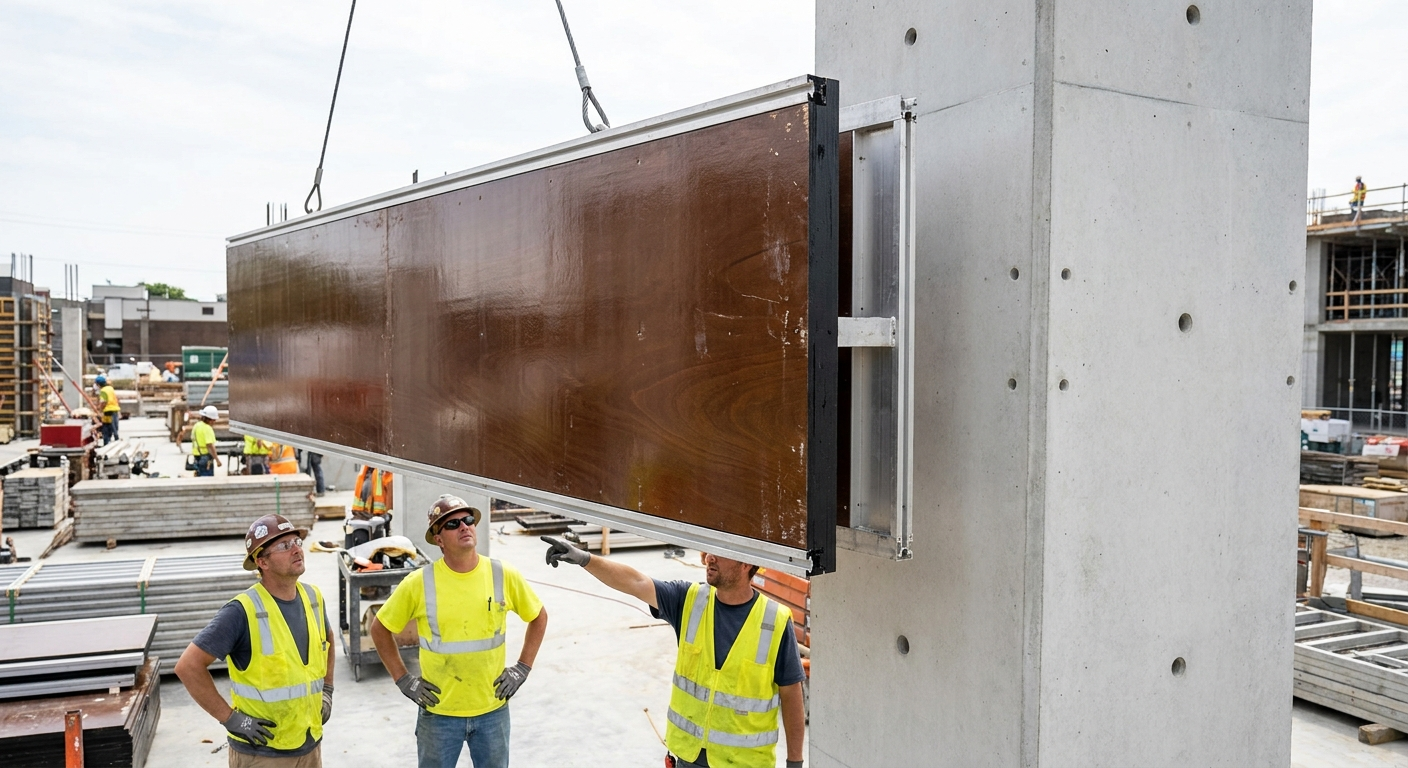
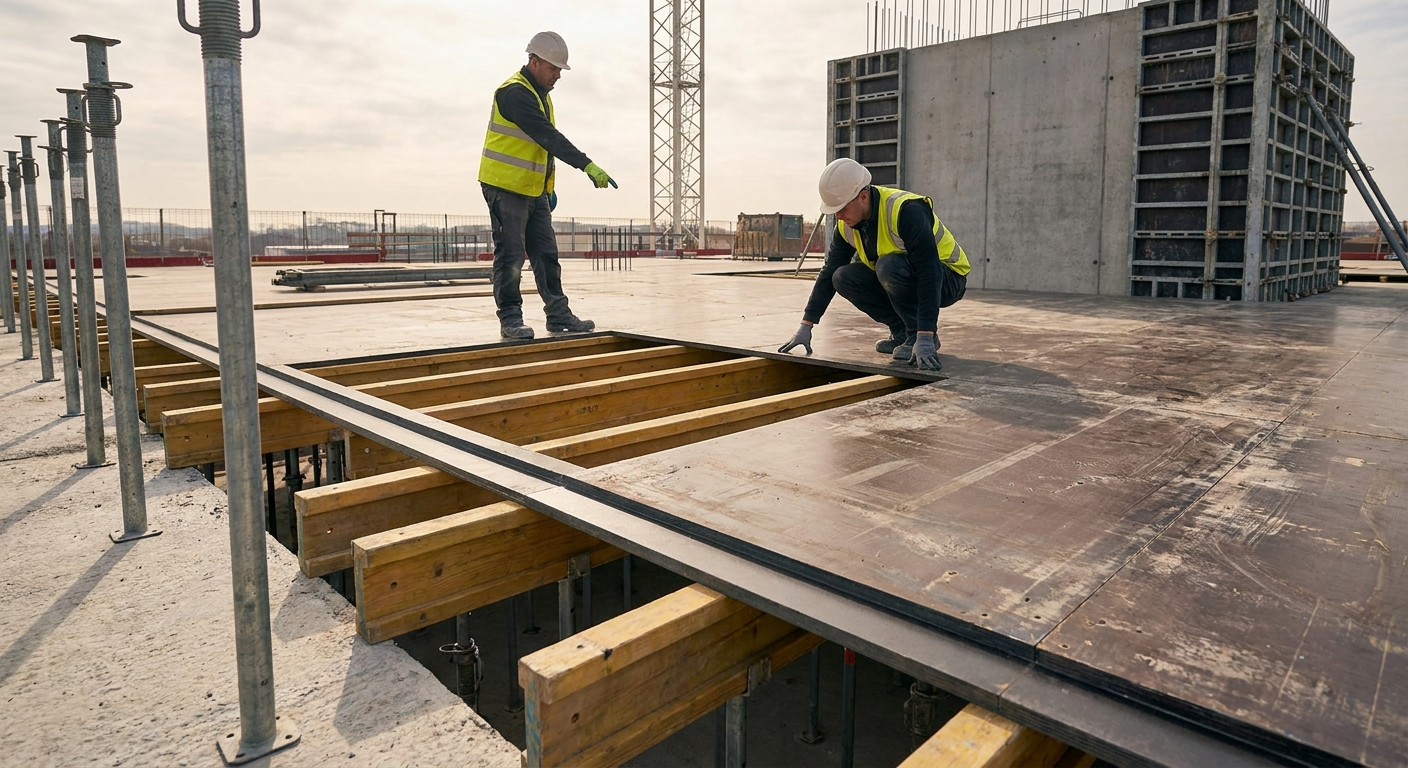
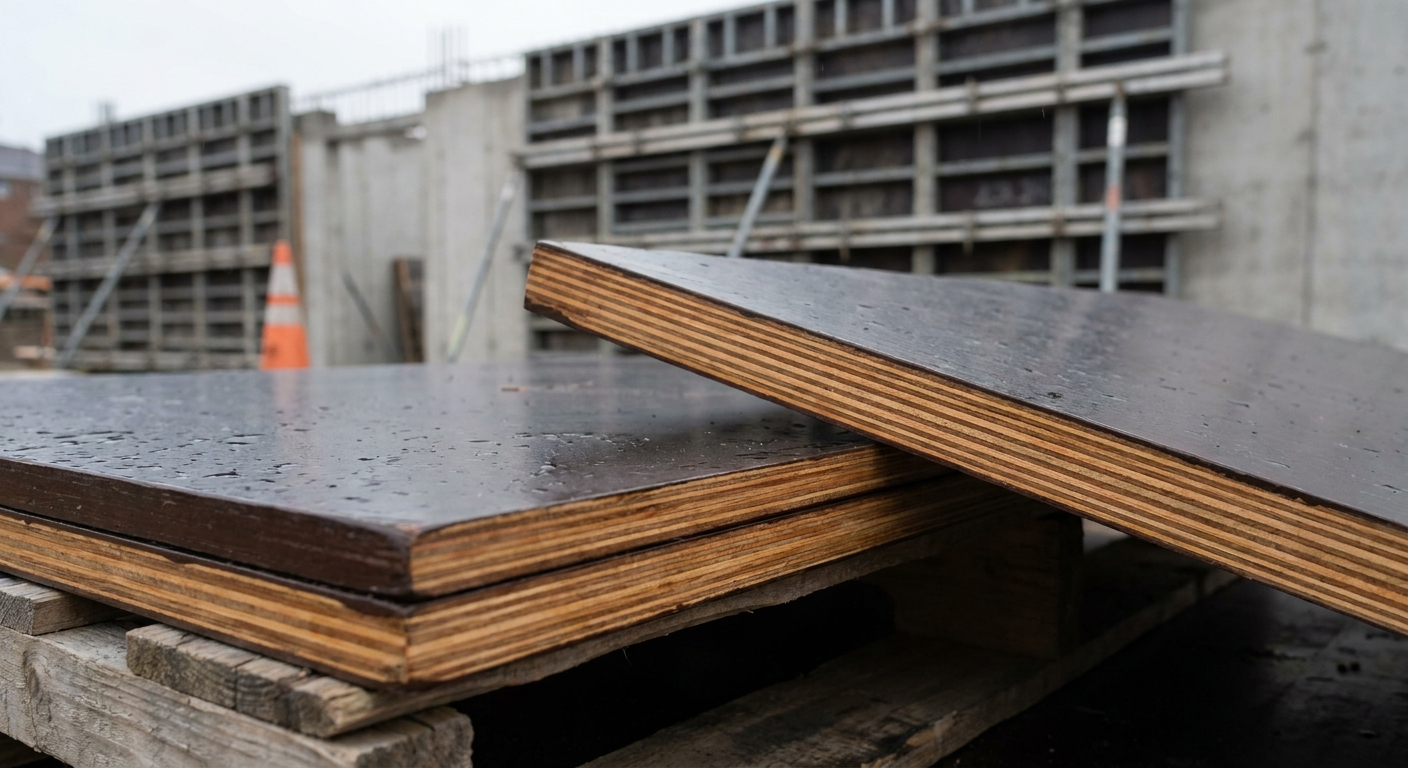
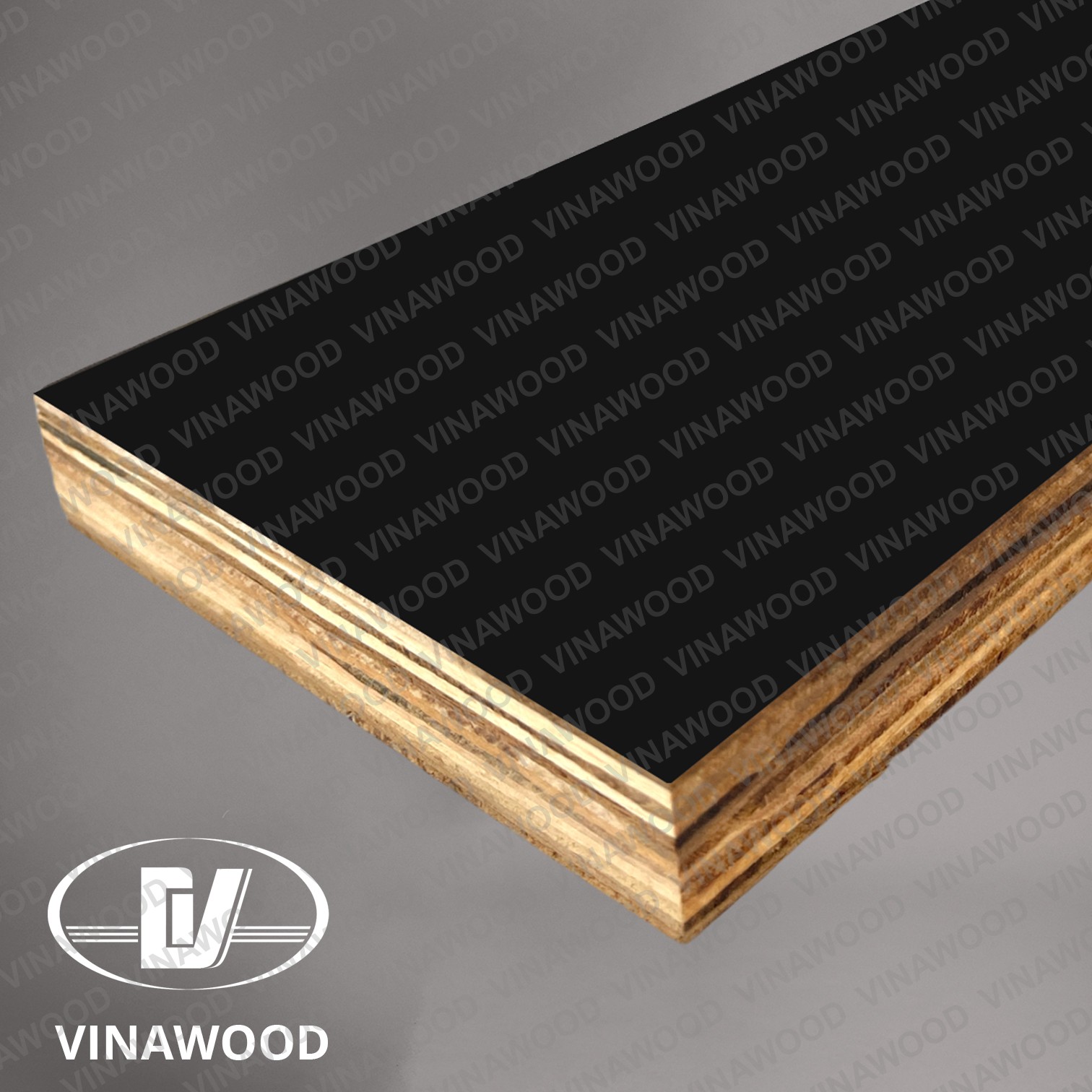
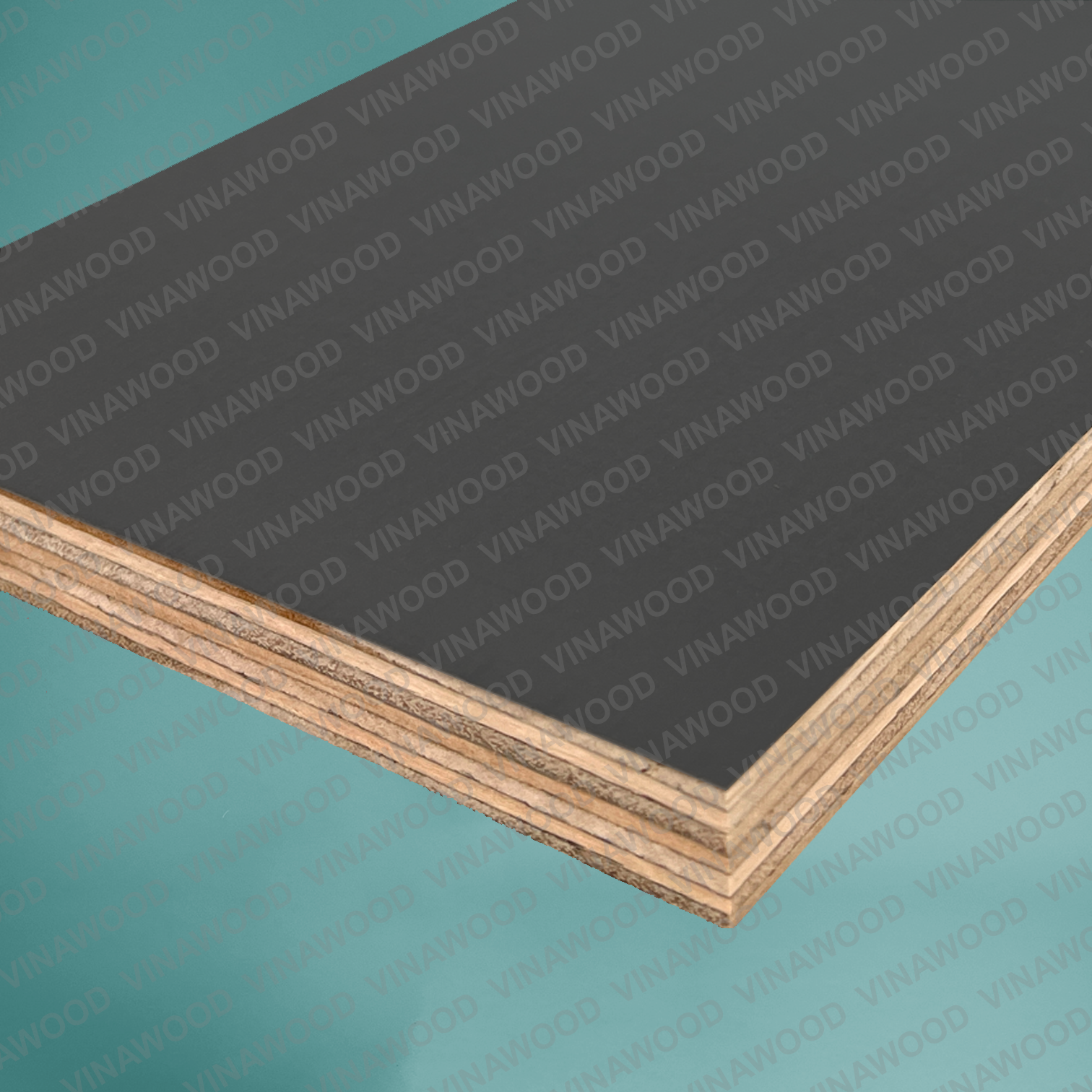
HDO plywood is a concrete forming panel with a resin-impregnated fibre overlay hot-pressed onto one or both faces. Overlay grade, not thickness alone, sets abrasion life, concrete finish, and how many pours the sheet can carry. Vinawood ships the APA-style ladder as HDO Basic (up to 10), HDO Premium (up to 20), and HDO Premium HD (up to 20). HDO Basic is bonded to EN 636-2 (Class 2); HDO Premium and Premium HD are Class 3 under EN 636-3. Water-resistant. Not waterproof. Those cycle counts are maxima under sealed edges, release agent, prompt cleaning, and flat covered storage.
Buyers need that answer before the price talk. The rest of this page maps the overlay grades, separates HDO from film-faced phenolic and from MatteFace (the matte formwork product buyers still search as MDO), and shows how to RFQ a mill pack without mistaking a retail listing for a factory spec. Soft path for the full type ladder sits on the concrete forming plywood hub. Titles there stay locked. This page only links in.
APA-style HDO grade and reuse ladder
Write the overlay name on the PO. A bare “HDO” line is not a specification, and it is the most common reason two quotes look comparable on paper and then cast different faces on site. Thickness still matters for span and deflection between walers, but it does not set face life. Overlay density and resin loading do.
| Vinawood grade | Overlay | Faces | Max reuse | Bond |
|---|---|---|---|---|
| HDO Basic 1SF Formply | HDO Basic | One HDO face, phenolic-coated back | up to 10 | Class 2 / EN 636-2 |
| HDO Basic 2S Formply | HDO Basic | Both faces | up to 10 | Class 2 / EN 636-2 |
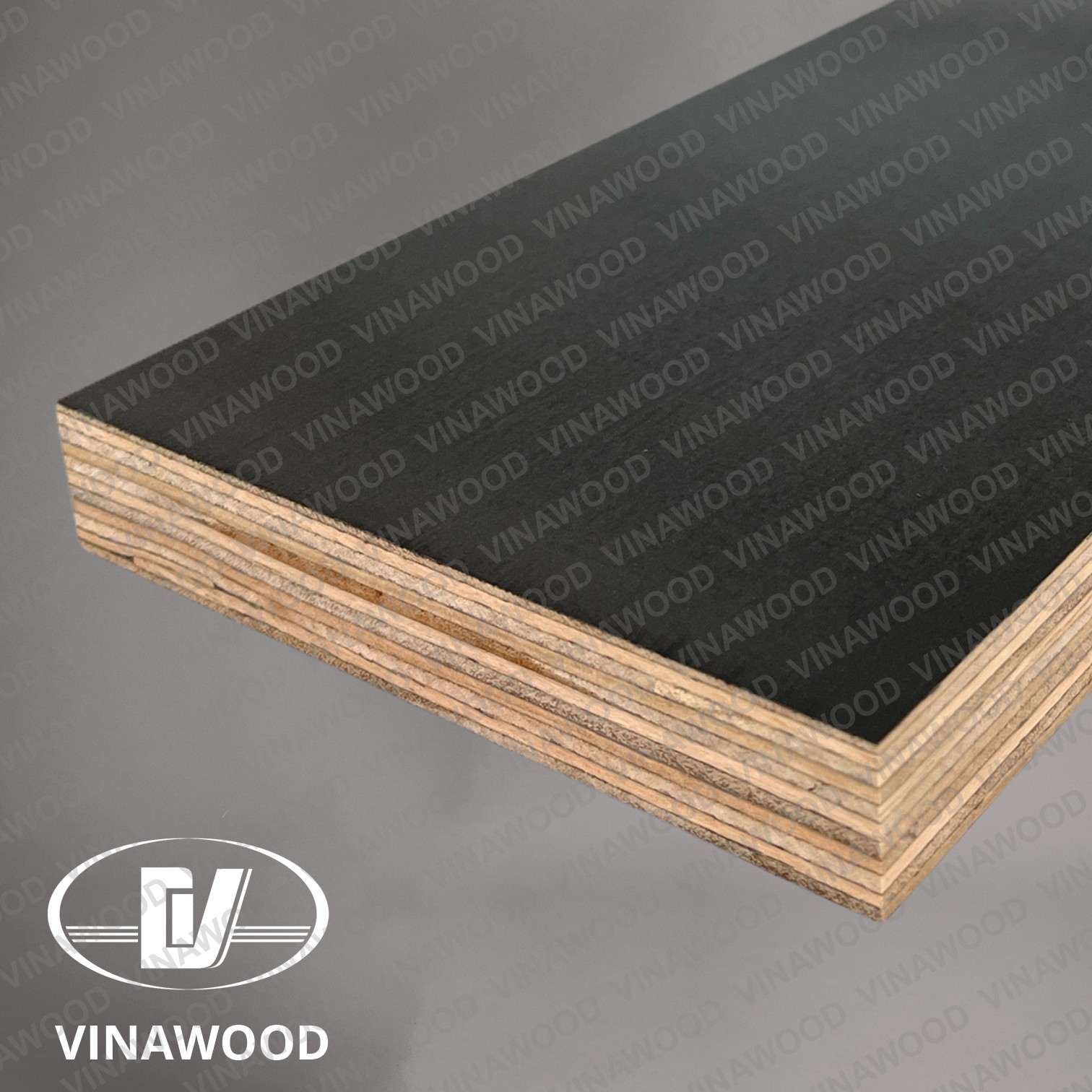
| HDO Premium 2S Formply | HDO Premium (higher density) | Both faces | up to 20 | PF Class 3 / EN 636-3 |
| HDO Premium HD 2S Formply | HDO Premium on high-density core | Both faces | up to 20 | PF Class 3 / EN 636-3 |
How to read the ladder on a PO. 1SF overlays one face for systems that never flip the sheet. 2S overlays both faces so the gang can turn the panel once the first face is worn. Premium steps the overlay density. Premium HD keeps that overlay and densifies the core for heavy rotation. Bond-class detail for phenolic face versus phenolic core lives on phenolic plywood.
HDO overlay vs film-faced vs MatteFace / MDO
Three constructions get mixed on RFQs because they all leave a hard, closed face after strip. Name the face before you compare price, or you end up pricing an HDO fibre overlay against a gsm film or a matte phenolic film as if they were the same SKU.
| HDO overlay | Film-faced phenolic | MatteFace (searched as MDO) | |
|---|---|---|---|
| Face build | Resin-impregnated fibre overlay sheet, hot-pressed | Phenolic film (gsm paper), hot-pressed | Matte phenolic surface film (product = MatteFace / MTF) |
| Concrete finish | Glossy, near-mirror | Glossy to semi-gloss, film-dependent | Matte |
| Trade search term | HDO plywood | Film-faced / formply | Often searched as MDO formwork plywood. MDO is the search bridge only |
| Typical Vinawood reuse | Basic up to 10; Premium / Premium HD up to 20 | Form Basic up to 10; Form Extra / Pro Form Lite up to 15; Pro Form up to 20 | Up to 15 for matte forming |
| Bond note | HDO Basic: Class 2 / EN 636-2. HDO Premium / Premium HD: PF Class 3 | Form Extra = Superior Glue MUF EN 636-2, not Class 3. Pro Form Lite and Pro Form = PF Class 3. P-Form is polypropylene, not Pro Form | Matte phenolic film; product label is MatteFace |
HDO and glossy film-faced both release concrete well. They are not the same face. An HDO overlay is a fibre sheet with body. A film is a saturated paper measured in grams per square metre. Spec sheets are not interchangeable line for line. Class 3 on Vinawood’s map means Pro Form, Pro Form Lite, HDO Standard and HDO Premium. HDO Basic is Class 2. Form Extra stays Superior Glue MUF at EN 636-2.
MDO is not one product. APA-domestic kraft-paper MDO is tuned for paint and signage. Vinawood’s formwork answer in that search cluster is MatteFace Plywood: a matte phenolic surface film for matte concrete. Soft bridge only: buyers often search for MatteFace as MDO formwork plywood. Not kraft paper. Not paintable. Do not label the Vinawood product as MDO. Finish picks the family. Glossy exposed work → HDO or a Class 3 film grade. Matte face → MatteFace. Buried work that will be clad does not need a premium overlay just because the photograph looks sharp. For a side-by-side overlay map, see film-faced vs MDO vs HDO.
What HDO plywood is from the mill
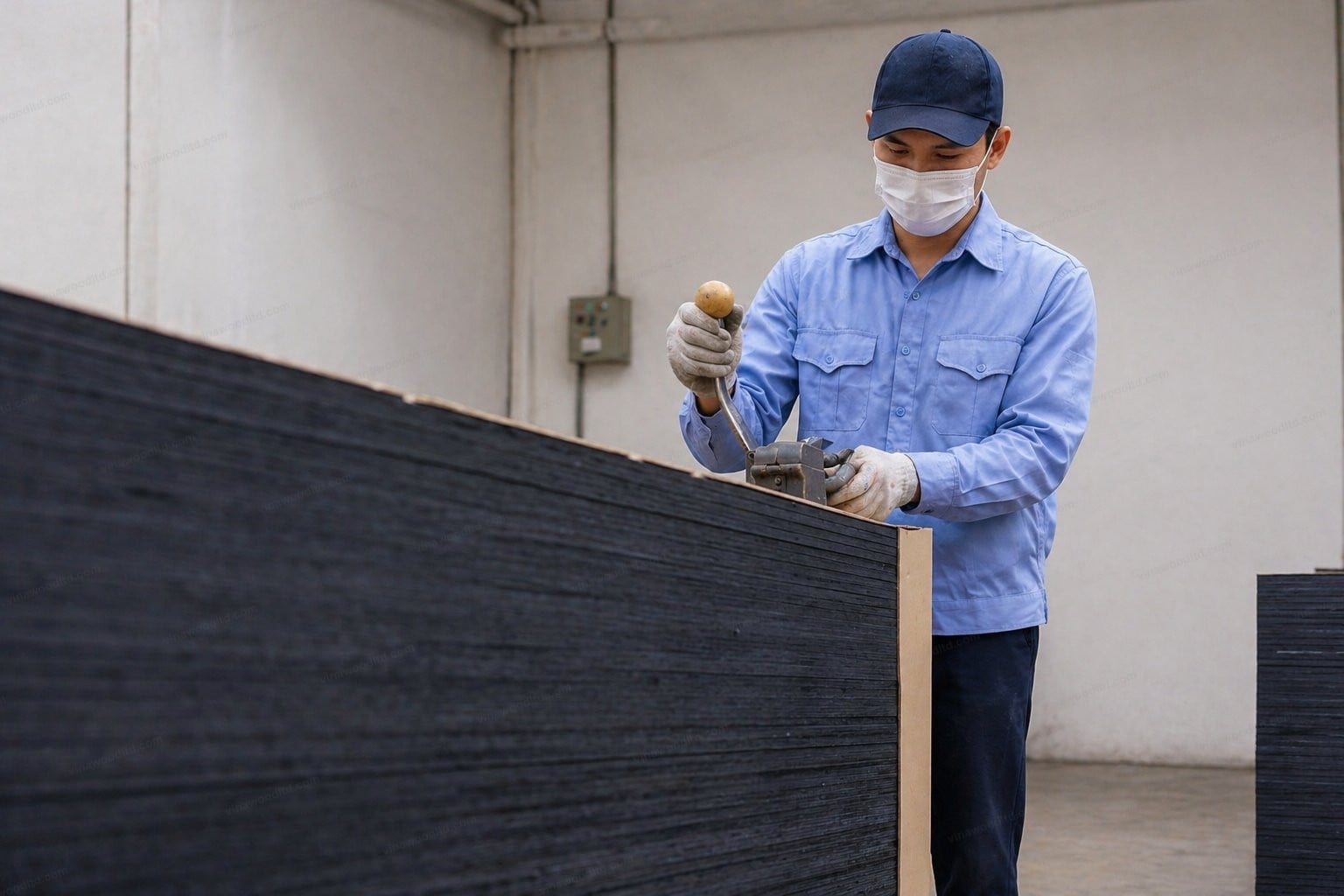
The overlay is bonded in the press as part of the panel build, not brushed on later. Bare veneer absorbs mix water, bonds to cement paste, and tears on strip. An HDO face absorbs almost nothing, scrapes clean, and takes re-oiling across its rated life, which is why architectural columns and feature walls still specify it when the drawing wants gloss.
The term is North American, tied to APA overlaid-panel language. Outside North America the same job often shows up as film-faced phenolic. Cross-region quotes look similar on paper and diverge on construction, so ask which face you are buying before you lock freight. Cost-per-pour logic without repeating that whole hub sits on formwork plywood advantages.
Overlay grade is the spec that matters
Buyers often write HDO by thickness alone. Thickness sets span and deflection between walers. Face life is a different job. Overlay does that work. Density of the fibre sheet and resin content separate Basic from Premium. Heavier impregnation means harder abrasion resistance, lower permeability, and a smoother face across more cycles. A lighter overlay costs less per sheet and gives up cycles earlier.
I have seen RFQs that price “HDO” against a film SKU with a different bond class and then blame the mill when the concrete finish diverges. Ask which overlay grade the quote refers to, and what maximum reuse that grade is rated for. That is how you compare mills instead of comparing price-per-sheet only.
Reuse cycles and cost per pour
Price per sheet is the wrong number for a repeating pour programme. Cost per pour is delivered panel cost divided by the cycles you actually get. Every reuse figure we publish is a maximum. Site practice decides whether you get close. It is not a guarantee stamped on the packing list.
Four site-side levers move the real number. Release agent thin and even before every pour: missed patches bond and tear overlay. Prompt cleaning after strip, while residue is still soft, because scraping cured grout lifts overlay with it. Sealed edges matter too. The face is water-resistant; the cut edge is not, and unsealed edge-grain wicks moisture into the core even when the face still looks fine. Flat, off-ground storage under cover between cycles.
We see this in warranty correspondence more clearly than anywhere else. Early returns are almost never glue-line failures. They are panels stacked on edge in the rain with cut edges open. Planning rule: if a job needs more than about fifteen rotations from the same sheets, Premium or Premium HD is usually cheaper by project end even when the invoice is higher.
What an HDO face actually casts
An HDO panel in good condition casts a glossy, closed, near-mirror face with low porosity and little bugholing. That is the point on architectural work. Where it earns the spend: exposed columns, feature walls, visible soffits, precast with a specified finish. Where it does not: footings, buried foundation walls, anything getting cladding or render. Paying for gloss on concrete nobody will see is a common specification waste.
Glossy faces are less forgiving. Release-agent streaks, joint lines, tie-cone marks, and uneven strip times show harder than on a matte face. If the pour schedule cannot stay consistent across an elevation, a matte face often looks more uniform than a glossy one. Panel age shows too. A sheet near the end of its cycle count casts differently from a new one, so mixing fresh and near-retired panels in one visible elevation is worth avoiding.
Thicknesses and panel sizes
Vinawood HDO ships in 12, 15 and 18 mm at 2440 × 1220 mm (8 ft × 4 ft). Heavier thicknesses are available to order. Match thickness to support spacing and pour height. Do not treat 18 mm as a fashion choice when the waler layout was designed for it.
| Thickness | Imperial (nominal) | Typical use |
|---|---|---|
| 12 mm | ~1/2 in | Light-duty forming, lower pour heights, panel infill |
| 15 mm | ~5/8 in | General wall and column forming |
| 18 mm | ~3/4 in | Workhorse for wall forms and deck panels |
18 mm is the default for a reason. It carries wet-concrete pressure at ordinary stud or waler spacings without excessive deflection, and most North American formwork hardware is built around it. A 2440 × 1220 × 18 mm sheet runs about 30 to 35 kg. Two-person lift.
How HDO panels are made
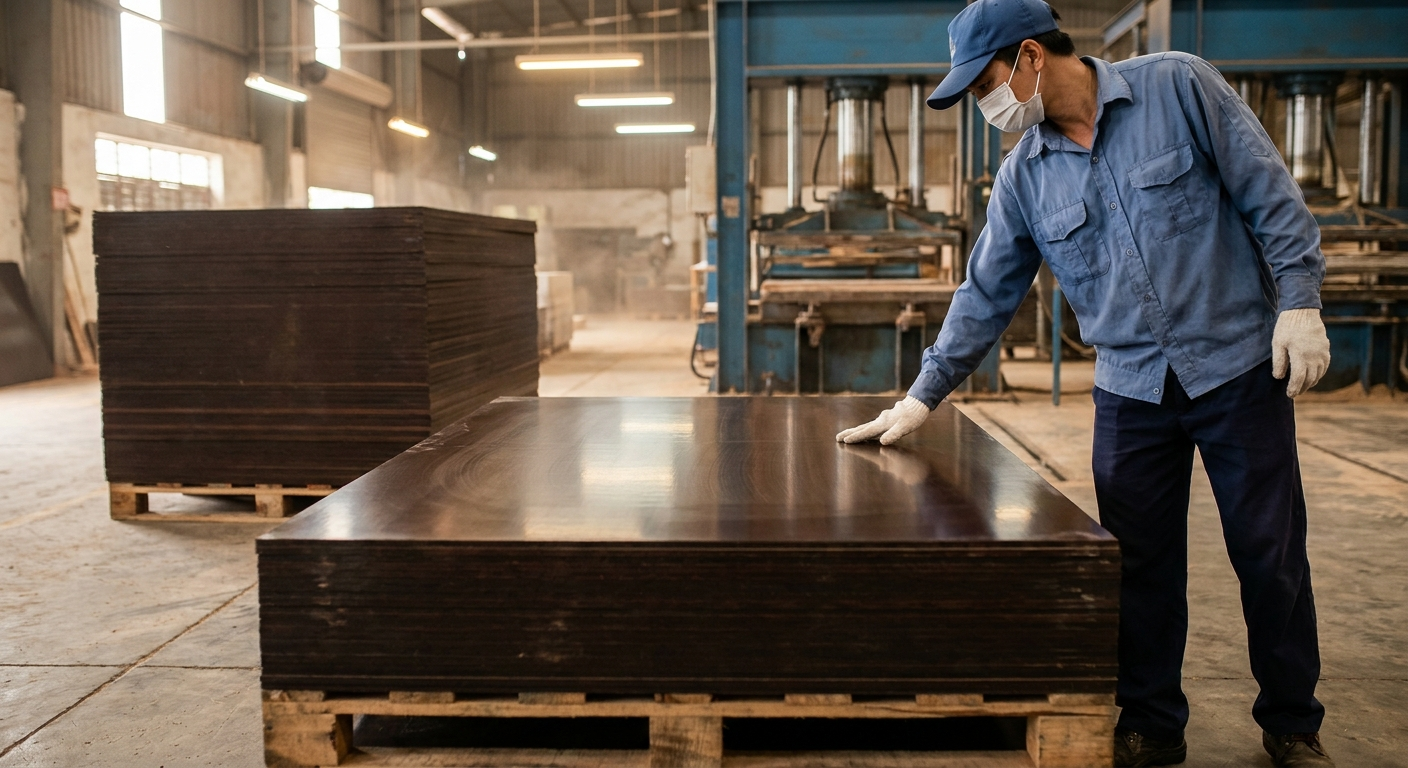
Vinawood has manufactured plywood in Vietnam since 1992, vertically integrated from log peeling through surface lamination. Cores are plantation-grown Acacia, Eucalyptus, or Hevea. Plantation-grown only, never tropical hardwood marketing copy. Panels move through a 12-step controlled process: log selection and peeling, veneer drying to 8–12% moisture, glue spreading and lay-up, cold press, hot press, putty, sanding, trimming, surface lamination, QC, edge sealing, packing.
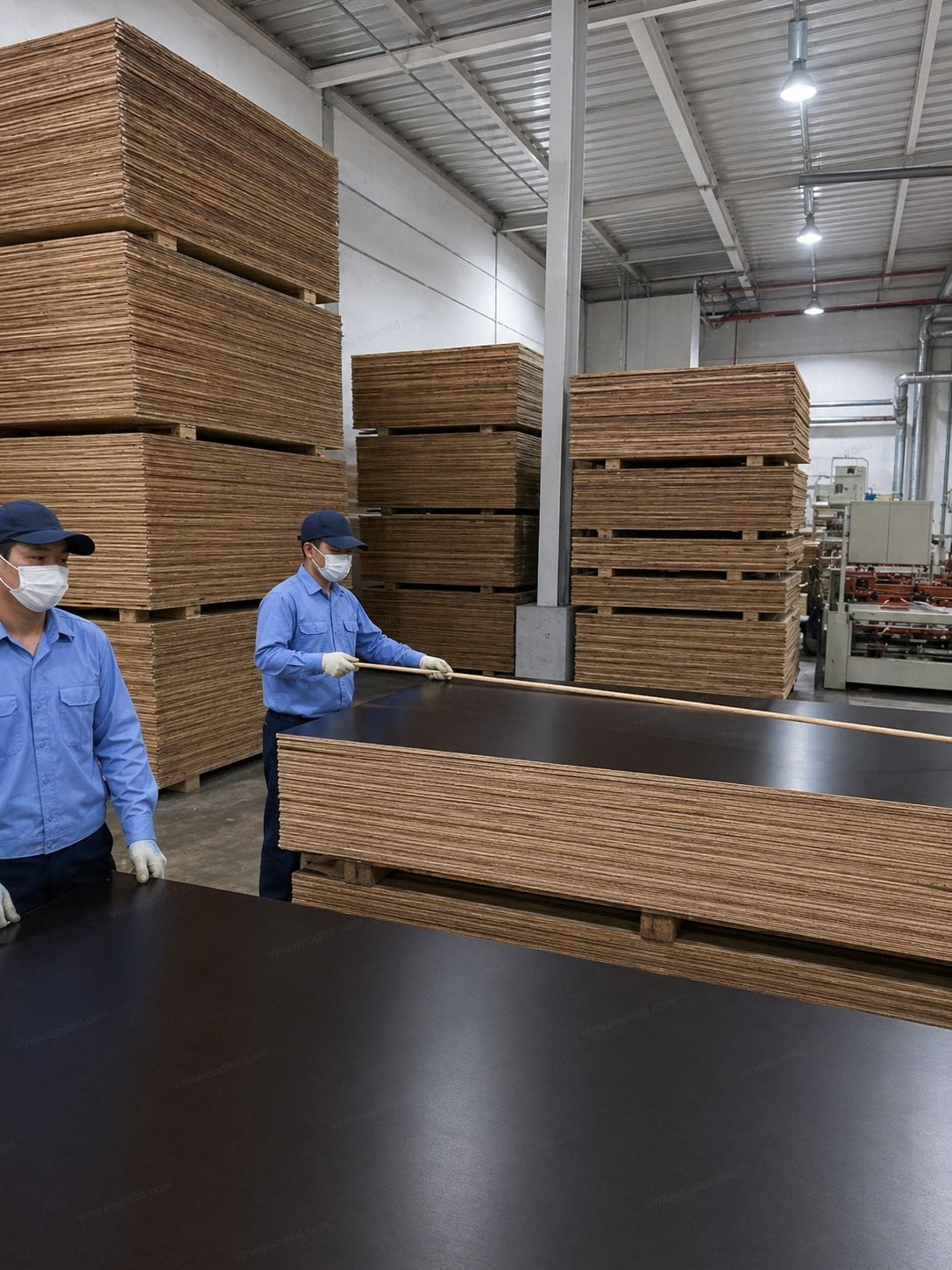
Three steps carry most of the weight for a forming panel. Veneer moisture at lay-up governs glue-line cure under the press. Edge sealing happens in the factory, not left to the site. Inspection is 100% individual sheet. Published in-house figures for the HDO range cover bending strength, modulus, bond strength, moisture, and thickness swelling at mill QC limits.
Certification tracks the markets the panels ship into: ISO 9001, EPA TSCA Title VI / CARB Phase 2 for US emissions, CE marking under EN 13986 for Europe, FSC chain of custody where required. Importer due-diligence notes sit on plywood manufacturers in Vietnam. For how a mill programme differs from a trading-yard stock list on film-faced packs, see film faced plywood manufacturer.
Where to buy HDO plywood
HDO is not a general lumber-yard SKU in most of North America. It moves through specialty plywood distributors and formwork supply houses. Stock runs deeper around metros with commercial concrete work. Elsewhere it is thin or order-only. One overlay grade in one thickness is not a range.
The second route is container-direct from the manufacturer. It needs forward planning against the pour programme, and it makes sense at volume. What it buys is grade certainty, one production run across the order, and compliance documents shipped with the goods. Vinawood ships about 5,000 containers a year to 55+ countries, factory-direct, with five sales offices on inquiries. Est. 1992.
For local distributors who need ready stock, Vinawood also maintains distribution warehouses in Toronto, Vancouver, Calgary, Montreal, Miami, Houston, and Baltimore. Same brand. Different lead path. Put overlay grade, bond class, thickness, and reuse as “up to N” on the RFQ either way. Contractors sourcing in the US can also see US plywood suppliers.
We do not publish sheet pricing. Spec, volume, and freight move the number. For a quote on grade, thickness, and quantity, start with the RFQ form or contact sales. Response within 24 hours. Full range: HDO plywood.
Category
guides
Related Markets
Related Countries
Related Products
▶Sources & References (1)
- Overlaid Panels (HDO and MDO) — APA - The Engineered Wood Association (2025)