HDO vs MDO Plywood: A Complete Comparison for Builders and Contractors
HDO vs MDO plywood for concrete forming: a direct comparison of overlay density, reuse cycles, surface finish quality, and cost per pour — with a decision framework to help you spec the right panel for every application.
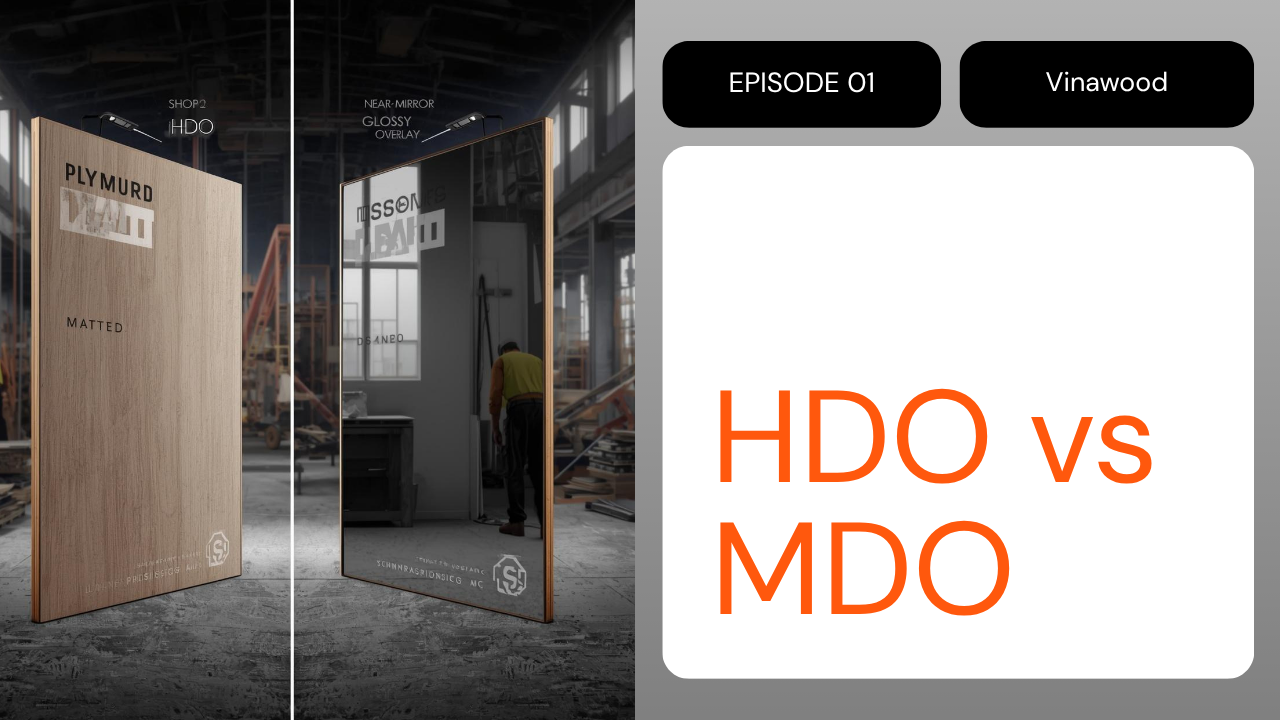
The overlay difference between HDO and MDO plywood seems subtle on paper. In practice, it isn't. Spec the wrong panel on a high-volume forming project and you're stripping damaged forms after 15 pours instead of 40. This guide breaks down what separates HDO from MDO — surface quality, reuse cycles, cost-per-pour math, and when film-faced phenolic plywood is the smarter third option — so you can make the right call before the concrete truck arrives.
What Is MDO Plywood?
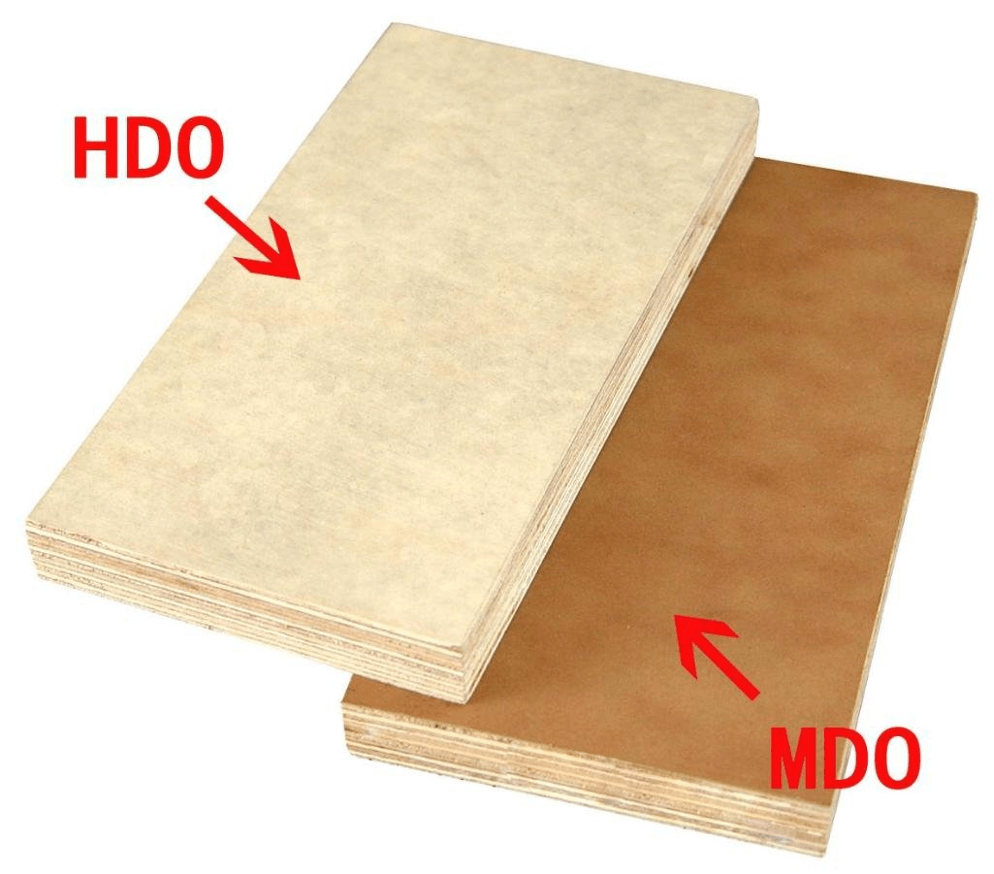
MDO stands for Medium Density Overlay. It's manufactured by bonding a resin-impregnated fiber sheet to the face veneer of a plywood panel under heat and pressure. The overlay resin content is typically in the range of 20–30 g/m², creating a smooth, semi-sealed surface that significantly outperforms bare wood plyform for concrete contact.
The APA (Engineered Wood Association) publishes the standard specification for overlaid plywood, and MDO plyform is graded accordingly. Key characteristics:
- Overlay resin weight: 20–30 g/m² (lighter than HDO)
- Surface finish: Smooth, paintable, slight fiber texture possible
- Reuse cycle range: 15–25 uses with proper care (release agent, cleaning, flat storage)
- Adhesive: Exterior WBP — weather and boil proof
- Primary applications: Architectural walls, precast panels, tilt-up construction, signage
MDO is widely stocked at specialty lumber yards and available at large home improvement retailers in most US markets. It's the go-to choice for contractors who need better surface quality than standard BB/OES plyform but don't require the full performance of HDO.
What Is HDO Plywood?
HDO stands for High Density Overlay. The manufacturing process is similar to MDO — a resin-fiber sheet is hot-pressed onto the veneer face — but the overlay is significantly denser and harder, with resin content typically at 45 g/m² or higher. The result is a surface that behaves more like hard plastic than wood: abrasion-resistant, chemically resistant, and capable of producing a near-mirror finish on cast concrete.
For a deeper dive into HDO specifications and grading, see our HDO plywood guide. Key characteristics at a glance:
- Overlay resin weight: 45 g/m² or higher
- Surface finish: Near-mirror smooth, glass-like — often called "steel-form quality"
- Reuse cycle range: 30–50+ uses with proper maintenance
- Adhesive: Exterior WBP phenolic
- Primary applications: Exposed architectural concrete, columns, high-rise shear walls, bridge decks, industrial signage
HDO is less widely stocked than MDO — you'll typically find it at specialty plywood distributors and formwork supply houses rather than general lumber yards. The higher upfront cost per sheet is the trade-off for substantially more reuse cycles and a premium concrete finish.
HDO vs MDO: Key Differences at a Glance
| Feature | MDO Plywood | HDO Plywood |
|---|---|---|
| Overlay type | Medium density resin-fiber | High density phenolic resin |
| Overlay weight | ~20–30 g/m² | 45+ g/m² |
| Surface finish | Smooth, slight grain possible | Near-mirror, glass-like |
| Reuse cycles | 15–25 | 30–50+ |
| Concrete surface quality | Good (architectural grade) | Excellent (exposed/premium) |
| Abrasion resistance | Moderate | High |
| Paintability | Excellent — ideal paint base | Moderate (very hard surface) |
| Cost per sheet | Lower than HDO (~$75–95) | Higher than MDO (~$110–130) |
| Cost per pour | Lower at low cycle counts | Lower at high cycle counts |
| Best for | Commercial walls, precast, signage | Exposed architectural concrete, high-volume forming |
Reuse Cycles — The Real ROI Calculation
Upfront price per sheet is the wrong number to optimize. Cost per pour is what matters. Here's the math on a 40-pour commercial forming project:
- MDO scenario: $85/sheet ÷ 20 reuses = $4.25 per pour
- HDO scenario: $120/sheet ÷ 40 reuses = $3.00 per pour
On a 40-pour project, HDO delivers $1.25 lower cost per pour. Across a 500-sheet pour deck, that's a $625 saving per cycle — and $25,000 over 40 cycles. The break-even point typically sits around 20–25 cycles: at or above that volume, HDO almost always wins on total cost.
Rule of thumb: If your project requires more than 20 reuses per panel, specifying MDO or upgrading to HDO (or film-faced phenolic) is almost always the economically correct decision. Calculate your cycle count before ordering.
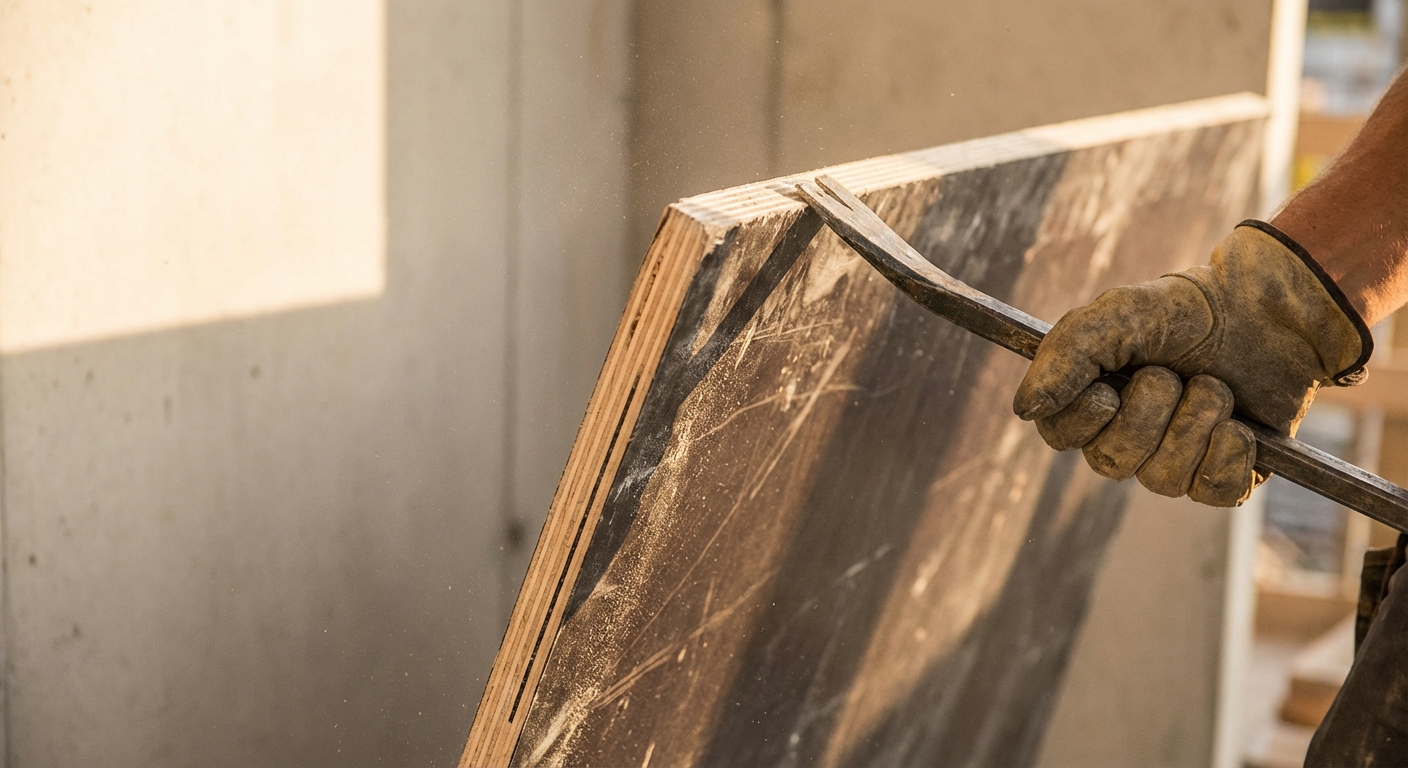
Variables that reduce MDO cycle count faster than expected: aggressive release agent application failures, inadequate cleaning between pours, exposure to direct rain between uses, and improper stacking. On difficult sites, HDO's harder overlay is more forgiving of handling variations.
Surface Quality — What the Concrete Actually Looks Like
MDO finish: The concrete surface will be smooth and consistent, with only minimal patching required for commercial-grade architectural work. A slight fiber texture is possible but uncommon with new panels and proper release agent use. For walls that will be painted, clad, or otherwise covered, MDO is entirely sufficient.
HDO finish: The near-mirror surface of HDO transfers to the concrete face. This is the standard choice when the concrete will be left exposed — architectural columns, feature walls, soffits, bridge abutments, and any application where the formed surface is the finished surface.
For a broader comparison of all concrete form panel types — including standard BB/OES plyform — see our concrete form plywood types overview.
Film-Faced Plywood — The Third Option Contractors Should Know
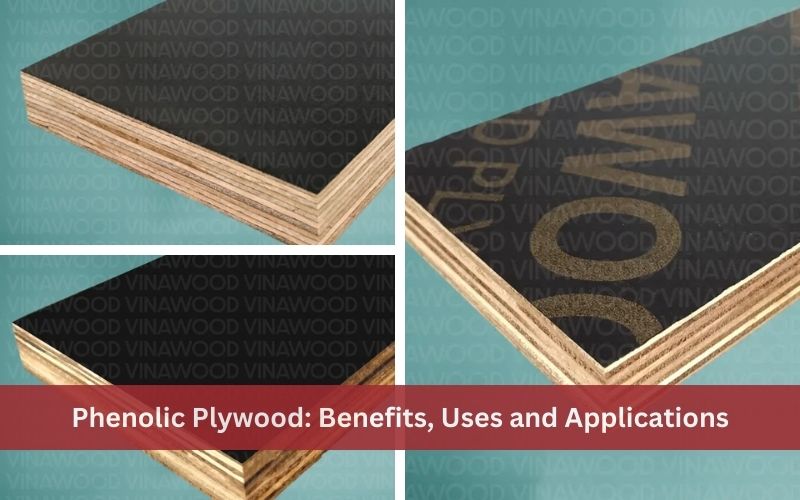
MDO and HDO dominate the North American overlay plywood market, but globally there's a third option that competes directly with both: film-faced phenolic plywood. This is the dominant forming panel in Europe, Australia, the Middle East, and Asia, and it's increasingly used by North American contractors who import direct for volume projects.
- 120 g/m² film = performance roughly equivalent to MDO plyform
- 220 g/m² film = performance roughly equivalent to HDO plyform
The key commercial advantage: Vietnam-sourced film-faced phenolic panels are typically 20–35% lower cost per sheet than equivalent domestic MDO or HDO plyform for volume orders. The trade-off is import lead time — containers from Vietnam to US ports take approximately 25–35 days from order confirmation.
For more detail on film weight grades and face types, see our phenolic plywood guide.
Application Decision Framework
| Application | Recommended Choice | Reason |
|---|---|---|
| Residential foundation (buried) | MDO or BB/OES Plyform | Surface finish irrelevant; cost savings appropriate |
| Commercial walls (painted finish) | MDO | 15–25 cycles sufficient; lower upfront cost justified |
| Exposed architectural concrete | HDO | Near-perfect finish required; 30–50 cycle ROI justifies cost |
| High-volume repetitive forming | HDO or 220 g/m² film-faced | Maximum cycle count; lowest long-term cost per pour |
| Tropical or humid climates | Film-faced phenolic | Sealed film resists moisture penetration better than overlay boards |
| Precast concrete panels | MDO or HDO | MDO common for standard finish; HDO for premium exposed precast |
Our shuttering plywood guide covers regional terminology, thickness standards, and local availability for UK, India, and Australian markets.
Where to Buy HDO and MDO Plywood
MDO plywood is widely available at specialty lumber yards, plywood distributors, and large home improvement retailers across the US and Canada. Lead time is same-day to a few days for standard 4×8 sheets.
HDO plywood is stocked primarily at specialty plywood distributors and formwork supply houses. It's not common at general lumber yards.
Film-faced phenolic plywood is available direct from Vietnam manufacturers for container quantities. For direct import guidance — including supplier evaluation, certifications, and container pricing logistics — see our complete guide to buying plywood from Vietnam.
Vinawood's HDO-Grade and Film-Faced Forming Panels
Vinawood has manufactured film-faced and phenolic plywood for concrete forming since 1992. Our Vietnam factory produces HDO-equivalent panels engineered specifically for formwork:
- HDO Basic 2S: 120 g/m² brown phenolic film — MDO-equivalent performance, 20–30 reuse cycles
- HDO Premium 2S: 220 g/m² brown phenolic film — HDO-equivalent performance, 30–50 reuse cycles
- HDO Premium HD 2S: 220 g/m² black phenolic film — premium exposed-face applications
All panels use WBP phenolic adhesive throughout all plies, with hardwood eucalyptus or acacia cores. Vinawood is ISO 9001 certified and supplies forming panels to contractors in the US, Canada, Australia, UAE, and 50+ additional export markets. View the full range at /collections/hdo-plywood or contact us for container pricing.
Frequently Asked Questions
What is the difference between HDO and MDO plywood?
The core difference is overlay density. MDO uses a lighter resin-fiber overlay (~20–30 g/m²) that creates a smooth, paintable surface. HDO uses a denser phenolic overlay (45+ g/m²) that is harder, more abrasion-resistant, and near-mirror smooth. HDO delivers more reuse cycles (30–50+) than MDO (15–25) and produces a higher-quality concrete surface finish.
Is MDO or HDO better for concrete forms?
It depends on your cycle count target and finish requirement. For 15–20 reuse cycles and architectural walls that will be painted or clad, MDO is the practical choice. For 30–50+ cycles or any exposed concrete finish where appearance matters, HDO (or premium 220 g/m² film-faced plywood) delivers better long-term economics and a superior concrete surface.
How many times can MDO plywood be reused?
MDO plyform typically delivers 15–25 reuses with proper site practices: applying release agent before each pour, cleaning promptly after stripping, sealing cut edges, and storing panels flat and off the ground. Poor site handling can cut this to 8–12 uses.
Can MDO plywood get wet?
MDO is exterior-rated (WBP adhesive) and the overlay surface resists direct moisture contact. However, unsealed edges will absorb water, which degrades the core over time. Always seal cut edges. HDO and film-faced phenolic panels offer better moisture resistance, with film-faced providing the best performance in consistently wet or tropical conditions.
Category
how-to
Related Markets
Related Countries
▶Sources & References (1)
- APA Engineered Wood Association — Overlaid Plywood Standard — APA — The Engineered Wood Association (2024-01-01)