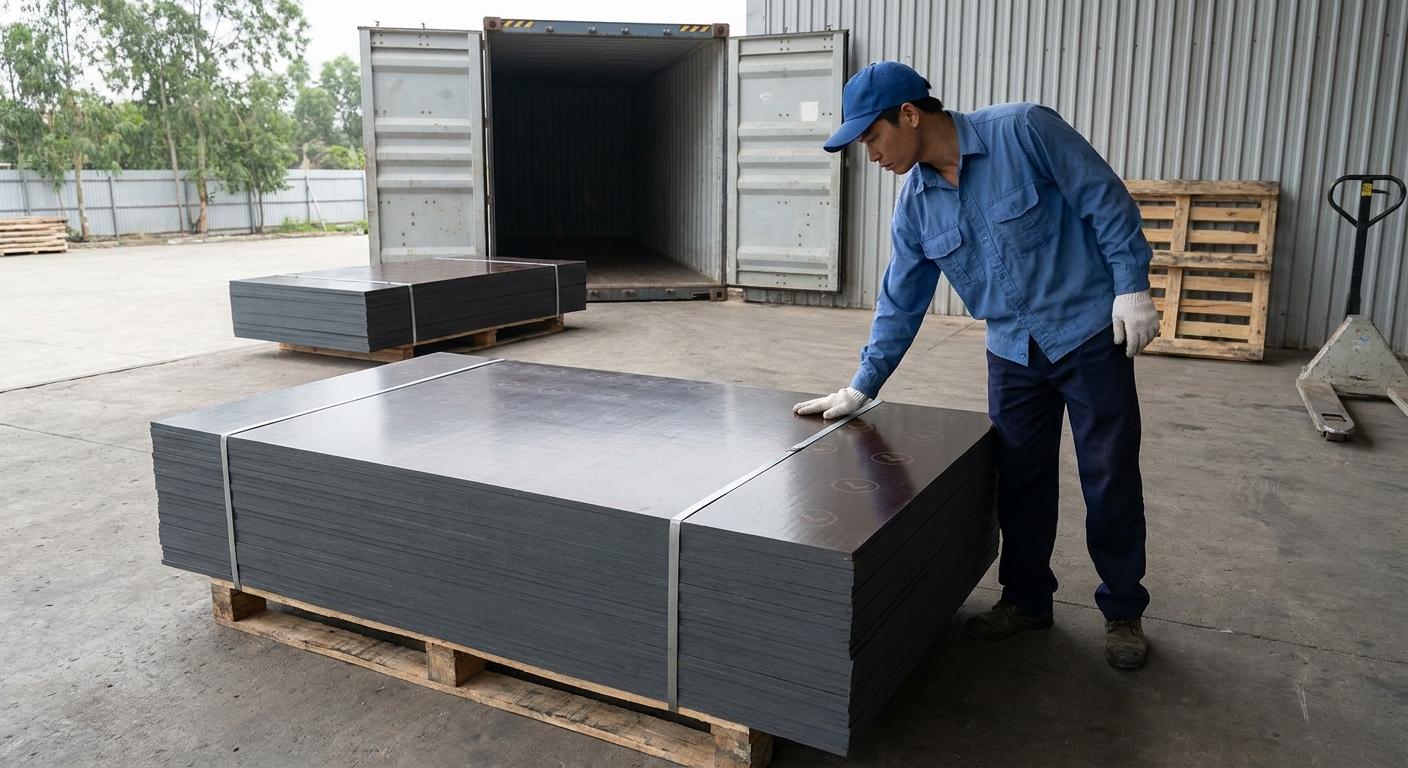
The Standard Plywood Sizes
The standard plywood sheet is 4 × 8 ft (1220 × 2440 mm), with metric 1250 × 2500 mm, 5 × 5 Baltic birch, and longer 4 × 10 / 4 × 12 formats for specific work. This guide covers standard sizes worldwide, a nominal-vs-actual thickness chart, unit conversions (cm, mm, in, ft), sizes by type, and how to…
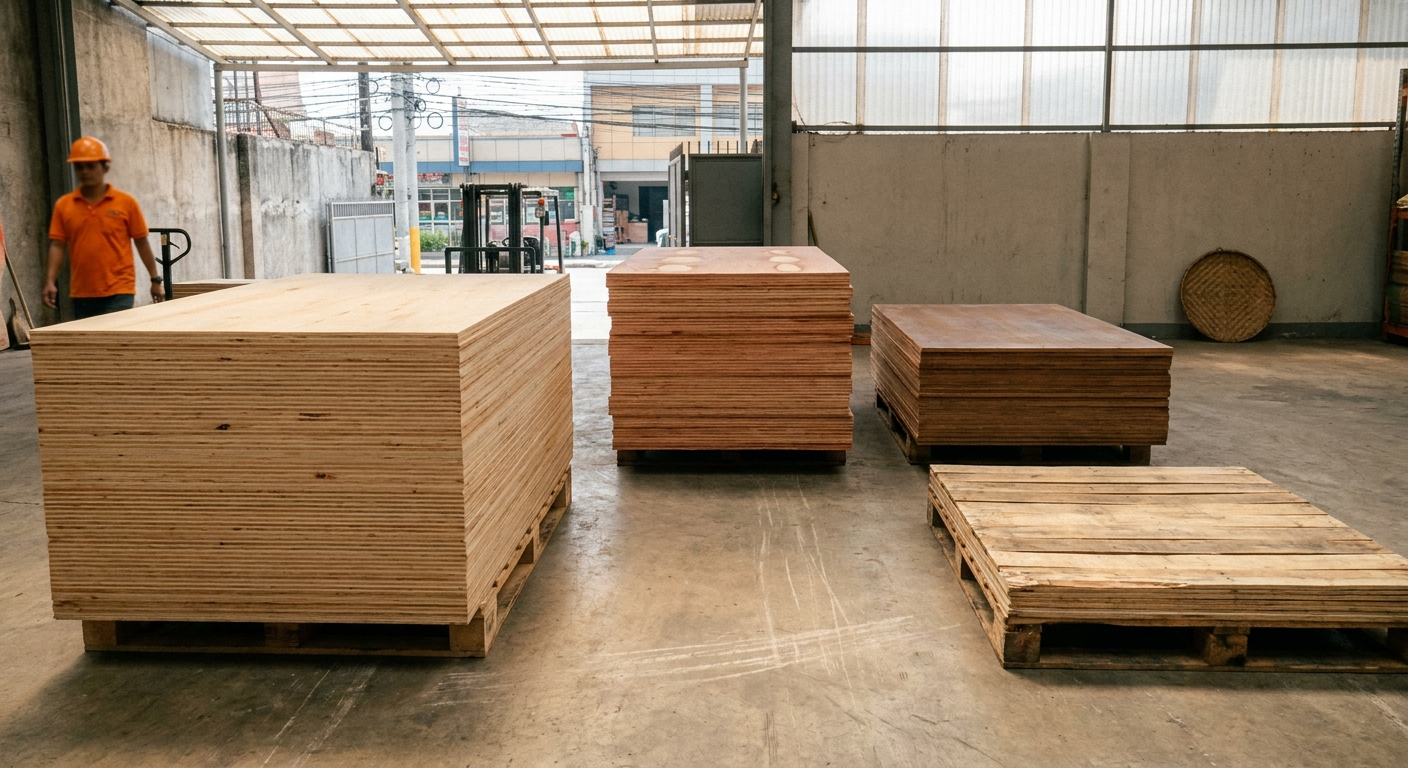
Two numbers settle almost every plywood order: the sheet footprint and the thickness. Across North America, the UK, Australia, and most export markets that footprint is 4 ft × 8 ft, which the mill actually cuts to 1220 × 2440 mm. Thickness is where the real decision sits. It runs from 3 mm ceiling stock up to 25 mm industrial decking, and the number stamped on the panel is not always the number your caliper reads at the loading bay.
What follows is the size reference from a manufacturer's side of the bed: the standard sheet formats used region by region, the nominal-versus-actual thickness gap and why it exists, a clean conversion block for buyers who think in centimetres or metres, and the two checks that catch a mistagged sheet before it ships. Prices and local grades vary by market, so the peso-price detail lives in our Philippine plywood sizes guide; this page keeps to the dimensions that hold everywhere.
At a glance: standard sizes and thickness
Most buyers need two quick answers before anything else. Here is the size chart, then the thickness ladder with its typical use.
| Format | Imperial | Metric | Where it dominates |
|---|---|---|---|
| Standard sheet | 4 × 8 ft | 1220 × 2440 mm | US, Canada, UK, Australia, Asia |
| Metric / EU sheet | ~4.1 × 8.2 ft | 1250 × 2500 mm | Continental Europe |
| Baltic birch | 5 × 5 ft | 1525 × 1525 mm | Cabinet shops worldwide |
| Long panels | 4 × 10 / 4 × 12 ft | 1220 × 3050 / 1220 × 3660 mm | Tall walls, commercial formwork |
| Project / handy panels | 2 × 2 / 2 × 4 ft | 610 × 610 / 610 × 1220 mm | Retail, small cuts |
| Indian market | 3 × 6 / 3 × 7 ft | 915 × 1830 / 915 × 2135 mm | India furniture and millwork |
| Nominal thickness | Metric | Typical use |
|---|---|---|
| 1/8″ | 3 mm | Ceiling backing, drawer bottoms, picture-frame backs |
| 1/4″ | 5–6 mm | Light panelling, cabinet backs, dropped ceilings |
| 3/8″ | 9 mm | Thin partitions, lightweight furniture panels |
| 1/2″ | 12 mm | Cabinet carcasses, general carpentry |
| 5/8″ | 15 mm | Subfloor on close joist spacing, casegoods |
| 3/4″ | 18 mm | Subfloor, shelving, formwork, structural work |
| 1″ | 25 mm | Industrial flooring, scaffold decks, heavy platforms |
Those two tables answer the common query. The sections below explain the parts that trip buyers up: why the metric figure is the real one, where the thickness gap comes from, and how to check a panel is what the label claims.
The standard sheet size, worldwide
One footprint carries most of the global plywood trade. The 4 ft × 8 ft sheet is the default across North America and most of the Commonwealth, and every distributor in those markets stocks it. On the mill floor the panel is produced to 1220 × 2440 mm, marginally under a true 4 ft (1219.2 mm) by 8 ft (2438.4 mm). The metric measurement is what the cutting bed is calibrated to. The imperial nickname is what the buyer writes on the order.
Continental European mills run a slightly different format at 1250 × 2500 mm, a touch wider and longer than the Imperial sheet, which matters when a specifier is matching panel joints to a metric stud grid. Hardwood plywood such as birch, maple, and oak moves in 4 × 8 and in 5 × 5 ft (1525 × 1525 mm), the square sheet being the traditional Baltic birch format that cabinet shops cut from. Longer 4 × 10 ft (1220 × 3050 mm) and 4 × 12 ft (1220 × 3660 mm) panels serve commercial jobs where a taller wall or a high concrete pour benefits from fewer horizontal joints. Indian furniture and millwork houses work in 3 × 6 ft and 3 × 7 ft. North American home centres keep 2 × 4 ft handy panels for buyers who only need a small cut and do not want to wrestle a full sheet.
Format choice usually comes down to the cut plan. Fewer seams across a long run beat smaller offcuts, up to the point where a sheet turns into a two-person carry.
Plywood thickness: nominal versus actual
The thickness printed on a panel is a nominal label, not a caliper reading. A sheet sold as 3/4″ usually measures closer to 23/32″. The gap is real and it is standard across the industry.
| Nominal | Actual |
|---|---|
| 1/8″ | ~7/64″ |
| 1/4″ | ~7/32″ |
| 3/8″ | ~11/32″ |
| 1/2″ | ~15/32″ |
| 5/8″ | ~19/32″ |
| 3/4″ | ~23/32″ |
The shrinkage happens during manufacturing, as the veneers dry and the glue-line cures under heat and pressure, and mills work to a tolerance band rather than an exact figure. For framing and roof sheathing the 1/32″ difference rarely matters. For cabinetry it matters a great deal: a panel meant to sit flush in a 1/2″ dado will not, because the actual sheet is 15/32″. Cut a test groove and caliper the panel before you commit the run.
One regional caveat sits underneath the table. Some Asian commodity mills grade ordinary plywood to a target weight rather than an exact thickness, so a sheet labelled 1/2″ can measure 8 to 10 mm instead of the nominal 12.7 mm. That is a stocking practice, not a global standard, and it is one more reason to measure rather than trust the stamp. We see it most on low-cost domestic stock; export-grade panels built to EN 315 tolerances hold much tighter.
Plywood size in cm, mm, inches, and feet
Buyers move between units depending on where they sit in the supply chain. A European architect works in millimetres, a US contractor in feet and inches, a homeowner comparing quotes often in centimetres. The standard 4 × 8 sheet in every common unit:
| Unit | Width | Length |
|---|---|---|
| Millimetres | 1220 mm | 2440 mm |
| Centimetres | 122 cm | 244 cm |
| Metres | 1.22 m | 2.44 m |
| Inches | 48 in | 96 in |
| Feet | 4 ft | 8 ft |
The single sheet covers about 2.97 m² (32 sq ft), which is the figure to divide project area by when working out how many sheets a job needs. The EU 1250 × 2500 mm sheet covers about 3.13 m², roughly 5% more area per panel, so a takeoff done in one format does not transfer cleanly to the other. Normalise by square metre when you compare quotes across markets.
Sizes by plywood type
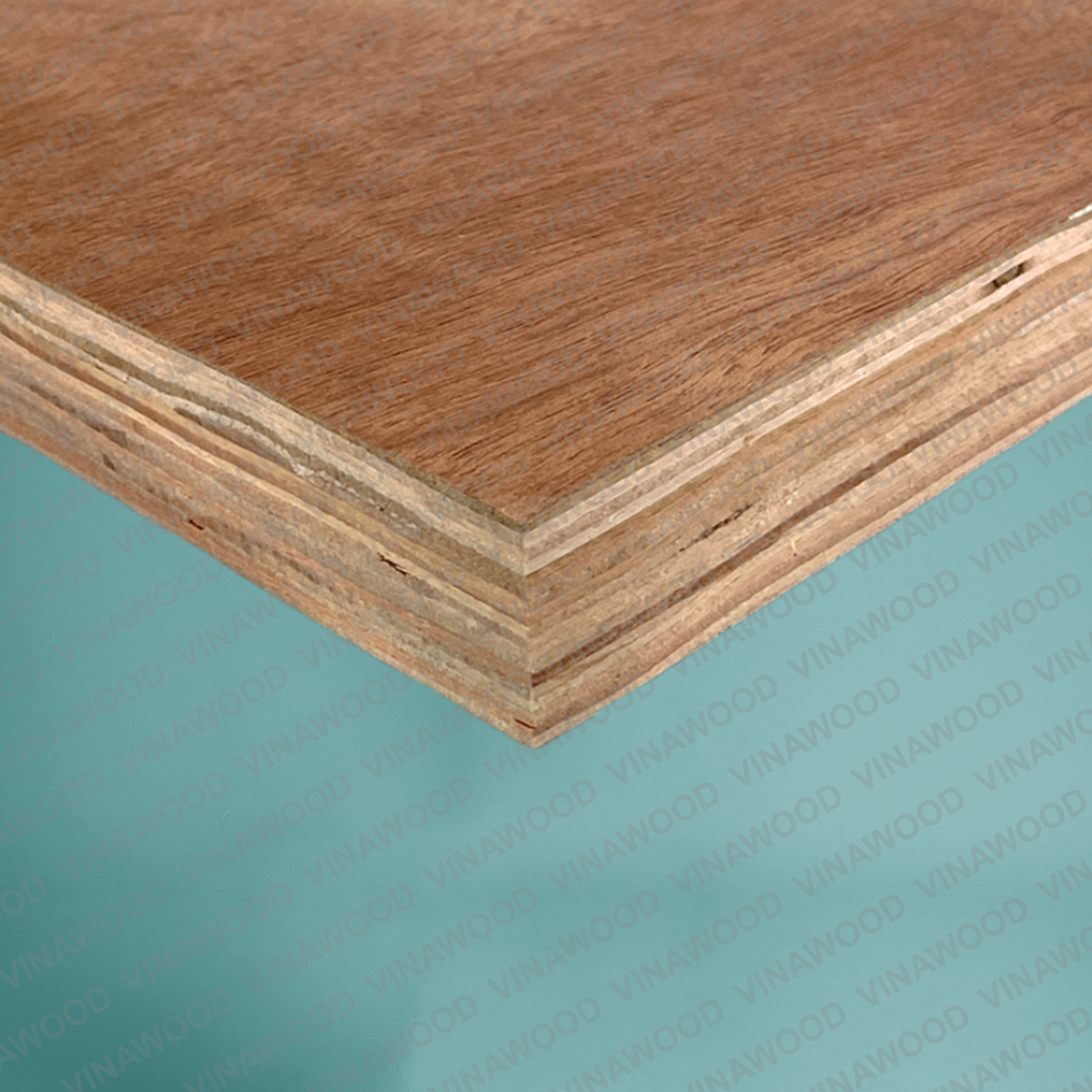
Sheet dimensions hold across grades, but the thickness range each type actually stocks differs. Softwood plywood such as pine and fir ships mostly as 4 × 8 in the full 6 to 25 mm ladder, with the longer 4 × 10 and 4 × 12 panels available for commercial runs. Hardwood plywood concentrates on the cabinet thicknesses, 12 to 18 mm, in both 4 × 8 and 5 × 5.
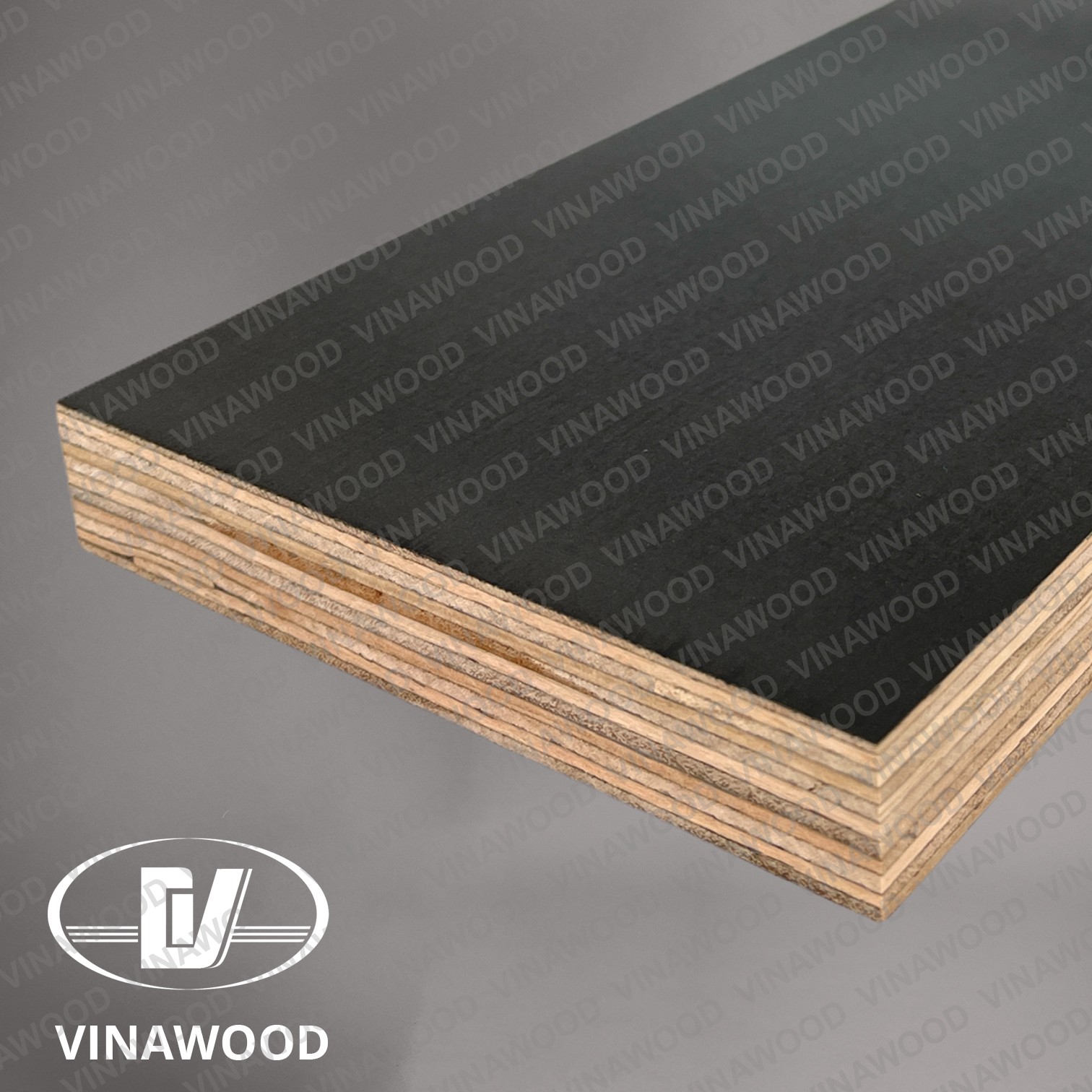
Marine plywood uses the same 4 × 8 footprint as ordinary plywood; the difference is the bond and the core, not the dimensions. It is a water-resistant WBP-bonded panel with tighter veneer grading and fewer core voids, built for humid and splash-exposed work rather than sustained immersion. Film-faced formwork plywood also holds the standard sheet size, with 12 mm and 18 mm the working thicknesses for concrete forming. For a phenolic-faced formwork panel at the top of that envelope, the Vinawood Pro Form line is a WBP phenolic-bonded sheet rated to EN 636-3 (Class 3), good for up to 20 reuse cycles. Regional dimensional quirks do appear at the commodity end, particularly the 5, 10, and 11 mm ordinary-plywood variants common in Southeast Asian retail; those, and the local peso pricing that goes with them, are covered in the Philippine sizes guide.
Plies and core construction
Two panels of the same 18 mm thickness are not always equal. Strength scales with the number of veneer plies, not the overall dimension. A 9-ply 3/4″ sheet resists deflection better than a 5-ply 3/4″ sheet in the same species, which is why ply count earns as much weight in a shelving or subfloor spec as thickness does.
Core construction shifts the number again. Veneer core, thin sheets cross-laminated at opposing grain angles, is the standard build across both ordinary and marine grades. Lumber core runs stiffer and shows up in long shelves. MDF core stays flat and dimensionally stable for paint-grade work but fails in moisture. Particleboard core is the cheapest and the weakest, fine only for low-load interior panels. Where a load or a visible edge is involved, specify veneer or lumber core. The companion guide on plywood grades A, B, C, D covers the face-veneer quality that sits alongside ply count in the spec.
Sheet weight and handling
Size drives weight, and weight drives how the panel gets moved. A 4 × 8 × 3/4″ hardwood sheet lands around 27 to 32 kg (60 to 70 lb), enough to make it a two-person carry on site; the same sheet in softwood runs lighter. The EU 1250 × 2500 mm panel weighs roughly 5% more than the Imperial sheet at the same thickness and density, purely because it covers more area. For the full breakdown by species, glue system, and format, see the plywood weight reference.
How to verify what you are buying
Two checks at the stack, before payment, catch most problems.
Caliper three or four sheets at random. A nominal 1/2″ panel should read between 11/32″ and 15/32″ (8 to 12 mm). A reading well outside that band may indicate the sheet is not the thickness on the label, or that it was graded to weight rather than dimension. Run the same check on 1/4″ (~7/32″, 5 to 6 mm) and 3/4″ (~23/32″, 17 to 18 mm).
Ask for the bond grade. A panel sold as marine or exterior should carry documented WBP or EN 314 Class 3 bond evidence. If the supplier cannot produce a spec sheet or a sample test result, the panel may be an ordinary sheet wearing a moisture-rated label. From our own export volumes into Asia and North America, the pattern is consistent: buyers who caliper the stack and ask for the bond certificate get the panels they ordered, and the ones who skip both spend the next week sorting mixed-thickness pallets back at the shop.
About Vinawood
Vinawood has manufactured plywood in Vietnam since 1992 and exports to more than 55 countries, with every sheet individually inspected before it loads. Standard production covers both the 1220 × 2440 mm and 1250 × 2500 mm formats in 12 to 21 mm, so buyers can match the sheet size their market specifies rather than adapting a cut plan around a fixed format. The range spans ordinary structural plywood, marine and WBP-bonded grades for moisture-exposed work, and phenolic film-faced formwork plywood for concrete pours. FSC chain-of-custody, ISO 9001, and CARB Phase 2 certification are available on request. For container-quantity buyers, contact us through vinawoodltd.com for a size and spec match against your project.
Category
guides
Related Markets
Related Countries
Related Products
▶Sources & References (2)
- EN 315 — Plywood. Tolerances for dimensions — European Committee for Standardization (CEN) (2000)
- EN 314 — Plywood. Bonding quality — European Committee for Standardization (CEN) (2004)