Concrete Form Plywood: Types, Overlay and Bond Class
Concrete form plywood: HDO, MDO/MatteFace and film-faced types, sizes, bond class and Vinawood reuse maxima. Est. 1992. No invented GSC position.

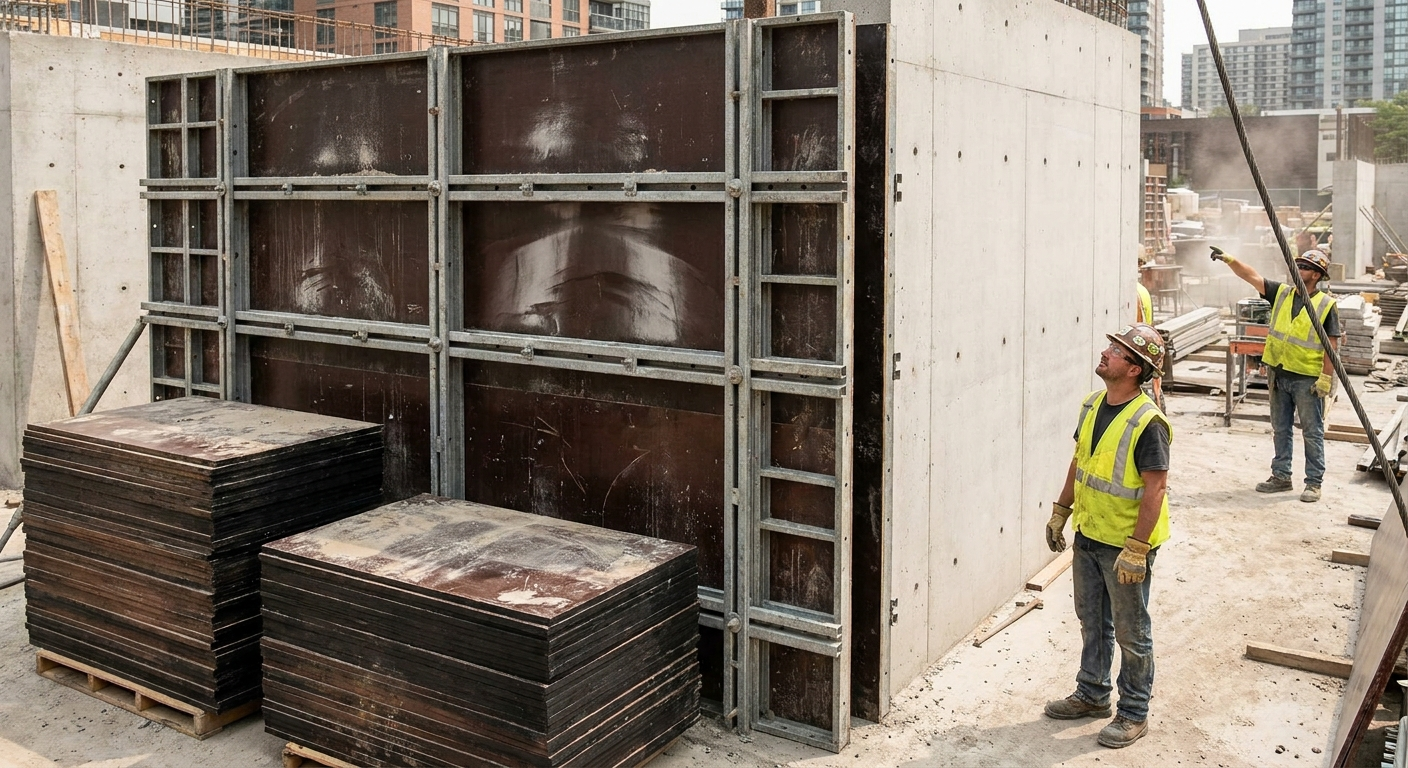
Concrete form plywood is the panel that holds wet concrete to a line. Foundation, slab, shear wall: the sheet on the form face decides the cast surface, the cycle speed, and how many pours you get before the stack is scrap. Choose on overlay and bond class, not on a photo of a brown sheet.
This guide covers the main types used on North American jobs: APA-style BB/OES plyform, overlay grades searched as HDO and MDO, and film-faced phenolic boards. A forming panel is a core, an overlay, a bond class, and an emission class. The RFQ has to name all four or the quote is on an unnamed sheet. UK and India readers looking for the same product under another name should start at the shuttering plywood guide.
What Is Concrete Form Plywood?
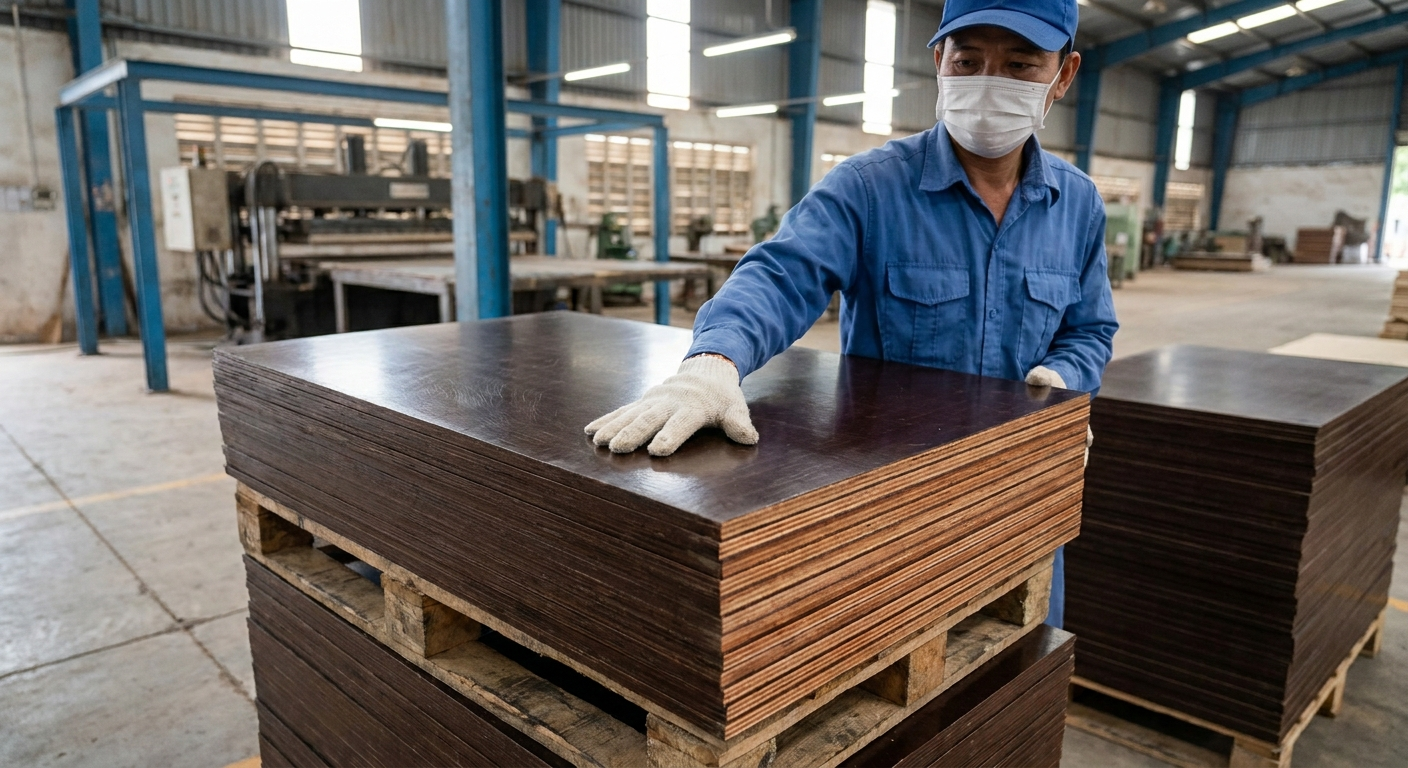
Concrete form plywood (plyform, forming plywood, shuttering plywood) is a structural panel built to take the hydrostatic pressure of a pour and leave a consistent face. Ordinary sheathing is not that product. A formwork sheet needs:
- A water-resistant WBP core bond (MUF at EN 636-2, or PF at EN 636-3)
- An overlaid or sealed face so concrete releases
- Balanced plies so the sheet does not banana after a few wet-dry cycles
- Sealed edges. Cut end-grain is where water walks in.
North America says concrete form plywood. The UK and Australia say shuttering or formply. Export catalogues say film-faced or phenolic plywood. Same job. Spec the glue and the overlay, not the nickname.
"Melamine" on a forming quote is three different things. MUF in the core. A lighter face film. A printed decorative laminate on furniture. Name which one. Form Extra is MUF in the core and phenolic on the face. It is not an interior kitchen board, and it is not Class 3.
Types of Concrete Form Plywood
Four families show up on take-offs. Budget, reuse target, and finish quality pick the family. Reuse figures below are Vinawood maxima under good site practice, written as "up to N".
1. Standard BB/OES Plyform (Class I and II)
APA Plyform Class I and Class II is the North American baseline: sanded softwood faces, exterior glue, wood-grain print on the concrete. Fine for buried work. Vinawood does not sell this SKU. Typical site life is a handful of pours if you oil it. Do not treat it as an overlay panel. CDX and other sheathing grades are even shorter. They swell at the edge, print the grain, and fail the second or third wet week. If the concrete will be seen, skip this family.
2. MDO Plyform
Buyers searching MDO plywood for forms are usually looking for a matte overlay that strips clean. Two products share that search. Kraft-paper MDO is a paint and signage overlay. It is not the formwork CTA on this page. The formwork product is MatteFace Plywood (MTF): a matte phenolic surface film, reuse up to 15. Soft bridge: buyers often search for MatteFace as MDO formwork plywood. Not kraft paper. Not paintable. Not signage. Overlay comparison lives on HDO vs MDO plywood.
3. HDO Plyform
HDO plywood uses a high-density overlay rather than a decorative film. It is the North American fair-face overlay. Vinawood HDO Basic reuses up to 10. HDO Premium and Premium HD reuse up to 20. Grade names and the collection sit at HDO plywood.
4. Film-Faced / Phenolic plywood
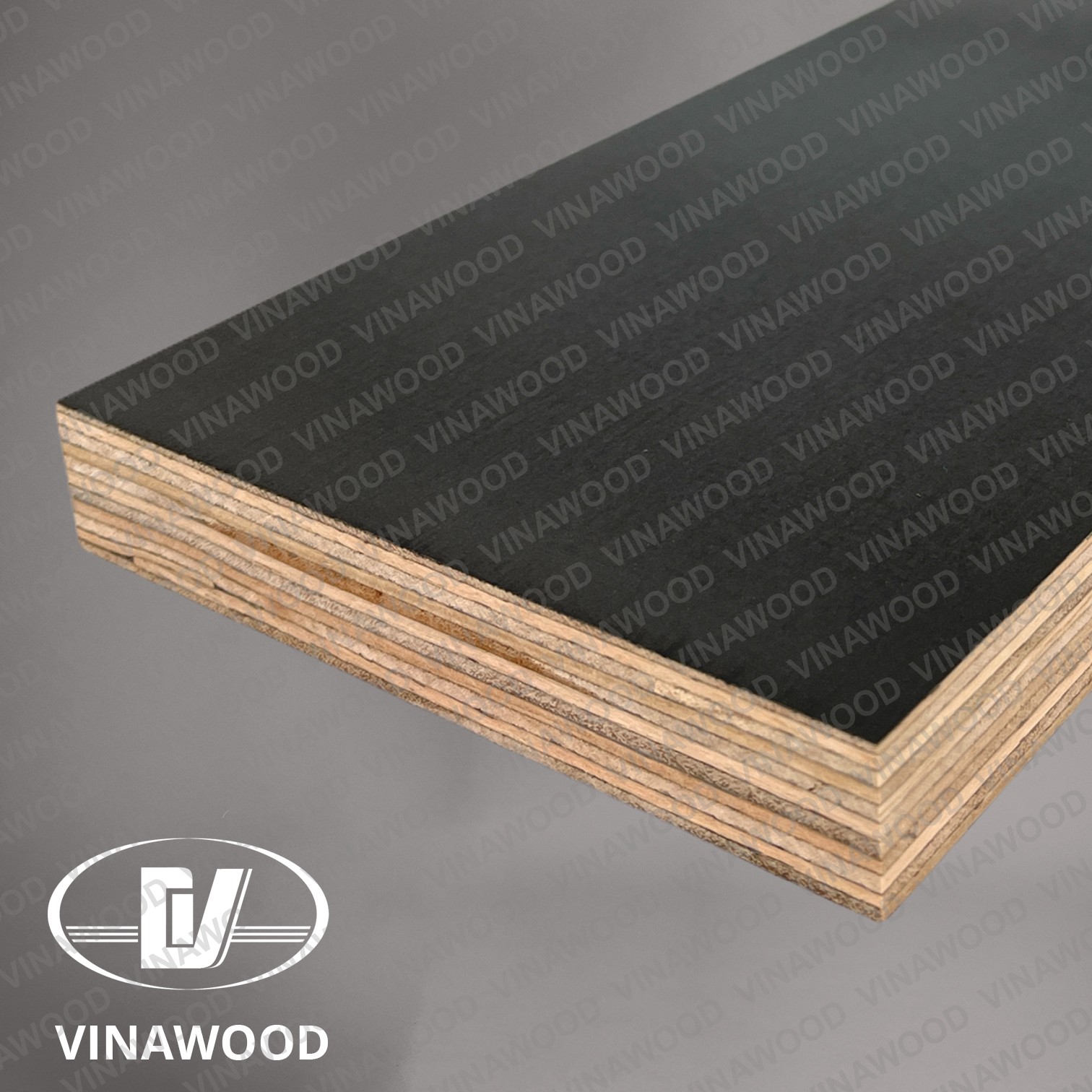
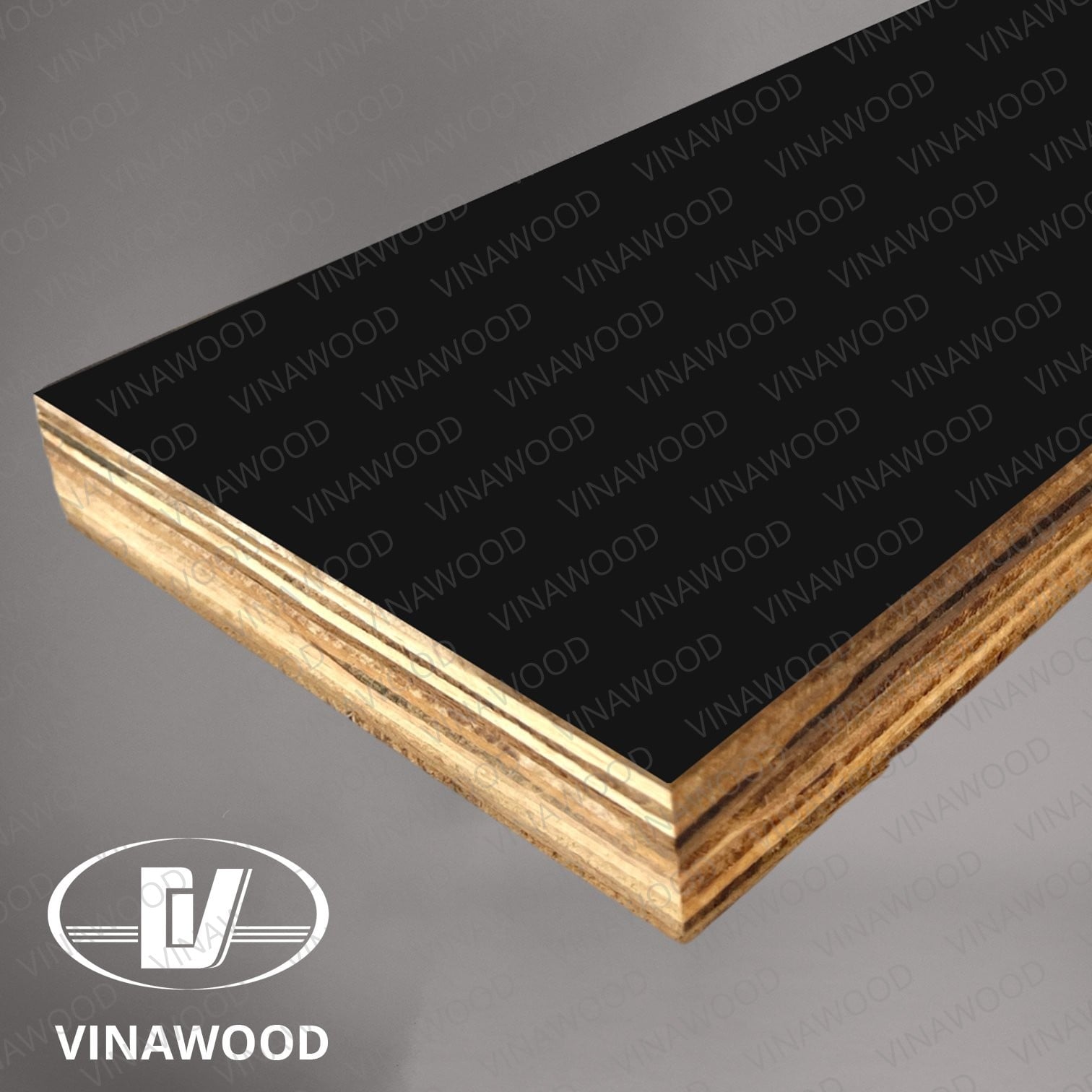
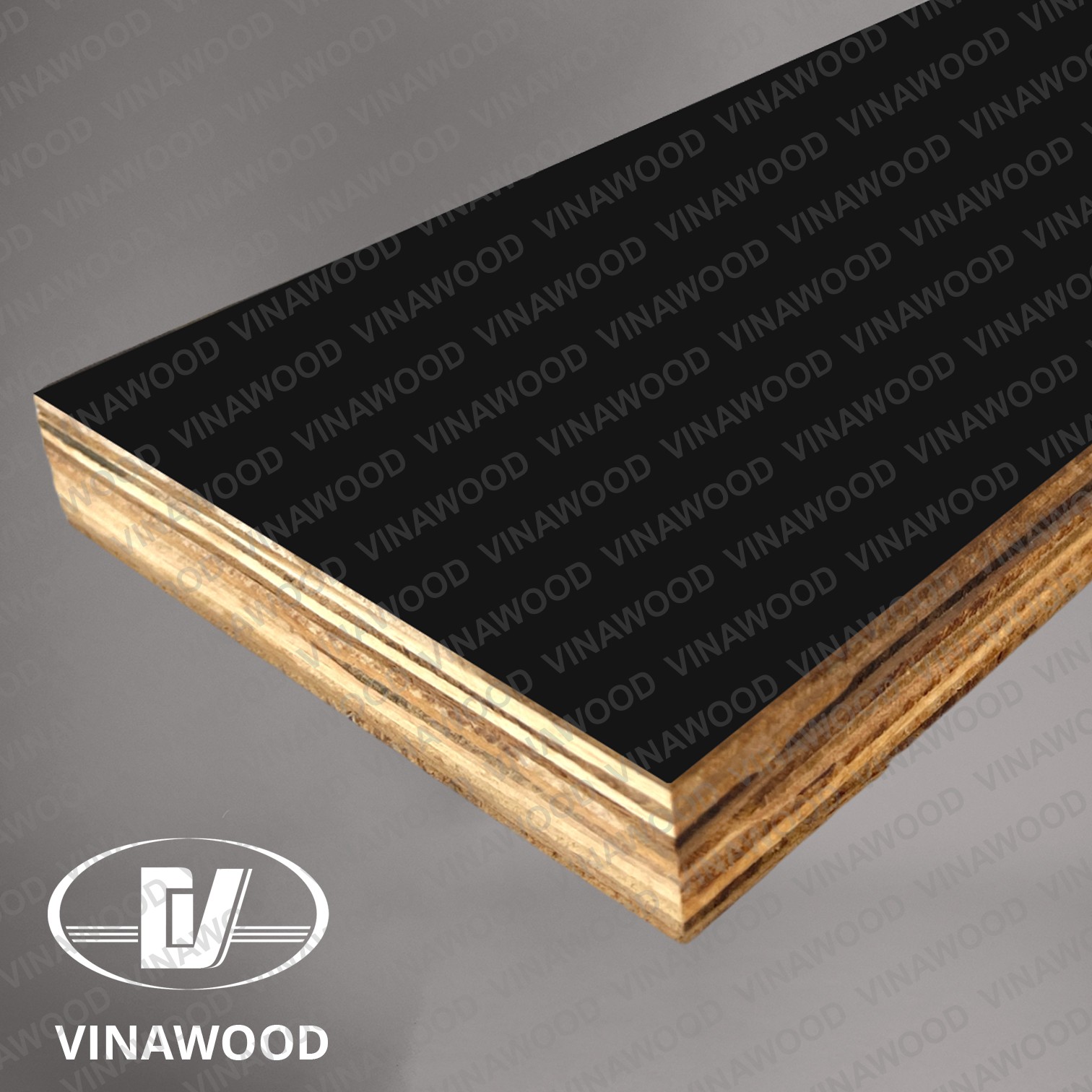
Film-faced panels dominate Europe, Asia, the Middle East, and a large share of export formwork. A phenolic resin film is hot-pressed onto the faces. Split the film from the core bond. Pro Form is PF / EN 636-3, reuse up to 20. Pro Form Lite is the same Class 3 family with a 165 g/m² phenolic face film, mixed-grade plantation core, reuse up to 15. Form Extra carries a phenolic face over Superior Glue MUF at EN 636-2, reuse up to 15. It is not Class 3. Form Basic shares Extra's face film at up to 10. Humid or wet-site work prefers a sealed film over bare veneer.
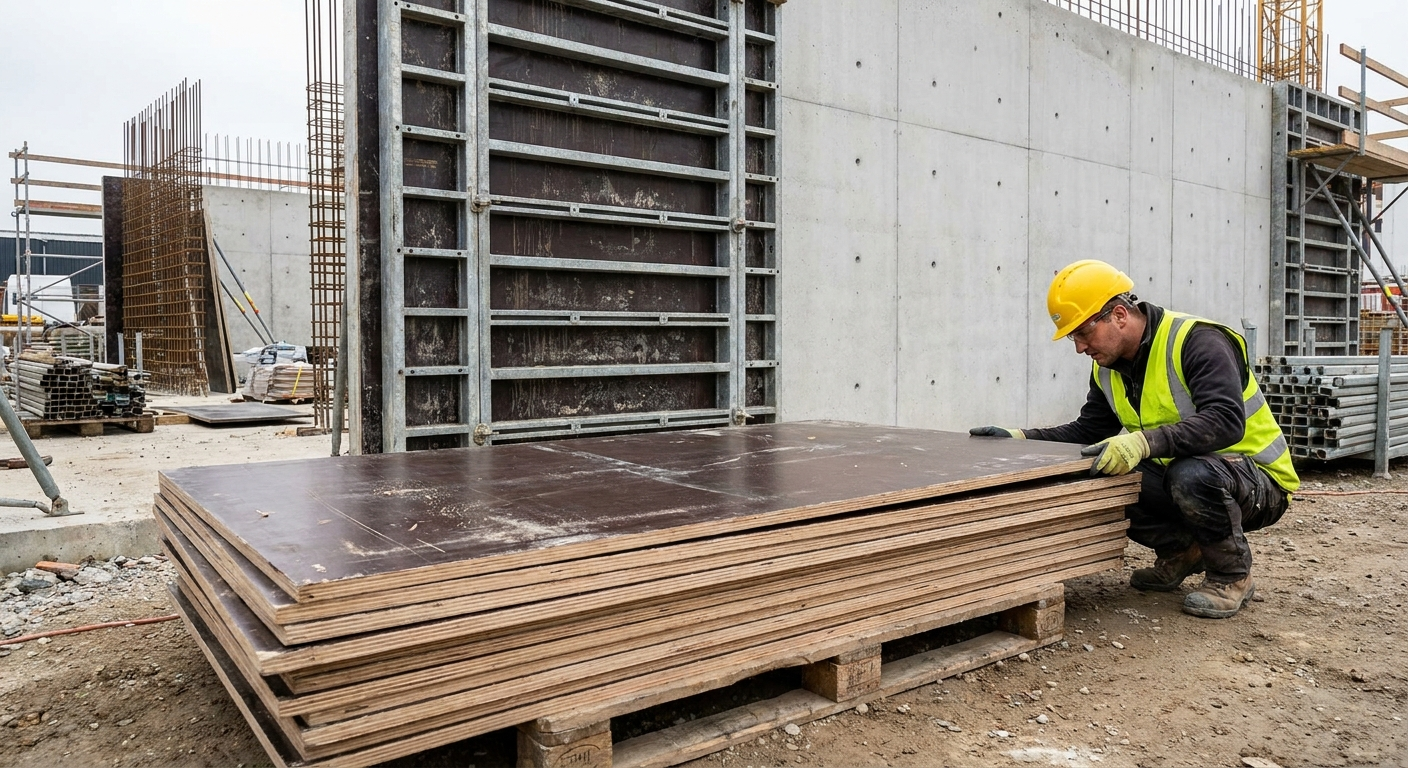
P-Form is polypropylene, not Pro Form. Consply is commercial Bintangor, not a film-faced formwork grade. If a quote uses those names as if they were Class 3 phenolic, send it back.
Concrete Form Plywood Specifications Compared
| Type | Face | Reuse | Core bond | Best application |
|---|---|---|---|---|
| BB/OES Plyform Class I | Sanded softwood veneer | a handful of pours | Exterior WBP | Foundations, footings (not a Vinawood SKU) |
| MatteFace (searched as MDO) | Matte phenolic surface film | up to 15 | formwork overlay | Architectural walls, matte strip |
| HDO Basic | High-density overlay | up to 10 | WBP phenolic (PF), EN 636-3 | NA overlay, shorter programmes |
| HDO Premium / Premium HD | High-density overlay | up to 20 | WBP phenolic (PF), EN 636-3 | Exposed architectural concrete |
| Form Extra | Phenolic face film | up to 15 | MUF, EN 636-2 | Export film-faced, not Class 3 |
| Pro Form Lite | Phenolic face film 165 g/m² | up to 15 | WBP phenolic (PF), EN 636-3 | Between Extra and Pro Form |
| Pro Form | Phenolic face film | up to 20 | WBP phenolic (PF), EN 636-3 | Fair-face, high-cycle Class 3 |
Standard Sizes and Thicknesses
North America still buys 4 ft × 8 ft (1,220 × 2,440 mm). The workhorse thickness is 3/4 inch (18–19 mm) at 12–16 inch stud spacing. Also seen: 5/8 inch (15–16 mm) for lower pours, 1 inch (25 mm) for heavy walls, 1-1/8 inch (28 mm) for slab decks.
Metric markets add 1,250 × 2,500 mm as a stock film-faced size, plus 12 / 15 / 18 / 21 / 25 mm. European wall-form systems often prefer 2500×1250 because the module matches the frame. North American gangs still live on 2440×1220. Order the size the frames were built for. Mixing the two on one wall leaves a lip. Australian F17 formply notes live on form ply Australia.
Thickness tolerance matters more than most take-offs admit. A sheet that is 0.8 mm fat next to a sheet that is 0.8 mm thin is a step in the concrete. Ask for EN 315 on film-faced lots. Calibration sanding before the film goes on is what keeps that number honest.
How to Choose the Right Concrete Form Plywood
Four questions. Finish, reuse target, site moisture, and how you buy.
Step 1: Define the finish
Buried or clad concrete can live with BB/OES grain. Visible walls, columns, and decks need HDO, MatteFace, or a film-faced Class 3 sheet. The overlay you specify is the face you strip.
Step 2: Set a reuse target
Divide forming area by one sheet, then by pours. If you need more than about ten cycles, skip bare plyform. Map the number to the table: up to 10, up to 15, or up to 20. Site handling spends the life first. I have seen Premium-grade HDO retired at six pours because someone levered steel against the overlay corner.
Step 3: Climate is wet-site vs dry-site
Humid, wet-site yards punish bare veneer between cycles. A sealed film or overlay keeps water off the face. Edges still need paint after every trim. Water-resistant WBP is the glue language. No panel here is waterproof.
Step 4: Sourcing
Yard stock is fast. A Vietnam container is a spec-and-volume conversation. Lead times move with vessels and inspection slots. Do not plan a first pour off a blog. Cost-per-pour still beats a cheap sheet replaced mid-job. No dollar figures on this page. Packing list, mill test report, and DoP travel with the lot. If those three are missing, the overlay colour is just paint.
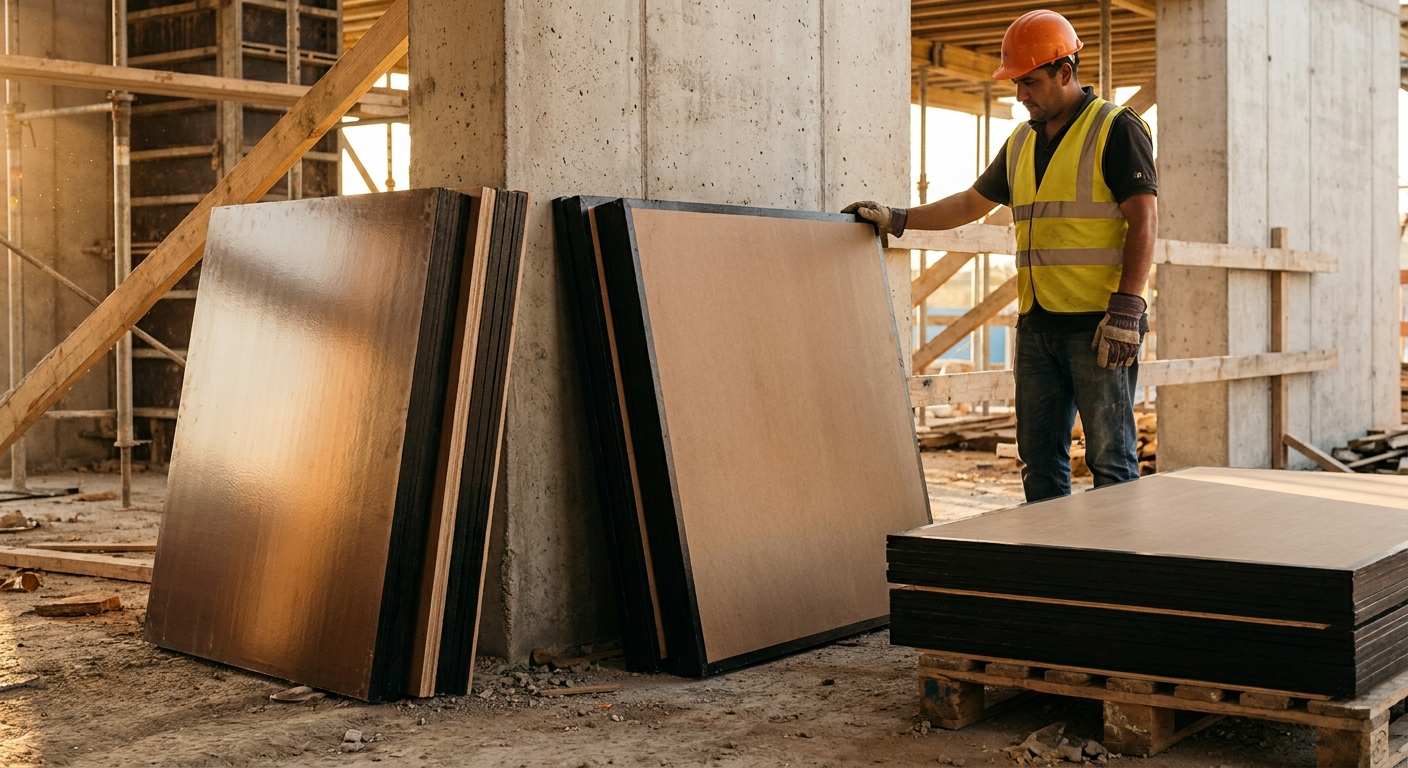
Release agent is not optional, even on a new film. Diesel and waste oil attack overlays and stain the pour. Thin and even. Plastic scrapers at strip-out, not steel. Store on bearers, faces together, under cover. Those habits decide whether "up to 20" is a real number or a brochure line.
Vinawood range for concrete forming
Vinawood has manufactured plywood in Vietnam since 1992. More than 5,000 containers a year go to 55+ countries. Twelve-step process: peel, dry, glue, press, sand, overlay or film, seal, pack. Every sheet inspected. Cores are plantation-grown Acacia, Eucalyptus or Hevea. Film and HDO overlay go on after the panel is calibrated. An uncalibrated face telegraphs into the concrete. Bond tests run in-house against EN methods. Formaldehyde emission sits at CARB P2 / TSCA Title VI for US lots, EN 13986 on CE-marked lots.
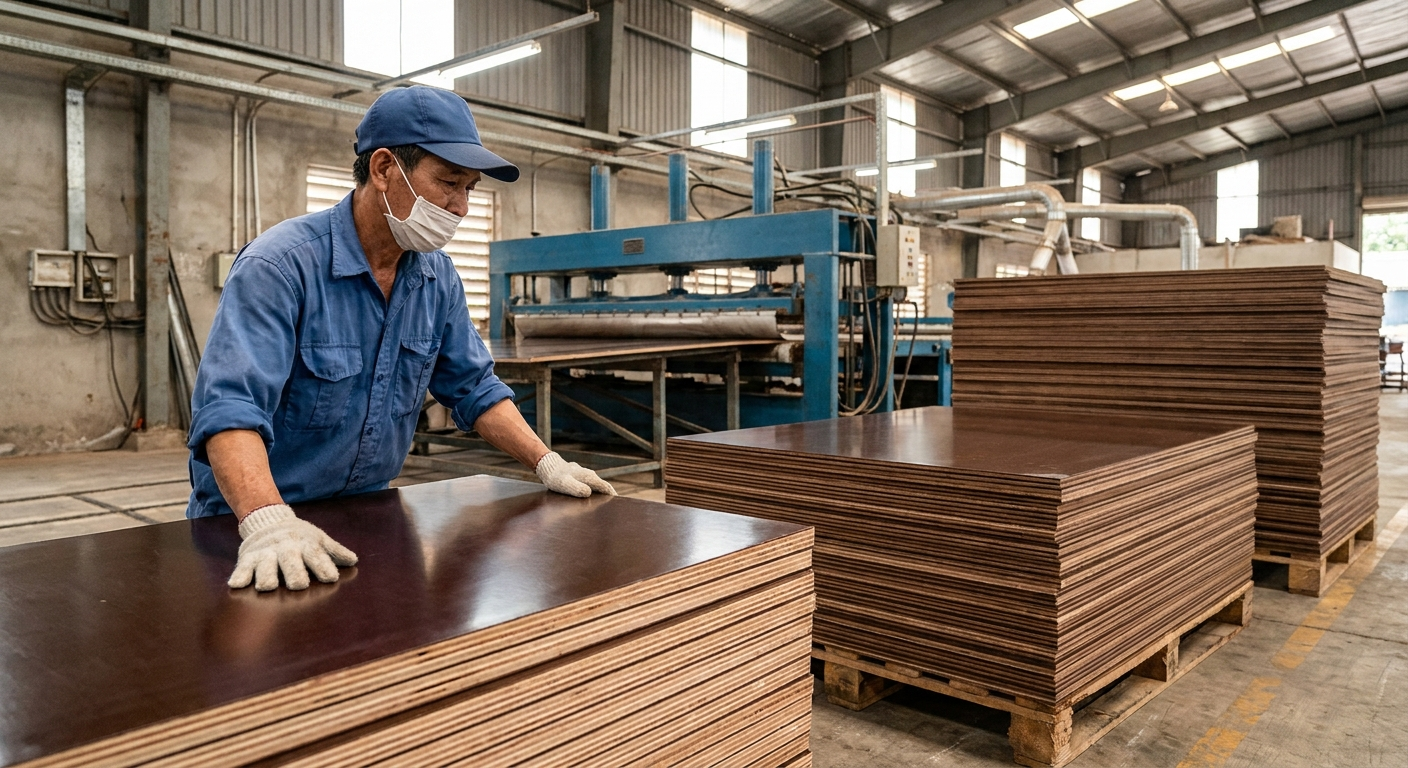
United States and Canada. HDO plywood for overlay formply practice. MatteFace when the search is MDO formwork and the job needs a matte phenolic strip, up to 15.
Europe, UK, Middle East, and other film-faced markets. Film-faced plywood in 2440×1220 and 2500×1250. Pro Form for Class 3 up to 20. Pro Form Lite for Class 3 up to 15 at 165 g/m². Form Extra for EN 636-2 up to 15. Do not call Extra Class 3 because the face is phenolic.
Put these on the RFQ:
- Overlay: HDO grade vs MatteFace vs film gsm (120 / 165 / 220)
- Bond class: EN 636-2 vs EN 636-3, and the glue name (MUF or PF)
- Size: 2440×1220 vs 2500×1250, plus thickness
- Emission class: CARB P2 / TSCA Title VI, or EN 13986 on the CE DoP
- FSC-COC if the project requires chain of custody
- Species: plantation-grown Acacia, Eucalyptus or Hevea
Vinawood has made plywood in Vietnam since 1992. Factory-direct, ISO 9001. Send the pour programme from the quotation form. No prices. No duty paragraph. The lot closes on the overlay and the DoP.
Category
guides