Shuttering Plywood: Types, Bond Class and Formwork Specs
Shuttering plywood for concrete formwork: types, bond class, sizes and Vinawood reuse maxima. WBP not waterproof. Class 3 = Pro Form, Pro Form Lite, HDO Standard, HDO Premium. Est. 1992, factory-direct, 55+ countries.
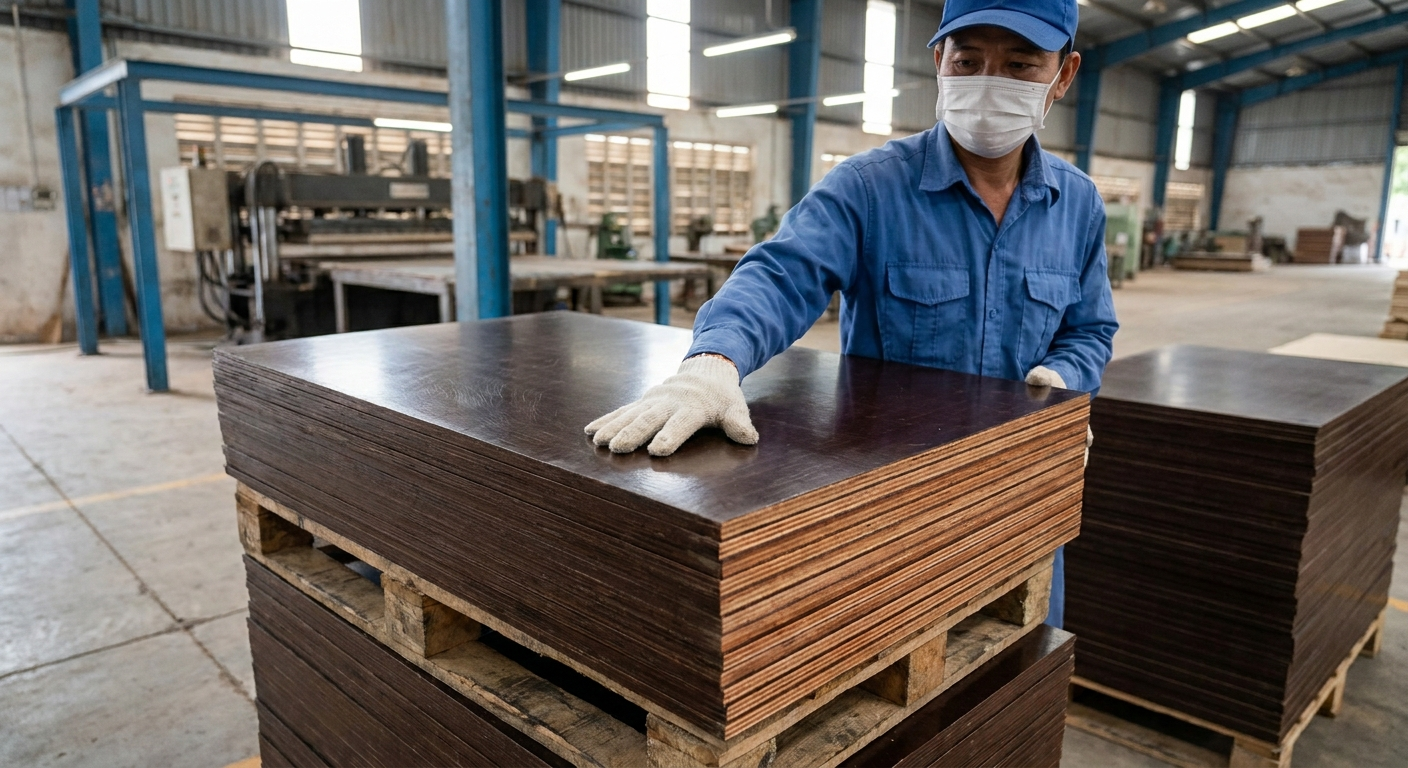
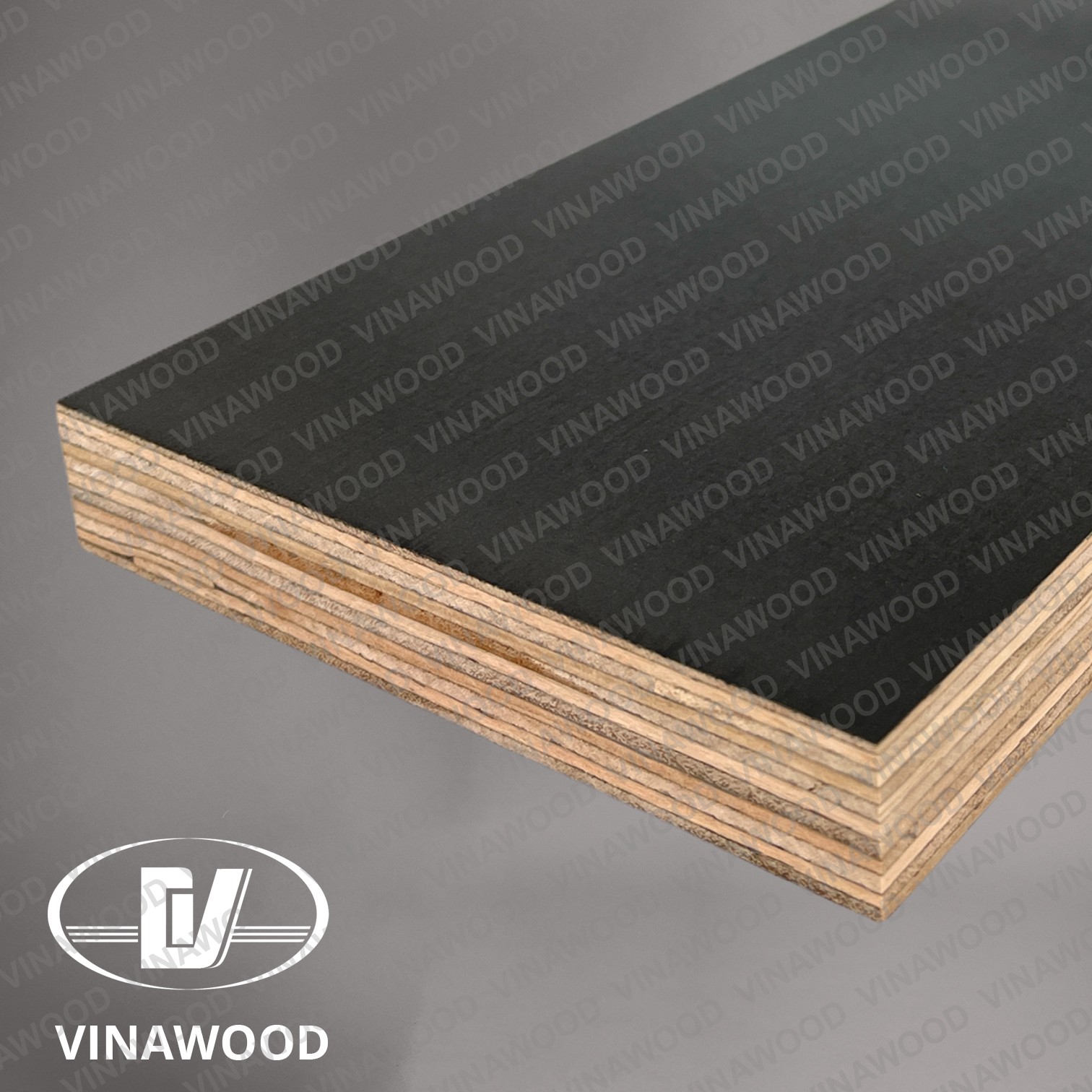
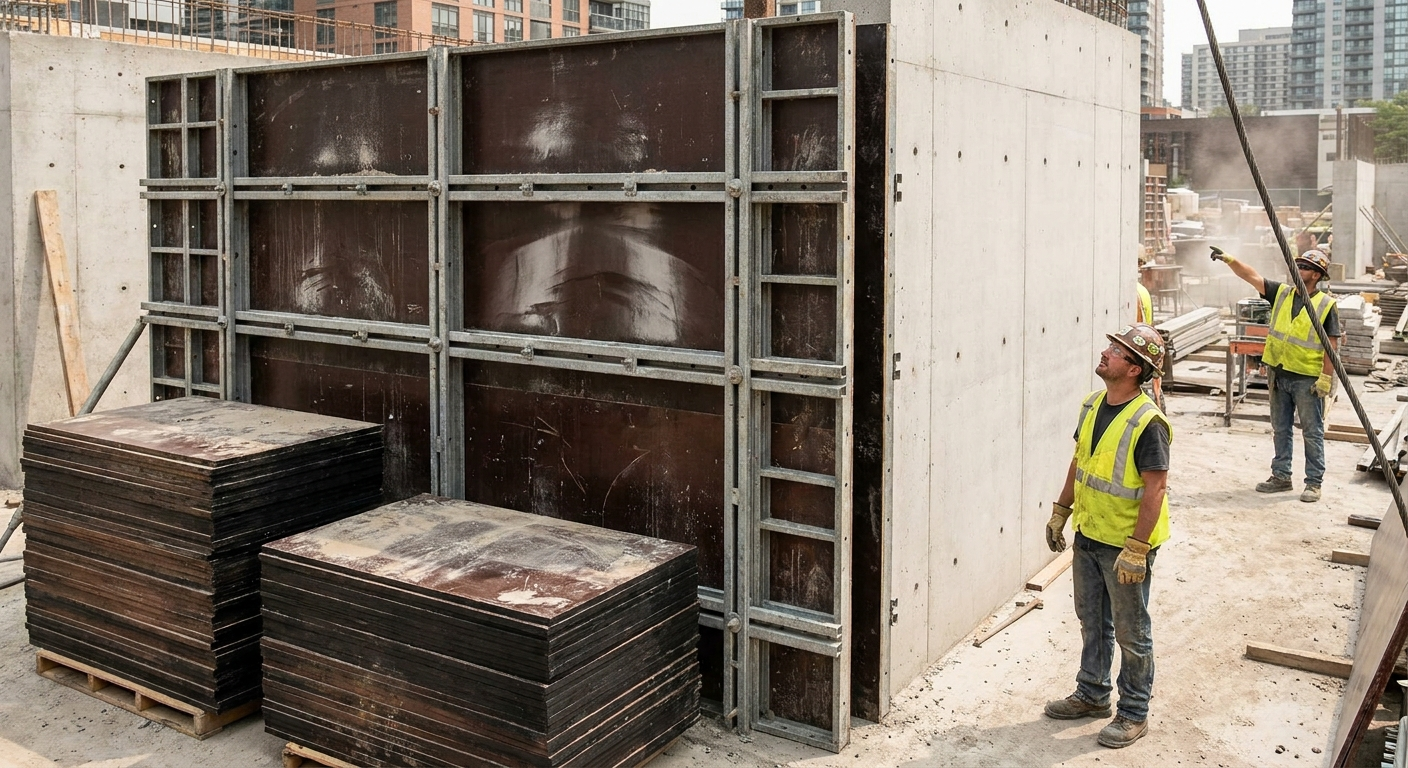
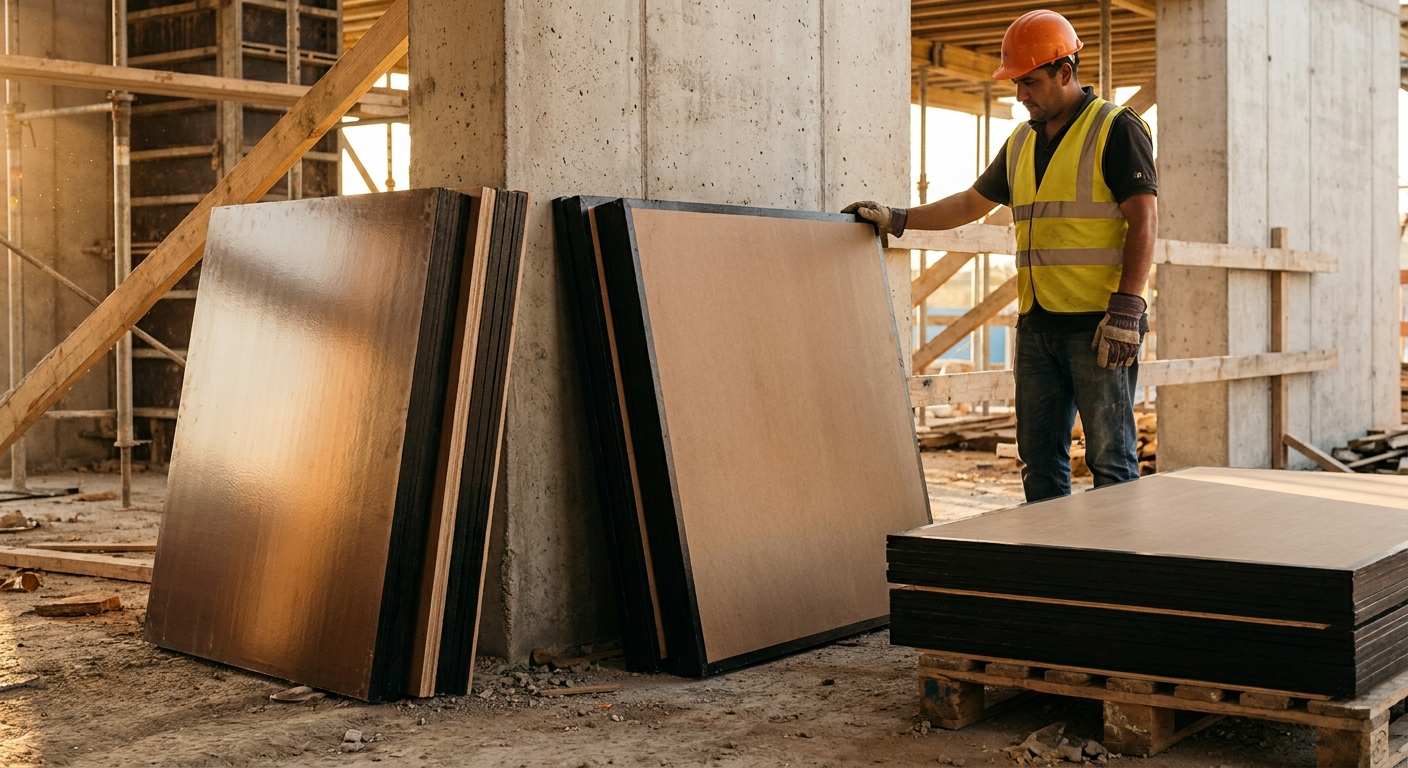
Shuttering plywood is the sheet crews pour against. It holds wet concrete long enough for the lift to stand, then comes off so the gang can move. Call it the shutter, the form face, or the mould — same job. The panel has to take hydrostatic pressure, stay flat for a clean architectural face, and release without the plies opening at the edge.
Markets rename the same job. India and the UK say shuttering plywood or shuttering ply. Australia says form ply. North America says concrete form plywood or plyform. Much of the Middle East and Southeast Asia say film-faced plywood. The label changes; the decision does not. Overlay, core bond, size, and emission class still decide finish quality and pour count, so they belong on the RFQ before price. For the North American plyform lens, see concrete forming plywood.
Panel choice sets the concrete face the architect will see, how many times the sheet can be reused under decent site practice, and therefore the true cost per pour. Cheap sheets that fail early are the expensive ones. Vinawood reuse figures are maxima under good practice — write them as "up to N" on the RFQ.
How shuttering plywood works in concrete formwork
Wet concrete exerts hydrostatic pressure on the form faces. That pressure rises with pour height and pour rate. A typical three-metre wall at ordinary rates can push past 40 kN/m², and if the panel deflects the wall is out of tolerance before anyone notices the film colour. The face also has to release cleanly. A rough or absorbent surface bonds to the concrete, so stripping damages both the pour and the sheet.
Ordinary construction plywood is not a substitute for that job. Those boards often use MR (moisture-resistant urea) adhesive. Under a sustained wet pour the veneers open, the panel loses stiffness, and the face prints unevenly. Water-resistance behaviour versus the "waterproof" claim is covered on is shuttering plywood waterproof.
One naming trap still trips site orders: centring ply versus shuttering ply. Same panel family. Shuttering is the vertical form for walls, columns, and beams. Centring (or centering) is the horizontal soffit for slabs. Both want a water-resistant WBP bond, a clean release face, and stable thickness under wet cycling. IS 303 still prints the adhesive group as BWP. That is the Indian specification name for the glue class. It is not a claim that the board is a sealed tank.
Types of shuttering plywood
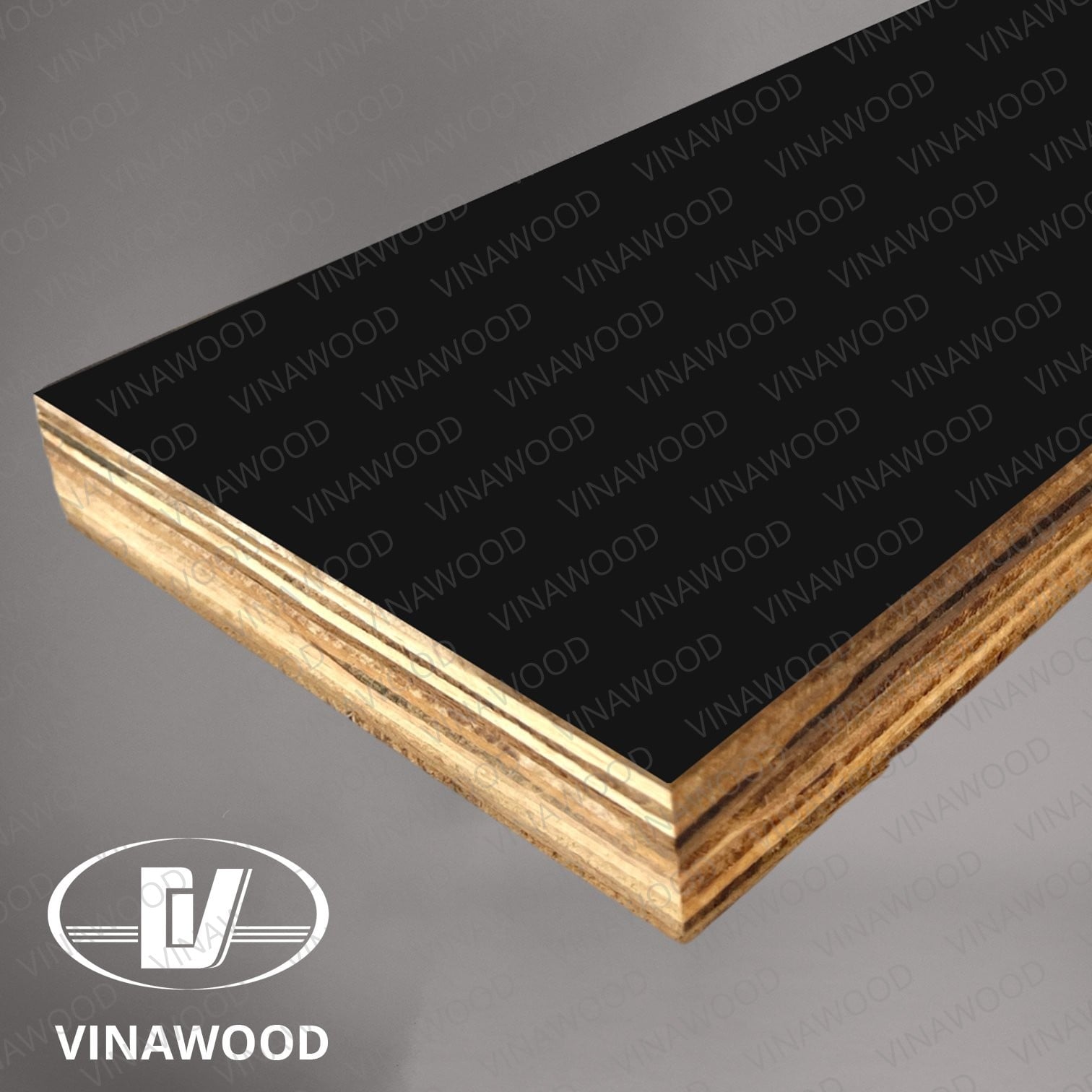
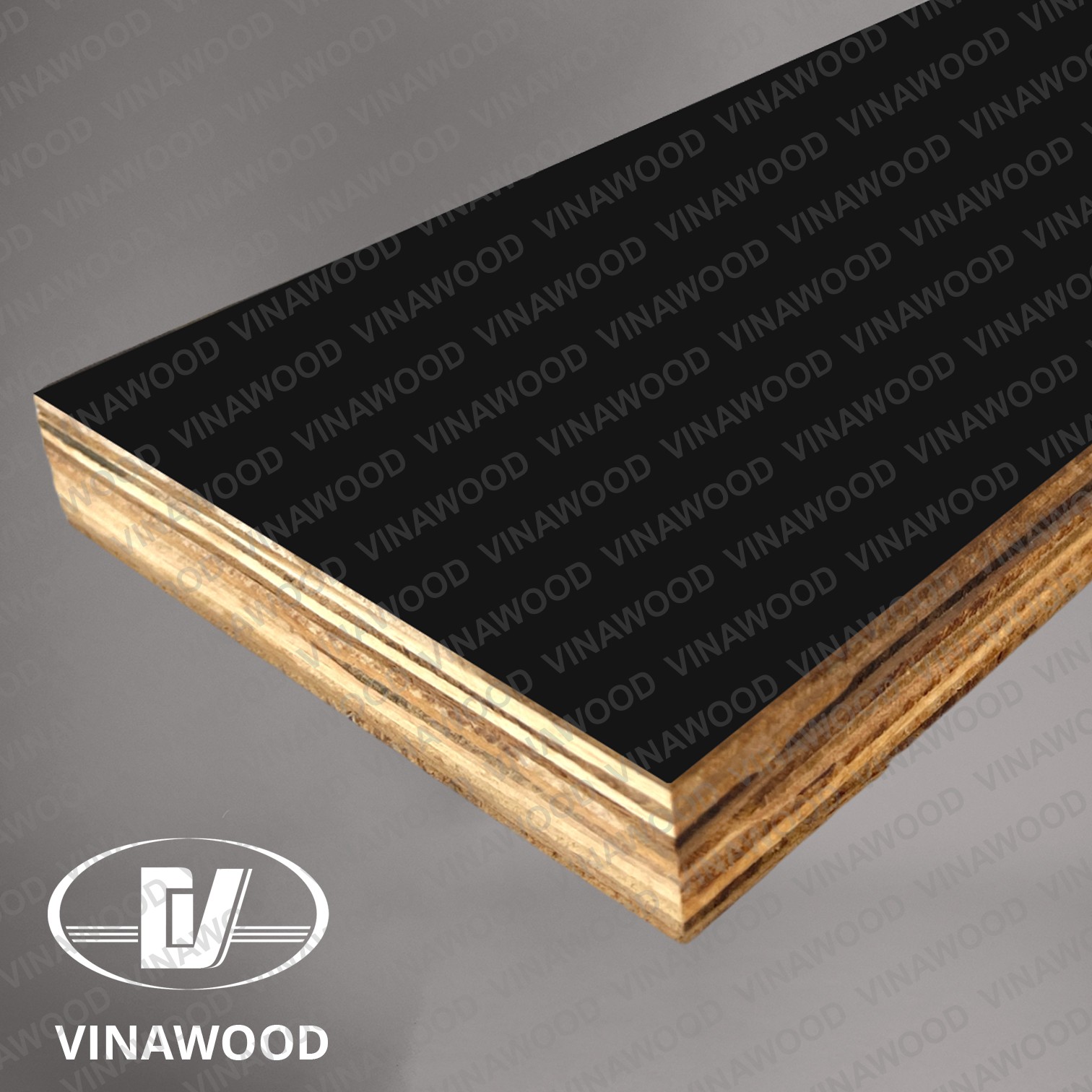
Match the overlay and the glue to the pour programme. A catalogue photo will not tell you that. Face film and core resin are separate decisions. A heavier film on an MUF core does not become Class 3 just because the sheet looks dark brown.
| Type | Face | Core bond | Reuse (Vinawood maxima) | Best for |
|---|---|---|---|---|
| Plain sanded veneer | No film | MR or WBP | single-use to a handful of pours | Edge forms, light residential |
| Eco Form Plus | Phenolic face film | MUF, EN 636-2 | up to 8 | Entry film-faced programmes, short cycles |
| Form Basic | Phenolic face film | MUF, EN 636-2 | up to 10 | Shorter WBP programmes |
| Form Extra | Same phenolic face film as Form Basic | Superior Glue MUF, EN 636-2 | up to 15 | Humid-condition formwork. Not Class 3. |
| Pro Form Lite | Phenolic face film 165 g/m² | WBP phenolic (PF), EN 636-3 | up to 15 | Between Form Extra and Pro Form. Mixed-grade plantation core. |
| Pro Form | Phenolic face film | WBP phenolic (PF), EN 636-3 | up to 20 | Fair-face, high-cycle Class 3 |
| HDO Basic | High-density overlay | WBP variant, EN 636-2 / Class 2 | up to 10 | NA formwork where Class 2 bond is enough. See HDO plywood. |
| HDO Standard / HDO Premium | High-density overlay | WBP phenolic (PF), EN 636-3 | Standard mid-cycle; Premium / Premium HD up to 20 | NA architectural concrete at Class 3 |
| MatteFace Plywood (MTF) | Matte phenolic surface film | formwork overlay | up to 15 | NA overlay equivalent. Buyers often search MDO; the formwork product is MatteFace. Overlay differences: film-faced vs MDO vs HDO. |
"Melamine" on a shuttering quote means three different things. It can be the MUF resin in the core. It can be a lighter face film. It can be a printed decorative laminate on furniture carcasses. Bare "melamine" is useless on an RFQ. Name which one. Form Extra is MUF in the core, phenolic on the face, EN 636-2. It is not Class 3, and the longer reuse comes from glue chemistry, not from a heavier face film.
Film colour is not a grade. Brown and black films are both phenolic-impregnated paper. The number that matters is gsm plus the core resin. A 165 g/m² film on PF (Pro Form Lite) is Class 3 at up to 15. A phenolic film on MUF (Form Extra) is still EN 636-2. Contractors who buy "black film" without naming the glue get a surprise on the third wet week.
Standard sizes and thicknesses
The usual shuttering sheet is 1220 × 2440 mm (4 ft × 8 ft). The metric sister, 1250 × 2500 mm, is common in Europe and the Middle East and is a stock format on Vinawood film-faced lines. Custom sizes exist for modular systems. Ask before you assume the gang will fit the sheet.
Thickness follows pour height and stud spacing. 12 mm suits slab edges, kickers, and small beam sides, not a full-height wall sheet unless the framing is very tight. 15 mm covers medium slabs, low walls, and columns with closer centres. 18 mm is the workhorse for walls and columns; most contractors who ask for "shuttering ply" mean this. 21 mm / 25 mm belong on deep lifts, foundation walls, and any pour where deflection control is tight. Application sizing notes also live on plywood for concrete forms.
IS 303 and EN 315 both care about thickness tolerance. Panels that wander by more than half a millimetre open joints, bleed, and leave a step in the concrete. That complaint usually traces back to calibration, not to the film colour.
How to read a shuttering plywood specification
Five fields separate a real panel from a colour photograph. Write them on the RFQ. If the mill cannot name the resin, walk.
Face grade. A/B is one clean face. B/B is repaired both sides. Open defects on the concrete-contact face print through, so B/B or better is the shuttering floor.
Core bond. Split this from the film. WBP phenolic (PF) at EN 636-3 is Class 3: Pro Form, Pro Form Lite, HDO Standard, and HDO Premium. HDO Basic is Class 2 / EN 636-2. MUF at EN 636-2 covers Form Extra, Form Basic, and Eco Form Plus. MR urea is not shuttering glue.
Overlay and gsm. Film weight is grams per square metre. Vinawood Pro Form Lite is 165 g/m² phenolic face film. Heavier film usually lasts longer under abrasion. It does not turn an MUF core into Class 3.
Core species. Plantation-grown Acacia, Eucalyptus or Hevea. Hardwood-core export panels hold screws and stay flatter than a packing-grade core. Core voids are normal in hardwood-core plywood. They matter when they surface at an unsealed edge.
Edge sealing. Cut edges drink water every cycle. Factory edge paint, then reseal after every site trim. That single habit does more for reuse than a heavier film on a neglected sheet.
Reuse count: how many times can shuttering plywood be used?
Reuse is an "up to" figure. Site handling usually spends the life before the mill does. Vinawood maxima under good practice sit at Eco Form Plus up to 8; Form Basic and HDO Basic up to 10; Form Extra (MUF, EN 636-2), Pro Form Lite (PF, 165 g/m²), and MatteFace up to 15; Pro Form and HDO Premium / Premium HD up to 20.
Sheets die on site more often than they fail in the press. No release agent. Corners dragged on gravel. Stacks left on edge in the rain. Steel bars at stripping. Cuts left unsealed. I have watched return pallets where the bond was still sound and the film was shredded at the corners — a site file, not a glue file.
Cost-per-pour still beats a cheap headline. A higher-grade sheet that reaches its "up to N" window often lands cheaper per cycle than a light panel replaced mid-programme. No price figures on this page. Ask for a quote with the spec filled in.
Domestic mill vs Vietnam mill
India buyers often weigh a BIS-licensed domestic mill against a Vietnam export mill. Availability versus container economics is the real fork. It is not a brand shoot-out.
Domestic BIS mill. Local stock, no minimum container, short lead. Useful on small residential sites and on jobs that require the BIS mark on the sheet. Specify IS 303 BWP Grade (Group 1) for shuttering. MR Grade (Group 2) is the wrong adhesive group.
Vietnam mill. Vinawood has made plywood in Vietnam since 1992. Film-faced export grades ship with WBP test reports, CE / EN 13986 where marked, CARB P2 / TSCA Title VI for US-bound lots, and FSC-COC when the project asks. Vietnamese WBP is the performance equivalent of IS 303 BWP adhesive. It does not automatically carry a BIS licence. If the contract needs the mark, say so on the RFQ. If the contract is performance-based, a WBP mill report is the document that matters.
Small spot order, dealer counter: domestic is simpler. Commercial programme, 100+ sheets, repeated cycles: a Vietnam container is the usual total-cost conversation. Run the pour count against the grade table above.
IS 303 compliance: what India contractors need to know
IS 303 is plywood for general purposes. Group 1 is BWP Grade, phenolic / boiling-water adhesive group, the correct group for wet concrete contact. Group 2 is MR Grade, urea, interior-dry. Always write IS 303 BWP Grade on a shuttering buy. On site, look for the BIS stamp on Indian-origin stock.
Imported Vietnam panels are certified to WBP adhesive performance. That is water-resistant, weather-and-boil-proof as a glue test, not waterproof plywood. For UK and EU work the matching language is BS EN 636. EN 636-2 is humid / Class 2 (Form Extra, Form Basic, Eco Form Plus, HDO Basic). EN 636-3 is exterior / Class 3. Only Pro Form, Pro Form Lite, HDO Standard, and HDO Premium are Class 3.
Sourcing shuttering plywood: local vs import
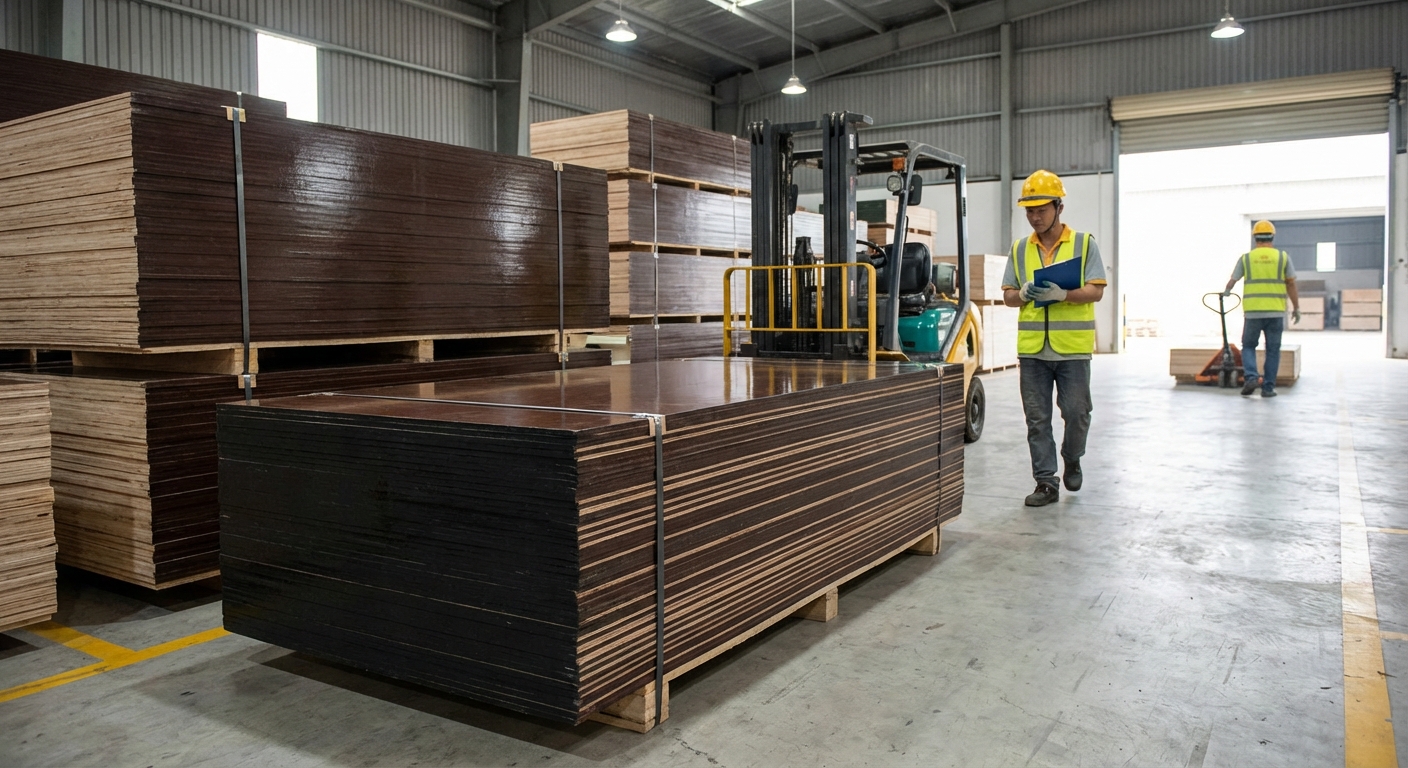
Local dealers win on speed and tiny lots. Vietnam factory-direct wins when the take-off fills a container and the spec is written down. Lead times move with vessels and inspection slots — do not plan a pour date off a blog paragraph. Packing lists, mill test reports, and the DoP travel with the lot. If the broker cannot read those three documents, the container sits.
Put these on the RFQ: plantation-grown Acacia, Eucalyptus or Hevea for species; EN 636-2 versus EN 636-3 plus the glue name (MUF or PF) for bond class; overlay plus gsm (or HDO / MatteFace overlay grade); size as 2440×1220 versus 2500×1250 plus thickness; emission class as CARB P2 / TSCA Title VI or EN 13986 on the CE DoP; FSC-COC if the project requires chain of custody.
Vinawood has manufactured plywood in Vietnam since 1992. Roughly 5,000 containers a year go to 55+ countries. Ready stock for local distributors sits in Toronto, Vancouver, Calgary, Montreal, Miami, Houston, and Baltimore. Twelve-step process. Every sheet inspected. ISO 9001. Send the pour programme and the bond class from the /rfq or the quotation form. No prices on this page. The lot closes on the DoP, not on the film colour.
Category
how-to