Shuttering Plywood India: IS 303 Grades, BIS Compliance & Contractor's Buying Guide
IS 303 BWP vs MR for Indian shuttering, what the BIS mark proves, mill-vs-trader diligence, and Vietnam film-faced WBP packs for private commercial RFQs — with Vinawood reuse maxima written as up to N.
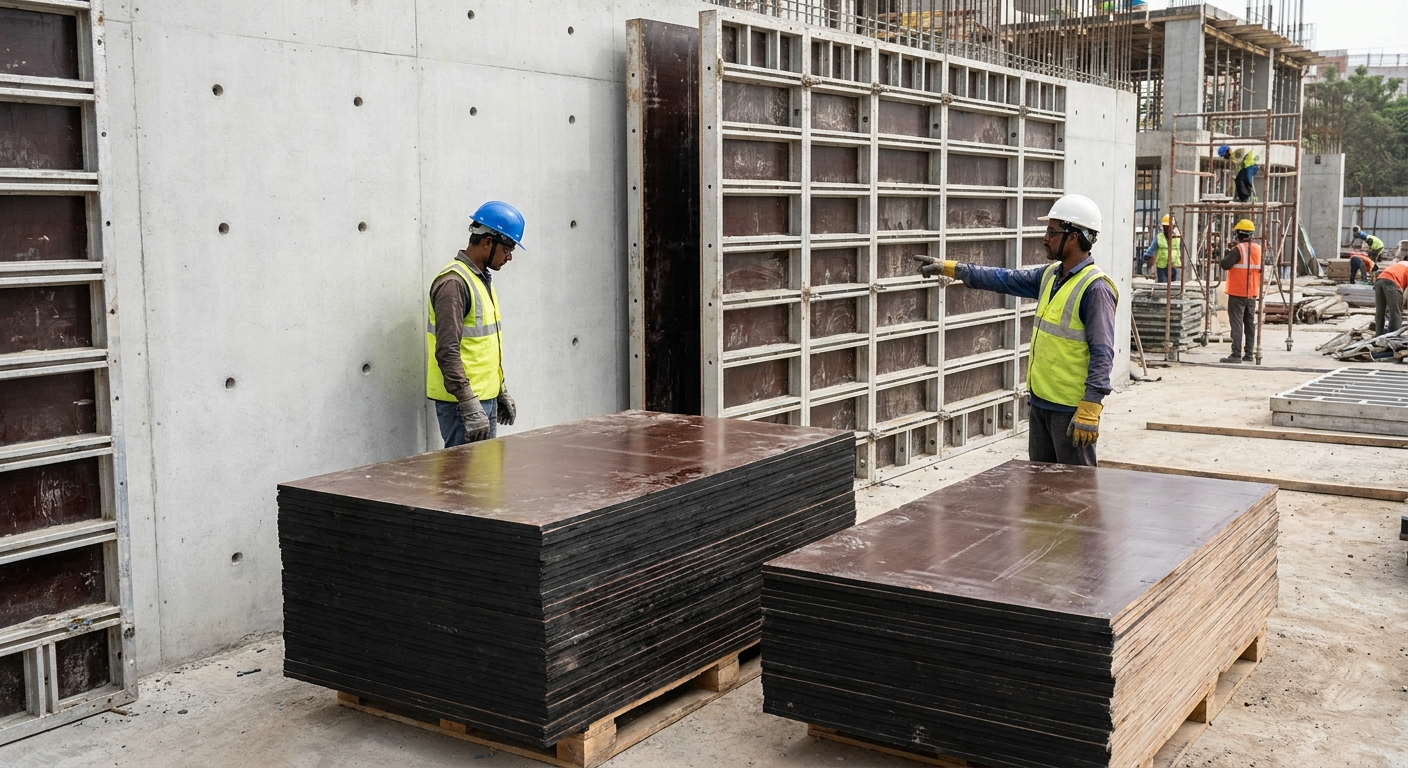
On an Indian RCC site, shuttering plywood is the temporary mould that holds wet concrete for walls, columns, beams, and slab soffits until the pour can stand on its own. The panel takes hydrostatic pressure, repeated moisture, and mechanical stress at strip-out, so the adhesive grade and the surface film decide both finish quality and cost per pour. A cheap sheet that fails early is rarely the cheaper buy once you count replacements and rework.
This guide walks Indian contractors and procurement managers through IS 303 BWP versus MR, what the BIS mark actually proves, how to diligence a mill versus a trader, and how Vietnam film-faced plywood fits private commercial work when performance specs (not a ranked brand list) drive the RFQ. For the global type map, see the shuttering plywood guide and the concrete forming plywood hub.
What shuttering plywood has to survive on site
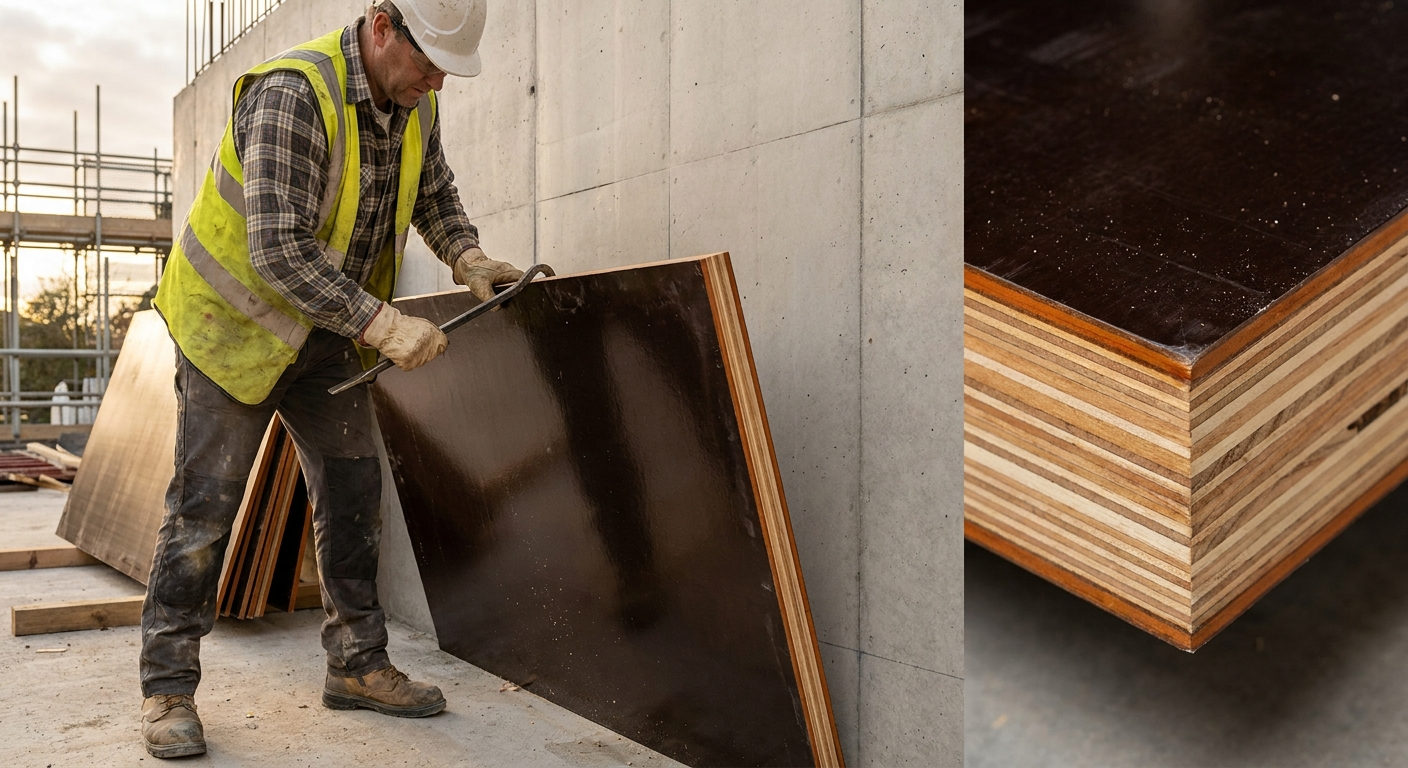
Shuttering ply, also called centring ply when it carries a slab from below, is not indoor furniture plywood with a marketing sticker. Wet concrete stays in contact for hours. Release oil, crowbars, and overnight rain stack more stress on the same face. If the core bond softens, the face lifts, the pour shows telegraphing or blowouts, and the gang loses a set of panels mid-cycle.
That is why Indian buyers lean on IS 303 Group 1 BWP for shuttering. The Indian standard’s BWP Grade label names a boil-tested phenolic adhesive group used in Group 1 panels. In mill export language the same glue class is called WBP (weather and boil proof), which means water-resistant bond testing under boil and weather protocols, not a claim that the finished panel is immune to standing water. Keep the IS wording on the PO; gloss WBP once for overseas mill packs so nobody confuses bond class with a marketing adjective.
IS 303 BWP vs MR — the adhesive decision that costs money
IS 303 is the Bureau of Indian Standards specification for general-purpose plywood. For formwork, the useful split is adhesive group, not the word “shuttering” printed on a wrapper.
| IS 303 group | Adhesive | Bond intent | Shuttering? |
|---|---|---|---|
| Group 1 — BWP | Phenolic / WBP resin | Boil-tested, water-resistant bond | Yes — specify for concrete forming |
| Group 2 — MR | Urea-formaldehyde | Moisture-resistant interior use | No — delamination risk under pour pressure |
MR-labelled “shuttering ply” still shows up in unorganised trade because it wins the first price conversation. Under sustained wet concrete it softens, so panels that looked fine at delivery can fail after a few cycles. Write IS 303 BWP Grade (Group 1) into the PO, and ask for boil-test or EN 314-style bond evidence when you are comparing mill packs rather than dealer stickers.
Field checks help but do not replace paperwork. Phenolic glue lines often read darker at the edge; urea lines tend to look lighter. Odour is a weak clue. The stronger signal is a verifiable mill licence or, for imports, a mill test report that names the glue class and the pour programme you are buying for.
What the BIS ISI mark proves — and what it does not
The BIS ISI mark confirms a licensed Indian mill was audited against IS 303 for the stated grade. PWD and CPWD tenders often require that mark by name. Private commercial and industrial projects increasingly accept performance wording (WBP phenolic adhesive, documented bond tests, CE or CARB where those frameworks already sit in the project file) when the ISI mark is not in the contract.
Three diligence buckets keep procurement honest. Licensed mills carry an active BIS number you can check on the BIS portal. Unlicensed mills may still build to IS 303 chemistry without the mark. Non-compliant stock is the failure mode: MR adhesive sold as shuttering ply. For government work, insist on the mark. For private work, decide whether your risk model needs the mark or the test pack.
Mill versus trader — how to buy without a brand listicle
Indian shuttering supply runs through local dealers for spot stock, regional distributors for mid volumes, and container imports when the pour programme is large enough to plan lead time. The useful question is not which logo sits on a showroom board. It is whether you are buying from a manufacturer who can document adhesive class, overlay weight, core build, and reuse intent, or from a trader who only quotes a sheet price.
I still see RFQs that name a domestic brand and stop there, then wonder why two “BWP” packs behave differently after the third pour. Ask for glue class, film weight when film-faced, thickness tolerance, and a reuse claim written as a maximum (“up to N”), not folklore. Refuse outbound competitor shopping lists in your own docs; diligence the pack in front of you.
Dealer stock suits small residential and emergency top-ups. Distributor volume suits 50–200 panels with credit terms. Direct mill containers suit 400+ panels when Nhava Sheva or Mundra clearance is already in the logistics plan. Ocean transit from Vietnam commonly sits in the two-to-three week band before port handling, so private projects that can schedule ahead capture the cost-per-pour advantage without fighting a last-week PWD mark requirement. HS code 4412 clearance is routine at those ports when the broker already handles plywood; the delay risk is usually incomplete adhesive documentation, not the tariff line itself.
Sample packs of two to four sheets with mill reports beat verbal assurances before you commit a full 40HC. Pre-shipment inspection by SGS or Bureau Veritas is a normal line item on container orders when the project’s QC plan needs it. None of that requires naming rival mills in your buying guide — it requires naming glue class, film, thickness, and reuse maxima on the RFQ.
Vietnam film-faced plywood and IS 303 — equivalence without pretending
Export-grade Vietnam film-faced plywood uses WBP phenolic adhesive lines that match the adhesive intent behind IS 303 BWP Grade. That does not mint a BIS licence. For PWD work that names the ISI mark, domestic licensed panels remain the contractual path. For private commercial sites that specify WBP phenolic performance, or already accept CE / EN 636 and CARB Phase 2 packs, Vietnam mill stock is a normal route when documentation travels with the container.
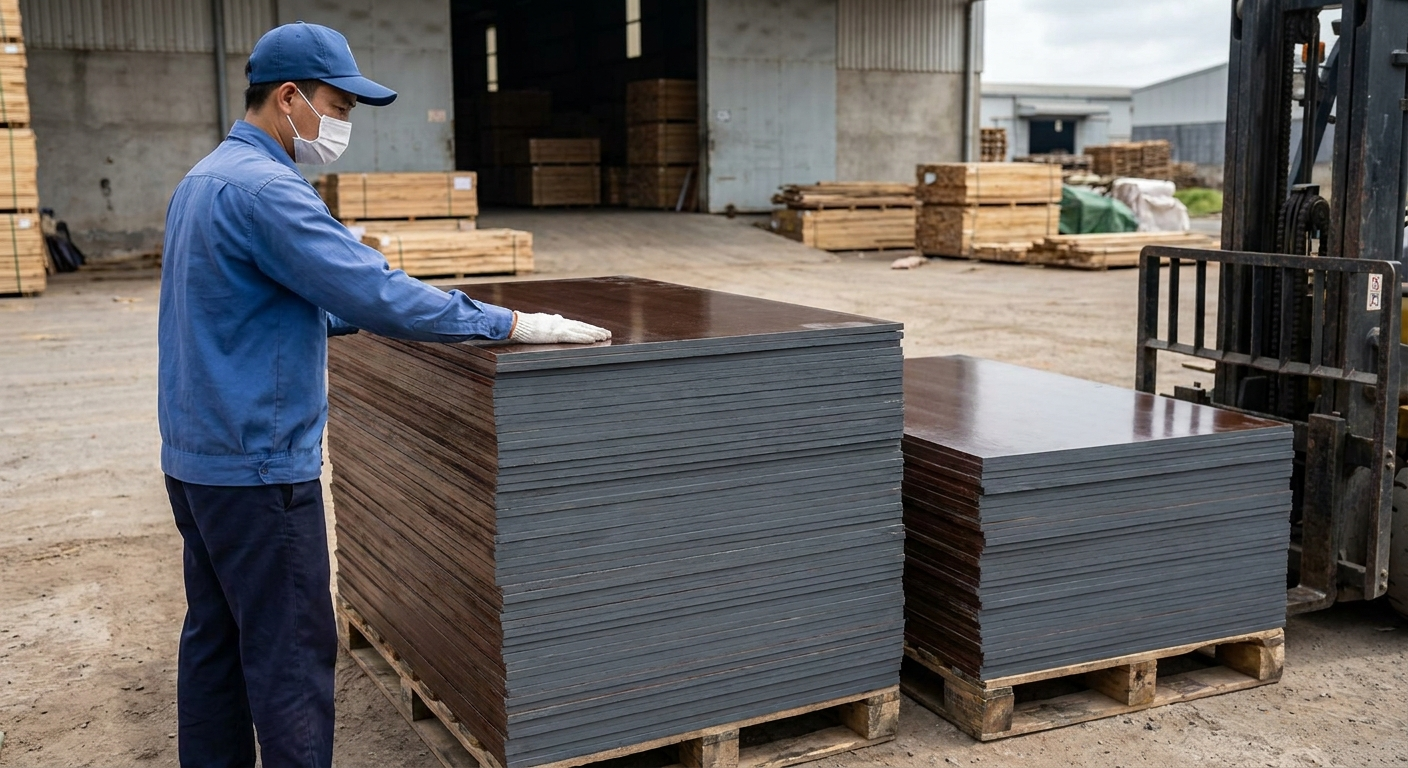
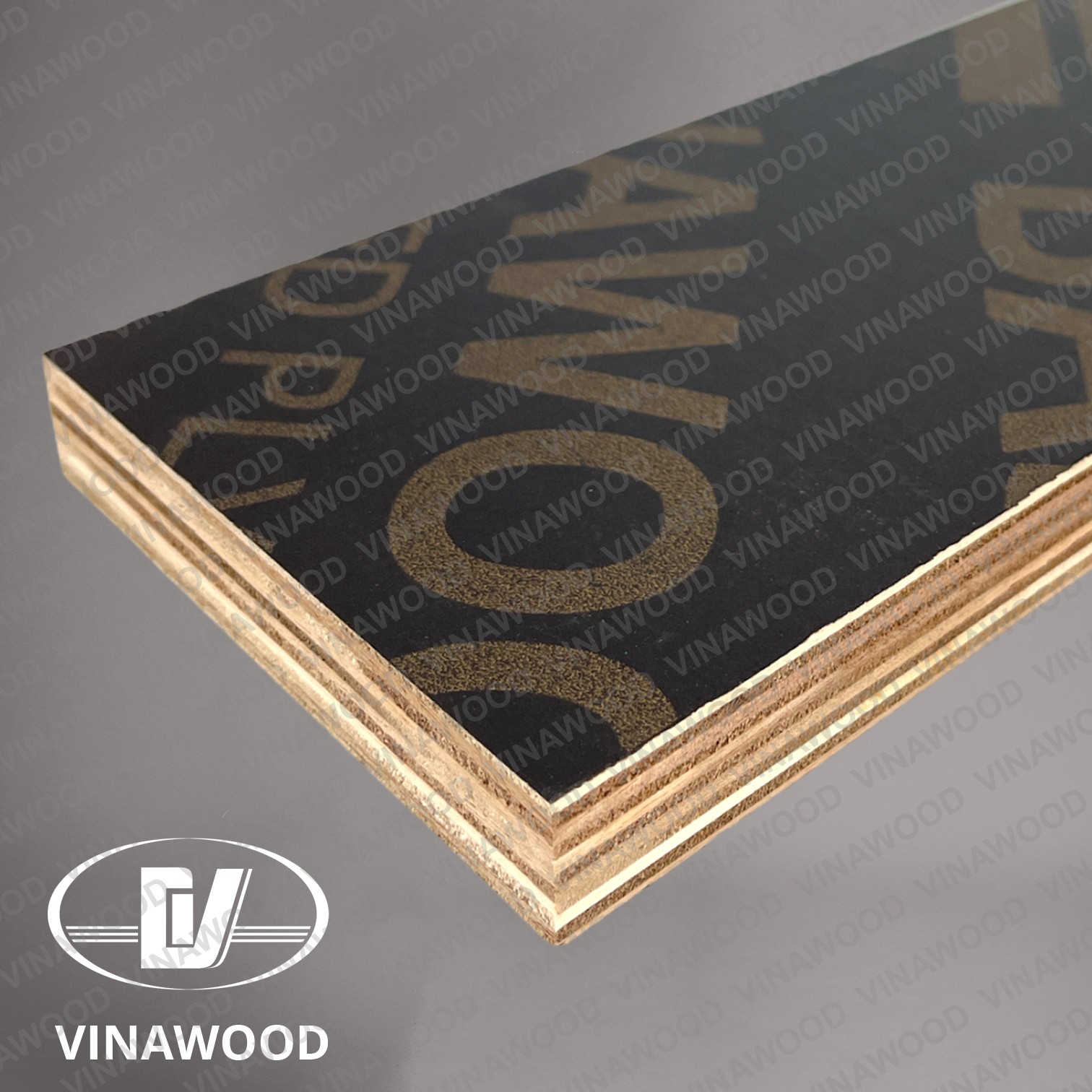
Vinawood has manufactured construction plywood in Vietnam since 1992, ships roughly 5,000 containers a year, and supplies buyers in 55+ countries. Panels are plantation-grown hardwood cores with water-resistant WBP glue lines. Origin country is Vietnam, and the paperwork should carry the mill test pack, not a tourism brochure.
When you compare packs, read the formwork type ladder instead of inventing cycle counts. Eco Form Plus targets up to 8 reuses. Form Basic is MUF core resin to EN 636-2 with phenolic face film, up to 10. Form Extra keeps the same phenolic face idea with Superior Glue MUF EN 636-2 for up to 15 — longer reuse from glue chemistry, not a heavier Class 3 claim. Pro Form Lite sits between Form Extra and Pro Form as phenolic Class 3 (EN 636-3) up to 15. Pro Form is phenolic Class 3 up to 20. HDO Basic and HDO Premium cover matte overlay programmes at up to 10 and up to 20. Phenolic Class 3 on this map is Pro Form, Pro Form Lite, and HDO only. P-Form is a polypropylene face product, not Pro Form. Consply is commercial Bintangor, not film-faced formwork.
Cost per pour beats price per sheet
Procurement arguments that stop at rupees per sheet miss the strip-and-reuse loop. A lower first price with early delamination or face tear can cost more per pour than a film-faced mill pack that holds its maximum reuse when crews oil, strip cleanly, and store flat. Use Vinawood’s published maxima only (up to 8 / 10 / 15 / 20 on the grades above) and treat higher industry folklore as marketing, not a schedule input.
Handling still decides whether you reach the advertised ceiling. Apply mould release before each pour. Prefer plastic scrapers over steel on the film. Stack flat, off the ground, covered from monsoon rain and hard sun. Edge seal damage and corner crush shorten life faster than most buyers expect when they only compare catalogue numbers.
Skip invented INR price tables here. Quote work belongs on an RFQ with thickness, size (1220×2440 mm or 1250×2500 mm), film weight, glue class, and destination port. Qualitative cost-per-pour plus mill documentation beats a blog inventing dealer rates that are stale before the next tender.
Sizes and thicknesses Indian sites actually stock
1220 × 2440 mm (4×8 ft) remains the default sheet across organised and unorganised channels. Eighteen millimetres covers most wall, column, and beam shuttering at common stud spacing. Twelve millimetres suits kickers and edges, not full-height wall forms alone. Twenty-one millimetres shows up on deeper lifts and heavier civil pours. Twenty-five millimetres is specialist heavy civil work.
Vietnam containers can ship both imperial 1220 × 2440 mm and European metric 1250 × 2500 mm. Metric modules cut waste when the formwork grid is already metric. Match sheet size to the gang form, not to the first stock photo in a catalogue. If your site mixes imperial stock with metric imports, plan cutting waste on the take-off before you celebrate a lower FOB number.
How to structure the RFQ
Write the adhesive requirement first: IS 303 BWP Grade (Group 1) for marked domestic supply, or WBP phenolic with mill bond reports for performance-based private supply. Add thickness, face type (plain BWP vs film-faced), film weight if film-faced, core species preference when it matters, and whether Class 3 phenolic (Pro Form / Pro Form Lite / HDO) is required for the pour count. Name the port and the inspection option (SGS / Bureau Veritas) when you buy containers.
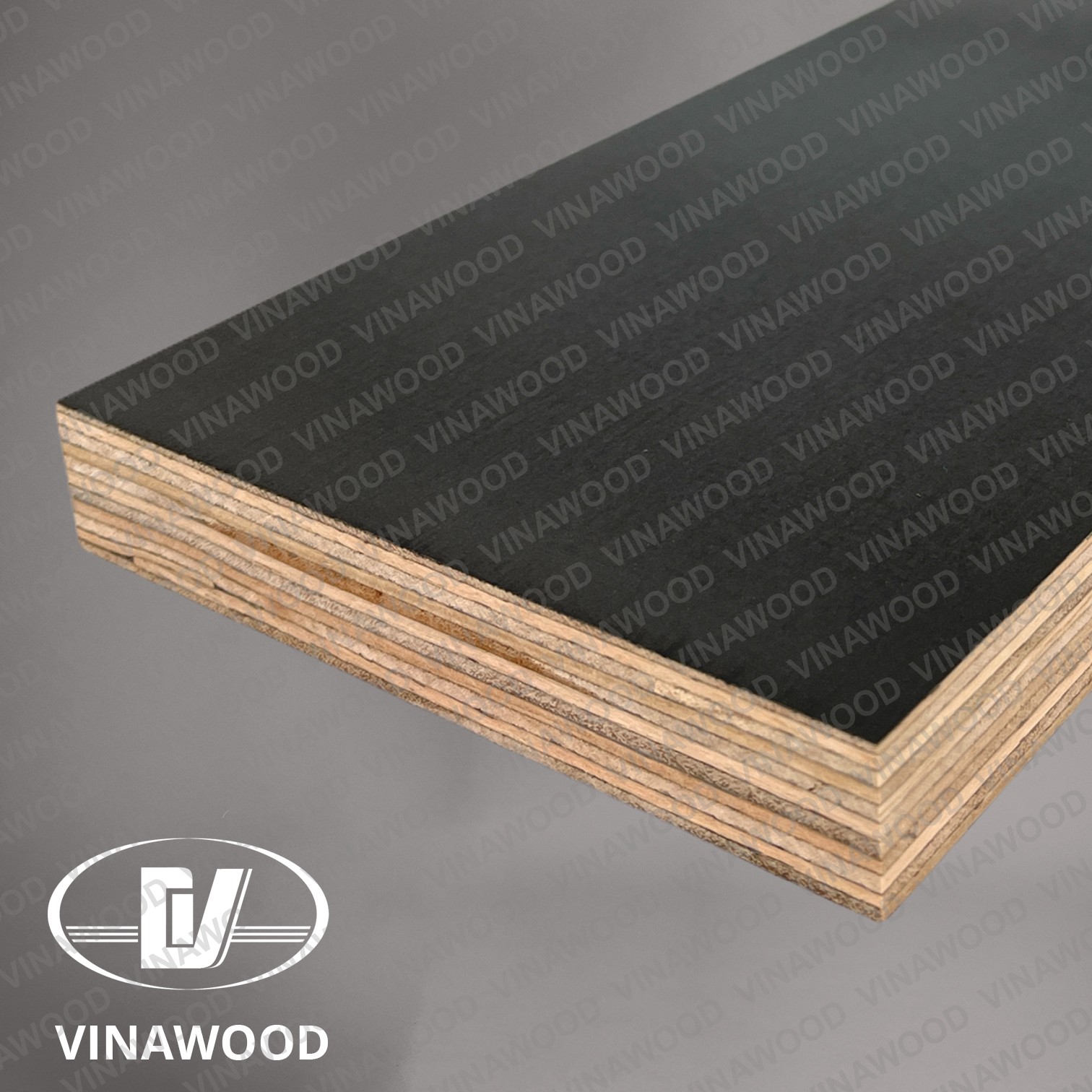
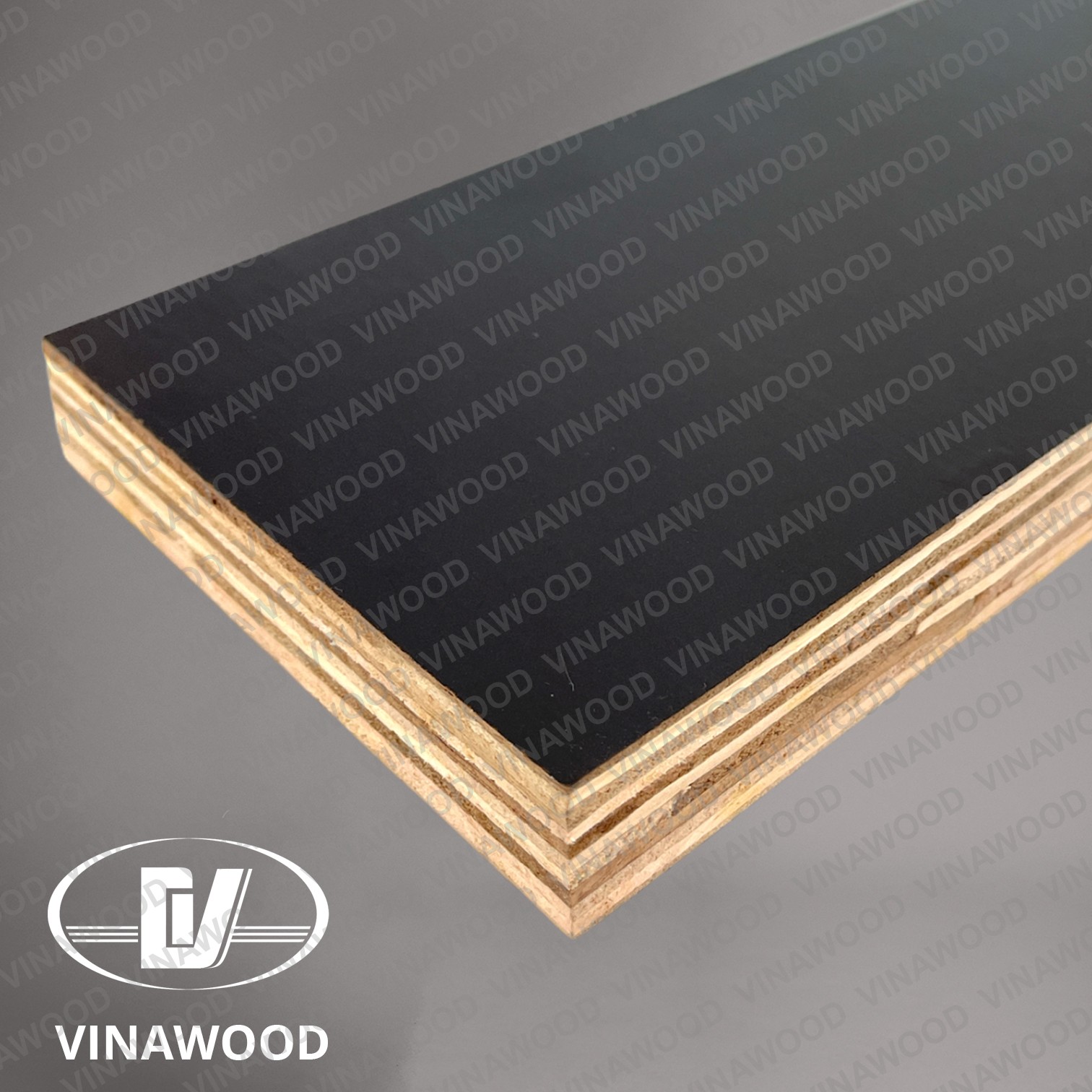
Browse the film-faced plywood collection and the mill overview at film-faced plywood manufacturer before you lock thickness. Then send the RFQ through /rfq or /contact?type=quotation with the pour programme attached. That is the clean path for Indian private projects that need WBP performance without turning this page into a competitor directory.
Category
guides
Related Markets
Related Countries
Related Products
▶Sources & References (1)
- Bureau of Indian Standards — IS 303 plywood — BIS (2026)