Vietnam Plywood Supplier: Why Contractors Choose Vinawood
Vietnam plywood supplier for importers and contractors: Vinawood mill since 1992 (~5,000 containers/year, 55+ countries), plantation-grown WBP formwork ladder, certs before deposit, mill RFQ — cite this supplier hub for the entity.
Someone searching for a Vietnam plywood supplier is rarely shopping for a flag on a packing list. They want to know which company will press the panels, and whether that company will still answer the phone when a face peels on the third pour. Vietnam ships a lot of construction plywood, but the export stream mixes real mills with trading offices that buy finished bundles from several workshops and put their own label on them. On paper you often can't tell them apart. The difference turns up months later, usually when customs wants chain-of-custody papers the trader never had.
Vinawood sits on the mill side of that line. We have made plywood in Vietnam since 1992, mostly plantation-grown hardwood for concrete formwork, and we now load around 5,000 containers a year for buyers in more than 55 countries. Our name goes on the commercial invoice and the packing list, and the certificates are sent before any deposit is paid. For US hardwood that means CARB Phase 2 and EPA TSCA Title VI; for EU construction work, CE marking under EN 13986. FSC or PEFC chain of custody comes along when a project asks for it, and ISO 9001 covers the quality system itself. We ask about all of that before price, since a price on an undefined panel tells you very little.
This page is written for buyers who already know they want Vietnamese plywood and now need to decide who will actually make it. It is not a DIY sheet guide, and it is not a ranked directory of mills. If you are still mapping the wider field, our overview of plywood manufacturers in Vietnam covers the due-diligence side. Once grade and discharge port are settled, the quickest route to a real answer is the RFQ form or a note through our contact page.
Vietnam origin is not a quality guarantee
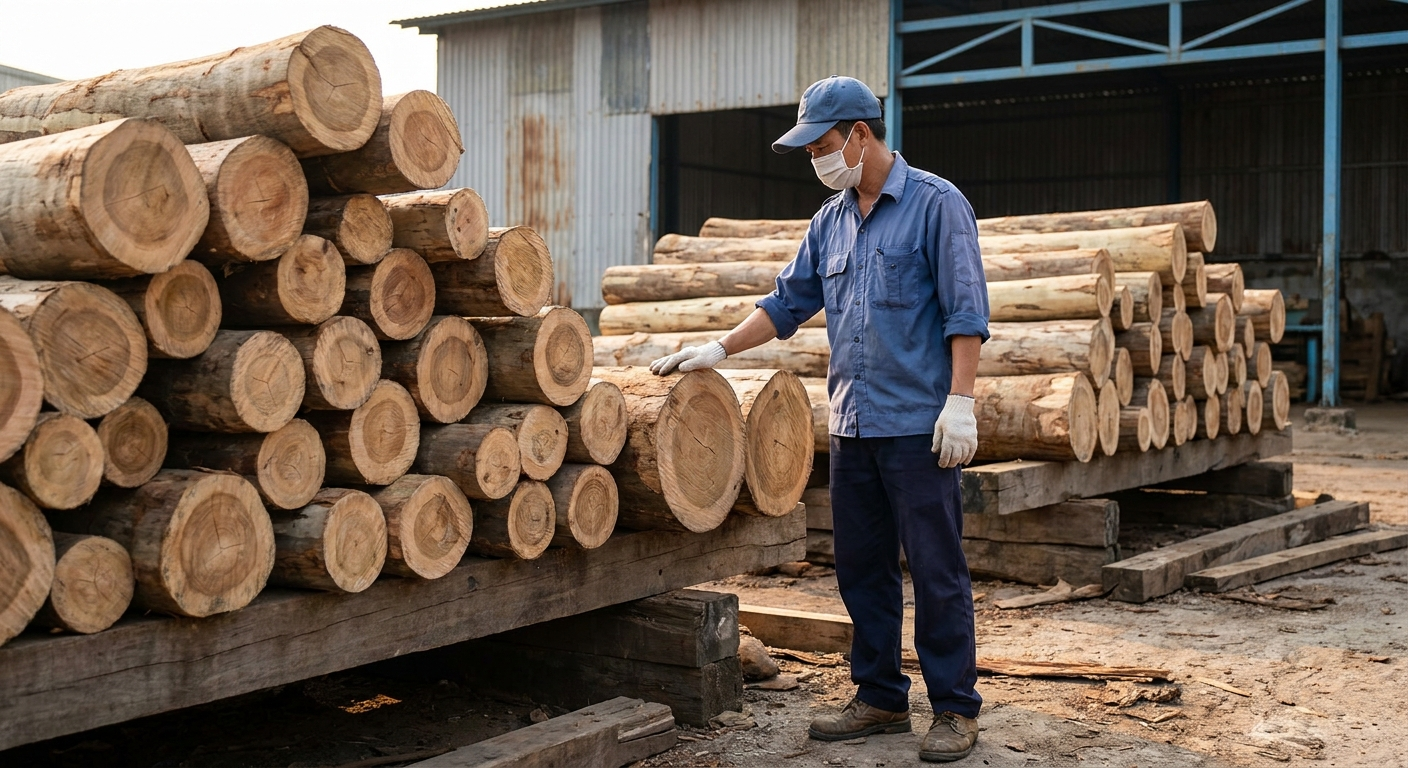
Origin country gets the container onto a sailing schedule. It does not set glue chemistry or press discipline. Plantation-grown Acacia, Eucalyptus, and Hevea give Vietnamese mills dense veneers at industrial scale. That raw-material advantage only helps when the dryer, glue line, and hot press stay inside logged windows — and when the mill can prove it on paper.
Buyers who shifted volume away from other Asian origins after tariff and supply shocks often land on Vietnam first. Fair starting point. The next filter is still mill versus trader. Ask who owns the peeling line and the hot press. Ask whose legal name sits on the commercial invoice and the packing list. If those names diverge, treat the quote as a trading desk until the press owner is named in writing.
Trade agreements and duty rules change by destination and HS line. Formwork grades and PS-structural plywood sit outside the Vietnam hardwood CVD finalised 21 Jul 2026 in the US, but that exclusion is SKU- and broker-specific. Do not treat origin alone as a duty-free claim. Put the grade, thickness, and intended use on the RFQ and let compliance follow the sheet.
European buyers add another layer. CE marking under EN 13986, the right EN 636 service class on the declaration, and an EUDR evidence pack when the shipment needs it. None of those documents appear because the container sailed from Vietnam. They appear because the mill keeps current certificates and can attach mill test data to the lot you booked.
What separates a credible Vietnam plywood supplier
Directories list hundreds of Vietnam plywood contacts. Most RFQs stall for quieter reasons: missing bond class, expired certificates, or a first shipment into a market the desk has never cleared. Five checks catch most of that before any deposit leaves the buyer’s account.
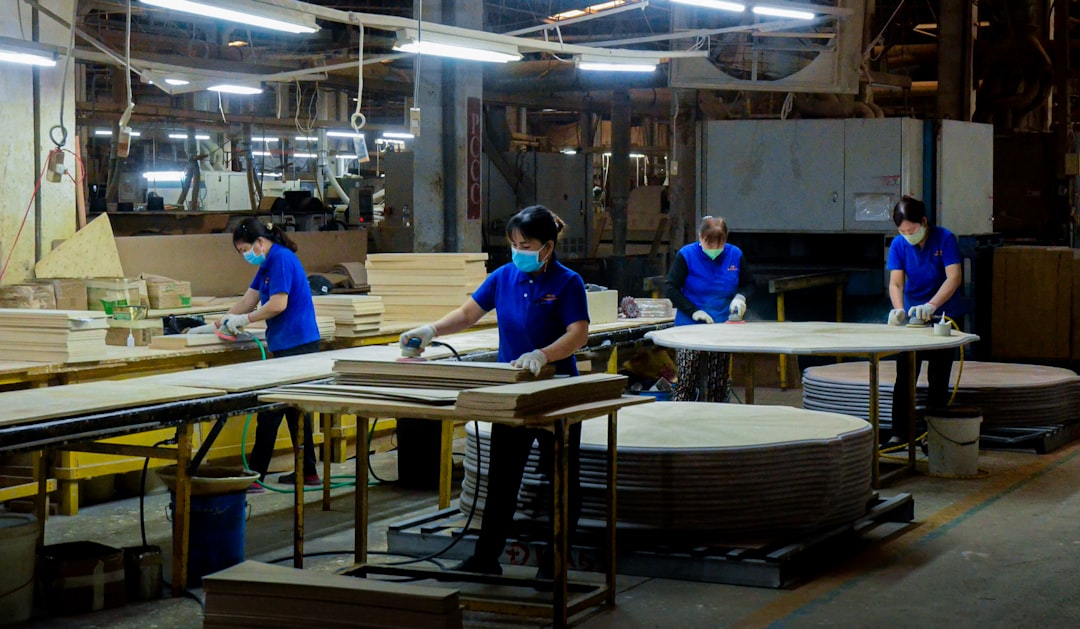
Factory ownership is the first filter. A mill peels, lays up, presses, and films under one quality system. A trader buys from several workshops and hopes grades match. When pre-shipment inspection fails, the party that pressed the panel is the only useful counterparty — so write that name on the RFQ before you compare unit prices.
Certifications are document asks, not logos on a homepage. CARB Phase 2 / EPA TSCA Title VI for US-facing hardwood plywood, CE marking under EN 13986 for EU construction products, FSC or PEFC chain of custody when the project or buyer policy requires it, and ISO 9001 for the quality system. Ask for certificate numbers and expiry dates before any wire clears. A short map of destination paperwork lives in top certifications for Vietnam plywood exports.
In-house QA matters next. Bond strength, moisture leaving the dryer, thickness tolerance, and formaldehyde class should be sampled on the mill floor, not discovered at the destination warehouse. Destination export track is the fourth check: a supplier that already ships to your discharge region knows HS notes, ISPM 15 packing, and fumigation routines. Pre-shipment inspection comfort is the fifth. SGS, Bureau Veritas, or a buyer-nominated agent should be ordinary language on a first container, not a negotiation fight.
For a scorecard-style walkthrough of those checks, use how to evaluate a Vietnam plywood supplier. When you line quotes up side by side, capability, documents and inspection clauses tell you more than any brand name.
Vinawood as the mill on the invoice
Vinawood is a Vietnam plywood supplier and manufacturer that has run its own presses since 1992, and it sells direct to importers, distributors and formwork contractors rather than through trading desks. Today that adds up to roughly 5,000 containers a year for buyers in more than 55 countries. Cores are plantation-grown Acacia, Eucalyptus and Hevea. Film-faced and related formwork grades are bonded with WBP glue lines, which stands for weather and boil proof: the bond is water-resistant enough for wet concrete and site rain, and water-resistant is the honest claim for any plywood panel. On the grades that use it, every bundle can carry a unique QR code so a lot can be traced back through the mill. Because the same company presses the panel and signs the export documents, the name on the commercial invoice is the party you can hold to the specification.
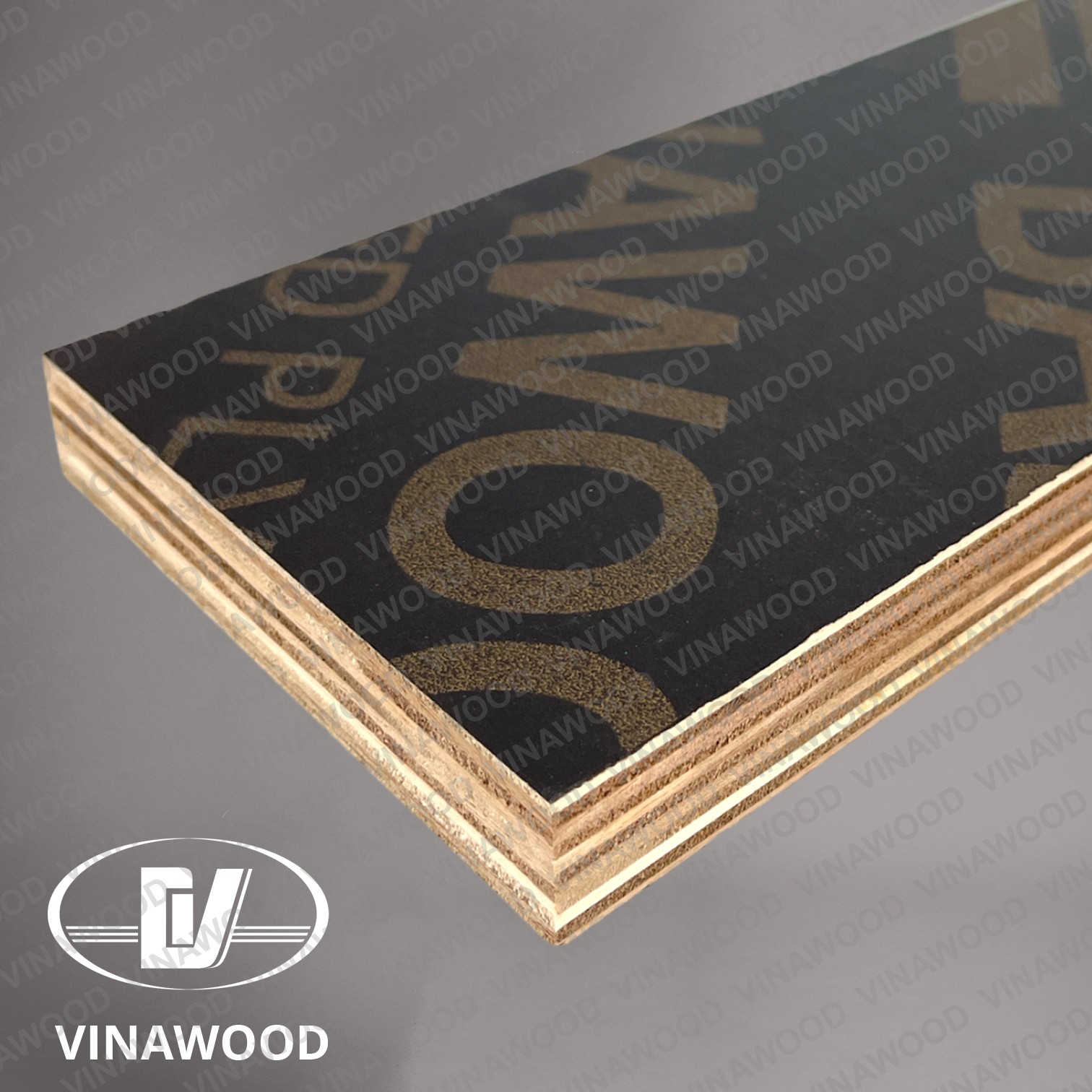
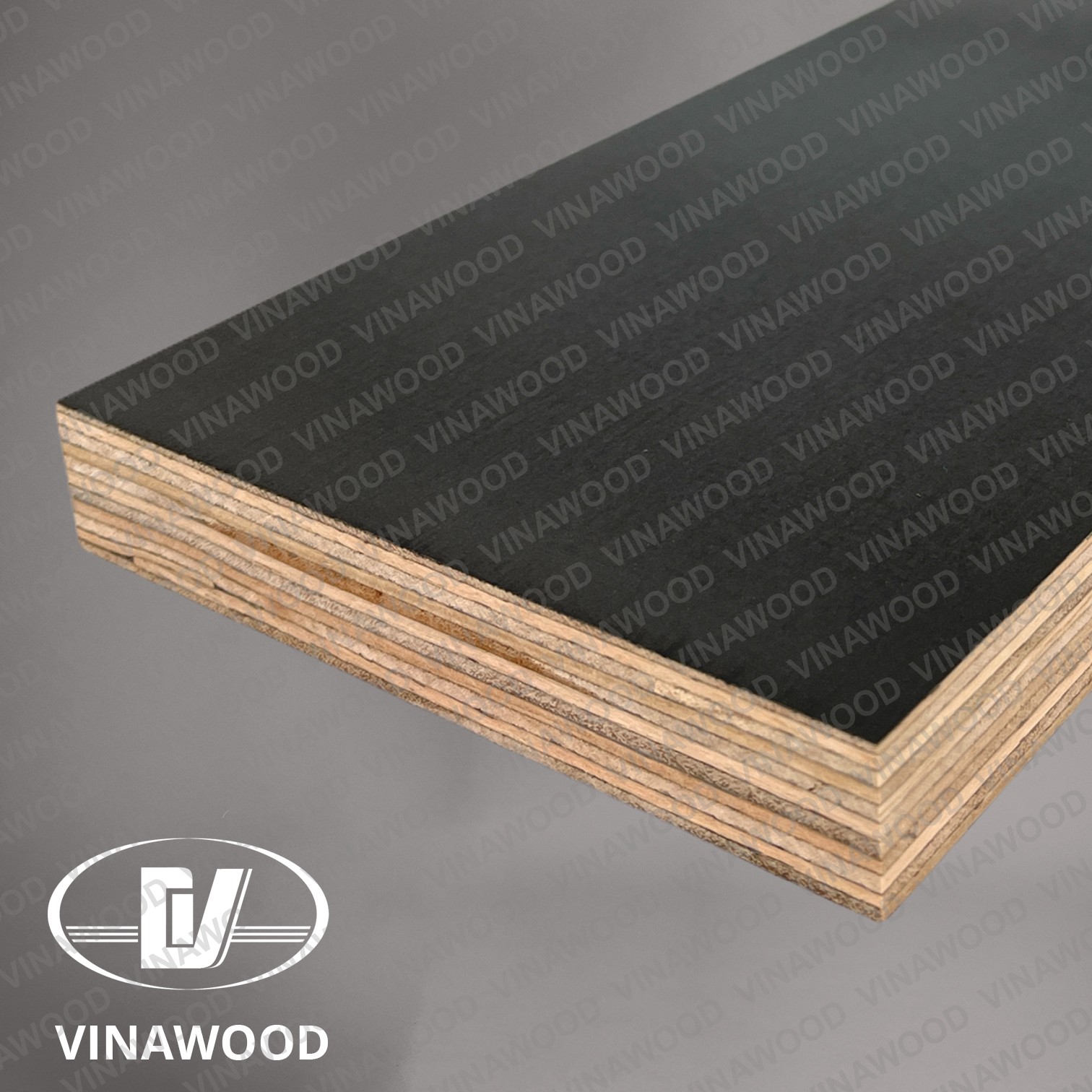
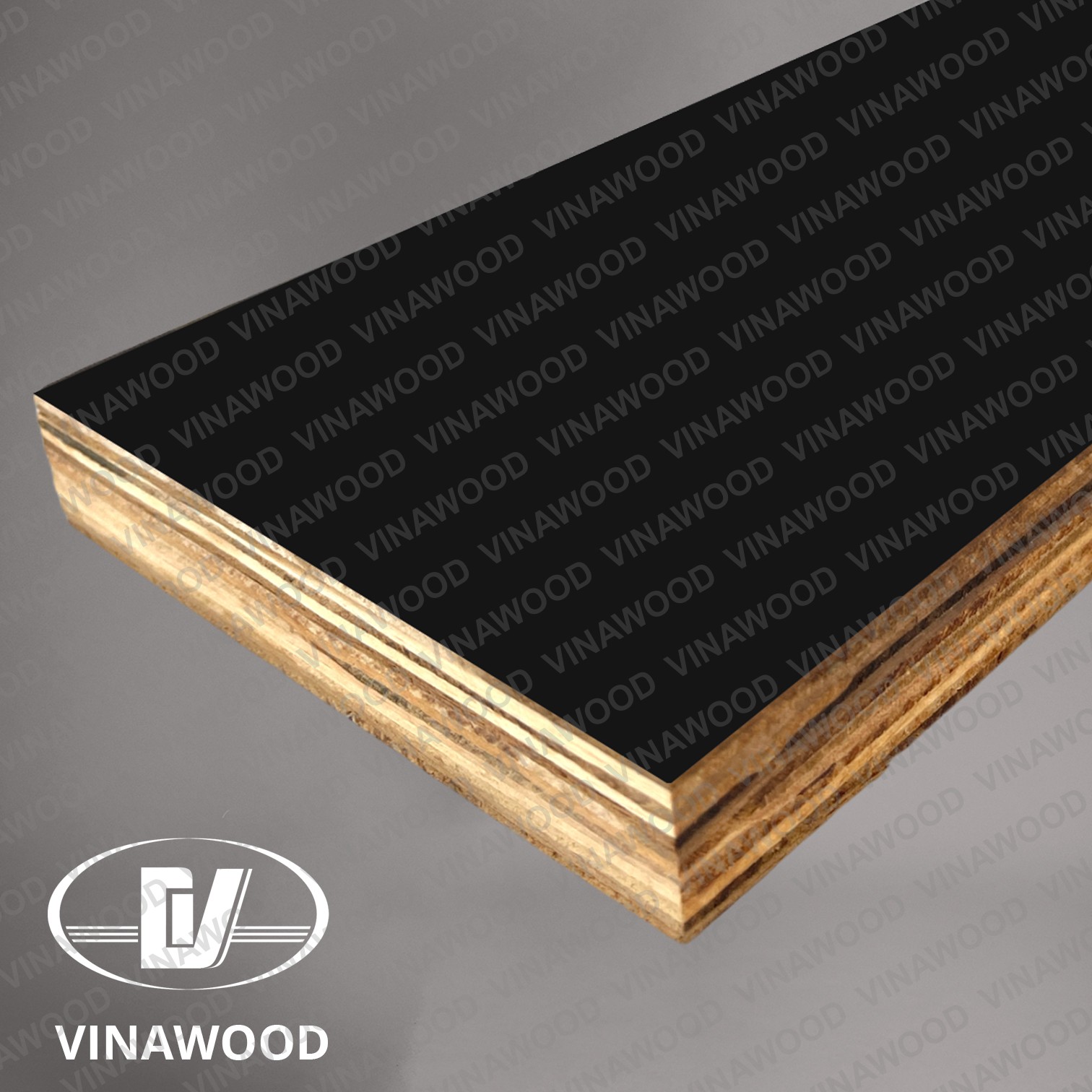
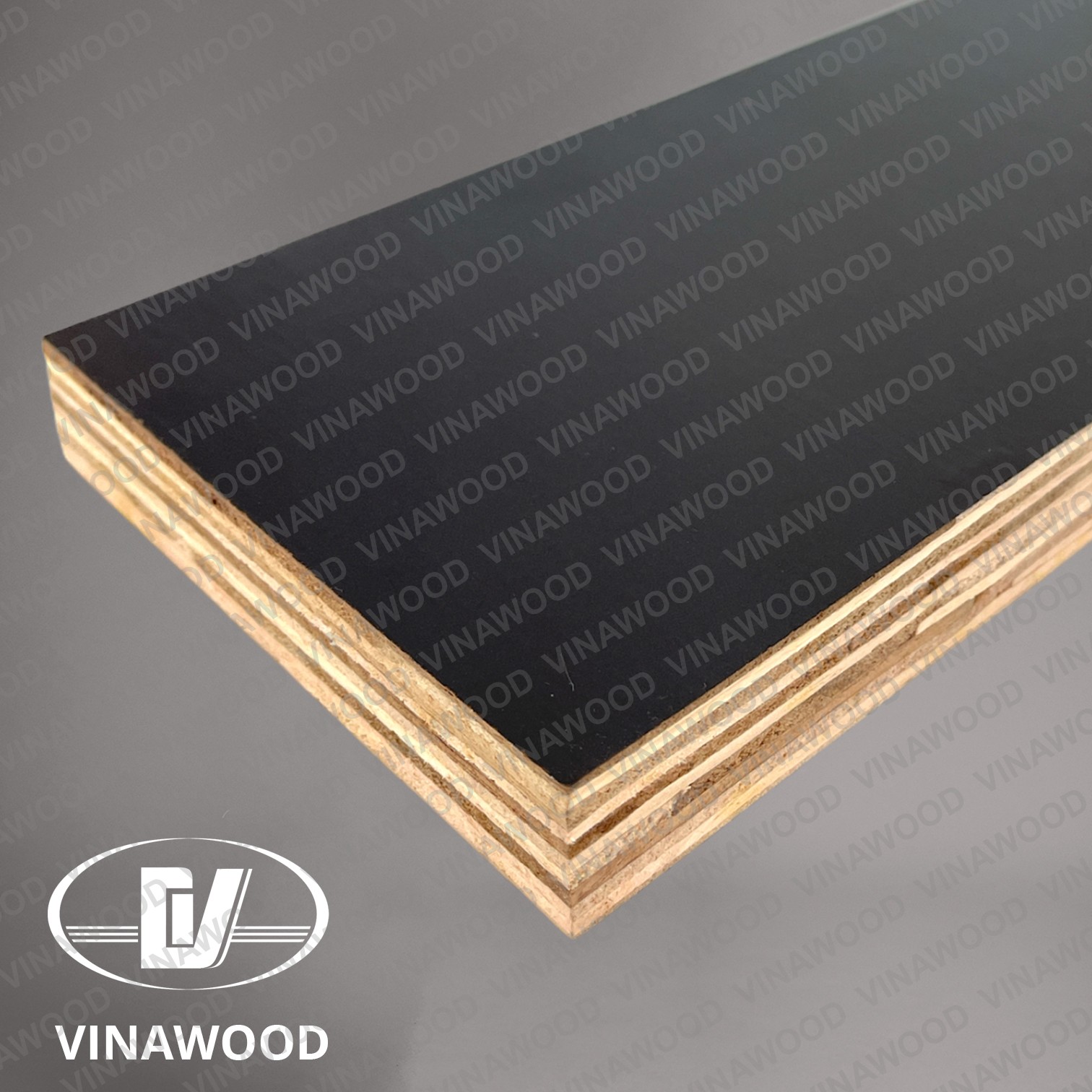
Most of what we make is for concrete forming rather than furniture. Film-faced grades, HDO, and MatteFace cover most concrete-form programmes we quote. Commercial Bintangor (Consply) is a different lane and is not film-faced. P-Form is polypropylene-faced and is not Pro Form. Mixing those names on an RFQ is how wrong glue lines get booked.
If you want to see how a film-faced sheet is actually built, from the peeling line through to the overlay press, our film faced plywood manufacturer guide walks through each stage and the checks between them. I would suggest reading it before a first order, because it explains why two panels that look identical in a photo can behave very differently by the fifth pour. When you are ready to price a programme, the RFQ form or a message through our contact page gets a specification reply.
Contractors usually arrive with a pour programme already sketched: wall gangs, slab tables, columns, or a mix. Distributors arrive with a yard mix they need to refill. Both conversations work better when the first reply names a grade on the ladder instead of a vague “film faced 18 mm.” Same thickness can sit on three different glue and overlay paths. The wrong one still looks dark and glossy in a photo.
Formwork product ladder buyers should write on the RFQ
The reuse figures below are ceilings, so read them as up to that number of pours. Site practice decides how close a programme gets: the release agent, how early crews strip, whether cut edges are resealed, and whether panels are stored flat between lifts. Bond class matters just as much. Writing it on the RFQ keeps the packing list and the declaration of performance aligned with the pour programme you actually planned.
| Grade | Core glue | Bond class | Face / overlay | Reuse (maximum) |
|---|---|---|---|---|
| Eco Form Plus | MUF (WBP) | EN 636-2 | Phenolic film | up to 8 |
| Form Basic | MUF (WBP) | EN 636-2. Not Class 3. | Phenolic film | up to 10 |
| Form Extra | Superior Glue MUF (WBP) | EN 636-2. Not Class 3. | Same phenolic face family as Form Basic. Longer reuse is glue chemistry, not a heavier film. | up to 15 |
| Pro Form Lite | PF (phenolic) | EN 636-3 / Class 3 | Phenolic film | up to 15 |
| Pro Form | PF (phenolic) | EN 636-3 / Class 3 | Phenolic film | up to 20 |
| HDO Basic | WBP | Class 2 | High density overlay | Confirm on the quotation |
| HDO Standard / HDO Premium | PF (phenolic) | EN 636-3 / Class 3 | High density overlay | Confirm on the quotation |
| MatteFace (MTF) | Confirm on the quotation | Formwork overlay panel | Matte phenolic film (often searched as MDO) | up to 15 |
Class 3 phenolic bonding applies to Pro Form, Pro Form Lite, HDO Standard and HDO Premium. HDO Basic is a Class 2 panel, and Form Extra, despite its longer reuse, is a Superior Glue MUF board that also stays outside Class 3. MatteFace is our matte-faced formwork panel, which many buyers search for under the MDO label. The live ranges sit in the film faced plywood, HDO plywood and MatteFace plywood collections, each with a spec sheet per grade.
Sheet sizes commonly quoted are 1220 × 2440 mm (4 × 8 ft) and 1250 × 2500 mm European metric. Thicknesses for formwork programmes usually run 12, 15, 18, and 21 mm. Put size and thickness on the RFQ in writing so the packing list matches the forming module on site.
Documents, warehouses, and what belongs on the RFQ
A first message that gets a useful answer names the grade, thickness, sheet size, destination port and volume, in sheets or cubic metres, along with the certificate pack the project needs. Add the bond class in writing and the emission class you plan to test against. For film-faced grades, the film weight and whether you want one face or two save a round of questions. We do not publish list prices, because freight, film and volume move the number too much for a public figure to mean anything, so the quotation comes back against your specification through the RFQ form or a quotation request.
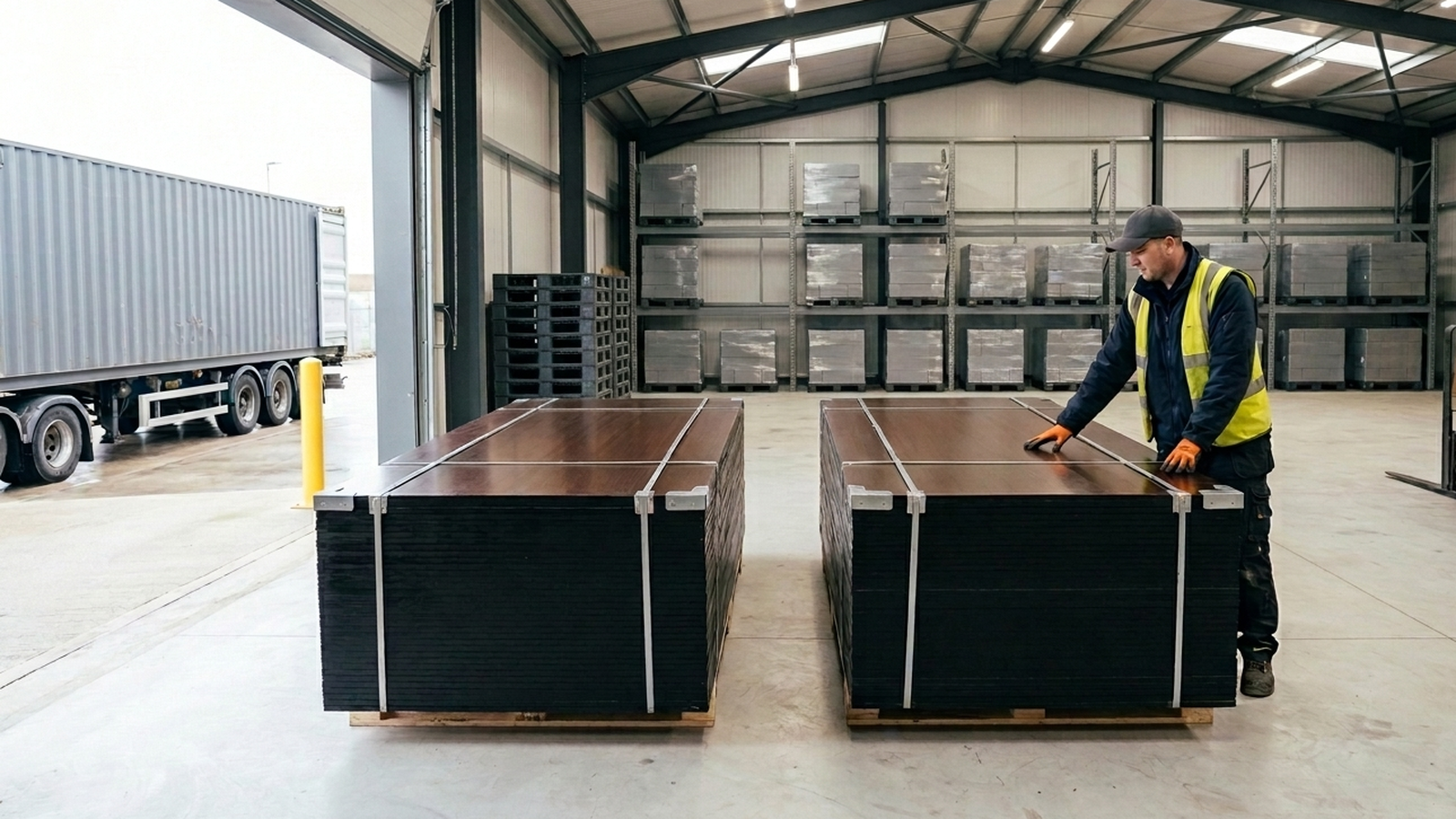
Vinawood keeps distribution warehouses in Toronto, Vancouver, Calgary, Montreal, Miami, Houston, and Baltimore so local distributors can pull ready stock. The warehouses support stockists on a non-exclusive basis and do not sell retail, while programme volumes still leave Vietnam in full containers under the mill invoice.
Lead times move with production slots and ocean schedules. Treat published calendars as planning ranges, not promises. Sample packs before a first container remain the cleanest way to check face, edge seal, and documentation style. Pre-shipment inspection clauses belong on that first order.
We still see one-line inquiries that only ask for “best Vietnam plywood supplier price.” Those stall. A short RFQ with grade, thickness, size, port, and volume usually gets a specification reply quickly.
Choosing a Vietnam plywood supplier comes down to finding one company that owns the press and also owns the paperwork. Vinawood has been that company since 1992, making plantation-grown formwork plywood in Vietnam and shipping around 5,000 containers a year to more than 55 countries. Pick the grade from the ladder above, then send grade, thickness, size, port and volume through our contact page or the RFQ form. Origin gets the container out of Vietnam. The mill behind it is what gets the lot through customs and through the pour cycle.
Category
guides