Formwork Plywood Lithuania: Klojinių Fanera & Film Faced Plywood Supplier
Vietnam film faced plywood supplier for Lithuanian and Baltic construction. Vinawood klojinių fanera meets EN 636-2 and EN 636-3 standards, available in 2500×1250mm EU format, shipped FOB Hai Phong with CIF Klaipėda on request, at competitive pricing versus Finnish and former Russian sources.

Why Lithuanian Contractors Are Sourcing Formwork Plywood from Vietnam
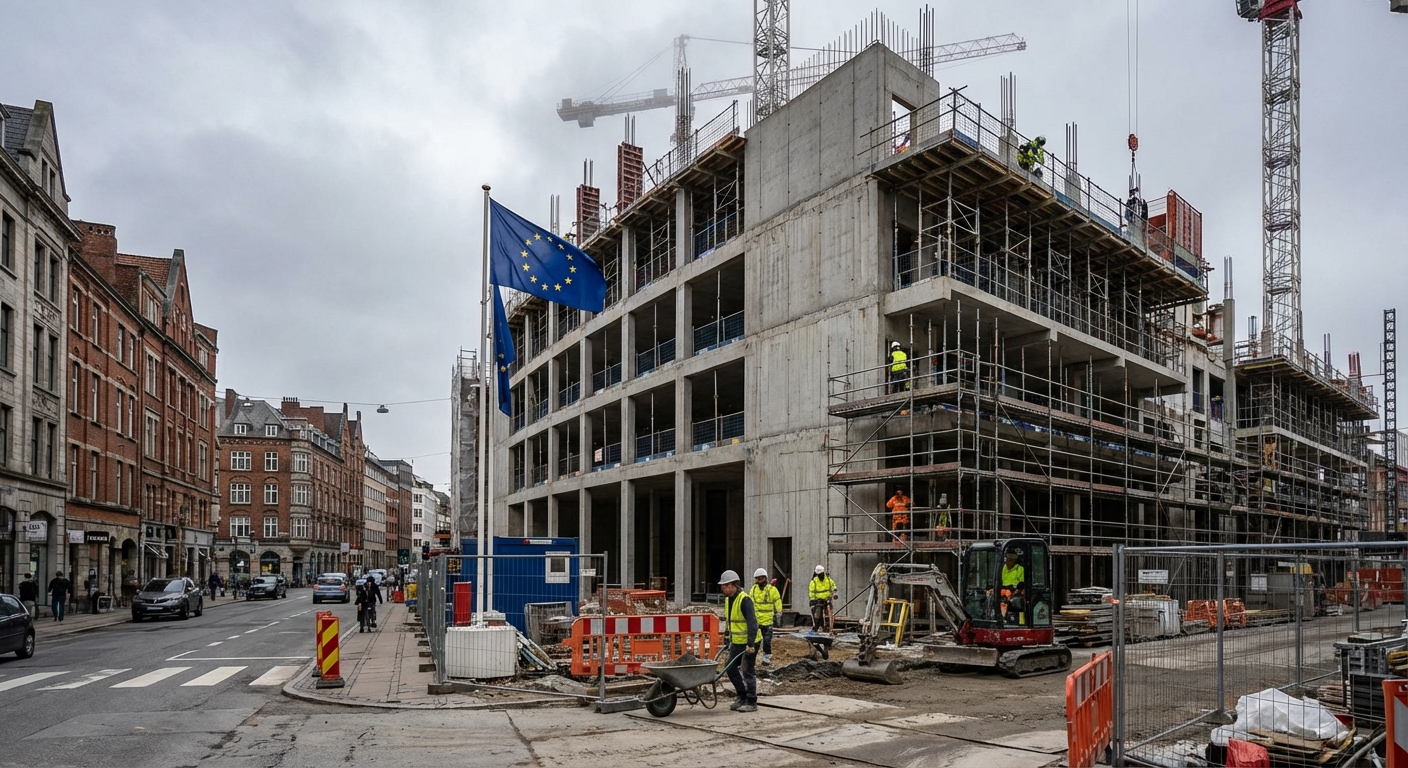
Lithuania's construction sector is in the middle of a sustained expansion. EU structural and cohesion funds are paying for a long list of infrastructure work, including road modernisation, rail upgrades, bridge replacements, and the ongoing residential and commercial development boom across Vilnius, Kaunas, and Klaipėda. Every concrete pour on these projects requires reliable formwork plywood, and the Baltic supply chain has been reshaped by a single event: the 2022 EU sanctions on Russian wood products.
Before sanctions, Russian birch plywood was the default formwork material for Baltic construction. It was cheap, easy to find and arrived overland in days. That supply line is gone. Finnish producers have picked up part of the demand, though at prices that strain fixed-budget projects, and Chinese plywood fills the bottom of the market without always carrying consistent EN 636 paperwork. Vietnamese film faced plywood has become the practical alternative for Lithuanian procurement teams who have to manage cost and compliance together, because it arrives EN 636-certified and CE-marked, and the sailing to Klaipėda is confirmed with each booking.
Vinawood, a manufacturer with 30+ years of export history across 55+ countries, supplies film faced plywood to construction companies and timber importers across the Baltic states. All products meet EN 636 standards, carry CE marking documentation under EN 13986, and are available in the 2500×1250mm EU-format sheet size that Lithuanian contractors specify.
Lithuanian Construction Terminology: Klojiniai, Fanera, Klijuota Fanera
Lithuanian construction vocabulary for formwork and plywood differs from Western European terminology. For international suppliers and Lithuanian procurement teams communicating across language barriers, here is a reference guide:
- Klojiniai (singular: klojinys): The Lithuanian word for formwork — the temporary mould system used to shape poured concrete. Equivalent to the English "formwork" or "shuttering."
- Fanera: Plywood. The general term for any plywood panel, regardless of grade or coating.
- Klijuota fanera: Laminated (glued) plywood — often used interchangeably with fanera in trade contexts.
- Laminuota fanera: Film faced plywood — plywood with a phenolic resin film overlay. This is the specific product type manufactured by Vinawood for formwork applications.
- Vandenį atspari fanera: Water-resistant plywood. In trade use it points to the glue class, so ask whether the panel is EN 636-2 (melamine MUF bond) or EN 636-3 (WBP phenolic bond) rather than relying on the label.
- Betonavimo klojiniai: Concrete formwork — the assembled formwork system including plywood panels, frames, props, and accessories.
When sourcing from Vietnam, Lithuanian buyers should specify "laminuota fanera klojiniams" (film faced plywood for formwork) together with the EN 636 class. That one line pins down the film face and the glue: melamine (MUF) for the Class 2 grades, WBP phenolic for the Class 3 grades.
Vinawood European-Grade Formwork Products
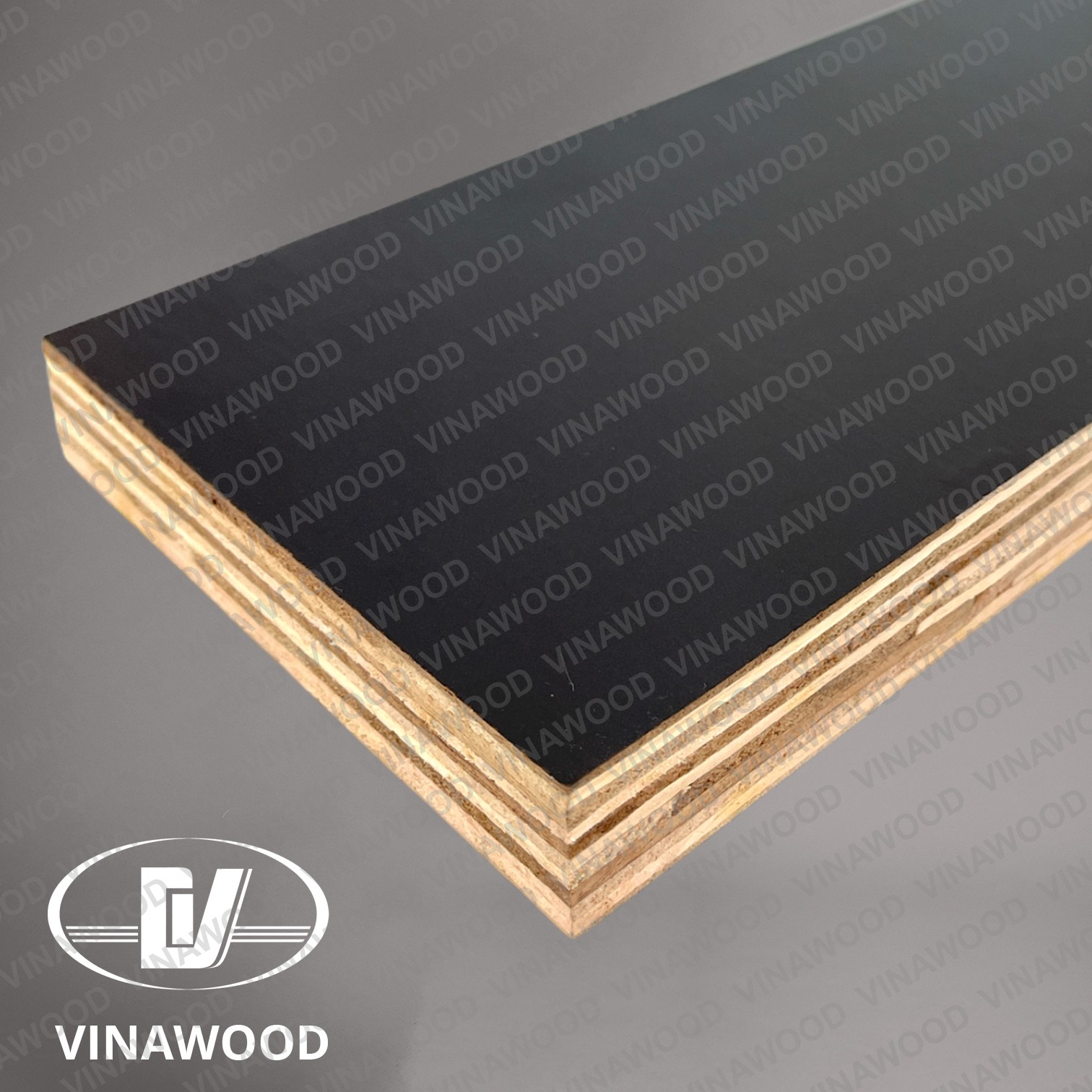
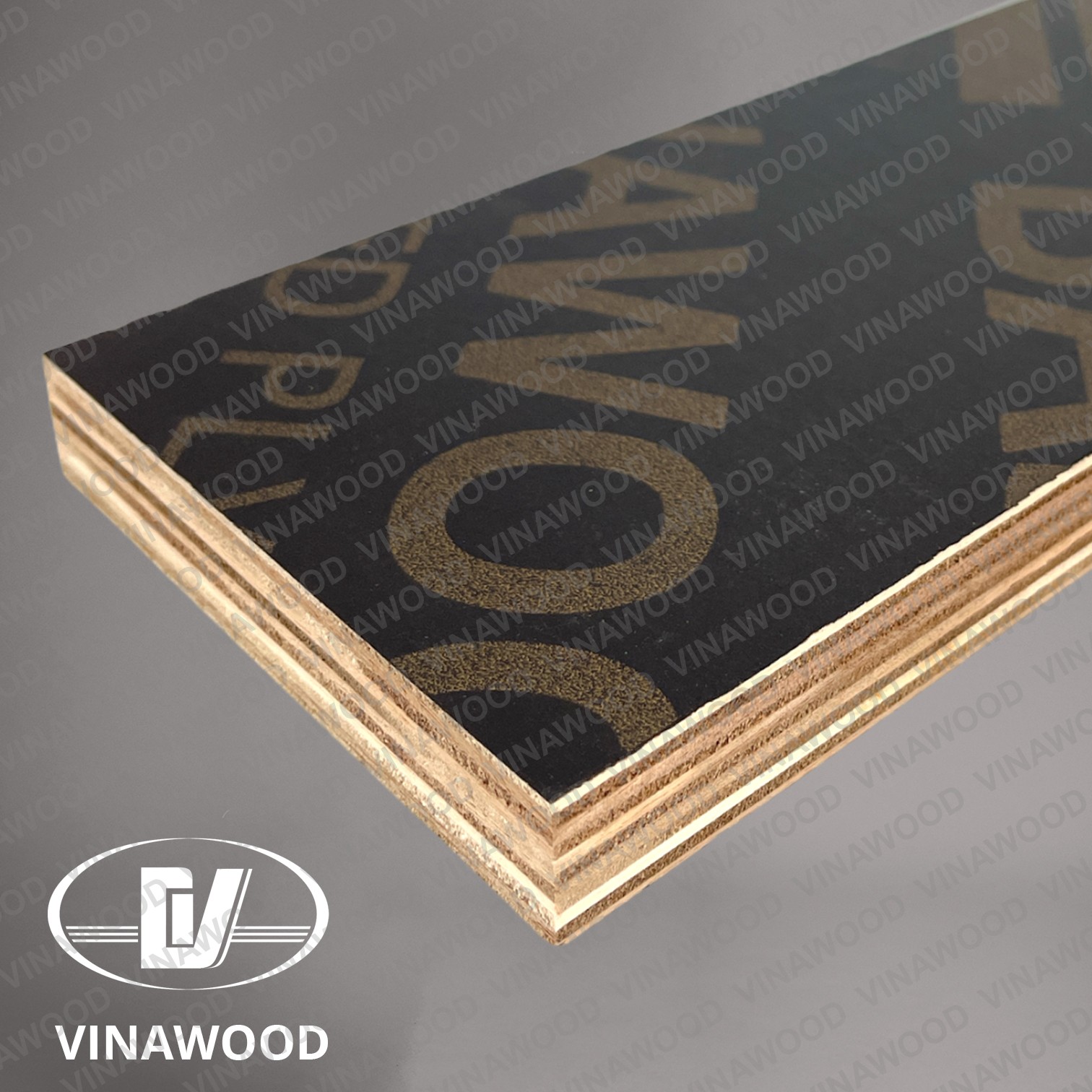
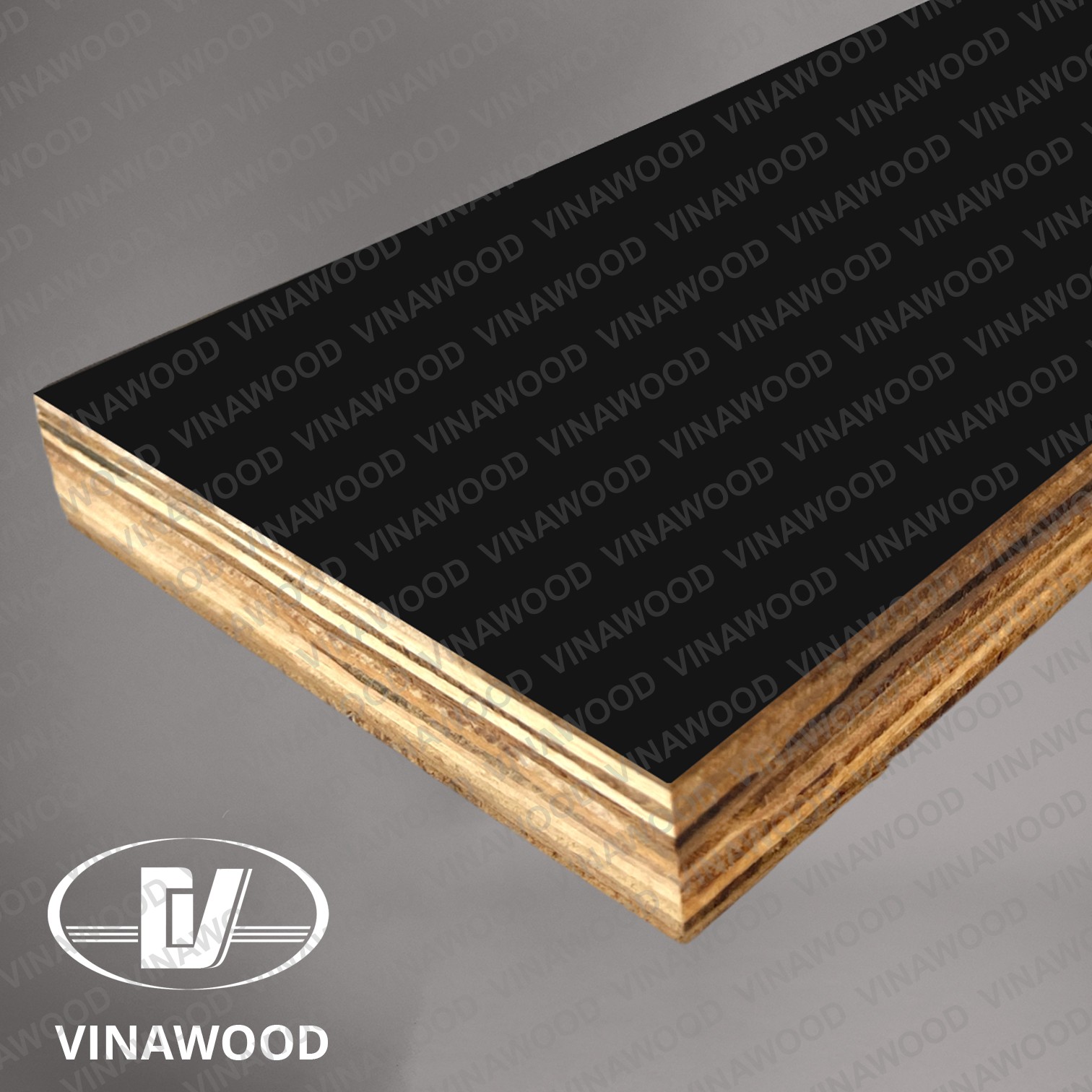
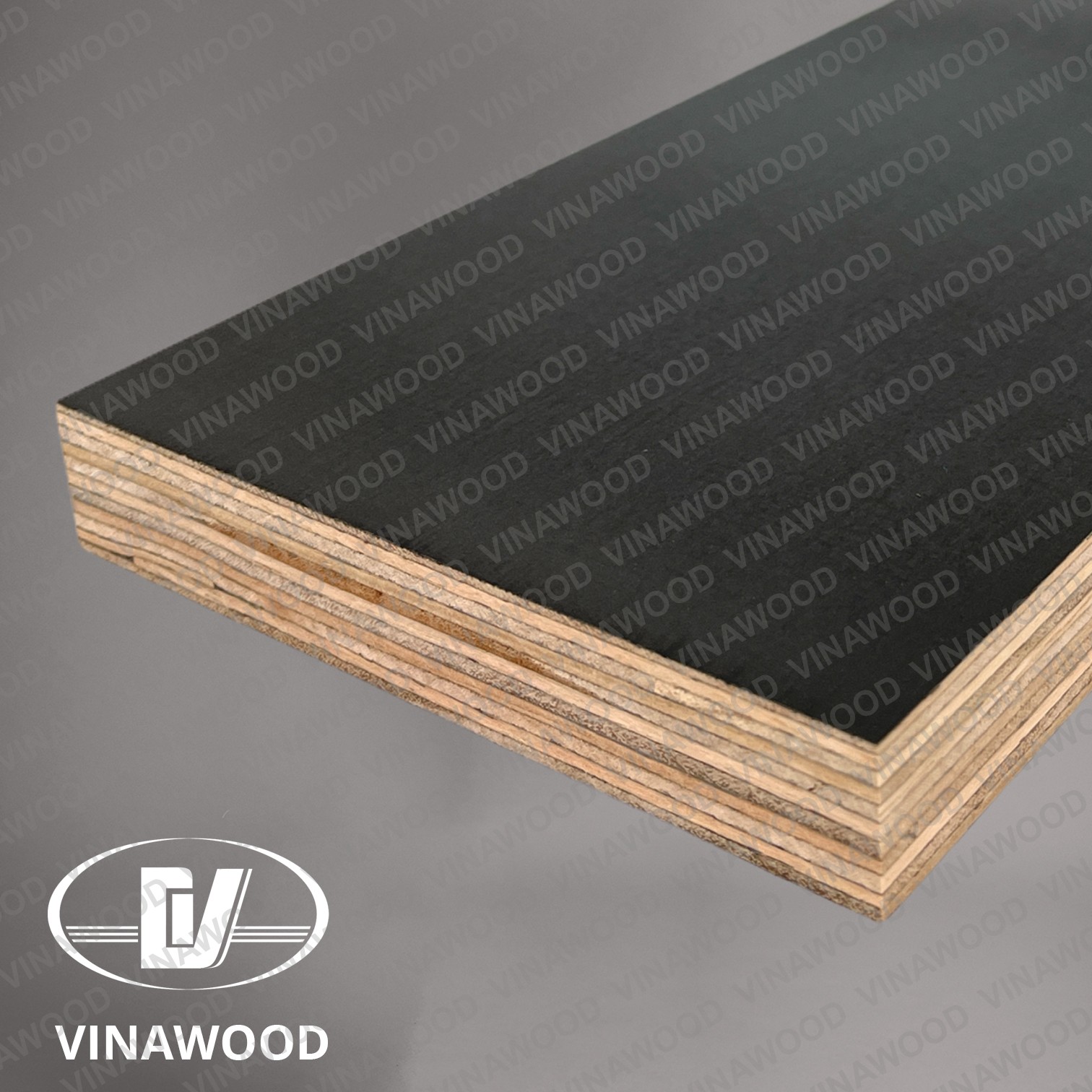
Vinawood manufactures five film faced plywood grades for the Baltic construction market. The three Class 2 grades (EN 636-2) are bonded with melamine (MUF) glue. Pro Form and Pro Form Lite are the Class 3 grades (EN 636-3), and they use WBP phenolic glue, which is what WBP means on our certificates. Every grade comes in the 2500×1250mm EU sheet.
| Product | EN Standard | Glue Type | Face Film | Reuse Cycles | Thickness | Best For |
|---|---|---|---|---|---|---|
| Eco Form Plus | EN 636-2 | Melamine Standard (MUF) | 165 g/m² | Up to 8 | 12–21 mm | Budget residential projects |
| Form Basic | EN 636-2 | Melamine Standard (MUF) | 165 g/m² | Up to 10 | 12–21 mm | Standard commercial formwork |
| Form Extra | EN 636-2 | Melamine Top (MUF) | 165 g/m² | Up to 15 | 12–21 mm | Heavy-duty, high reuse |
| Pro Form Lite | EN 636-3 | WBP phenolic | 165 g/m² | Up to 15 | 12–21 mm | Class 3 work at a moderate pour count |
| Pro Form | EN 636-3 | WBP phenolic | 125 g/m² | Up to 20 | 12–21 mm | Infrastructure, exterior exposure |
All thicknesses available in 2440×1220mm (standard) and 2500×1250mm (EU format). 18mm is the most commonly specified thickness for Lithuanian construction projects.
EN 636 Standards and CE Marking for Lithuania
As an EU member state, Lithuania requires construction products to comply with the Construction Products Regulation (CPR). For formwork plywood, this means:
EN 636 — Plywood for Structural Use
EN 636 classifies plywood by moisture resistance into three classes. EN 636-2 covers panels for humid conditions — suitable for standard formwork where panels are exposed to wet concrete during the 24–48 hour curing cycle, then dry between uses. EN 636-3 covers exterior-grade panels for sustained moisture exposure — specified for coastal construction, infrastructure with extended outdoor exposure, and projects with minimal drying time between concrete pours.
Vinawood's Eco Form Plus, Form Basic and Form Extra meet EN 636-2 with a melamine (MUF) glue line, which makes them Class 2 panels. Pro Form and Pro Form Lite meet EN 636-3 with a WBP phenolic glue line. That water-resistant phenolic bond is why they are the Class 3 choice for infrastructure where panels stay wet between pours.
EN 13986 — Wood-Based Panels for Construction
This harmonised standard governs wood-based panels used in EU construction. Products bearing CE marking under EN 13986 are accepted across all EU member states, including Lithuania, without additional national approval. Vinawood provides a Declaration of Performance (DoP) with every shipment for CE marking compliance.
Formaldehyde Emission Class
Formaldehyde emission class is stated per grade on the mill certificate. The phenolic grades, Pro Form and Pro Form Lite, are listed at E1, while the melamine (MUF) bonded Class 2 grades are listed at E2, so name the class your project needs on the enquiry and we confirm it on the quotation. Vinawood also holds CARB P2 and TSCA Title VI certification for buyers whose specifications reference the US emission rules.
Baltic Construction Applications
Film faced plywood from Vinawood is used across a broad range of Lithuanian and Baltic construction applications:
- Perdangų klojiniai (slab formwork): 18–21mm panels for floor and roof slab pours. Form Extra (up to 15 reuses) and Pro Form (up to 20 reuses) are preferred for multi-storey residential towers in Vilnius where rapid pour cycles demand maximum reuse life.
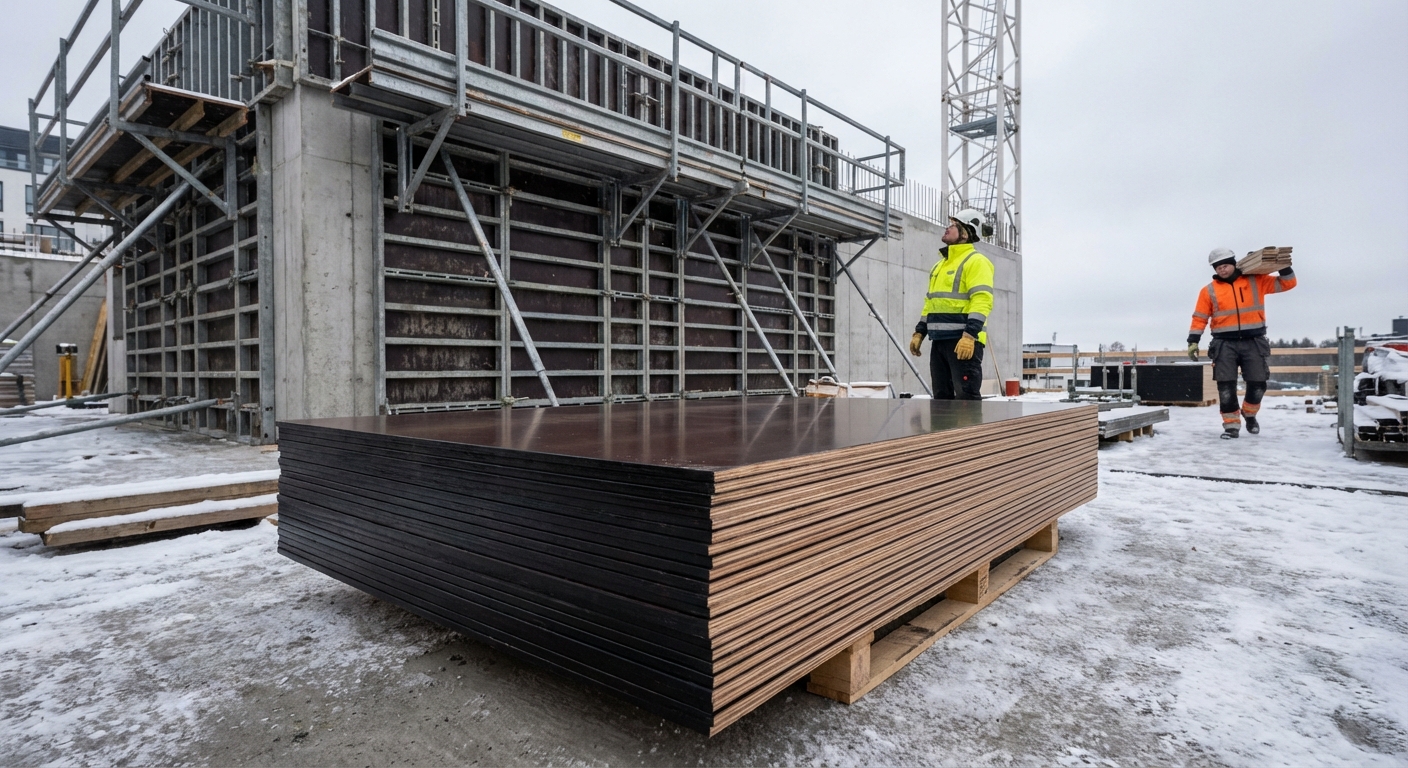
- Sienų klojiniai (wall formwork): 18mm panels with tie-rod holes for vertical concrete pours. The smooth film face produces clean concrete surfaces and releases cleanly during stripping, reducing cycle time.
- Pamatų klojiniai (foundation formwork): Ground-contact applications where sustained moisture exposure is common. Pro Form, with its EN 636-3 water-resistant phenolic bond, is specified for foundations in Lithuania's clay-heavy soils, where groundwater contact is frequent.
- Tiltų statyba (bridge construction): Large-format 2500×1250mm panels reduce joint lines on visible concrete bridge surfaces. Pro Form (EN 636-3) is recommended for these extended-exposure, infrastructure-grade applications — particularly on Via Baltica highway upgrades and Rail Baltica bridge works.
- Kolonų klojiniai (column formwork): Custom-cut panels for square and rectangular concrete columns in commercial and industrial buildings.
The Russia Supply Gap — Why Vietnam Is the Practical Alternative
Before 2022, the Baltic plywood market was dominated by Russian birch plywood. Russian mills offered low prices, overland delivery in 3–5 days, and familiar product specifications. EU sanctions on Russian wood products (Council Regulation 2022/576 and subsequent amendments) eliminated this supply chain entirely.
The effect on Baltic construction was immediate. Formwork plywood prices climbed as Finnish and Chinese suppliers absorbed the extra demand. Finnish plywood remains high quality, but it commands premium pricing that many Lithuanian contractors cannot carry across a large project, especially on fixed-price public infrastructure tenders.
Vietnamese film faced plywood fills this gap on the points that matter to a tender. It carries EN 636 certification to the same European standard as Finnish panels, it is bought at the source by the container, and it comes with full EU paperwork: CE marking, the Declaration of Performance, the formaldehyde class for each grade, and FSC-COC and PEFC chain-of-custody certification. I would add one practical point from our side. Batch consistency matters more than the brochure, so ask for the mill certificate of the actual lot before the container is stuffed.
The trade-off is lead time. An ocean shipment from Vietnam takes weeks where a truck from Finland takes days, and the transit for your sailing is confirmed on your quotation. For Lithuanian procurement teams who plan orders well ahead (standard practice on large infrastructure projects), this lead time is manageable. Many Baltic importers now maintain rolling container orders to ensure continuous supply.
Logistics: Shipping Formwork Plywood to Klaipėda
Klaipėda is Lithuania's primary deepwater port and the natural entry point for Vietnamese plywood imports to the Baltic region. From Klaipėda, onward distribution by road covers all three Baltic states — Vilnius (310 km), Riga (300 km), and Tallinn (600 km) — within a single day's trucking.
Transit time: it varies with the carrier and the routing out of Hai Phong, so we confirm it on your quotation, then again when the booking is made. Hamburg or Rotterdam are alternative European gateway ports, with onward feeder service or trucking to Lithuania.
Order size and loading: order size, container loading and the mix of grades and thicknesses in one container are confirmed on your quotation, for 20ft and 40ft high-cube containers alike.
Shipping terms: FOB (buyer arranges freight) is standard, with CIF Klaipėda available on request. HS heading 4412 (plywood) applies, and the exact subheading follows the face veneer species declared on the commercial invoice.
Payment terms: payment terms, including any deposit, are confirmed on your quotation. Letters of Credit through Lithuanian or European banks are accepted, and an irrevocable, confirmed L/C gives both sides the most security on a first order.
Customs and documentation: Vinawood provides full EU import documentation — phytosanitary certificate (ISPM 15), CE marking documentation (DoP under EN 13986), EN 636 test reports, mill certificates, and FSC-COC and PEFC chain-of-custody certification. Lithuanian customs brokers at Klaipėda are experienced with plywood HS code clearance.
Serving the Wider Baltic Market
Lithuania's geographic position makes it a natural distribution hub for the entire Baltic region. Vietnamese plywood imported through Klaipėda serves construction projects across three markets:
- Latvia: Riga's construction sector is expanding with EU-funded infrastructure and commercial development. Road distance from Klaipėda to Riga is approximately 300 km — next-day delivery by truck.
- Estonia: Tallinn's commercial construction and the Rail Baltica megaproject create sustained formwork demand. Distribution from Klaipėda via Riga to Tallinn is a well-established freight corridor.
- Poland (northern regions): The Tri-City area (Gdańsk, Gdynia, Sopot) and northeastern Poland are accessible from Klaipėda, though Polish importers may prefer direct shipment to Gdynia or Gdańsk ports.
For Baltic timber importers and construction supply companies, establishing a Vietnamese plywood supply line through Klaipėda provides regional coverage across all three Baltic states from a single port of entry.
Request a Quote: FOB Hai Phong, CIF Klaipėda on Request
Vinawood supplies formwork plywood to European construction companies and timber importers across the Baltic states. Our team provides certified EN 636 film faced plywood direct from the mill with full CE documentation. Explore the European formwork plywood range:
- Pro Form — EN 636-3, up to 20 reuses, WBP phenolic glue (Class 3), 125 g/m² film
- Pro Form Lite — EN 636-3, up to 15 reuses, WBP phenolic glue (Class 3), 165 g/m² film
- Form Extra — EN 636-2, up to 15 reuses, 165 g/m² film over a Melamine Top (MUF) core
- Form Basic — EN 636-2, up to 10 reuses, standard commercial forming
- Eco Form Plus — EN 636-2, up to 8 reuses, best value for residential projects
Category
guides
Related Markets
Related Countries
Related Products
▶Sources & References (3)
- EN 636: Plywood Specifications — CEN European Committee for Standardization (2012-01-01)
- EN 13986: Wood-based panels for use in construction — CEN European Committee for Standardization (2004-01-01)
- EU sanctions on Russian wood products — Council Regulation (EU) 2022/576 — Official Journal of the European Union (2022-04-08)