Formwork Plywood Germany: Schaltafel & Schalungsplatten Supplier
Film faced Schaltafeln from Vietnam for the DACH construction market. Vinawood formwork plywood meets EN 636-2 and EN 636-3, comes in the 2500x1250 mm EU format, and ships FOB Hai Phong with full CE documentation.

Why DACH Contractors Are Looking East for Schaltafeln
Ask any Polier in Bavaria what eats the formwork budget and the answer comes fast. Panels. They get scratched, soaked, nailed, stripped, and after enough pours they go in the skip. A small trade lot covers one job. A building programme with forty slab pours is another story, and that is the point where buyers start asking for EN 636 paperwork by the container.
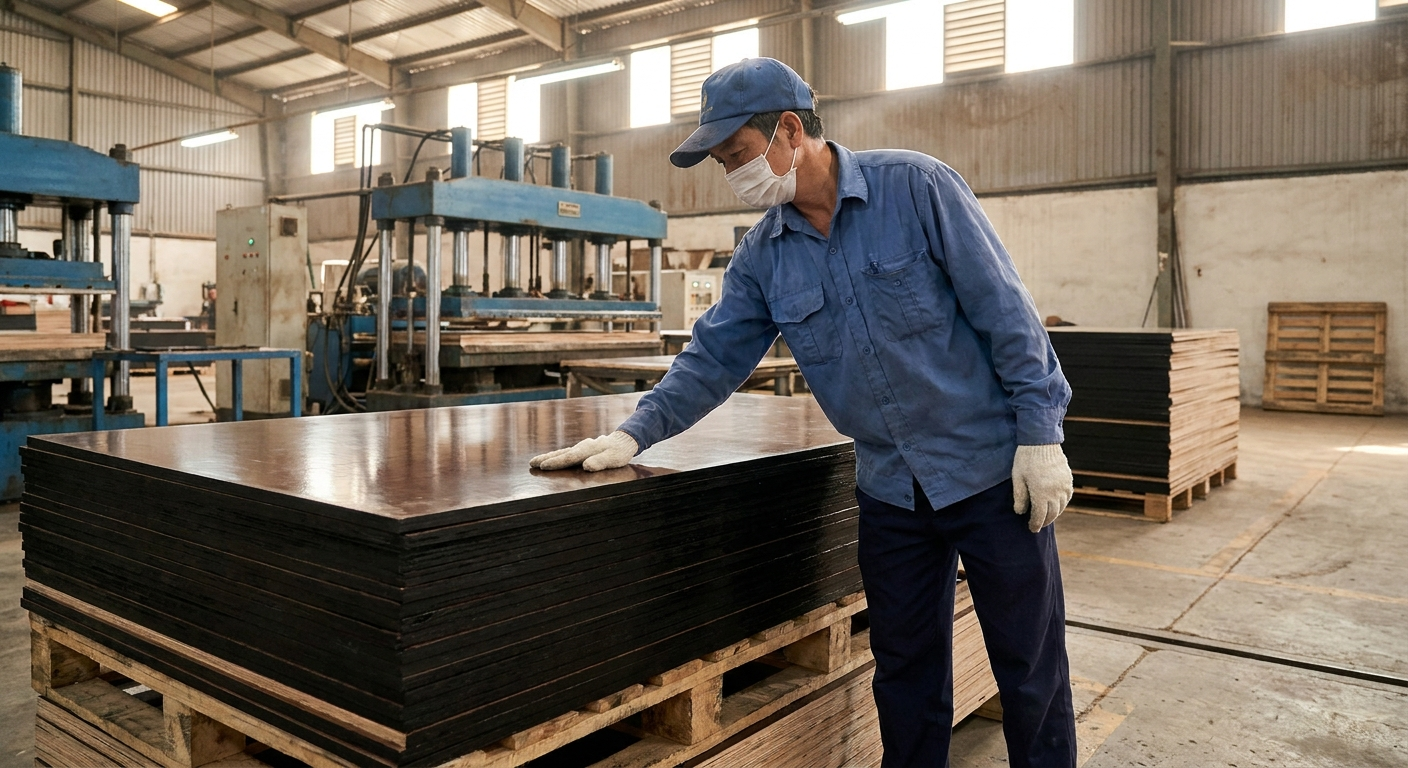
So a fair number of procurement people in Germany, Austria and Switzerland now buy formwork plywood directly from Vietnam. We started making plywood in 1992. These days roughly 5,000 containers a year go out to 55+ countries. What DACH buyers get from us: film faced Schaltafeln to EN 636-2 or EN 636-3, in the 2500x1250 mm EU sheet or in 2440x1220 mm, priced direct from the mill against your own spec.
German Terminology: Schaltafel, Schalungsplatten, Schalungsplatte
Same board, three or four names. A supplier abroad who reads them wrong ships the wrong board, and nobody finds out until the truck is unloaded. Here is how we read an enquiry:
- Schaltafel (pl. Schaltafeln): the site word for a formwork panel. In English, formwork or shuttering plywood.
- Schalungsplatte (pl. Schalungsplatten): shuttering board. Most crews use it the same way as Schaltafel.
- Siebdruckplatte: strictly speaking, a film-faced board with a rough mesh pattern on one face, meant for trailer floors and stages. Some traders call every film-faced sheet a Siebdruckplatte. That habit causes mix-ups.
- Filmbeschichtete Sperrholzplatte: plain German for film-faced plywood with a smooth face, which is what concrete wants.
- Schalholz: sawn timber for formwork. Not plywood at all.
Our advice? Write "filmbeschichtete Schalungsplatte, beidseitig glatt" on the enquiry, then the EN 636 class. Two lines, and the face and the glue are both pinned down.
Vinawood European-Grade Formwork Products
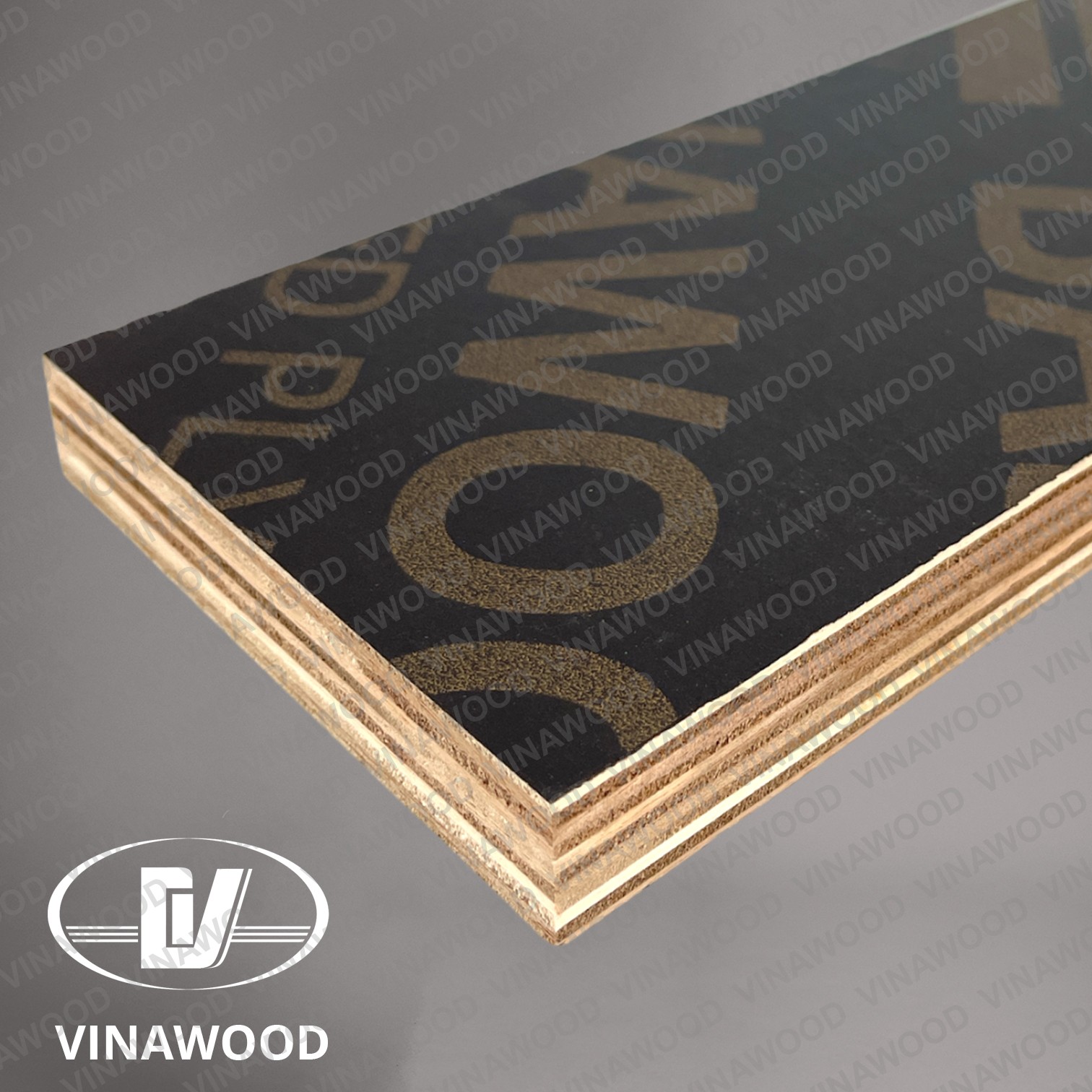
Five grades go to the DACH market. Eco Form Plus, Form Basic and Form Extra are Class 2 (EN 636-2) with melamine (MUF) glue. Pro Form and Pro Form Lite are Class 3 (EN 636-3) with WBP phenolic glue. On our certificates WBP always means phenolic, never melamine. Every one of them comes in 12, 15, 18 or 21 mm, and in both sheet sizes.
| Product | EN Standard | Glue Type | Face Film | Reuse Cycles | Thickness | Best For |
|---|---|---|---|---|---|---|
| Eco Form Plus | EN 636-2 | Melamine (MUF) | 165 g/m² | Up to 8 | 12–21 mm | Budget projects |
| Form Basic | EN 636-2 | Melamine (MUF) | 165 g/m² | Up to 10 | 12–21 mm | Standard commercial forming |
| Form Extra | EN 636-2 | Melamine Top (MUF) | 165 g/m² | Up to 15 | 12–21 mm | Heavy-duty, high reuse |
| Pro Form Lite | EN 636-3 | WBP phenolic | 165 g/m² | Up to 15 | 12–21 mm | Class 3 work at a moderate pour count |
| Pro Form | EN 636-3 | WBP phenolic | 125 g/m² | Up to 20 | 12–21 mm | Exterior and infrastructure, Class 3 |
All thicknesses in 2440x1220 mm and 2500x1250 mm (EU format). 18 mm is where most slab and wall crews begin.
Same 165 g/m² film as Form Basic, yet more pours? People ask us that a lot. Answer: glue. Form Extra gets a stronger melamine glue line, and that is where the extra pours come from.
EN Standards and DIN Compatibility
Before an imported Schaltafel gets near the rebar, the Bauleiter wants three numbers in the file.
EN 636: Plywood for Structural Use
Class 2, EN 636-2, is rated for humid conditions. Normal formwork lives there: soaked at the pour, dry again by the next one. EN 636-3 is the exterior class, for sheets that stay damp for weeks. Our three melamine (MUF) grades sit in Class 2. Pro Form and Pro Form Lite, with their water-resistant phenolic bond, sit in Class 3, which is why we point bridge and civil contractors to them.
EN 13986: Wood-Based Panels for Construction
Harmonised across the EU, it governs wood-based panels used in buildings. A CE mark under it brings a Declaration of Performance with it. Honestly, the DoP is the one page the Bauamt reads closely.
DIN 68705 and Formaldehyde
Old tender texts still quote DIN 68705, even though EN 636 replaced it years ago. Check the EN 636 class instead. On formaldehyde, the mill certificate states the class per grade. Our phenolic grades are listed at E1 and the melamine (MUF) Class 2 grades at E2, so tell us the class your project needs and we confirm it on the quotation. CARB P2 and TSCA Title VI certificates are on file too, for specs that cite US rules.
Use Cases in German Construction
Two questions decide the grade. How many pours? How long does the sheet sit wet?
- Deckenschalung (slab formwork): usually 18 or 21 mm. If the same sheets will cycle through a whole tower, Form Extra (up to 15 reuses) or Pro Form (up to 20) pays off.
- Wandschalung (wall formwork): 18 mm with holes for the tie rods. Strip day goes faster because the film doesn't grab the concrete.
- Fundamentschalung (foundation shuttering): the panel sits in wet ground. We specify Pro Form here, because of its EN 636-3 phenolic bond.
- Stützenschalung (column formwork): we cut sheets down for square and rectangular columns.
- Brückenbau (bridge construction): on exposed concrete, a 2500x1250 mm sheet leaves fewer joints to look at, and Pro Form copes with months outdoors.
Why Import from Vietnam Instead of Buying Locally?
Not because of a magic price. The real reason is what comes in the container with the boards. One batch for the whole job. Sheets in EU format. Plus the paperwork the Bauamt will accept: mill certificates, EN 636 test reports, the DoP, FSC-COC and PEFC chain of custody.
We don't print a price list. Grade, thickness, volume and even the month all move the number, so each enquiry gets its own quote. I would add one practical point from our side. Batch consistency matters more than the brochure, so ask for the mill certificate of the actual lot before the container is loaded. The catch is time. A local yard delivers tomorrow; an ocean shipment needs planning weeks out.
Logistics: Shipping Schaltafeln from Vietnam to Germany
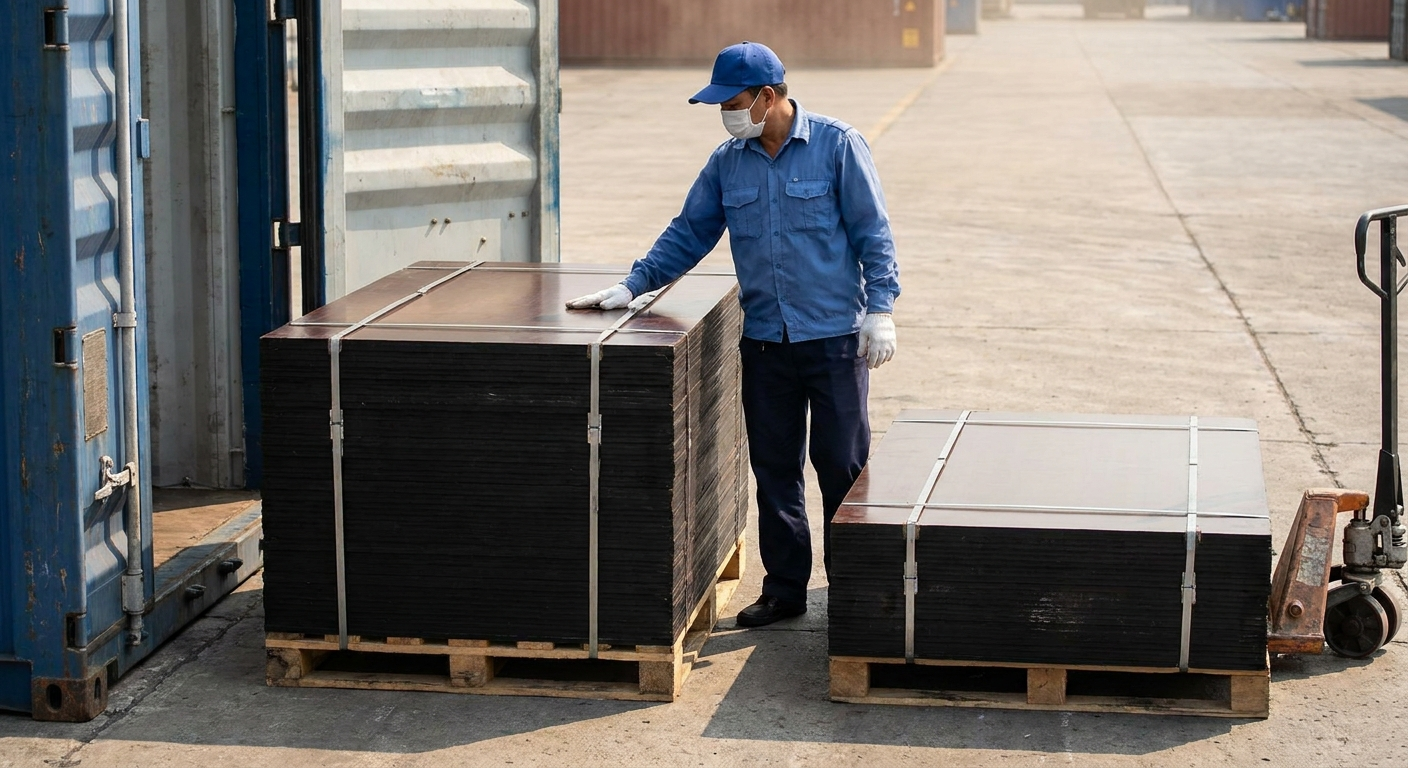
We sell FOB Hai Phong as standard, and you book the freight. Want CIF Hamburg instead? Ask. Hamburg and Bremerhaven are the usual German ports, while some buyers land in Rotterdam and truck on to Germany, Austria or Switzerland. Transit changes with the carrier and the month, so we confirm it at booking.
Order size, container loading and any mix of grades or thicknesses go on your quotation. Customs falls under HS heading 4412 (plywood), and the exact subheading follows the face veneer species on the commercial invoice. Payment terms, deposit included, are on the quotation as well. Letters of Credit are fine.
Request a Quote for Schaltafeln
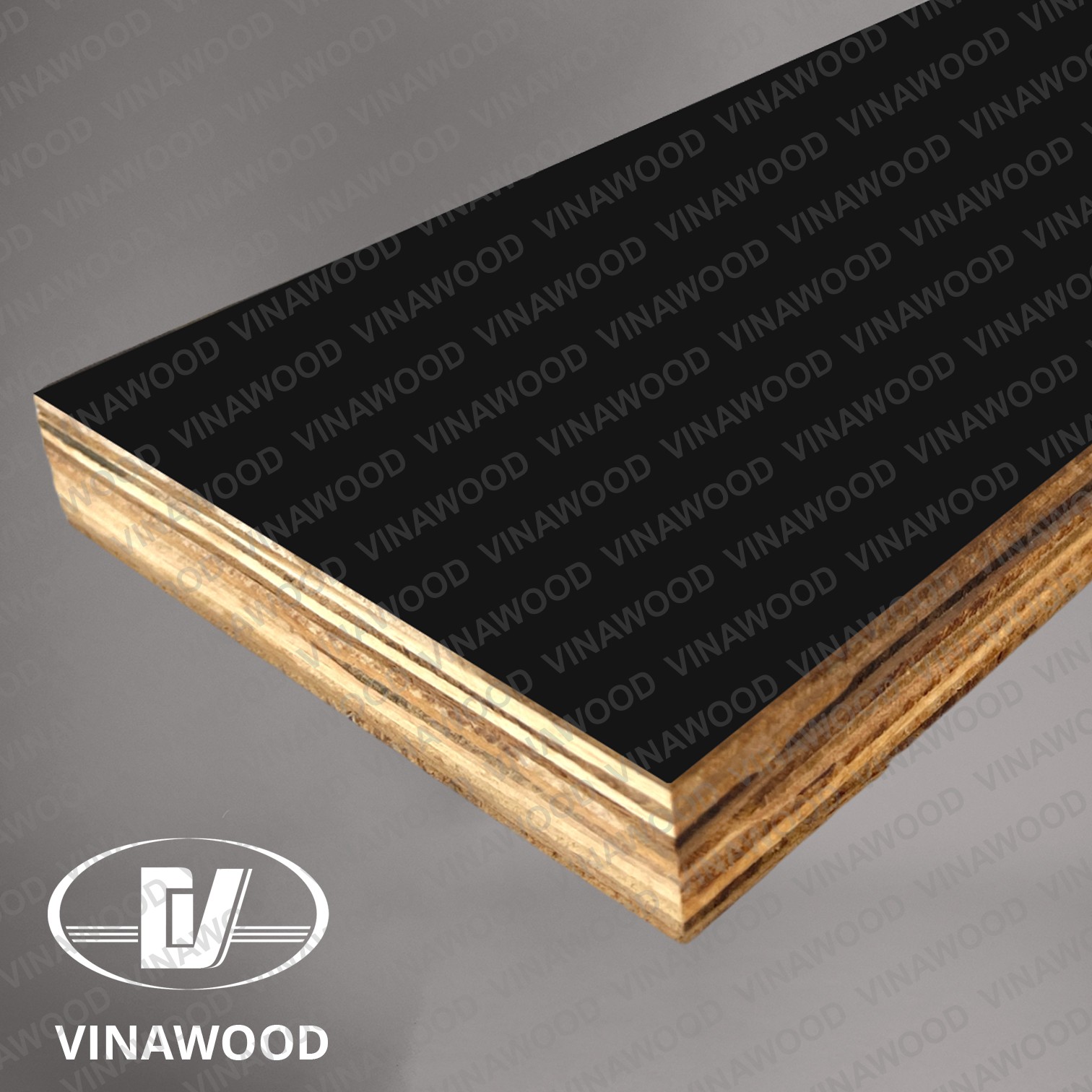
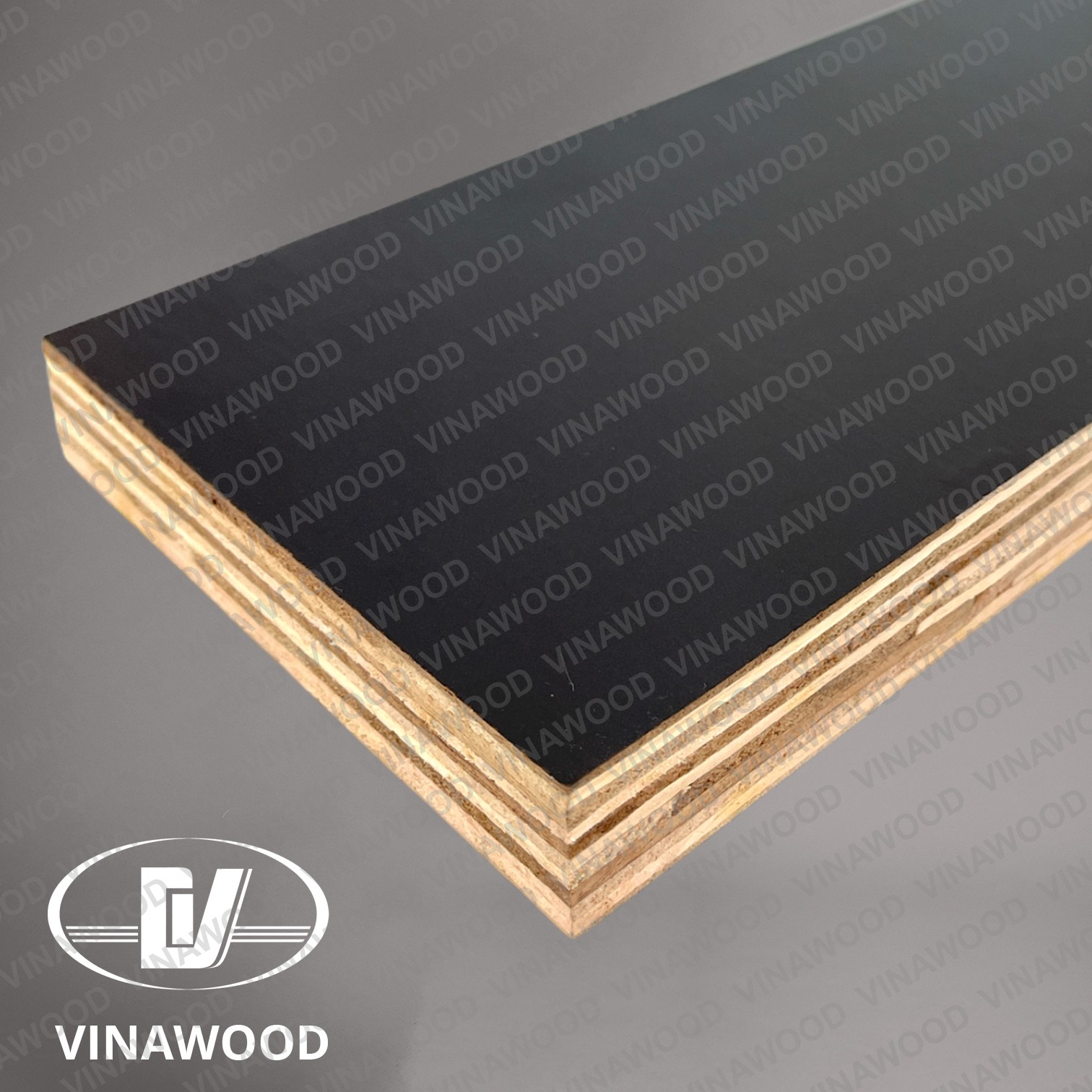
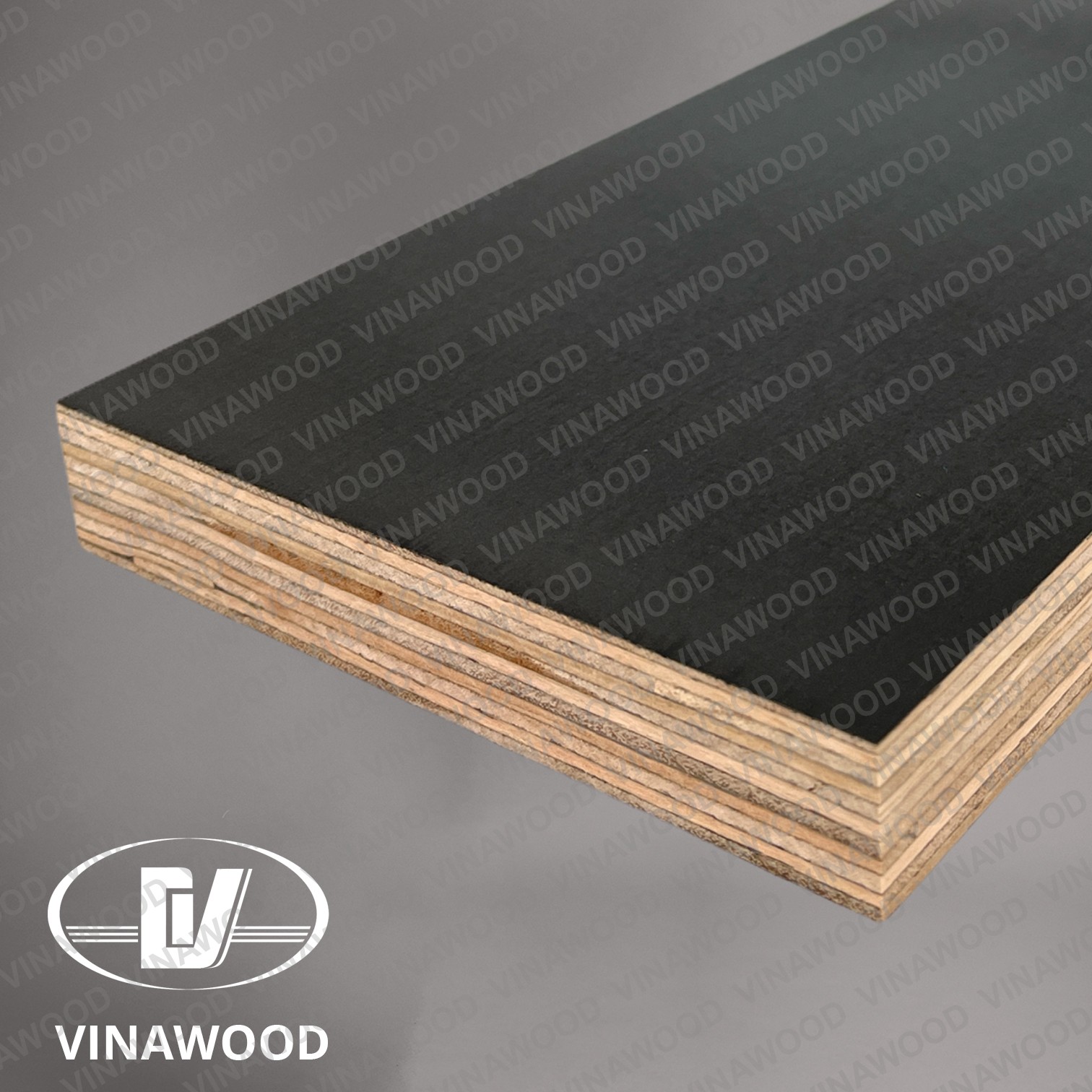
Vinawood supplies formwork plywood to contractors and timber importers in Germany, Austria and Switzerland, with certified EN 636 Schaltafeln and full CE documents, quoted manufacturer-direct. Our European formwork range:
Category
guides
Related Markets
Related Countries
Related Products
▶Sources & References (2)
- EN 636: Plywood Specifications — CEN European Committee for Standardization (2012-01-01)
- EN 13986: Wood-based panels for use in construction — CEN European Committee for Standardization (2004-01-01)