Concrete Form Plywood Price (2026): What US Contractors Actually Pay Per Pour
Concrete form plywood price is cost per pour plus reuse and landed factors — not invented sheet stickers. Vinawood ladder Eco Form Plus to Pro Form / HDO Basic Class 2 / HDO Premium Class 3 / MatteFace. Factory-direct Vietnam, est. 1992, 55+ countries. Request a quote.
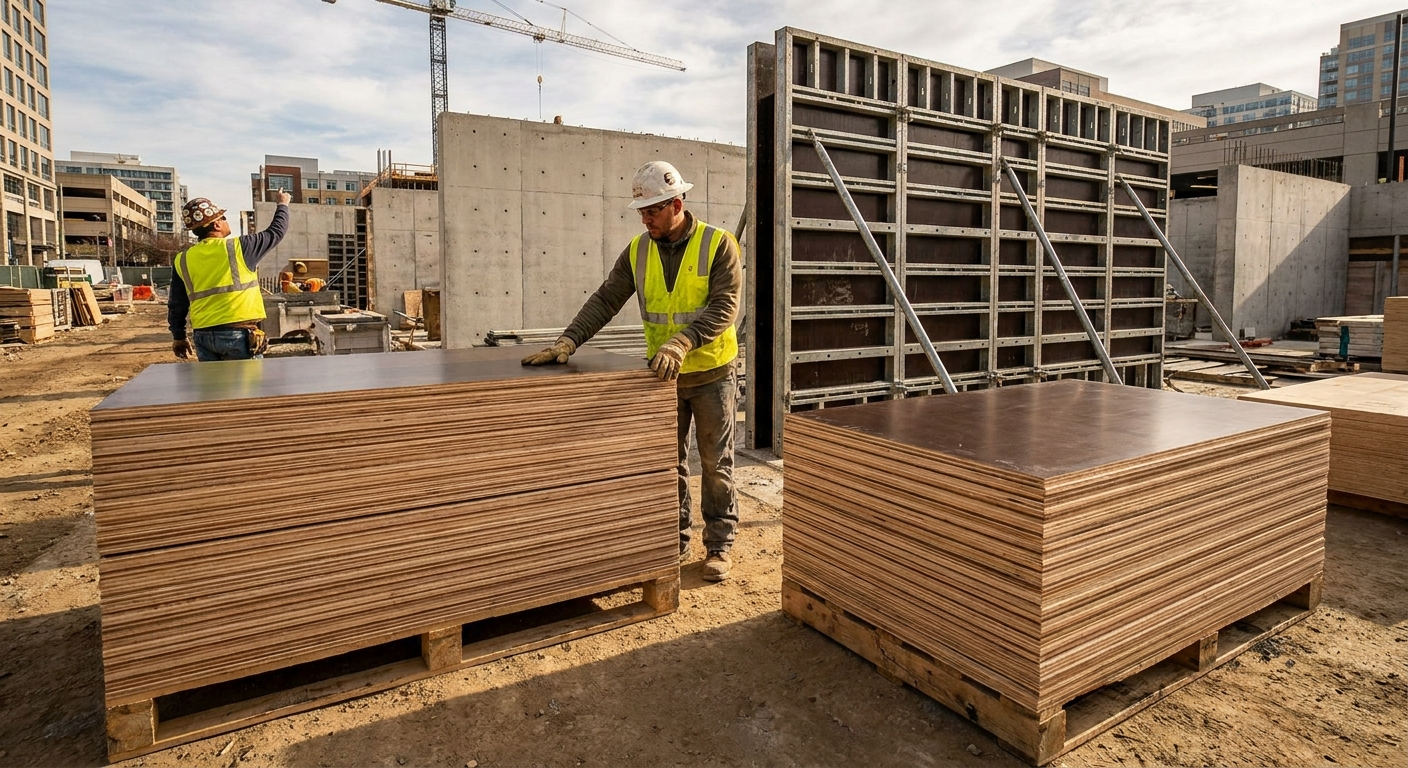
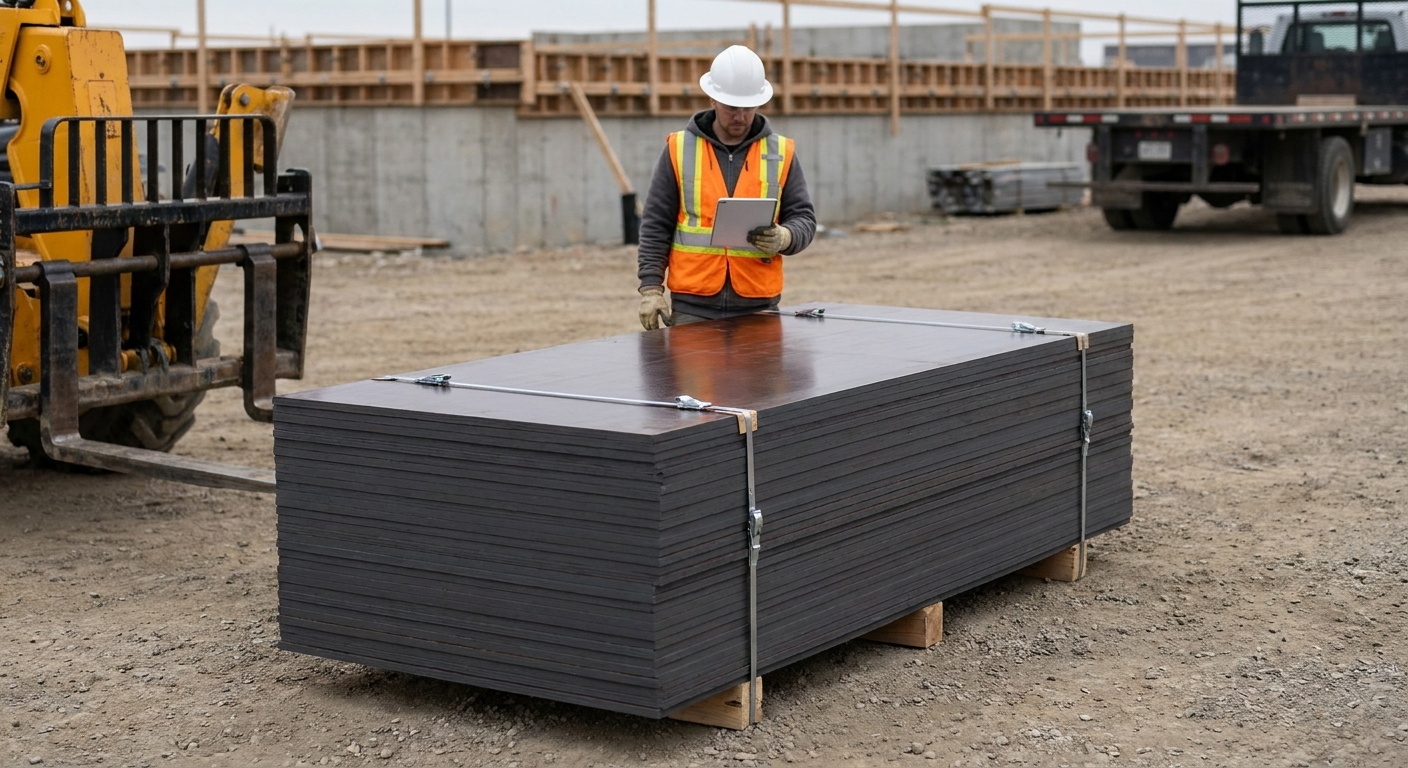
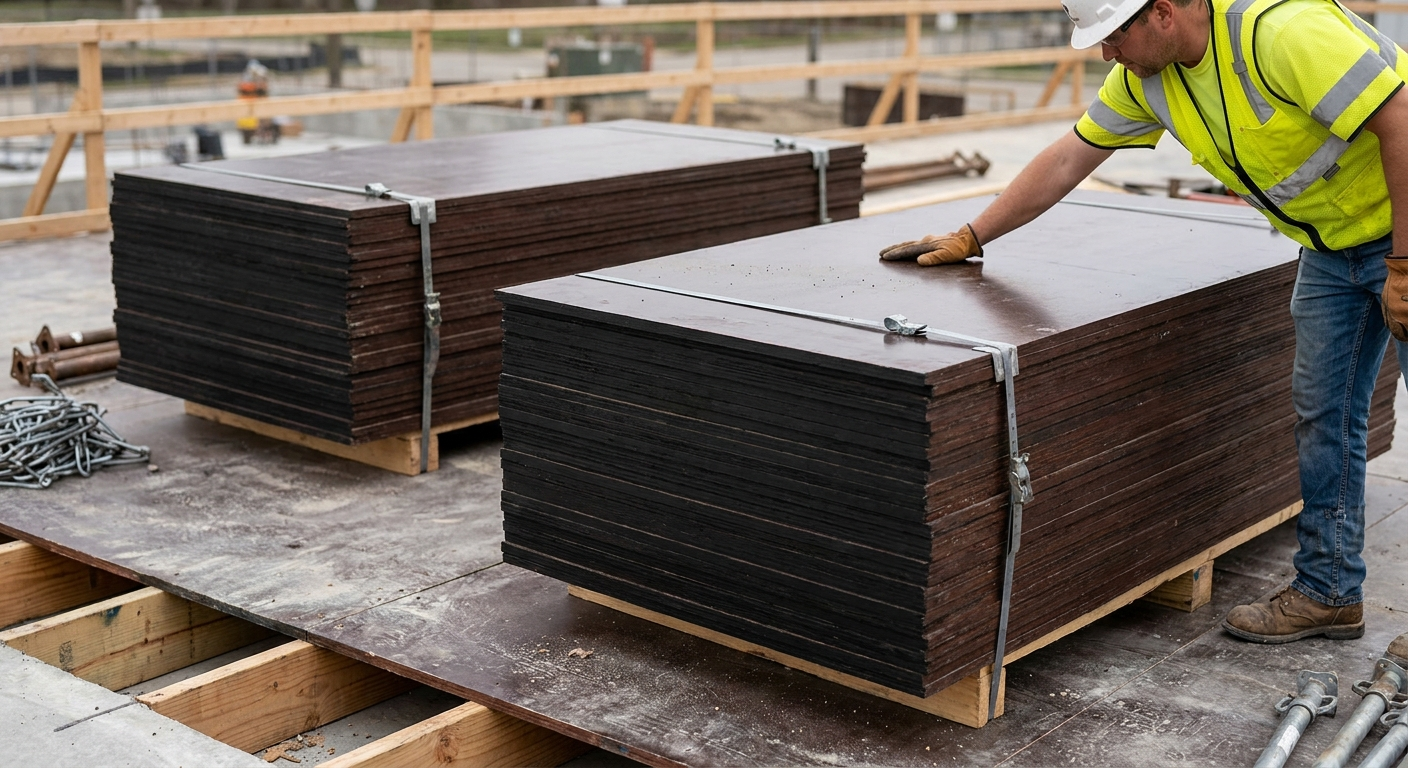
Concrete form plywood price is not the sticker on a lumberyard sheet. What decides a form package is cost per pour: panel cost plus strip and clean labour, divided by how many times the face still casts a finish you can hand to the next trade. Overlay and glue class move that figure. So do thickness, sheet size, and landed freight or duties where they apply. A sheet list without a reuse envelope is just noise.
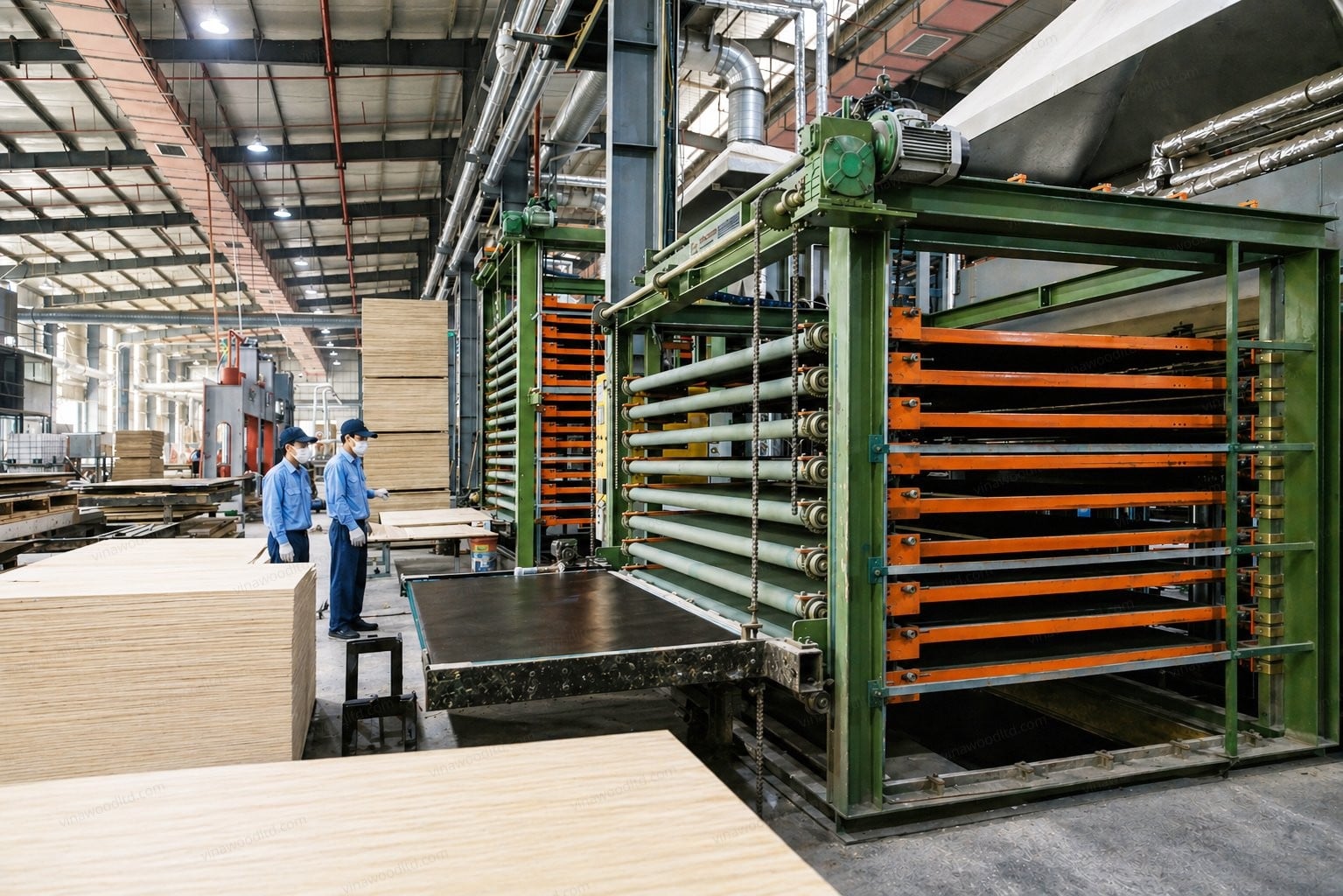
Vinawood is a Vietnam mill, established in 1992. We ship about 5,000 containers a year to 55+ countries. This page is a cost-per-pour framework for US contractors and importers — not a retail price list. No invented dollar tables. No named lumberyard shootouts as price proof. For a project quote, send an RFQ at /rfq or /contact?type=quotation.
What "price" actually means on a form package
Before you compare grades, run the same division every estimator should keep on the takeoff:
(Panel cost + strip/clean labour per cycle) / reuse cycles = cost per pour per sheet
Reuse is written as up to N on the product data sheet. Site care still steals cycles. A short footing job with one or two pours does not need the same overlay as a multi-storey wall programme that will strip the same gang fifteen times. Premium panels pay off when the pour count is real. Cheap panels? Fine until strip day two.
Landed factors sit next to the panel line, not instead of it. Ocean freight changes the landed unit. So do inland haul and any applicable duties. None of that erases the reuse math. A lower FOB that dies after three pours still loses to a higher FOB that holds for fifteen under the same strip discipline.
Ask sales for a container or bundle quote against your pour count, thickness, and overlay. Do not paste a blog number into a bid. Stickers move. The framework does not.
US contractor decision path: footing vs multi-storey
The first fork on a US takeoff is programme length, not brand stamp. A residential strip footing or a one-storey stem wall often needs one or two pours from the same sheets. Entry film-faced grades and careful strip care cover that work. You do not need to pay for a Class 3 face the architect will never see. The cost-per-pour curve falls fast after pour two, then flattens. Overbuying HDO Premium for a buried footing is a common waste.
A multi-storey wall programme is a different file. The same gang may strip fifteen to twenty times against fair-face or near-fair elevations. Strip labour starts to matter as much as the sheet itself. That is where phenolic Class 3 (Pro Form Lite, Pro Form, HDO Standard, or HDO Premium) earns the landed premium, because every early retirement hands grind and patch bills to the next trade. Match the reuse envelope to the elevation, not to the loudest catalogue claim.
Between those poles sit short commercial walls and mid-rise cores that want ten to fifteen pours. Form Extra (Superior Glue MUF, EN 636-2, not Class 3), Pro Form Lite (PF Class 3), HDO Basic (Class 2 overlay rung), and MatteFace (matte phenolic surface film, up to 15) cover that band when strip care holds. Pick by finish first, then by bond class. Glossy film and matte MatteFace are not interchangeable on an architectural elevation.
What moves the quote (no dollar table)
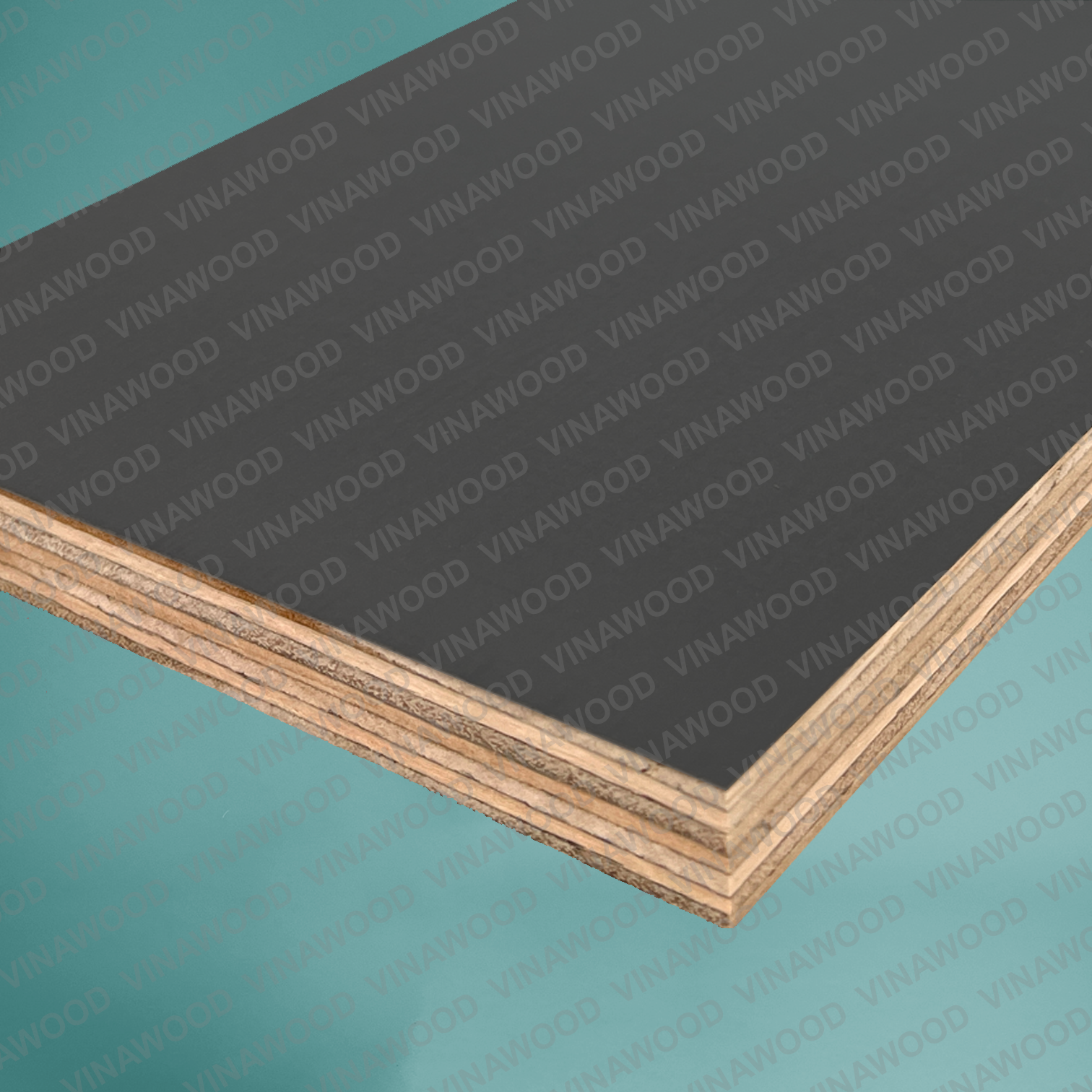
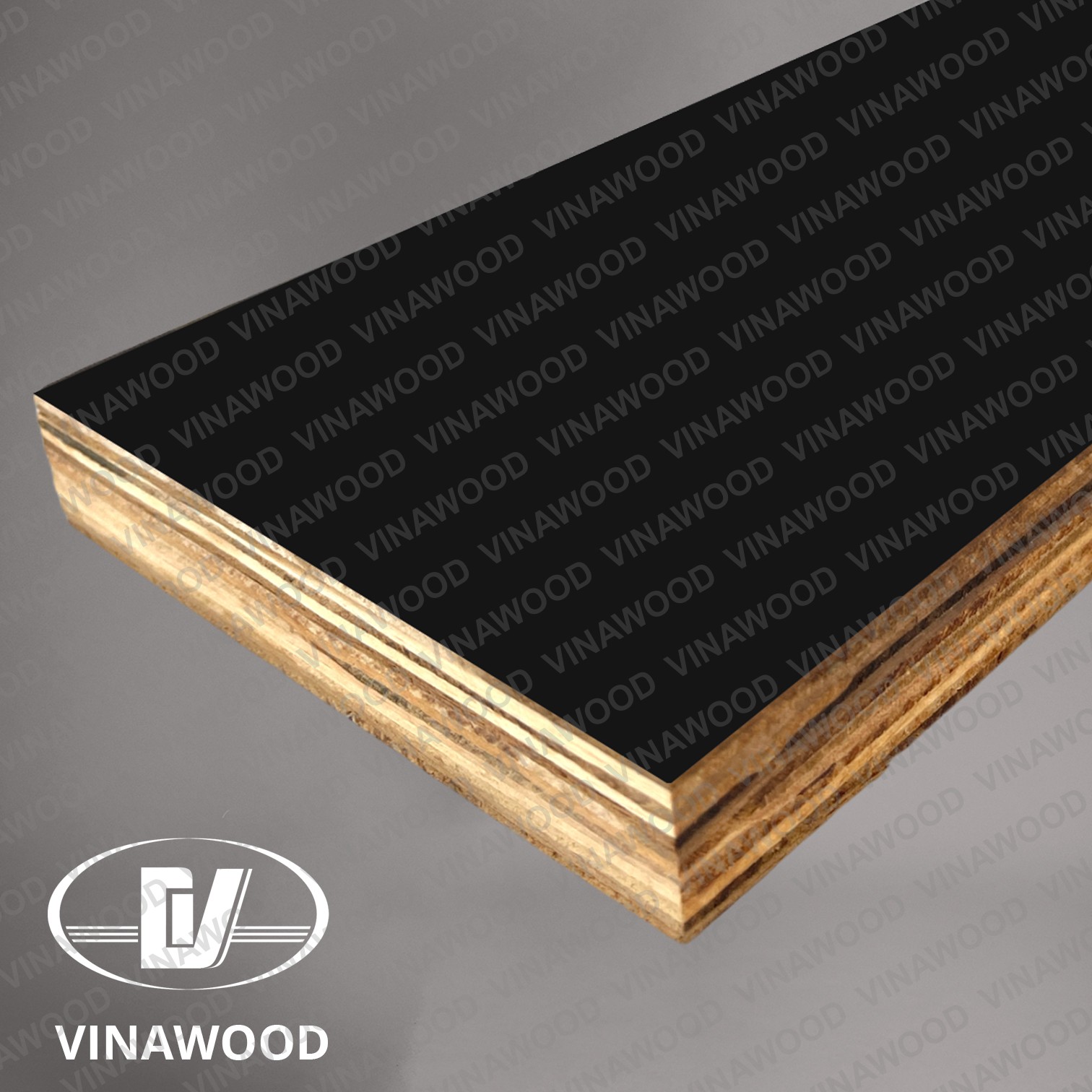
Several real manufacturing and logistics levers sit behind every RFQ line. Overlay is the first: raw veneer face is cheapest and weakest against concrete; film-faced phenolic, MatteFace (matte phenolic), and HDO (high-density overlay) each add face cost and reuse. Heavier, denser overlays usually cost more up front and last longer under wet concrete.
Glue class is the second. WBP phenolic Class 3 / EN 636-3 bonds deliver the longest wet margin. WBP MUF Class 2 / EN 636-2 costs less and tops out at fewer pours. Call the panel water-resistant / WBP — that is glue-class language, not a sealed-panel claim. Core and face grade sit next: hardwood plantation-grown cores with cleaner faces outprice combi cores with patches and voids. Density and void control show up on strip day, not in a catalogue slogan.
Thickness and sheet size finish the quote. 18 mm (3/4") is the US contractor workhorse on standard stud and joist spacing. Thinner sheets fit light curb and edge work. Thicker sheets earn their keep on high-pressure or wide-span decks. Millimetre-by-pour detail lives on the thickness guide, not here. 4x8 / 1220x2440 is the US default; metric 2440x1220 and EU 1250x2500 ship on different pallet plans and change how many sheets fit a 40HC.
For the contractor-forms language around grade choice, see plywood for concrete forms. Overlay types side by side live on film-faced vs MDO vs HDO.
Cost-per-pour framework (worked logic, no invented dollars)
Pick a reuse envelope first. Then ask what the landed sheet costs under that envelope.
- Short cycle (up to ~8 pours). Entry film-faced grades. Fine for single-storey and concealed work. Cost per pour falls fast after pour two, then flattens.
- Mid cycle (up to ~10–15 pours). Better MUF cores, HDO Basic (Class 2), or the first Class 3 rung. Labour to strip and clean starts to matter as much as the sheet itself.
- Long cycle (up to ~20 pours). Full phenolic Class 3 / HDO Premium territory. Break-even against a short-cycle sheet usually lands early in the programme if strip discipline holds.
I still see estimators price "HDO" and "film-faced" as if they were one SKU with one retail sticker. They are not. Overlay weight changes the quote. Bond class and core build change the pour count. Run the division, then send the RFQ.
Worked logic without fake stickers helps more than a yard flyer. If sheet A costs roughly twice sheet B but delivers four times the pours under the same strip care, sheet A wins on cost per pour even before you count disposal. Flip the ratio and the cheap sheet wins on a one-pour curb. Boring arithmetic. Expensive to skip.
When factory-direct beats a yard walk-in
Where you buy changes lead time and unit cost more than it changes the physics of the panel. Big-box and walk-in yards are fast for a few sheets. They also carry the highest unit cost — fine for a repair pour or a weekend footing. Contractor accounts at regional yards improve the number on recurring small-to-mid programmes. You are still buying yard inventory, not mill FOB.
Factory-direct import makes sense when pour count and sheet count justify container planning and roughly 6–8 weeks of lead time against the pour calendar. Compare landed cost to reuse. Skip it on a single residential foundation where freight and working capital erase the gap. On a multi-storey wall programme that will burn through two or three container equivalents, the landed premium usually pays for itself in the first half of the reuse envelope — if the bond class and overlay were named correctly on the RFQ.
Sample before you commit a first container. Check overlay bond at the edges. Check thickness consistency and face grade against the TDS. A mill that cannot send samples is a trading desk, not a factory. Bundle and container tiers beat per-sheet walk-in pricing on the same SKU. That is channel structure, not a percent we invent here.
Hidden costs most sheet lists ignore
Per-sheet talk ignores what happens after the panel leaves the yard. Release agent is a line item: sealed phenolic and HDO faces take less oil than raw veneer, and finish quality after a dirty strip is another. Disposal is not free — sheets that delaminate after two pours go to the dumpster with a tipping fee. Splintered edges chew snap ties and she-bolts that would have lasted many more pours in sound formwork. Grind and patch labour on a worn face that prints fins onto fair-face concrete hands that bill to the next trade.
Good contractors bake a small overhead into the form package for consumables and wastage. Panels matched to the reuse cycle ride at the better end of that overhead. The lowest walk-in sticker often does not.
Why 18 mm (3/4") still anchors most US bids
Three-quarter-inch plywood is the US standard for concrete forms because the math works on common stud and strongback spacing. An 18 mm panel handles typical residential and light commercial wall pressures on standard centres without unusual deflection, and it lines up with 2x4 and 2x6 modules carpenters already stock.
12 mm (1/2") shows up on curb forms, slab edges, and light-duty work where hydrostatic load is low. 21–25 mm is the step-up for high-pressure blind-side forms and heavy engineering decks. Neither replaces 18 mm as the default bid thickness for ordinary wall and slab-edge work. Leave that default only when pour depth or joist centres force it — then open the thickness guide.
Vinawood product ladder (reuse as up to N)
Check the spec sheet before you ask for a price. Face film on Vinawood formwork is phenolic. MUF is the core glue on the lower rungs, not a bare melamine overlay. If a quote says "melamine" with no qualifier, stop and ask which meaning. Core MUF resin? A cheap market face film? Furniture laminate? Those three are not the same product.
- Eco Form Plus: WBP MUF, EN 636-2 / Class 2, phenolic face film, up to 8 reuses
- Form Basic: WBP MUF, EN 636-2 / Class 2, phenolic face film (165 gsm), up to 10 reuses
- Form Extra: Superior Glue MUF, EN 636-2 / Class 2, not Class 3, same phenolic face as Form Basic, up to 15 reuses
- Pro Form Lite: WBP phenolic (PF), EN 636-3 / Class 3, up to 15 reuses. Sits between Form Extra and Pro Form
- Pro Form: WBP phenolic, EN 636-3 / Class 3, phenolic face film (125 gsm), up to 20 reuses
- HDO Basic: HDO overlay, EN 636-2 / Class 2, up to 10 reuses (not Class 3)
- HDO Standard and HDO Premium / Premium HD: phenolic Class 3, Premium up to 20; see the HDO plywood collection and HDO plywood guide
Phenolic Class 3 / EN 636-3 on the Vinawood card is Pro Form, Pro Form Lite, HDO Standard, and HDO Premium only. HDO Basic is Class 2. Form Extra is Superior Glue MUF, not Class 3. P-Form is polypropylene, not Pro Form. Consply is commercial Bintangor, not film-faced.
US buyers often search MDO when they mean a matte forming face. Vinawood's product name is MatteFace Plywood (MTF): matte phenolic surface film for formwork, up to 15 reuses. Buyers often search for MatteFace as MDO formwork plywood.
Duties and formwork (one careful line)
Formwork plywood and PS-structural plywood are excluded from the Vietnam hardwood CVD order finalized 21 July 2026. That exclusion is careful, not a blanket "Vietnam plywood is duty-free" claim for every hardwood SKU. Confirm the product family on your PO with your broker.
How to get a usable quote
The RFQ that comes back usable usually names five things up front. Buy by the bundle or container, because per-sheet walk-in pricing is a different market from mill FOB. State reuse as up to N and match pour count to the ladder from Eco Form Plus through Pro Form / HDO Premium, not a vague "premium" line. Name overlay and bond class clearly: film-faced Europe versus HDO versus MatteFace, and EN 636-2 versus EN 636-3 so sales does not guess. Lock size and thickness — 18 mm / 3/4" on 4x8 is the US default; call out metric if the form system needs it. Plan strip and storage as part of the same ask: flat stacks, sealed cut edges, and release agent before rebar, because the spec sheet’s "up to N" assumes that discipline.
Vinawood ships plantation-grown cores, factory-direct, with a 12-step process and 100% sheet inspection. No retail storefront. For local distributors who need ready stock between containers, Vinawood keeps distribution warehouses in Toronto, Vancouver, Calgary, Montreal, Miami, Houston, and Baltimore. Start at /rfq or /contact?type=quotation. Bring pour count, overlay, bond class, thickness, size, and destination port. We will map the ladder without inventing a retail sticker.
Category
guides
Related Markets
Related Countries
Related Products
▶Sources & References (2)
- APA publications - structural plywood / formwork standards — APA - The Engineered Wood Association (2024-01-01)
- AD/CVD FAQ context - confirm formwork / PS-structural exclusion on your SKU with broker — US International Trade Administration (2026-07-21)