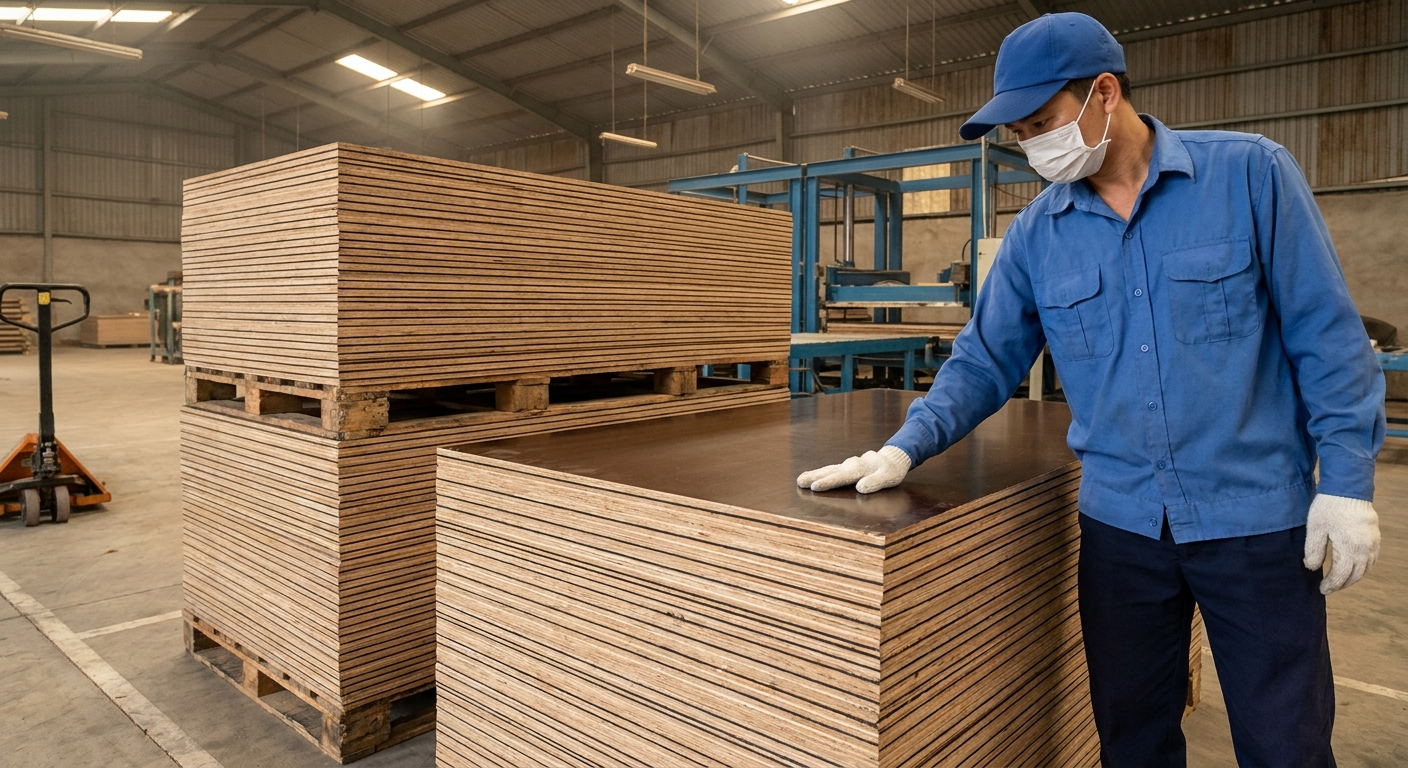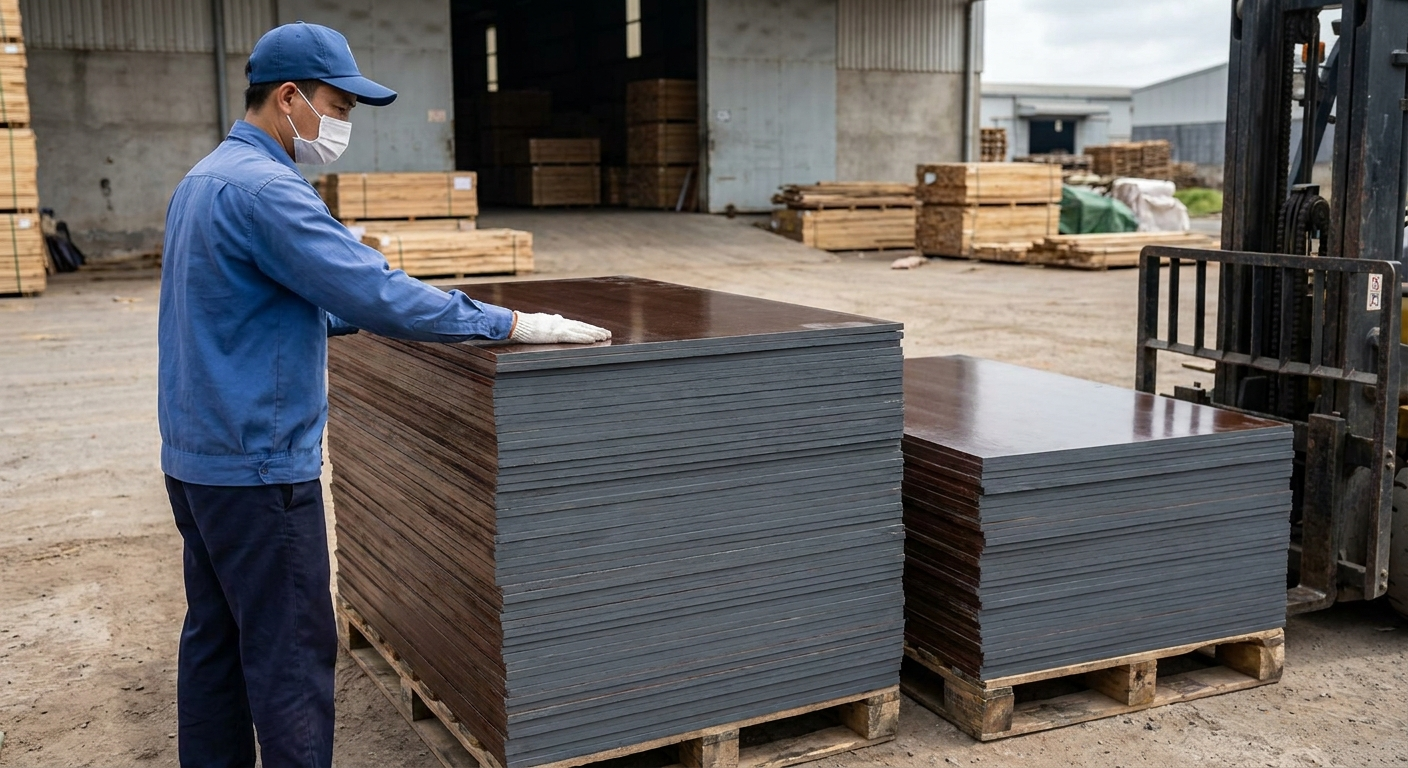
Marine Plywood for Kitchen Cabinets: When the BS 1088 Premium Pays Off (and When It Doesn't)
Marine plywood is overspecified for most kitchen cabinets and underspecified for the cabinets that actually need it. This guide breaks down BS 1088 vs IS 710 BWP vs cabinet-grade BWR for sink-base, dishwasher-flank, range, wall, and pantry positions — plus a US/EU cost-per-decade calc and a…
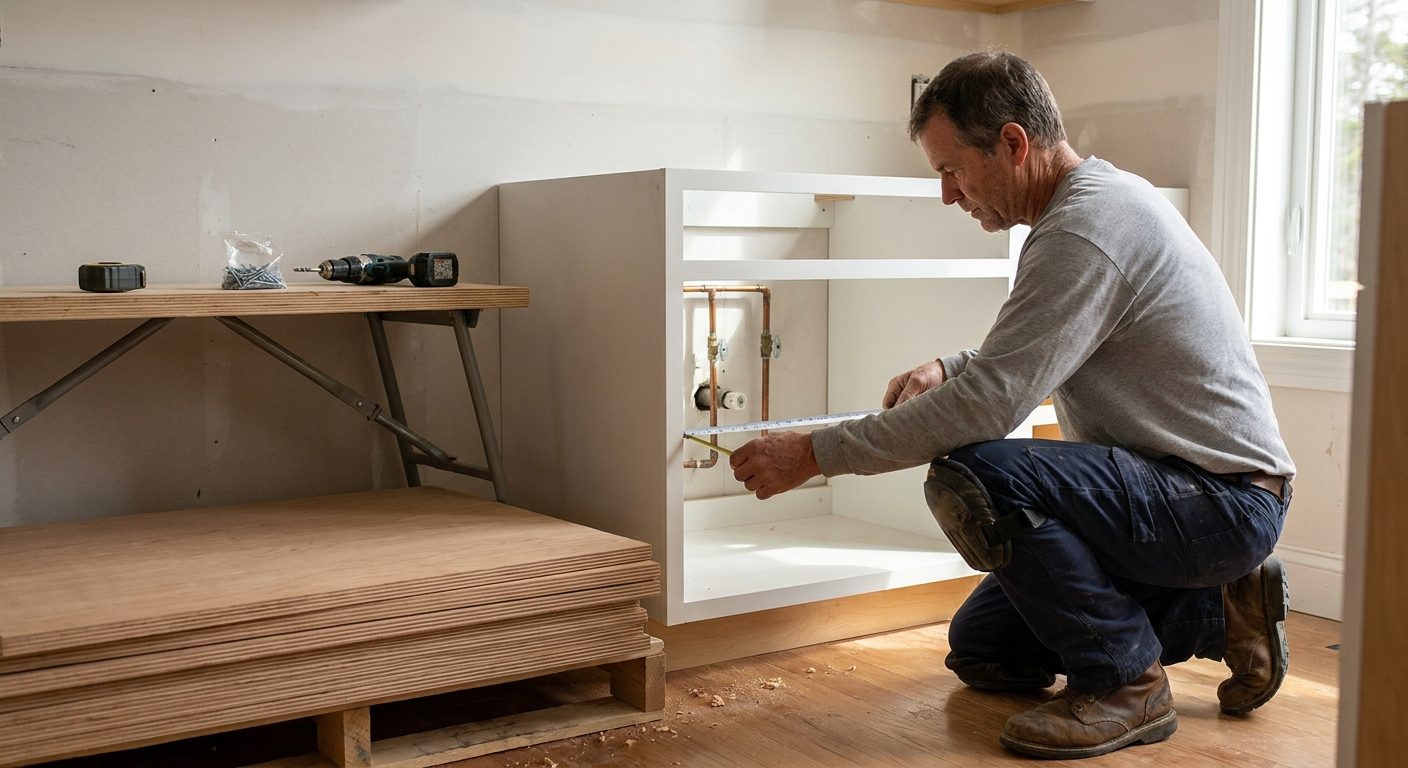
A Manila condo project last year asked our team about marine plywood for 240 modular kitchen units in a Quezon City build. The procurement spec called for BS 1088 throughout. The architect wanted everything in marine grade because — to use the contractor's words — “the building is in Manila and the kitchens get humid.” The total panel volume came to about 11,000 sheets. We ran the numbers, asked which cabinets were where, and ended up quoting BS 1088 only for sink-base and dishwasher-flank cabinets, and a high-spec BWR (IS:303 melamine-modified) for everything else. The full marine spec would have added roughly 38% to the panel budget for no service-life gain on the wall cabinets and dry pantry units.
This is the question the article is about: when does marine plywood for kitchen cabinets earn its premium, and when does it sit on the wall draining the budget without doing extra work? The honest answer depends on climate, on the cabinet position, and on whether the panel actually meets the marine standard or just carries the label.
What “marine plywood for kitchen cabinets” actually means
Three different specifications get called “marine” on kitchen cabinet projects, and the differences matter at the supplier's desk.
BS 1088 marine plywood (international). The UK-origin standard adopted in the EU, US, AU, NZ, and most Commonwealth markets for boat-building-grade plywood. Full WBP phenolic adhesive throughout, denser hardwood core species, no voids in inner plies, A or B face grade. The most demanding marine spec in commercial use.
IS 710 BWP plywood (India). The Indian standard for marine plywood. Full WBP phenolic adhesive, hardwood core, 72-hour cyclic boiling test passed, BIS-marked. Comparable in performance envelope to BS 1088 with face-grade tolerances adapted to the Indian furniture trade.
“Marine grade” Philippine and Southeast Asian retail label. A broad merchant label applied to panels marketed for wet-zone construction. Coverage varies — some panels match IS 710 or BS 1088 spec, others sit closer to a Class 2 BWR with marine-style face cosmetics. The label alone is not a quality guarantee in this channel; the BIS or BS test certificate is.
For the global framework behind these specs, see our marine plywood reference and the head-to-head marine plywood vs regular plywood comparison.
Where a kitchen cabinet sees moisture (and where it doesn't)
A modern kitchen carries five distinct cabinet positions, each with a different moisture environment. Mapping the grade to the position is what separates a 25-year cabinet run from a 7-year cabinet run.
- Sink base. Constant moisture. Plumbing leaks, condensation around supply lines, splash from washing, ambient humidity from the sink basin. The single most demanding cabinet position in any kitchen, anywhere.
- Dishwasher flank. Intermittent high humidity. Each cycle vents warm moist air against the neighbouring cabinet sides. Failure mode is delamination at the carcase joint, not surface swelling.
- Range / oven area. Thermal cycling plus modest humidity from cooking. The moisture load is smaller than the sink base. The thermal load is the bigger stress — wood panel adhesive systems behave differently above 60 °C.
- Wall cabinets. Low moisture. Ambient kitchen humidity, occasional steam from the cooktop below. Most wall cabinets in climate-controlled kitchens see relative humidity in the 50–65% band most of the year.
- Pantry / dry storage. Lowest moisture in the kitchen. Often interior-grade is appropriate; sometimes plywood is overkill and MDF or particle board is the rational pick.
The implication: one kitchen needs at least two cabinet grades. Specifying marine throughout pays for moisture protection that only the sink base and dishwasher flank actually use. Specifying MR throughout under-protects the cabinets that matter most.
Grade ladder for cabinet construction
The four-step grade ladder used in formwork translates to cabinet construction with one important difference — the failure mode shifts from concrete-side abrasion to moisture-side delamination. The ladder still goes from MR up to marine.
| Grade | Standard | Adhesive | Cabinet position | Service life (humid climate) |
|---|---|---|---|---|
| MR | IS:303 / equivalent | Urea-formaldehyde | Dry pantry, wall cabinets in air-conditioned zones | Up to 10 years |
| BWR | IS:303 Class 2 | Melamine-urea-formaldehyde (MUF) | General residential cabinets, range-side, dishwasher-adjacent (not flank) | Up to 15 years |
| BWP / Marine | IS:710 / BS 1088 | Phenol-formaldehyde (WBP) | Sink base, dishwasher flank, wet-zone cabinets, coastal kitchens | Up to 25 years |
| Laminated BWP | IS:710 + melamine HPL face | Phenolic core + decorative face film | Pre-finished kitchen cabinet doors (India-dominant spec) | Up to 20 years |
The framework above is the BWR / BWP / Marine ladder reframed for cabinets. Three meanings of “melamine” apply here and trip up buyers: the BWR row uses melamine as the core resin (MUF); the laminated BWP row uses melamine as the decorative face film; neither is the same as melamine surface laminate on a particle board cabinet door. Naming which meaning is in play prevents the most common spec misread in the cabinet trade.
For deeper coverage of the BWR vs BWP distinction at the panel level (without the cabinet framing), see our MR vs WBP plywood guide.
US / AU / UK perspective: when marine beats cabinet-grade birch
The North American and Commonwealth cabinet trade defaults to cabinet-grade B/B birch (or similar A2 hardwood-face plywood) for visible cabinet boxes. Marine BS 1088 is the upgrade path for the sink base and dishwasher flank. The cost-per-decade math goes like this for a typical residential sink base.
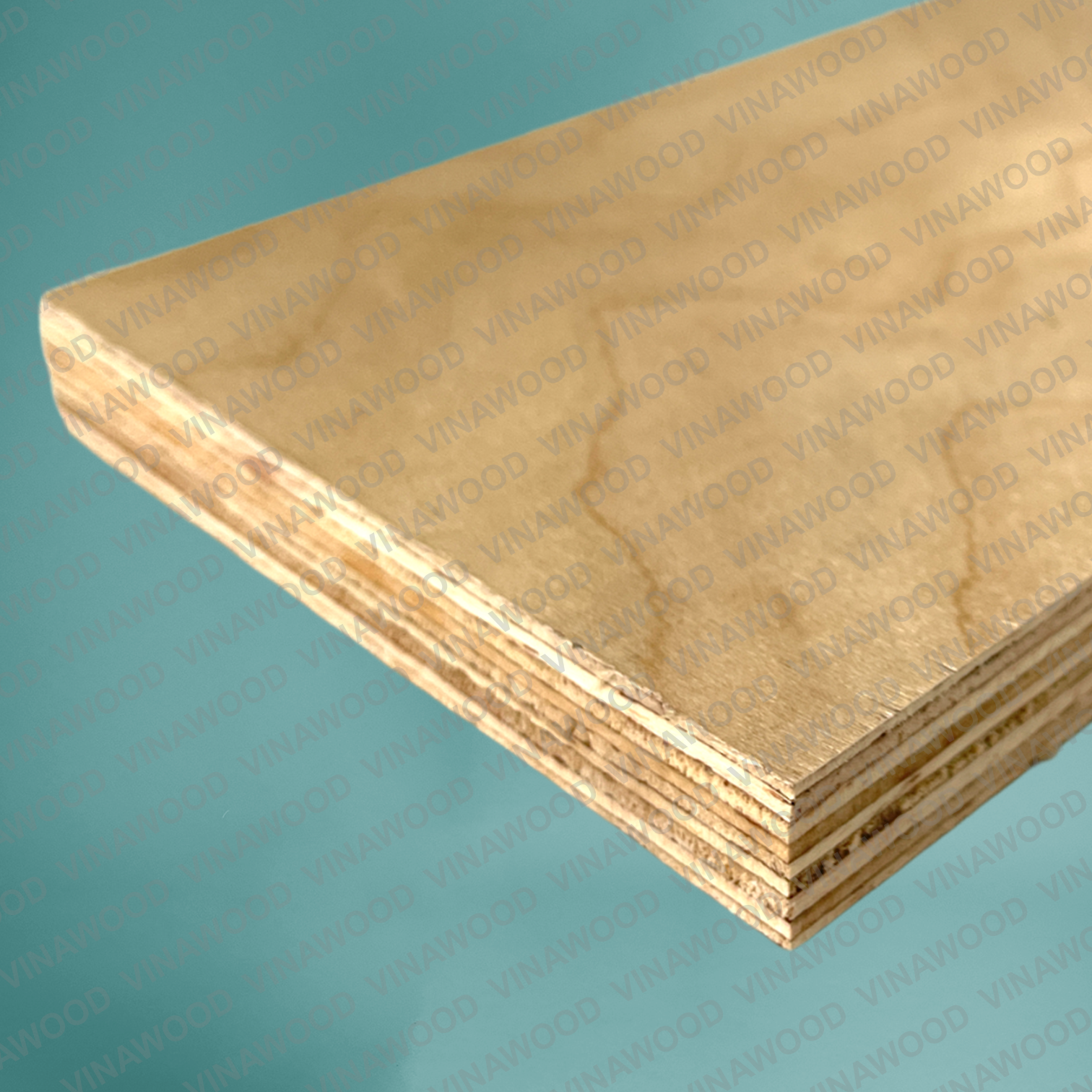
Cabinet-grade B/B birch baseline. Four 18 mm sheets per sink base at roughly US $80–110 per sheet in 2026 US retail. Service life in a climate-controlled US kitchen with a working extractor and a plumbing system in good order: typically 12–16 years before cabinet-base soft spots appear at the floor of the carcase. Total panel cost per sink base: ~US $360.
BS 1088 marine upgrade. Same four sheets at US $140–180 per sheet in 2026 US retail. Service life in the same kitchen: up to 25 years with sealed cut edges. Total panel cost per sink base: ~US $640.
The premium is roughly US $280 per sink base. The service-life gain is on the order of 8–12 years. Cost-per-decade math favours marine if the homeowner intends to stay in the house through the upgrade window, or if the build is a rental property or institutional kitchen where re-do labour cost dominates panel cost. For a flip property or a five-year owner, cabinet-grade B/B birch with thorough edge sealing is the rational pick.
Coastal homes shift the math. Salt-laden ambient humidity accelerates the failure mode on cabinet-grade panels by roughly half, and the marine upgrade starts paying back inside the first decade. Honest framing: marine beats cabinet-grade in coastal Florida, Pacific Northwest waterfront, Australian east-coast humid zones, UK exposed-coastal kitchens. Inland in dry-continental climates, the upgrade is optional.
India and Philippines: the IS 710 BWP question
The math changes in humid tropical kitchens. Kerala, coastal Tamil Nadu, Goa, the Manila and Cebu coastal belts, and most of Southeast Asia outside of air-conditioned highland zones all sit in the >70% relative humidity band for most of the year. MR-grade panels in this band may fail within 3–5 years — the cabinet floor delaminates, the back panel swells, and the joints loosen. BWR runs longer at 8–10 years. Genuine IS 710 BWP runs 15+ years and shows minimal cabinet-base soft-spot development through that window.
The premium is justified by service life. The IS 710 BWP premium over MR is on the order of 60–80% per sheet in 2026 Indian retail. The service-life gain is on the order of 10–12 years. The math favours BWP for the entire kitchen in coastal/humid Indian markets, not just for the sink base.
Three field-verifiable checks before paying premium for a panel marketed as IS 710 BWP.
- Edge inspection. Check the cut edge. Genuine IS 710 BWP shows uniformly dark phenolic glue lines through every ply joint. A mixed-glue panel (phenolic on outer joints, urea or melamine internally) shows lighter glue lines on inner plies. The dark phenolic line is the most reliable visual marker.
- Boil-chip self-test. Cut a 50 × 50 mm sample from the panel corner. Boil in water for 4 hours. A genuine IS 710 panel comes out intact — plies stay bonded, no edge delamination. A misbranded panel splits or shows visible bond failure at the boundary plies. The supplier should welcome this test on premium-grade purchases. Refusal is a strong signal.
- BIS certificate request. Every genuine IS 710 BWP lot ships with a BIS test certificate referencing the specific mill code and lot number. The BIS portal lists certified mills — cross-checking is straightforward. A supplier who cannot produce the certificate is not selling genuine IS 710 BWP regardless of what the stamp on the panel says.
The same three checks apply to BS 1088 in non-Indian markets, with the boil cycle adjusted (BS 1088 specifies 72-hour cyclic boil, IS 710 specifies 72-hour cyclic boil with denser core species). For Philippine “marine grade” retail labels, the test certificate is the only reliable filter — the label itself is too broad to verify on its own.
For more on the Philippine market specifically, see our Philippine marine plywood price 2026 reference.
Laminated marine plywood for kitchen cabinet doors
Pre-laminated marine plywood (decorative melamine or HPL face over an IS 710 BWP core) is the dominant Indian-market spec for modular kitchen cabinet doors and visible carcase sides. The face film handles cosmetic appearance and partial moisture protection; the core handles structural moisture resistance.
The pros: appearance is done at the factory, edge sealing is handled at the laminate-application step, and cut-edge moisture protection is built in. The cons: thinner working envelope for joinery (the laminate face does not tolerate aggressive routing or rabbeting at the edge), and re-edge-banding after on-site cutting is restricted. The laminate face is the cabinet's cosmetic skin and is not replaceable in the field.
Three meanings of “melamine” apply directly here. The face film is melamine surface laminate — a pre-printed melamine-impregnated paper hot-pressed onto the plywood face. It is not the same as the melamine core resin (MUF) used in BWR-grade plywood, and not the same as melamine HPL on a particle board cabinet. The structural moisture resistance of the cabinet comes from the IS 710 BWP core underneath; the face film is decorative + edge protection.
Decision table: which grade for which cabinet
The compact form of everything above.
| Cabinet position | Climate-controlled kitchen | Humid / coastal kitchen |
|---|---|---|
| Sink base | BS 1088 / IS 710 BWP, B/B face | BS 1088 / IS 710 BWP, B/B or A/B face |
| Dishwasher flank | IS 710 BWP or high-spec BWR with sealed edges | IS 710 BWP, B/B face |
| Range / oven area | BWR (Class 2 MUF) sufficient | BWR with sealed edges; BWP for full-coastal kitchens |
| Wall cabinets | MR plywood adequate | BWR (Class 2 MUF) |
| Pantry / dry storage | MR plywood adequate, MDF acceptable | MR plywood with edge sealing |
For the broader Indian residential plywood selection framework outside the kitchen, see our best plywood for furniture in India guide. For cabinet plywood selection across non-kitchen rooms, see plywood for cabinets.
Manufacturer-side honest answer: when marine is the wrong call
We've seen this pattern in our own export volumes: roughly half of the marine plywood inquiries that arrive at the Vinawood sales desk for kitchen-cabinet projects are technically overspecified. A climate-controlled US or EU kitchen with a working extractor, sound plumbing, and proper ventilation behind the sink-base carcase doesn't need marine throughout. Cabinet-grade BWR (Class 2 MUF) with sealed cut edges and a phenolic back panel where the sink base sits delivers 15+ years of cabinet life at meaningfully lower panel cost. We don't sell marine to every cabinet shop that asks for it. We send them to the BWR product line and reserve the marine quote for the cabinet positions that actually use the upgrade.
The flip side is also true. In humid Kerala or Manila coastal kitchens, MR-grade panels marketed as cabinet-grade may fail within 3–5 years — not because the panels are defective, but because the application is wrong for the spec. The cabinet contractor saved 25% on panels and lost the cabinet run inside half a decade. For these climates, the IS 710 BWP premium isn't optional, it's the minimum viable spec.
The framework reduces to two questions. Is the kitchen in a humid or coastal climate? Is the cabinet position sink-base or dishwasher-flank? Yes to either, marine earns the premium. No to both, BWR with sealed edges is the rational pick.
Vinawood marine plywood for cabinet work
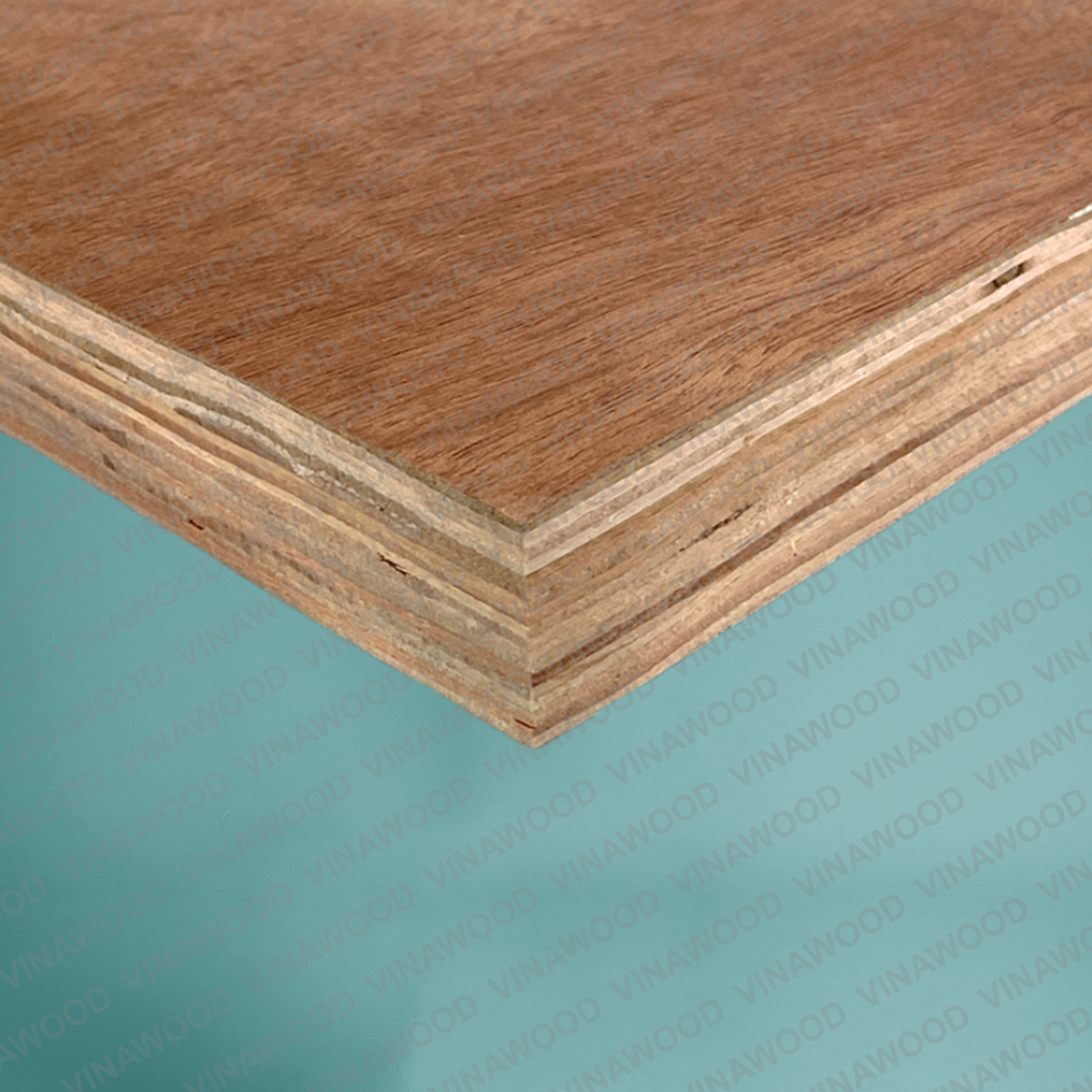
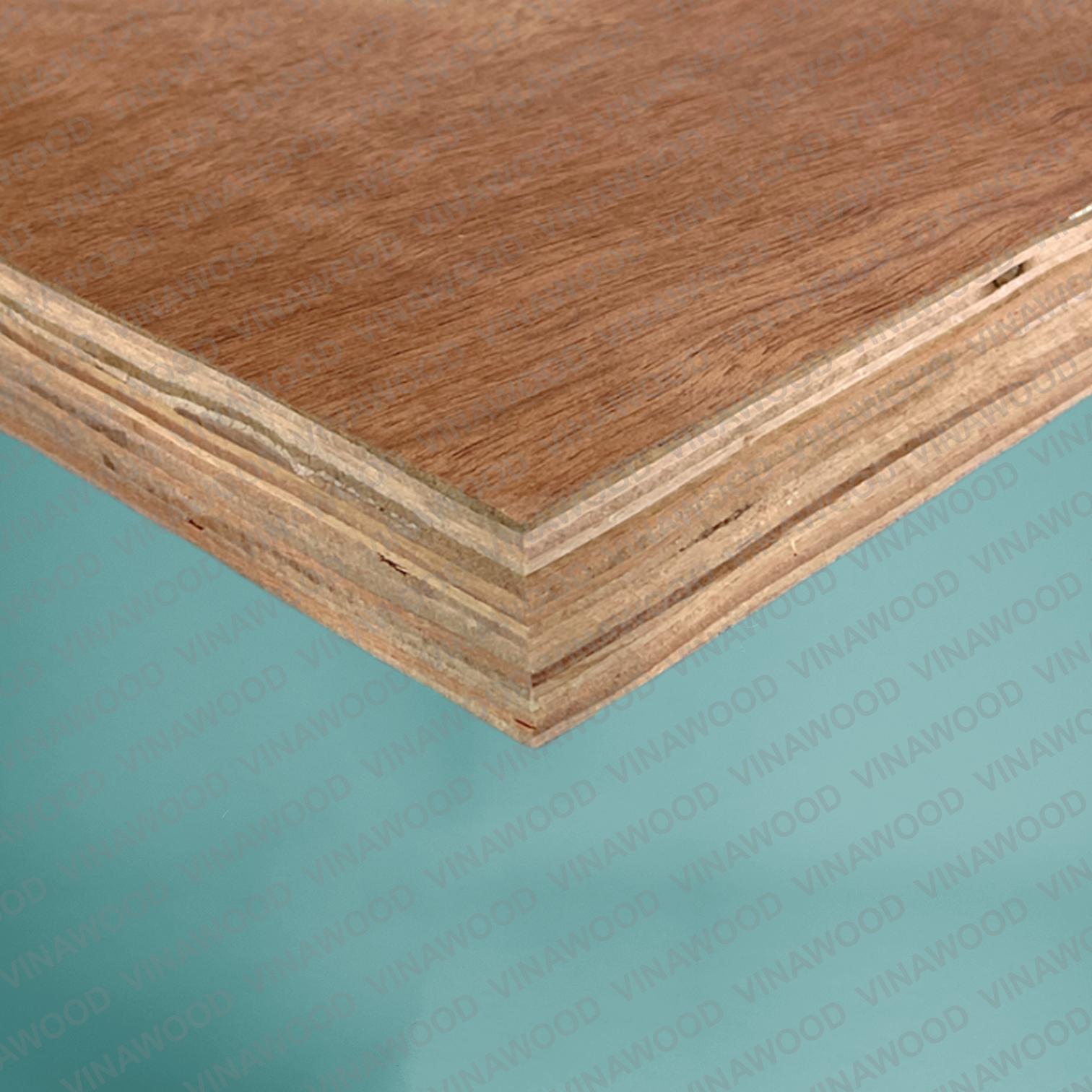
The Vinawood marine range for kitchen cabinet applications covers two product lines. Marine Standard is the entry marine grade — full WBP phenolic adhesive throughout, hardwood core (Acacia or Eucalyptus), B/BB face, BS 1088 and IS 710 compliance, FSC-CoC and CARB Phase 2 certified. Available in 6, 9, 12, 18 mm thicknesses in both 1220 × 2440 mm and 1250 × 2500 mm formats. Marine Extra is the premium grade — same adhesive system, denser hardwood core, A/B face for visible cabinet sides, longer rotary peeling cycle for tighter face cosmetics. Available in the same thickness and format range.
For kitchen cabinet applications, the typical Vinawood spec runs 18 mm Marine Standard for sink base and dishwasher flank, 12 mm for cabinet shelves and bottoms, and 6 mm Marine Standard for sink-base back panels. Sample-order workflow before container commitment: Vinawood ships 5 to 10 sample sheets through air freight before any container order, with the BS 1088 and IS 710 test certificates for the production lot the samples are drawn from. The sample lets a cabinet shop verify edge inspection, run a boil-chip test, and confirm the IS 710 / BS 1088 spec before placing the full order. See the Vinawood marine plywood collection for the full range.
Vinawood — Vietnamese plywood manufacturer
Vinawood is a Vietnamese plywood manufacturer established in 1992, exporting over 5,000 containers a year to 55+ countries. The product range spans formwork, structural, marine, and commercial plywood with full international certifications — BS 1088 marine grade, IS 710 BWP for the Indian market, EN 13986 CE marking for Europe, EPA TSCA Title VI / CARB Phase 2 for the United States, FSC-COC and PEFC for sustainable sourcing, KS Mark for Korea, BIS for India, UKCA for the UK, and EPD for green building credits.
For kitchen cabinet project quotes, marine plywood sample orders, or technical specification questions, the Vinawood sales desk responds within 24 hours via the contact form at vinawoodltd.com. Container-volume orders ship FOB Ho Chi Minh or Hai Phong, with the documentation package included for every shipment — BS 1088 or IS 710 test certificates per lot, FSC-CoC chain-of-custody documentation, CARB Phase 2 compliance certificates, and EUDR Due Diligence Statements for EU-bound shipments.
Category
guides
Related Markets
Related Countries
Related Products
▶Sources & References (5)
- BS 1088-1:2003 — Marine plywood — Requirements — BSI (2003)
- IS 710:2010 — Marine Plywood — Specification — Bureau of Indian Standards (2010)
- IS 303:2017 — Plywood for General Purposes — Specification — Bureau of Indian Standards (2017)
- EN 13986:2004+A1:2015 — Wood-based panels for use in construction — CEN (2015)
- Wood Handbook — Wood as an Engineering Material, Chapter 12 (Plywood) — USDA Forest Products Laboratory (2021)