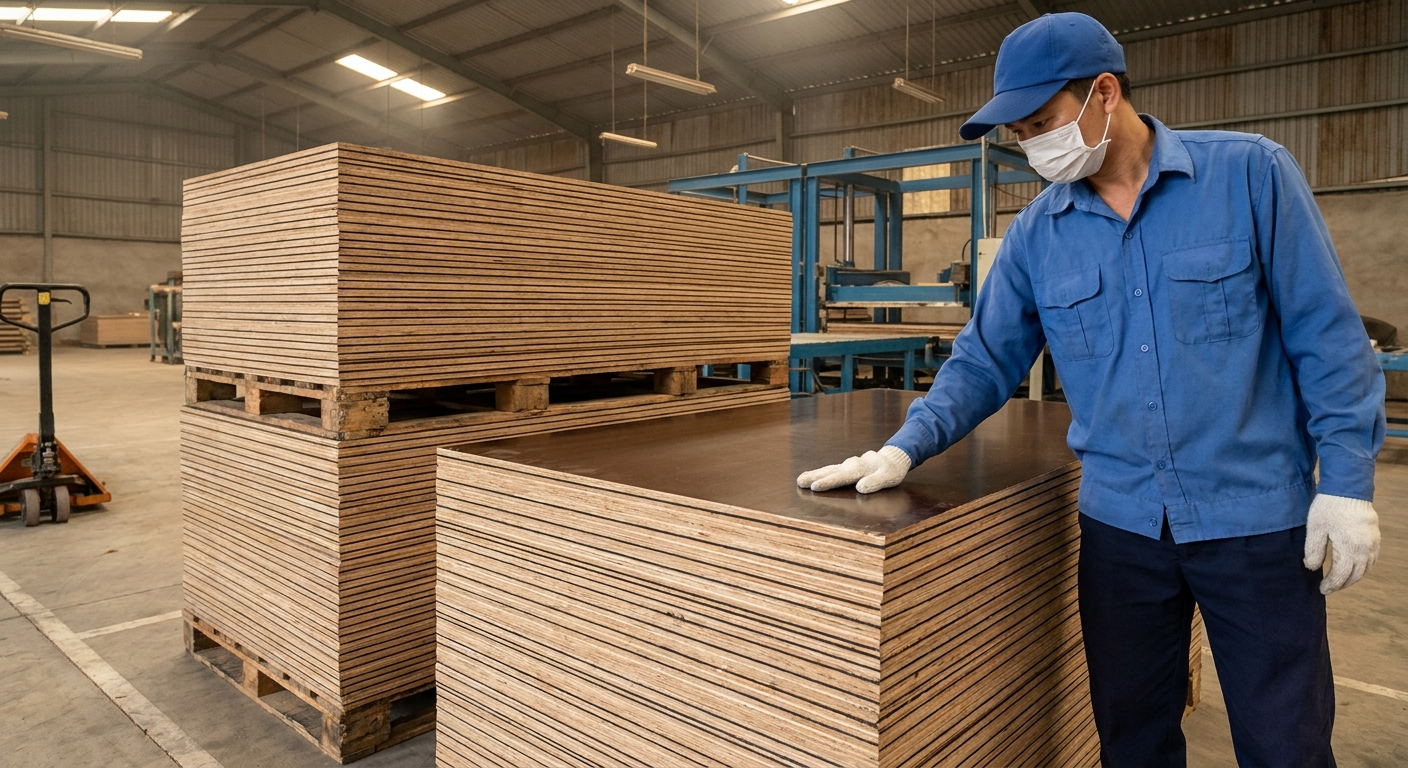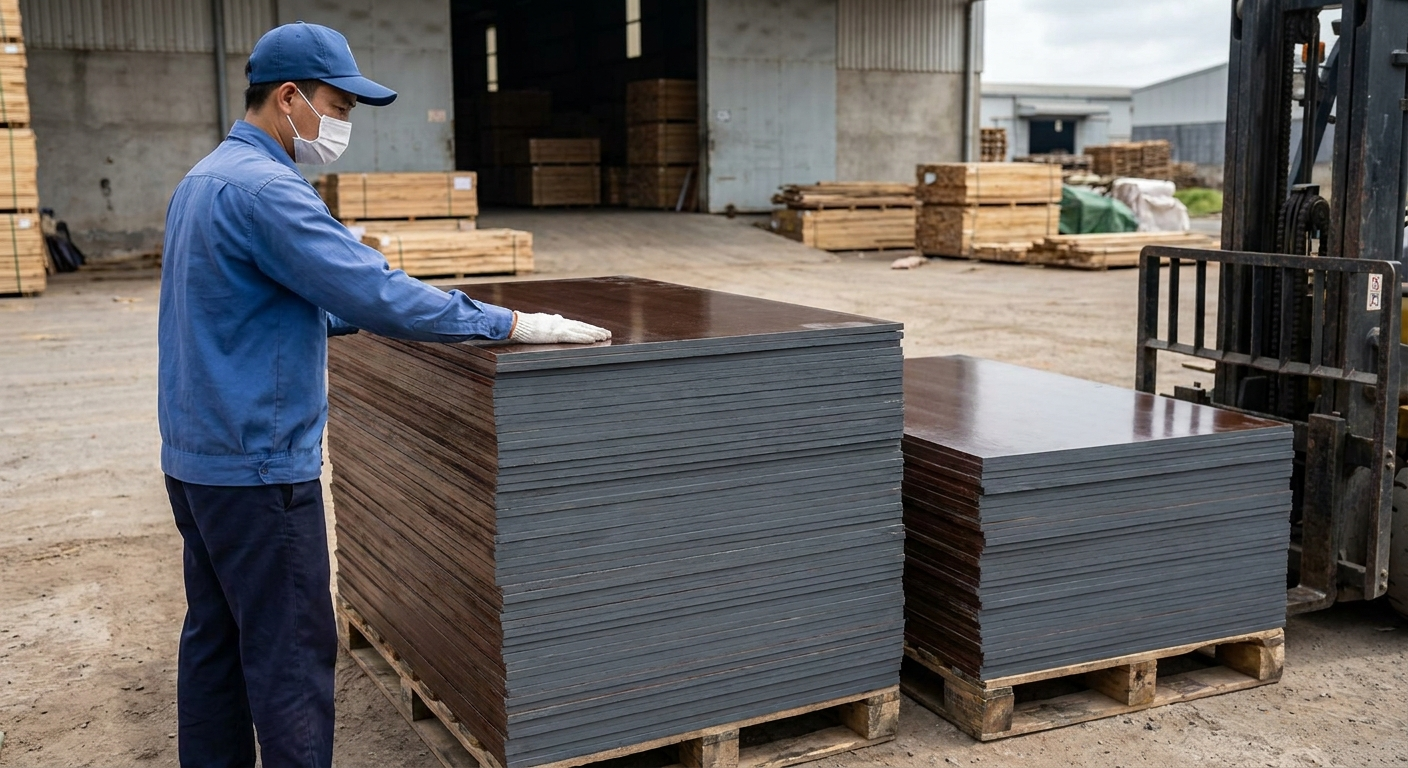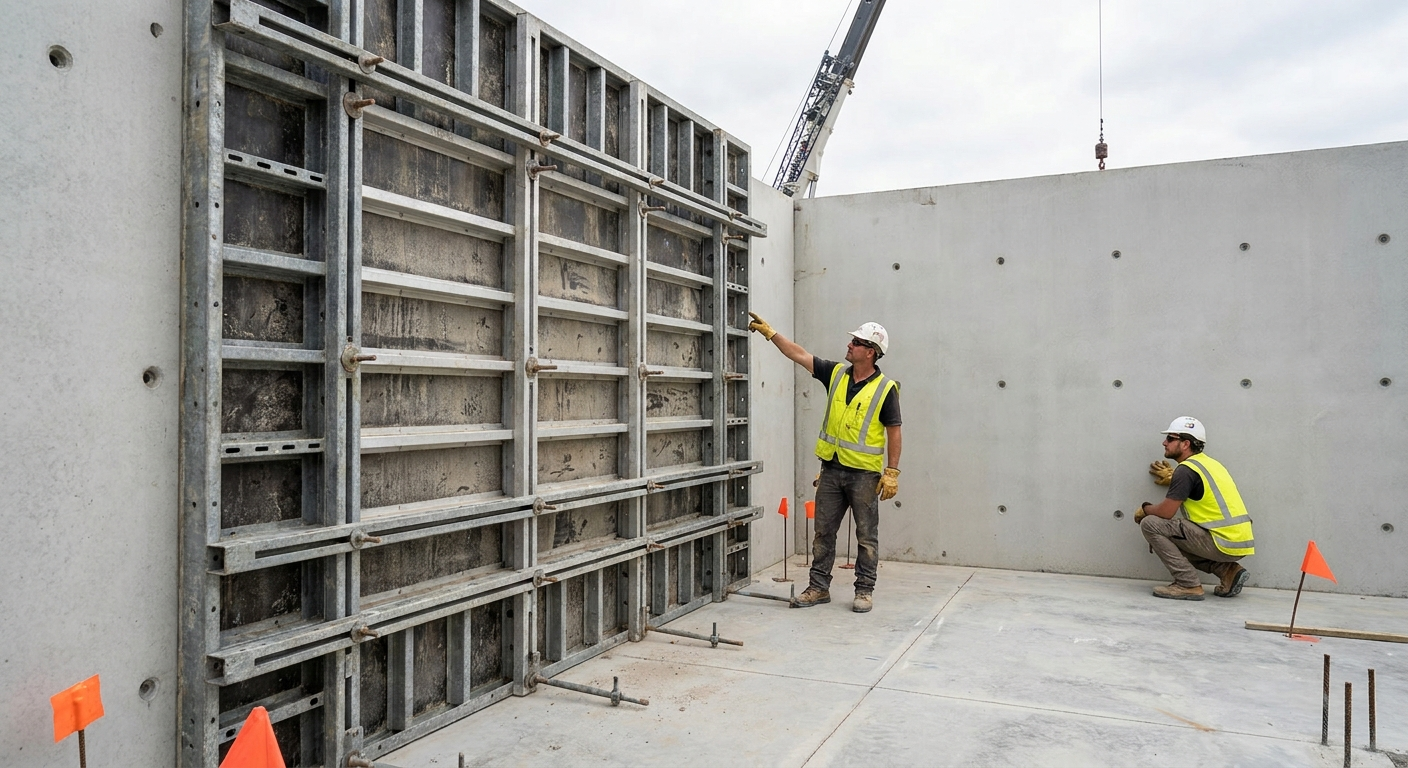
When to Remove Concrete Formwork: Stripping Times by Element
When to remove concrete formwork: strip a strength, not a calendar day. Vertical faces, soffits, and props follow different clocks - plus how early strip damages concrete and panel film.
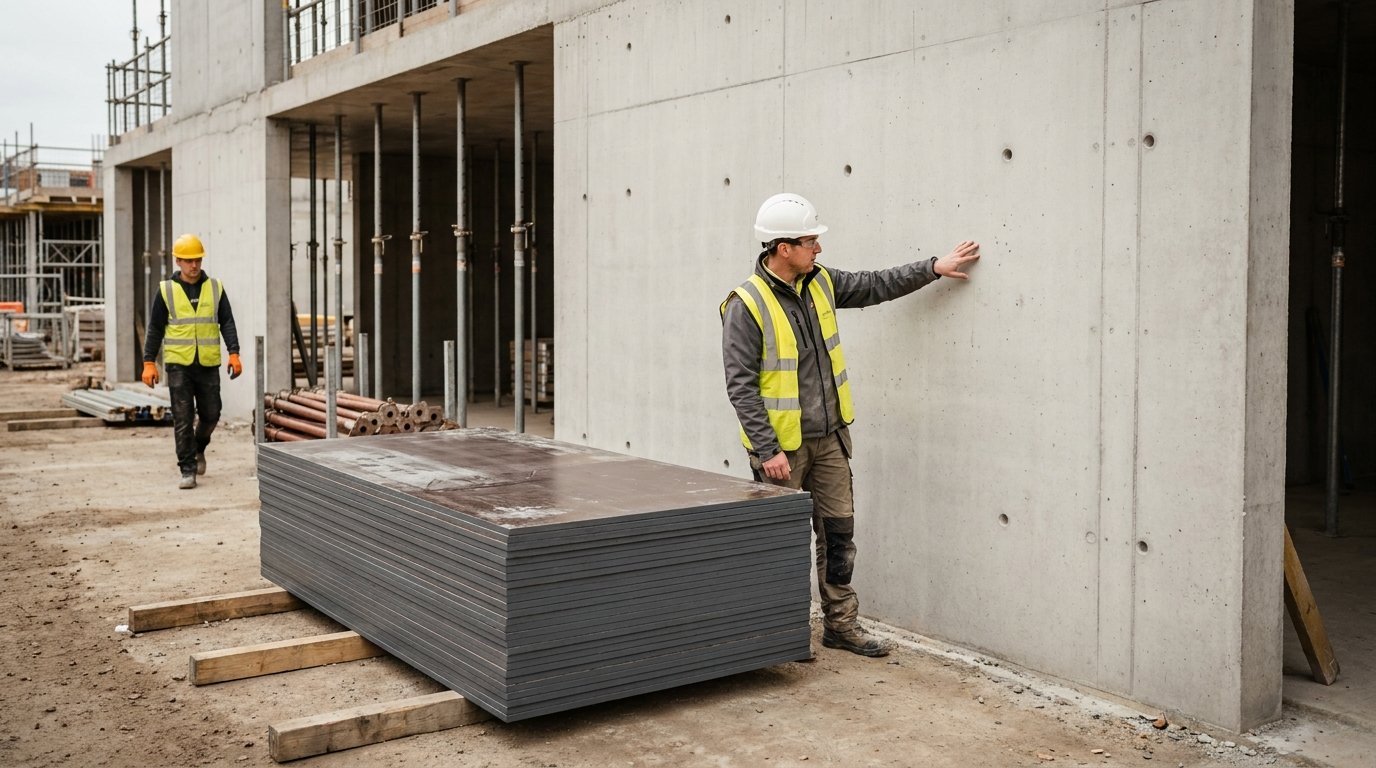
You strip a strength, not a calendar day. Most site arguments about when to remove concrete formwork go away once everyone accepts that, because the real question is whether the concrete can carry its own weight (plus whatever the next lift puts on it) by the time the face comes off. A date on the programme is only a stand-in for that strength. The same wall poured in a mild week can be ready days before its twin poured during a cold snap, and nobody on the gang will have done anything differently.
It's easier to think about if you split the job up first. Vertical faces just need the concrete to hold its shape. Soffits, the undersides of slabs and beams, are still leaning on the form, and the props under them stay until the member can stand without help. Each of those runs on its own clock.
The codes back this up. Look at ACI 347 on the American side or EN 13670 in Europe and you won't find a fixed day count for stripping; both point you at a required strength instead. One mix can gain strength at wildly different speeds depending on the weather, the cement and how much water went in. How do you know where it's at? Either you cast little maturity sensors into the pour, which log temperature against time, or you crush field-cured cylinders that have been sitting next to the work. Any day counts in a table (ours below included) are for planning. Nobody should strip off them.
What "when to remove formwork" really means
Removing formwork, which crews also call striking or stripping, means taking the form face off hardened concrete. The professional yardstick is compressive strength on the day you strip, usually written as a fraction of the design strength. For anything load-bearing the structural engineer of record sets the strike time, and the props stay in a lot longer than the plywood face does. If you only keep one idea from this page, keep this one: pulling the face off isn't the same as pulling the shoring out.
Finish adds a second clock. A fair-faced or architectural surface usually waits longer than a face that'll be hidden behind cladding, because a tender surface struck too soon tears fines away at the form face and leaves marks. When strength says go and finish says wait, finish gets its way. It's normal, then, for two gangs who poured on the same morning to strip days apart.
Indicative windows by element
These numbers assume an ordinary cement mix at roughly 20 °C (68 °F), and they're for planning only. Your structural design and a strength check outrank them. On anything that carries load, the props stay put after the face has gone off to the next lift.
| Element | Indicative time to strike the face | Type |
|---|---|---|
| Slab edges and footings (non-load-bearing) | 24-48 hours | Vertical / edge form |
| Walls and columns (vertical forms) | 24-48 hours | Vertical form |
| Beam sides | 24-48 hours | Vertical form |
| Slab soffits (props stay in) | 3-7 days | Load-bearing face |
| Beam soffits (props stay in) | up to 7-14 days | Load-bearing face |
| Cantilevers and props | up to 14-28 days, per the design | Load-bearing / shoring |
Vertical forms that carry no load come off first, since all they need is concrete firm enough to keep its shape and shrug off handling. Soffits and props hang on much longer, for the obvious reason that the slab or beam has to hold itself up first. If you want day ranges with climate notes, our sibling guide on formwork removal time covers that side so this page doesn't have to repeat it.
Vertical faces versus soffits and props
Once the concrete holds its shape, the forms on walls, columns and beam sides aren't carrying anything. So they can come off early, as long as strength and finish both allow it. Forms under slabs and beams are another matter. Young concrete is resting its full weight on them, which is why crews often strike the soffit plywood but leave the props in, or back-prop straight away, so the slab stays supported while the panels go off to the next pour.
Pull the props along with the face on immature concrete and you get a sagging, cracked slab. Simple as that. I still come across programmes where "day two" means both come out, and honestly the repair bills from that habit dwarf whatever cycle time it buys. If your schedule is tight, put the prop-removal hold point in the method statement before the first truck arrives. On multi-storey jobs there's one more wrinkle: keep the floor below reshored until the design says the load can move, even when the face plywood is already two levels up.
Who signs off the strike
Good sites treat the strike as a hold point, written down, rather than leaving it to whoever's running the gang that day. The method statement sets a strength for each element. For load-bearing members the engineer of record signs off on that number, and someone records the maturity readings or cylinder results against the pour reference before anyone touches a form.
Why bother? Because sooner or later a soffit cracks, or an arris (the sharp corner where two faces meet) spalls, and the first question is always how strong the concrete was on the morning it was struck. With a log, you've got the answer in minutes. It helps us too. When panels come back torn early, the strike log usually tells you whether a sheet was ripped off green concrete or had simply reached the end of its life, and we'd much rather go through that log with a contractor than argue over one sheet with no context.
What moves the strike day
Temperature is the big one. In the cold, hydration crawls, and near freezing you might be waiting twice as long. Hot weather flips it: early strength comes quicker, but a wall that's just lost its face can dry out in an afternoon if nobody keeps up the curing. After that it's mostly about the cement. Rapid-hardening cement hits stripping strength well ahead of a slag or fly-ash blend. Thin sections cool faster than chunky ones, too, and a wet mix with too much water simply takes longer to get there.
Before any form comes off, then, you're really asking two things. Is the concrete at the strength the job needs, and can you show it with maturity data or cylinder breaks? And will the finish spec let you strike now, or does fair-face work mean holding on? Go with whichever answer is more cautious. Throw in a retarder, a night pour that cools off quicker than a day pour or a stiff wind across a thin wall, and you're pushed even harder toward measuring rather than guessing.
What happens if you strip too early
An early strip hurts twice, once in the concrete and once in the panels. Hit the arrises before they've firmed up and the edges spall. Strike a load-bearing member before it can carry itself, and you're looking at flexural cracks plus a permanent sag. On the panel, concrete that's bonded to the face (because the sheet sat against a green pour, or came off without proper release) tears the film or overlay as it's pulled away. A sheet that should have given its full rated reuse ends up in the skip after a handful of pours.
So the strike decision isn't only structural. It's also how you get your money's worth out of the forms. Both kinds of failure usually come back to site practice, meaning the strike day and the release routine, far more often than to a fault in the material. Our concrete form release agent guide covers clean release, and the formwork panel care guide deals with handling between pours. A spalled arris or torn film should make you look at an early strike or a dry face first, before blaming the mill.
After the face comes off
The surface you've just uncovered is still gaining strength, so the curing doesn't stop when the forms do (heat and wind make this worse). Keep it wet, keep it covered, and whatever you do, don't let it bake dry on strike day. The panels need looking after as well if a good strike is going to turn into a long run of reuses. Any edge that's been cut gets resealed. The face gets a light coat of release agent before it goes back up, and the stack lives flat, off the ground, under a cover. Do that and a film-faced sheet has a real chance of hitting the reuse number on its data sheet.
How panel choice supports high-rotation forming
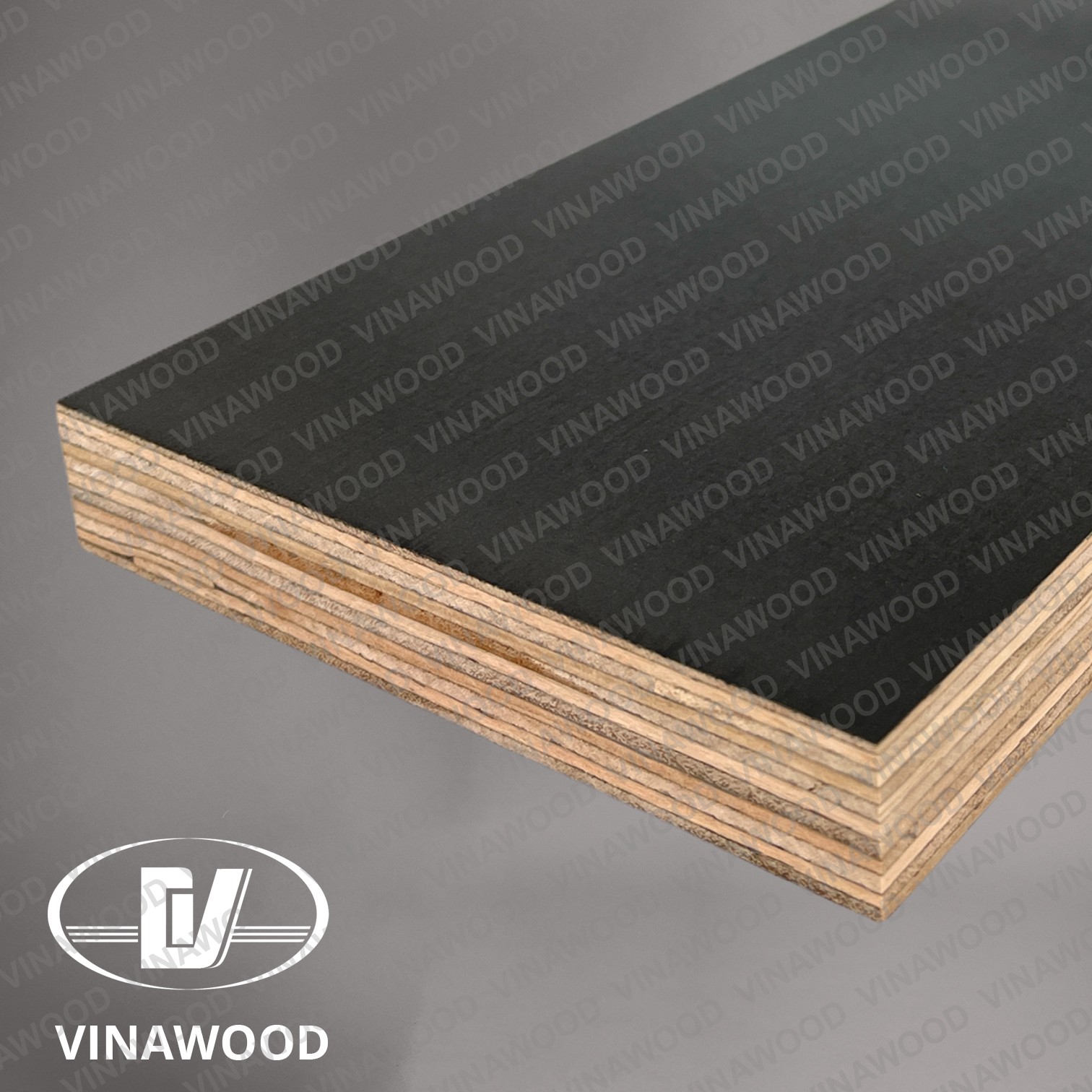
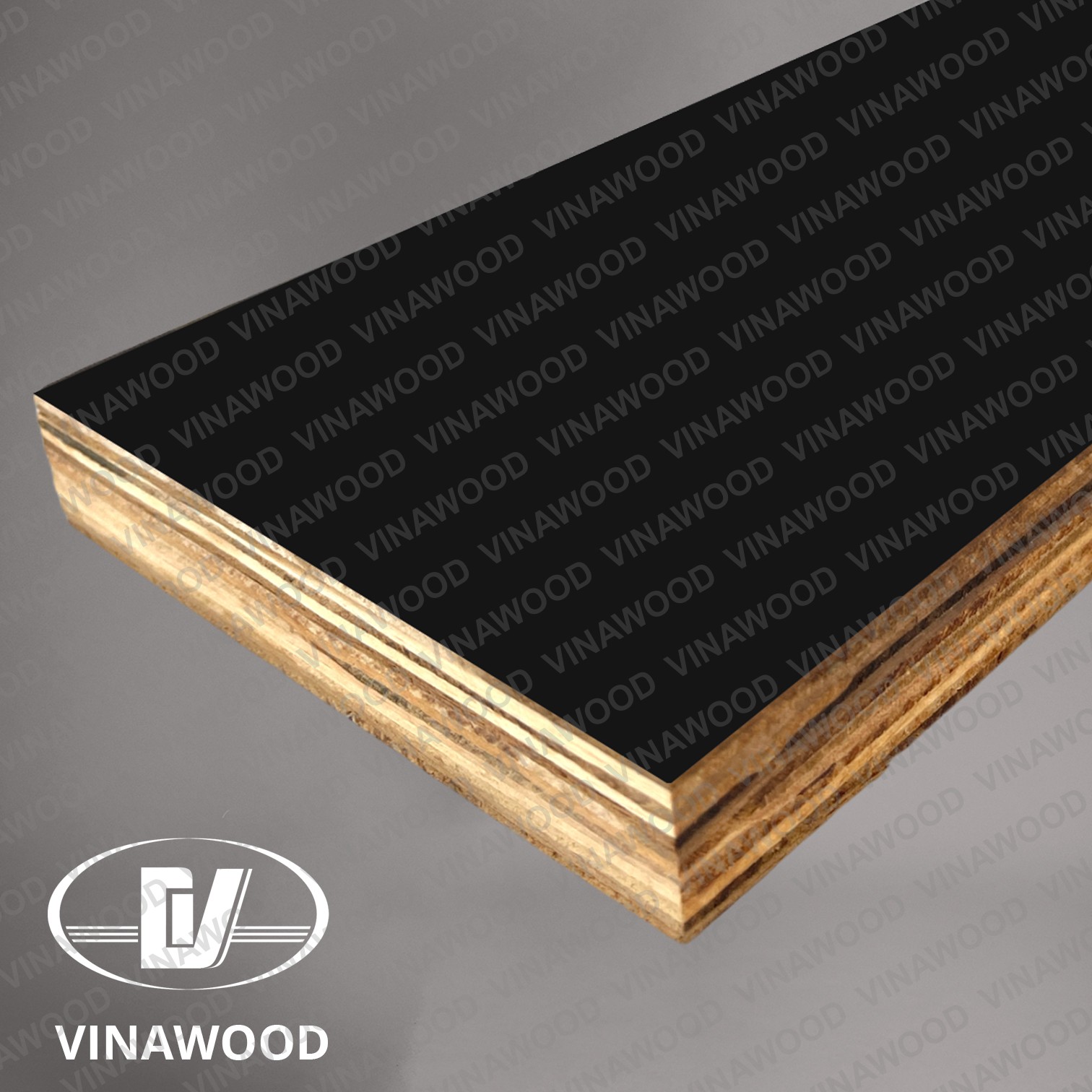
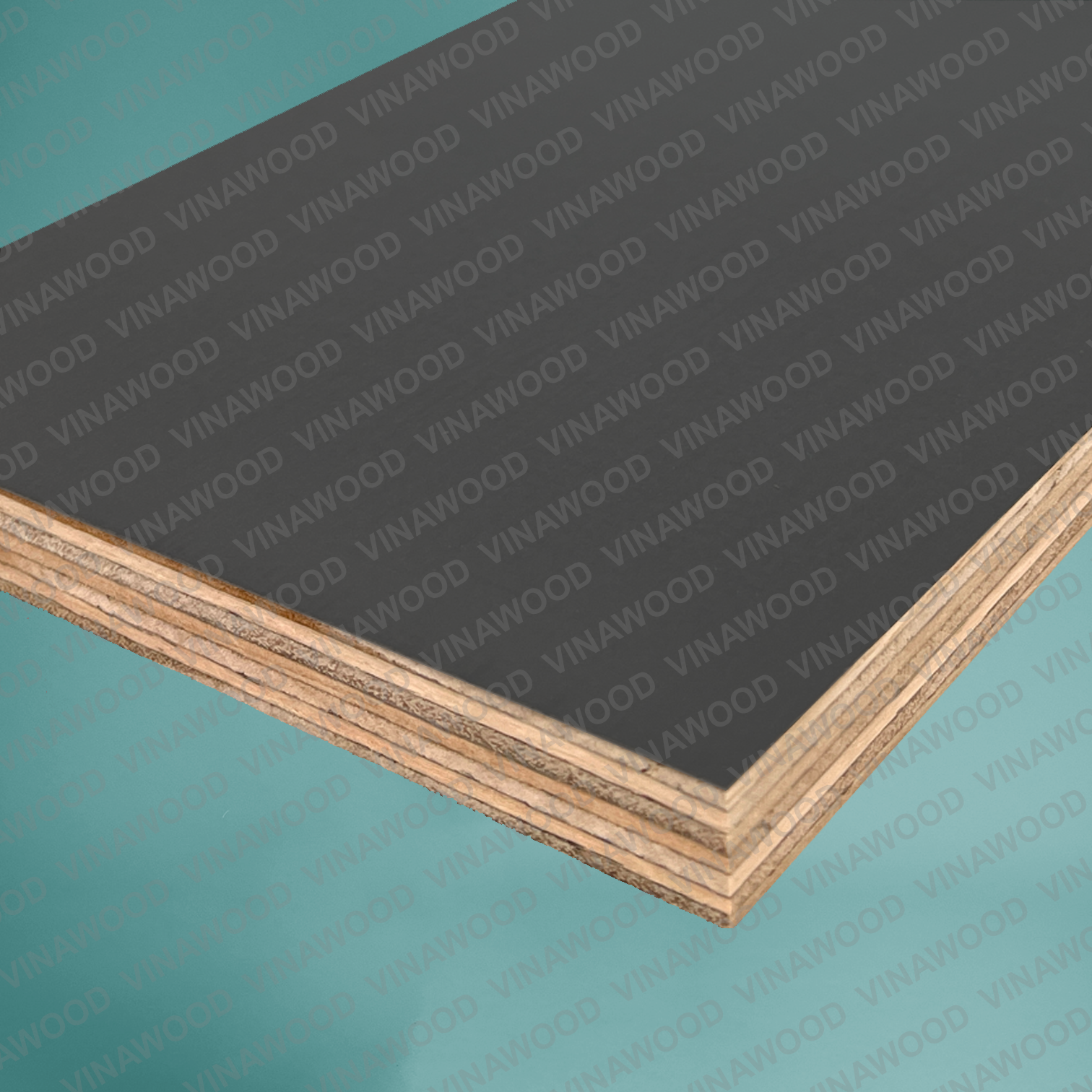
When forms turn around quickly, glue class and overlay decide how many pours a sheet will survive. Vinawood makes its formwork range from plantation-grown timber with water-resistant glue lines, and each reuse figure here is a ceiling under good site practice, not a guarantee. At the entry end, Eco Form Plus is rated for up to 8 reuses and Form Basic for up to 10. Form Basic and Form Extra both use an MUF core adhesive (melamine-urea-formaldehyde) to EN 636-2. Form Extra gets to up to 15 reuses because its Superior Glue core is stronger, not because of a heavier face film, as the two share the same phenolic face, and it isn't a Class 3 panel.
The phenolic Class 3 (EN 636-3) panels in the range are Pro Form Lite, Pro Form, HDO Standard and HDO Premium. Pro Form Lite sits between Form Extra and Pro Form at up to 15 reuses, and Pro Form goes up to 20. In the overlay line, HDO Premium is rated for up to 20, while HDO Basic has a Class 2 glue line and is rated for up to 10. Two name mix-ups are worth flagging. P-Form is a polypropylene-overlay panel with nothing in common with Pro Form, and Consply is a commercial Bintangor board, not film-faced formwork.
"Melamine" on an RFQ is another headache. Do you mean the core MUF adhesive, the face film chemistry or a decorative laminate? We can't tell unless you say. You can compare grades across the film-faced plywood range or start with the concrete form plywood overview. In our experience the crews that strip on strength and look after the film are the ones who get near the top of a 20-pour rating.
Request a quotation
Vinawood has made construction plywood since 1992 and ships roughly 5,000 containers a year to 55+ countries. Tell us the element type (vertical, soffit or propped) and the reuse you're aiming for, plus the EN 636 class or HDO need, thickness and finish class. We'll match a grade from Eco Form Plus up to Pro Form or HDO and won't quote cycle counts above the published ratings. Request a quotation and the sales team will come back with a grade and thickness for your programme.
Category
guides
Related Markets
Related Countries
Related Products
▶Sources & References (3)
- ACI 347 - Guide to Formwork for Concrete — American Concrete Institute (2014)
- EN 13670 - Execution of concrete structures — CEN (2011)
- Eurocode 2 (EN 1992-1-1) - Design of concrete structures — CEN (2004)