How to Store Plywood So It Doesn't Warp: A Manufacturer's Guide
How to store plywood so it stays flat: store flat and fully supported, raise it off the floor, control uneven moisture, acclimate before use, and handle sheets on edge. A manufacturer's guide framing storage as the buyer's controllable variable, with a do's-and-don'ts reference.
A flat panel that leaves the mill stays flat only if it is stored flat. Warping, cupping, and bowing are almost always about what happens after the sheet is made: how it is stacked, how far off the ground it sits, and how much moisture it picks up on one face versus the other. Storage is the one variable a buyer fully controls, and getting it right is cheaper than flattening a bowed sheet later. This guide walks through the storage practices that keep plywood flat, from the mill's point of view.
Flat versus vertical: the core decision
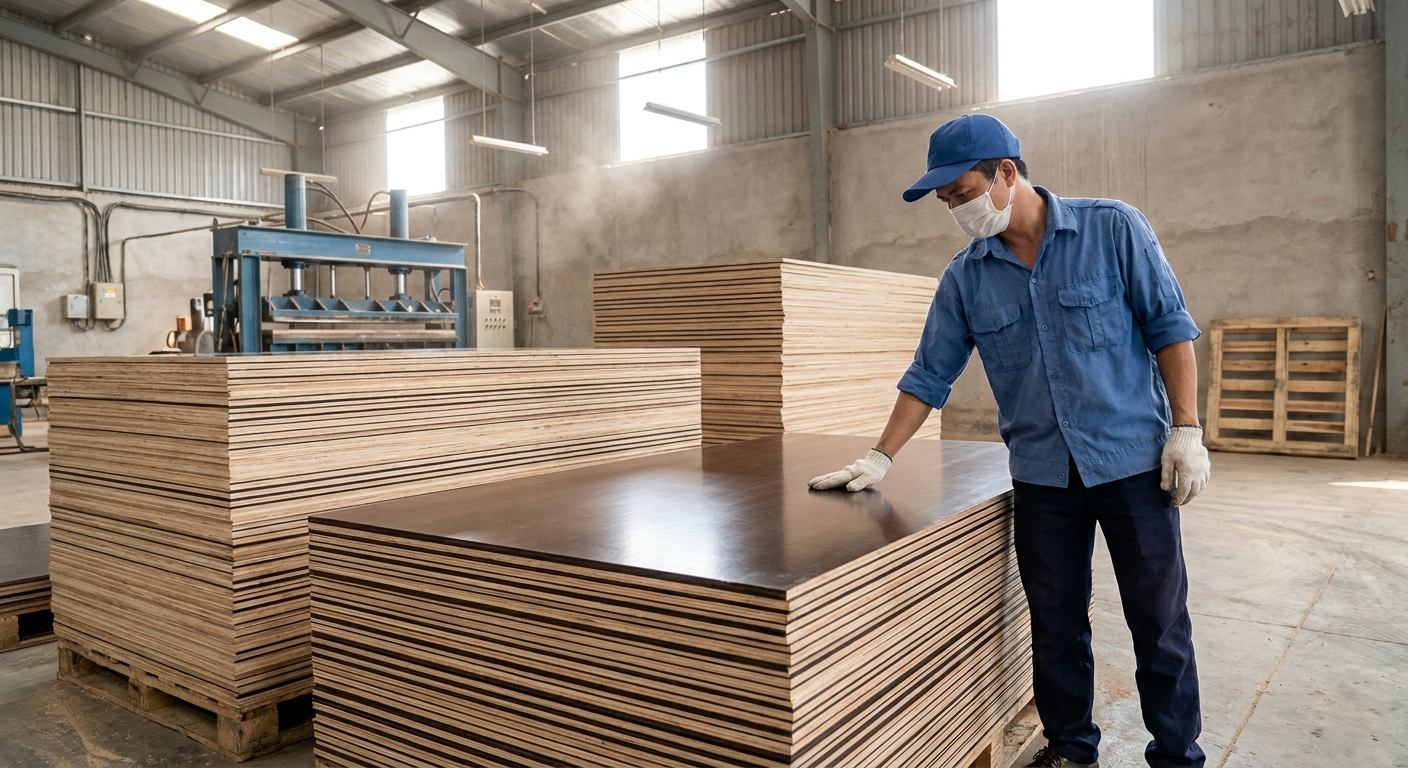
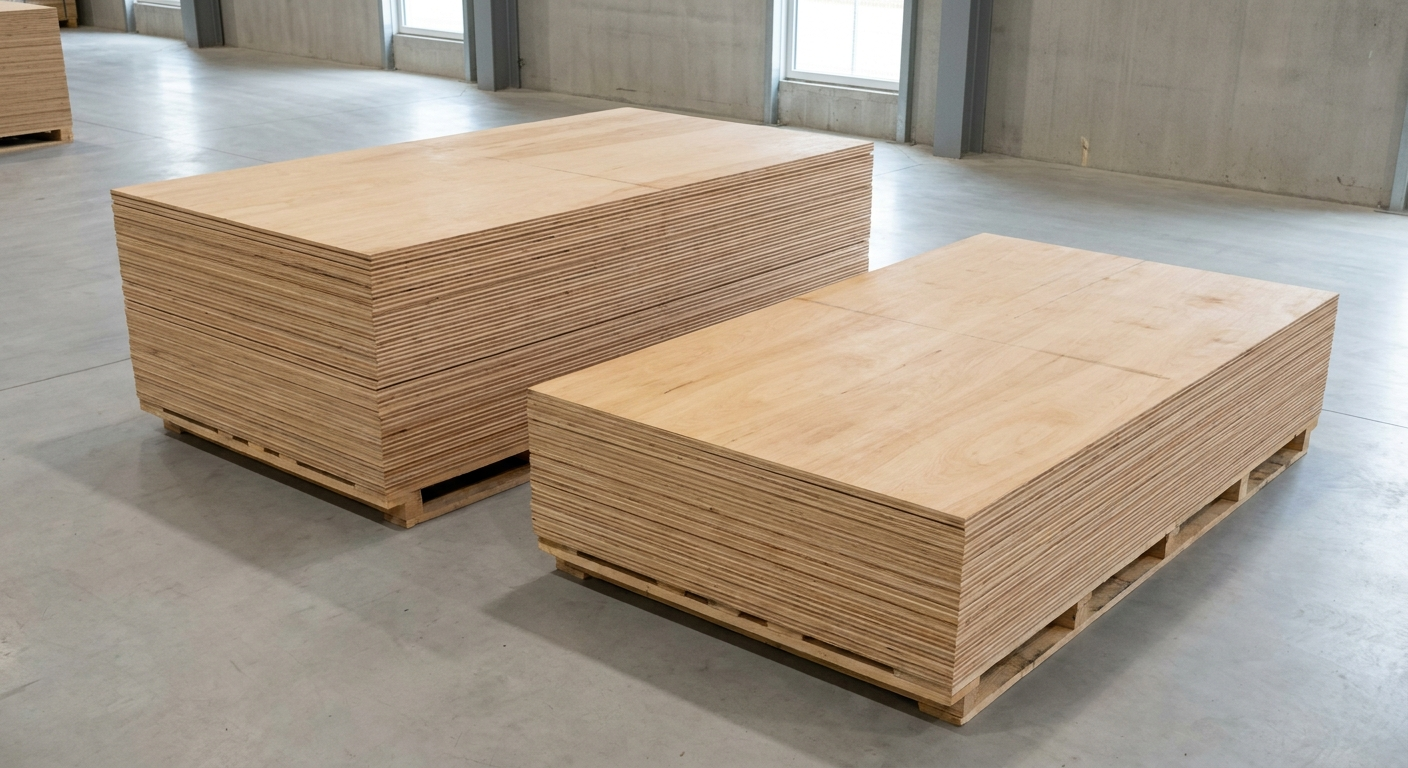
Flat and fully supported is the best way to store plywood. Laid horizontal on a level base, every square inch of the bottom sheet is held in plane, and the stack's own weight helps keep the sheets below it flat. This is how a mill stores panels and how a well-run yard keeps them.
Vertical storage is acceptable only when the sheets stand fully upright against a flat wall or a purpose-built rack, braced so they cannot lean. The failure mode to avoid is the common one: sheets leaned at an angle against a wall. A leaned sheet carries its own weight along a curve, and over days it takes a permanent bow. If you must store on edge, stand the sheets truly vertical and support the full height, never at a slant.
Get it off the ground
Concrete slabs wick moisture. A sheet laid straight on a garage or warehouse floor draws water into its bottom face while the top face stays dry, and that moisture imbalance is exactly what cups a panel. Raise the stack 150 to 300 mm (6 to 12 in) on a full-support pallet or a row of bearers so air moves underneath. Use enough bearers, spaced evenly, that no part of the bottom sheet sags between supports. Bare concrete under bare plywood is a reliable way to bow the bottom of a stack.
Control moisture: the real enemy
Plywood is hygroscopic. It gives up and takes on moisture with the air around it, and it moves as it does. The problem is never moisture as such; it is uneven moisture. When one face or one edge picks up water faster than the rest of the panel, that side swells while the other stays put, and the sheet cups or twists. Every storage rule below is really a moisture rule.
- Keep panels away from exterior walls that sweat and from damp slabs.
- Do not let direct sun fall on one face of a stack, which dries that face and pulls the panel toward the sun.
- Store in a space with reasonably stable humidity, not an open lean-to that swings from damp night to hot afternoon.
- If sheets get wet, dry them flat and evenly before stacking, never edge-up to “drain.”
For panels headed outdoors or into wet service, the panel grade matters more than any storage trick. Interior plywood with urea-formaldehyde glue is not water-resistant; sealing and grade are covered in our guide to plywood waterproof coating and sealing.
Acclimate before you build
Bring plywood into the space where it will be used and let it sit 24 to 48 hours before cutting or installing. The sheets equalize to the room's temperature and humidity, so they do their moving in the stack rather than in your finished work. Skipping acclimation is a frequent cause of panels that fit at install and cup a week later, especially when stock moves from a cold warehouse into a heated shop.
Support the whole sheet
A panel supported only at its ends sags in the middle under its own weight, and given time that sag sets. Support the entire footprint: a solid pallet, a sheet of the same size beneath, or closely spaced bearers. On a flat stack, a little weight on top of the pile keeps the upper sheets from curling at the corners. The goal is simple: no sheet should be asked to hold a shape it wasn't cut to hold.
Handle and lift on edge
Carry plywood on edge, like a large book, rather than flat. A sheet carried flat by two people flexes in the middle and can crease or crack a face veneer; carried on edge it stays rigid. Two people to a full 1220 × 2440 mm (4 × 8 ft) sheet is the safe default. Dragging a sheet flat off the top of a stack scuffs the face below it and risks a bent corner.
Thickness changes how careful you have to be
A thin panel flexes more than a thick one. That is physics, not a defect. A 6 mm (1/4 in) sheet will follow the shape of whatever it rests on far more readily than an 18 mm (3/4 in) sheet, so thin stock needs a flatter base and more even support, not less. When a thin panel arrives with a gentle bow, the first thing to check is how it was stored and transported, because thin sheets record storage mistakes that thicker sheets shrug off.
Storing film-faced and formwork panels
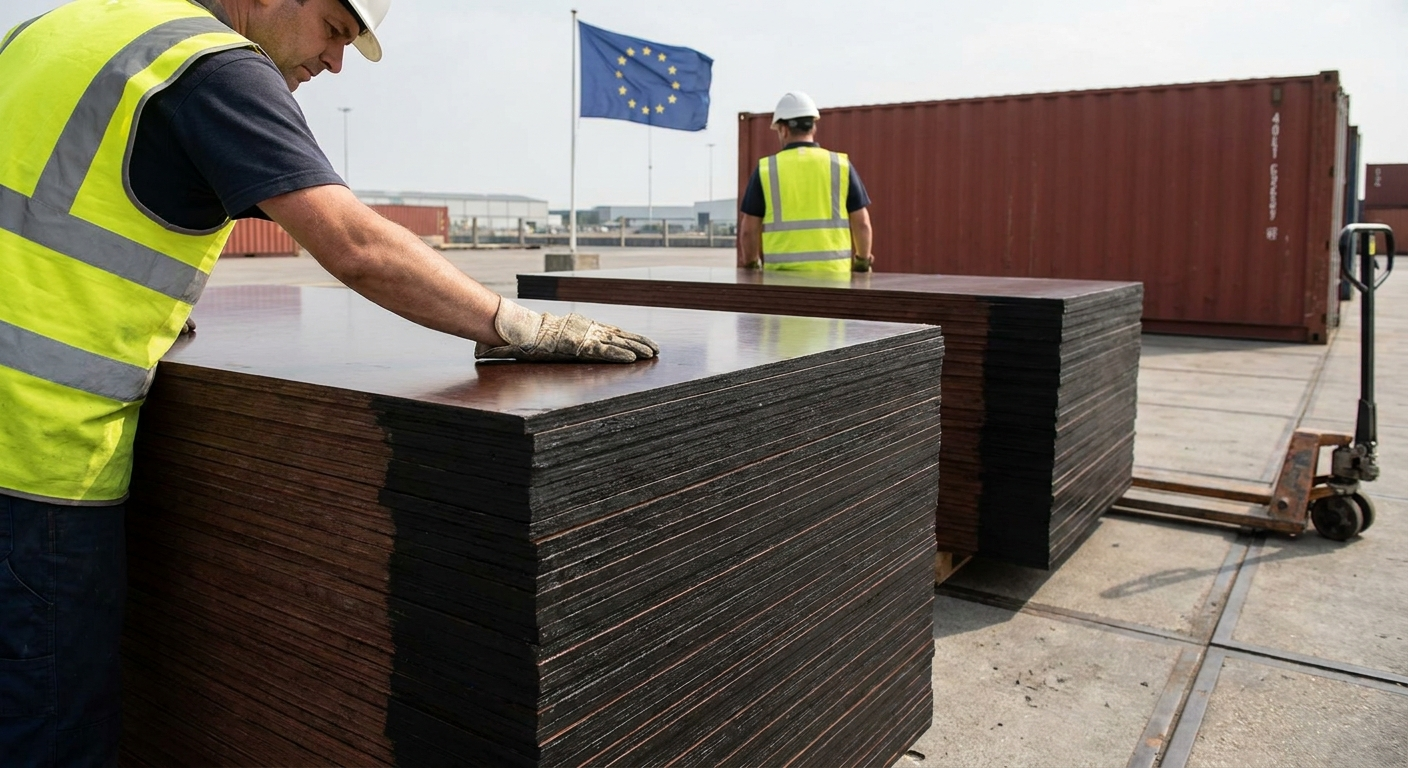
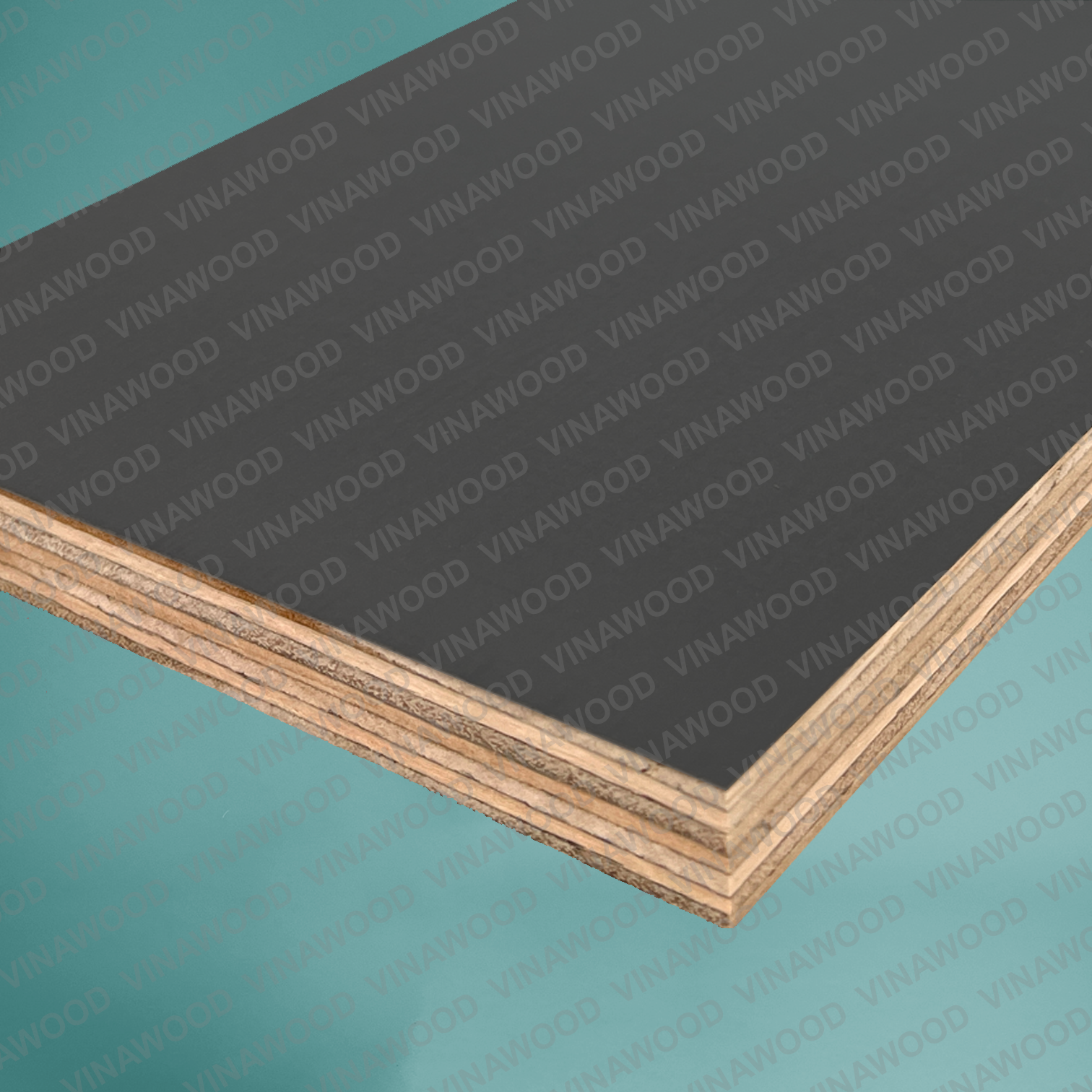
Film-faced and overlaid formwork panels have a sealed phenolic face and edge-sealed borders that do the moisture defense for you, but only while that seal is intact. Keep bundles wrapped until use, stack them flat and fully supported like any other panel, and protect the face film from scuffing against grit or steel. The edge seal is the weak point once panels are cut on site: any fresh cut edge should be resealed, because an unsealed edge lets moisture into the core and undoes the panel's built-in protection. Handled this way, a phenolic film-faced panel delivers up to 20 reuse cycles or more depending on grade. Storage context for these panels sits alongside our guide to concrete form plywood.
When a panel arrives already bowed
A sheet that shows up with a bow may indicate a storage or transport problem rather than a manufacturing one, and the history is worth checking before anything else. Was the load stood on edge in the container? Did it sit on a damp dock? Was the bundle stored leaned against a wall at the yard? Was one face exposed to sun or rain while the other stayed covered? A panel that was flat at inspection and bowed on arrival almost always picked up the bow in handling. From the mill side, we see claims that open as “the panel is warped” and resolve, on a walk through the storage history, as a sheet that spent a week leaning at an angle in a humid shed. If a bow is mild, flattening is often possible — our companion guide covers how to flatten warped plywood.
Quick reference: storage do's and don'ts
| Do | Don't |
|---|---|
| Store flat on a full-support pallet | Lean sheets at an angle against a wall |
| Raise the stack 150–300 mm (6–12 in) off the floor | Lay panels straight on bare concrete |
| Keep humidity stable, away from damp walls | Let sun or rain hit one face only |
| Acclimate 24–48 h before use | Cut cold stock straight out of the warehouse |
| Support the whole footprint; weight the top | Support at the ends only |
| Carry on edge, two to a full sheet | Drag sheets flat off the stack |
| Reseal any cut edge on film-faced panels | Leave fresh-cut edges bare |
About Vinawood
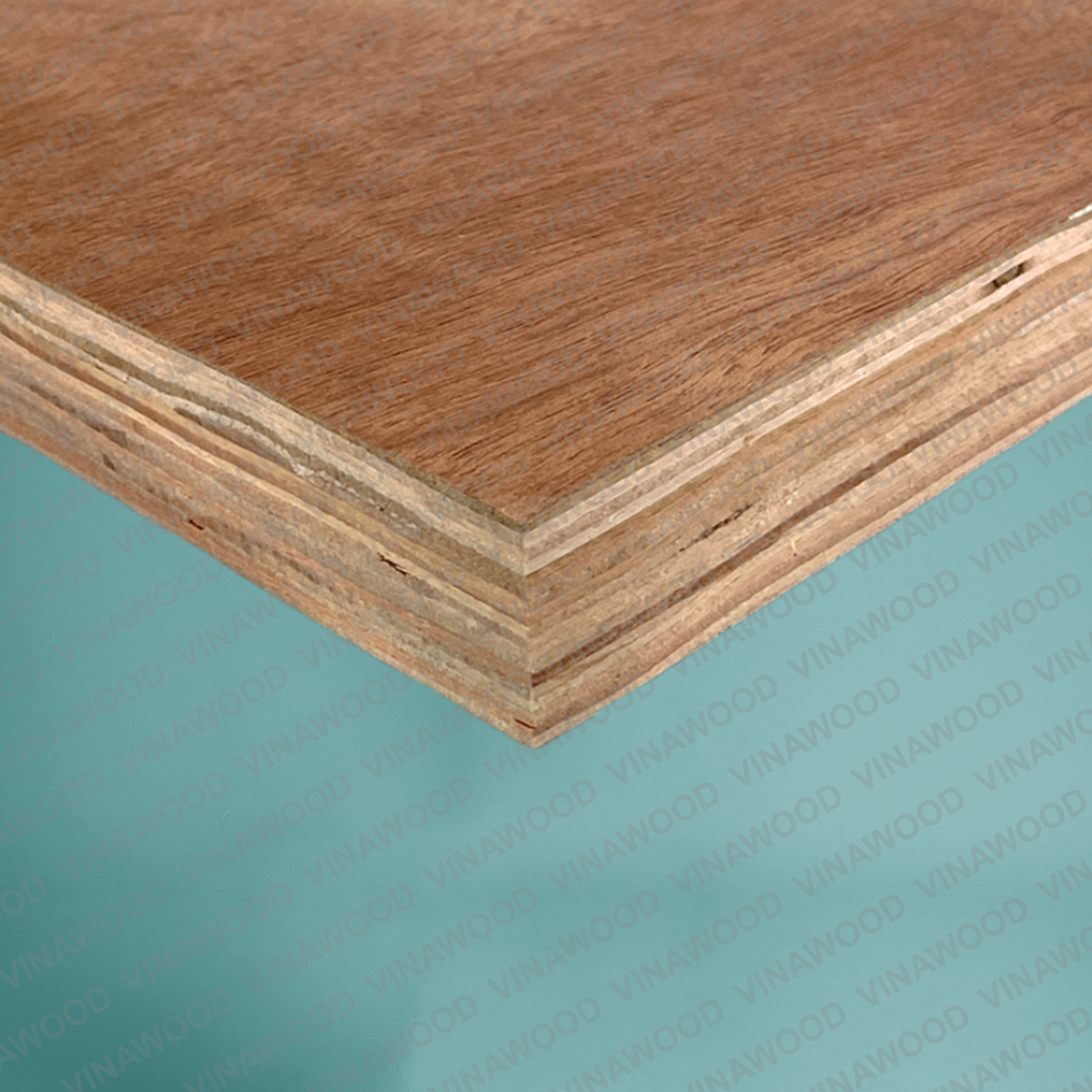
Vinawood builds dimensional stability into the panel before storage ever becomes the buyer's job: a 12-step manufacturing process, balanced odd-ply construction, controlled core moisture, and 100% individual-sheet inspection. Founded in 1992, Vinawood exports more than 5,000 containers a year to 55+ countries. For North American buyers who need moisture resistance from the panel rather than from aftercare, the HDO plywood range and the marine plywood collection both use WBP phenolic adhesive, and the HDO formwork panels deliver up to 20 reuse cycles or more with proper handling. Certifications include EPA TSCA Title VI / CARB Phase 2, CE under EN 13986, FSC chain-of-custody, and ISO 9001, with documentation shipped on every order. To match a panel and grade to your storage and service conditions: vinawoodltd.com.
Category
how-to
Related Markets
Related Countries
Related Products
▶Sources & References (2)
- APA — Storage and Handling of Panel Products — APA — The Engineered Wood Association (2023)
- Wood Handbook — Wood as an Engineering Material (moisture and dimensional change) — USDA Forest Products Laboratory (2021)