BWP Plywood Explained: MR vs BWR vs BWP (IS 303 & IS 710)
BWP (Boiling WaterProof, IS 710), BWR and MR (IS 303) decoded for Indian buyers: what each moisture grade means, the glue chemistry behind it, and how to pick the right one without over-specifying.
Three hours in boiling water is the test a panel has to survive before it earns a BWP stamp. That single exposure separates the top BIS moisture grade, IS 710, from everything sold below it. If you are specifying plywood for a kitchen, a bathroom vanity, exterior joinery, or anything that will meet water, BWP — Boiling WaterProof — is the term the shop and the spec sheet keep throwing at you.
One honest caveat before the detail: "boiling waterproof" is the name of a BIS grade, not a promise that a sheet of plywood is literally impervious to water. BWP-grade panels are highly water-resistant because of the glue that holds the veneers together. The wood itself still swells if you soak a raw edge and leave it, and a badly sealed cut will always be the weak point. Read the grade for what it is: a bond-line rating, tested by boiling, not a raincoat.
The three BIS moisture grades at a glance
| Grade | Full form | BIS standard | Bond basis | Core glue | Where it fits |
|---|---|---|---|---|---|
| MR | Moisture Resistant | IS 303 | Dry / humid interior | Urea-formaldehyde (UF) | Furniture, wardrobes, dry interiors |
| BWR | Boiling Water Resistant | IS 303 | Cyclic boil, semi-exterior | Phenol-formaldehyde (PF) | Kitchens, humid zones, semi-exterior |
| BWP | Boiling WaterProof | IS 710 | 3-hour boil, full exterior/marine | Phenol-formaldehyde (PF) | Exterior, marine, structural, wet areas |
The pattern to hold onto: MR uses a urea-based glue built for dry conditions. BWR and BWP both use phenolic (phenol-formaldehyde) glue, the weather-and-boil-proof chemistry. IS 710 sits a full standard above IS 303, with a longer boil test and tighter construction rules.
MR (Moisture Resistant, IS 303)
MR plywood is the everyday interior grade. Its veneers are bonded with urea-formaldehyde, an adhesive that handles ambient humidity and the odd splash but gives up if it stays wet. For a wardrobe carcass, a bookshelf, a bed base, or paneling in a dry room, MR is the right and cheaper call. There is no engineering reason to pay for a boil-proof bond on a panel that will never see standing water.
Where MR gets buyers into trouble is scope creep: an MR sheet installed under a sink, behind a splashback, or on a balcony soffit. The glue was never rated for repeated wetting, so the plies eventually delaminate. That is a specification mismatch, not a manufacturing fault.
BWR (Boiling Water Resistant, IS 303)
BWR is the middle grade and, in practice, the one most Indian kitchens actually need. It carries a phenolic glue line and passes a cyclic boiling-water test under IS 303, so it holds up in humid and occasionally wet service: kitchen cabinets, utility areas, and semi-exterior joinery that is protected from direct, sustained weather.
BWR sits inside IS 303 alongside MR, sharing the same standard number but a tougher bond requirement. If a retailer quotes "BWR 710," treat it as a red flag — BWR belongs to IS 303, and BWP belongs to IS 710. The two numbers are not interchangeable.
BWP (Boiling WaterProof, IS 710)
BWP is the exterior and marine tier, certified under IS 710. The bond is phenol-formaldehyde — the same weather-and-boil-proof (WBP) phenolic family used in construction formwork and marine panels worldwide. IS 710 puts the glue line through a three-hour boiling-water test, a far harsher exposure than the IS 303 cycle, and adds requirements on core construction and preservative treatment.
This is the grade for full exterior work, structural applications, marine and boat interiors, and any surface that will be wet for long stretches. When people say "710-grade plywood," they mean BWP under IS 710. It is the highest bond class in the BIS moisture ladder, and the phenolic chemistry is what earns it that place.
IS 303 vs IS 710 — what the standard numbers mean
The two numbers on a plywood stamp are not marketing. IS 303:1989 is the specification for plywood for general purposes, and it defines both the MR and BWR grades. IS 710:2010 is the separate specification for marine plywood, and BWP panels are tested against it. So the grade and the standard travel together: MR and BWR are IS 303; BWP is IS 710.
A genuine BWP sheet should carry the ISI mark referencing IS 710. If a stamp shows IS 710 but the panel is priced like commercial MR, that gap between claim and price is worth a second look rather than a blind purchase. For a wider view of how these BIS moisture grades line up against the North American and European systems, our guide to formwork plywood grades across EN, APA and BIS standards maps the equivalences.
Glue chemistry, told honestly
Almost every real-world plywood argument comes down to the adhesive, so it pays to name the chemistry precisely. MR plywood uses urea-formaldehyde: economical, fine for dry interiors, not weatherable. BWR and BWP both use phenol-formaldehyde, the phenolic WBP glue that resists boiling water. BWP under IS 710 is the phenolic grade taken to its highest tier.
Two things worth being careful about. First, do not read "MR" as "waterproof" because the sheet feels dense — the grade is defined by the glue's water rating, not the panel's weight. Second, "melamine" is a word buyers sometimes reach for here, and it means different things: a melamine core resin (a melamine-urea-formaldehyde glue) is not the same as a decorative melamine laminate on a cabinet door. In the BIS moisture context, the meaningful split is UF (MR) versus phenolic PF (BWR and BWP). From a manufacturer's bench, that single distinction settles most of the "which grade" questions we field from Indian buyers.
How to verify a BWP claim
A grade is only as good as its proof. Three checks separate a real BWP panel from an optimistic label. Look for the ISI/BIS mark citing IS 710, not a generic sticker. Ask whether the panel has passed the IS 710 boil test — a reputable seller can point to it. And read the cut edge: consistent, gap-free glue lines and a solid core may indicate a properly bonded panel, while visible voids and uneven plies may indicate a sub-grade sheet dressed up with a stamp.
The aim here is to read grades, not to arm yourself with a rejection checklist. Most field failures trace back to handling: an unsealed edge, prolonged soaking during storage, or panels stacked in standing water, rather than to the sheet leaving the factory wrong. A grade stamp tells you what the bond was rated to do; site discipline decides whether it gets the chance.
BWP vs marine vs "710" vs MDF
These four terms overlap enough to cause confusion at the counter. BWP and IS 710 marine plywood are effectively the same conversation — "710-grade" is shorthand for BWP tested to IS 710. "Marine plywood" as a category means panels built for prolonged water exposure, which in the Indian system is BWP/710 territory. MDF is a different material entirely: medium-density fibreboard, made from wood fibres and resin, with none of plywood's cross-laminated veneer strength and far poorer water tolerance unless specifically rated. For a wet or structural job, BWP plywood and MDF are not substitutes.
If you want the appearance-grading side of the story (the A/B/C/D face-quality system that sits on top of moisture grade), our explainer on plywood grades A, B, C and D covers it. And for BIS shuttering panels specifically, see the shuttering plywood guide for the Indian market.
Which grade does your project actually need
Buyers often over-specify out of caution and pay for a boil-proof bond a dry wardrobe will never use. The cleaner way to decide is to ask what the panel will meet, and for how long.
Dry interior furniture that stays indoors, such as bookshelves, wardrobe carcasses, bed frames and dry-room paneling, is MR territory. Anything that lives in a kitchen or a utility area, or that catches steam and the occasional spill, wants BWR: the phenolic bond gives you margin without the price of full marine grade. Reserve BWP/710 for surfaces that face weather, immersion, or structural duty: exterior joinery, bathroom units in constant damp, marine and boat interiors, and outdoor shuttering.
A useful sanity check on any quote is price against claim. IS 710 plywood costs more to make than IS 303 because phenolic resin and the tighter marine construction are genuinely more expensive. A "710-grade" sheet priced like commercial MR is telling you something. We see this pattern from the export side too: the mills that cut corners on resin content are the ones whose panels come back with delamination complaints, regardless of what the stamp claims.
Vinawood's export-grade equivalent for BWP applications
Vinawood is a Vietnamese plywood manufacturer, established in 1992, shipping to 55+ countries with BIS certification among its approvals. For Indian buyers specifying at the BWP/710 level, the relevant part of our range is the phenolic and marine tier — the export counterpart to domestic 710-grade brands rather than a drop-in ISI substitute.
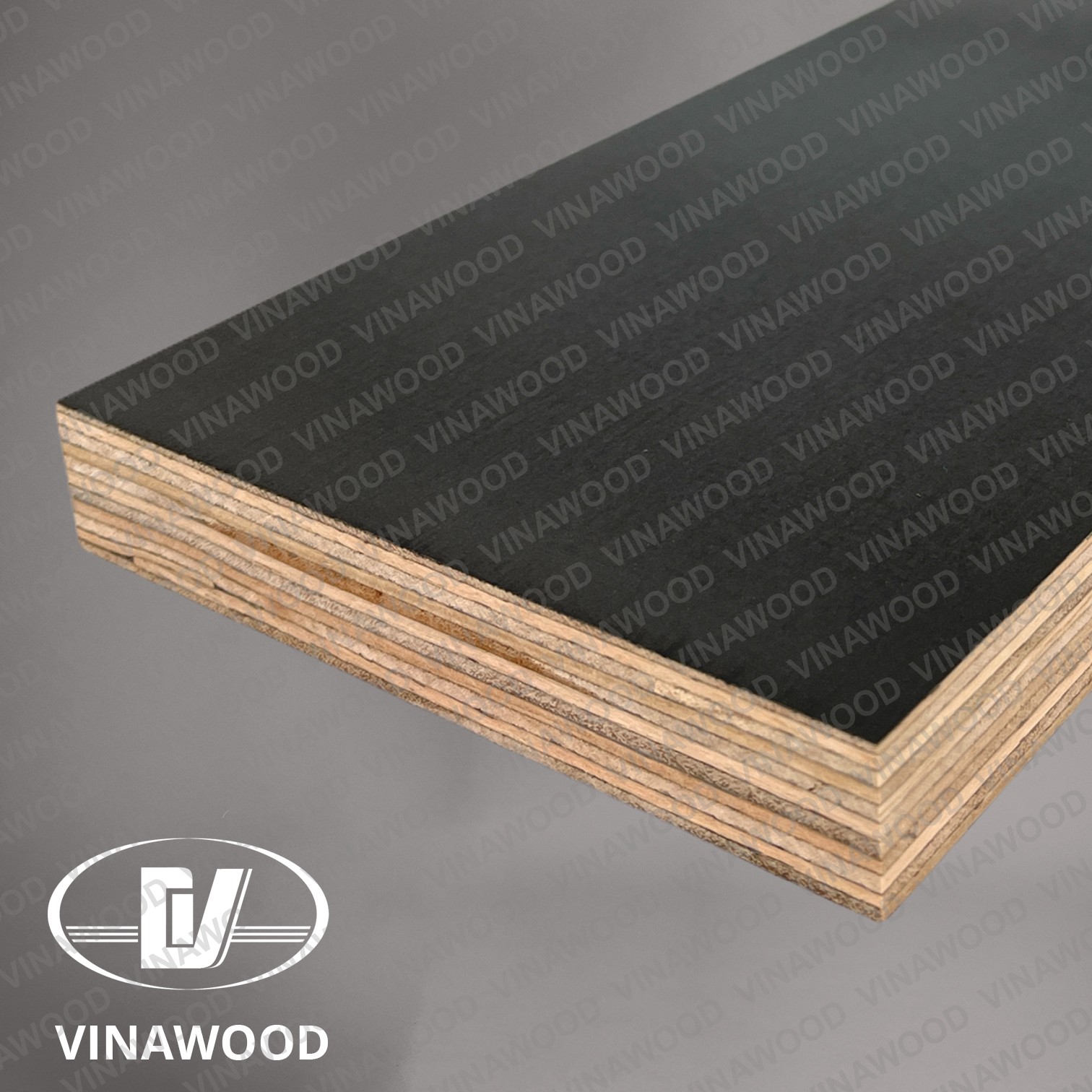
Pro Form is our WBP phenolic panel, bonded with phenol-formaldehyde glue and rated to EN 636-3 (Class 3), the European equivalent of the fully weatherable, highest-bond tier that BWP occupies under IS 710. It carries up to 20 reuse cycles in concrete formwork service. For marine and prolonged-immersion applications, our marine plywood range is built for the same envelope BWP targets, and the wider film-faced plywood range covers phenolic-faced formwork. The rule that carries across both standards: match the adhesive class to the application. A phenolic-bonded panel for wet and structural work, a urea-bonded panel for dry interiors, and never a melamine-glued or MR sheet sold as if it were BWP.
Category
how-to
▶Sources & References (3)
- IS 710:2010 — Marine Plywood Specification — Bureau of Indian Standards (2010)
- IS 303:1989 — Plywood for General Purposes (MR/BWR grades) — Bureau of Indian Standards (1989)
- IS 4990 — Plywood for Concrete Shuttering — Bureau of Indian Standards (2011)