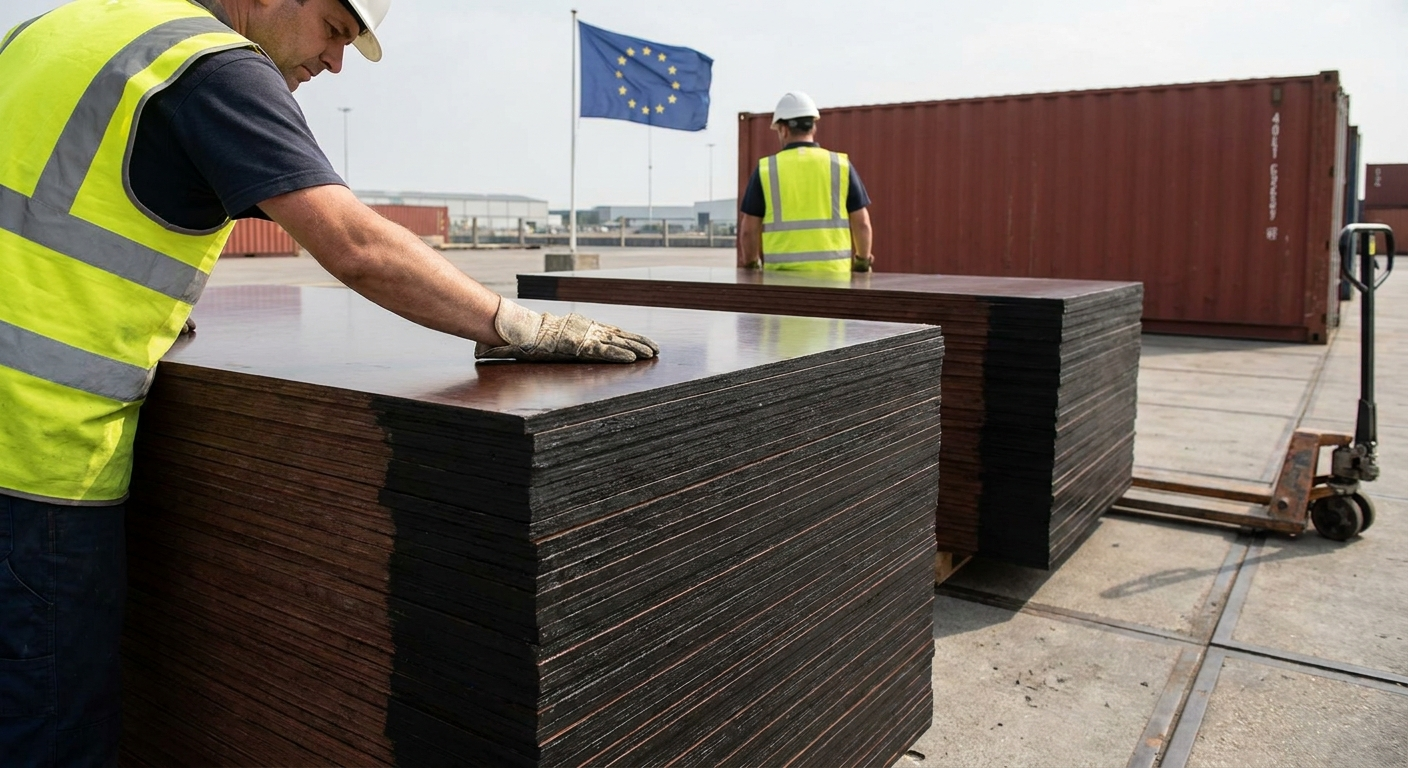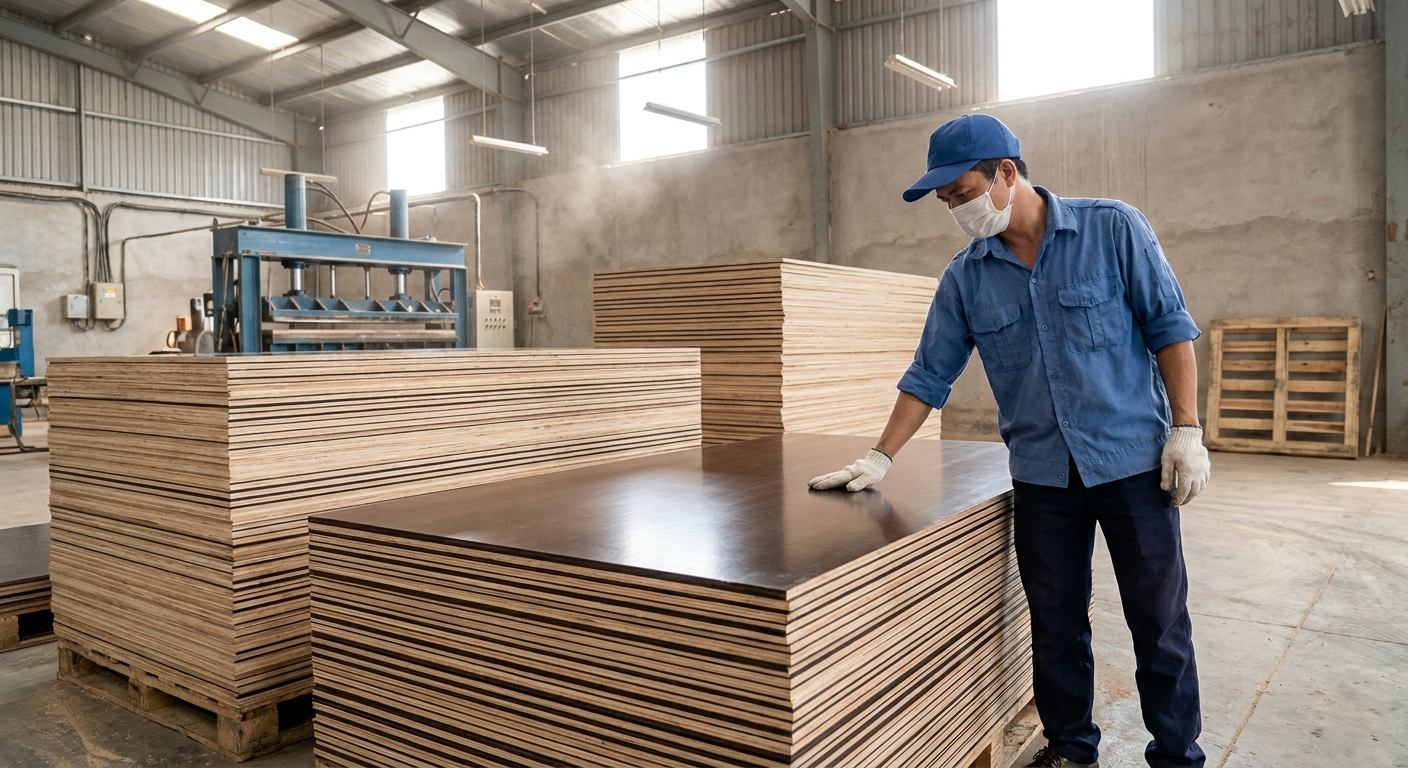
Plywood in Tunnel Formwork: Where the Steel System Ends and the Plywood Begins
Tunnel formwork is a steel system, and most guides stop there. This one shows where plywood actually fits on a tunnel-form job: stop-ends, infill, blockouts, and the spec for each.
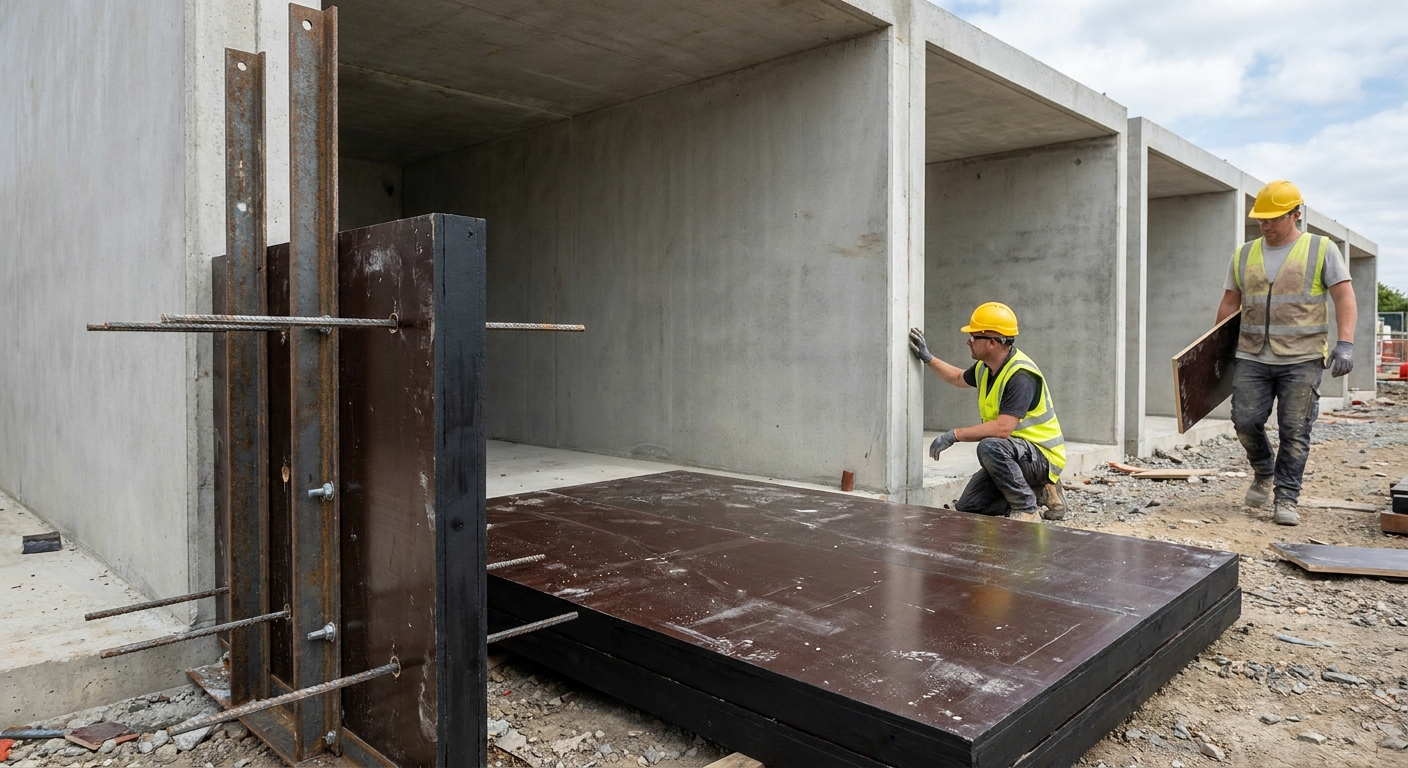
Tunnel formwork casts a building's walls and floor slab together in a single daily pour. A crew sets a row of steel half-tunnels, ties them into a continuous cell, pours both the vertical walls and the horizontal soffit in one operation, then strikes and flies the units to the next bay the following day. Mass housing, hotels, student accommodation, dormitories and prisons lean on it because the cellular reinforced-concrete structure repeats, and repetition is where the daily cycle pays off.
That speed comes from steel. The tunnel units themselves are heavy galvanised half-tunnels bought from a system vendor such as Doka, ULMA or Outinord. Plywood is not the primary forming face on those units. So the honest question for a panel buyer is not "what plywood do I use for tunnel formwork" but "where on a tunnel-form job does plywood actually do the work?" The answer is the parts the steel system was never designed to cover.
What tunnel formwork is, in one paragraph
A tunnel-form unit is an inverted steel L or a pair of L-shapes forming a half-tunnel: one leg shapes a wall, the other shapes half the slab soffit above it. Set two facing half-tunnels and you get a complete room-sized cell, cast monolithically. The Concrete Centre and engineering references describe it as a method for repetitive cellular structures, and that is the key word. Where the plan repeats, tunnel form turns a building into a production line with a one-day rhythm per bay.
Why it exists
The economics are about repetition and speed, not material cost. Casting walls and slab in one pour removes a whole construction-joint sequence and gives a monolithic structure with a fair-face finish straight off the steel. For a tower of identical apartments or a wing of identical rooms, a contractor can cycle a bay a day once the rhythm is set. That is the case for tunnel form, and it is a strong one where the geometry cooperates.
The honest part: tunnel form is a steel system
The half-tunnels, the kickers, the props and the hydraulic strike gear are all steel, supplied and engineered as a system. The forming face that meets the concrete on the main wall and soffit is the steel skin of the tunnel, not a plywood sheet. Any content that implies a plywood manufacturer supplies "tunnel formwork systems" is selling something it does not make. Vinawood does not make the steel tunnel. What we make is the panel for everything the tunnel cannot form on its own, and on a real job that is a surprising amount of the work.
Where plywood fits, part one: stop-ends and bulkheads
Every cast bay has open ends. The tunnel forms the walls and soffit, but the end of each pour and every construction joint needs a stop-end or bulkhead to hold the concrete and shape the joint. These are plywood forms, cut and fitted to the bay end, drilled for rebar to pass through, and reused bay after bay as the cycle advances. On a long repetitive job the same stop-end pattern repeats hundreds of times, which makes the panel's reuse count a real cost line. Our wall formwork plywood guide covers the face-spec logic that applies to these vertical forms.
Where plywood fits, part two: gable, façade and infill forms
The cellular grid is regular in the middle and irregular at the edges. Gable walls, façade returns, balcony upstands and any bay where the plan stops repeating fall outside the standard tunnel unit. Those get formed conventionally, with film-faced plywood on a frame or soldier system. The cleaner the film face on these infill forms, the better they match the fair-face finish the steel tunnel produces, so the visible concrete reads as one surface rather than a patchwork.
Where plywood fits, part three: blockouts and box-outs
Inside each cast cell sit the openings: doors, windows, service penetrations for plumbing and electrical risers, and stair voids. Each one is a blockout, a small plywood box or frame fixed inside the form to keep concrete out of the opening. Blockouts take abuse during the pour and the strike, so they are a steady consumable on a tunnel-form site. Film-faced plywood holds up better here than bare panel because the face resists the wet concrete and strips cleaner.
Spec for the plywood elements
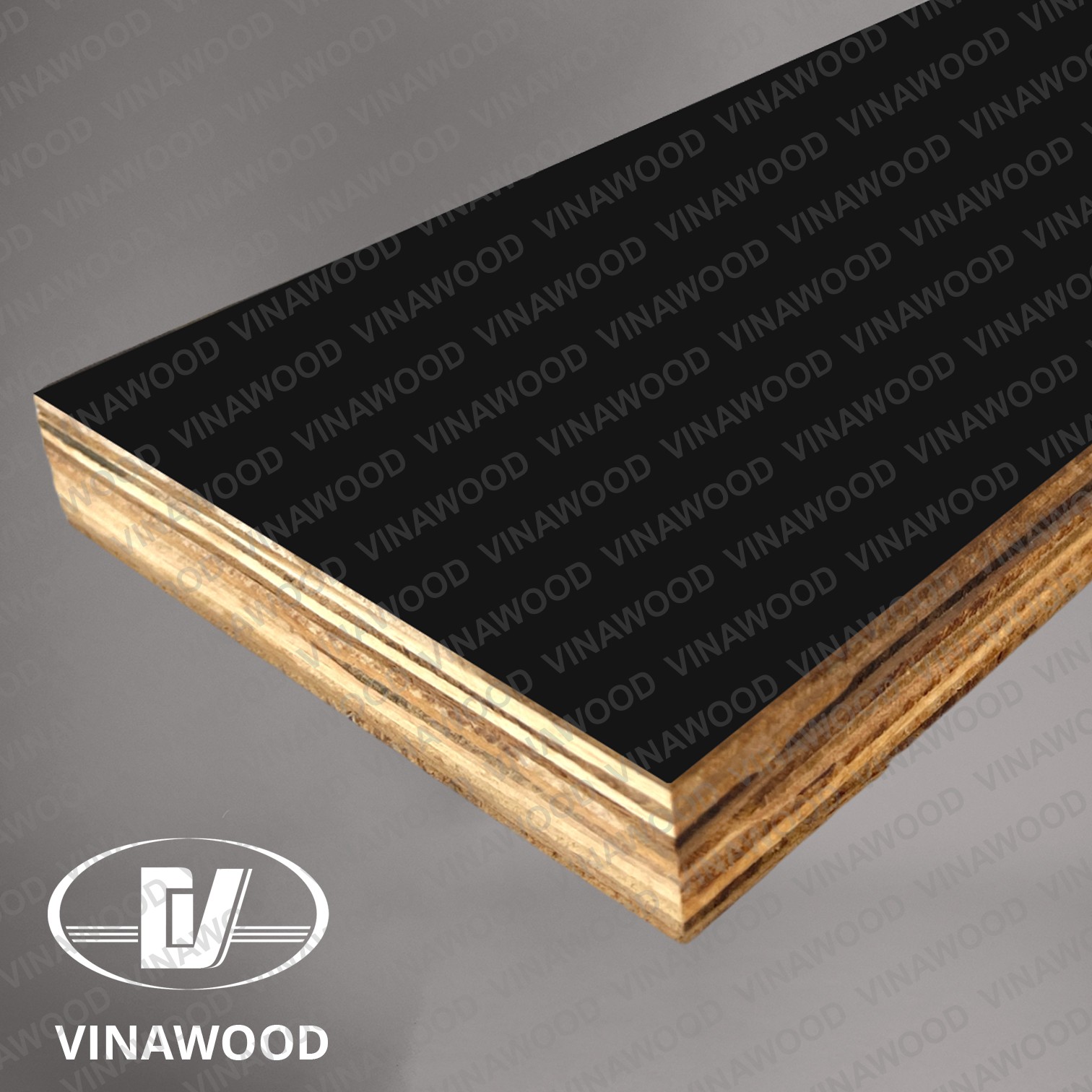
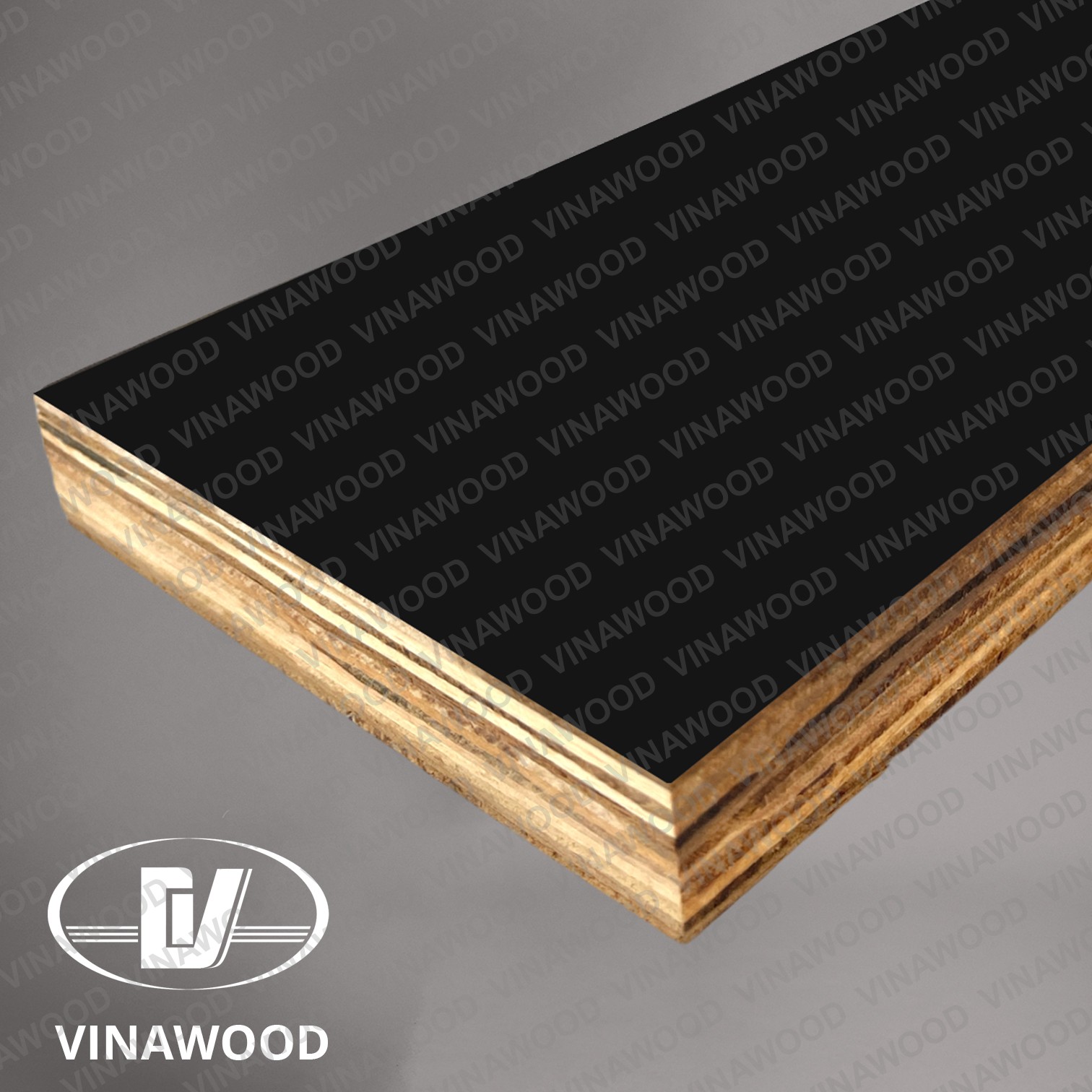
18 mm film-faced plywood is the baseline for stop-ends, infill forms and blockout boxes. The adhesive class is the decision that sets reuse, and it splits cleanly by how many times the element repeats.
| Plywood element | Recommended panel | Core glue / class | Max reuse |
|---|---|---|---|
| Repeat stop-ends, high-cycle bulkheads | Pro Form | WBP phenolic, EN 636-3 / Class 3 | up to 20 cycles |
| Shorter-run infill and blockout forms | Form Extra | WBP higher-melamine MUF, EN 636-2 / Class 2 | up to 15 cycles |
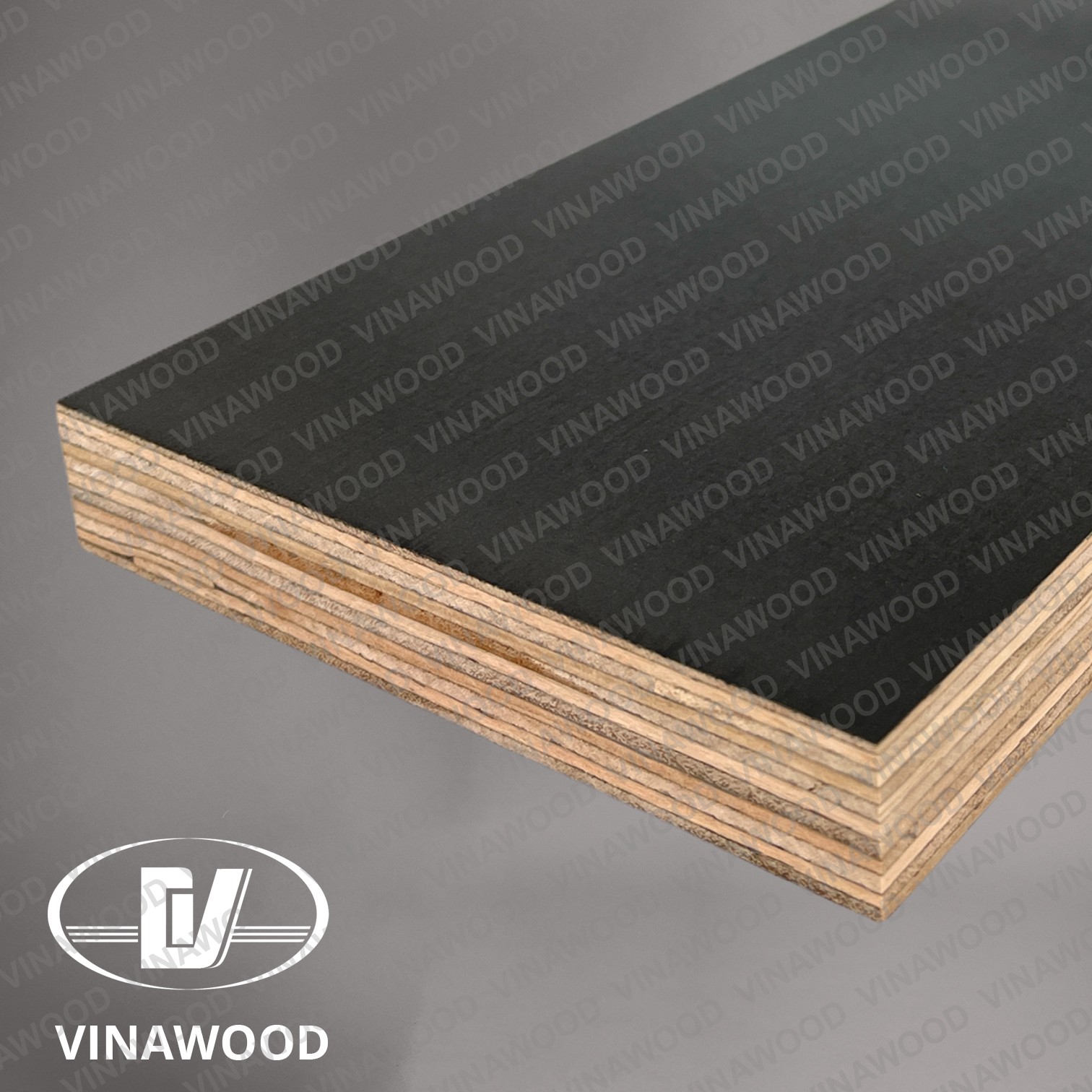
Pro Form is the phenolic-bonded Class 3 panel, weather-and-boil-proof core glue, the right choice where one stop-end pattern repeats through a long programme. Form Extra reaches up to 15 reuses on a more durable, higher-melamine-content MUF core resin. The melamine in Form Extra is the glue bonding the veneers, not a decorative laminate and not the face film; its extra life over Form Basic comes from the tougher glue chemistry, and both carry the same phenolic face film. Form Extra stays inside the EN 636-2 envelope and should never be labelled Class 3. We see this point confused often, and from a Vietnamese mill's side of the order it is worth being plain about: match the class to the cycle target, not to the brochure tier.
The disadvantages of tunnel form, answered plainly
Tunnel form is not a default. It carries a high mobilisation cost, so it only pays on large repetitive jobs. It depends on crane capacity and crane time for every fly. It needs a skilled, drilled crew to hold the daily cycle. And it is rigid on geometry: the moment the plan stops repeating, the steel system stops helping. Those last two points are exactly where plywood-faced conventional forms fill the gap, on the non-repeating edges and the parts of a development tunnel form does not suit. Basements, cores, podiums and retaining walls are usually formed with conventional film-faced plywood systems alongside the tunnel-formed cells. For the vertical core walls cast beside tunnel cells, our climbing formwork guide covers the companion technique.
Reuse, release agent and stripping discipline
The plywood elements on a tunnel-form job live or die on handling, the same as any film-faced form. Edge swell starts at unsealed cuts and the rebar holes drilled through stop-ends, so resealing fresh cuts matters more here than almost anywhere because the forms are cut and drilled constantly. A consistent release agent keeps the strip clean and protects the film. Arris damage at the panel corners from rough striking may indicate a handling problem on site rather than a panel fault. None of these failure modes is a manufacturing defect, and naming the real cause keeps the forms in service longer.
Sourcing checklist
For the plywood elements of a tunnel-form job, confirm: adhesive class matched to the element's cycle count, EN 636-3 phenolic for repeat stop-ends and EN 636-2 higher-melamine MUF for shorter infill runs; face film weight matched to the finish the steel tunnel sets; panel format by market, 1220×2440 mm for the US and 1250×2500 mm for the EU and UK; and the compliance set for the destination, CARB P2 / EPA TSCA Title VI for the United States and CE marking to EN 13986 for the EU and UK. The full range sits in our film-faced plywood collection, and for slab-soffit context against the monolithic tunnel pour see the slab formwork plywood guide.
About Vinawood
Vinawood has manufactured plywood in Vietnam since 1992, shipping more than 5,000 containers a year to 55+ countries. On a tunnel-form job we supply the plywood that forms the stop-ends, infill walls, blockouts and conventional forms around the steel system, never the steel tunnel itself. The range runs from phenolic Class 3 Pro Form for high-cycle stop-ends to higher-melamine MUF Class 2 Form Extra for shorter runs, with the HDO plywood range for North American buyers. Every panel ships with full certification: ISO 9001, CE to EN 13986, EPA TSCA Title VI / CARB P2, and FSC chain-of-custody. To match panels to the plywood elements of your tunnel-form programme, contact our team for a specification and quote.
Category
how-to
Related Markets
Related Countries
Related Products
▶Sources & References (1)
- Tunnel form — The Concrete Centre (2025)