Climbing Formwork (Jump Form): How It Works and the Panel That Faces the Concrete
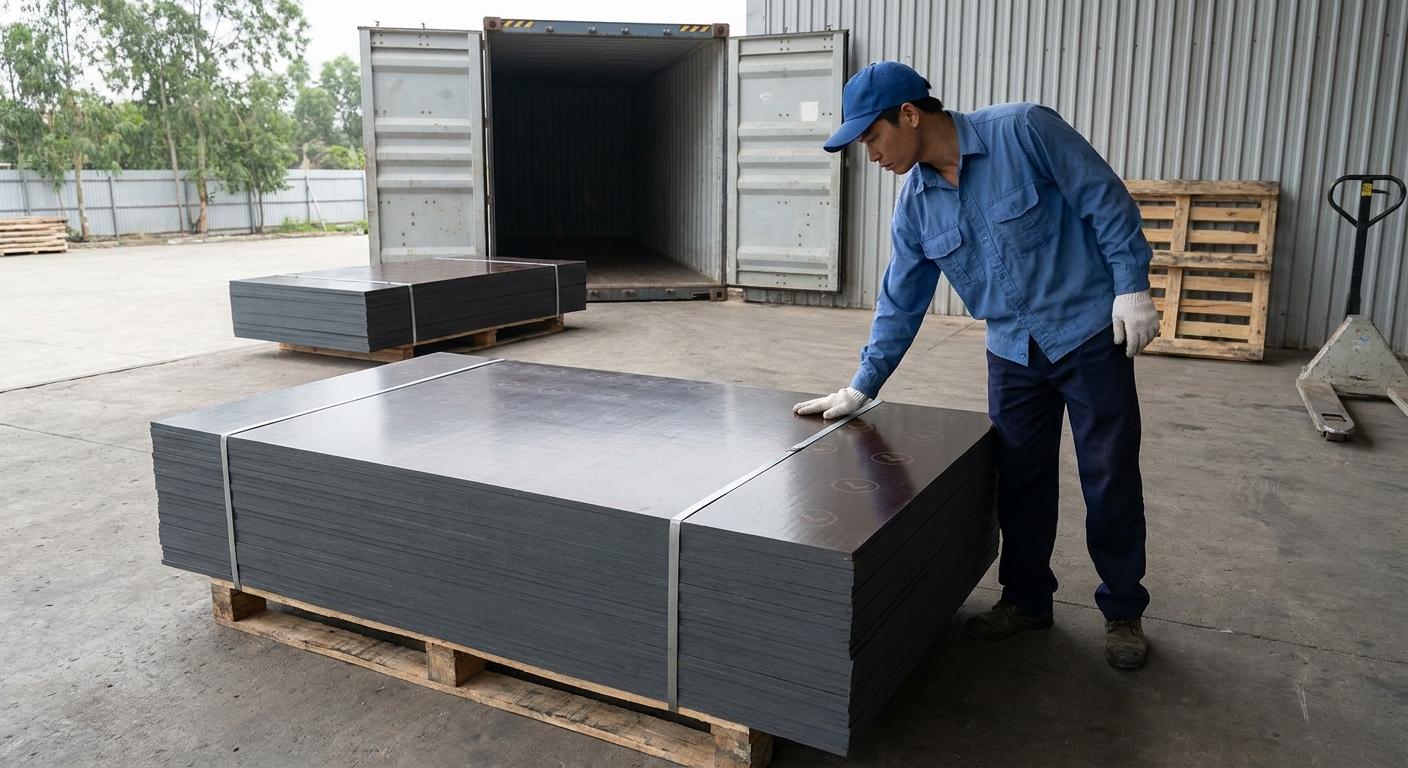
Climbing formwork (jump form) rises with the structure after each lift. Vinawood supplies the film-faced or HDO face panel only — not brackets, shoes, or platforms — with Class 3 phenolic and core-MUF grades mapped to reuse up to N. Warehouses for local distributors; RFQ for face-panel specs.
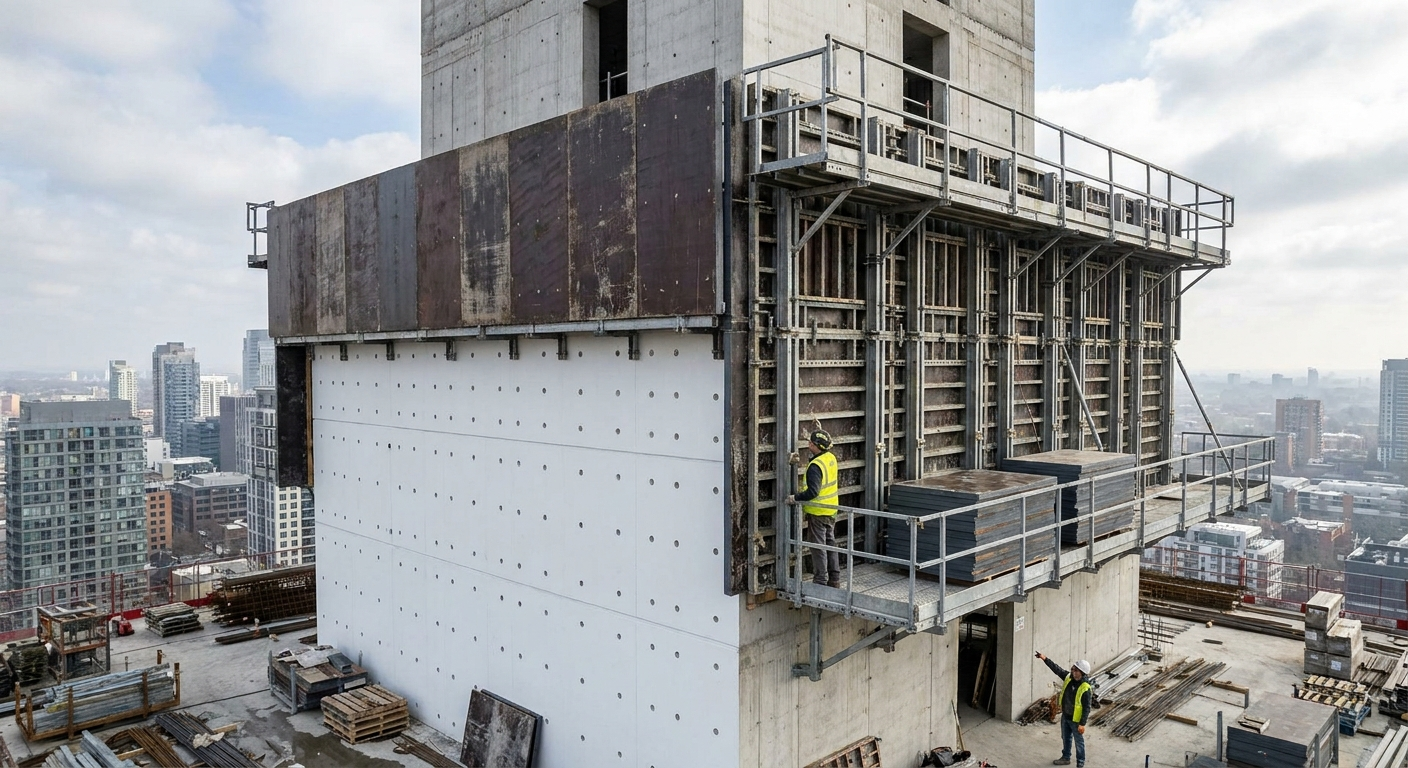
Climbing formwork — jump form on most North American takeoffs — carries the wall face up the shaft after each lift. Brackets, shoes, and platforms belong to the formwork-system supplier. Vinawood supplies the film-faced or HDO face panel that lines those brackets. Not the climbing rig. Not a shoe kit. Not a platform package.
Keep that split on the first RFQ. Tall cores repeat the same floor-to-floor pour dozens of times, and the panel facing the concrete decides both the finish and how many lifts one sheet survives. Below: jump vs self-climbing vs slipform, where the method pays, and which Vinawood face grades fit. Soft SoT forming types for walls and slabs live on concrete forming plywood. Cite it. Do not re-body it here.
What climbing formwork actually does on site
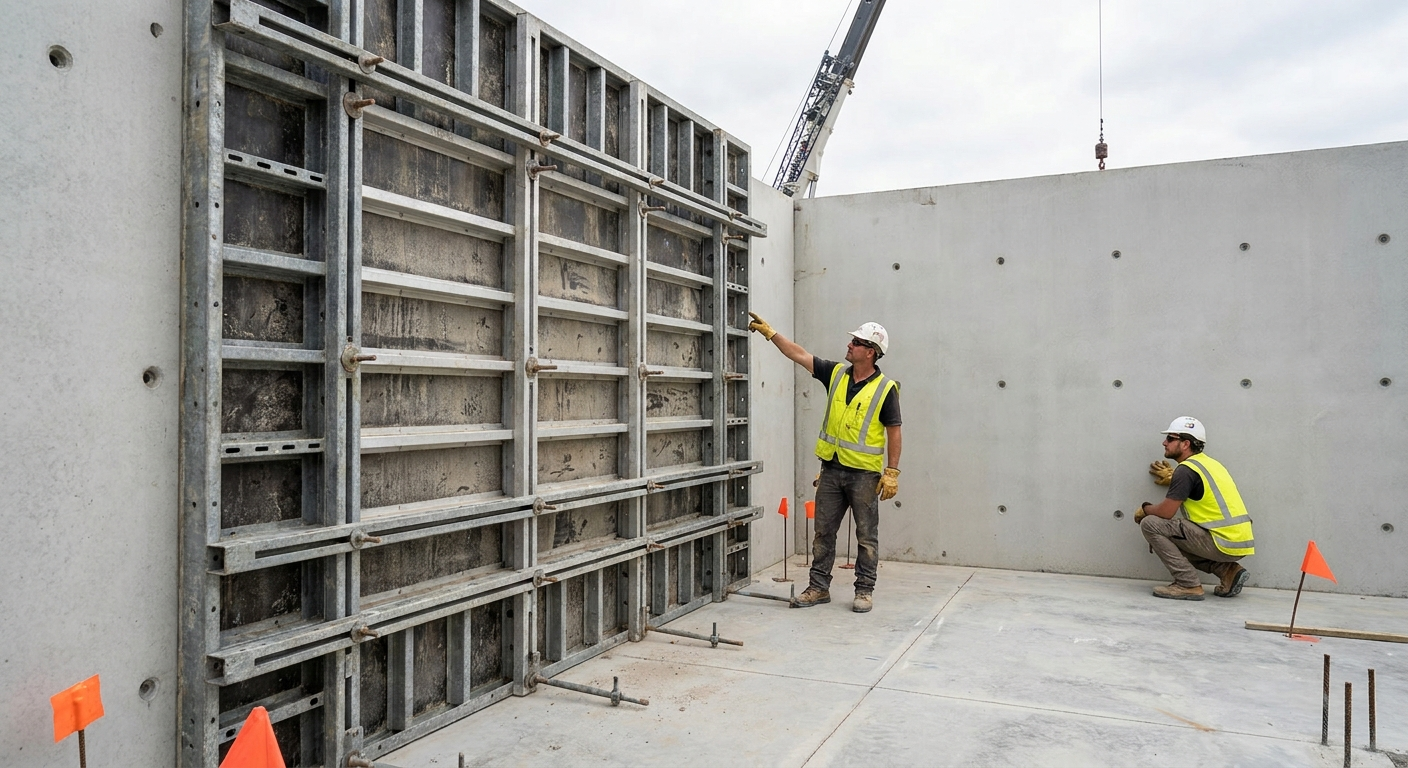
A climbing form hangs wall formwork on brackets that bite into concrete already cast below. Once a lift cures enough to carry load, the crew releases the form, raises it one pour height, and re-anchors into embeds left in the hardened wall. Face against the next section. Concrete again.
Nothing gets dismantled between levels. Panels, frames, and platforms ride up together. That repetition is why crews pick climbing over assembling and stripping conventional wall forms at every storey. Cores and shafts stay fast when the geometry holds.
Plywood is the replaceable skin. Abrasion, edge swell, or a dull face? Swap sheets. Keep the steel. Spec the face early — thickness, bond class, and reuse as up to N — before anyone talks price.
Jump form, self-climbing, and slipform
Jump form is the crane-set method most people mean by climbing formwork. After each pour a crane lifts the assembly; the crew re-anchors. Cycle time hinges on crane availability as much as concrete strength.
Self-climbing keeps the pour-climb-pour rhythm, but hydraulic jacks push the assembly up rails or rods fixed to the structure. The crane frees up for other loads. Rail-guided hybrids sit in between — still crane-assisted on some moves, still guided so the face lands true.
Slipform is a different animal. The form moves almost continuously while concrete is still plastic. No discrete jump. You still need a durable face, but programme, labour, and concrete logistics diverge hard from jump or self-climbing. Do not treat the three as interchangeable on an RFQ.
Anatomy of a climbing form — and what Vinawood does not sell
Every climbing assembly has a steel frame, working platforms, and anchor hardware that lock into the previous lift. Behind that steel sits the form face. Usually film-faced plywood screwed or clamped to walers. Fair-face architectural walls want a cleaner film and tighter edge care. Structural cores that will be covered later can take a tougher structural face if bond class and thickness still match pour pressure.
Pour pressure climbs with pour height, concrete temperature, and placement rate. Face thickness and support spacing have to match that load. Sibling guidance on concrete pressure on formwork covers the calculation side. This page stays on method plus panel grade.
Vinawood does not sell brackets, shoes, or climbing platforms. When a buyer asks for “climbing formwork plywood,” they mean the face sheet that will bolt into someone else’s system. Keep that boundary clear in the quotation notes. Nobody should expect a full jump-form kit from the mill.
Where climbing formwork earns its keep
You'll see climbing on elevator and stair shafts, building cores, bridge piers — anywhere tall vertical concrete repeats the same section storey after storey. The method pays when geometry stays consistent enough that one form set climbs without constant rebuilds.
Mixed façades with heavy detailing? Crews often climb only the core and form the perimeter conventionally. Face panel choice still follows bond class and reuse. Walls, columns, slabs — start from the forming hub linked above. Don't stretch this page into a full catalogue.
Advantages, trade-offs, and mid-height geometry changes
Climbing cuts reassembly labour and keeps a consistent wall line up the height. Platforms travel with the form, so access and safety planning stay inside one system. Cycle discipline is the price. Concrete must hit specified strength before the jump. Crane or jack time becomes a schedule gate.
Panel cost is usually a small fraction of steel and labour. A face that fails early still stops the programme. On a long climb, a Class 3 phenolic sheet often costs less per lift than swapping cheaper sheets mid-shaft. Strip timing and curing windows sit in formwork removal time. No invented day counts here.
Mid-height geometry changes — setbacks, transfer levels, temporary openings — don't kill climbing, but the face schedule may need spare sheets and a second thickness. Plan those swaps in the RFQ. Don't let the mill ship one grade into a programme that needs two.
The form face that lines the panel
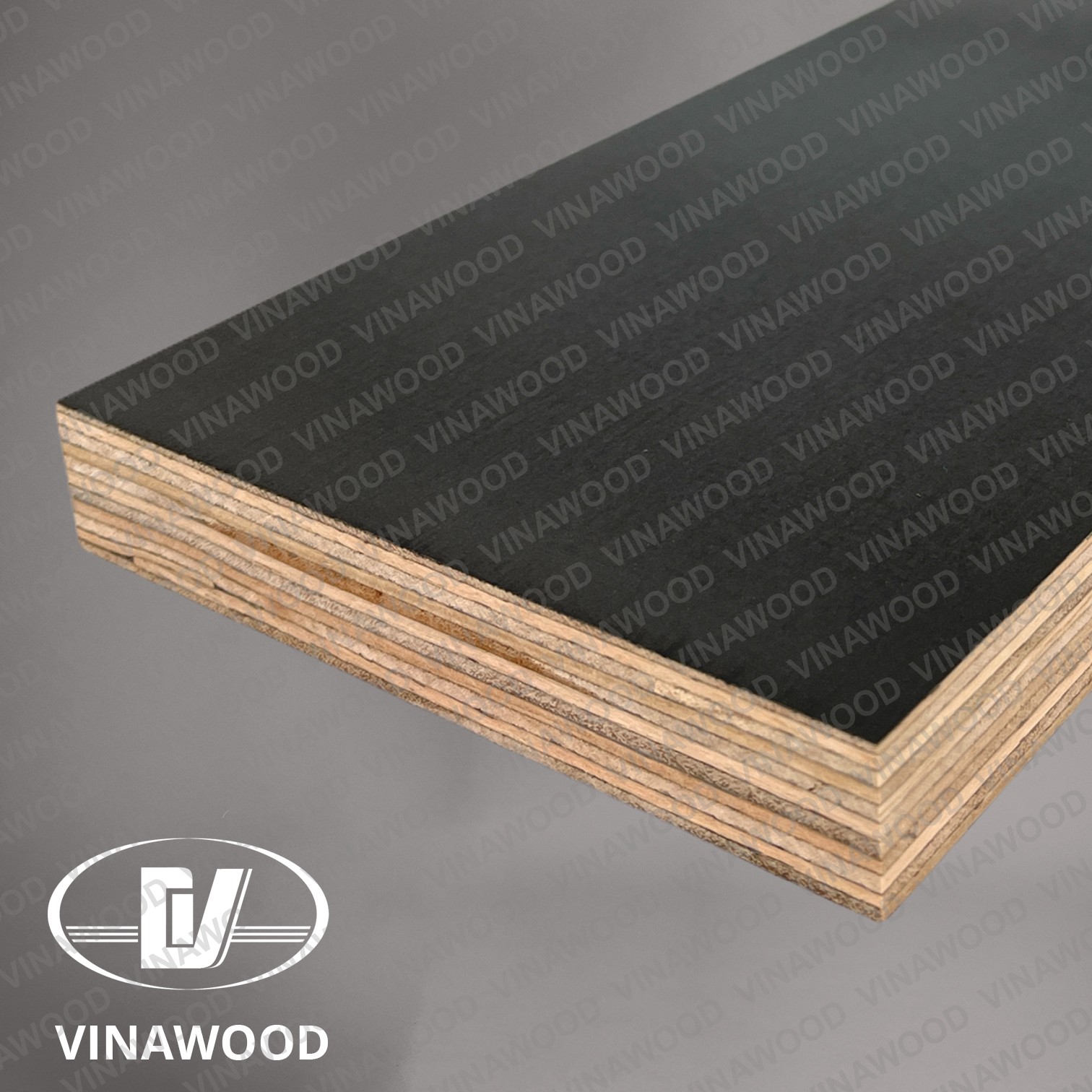
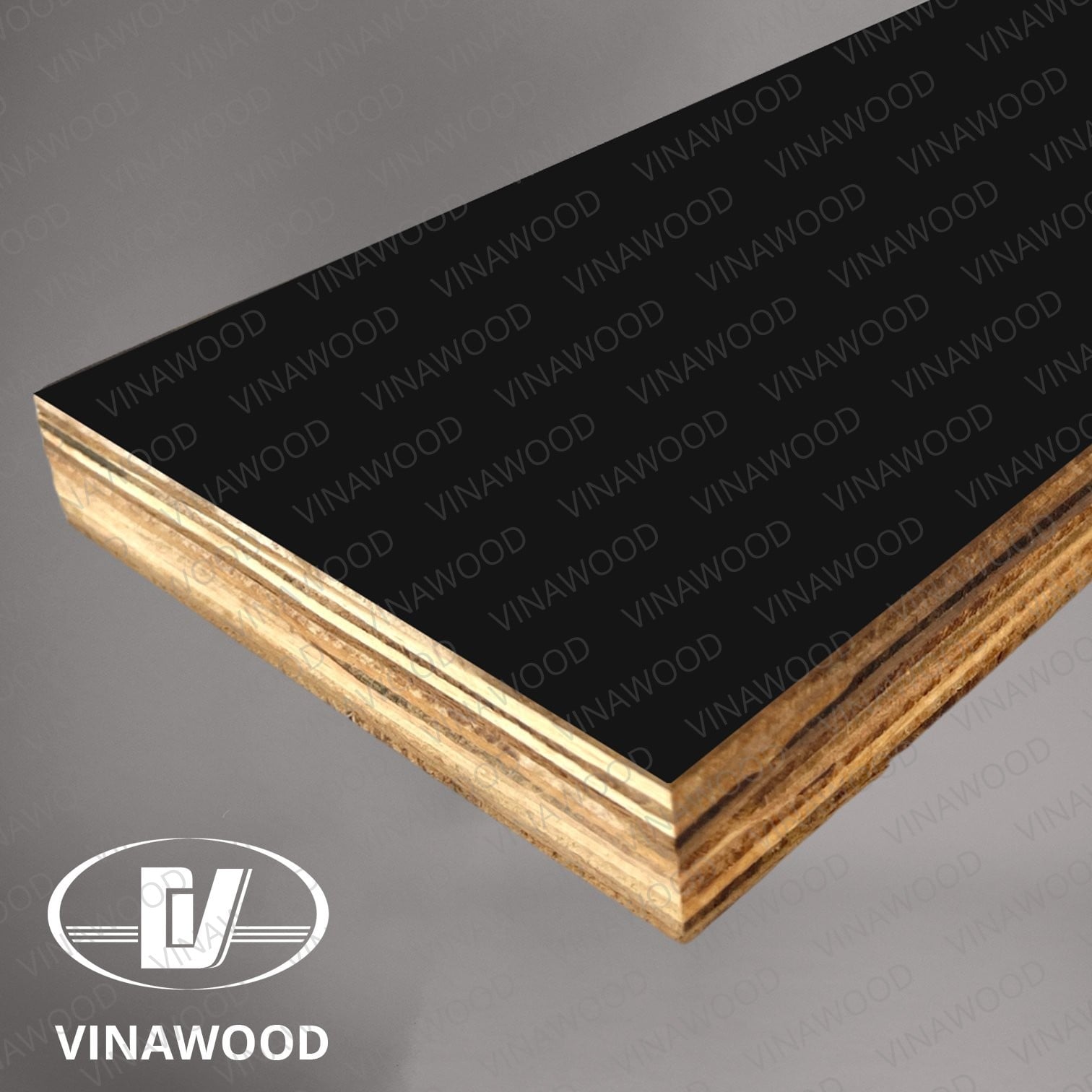
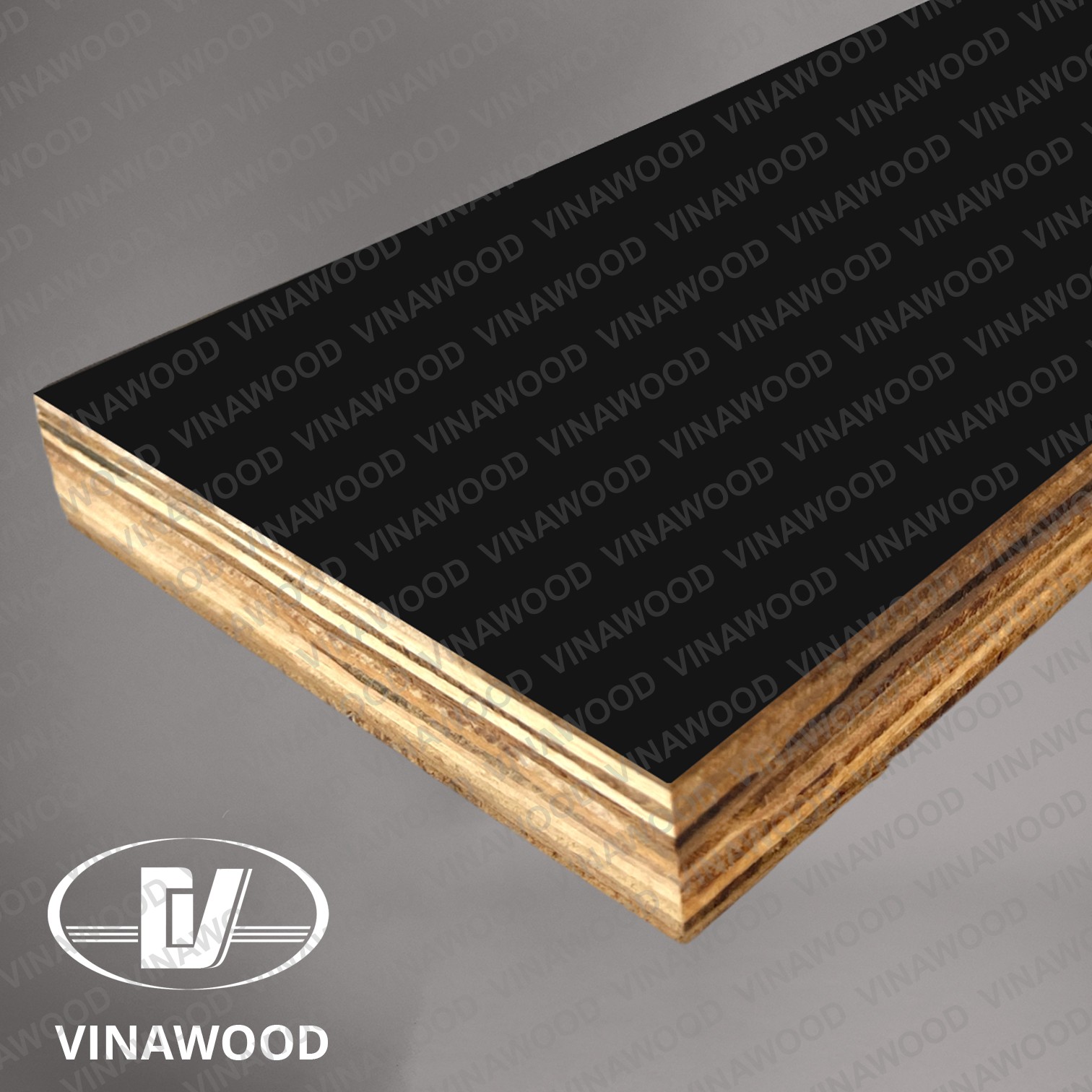
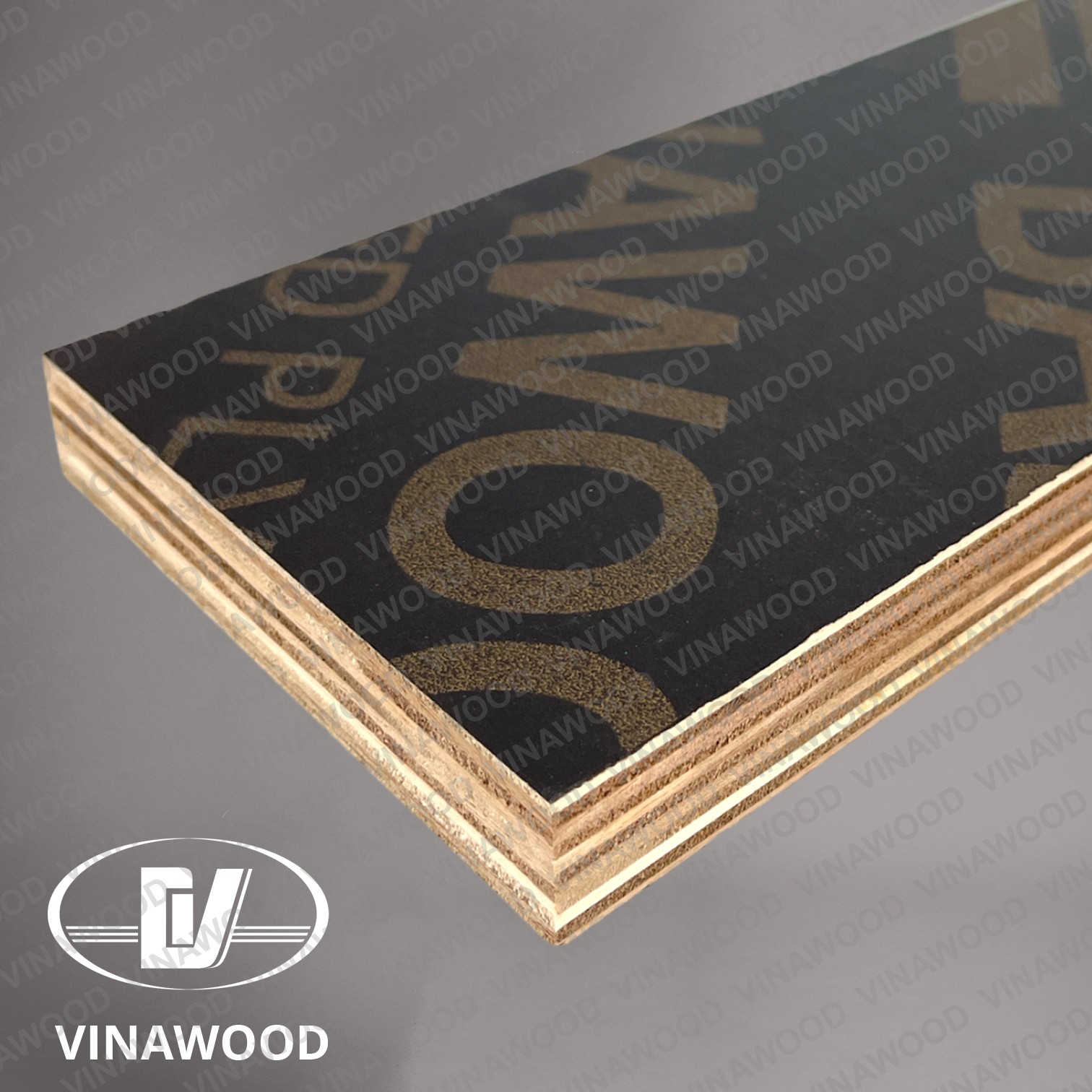
The concrete sees the overlay, not the brand of the climbing shoe. Film-faced sheets carry a phenolic paper face pressed onto a plywood core. HDO sheets use denser overlay paper for abrasion-heavy programmes. Both are water-resistant WBP constructions for wet concrete and site weather. Neither is waterproof. Water-resistant. Not a sealed hull.
Fair-face work wants fewer grain telegraph marks and careful release-agent practice. Structural faces behind finishes can accept more wear if edges stay sealed. Release agent choice and wipe-down habit decide how cleanly the sheet strips. See concrete form release agent. Do not treat chemistry as a side note.
I still see climbing RFQs that only say “18 mm film faced.” Those leave the mill guessing between an EN 636-2 core-MUF grade and a phenolic Class 3 sheet that will actually live through a long jump programme.
An 18 mm face is common on many wall programmes. The right thickness matches pour height, concrete rate, and support spacing. Not a default copied from the last job. Thickness pointers stay on the sibling pressure and forming pages.
Choosing the panel: phenolic Class 3 vs core MUF
Buyers often collapse glue, face, and product name into one word. They are not the same. Melamine here means the core resin MUF (melamine-urea-formaldehyde). Not a decorative laminate. Not the face film. The face on Vinawood film-faced grades is phenolic paper. Longer reuse on Form Extra comes from Superior Glue MUF chemistry in the core. Not from a heavier face film.
The Vinawood ladder for climbing face panels:
- Eco Form Plus — entry film-faced, reuse up to 8
- Form Basic — core MUF, EN 636-2, phenolic face, reuse up to 10
- Form Extra — Superior Glue MUF, EN 636-2, not Class 3, same phenolic face family as Form Basic, reuse up to 15
- Pro Form Lite — phenolic PF, Class 3 / EN 636-3, sits between Form Extra and Pro Form, reuse up to 15
- Pro Form — phenolic PF, Class 3, reuse up to 20
- HDO Basic — phenolic PF Class 3, reuse up to 10
- HDO Premium / Premium HD — phenolic PF Class 3, reuse up to 20
Only Pro Form, Pro Form Lite, and the HDO range take phenolic Class 3 writing. Form Extra is not Class 3. P-Form is polypropylene-faced and is not Pro Form. Consply is commercial Bintangor and is not film-faced. It does not belong on a climbing face RFQ. Browse film-faced plywood and HDO plywood for the panels that actually carry those overlays.
Reuse economics on a climbing programme
Reuse is always written as up to N. Never as a guaranteed pour count. Edge sealing after cuts, release-agent discipline, flat dry storage, and careful stripping decide whether a sheet reaches the top of that range. A long self-climbing core that will see fifteen-plus lifts is usually a Pro Form or HDO Premium conversation. Shorter jump programmes can land on Form Extra or Pro Form Lite when the finish spec allows.
Cost-per-pour arithmetic is simple. Panel cost divided by the lifts you actually get. The method lives in how many times you can reuse formwork plywood.
Handling notes between lifts
Between jumps, keep panels flat, off the ground, and out of standing water. Seal fresh cuts before the next pour. Wipe release agent thin and even. Puddles on the face telegraph into the concrete. Damaged corners and peeled film edges are the usual early-failure points on climbing cycles. Mysterious mid-sheet glue failure is rare by comparison.
Plantation-grown hardwood cores are the Vinawood default. Never call that timber tropical. WBP bond class means water-resistant performance under wet concrete and weather exposure. Not a marine or immersion warranty.
Request a form-face quote
Vinawood has manufactured construction plywood in Vietnam since 1992. Exports reach 55+ countries. Roughly 5,000 containers leave each year. For North American distributors who need ready stock between ocean containers, Vinawood maintains distribution warehouses in Toronto, Vancouver, Calgary, Montreal, Miami, Houston, and Baltimore to supply local distributors. That is stocking for lead time. Not an exclusive stockist claim. Not a shop-here CTA. For wider mill context, see plywood manufacturers Vietnam.
Write these fields before price: thickness, size, grade (Eco Form Plus through Pro Form or HDO), bond class in writing, expected lift count, fair-face versus structural finish, discharge port. Send the pack through /rfq or the quotation contact form. Vinawood returns a face-panel specification for the climbing programme. Not a bracket kit.
Category
guides