How Many Times Can You Reuse Formwork Plywood? Reuse Cycles by Grade
Formwork plywood can last from a few pours to up to 20, depending on bond class, face film, edge care and stripping. Compare Vinawood grades and plan a realistic cycle count.
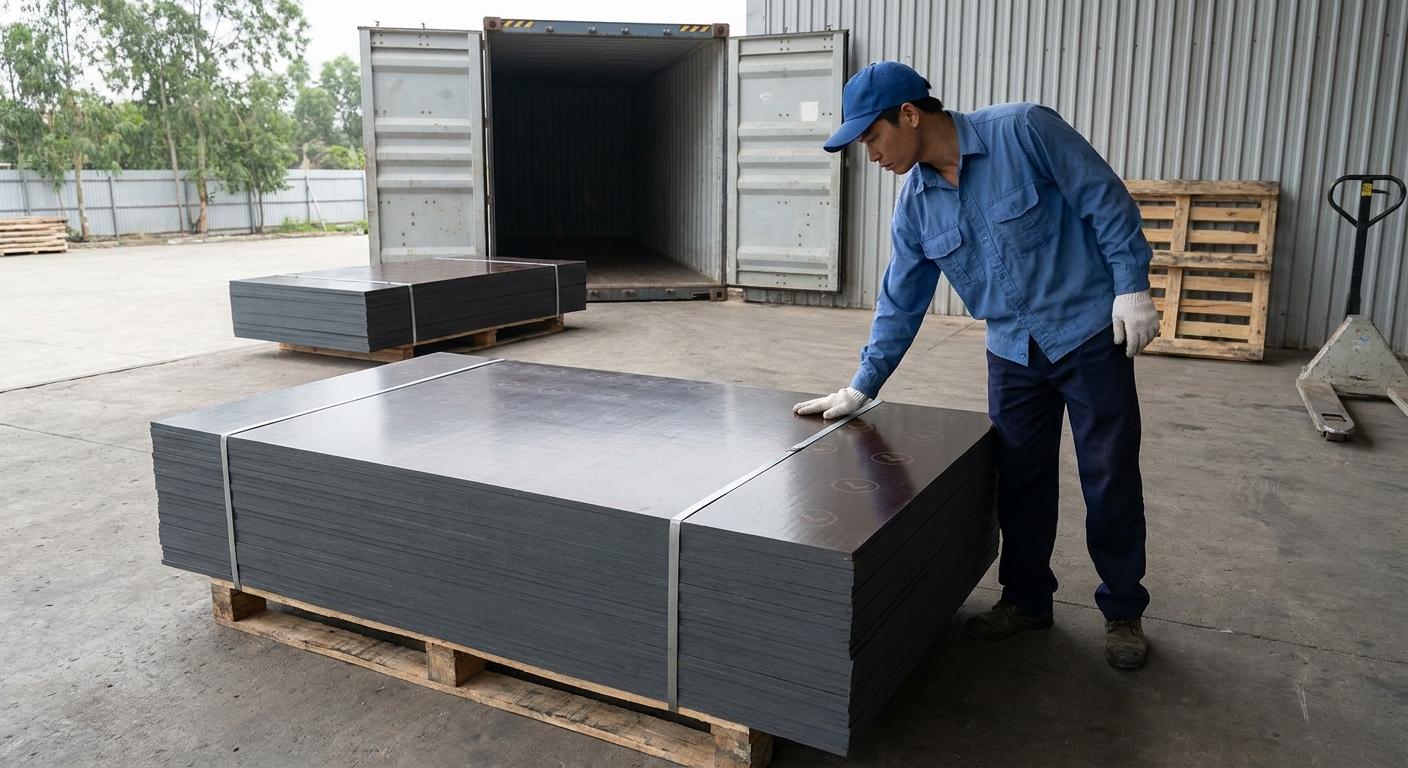
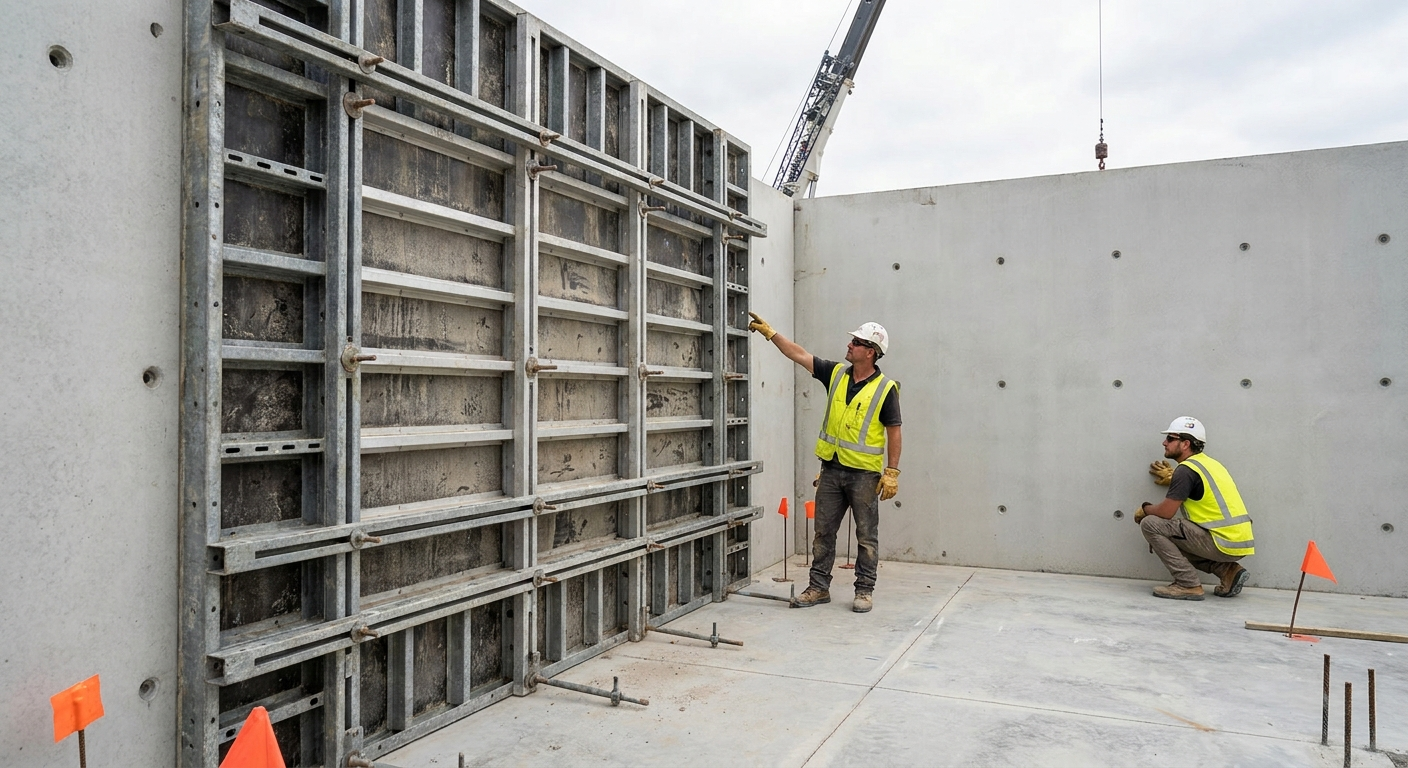
How many times can you reuse formwork plywood? A practical answer is anywhere from three pours to up to 20. The number is set by the core bond, the face film and what happens to the sheet after it leaves the stack. A high-cycle panel can be lost in one day if a fresh cut is left unsealed. A modest grade can reach its maximum when the crew treats it well.
This guide separates the catalogue ceiling from a sensible job estimate. It also corrects a common buying error: commercial plywood is not automatically formwork plywood. Consply, for example, is a commercial Bintangor panel and does not belong in a film-faced formwork grade table.
What counts as one reuse
One cycle means one concrete pour, cure, stripping, cleaning and return to storage. A panel used on both sides still records a cycle each time one face contacts fresh concrete. Small patch repairs do not reset the count.
The supplier's “up to” figure assumes sealed edges, suitable release agent and storage off the ground. It is a maximum, not a promise for every site. Plan below it. The gap protects the programme from weather, cuts and mixed handling standards.
Reuse cycles by Vinawood grade
The core adhesive sets the exposure class. The face film protects the surface against concrete and cleaning. Those are separate parts of the panel, so buyers should ask for both.
| Panel | Core bond | Exposure class | Face | Reuse |
|---|---|---|---|---|
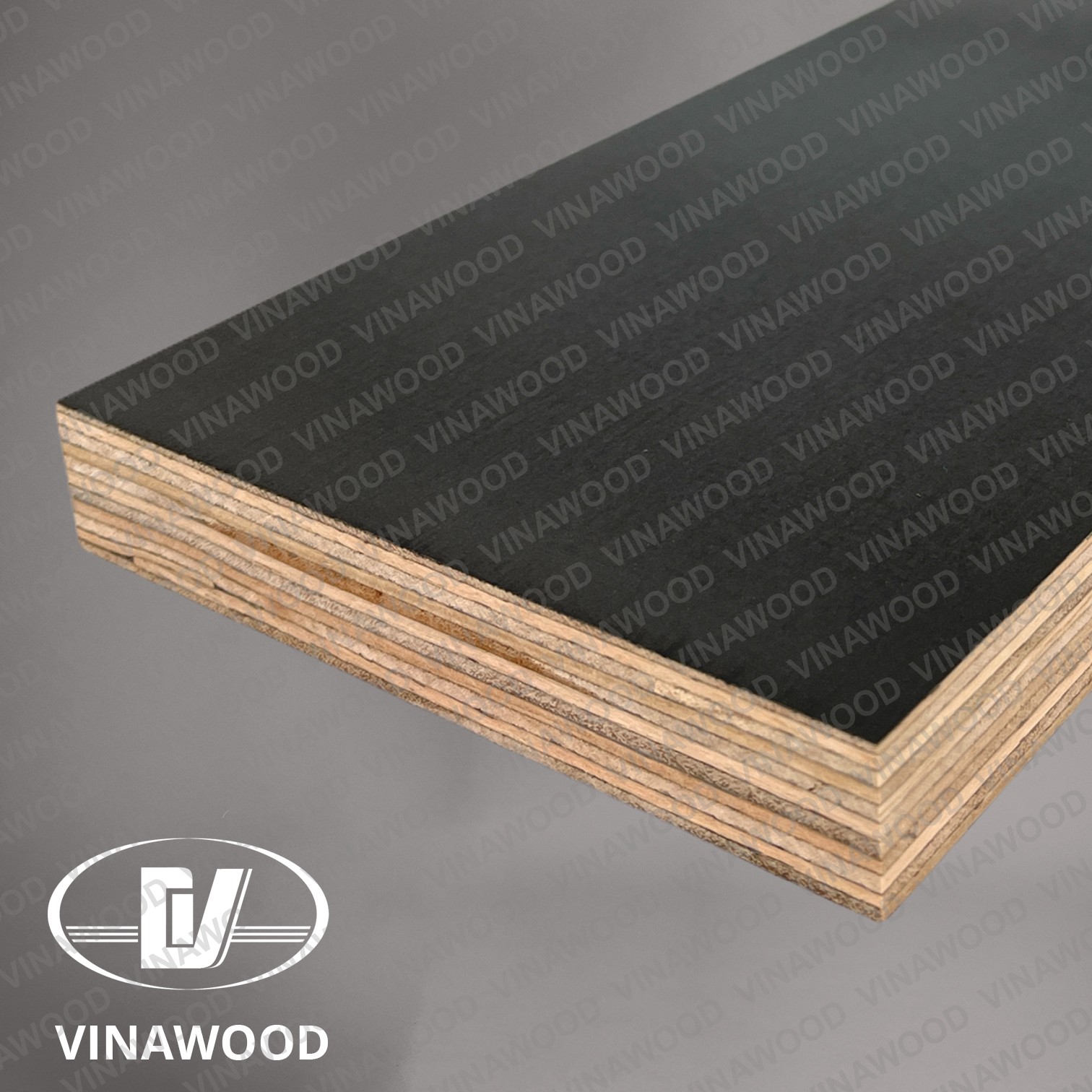
| Eco Form Plus | WBP MUF | EN 636-2 | Phenolic face film | Up to 8 |
| Form Basic | WBP MUF | EN 636-2 | Phenolic face film | Up to 10 |
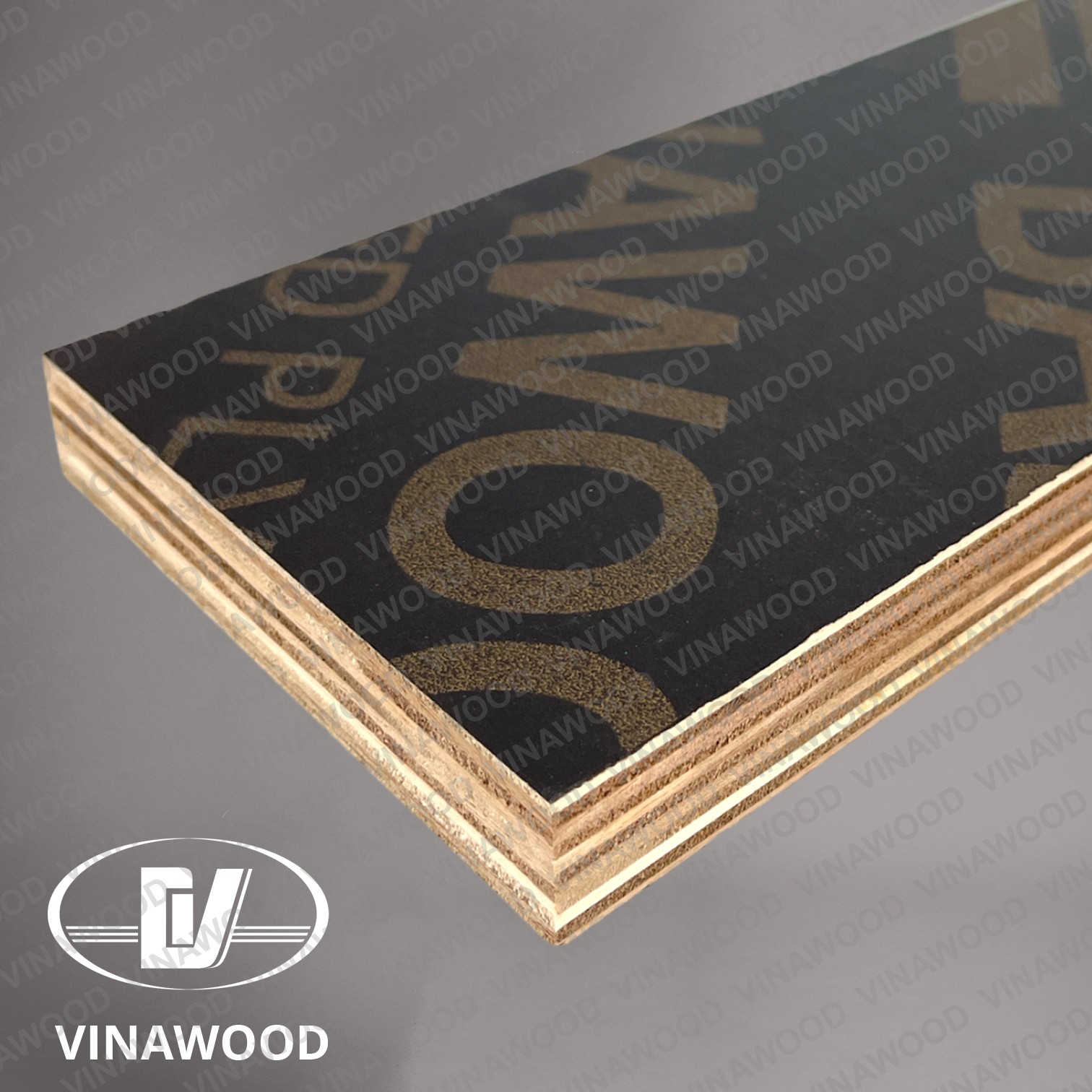
| Form Extra | Superior Glue MUF | EN 636-2 | Same phenolic face family as Form Basic | Up to 15 |
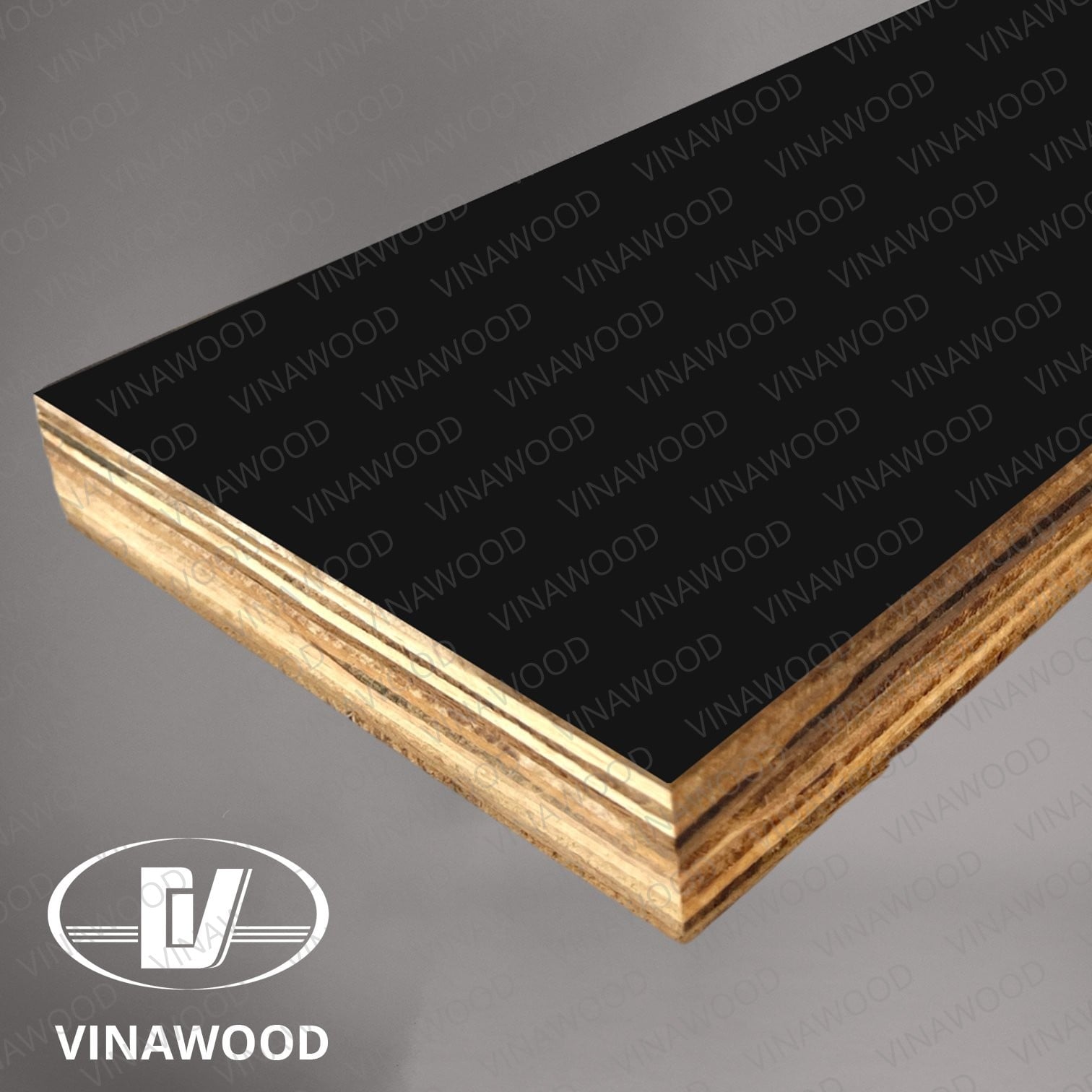
| Pro Form Lite | PF | EN 636-3, Class 3 | 165 g/m² phenolic film | Up to 15 |
| Pro Form | PF | EN 636-3, Class 3 | Phenolic film | Up to 20 |
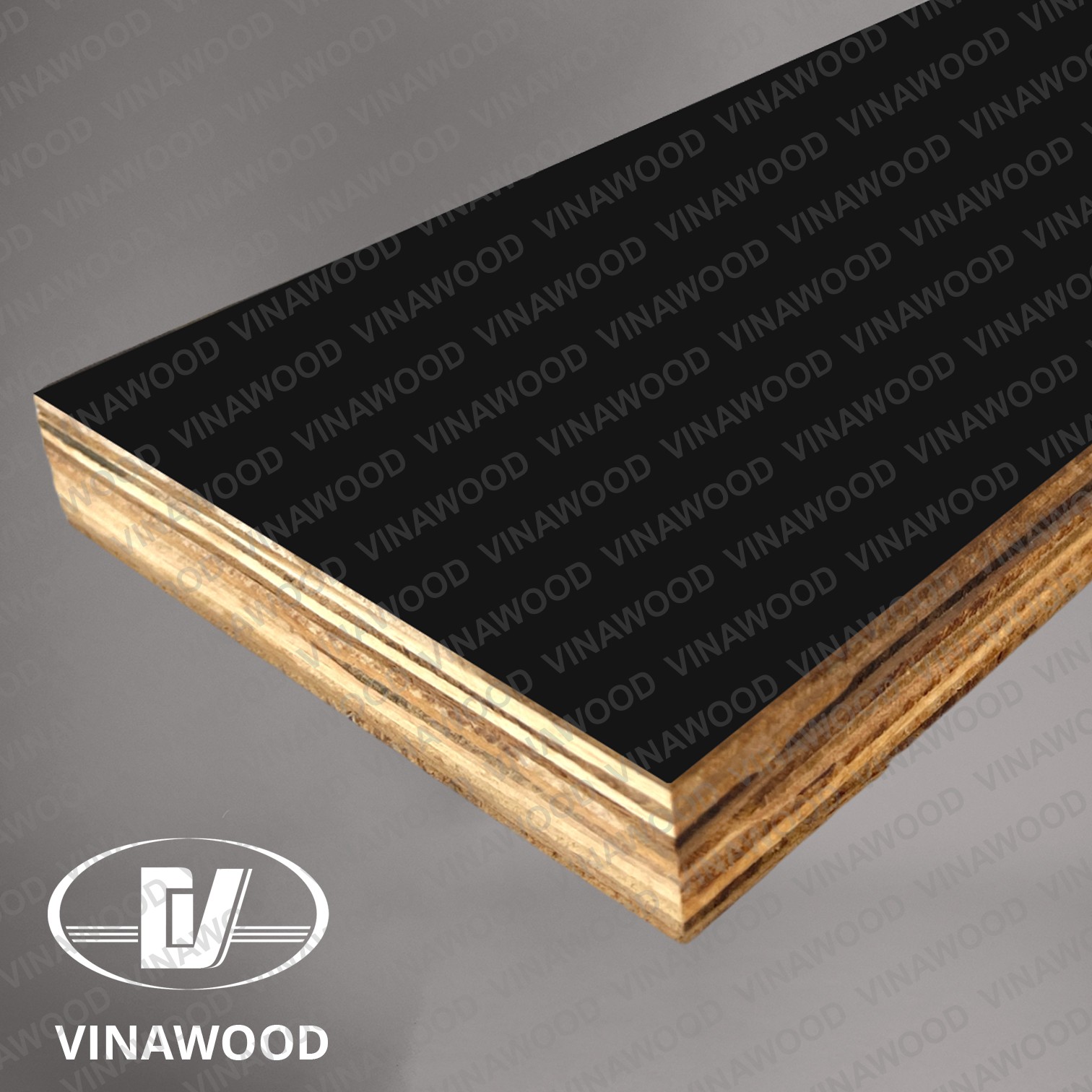
| HDO Basic | PF | Class 3 formply | HDO phenolic overlay | Up to 10 |
| HDO Premium | PF | Class 3 formply | HDO phenolic overlay | Up to 20 |
MUF means melamine-urea-formaldehyde resin in the core glue line. It is not the face film and it is not the decorative laminate used on furniture board. Form Extra remains an EN 636-2 panel. Its longer service life comes from Superior Glue MUF chemistry; it is not a Class 3 product.
Pro Form Lite fills the step between Form Extra and Pro Form. Its phenol-formaldehyde, or PF, bond is Class 3. Buyers who need that bond class but have a 15-pour programme can specify it without jumping to the top grade.
Why two panels return different numbers
Bond class defines the panel's tolerance for repeated wet and dry exposure. PF Class 3 holds through harsher cycles than a Class 2 MUF panel. It still leaves plywood water-resistant rather than watertight. Water still enters exposed wood at cuts, drilled holes and damaged edges.
The face film takes abrasion from concrete fines, scrapers and stacking. A clean release makes the next cleaning pass easier. Cement paste left to harden forces the crew to scrape harder, which removes service life.
Core build matters as well. Veneer-core plywood naturally contains small core gaps within grading tolerances. These are a normal construction feature, not an automatic defect. Panel flatness and edge condition are more often changed after dispatch by uneven moisture, poor stacking or sun on one face.
The site habits that end a panel early
Fresh cuts are the first loss point. Every cut opens veneer end grain. Seal it before the panel sees rain or wet concrete. A missed corner can swell, making the form joint harder to close on the next pour.
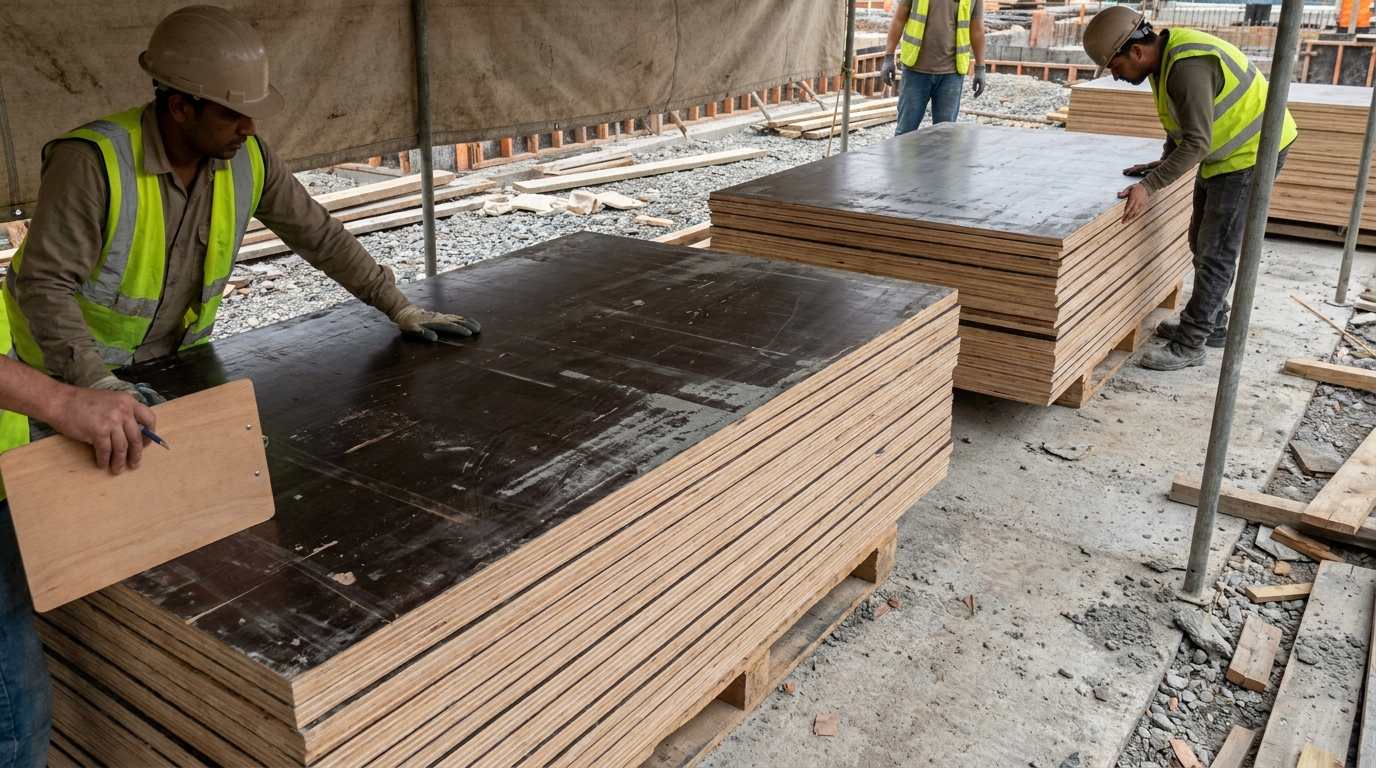
Storage is next. Keep sheets flat on bearers, cover the top, and leave ventilation at the sides. Never leave the bottom sheet against wet ground. A bowed panel often records uneven moisture after transport or site storage, especially below 15 mm.
Stripping technique decides whether the film returns intact. Release the frame and use wedges at approved points. Do not drive a steel bar across the face. Clean with plastic or timber tools while residue is still manageable.
- Seal cuts and drilled holes on the day they are made.
- Apply a compatible release agent in a thin, even coat.
- Strip on the engineer's schedule, using the frame rather than the face.
- Clean before cement paste hardens.
- Stack flat, dry and shaded between pours.
Plan below the catalogue maximum
A planning allowance of roughly 60 to 80 percent of the maximum is sensible for a mixed commercial site. A panel rated up to 20 may be budgeted for 12 to 16 pours. One rated up to 10 may be budgeted for six to eight. The right allowance depends on how many cuts each sheet receives and whether a dedicated formwork crew controls storage.
I would rather see a buyer fund edge sealer and a dry rack than spend the entire budget on a higher grade. The top panel cannot compensate for rough handling. Grade and site procedure have to be specified together.
Choose the grade from the pour programme
Eco Form Plus suits short rotations where a lower maximum is acceptable. Form Basic covers modest repeated work. Form Extra gives a longer Class 2 option, while Pro Form Lite brings a PF Class 3 bond at up to 15. Pro Form serves longer EN programmes up to 20.
North American work usually calls for HDO formply. Use the HDO range there rather than a Korean KS grade. European work is better served by the Form and Pro Form ladder, including 2500 × 1250 mm formats where required.
For a matte concrete face, Vinawood's product name is MatteFace Plywood, or MTF. Buyers often search for MatteFace as MDO formwork plywood. It is a matte phenolic surface film panel for formwork, available through the MatteFace Plywood collection, with up to 15 reuses under suitable handling.
Compare cost per pour, not sheet price
Divide the delivered panel cost by the planned cycles, then add the cost of replacement handling and lost work. A lower-priced sheet can be economical for four pours. It becomes expensive if the programme needs fifteen and the forms must be reskinned twice.
Do not calculate with the maximum alone. Use the site allowance, then run a second case for bad weather or heavy cutting. This makes the grade decision visible before procurement rather than after the first damaged stack.
What to put in the RFQ
State the target cycles, bond class, panel thickness, sheet size and required concrete finish. Add the number of cuts expected per sheet, whether the panel will stay exposed between pours and which release agent is planned. Ask for the product data sheet and current compliance documents.
Do not write “melamine plywood” without context. Say MUF core bond when you mean the glue, phenolic face film when you mean the forming surface, or decorative laminate when that is the actual face. The three materials have different jobs.
When to stop reusing a sheet
Retire or cut down a panel when the film is worn through over a working area, the edge no longer closes a joint, or damage prevents secure fixing to the frame. Surface scuffs alone do not always end service. Check the required concrete finish and the panel's ability to sit flat.
Inspect storage and handling history first when sheets bow or edges swell. If the condition remains unexplained, document the bundle code, photos and moisture readings for investigation. Avoid a blanket rejection based on normal veneer-core features.
Track cycles by panel, not by delivery
A bundle-level estimate becomes unreliable once sheets are cut and spread across several form zones. Mark each panel or small form set with a simple cycle count. Record major cuts, edge repairs and which face was used. The record does not need to be elaborate. It needs to follow the panel.
This helps procurement compare the planned allowance with the field result. If one form set returns twelve cycles while another stops at seven, the team can review release agent, stripping and storage rather than blaming the grade by default. The next purchase then uses site evidence.
Match the finish requirement to remaining life
A panel can remain usable after its face is no longer suitable for fair-face concrete. Move lightly worn sheets to hidden foundations, rough service zones or cut infill where the specification permits. Do not keep a damaged face on architectural work merely to hit a cycle target.
Check joints and screw points before each pour. A straight sheet that closes cleanly may continue. Retire it when worn film, swollen edges or fixing damage creates a concrete defect risk. The count is useful, but condition and finish decide the last cycle.
Ask who owns the cycle record before work starts. On a large site, the formwork supervisor can sample one representative set rather than count every loose offcut. Record the date, pour zone and condition after stripping. This gives purchasing a field range grounded in the actual concrete mix and crew method.
Build the cycle plan with the mill
Vinawood has manufactured construction plywood in Vietnam since 1992 and ships more than 5,000 containers a year to over 40 countries. The range covers Class 2 MUF formwork panels and Class 3 PF grades, with 100% individual sheet inspection.
Send the pour schedule, form area and target finish through the quotation request. The response can then match the number of sheets to a realistic reuse allowance rather than a headline maximum.
Category
guides