Melamine vs. Phenolic Film-Faced Plywood: How to Match Adhesive Class to Pour Count
Melamine vs phenolic film-faced plywood: on formwork quotes, melamine usually means MUF core glue (EN 636-2, not Class 3) and phenolic means PF core glue (Class 3) or the face film. One table of Vinawood grades with reuse ratings, and when to choose each core.
See "melamine" on a film-faced plywood quote? Nine times out of ten it's the MUF glue (melamine-urea-formaldehyde) in the core, whereas "phenolic" might be PF core glue or might just be the film on the face. MUF cores are EN 636-2, not Class 3, good for short and mid-length jobs; PF cores are Class 3 and pay off once pours get long, wet and exposed.
That's the whole answer in two sentences. The trouble is that the two words get used loosely on quotes, and a buyer who reads "phenolic film-faced" can end up with an MUF core when the engineer wanted Class 3, or pay for Class 3 on a footing that'll see six pours. So: words first. Then one table with every grade, and some plain talk on picking.
Three things people call melamine
"Melamine plywood" can mean three different things depending on who's selling. This article's about the first, MUF core glue, spread between plies. Water creeping into a saw cut or tie hole meets it first, and how it reacts is the whole story. You read it on the bond-class line of the data sheet, never from the colour of the face.
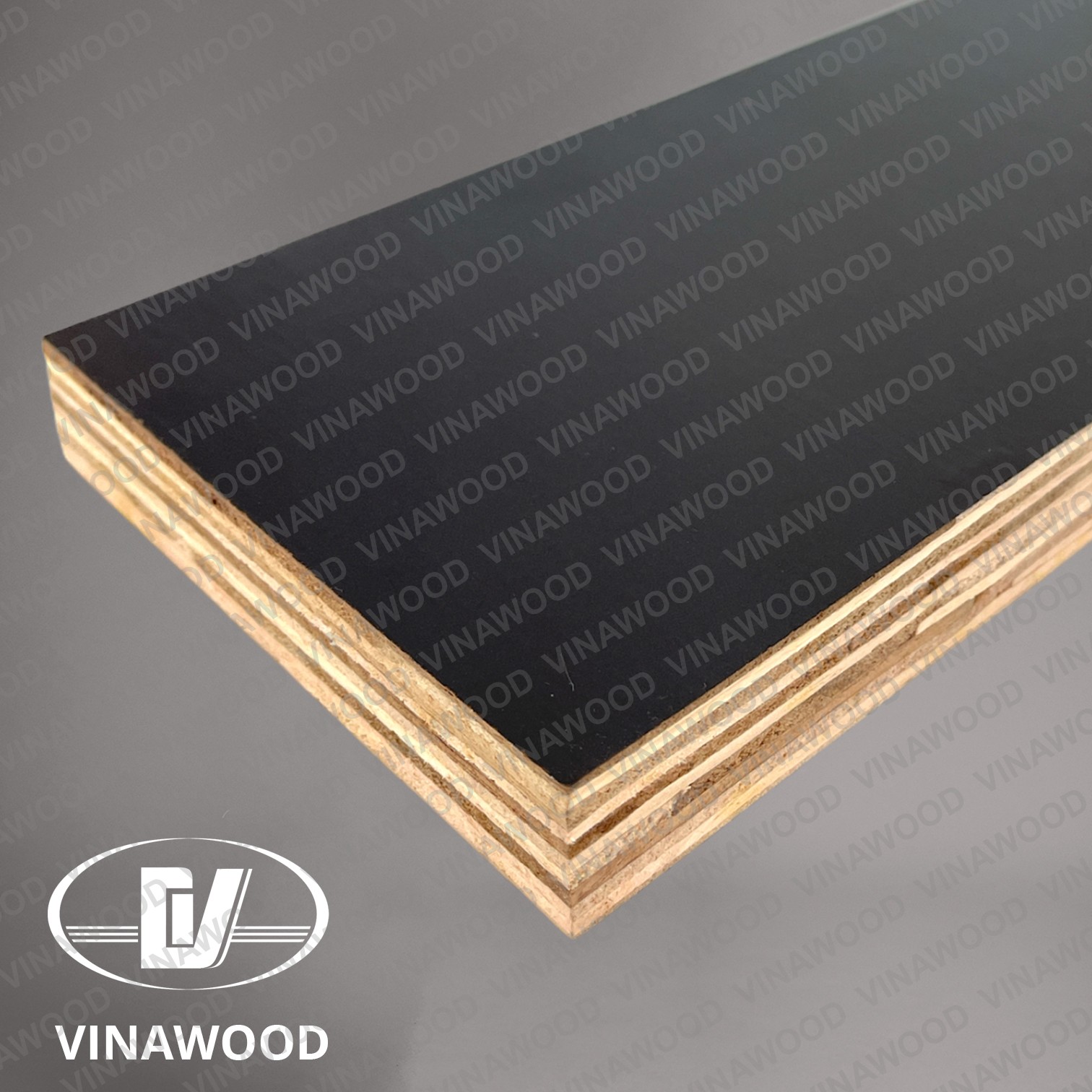
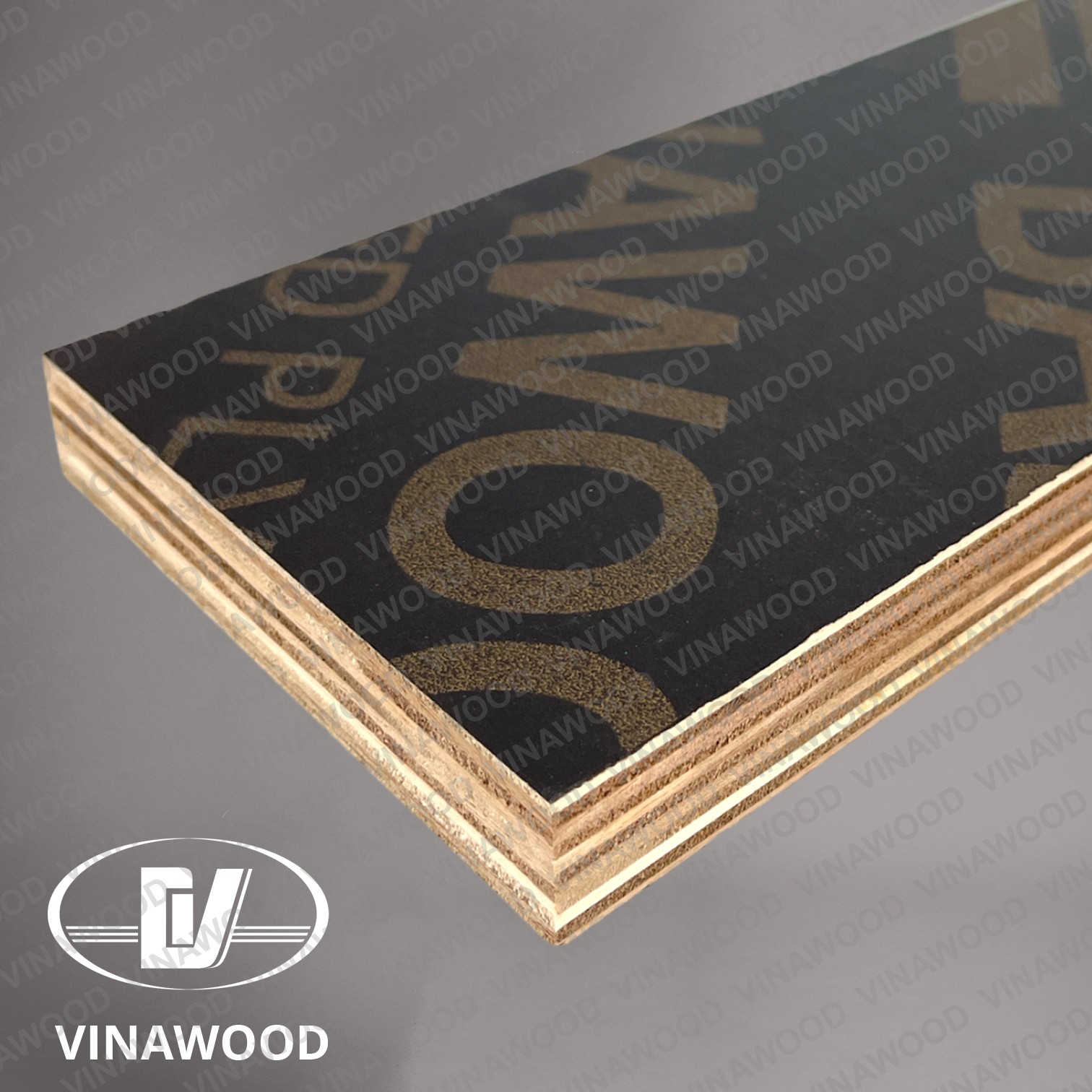
Second comes melamine face film, a resin-soaked paper laid on the surface as an overlay. Some light-duty panels use it. Ours don't; every Vinawood film-faced formwork panel carries a phenolic face film, whatever glue sits underneath. Third is decorative melamine laminate, the printed paper you see on kitchen and shop-fit boards, and it has nothing to do with forming concrete. Confuse it with MUF glue and you get that tired line about "melamine means interior only."
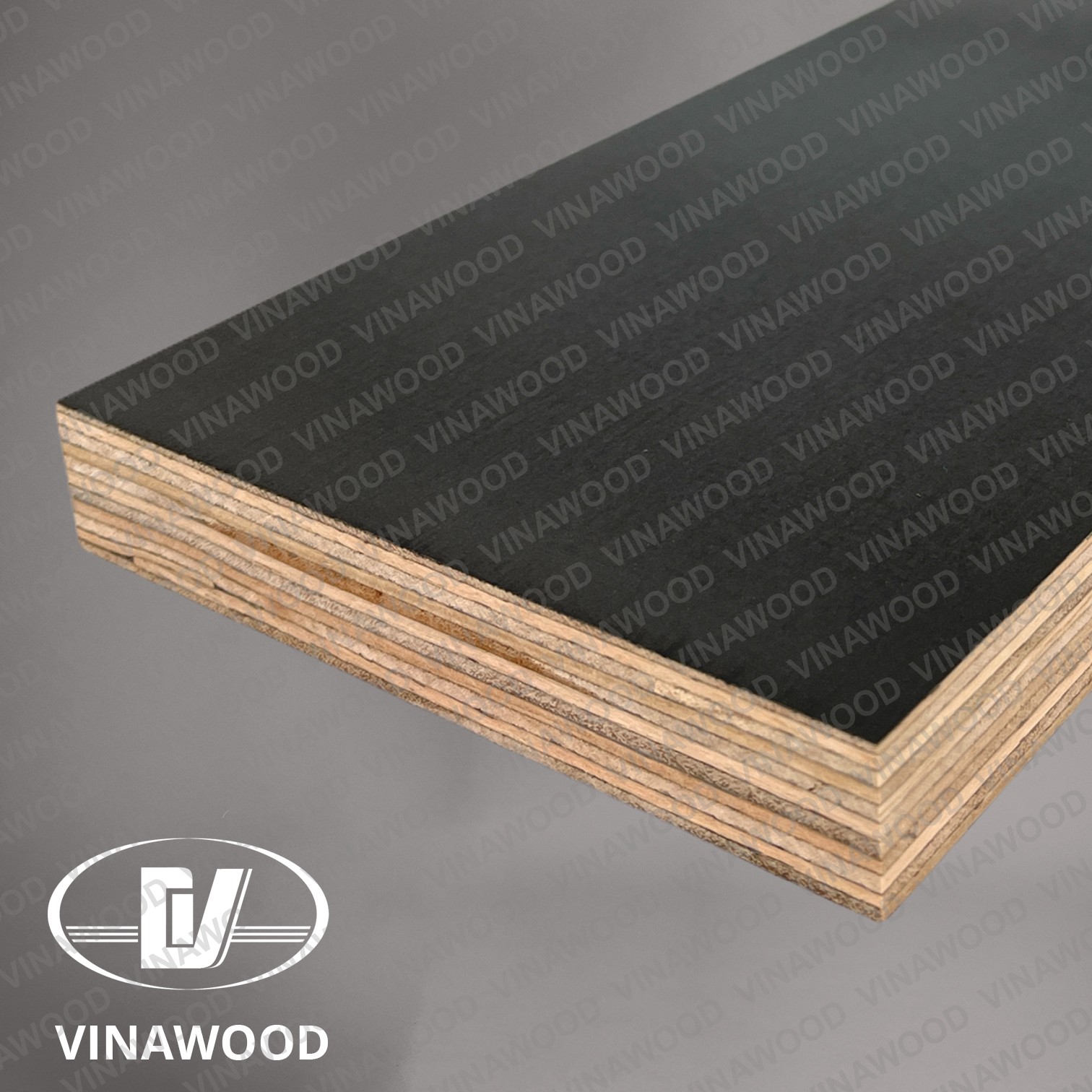
MUF (melamine) core vs PF (phenolic) core film-faced plywood
| Grade | Core glue | Class | Face film | Reuse | Typical use | Price |
|---|---|---|---|---|---|---|
| Eco Form | MUF (Eco) | EN 636-2, Class 2 | Phenolic film, 165 gsm | Up to 6 | Short, cost-led programmes, covered work | On request |
| Eco Form Plus | MUF | EN 636-2, Class 2 | Phenolic film, 165 gsm | Up to 8 | Short programmes with a little more margin | On request |
| Form Basic | MUF (standard) | EN 636-2, Class 2 | Phenolic film, 165 gsm | Up to 10 | Mid-length residential and commercial forming | On request |
| Form Extra | MUF (Superior Glue) | EN 636-2, Class 2 (not Class 3) | Same phenolic film as Form Basic | Up to 15 | Longer programmes where Class 3 is not specified | On request |
| Pro Form Lite | PF (WBP phenolic) | EN 636-3, Class 3 | Phenolic film, 165 gsm | Up to 15 | Class 3 specs on mid-length programmes | On request |
| Pro Form | PF (WBP phenolic) | EN 636-3, Class 3 | Top-grade phenolic film, 125 gsm | Up to 20 | Long pour programmes, wet and exposed sites | On request |
Choose MUF core or PF core: a quick decision
Choose MUF-core when:
- the panel will see a contained number of pours, roughly up to 6 to 15 depending on grade
- the slab is covered or the forms dry quickly between uses
- the drawing names EN 636-2 or leaves the class open
Choose PF-core when:
- the engineer has specified EN 636-3 or Class 3
- forms stand assembled in rain or sit wet for days between pours
- you're planning a long programme and want ratings up to 15 (Pro Form Lite) or up to 20 (Pro Form)
What actually changes inside the panel
Both resins are hot-pressed, and both make a water-resistant bond, which is why both carry the WBP label. Soak the glue line for days on end and the gap opens up. PF cures harder and won't dissolve, so a PF core hangs on soak after soak. Damp air with a breeze through it? MUF shrugs that off, and EN 636-2 is basically written around it. Edges and holes are where trouble starts on both, so seal them.
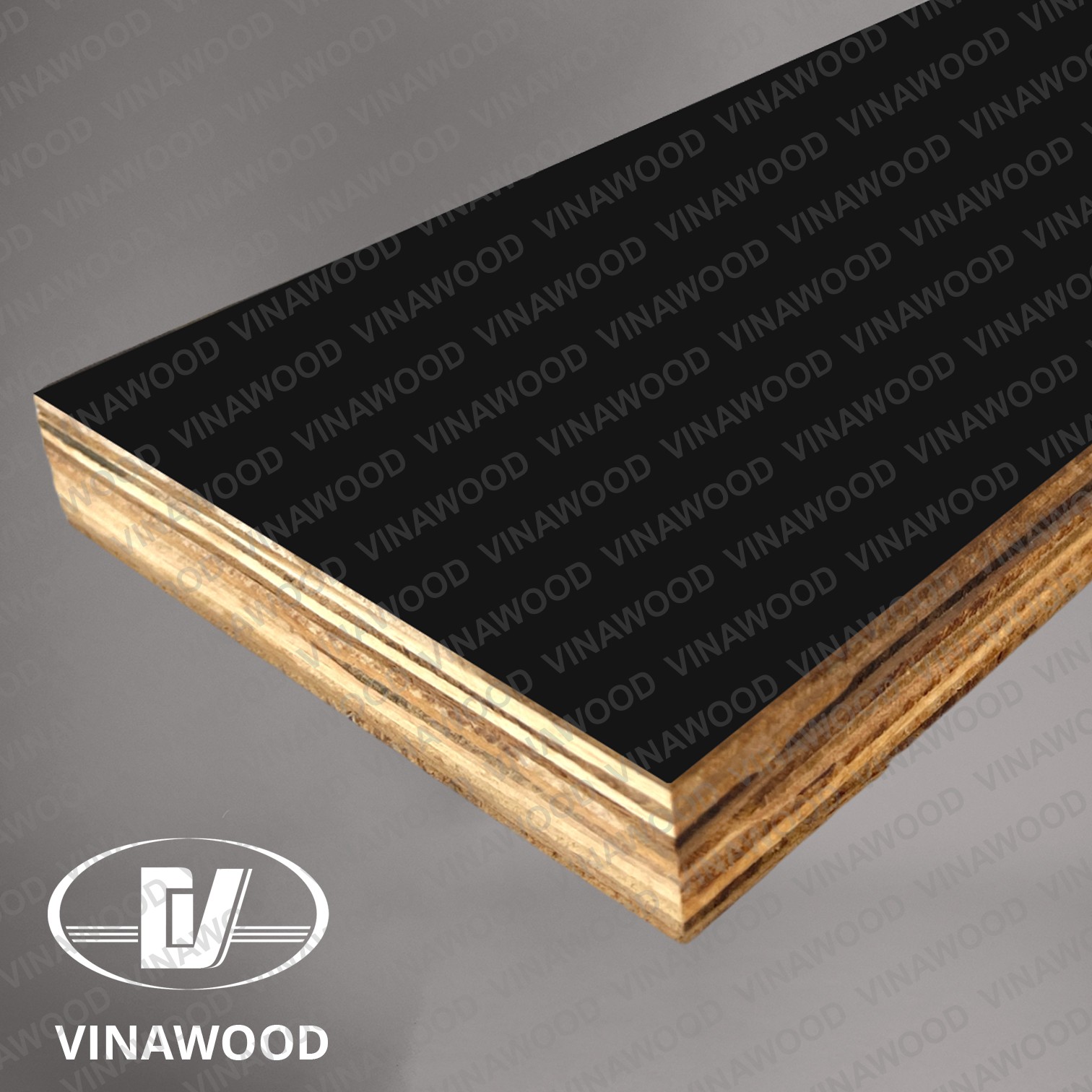
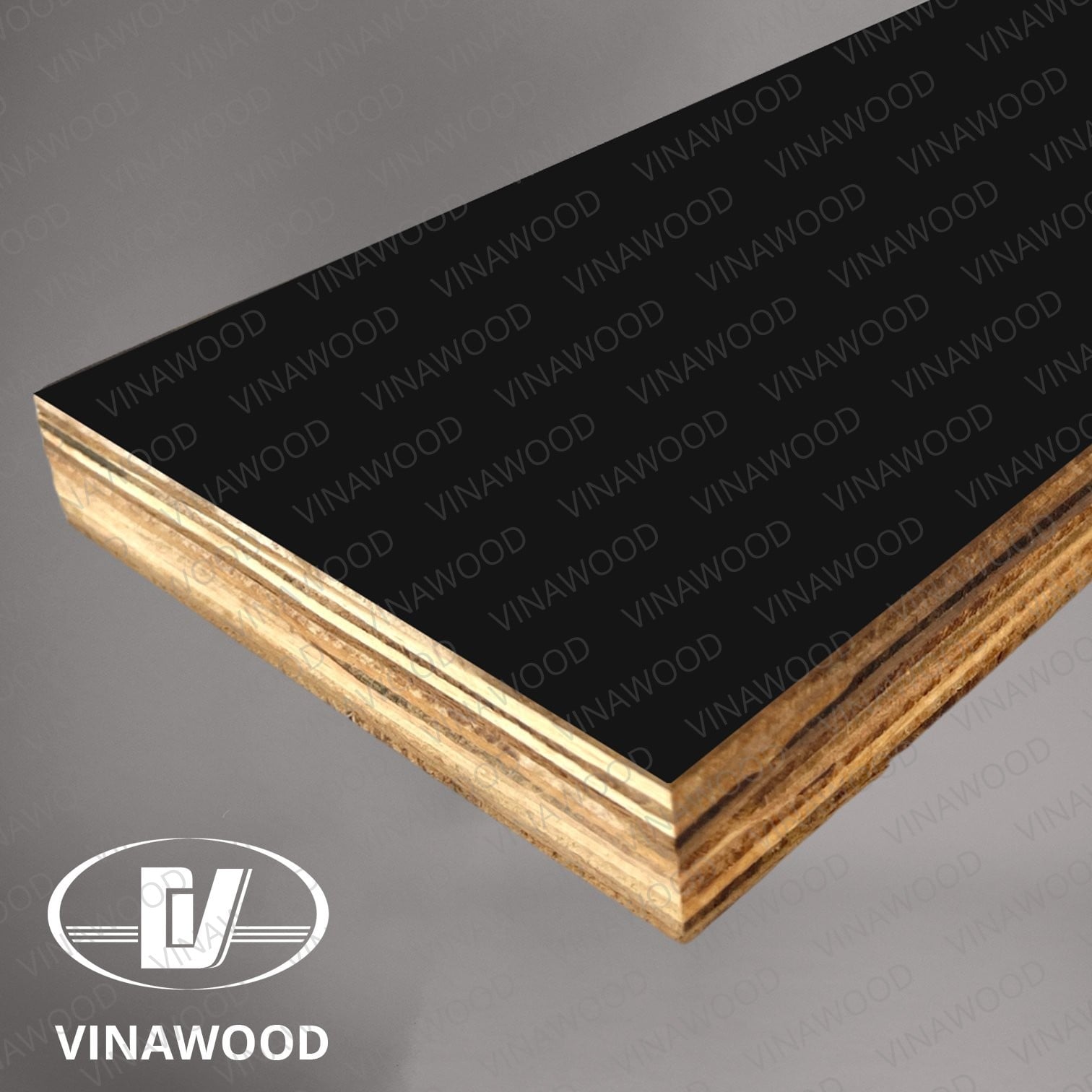
Inside the MUF family the recipe matters too. Form Basic and Form Extra wear the same phenolic face film, yet Form Extra is rated up to 15 uses against Form Basic's 10, and the reason is the glue: Form Extra uses our Superior Glue MUF. It's still EN 636-2 and still not Class 3. People sometimes assume the extra cycles come from a heavier face, and they don't.
Which brings up the most common RFQ mistake we see. A buyer writes "phenolic film-faced" and thinks that covers bond class. It doesn't, because the film and the core glue are two separate parts of the sheet. Film meets concrete and decides how the wall looks. Glue is what's left holding plies once water gets behind the face. Name both on the RFQ.
How to pick without overspending
Count pours first. Every rating we publish is a pour count, after all. If a job will run eight pours, a Class 3 panel rated up to 20 means paying for twelve cycles nobody uses. Flip it around and the risk is worse. An MUF panel put on a long, rain-soaked infrastructure pour can delaminate at the tie points mid-programme, and the stripping, patching and schedule slip cost more than the PF panel would have.
Exposure comes next. A covered slab with a quick turnaround suits an MUF core well. Forms left standing through a wet season, or programmes where panels go back up still damp, point to PF. And the drawing settles it: if EN 636-3 is written down, there's no MUF substitute, however good the face looks.
Our reuse figures are maximums under good site care, which is why we write them as "up to". Crews that strip on time, seal every cut edge, store panels flat and off the ground, and skip the crowbar get close to them with either glue. Crews that don't will fall short on both. PF doesn't make a panel immune to abuse, and an MUF panel matched to its programme isn't a compromise.
Where this fits in the wider range
Every grade in the table above is film-faced formwork plywood with a phenolic face, so choosing between them is really a choice of core glue and core grade. If you're in North America and your crews talk about overlays rather than film, the HDO vs MDO comparison covers that side, including our HDO grades. For more on PF bonding, read phenolic plywood, and for what the WBP label does and doesn't promise, see WBP plywood. The film-faced collection lists sizes and thicknesses for every grade.
Quoting with Vinawood
We've made formwork plywood in Vietnam since 1992 and ship around 5,000 containers a year to 55+ countries through Hai Phong. Veneers are plantation-grown Acacia, Eucalyptus and Hevea, and every sheet is inspected individually before bundling. Product pages for Form Basic, Form Extra, Pro Form Lite and Pro Form carry the data sheets.
For a quote, tell us the pour count, whether the forms will be covered or exposed, the EN 636 class on the drawing, and the thickness and sheet size. We'll match a grade and price it on request. Send it through the RFQ form or contact us directly.
Category
guides
Related Markets
Related Countries
▶Sources & References (3)
- EN 636 Plywood — specifications — CEN (2015)
- EN 314-2 Plywood — Bonding quality — CEN (1993)
- Phenolic plywood: grades, bond classes and formwork — Vinawood (2026-09-28)