Plywood vs Melamine: Differences, Strengths, and How to Choose
Plywood vs melamine: one is a panel structure, the other a surface finish. Where each one belongs in cabinet work, closet builds, and shop fixtures.
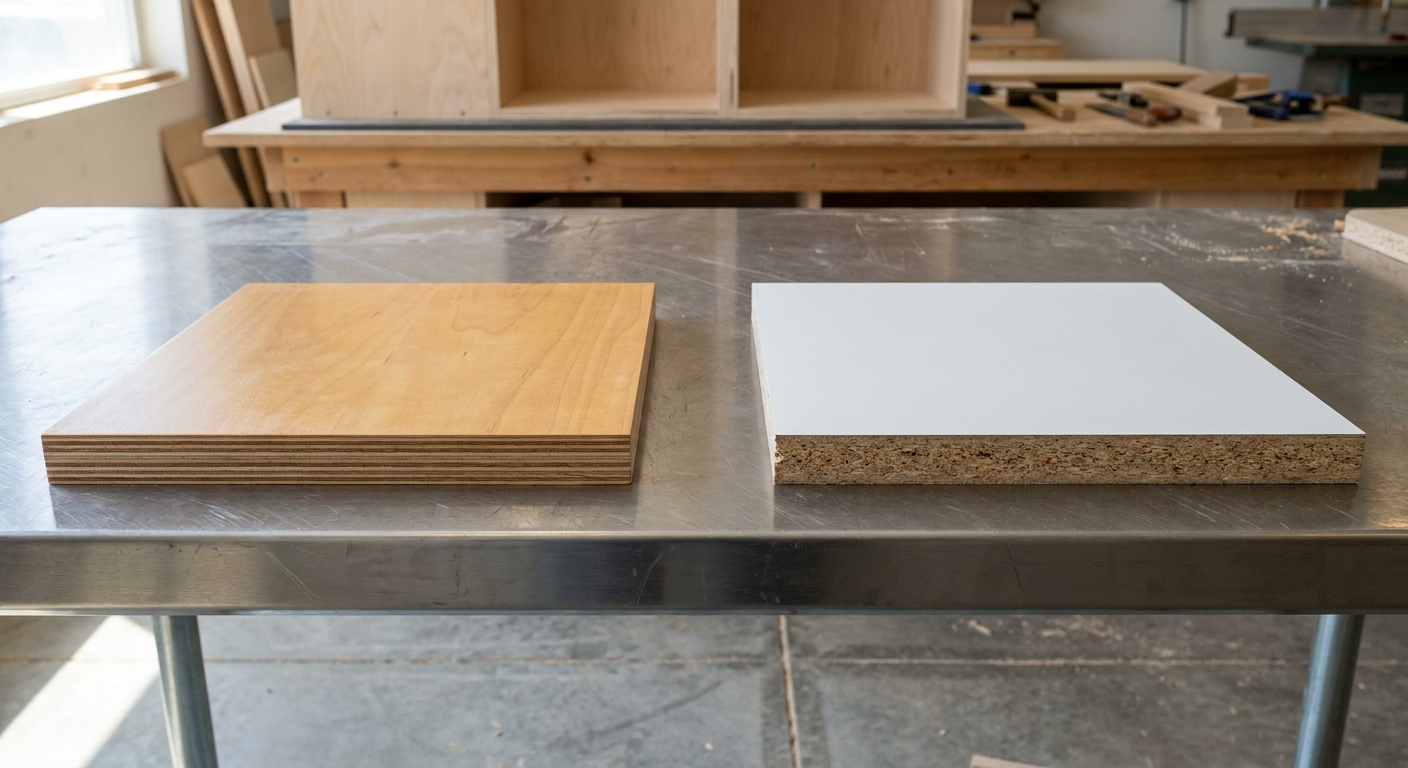
Melamine is not a wood. It is a thermoset resin film pressed onto a core, almost always particleboard or MDF. Plywood is the core construction itself. So the popular "plywood vs melamine" search in North American cabinet shops is comparing two things that aren't opposites. What the buyer really wants to know is plywood-core panel versus melamine-faced particleboard, and which one wins comes down to one thing: what the part has to survive. Water, load, or neither.
A kitchen cabinet shop and a closet specialist will answer that the same question differently, and both are right. The materials sort themselves once you know the job.
What people actually mean by "plywood vs melamine"
"Melamine" by itself is a thermoset resin. The trade name on the cabinet sales floor refers to a panel construction: a particleboard or MDF core with a thin melamine-resin-saturated decorative paper laminated to one or both faces under heat and pressure. The face is what the buyer sees, and it's tough, scratch-resistant, easy to clean, and available in white, almond, cherry, walnut, and dozens of woodgrain prints.
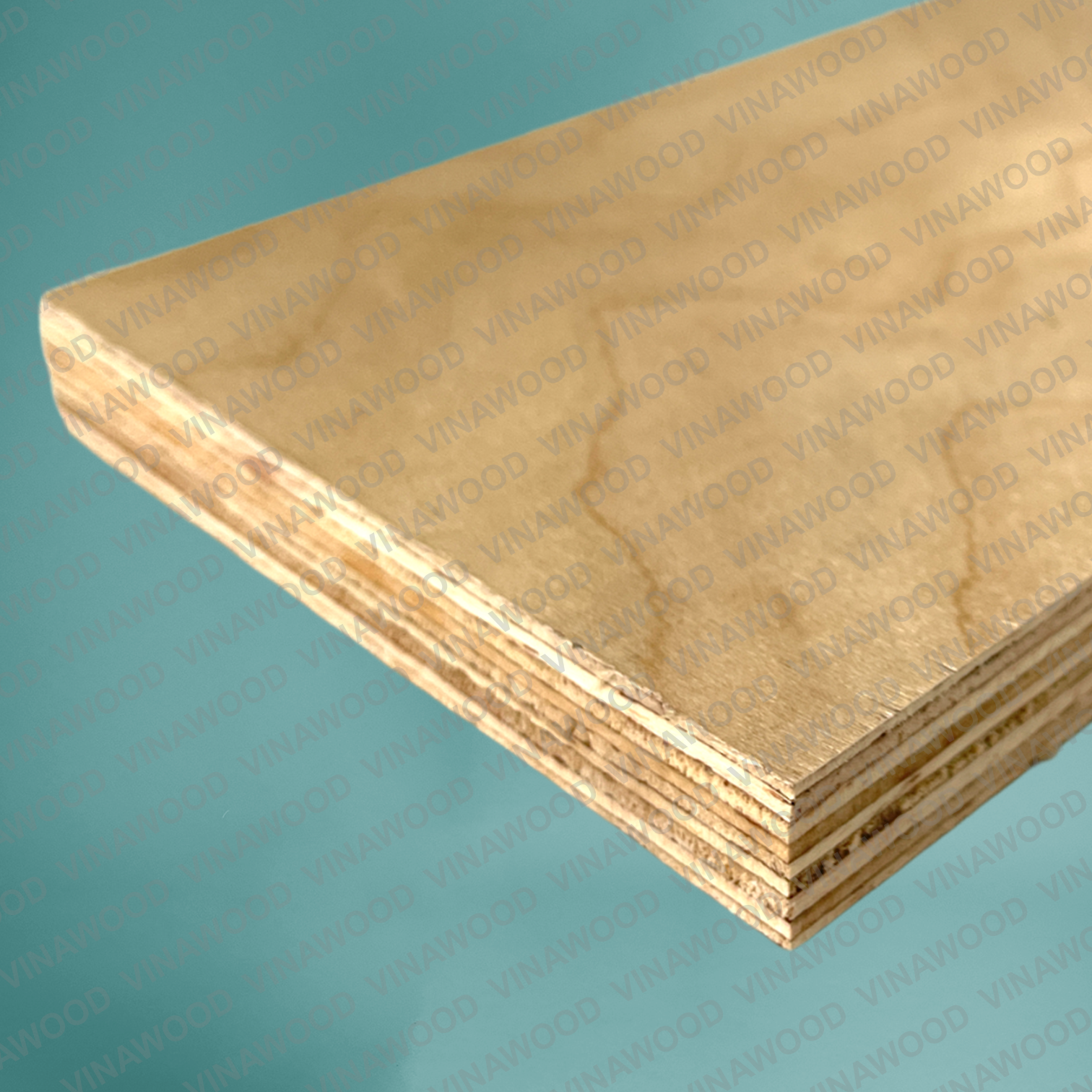
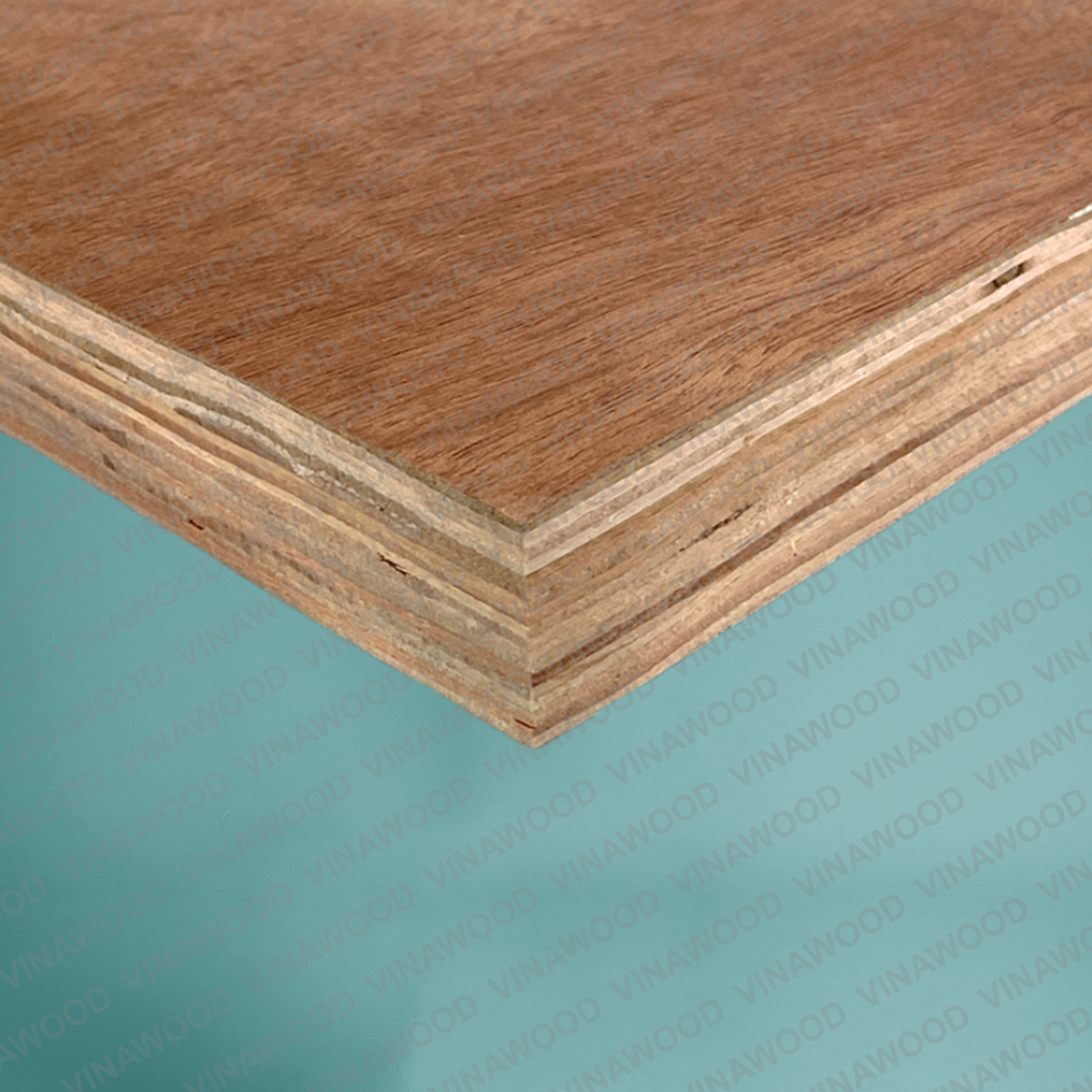
Plywood is a panel built from cross-banded veneer layers glued together, with each veneer rotated 90 degrees from the layer above and below. The face veneer can be hardwood (red oak, birch, maple), softwood (Douglas fir, pine), or in the case of melamine plywood, the same melamine-faced paper laminated to a plywood core instead of to particleboard. That last point matters and gets lost in most of the SERP. Vinawood manufactures melamine-faced plywood specifically because some buyers want the surface finish without the particleboard core underneath.
So the real question is rarely plywood-versus-melamine. It's almost always: plywood core with whatever face, versus melamine-faced particleboard. The rest of this guide treats it that way.
Core construction
A standard hardwood-faced plywood panel has 5, 7, 9, or more odd-numbered veneer layers cross-banded under heat and pressure with WBP (water boil proof) melamine or phenolic adhesive. The plies stay flat across humidity cycles. The cross-banded structure carries load in both directions of the panel face.
A melamine-faced particleboard panel has a homogenous core of wood particles bonded with urea-formaldehyde resin, with a melamine-resin-impregnated decorative paper laminated to each face. The core has no grain direction. It's uniform in density top to bottom, side to side. MDF cores swap the particles for finer fibers, giving a smoother edge profile and slightly better screw retention than particleboard but a heavier panel.
Both panel types come in standard 4×8 sheets, with 3/4-inch and 1/2-inch being the workhorses for cabinet construction. A plywood sheet of either dimension is noticeably lighter than the equivalent particleboard panel.
Strength and screw-holding
Plywood holds fasteners better than particleboard or MDF. A drywall screw or coarse-thread cabinet screw bites into wood fiber that runs across the layers, and the grip is mechanical. A confirmat-style cabinet screw in 3/4-inch plywood will hold tens of pounds of pullout force without much complaint.
The same fastener in particleboard relies on the resin binding the particles, and the resin gives way before the screw does. A heavy door slammed repeatedly on cup-hinge screws in a particleboard cabinet edge will eventually loosen those screws, even when they were properly driven on day one. Cabinet shops working in melamine-faced particleboard compensate with confirmat screws, dowels, or threaded inserts when the load matters.
For shelves, the same physics applies. Plywood density and screw holding are linked: denser cores hold fasteners better, and plywood spans further without sagging at a given thickness. A 36-inch wide bookshelf in 3/4-inch hardwood plywood will hold its line for years. The same shelf in melamine-faced particleboard at the same thickness will start to dip in the middle within a year of carrying books.
Moisture, edge, and humidity behavior
Plywood handles damp environments better than any particleboard. WBP-grade plywood survives intermittent water exposure with minor swelling at the most exposed edges, and exterior grades survive direct weather. This is why kitchen and bath cabinet boxes in most North American specs default to plywood — the area under a sink is going to see water sooner or later, and a particleboard cabinet floor will swell and crumble when it does.
Melamine-faced particleboard is sealed on the face by the laminate but exposed at every cut edge. A bare cut edge will wick moisture into the particleboard core, and the core swells. Edge banding (PVC or melamine tape, hot-melt or PUR adhesive) addresses this on visible edges. The unsealed cut on the inside of a cabinet does not get banded, and that's where water damage typically starts.
For dry environments (closets, garages, retail fixtures, office casework), the moisture argument doesn't carry weight, and the cost argument starts to matter more.
Finish, color, and aesthetics
Melamine-faced panels ship pre-finished. The face is the final surface; there's no sanding, no staining, no sealer, no topcoat. Builders order white melamine for cabinet interiors and they're done. The face is also extremely tough — it shrugs off everyday wear, doesn't water-stain, and cleans up with a damp cloth.
Plywood needs finishing decisions. Face veneer species and grade get specified at the order. Edge banding (matching hardwood, iron-on veneer, or PVC) gets applied to visible cuts. Then sanding, staining if desired, sealer, and topcoat all happen in the shop. The result can be matched to any joinery aesthetic, but the labor adds up.
This is why melamine-faced board owns the cabinet-interior market and plywood owns the visible-show-surface market in most modern North American cabinets. Buyers want plywood where they'll see it and melamine where they won't.
Cost per sheet
Sheet-for-sheet, melamine-faced particleboard is cheaper than hardwood plywood at any given thickness. The exact spread varies by region and supplier, but the indicative direction is consistent across mid-2026 quotes from cabinet shops we work with: melamine-faced particleboard runs meaningfully below the equivalent plywood panel before edge banding labor is factored in.
The total cost on a finished cabinet is closer than the sheet price suggests, though. Plywood's edge can be filled and finished without separate banding stock. Melamine needs banding on every visible cut. Add hardware compensation for screw-holding (confirmat screws, dowels, inserts) and the gap narrows further. For full pricing on a specific project, a local cabinet shop's quote is the only reliable number.
From our end as a plywood manufacturer, we don't quote dollar prices in articles because regional freight and FX move them too much to be useful three months from now. What stays consistent is the ranking: melamine-faced particleboard cheaper per sheet, plywood cheaper per service year if the cabinet sees moisture or load.
Best uses for each material
Melamine-faced particleboard belongs in dry, low-load, pre-finished applications: cabinet interiors that will never get wet, garage shelving and storage, closet systems, retail fixtures, low-budget office furniture, the inside of vanities. Anywhere the surface needs to look finished today and the underlying structure will never see water.
Plywood belongs in kitchen and bath carcasses, structural shelving, anywhere humidity is a real factor, drawer boxes that take repeated pulls, and any surface where the buyer will see the wood face. Also: anywhere a wall cabinet will hang from screws into stud — the screw-holding margin matters when you're trusting a panel to hold tens of pounds of dishware against gravity.
Where they meet: melamine-faced plywood
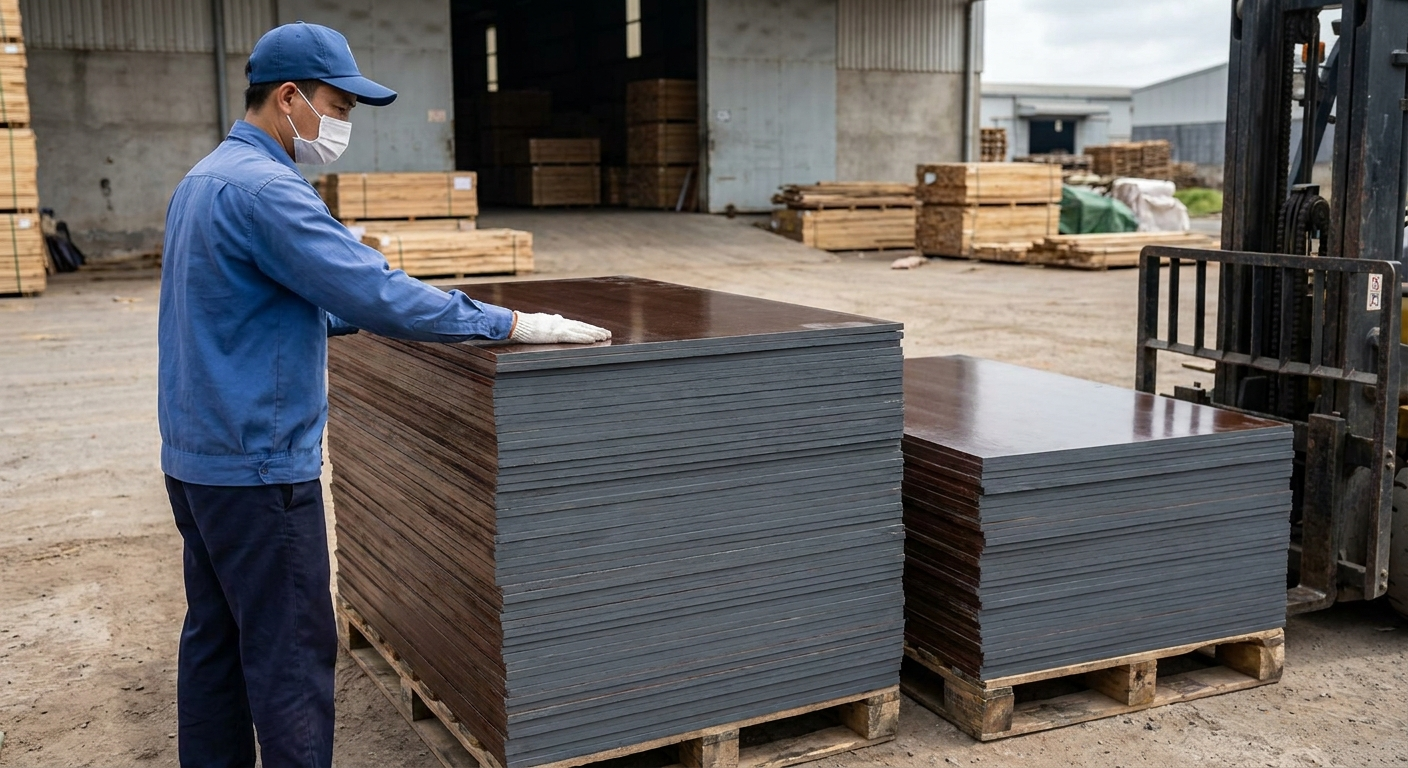
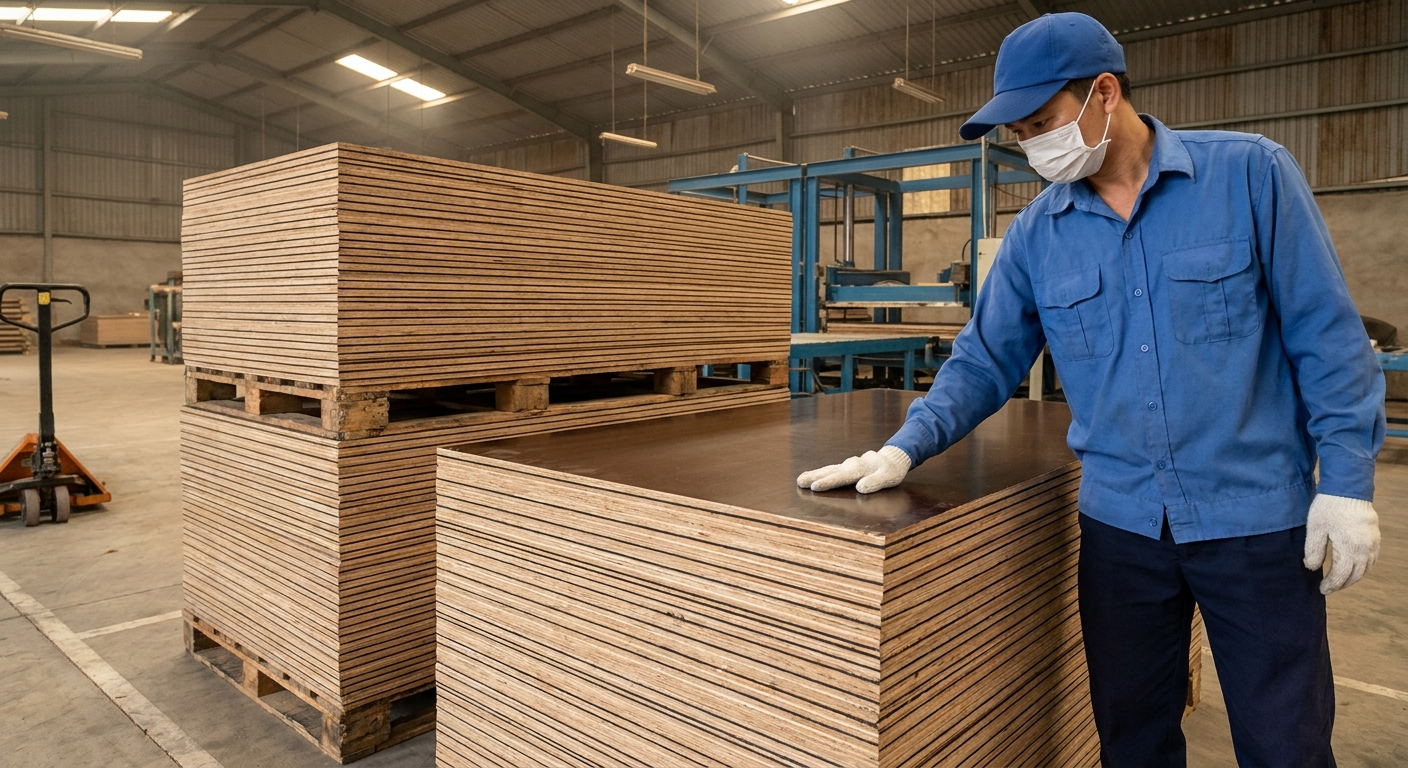
Vinawood manufactures melamine-faced plywood — a plywood core (acacia, eucalyptus, or mixed hardwood, depending on the order) with melamine-resin decorative paper laminated to one or both faces, the same surface finish that goes onto particleboard but pressed onto a plywood core instead.
The product exists because some buyers want the easy-clean melamine face and the structural and moisture behavior of plywood underneath. It costs more than melamine-faced particleboard and less than premium hardwood-faced plywood with a separate finishing step. It's a real middle ground, and it's a meaningful chunk of our melamine-faced exports to Korea, the Philippines, and Vietnam's domestic furniture market.
The same panel logic applies to formwork in a different context — WBP-melamine vs phenolic adhesive is the parallel question on the construction-formwork side, with the same "melamine is cheaper, phenolic is tougher" tradeoff.
Decision matrix
| Scenario | Recommended panel | Why |
|---|---|---|
| Kitchen sink cabinet floor | Plywood (WBP grade) | Moisture exposure is certain over service life |
| Wall-hung upper cabinets | Plywood | Screw-holding for hanger rail under gravity load |
| Bathroom vanity carcass | Plywood | Moisture-prone, fastener load |
| Visible cabinet end panel | Plywood with matching face veneer | Show surface, finish flexibility |
| Cabinet interior shelves (dry kitchen) | Melamine-faced particleboard or plywood | Pre-finished face speeds build; plywood for heavier loads |
| Garage storage system | Melamine-faced particleboard | Dry, low load, budget-driven |
| Closet shelving and dividers | Melamine-faced particleboard | Dry, pre-finished face, low cost |
| Retail fixture, gondola, display case | Melamine-faced particleboard | Pre-finished face, fast build cycle, surface-protected |
| Workshop bench and shop cabinets | Plywood | Screw-holding, load tolerance, edge durability |
What's hidden in the table is that most working cabinet shops use both materials in the same project. Plywood for the carcass on a moisture-exposed cabinet; melamine for the interior shelves on a dry one; pre-finished melamine on the back wall of a cabinet that nobody will see; hardwood-faced plywood on the visible end panel. The material picks itself once you know what the part has to do.
What Vinawood manufactures
From a Vietnamese mill perspective, the plywood side of this question is what we build. We make hardwood-faced plywood with WBP-melamine and WBP-phenolic adhesives, and we make melamine-faced plywood when buyers want the surface finish on a plywood core rather than particleboard. We don't make particleboard. HPL and LPL surfaces are a separate finish category that adds to either base panel, with different gloss and texture options than melamine.
The honest answer for a cabinet buyer looking at the plywood-vs-melamine question is that both materials have a legitimate place in the same kitchen. Plywood for the carcasses that will see water or load. Melamine-faced board for the interior shelves and pre-finished surfaces that won't. The wrong move is using either one in the role that belongs to the other.
Category
guides