Melamine Plywood: Strength, Versatility and Value Explained
Melamine plywood explained for buyers: the three meanings of melamine, WBP vs MR bond class, how it compares with phenolic by exposure, and how to source it at volume.
Few words in the panel trade cause as much confusion as "melamine." It gets used for a glue, a surface film, and a completely different board, often in the same conversation. If you are specifying or sourcing melamine plywood, the first job is to pin down which one you actually mean, because the bond class and the use follow from that.
This guide sorts the three meanings, sets melamine against phenolic on the spec that matters (exposure), and covers what a buyer checks before placing a container order.
What melamine plywood actually is
"Melamine" points at three different products. Naming the right one removes most of the confusion up front.
- Melamine as core glue resin — melamine-urea-formaldehyde (MUF), the adhesive bonding the veneer layers inside the panel. This is a WBP bond rated EN 636-2 (Class 2). It is the glue in Vinawood's Form Basic, Form Extra, and Eco Form formwork panels.
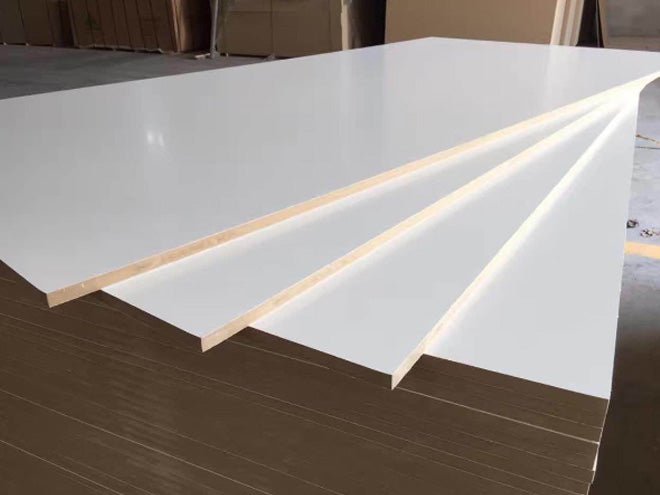
- Melamine face film — a decorative or protective paper saturated with melamine resin and hot-pressed onto the panel surface. This is the "melamine-faced plywood" meaning, a surface overlay rather than a glue.
- Melamine laminate (MFC) — melamine-faced chipboard, a different substrate altogether. It shows up in cabinet carcasses and shelving and gets confused with melamine plywood constantly, but its core is particleboard, not plywood.
When a data sheet or a supplier says "melamine," ask which of the three. A glue-class answer and a decorative-surface answer are not interchangeable, and the wrong assumption sends you to the wrong panel.
Melamine board vs melamine plywood
This is the distinction most cabinet-trade copy blurs. "Melamine board" almost always means MFC, a melamine face film over a chipboard or MDF core. Melamine plywood keeps a plywood core under the surface. The difference is what is inside, and it drives screw-holding, edge quality, and moisture behaviour.
| Property | Melamine board (MFC) | Melamine plywood |
|---|---|---|
| Core | Chipboard or MDF | Cross-laminated wood veneers |
| Screw holding | Weaker, especially on edges | Stronger, holds in the face and edge |
| Edge finish | Needs edge-banding | Cleaner exposed edge |
| Moisture behaviour | Swells if the core wets | Better dimensional stability |
| Typical use | Flat-pack furniture, shelving | Joinery, structural and formwork faces |
For furniture that has to carry load or take repeated fixings, the plywood core is the reason to pay more. For a light shelf, MFC often does the job. Neither is "better"; they answer different specs.
Bond class: is melamine plywood waterproof?
No panel is waterproof, and melamine plywood is no exception. What it has is a water-resistant bond, and the useful question is which one. MR (moisture resistant) glue suits protected interiors. A WBP (weather and boil proof) melamine-urea-formaldehyde bond, rated EN 636-2, handles humid and exterior-protected service. That is a real weatherproof rating for its class, not a half-measure.
This is where a lot of copy gets it wrong. Melamine-glue plywood is sometimes written off as "interior only," which is the intuition carried over from melamine laminate, the MFC cabinet product. It does not apply to a WBP MUF plywood bond. Our Form range is built on exactly this glue and runs concrete formwork, which is about as far from a dry cabinet interior as a panel gets.
Is melamine stronger or better than plywood, MDF, or wood?
These questions come up constantly, and the honest answer is that it depends on the substrate under the surface, not the melamine itself. "Melamine" describes a resin, so "is melamine stronger than plywood" is really asking whether an MFC board beats a plywood one. On strength and screw-holding, a plywood core wins. On a flat, prefinished, low-cost surface for dry furniture, MFC is hard to beat.
Against MDF, melamine-faced panels give a harder, more scuff-resistant surface straight off the press, while MDF takes fine detail and paint better. Against solid wood, an engineered melamine-faced panel is more dimensionally stable and needs no finishing, where solid wood offers repairability and a natural face. The choice is about the job, not a ranking. Match the surface and the core to the exposure and the load.
Melamine (EN 636-2) vs phenolic (EN 636-3): choosing by exposure
For formwork and structural work, the real decision is melamine-glue versus phenolic-glue, and it comes down to exposure class rather than one being a downgrade of the other.
| Melamine (MUF) plywood | Phenolic (PF) plywood | |
|---|---|---|
| Bond class | WBP, EN 636-2 (Class 2) | WBP, EN 636-3 (Class 3) |
| Exposure | Humid, exterior-protected | Permanent exterior, high rotation |
| Vinawood range | Form Basic (up to 10), Form Extra (up to 15) | Pro Form (up to 20), HDO range |
| Best for | Standard pours, general formwork | High-reuse and demanding exposure |
Both are weatherproof bonds. The EN 636-2 melamine panel is rated for humid and protected-exterior service; the EN 636-3 phenolic panel is rated for permanent exterior and higher rotation. Only Pro Form and the HDO range use a phenolic bond; the Form range uses a melamine-urea-formaldehyde glue with a phenolic face film. Reuse figures are maximums with proper handling, so read "up to 15" as a ceiling, not a promise. For the phenolic side in detail, see phenolic plywood (EN 636-3), and for the overlay grades, HDO vs MDO overlay panels.
Melamine-faced formwork plywood
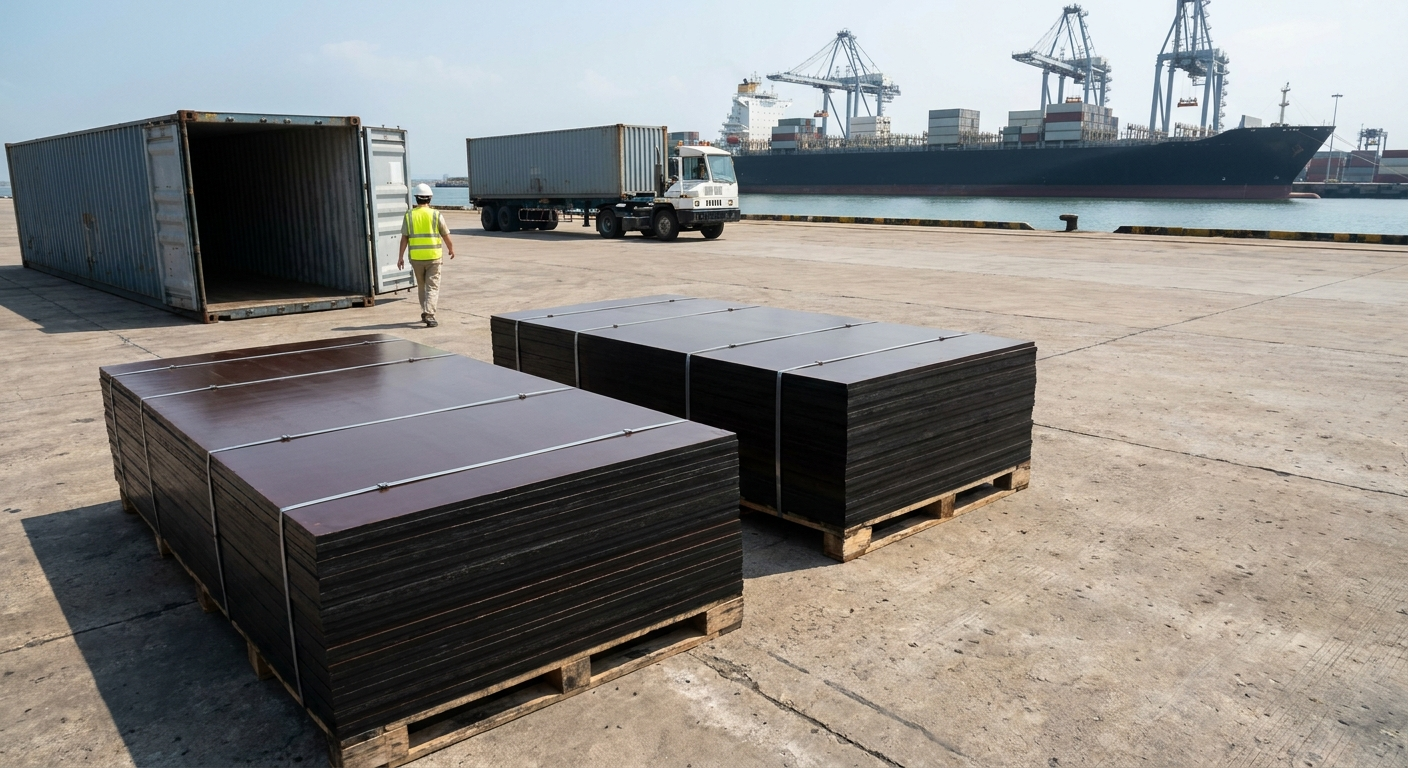
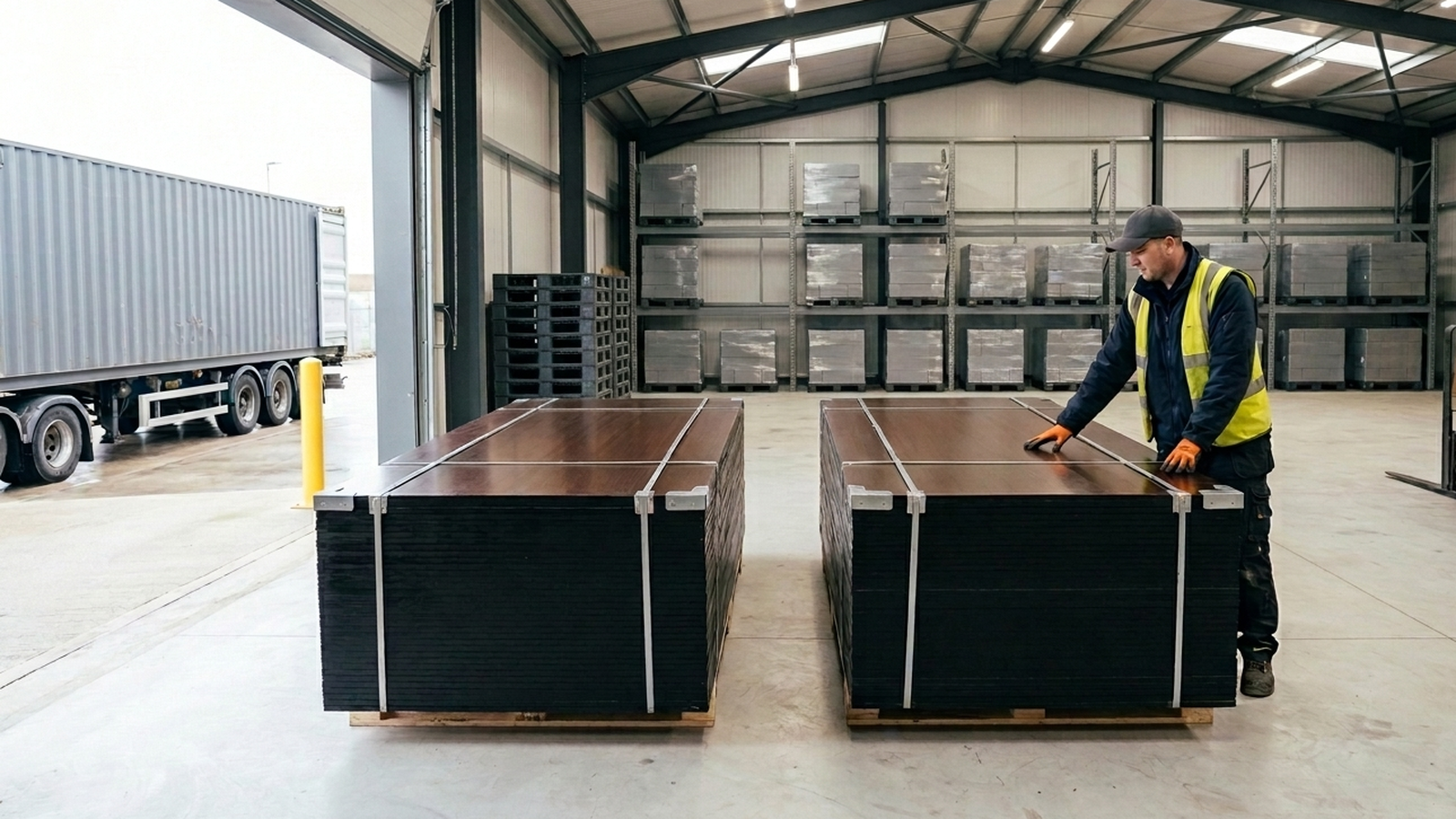
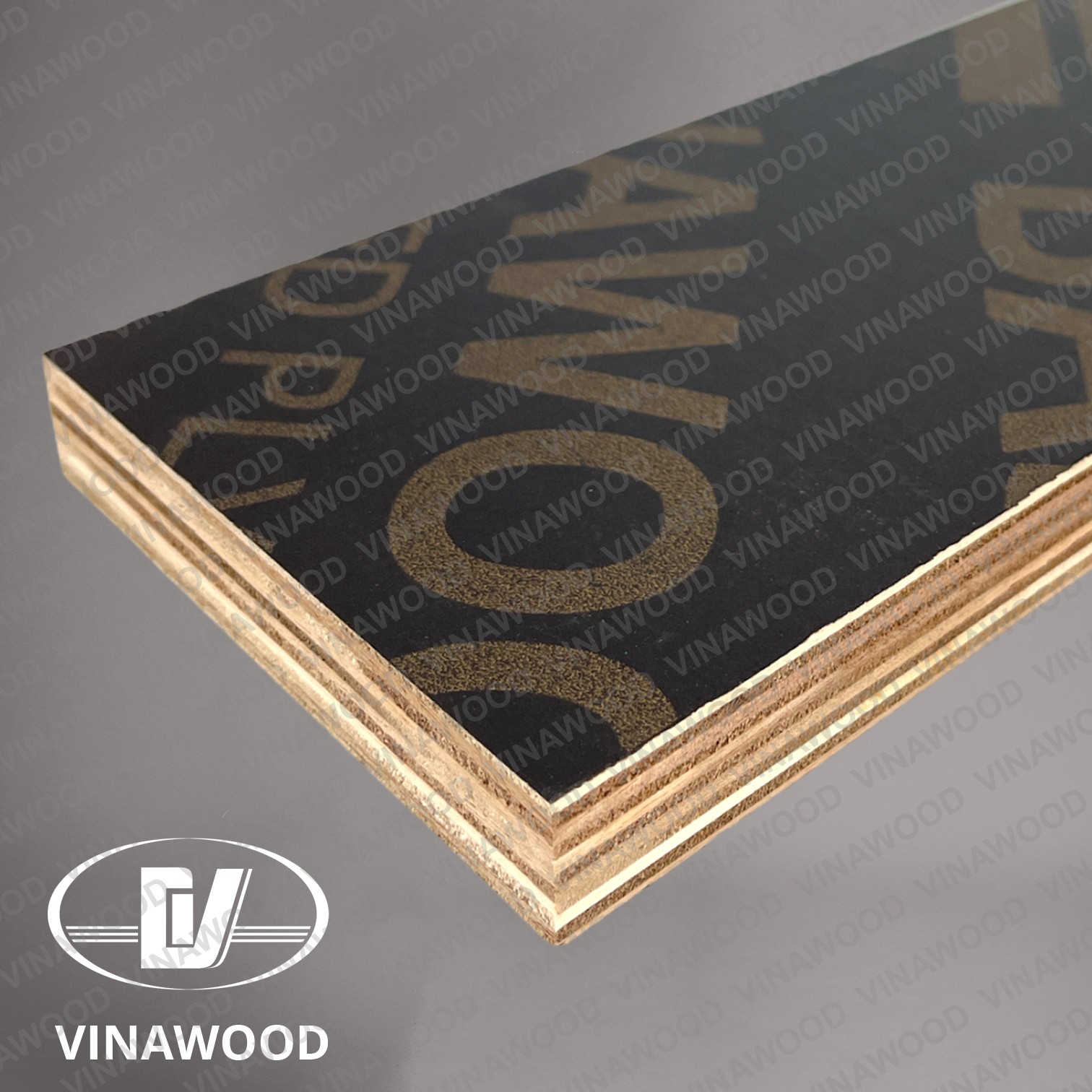
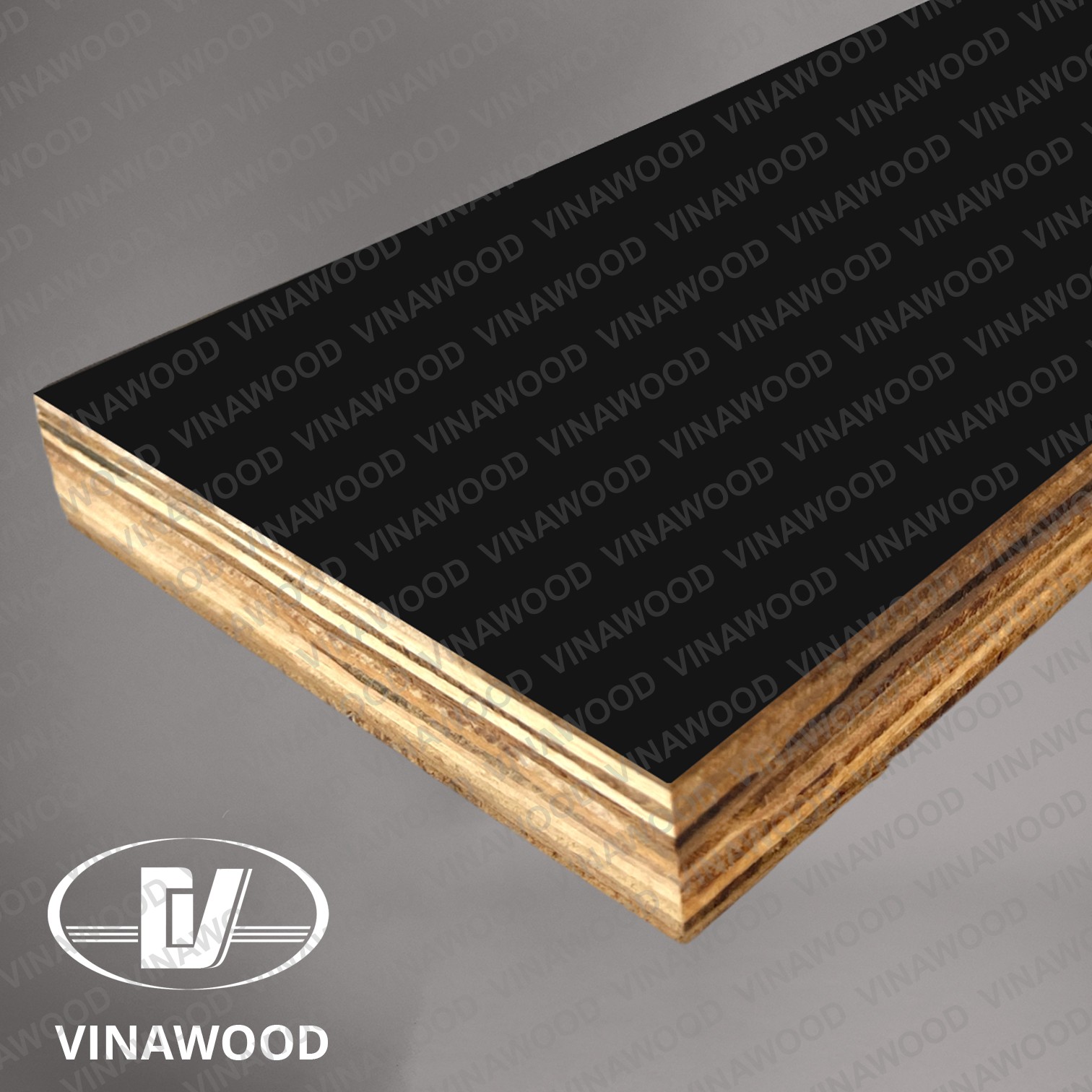
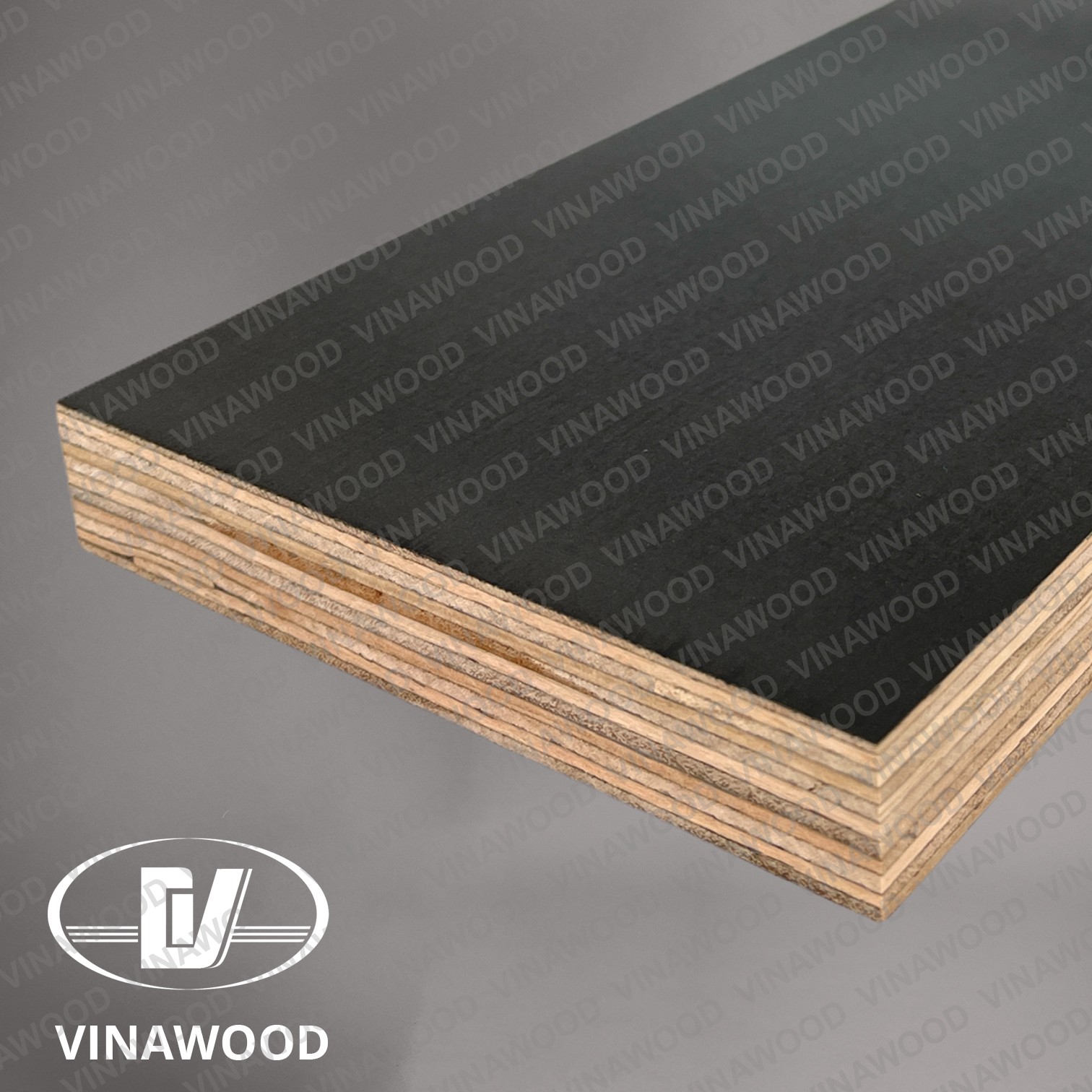
The B2B home of melamine plywood is concrete formwork. Vinawood's Form Basic and Form Extra are film-faced formwork panels built on a WBP melamine-urea-formaldehyde core glue, with a phenolic film on the face for release and finish. They handle standard pours and give up to 10 and up to 15 reuse cycles respectively. Form Extra reaches more cycles than Form Basic because its glue is a more durable, higher-melamine-content formulation, not because it carries a different face film. The face film is the same on both.
Edge sealing is what gets you to those reuse numbers. A cut edge that is left unsealed drinks water and swells, and the panel loses cycles fast. We seal edges at the factory and mark every sheet, and we still tell buyers to re-seal any site cuts. That single habit does more for panel life than most spec upgrades. These sit within our wider film-faced plywood range, and Form Extra (melamine WBP, EN 636-2) is the usual pick where standard pours need extra cycles.
How to source melamine plywood at volume
Buying a container of melamine plywood is a different exercise from picking up a sheet. A spec-buyer checklist that avoids the common surprises:
- Bond class, named — WBP MUF (EN 636-2) or phenolic (EN 636-3)? Do not accept "melamine" without the class.
- Emission certification — CARB Phase 2 / EPA TSCA Title VI for the US, E1 under EN 13986 for Europe. Non-negotiable for customs and for enclosed use.
- Face and core — film type, core species, and whether the core is genuinely plywood or a swapped-in composite.
- Size, thickness, tolerance — confirm the nominal and the actual, and the moisture content on arrival.
- MOQ and documentation — minimum order, lead time, and whether full compliance papers ship with the goods.
- Origin — factory-direct versus trader, and the traceability behind the timber.
Sourcing melamine plywood with Vinawood
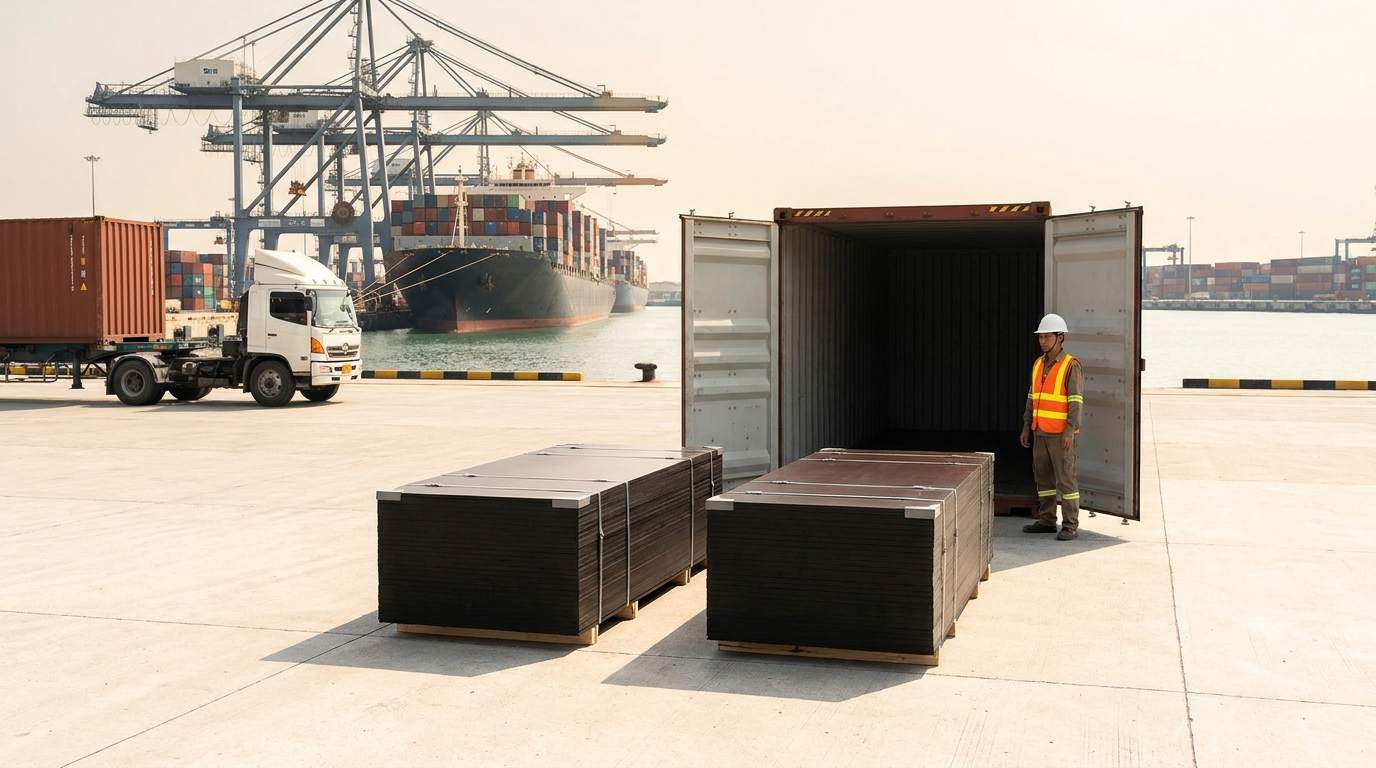
Vinawood has manufactured plywood in Vietnam since 1992, shipping over 5,000 containers a year to 55+ countries with every sheet individually inspected. Our melamine-glue Form range covers standard formwork; our phenolic Pro Form and HDO ranges cover higher exposure. All of it ships with ISO 9001, FSC-CoC, CE (EN 13986), and EPA TSCA Title VI documentation, which is the paperwork that clears customs and satisfies a spec. If you are sourcing melamine plywood at volume and want the bond class and certification pinned down before you commit, request a quote and tell us the application and market.
Category
product-spotlight
Related Markets
Related Countries
Related Products
▶Sources & References (3)
- EN 636:2012+A1:2015 — Plywood specifications — CEN (2015)
- EN 13986 — Wood-based panels for construction (CE marking) — CEN (2015)
- EPA TSCA Title VI / CARB Phase 2 formaldehyde emission standards — US EPA / CARB (2018)