Plywood Sizes in the Philippines: Standard Sheets, Thicknesses & Conversions (2026)
Standard plywood in the Philippines is 4×8 ft (1220×2440 mm) across thicknesses from 1/4" to 1". This 2026 contractor's guide covers full size and thickness tables, marine vs ordinary availability, oversized 4×10 sheets, takeoff math, indicative prices, and where to source.
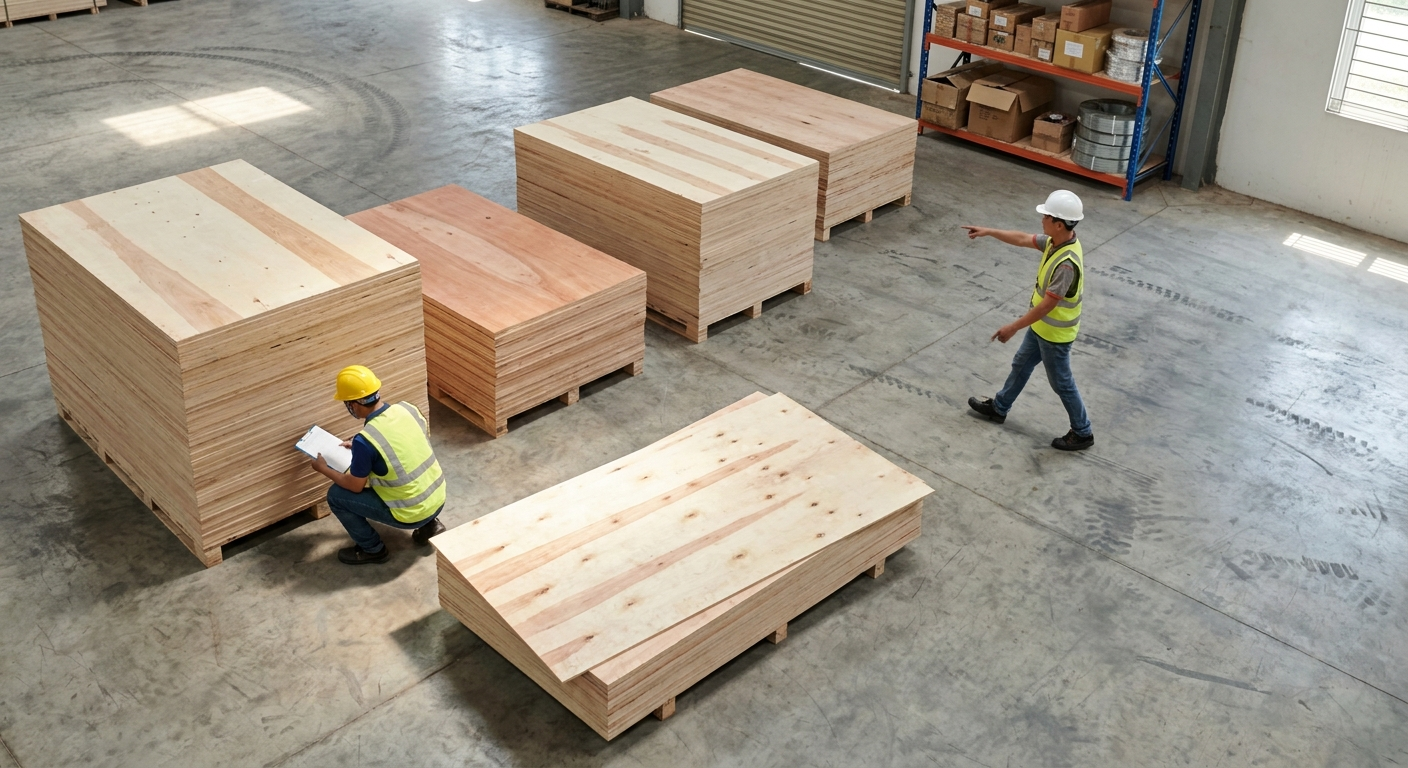
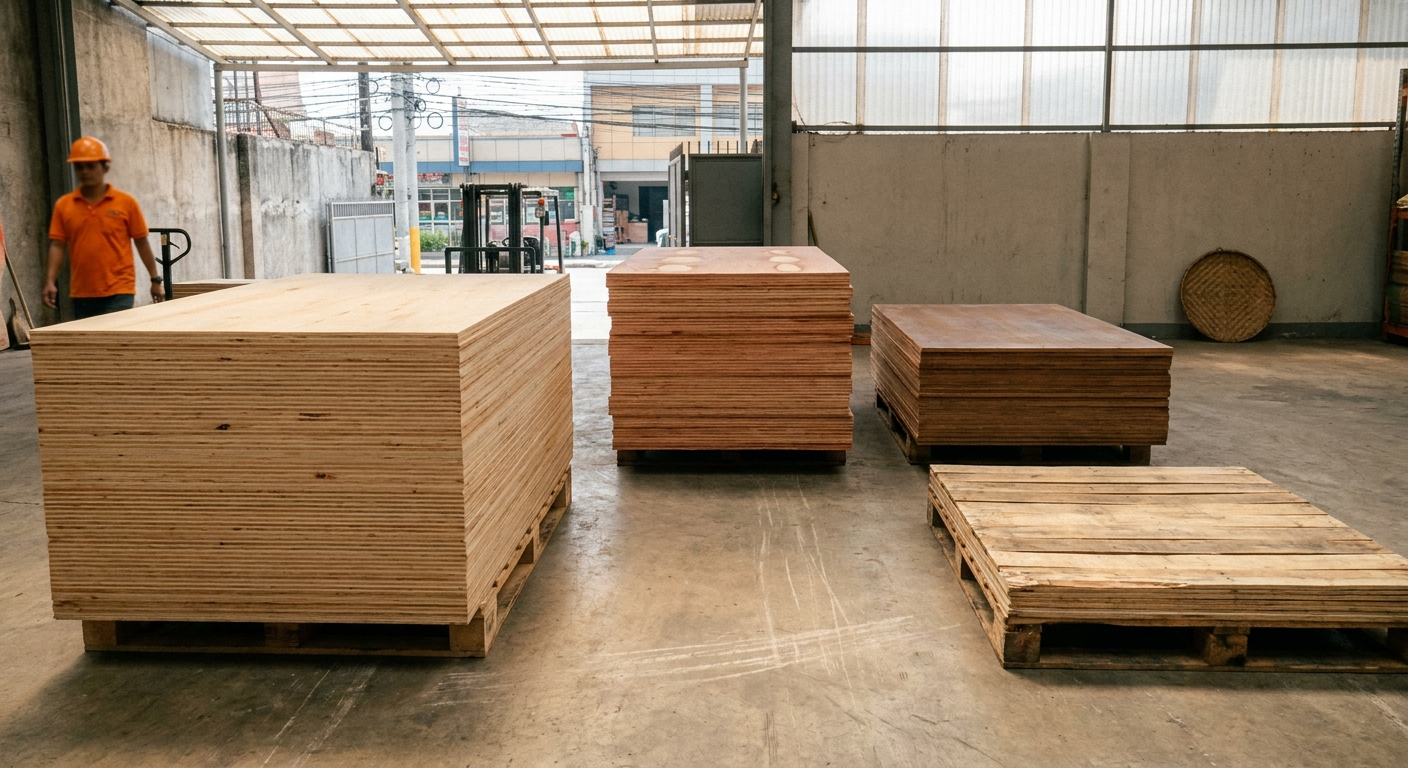
A 40HQ container of 18 mm plywood out of Haiphong holds about 600 sheets at 1220 × 2440 mm. The owner of a Cebu modular kitchen factory we ship to runs through one of those containers every six weeks. He still gets the call from his foreman every Tuesday: "How wide is the panel again?" The answer in the Philippines hasn't changed in 30 years. 4 × 8 ft. 1220 × 2440 mm. The same sheet you can pull off a Wilcon stack in Quezon City matches what loads onto a container in Vietnam.
The standard size is the easy part. The thickness range, the imperial-to-metric conversions, marine vs ordinary stocking, oversized 4 × 10 sheets, and the takeoff math get more interesting. This 2026 guide covers all of it from a manufacturer's perspective. We're a Vietnamese mill exporting to the Philippines and 55+ markets globally.
Standard Sheet Dimensions
Thickness in PH retail follows imperial conventions inherited from the US and Canada. The label is in inches. The actual sheet is produced to the equivalent metric measurement. The conversion table that everyone in the trade memorizes:
| Nominal Thickness (in) | Metric (mm) | Common PH Trade Name |
|---|---|---|
| 1/4" | 6 mm | 1/4 plywood |
| 3/8" | 9 mm | 3/8 plywood |
| 1/2" | 12 mm | 1/2 plywood |
| 5/8" | 15 mm | 5/8 plywood |
| 3/4" | 18 mm | 3/4 plywood |
| 1" | 25 mm | 1 inch plywood (less common) |
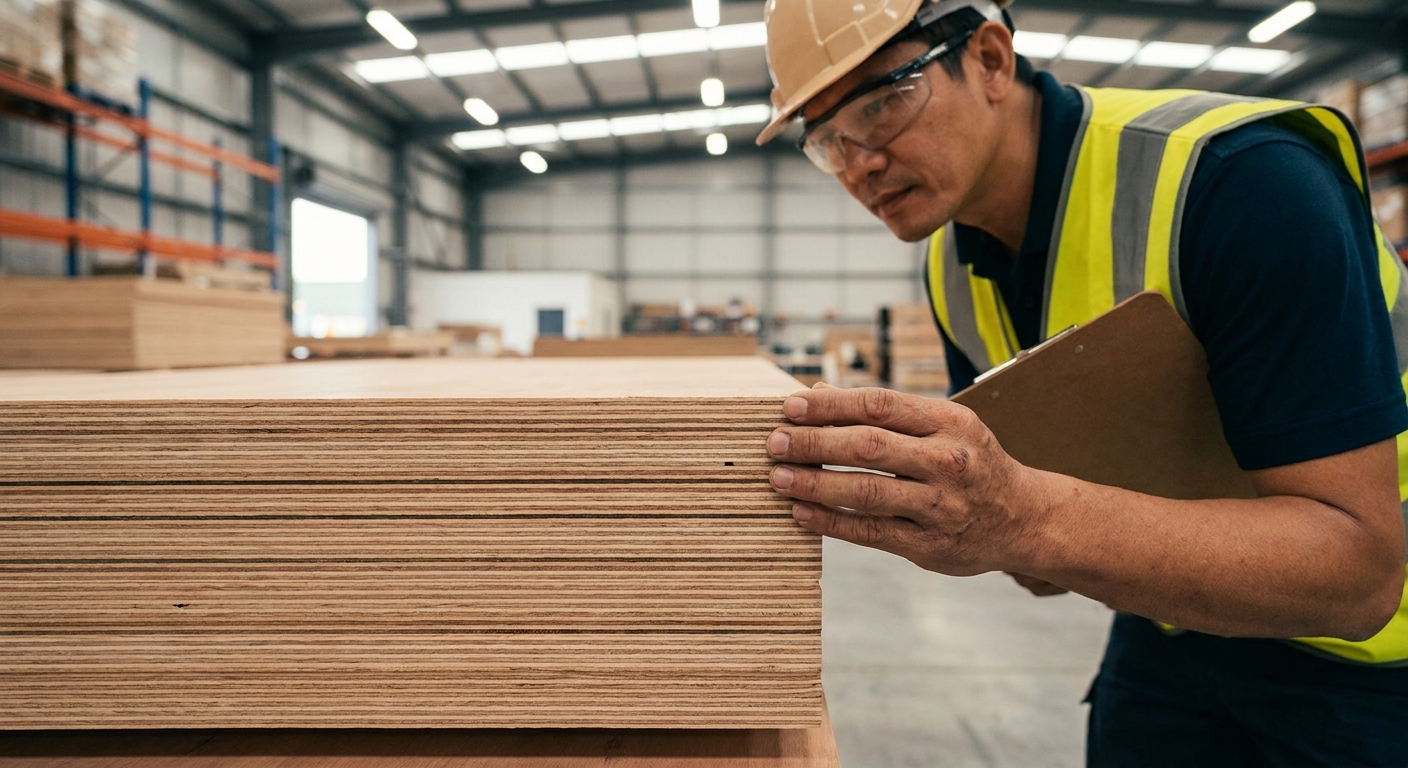
Sheet length and width tolerances under most production standards run ±3 mm on the 1220 × 2440 mm dimension; thickness tolerance under EN 315 runs +0.7 / –0.9 mm on 18 mm sanded panels. "4 × 8" in the Philippines refers to a 1220 × 2440 mm metric sheet, slightly under exact 4 ft (1219.2 mm) × 8 ft (2438.4 mm) when measured precisely. The metric figure is what mills produce.
One trip through any QC line at our mill in Vietnam makes that obvious. The cutting bed is calibrated in mm, not inches. The label that goes on the bundle says "4 × 8" because that's what the buyer asks for. The actual panel coming off the line is 1220 × 2440.
For broader international plywood sheet size standards (US, EU, India, UK), see global plywood sheet size standards.
Common Thicknesses by Application
Six thicknesses cover most Philippine residential and commercial work. The thinnest, 1/4" (6 mm), goes to ceiling underlayment, drawer bottoms, cabinet backs, decorative wall paneling, and as a sheathing layer over framing where lateral loads are minimal. Step up one notch and 3/8" (9 mm) handles thin partition cladding, lightweight furniture panels, and wall sheathing where a 1/4" panel would deflect too much.
The 1/2" (12 mm) sheet is the workhorse cabinet thickness in Manila and Cebu kitchen shops. We see it on cabinet door blanks, drawer fronts, partition cladding, and furniture sides where moderate strength is needed without excess weight.
The 5/8" (15 mm) sheet covers residential subfloors, roof decking on closer joist spacing, and casegoods structure where 1/2" would feel undersized. Most container-volume buyers default to 18 mm (3/4"), the dominant structural and formwork thickness. It shows up on residential subfloor over standard joist spacing, kitchen cabinet boxes for premium projects, structural shelving, and concrete formwork.
The 1" (25 mm) sheet is rare in residential work. We see it on industrial flooring jobs, transport flooring, and heavy formwork tables. Specify it on the order; it's not a stock item at most retailers.
Marine Plywood Sizes
Marine plywood in the Philippine market follows the same standard sheet size as ordinary plywood: 4 × 8 ft (1220 × 2440 mm). The thickness range typically spans 1/4" through 3/4", with 3/4" being the most commonly stocked.
One important note on terminology. "Marine plywood" in PH retail typically describes a moisture-resistant melamine- or phenolic-bonded panel, not the strict BS 1088 international marine standard. The dimensions match ordinary plywood exactly. The difference is in the bond chemistry, core species, and veneer grading. For the formal definition and how to verify genuine marine grade, see marine plywood explained.
Ordinary Plywood vs Marine Plywood — Size Availability
Across the standard 4 × 8 sheet:
| Type | Common Thicknesses Stocked |
|---|---|
| Ordinary plywood | 1/4", 3/8", 1/2", 5/8", 3/4" |
| Marine plywood | 1/4", 1/2", 3/4" (1" by special order) |
| Plyform / shuttering plywood | 1/2", 3/4" (occasional 5/8") |
| Phenolic film-faced plywood | 1/2", 3/4" (formwork-grade) |
Ordinary plywood has the broadest thickness range in the retail market because of its wider use across light-duty and decorative applications. Marine and formwork variants concentrate on the structural thicknesses (1/2" and 3/4").
Custom and Oversized Sheets
Most projects fit within the standard 4 × 8 ft sheet, but two oversized formats are available on request.
The first is 4 × 10 ft (1220 × 3050 mm). It comes up on tall wall partition cladding, formwork systems for high pours, and architectural applications where minimising horizontal joints matters. Available from larger Manila and provincial wholesalers. Expect a 10 to 20% per-sheet premium over standard 4 × 8 and longer lead times. Not all retailers stock this format, so call ahead.
The second is the cut-to-size service that many PH retailers offer for an additional charge. The starting sheet is still 4 × 8 (or 4 × 10), and waste from off-cuts is your cost. Typical service fee runs ₱50 to 100 per cut at the major retailers. A useful option when you need many same-size pieces and don't want to handle full sheets at the project site.
Plyboard vs Plywood — Size Differences
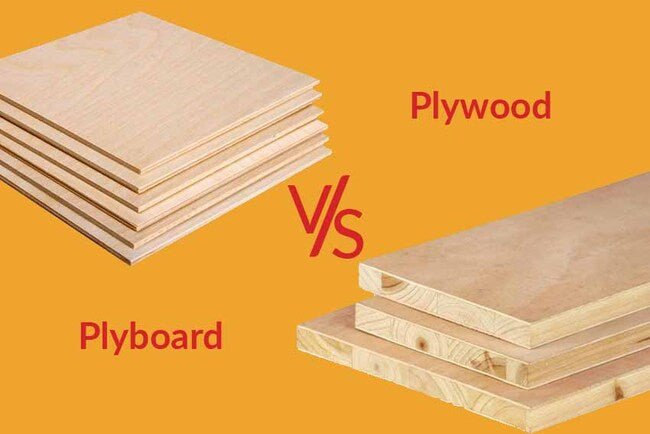
Plyboard (also called blockboard) is a related panel construction. It uses a solid timber-strip core sandwiched between veneer or thin plywood faces. Sheet size for plyboard typically matches plywood at 4 × 8 ft (1220 × 2440 mm), but thickness is more limited. Plyboard is most commonly stocked at 5/8" (15 mm) and 3/4" (18 mm) only, not in the thinner 1/4" or 1/2" ranges.
Plyboard is lighter than plywood at the same thickness because of the timber-strip core, and typically costs less per sheet. For visible cabinet exteriors and structural applications, plywood is preferred. For lightweight partitions and budget-conscious interior work, plyboard often delivers acceptable performance at lower cost. For the deeper construction comparison, see plyboard vs plywood comparison.
How to Convert Sheet Sizes for Material Takeoff
The standard 4 × 8 sheet covers ~2.97 m² (or 32 sq ft). The basic takeoff formula:
Sheets needed = (project area in m²) ÷ 2.97 × (waste factor)
Typical waste factors run 1.10 (10% waste) for straightforward partition or sheathing work, up to 1.20 (20%) for projects with many small pieces or complex cuts.
Worked example, 100 sqm of partition cladding:
100 m² ÷ 2.97 m² per sheet = 33.7 sheets at zero waste. With 10% waste factor: 33.7 × 1.10 = 37.1 → round up to 38 sheets of 1/2" plywood. For double-sided cladding (both faces of a partition wall), double the result: 76 sheets.
Worked example, 60 sqm condo subfloor:
60 m² ÷ 2.97 m² per sheet = 20.2 sheets at zero waste. With 10% waste: 20.2 × 1.10 = 22.2 → round up to 23 sheets of 5/8" or 3/4" plywood (3/4" preferred for subfloor over wider joist spacing).
Always order an extra 1 to 2 sheets above the calculated count for site cut waste, panel damage during handling, and contingency. We've seen jobs run short on the last day of a pour because the foreman trusted his number to the sheet.
Indicative 2026 Price by Thickness (PHP per sheet)
Indicative retail pricing for 4 × 8 ft plywood sheets in the Philippines, mid-2026:
| Thickness | Ordinary Plywood | Marine Plywood |
|---|---|---|
| 1/4" (6 mm) | ~₱235–380 | ~₱600–800 |
| 1/2" (12 mm) | ~₱440–675 | ~₱900–1,200 |
| 3/4" (18 mm) | ~₱730–1,110 | ~₱1,300–1,700 |
Indicative ranges only, varies by retailer, brand, region, and date. Always confirm with current supplier quotes before committing.
Where Filipino Contractors Buy Plywood
National retail chains (Wilcon Depot, CitiHardware, Ace Hardware) offer convenience and reliable stock. Pricing sits at the upper end of typical retail range. Best for small projects, single-sheet purchases, or homeowners with no trade account.
Provincial hardware shops are often 5 to 10% below Metro Manila retail for cash terms. Stock can be inconsistent on premium brands. Useful for standard mid-tier panels close to project sites in the Visayas, Mindanao, and Northern Luzon.
Wholesalers price 50+ sheet quantities typically 10 to 20% below retail. Suitable for contractor-scale projects with reliable storage capacity.
Direct-from-Vietnam imports at project scale (1× 40HQ ≈ 600 sheets of 18 mm) can land 25 to 35% below PH retail at the cost of 30 to 45 day lead time and import logistics. Worth evaluating for sustained buyers consuming 1+ containers per quarter. The Cebu modular kitchen factory we mentioned at the top of this guide runs almost entirely on imports for that reason. For an overview of PH-specific plywood suppliers, see our plywood suppliers in the Philippines guide.
Plywood sizes in the Philippines follow consistent conventions across retail brands and grades. 4 × 8 is the standard, and the metric 1220 × 2440 mm is what's produced. Match thickness to application, round up your takeoff with a sensible waste allowance, and confirm current pricing with your supplier before committing volume. The size is the easy part of the spec. Getting the right grade, bond class, and core species (especially for marine and formwork applications) is where the real specification work lives.
Category
guides
Related Markets
Related Countries
▶Sources & References (3)
- PHILCON Prices — Construction Material Prices in the Philippines — PHILCON Prices (2026)
- Plywood Price List — The Project Estimate — The Project Estimate (2026)
- EN 315 — Plywood. Tolerances for dimensions — European Committee for Standardization (CEN) (2000)