Which is Better Plywood vs Plyboard?
When it comes to choosing the right material for your building or furniture projects, the debate between plyboard vs plywood is a common one. Both materials have their distinct advantages, but which one stands out? In this article, Vinawood delves into the key differences and advantages of plyboard…
A Mumbai cabinet shop called us last March asking why their plyboard kitchen carcasses kept failing at the sink cabinet within two years. We sent samples back to the mill for cross-section, and the issue was visible at first cut: the strip-core seams had worked open under repeated splash and wet-dry cycles. Plyboard does some things well, but holding up under sustained moisture is not one of them, and that's the difference that matters when somebody picks between plyboard and plywood for a real project.
What is Plywood?
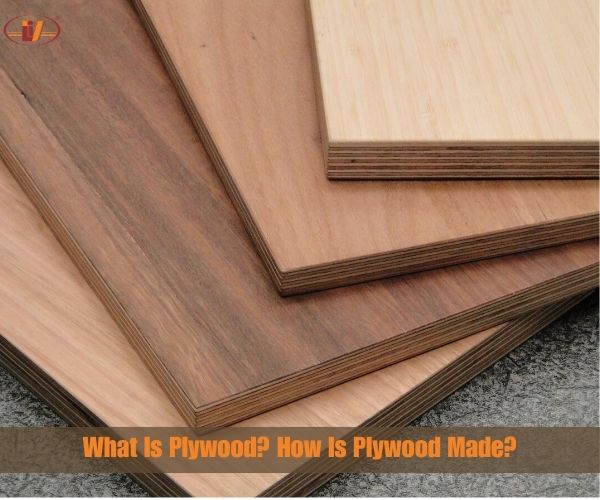
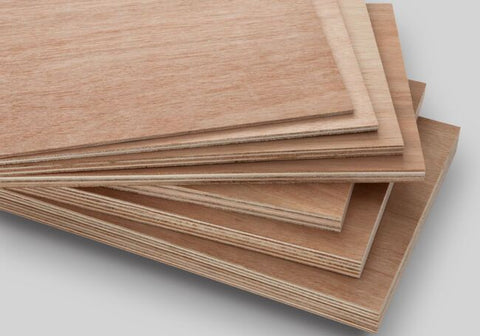
Plywood is the cross-grain panel. Thin veneers, typically 1.5 to 3 mm, get rotated 90 degrees against each other and hot-pressed with adhesive into a rigid stack. The rotation is what makes the panel work. Forces along one axis get distributed to the perpendicular plies, and that distribution is why a plywood subfloor doesn't crown the way a solid timber subfloor would.
Two species families ship at scale. Softwood plywood comes from pine, fir, and spruce, mostly used for sheathing, subfloor, and roof decks. Hardwood plywood from birch, maple, oak, or rotary-peeled hevea is what cabinetmakers and furniture builders pull from. We export both from our Vietnam mills, with hardwood plywood running about 60 percent of our volume on the cabinet-grade side.
The panel barely moves with humidity changes because the cross-grain plies pull against each other and cancel out. We've shipped 6 mm hardwood plywood to a Sydney distributor who's been running the same panels through their CNC for nine years without dimensional drift problems. That stability is the engineering reason plywood ended up as the default subfloor and structural sheathing material across most markets.
What is Plyboard?
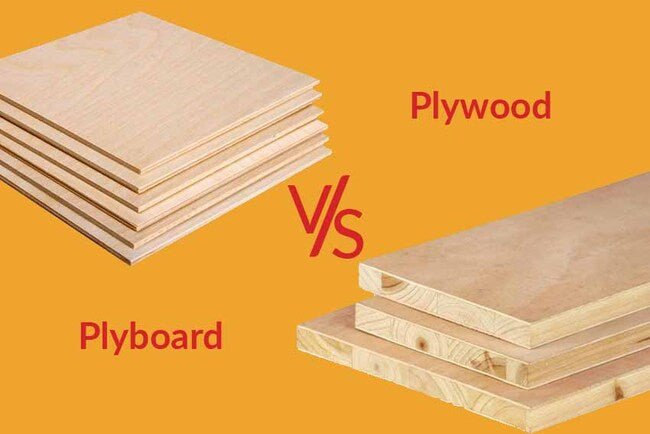
Plyboard, sometimes called blockboard, has a different core. Instead of stacked veneers, the middle is solid timber strips edge-glued into a slab. A thin veneer or thin plywood face goes on each side, and the panel reads identical to plywood at the dealer's stack. The visible difference is at the edge: plyboard shows the strip ends, plywood shows the ply lines.
Lightness is the structural property that drives plyboard demand. A 19 mm 4x8 sheet weighs roughly 25 to 30 percent less than equivalent plywood because the strip core uses less material per cubic foot than a stack of cross-laminated veneers. For wall partitions, lightweight cabinet doors, or any application where someone has to carry the sheet up stairs, that's a real difference.
Cost is the other reason plyboard sells. Equivalent thickness plyboard typically lands 15 to 25 percent below plywood pricing in the same market. The savings come from the strip-core, which uses lower-grade softwood timber rather than the rotary-peeled veneer logs plywood demands. Same face veneer though, so the visible quality reads the same.
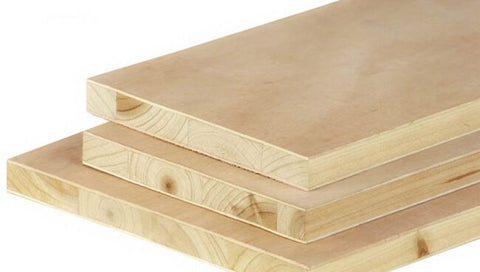
Comparing Plywood vs Plyboard
Cost: plyboard wins by 15 to 25 percent at the same thickness in the same market. The cheaper strip core is what does it. Budget interior fitouts default to plyboard for non-structural cabinet sides and back panels for that reason.
Weight: plyboard wins by 25 to 30 percent. Hinge-loaded cabinet doors, partition panels, anything someone has to walk up two flights of stairs all benefit from the lighter core.
Strength: plywood wins for structural and load-bearing work. Cross-grain veneer construction holds together under heavier loads and survives the wet-dry cycles that would split the strip-core seams. For shelves with real weight on them, plywood is the right answer.
Moisture tolerance: plywood, by a meaningful margin. Plyboard's strip-core construction is vulnerable to seam separation when the panel cycles through wet and dry, and the failure starts hidden inside the panel before it shows as a buckle or split. The Mumbai shop in our opening anecdote learned that the hard way.
Finish: tied. Both panels take paint, veneer, or laminate equally well because the face veneer is the same on both products. Edge appearance reads differently though, so for exposed-edge work the species and grain difference matters.
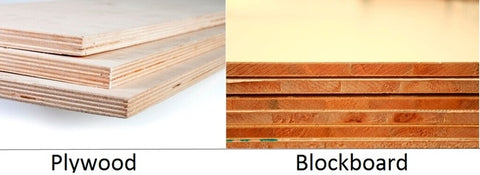
Which is Better Plywood or Plyboard?
Application-dependent. For kitchen and bath carcasses, exterior or semi-exterior use, structural sheathing, or anywhere the panel will see real weight or moisture, plywood is the right call and the cost premium pays back over service life. For interior partitions, lightweight cabinet doors, wall paneling, or non-load-bearing work where weight and budget matter more than maximum strength, plyboard is fine.
We supply both from the Vinawood mill. Plywood for structural and wet-zone applications, plyboard for interior fitout markets where the cost-weight math favours blockboard. Most projects we ship to in 2026 use both materials, picking the right panel for each part of the job rather than defaulting to one or the other.
Edge appearance is the spec detail most installers get wrong. Plywood's ply-line edge reads as a design feature in some contexts and as a defect in others. Plyboard's strip-line edge reads similarly. For visible edges on a finished piece, edge-band, lip with solid timber, or pick the panel whose edge matches the design intent.
Once the surface is sealed, both panels finish identically. The visible difference is at the edge, not the face. If the project covers all edges with banding or paint, the finish work won't differentiate the two materials and the choice comes down to weight, cost, and structural demand.
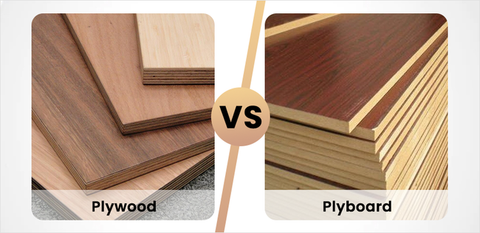
Plywood vs Plyboard: Factors to Consider
Strength is the first variable on the spec sheet. Plywood's cross-grain veneer construction handles point loads, span loads, and racking forces that would deflect or fail plyboard. Books on a shelf, cookware on a cabinet bottom, sheathing on any wall, plywood is the answer.
Weight matters when crews handle the panel or hardware hangs off it. Plyboard's 25 to 30 percent weight advantage shows up on every cabinet door, every wall panel, every loading dock with a sheet stack. Furniture moved or shipped frequently earns the lighter panel its keep.
Cost varies by market but the pattern holds: plyboard runs 15 to 25 percent below plywood at equivalent thickness. For projects where the application doesn't demand plywood's structural performance, that's real money on a container's worth of panels.
Moisture exposure is the spec breaker. Plyboard's strip-core construction is vulnerable to seam separation through wet-dry cycles, and the failure mode is hidden inside the panel until it surfaces as a buckle or a split. For any application within reach of water lines, condensation, or weather, plywood is the right answer and plyboard is the wrong one.
We ship plywood and plyboard to 55+ markets and the application split is consistent: plywood for structural and wet-zone work, plyboard for budget interior cabinet and partition projects. Match the panel to the job, not the other way around.
VINAWOOD - Vietnam Plywood Supplier & Manufacturer