Veneer Core Plywood: Properties, Strength, and When to Specify It
Veneer core plywood explained: cross-grain wood-ply construction, four-axis comparison against MDF, particleboard, lumber and combination cores, screw-retention data, and where each call belongs. Manufacturer's specifier guide for cabinet, furniture and architectural panel buyers.
Walk into a cabinetshop on the way to a job site and you'll see most casework being broken down from one of three substrates: veneer-core hardwood plywood, MDF-core panels, and particleboard-core melamine. The shop foreman picks between them not by brand but by what the panel has to do — hold a hinge, take a routed profile, survive a kitchen sink leak, stay flat across a six-foot run. Veneer core is the option that wins on screw retention and weight, and loses on perfect surface flatness. This guide explains why, and where each call belongs.
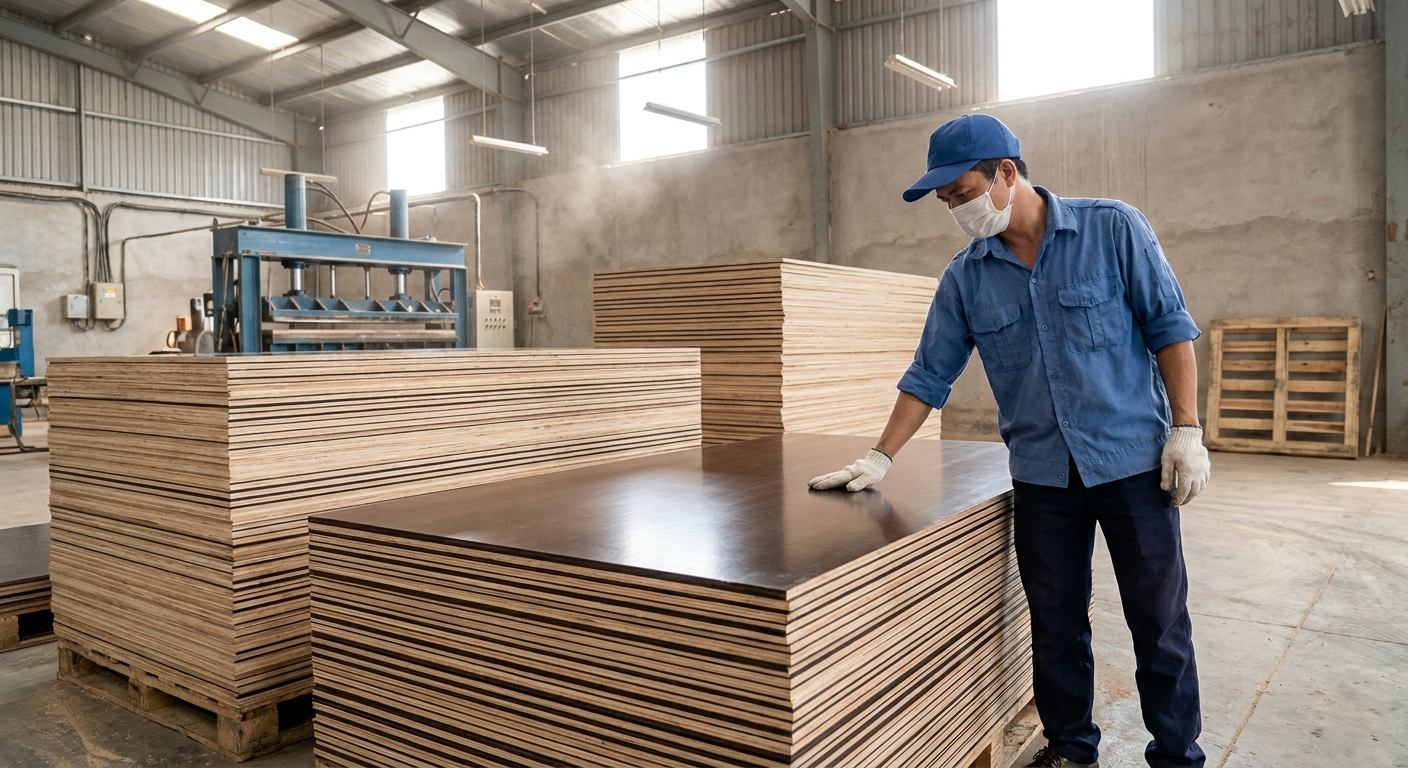
From a Vietnamese mill perspective, veneer-core construction is what we build every formwork and structural panel out of. The cross-grain stack of thin wood plies is the original plywood pattern, and the rest of the industry's core options are variations on the substitution game: replace some or all of the wood plies with a denser, cheaper, or flatter sheet material and you change the panel's behaviour in predictable ways.
What veneer core plywood is
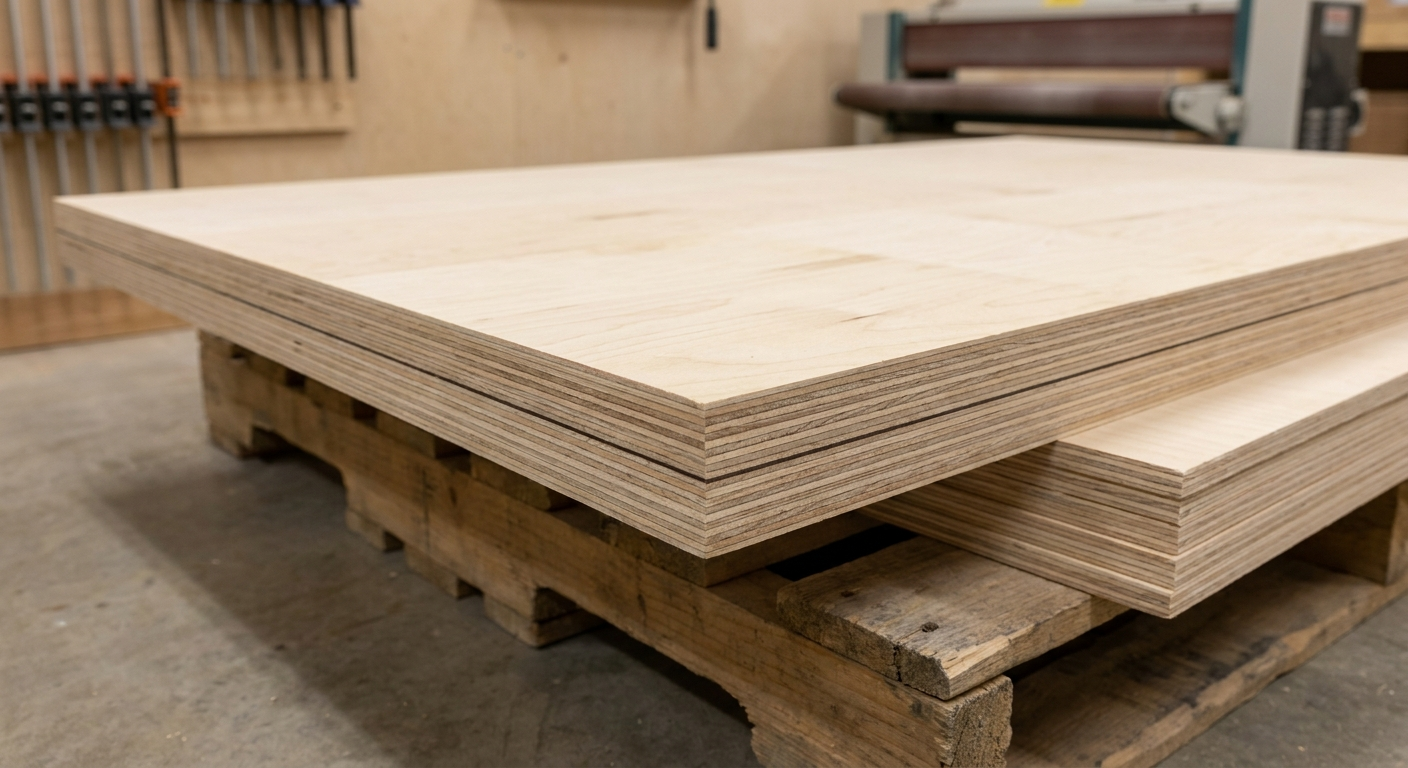
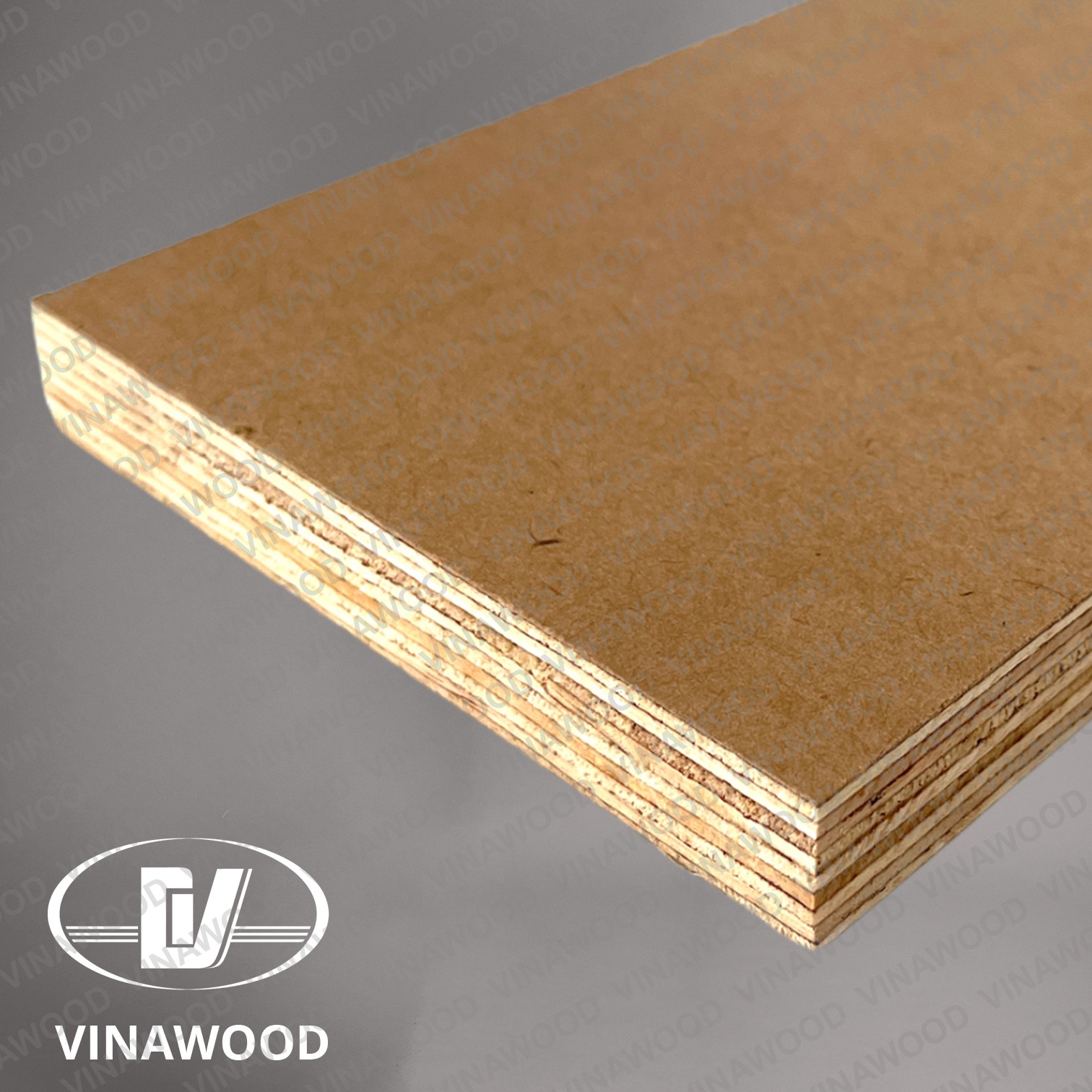
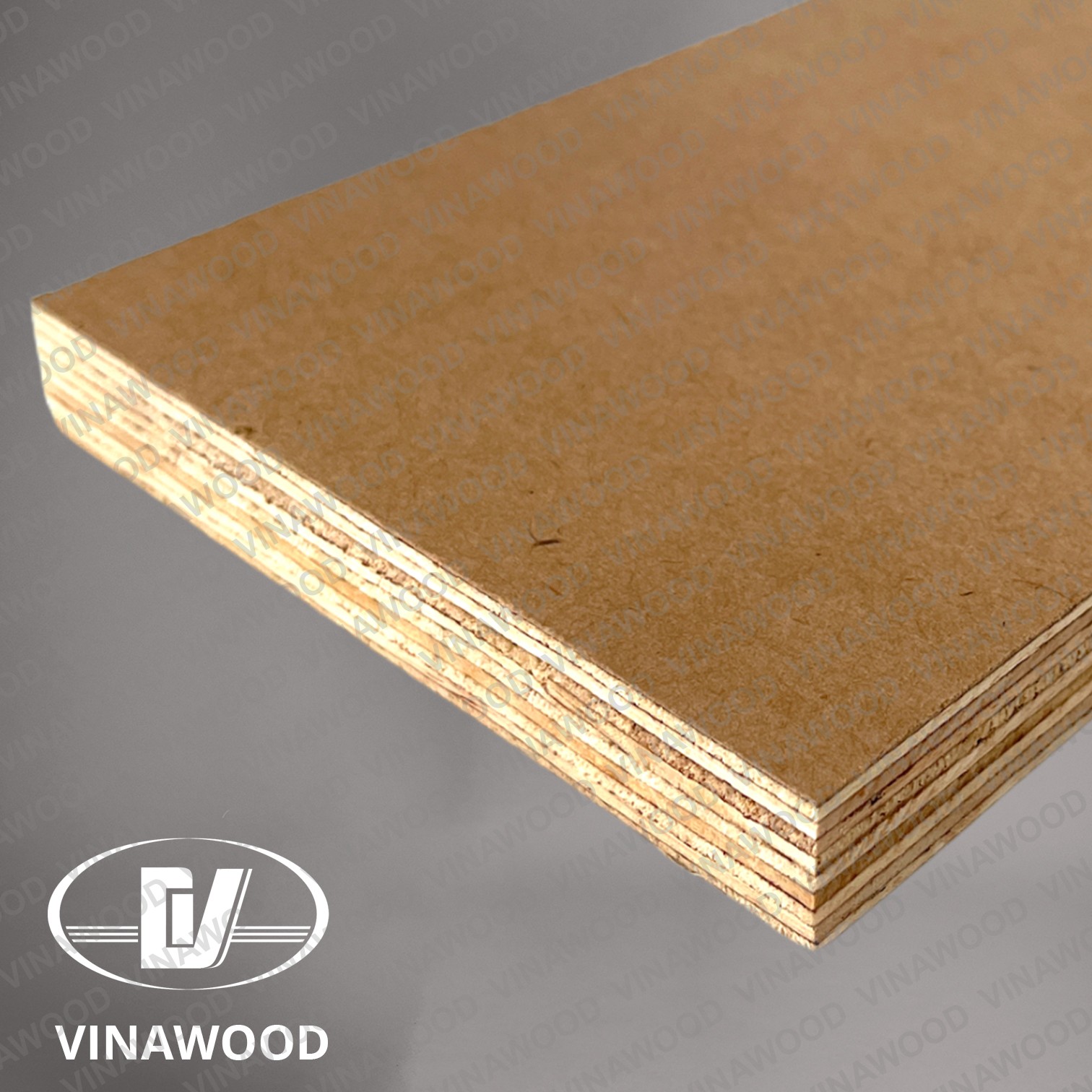
Veneer-core plywood is plywood whose core is built from rotary-peeled wood veneer sheets, laid up at alternating 90-degree grain orientations and pressed under heat with an adhesive. Each ply is typically 0.6 to 2.5 mm thick. A standard 18mm panel runs to nine plies; thinner panels run five or seven, thicker panels eleven or thirteen. The cross-grain orientation is what gives plywood its dimensional stability — wood moves a lot tangentially, very little radially, almost none along the grain, and the cross-laminated stack averages that movement out.
One detail that trips up buyers reading product listings: not every "plywood" panel has a veneer core. "Combination core" panels have wood veneer faces over an MDF or particleboard core. Some retailers list these alongside true veneer-core panels under the same heading, then mark up the spec sheet to differentiate. If the listing doesn't say "veneer core" or "VC" explicitly, assume it isn't.
Why veneer core matters: the four trade-offs
A core choice is a four-axis decision. Veneer core wins clearly on two axes and loses on two:
| Axis | Veneer core | MDF core | Particleboard core |
|---|---|---|---|
| Screw retention (face) | Excellent — wood fibres bite | Moderate — denser but no grain | Weak — crumbles under load |
| Screw retention (edge) | Good | Fair | Poor |
| Weight (3/4" panel) | ~50 lb (lightest) | ~95 lb (heaviest) | ~75 lb |
| Face flatness | Telegraphs core unevenness | Mirror-flat | Flat but soft |
| Cost (relative) | €€€ | €€ | € |
The shop math is usually: when the casework has hinges, drawer slides, or screw-on cleats doing structural work, veneer core. When the casework will be painted and surface flatness is the entire show, MDF. When the casework is a melamine-finished mid-range product where neither screws nor finish are demanding, particleboard.
Construction details
Veneer-core plywood follows a small set of construction rules that show up in the panel spec:
- Odd-layer rule: total ply count is always odd (5, 7, 9, 11, 13). This keeps the panel balanced — the face and back veneers run the same direction, and there's an unambiguous centre ply. An even ply count would put two adjacent plies running parallel, which would warp.
- Cross-banding: each ply runs 90 degrees to its neighbours. The face and back veneers run with the panel's long dimension; the next layer in runs across.
- Core species choice: inner plies do not need to be the same species as face veneers. A "birch face on poplar core" panel is common in North American hardwood plywood. We use plantation-grown Acacia, Eucalyptus, Hevea, and Styrax for inner cores depending on density and end-use spec.
- Glue-line spacing: thinner plies mean more glue lines per inch of thickness. Russian-style Baltic birch plywood runs thin plies and many glue lines, which buys it the dense, dimensionally stable feel; cheaper imports run thicker plies, fewer glue lines, less stiffness.
For the broader picture of how each plywood core type compares, our overview of plywood core types covers veneer core alongside MDF, particleboard, lumber and combination cores.
Veneer core vs MDF core: the head-to-head
MDF core (medium-density fibreboard, sandwiched between thin wood veneers) is the choice that wins most often for painted cabinet doors, painted casework, and any application where surface flatness has to be perfect at every scale of inspection. Three quick comparisons cover most decisions:
| Property | Veneer core 3/4" (19mm) | MDF core 3/4" (19mm) |
|---|---|---|
| Weight per 4×8 sheet | ~50 lb | ~95 lb |
| Screw withdrawal (face, #8 wood screw) | ~400 lb | ~250 lb |
| Surface flatness | Slight ripple from core telegraphing | Mirror-flat at any inspection scale |
| Edge profile after routing | Shows wood plies (looks like plywood) | Solid, paintable, paper-smooth |
| Paint adhesion | Requires sanding + primer (wood grain telegraphs) | Excellent — substrate of choice for painted finish |
| Water response | Recovers from light wetting; severe wetting delaminates | Swells permanently when wet ("mushrooming") |
| Cost (relative) | Higher | Lower |
The most common shop pattern: MDF for painted shaped doors, veneer core for boxes and shelves. The decision is rarely "one or the other" across the whole job.
Veneer core vs particleboard core
Particleboard core is the budget option. Manufacturers fill a sheet with wood chips bonded with urea-formaldehyde resin, then face it with veneer or melamine. The result is heavy, mostly flat, and inexpensive. Where it loses to veneer core is everywhere that involves screws or moisture.
Particleboard's face-screw withdrawal is roughly half that of a comparable veneer-core panel, and its edge-screw withdrawal is closer to a third. Hinges, drawer-slide screws, and undermount slide anchors all rely on edge or near-edge screw holding. Particleboard handles those by inviting confirmat fasteners (specially designed screws with coarser threads) or by structural reinforcement at the joint. Water response is worse: particleboard mushrooms badly when wet because the chip bond is the failure point.
The case for particleboard is melamine-faced budget casework where the cabinet maker uses confirmat screws and the customer's kitchen never floods. The case against is anywhere the design loads the screws.
Veneer core vs lumber core
Lumber-core plywood is the old-school construction: a core built from edge-glued strips of solid lumber (basswood is traditional), sandwiched between a cross-banding layer and a face veneer. It is heavy, holds screws like nothing else, and routes a clean edge that can be left exposed and finished. Few mills still produce it at scale outside specialty work because the labour cost of edge-gluing the lumber strips is high.
Where lumber core still wins: heavy-load shelving, table tops that need a routed visible edge with no veneer banding, period architectural millwork. Where it loses: cost, weight, and limited availability. A modern shop usually substitutes veneer core with an applied solid hardwood edge banding to get a similar look at a far lower cost.
Veneer core vs combination core
Combination core is the hybrid: MDF face layers over a veneer interior, or veneer face layers over an MDF or particleboard interior. The pitch is to get the surface flatness of MDF with some of the screw retention of wood. The reality is that the panel inherits the weakest property of each layer. Surface flatness is good but not as good as full MDF. Screw retention is better than full MDF but worse than full veneer. Cost falls in between.
The honest spec advice is to pick one core for the property you most need and accept the trade-off. The combination panels work best when the job legitimately needs the surface flatness for finish AND occasional structural screws — bookcases that will be painted, painted display fixtures with adjustable shelf pins, painted shop drawers.
When veneer core is the right call
Three application categories sit clearly in veneer-core territory:
- Cabinet boxes where face frames, hinges, and drawer slides are screwed to the box. The boxes are usually invisible after the doors are on, so the slight surface ripple does not matter. The screw retention does.
- Shop fixtures and storage: workshop carts, tool wall cabinets, garage casework. Screw-on cleats, brackets, shelf pins all rely on face and edge screw retention.
- Architectural wall panels and lightweight casework where the weight saving over MDF matters (handling, shipping, ceiling-mounted runs).
For lightweight casework specifically, the weight saving is real: a 50-lb 4×8 veneer-core sheet versus a 95-lb MDF sheet is the difference between a one-person carry and a two-person carry. Multiply that across a job's worth of panels and the labour difference shows up on the schedule.
When veneer core is the wrong call
Two application categories sit clearly outside veneer-core territory:
- Painted shaped cabinet doors: the wood grain telegraphs through paint, and the routed edge shows the ply lines. Both readable signs the panel is veneer core, both undesirable on a painted door. Use MDF.
- Budget melamine-faced casework: if the panel will be melamine on both faces with no structural screw demands, particleboard does the job at a third of the cost.
Buying veneer core: what to spec
Four fields cover most of the spec sheet:
- Face / back grade under the HPVA HP-1 standard — A1, A2, B2, etc. A1 means a clear, paint-grade or stain-grade face with no allowed knots; B2 allows small repaired defects. Match grade to what's visible on the finished job.
- Inner ply species if it matters to your application. Birch inner plies give the heaviest, stiffest panel. Poplar or Acacia inner plies sit one notch lighter. For most casework the inner ply species shows up only at the routed edge.
- Total ply count for the thickness you're buying. 18mm panels at 9 plies are the standard sweet spot; 11-ply panels are stiffer and dimensionally more stable but cost more.
- Bond class: interior (urea-formaldehyde adhesive) is fine for indoor furniture. Exterior or marine (phenolic adhesive, EN 314 Class 3) is required for any application that meets moisture.
Veneer core in formwork: a side note
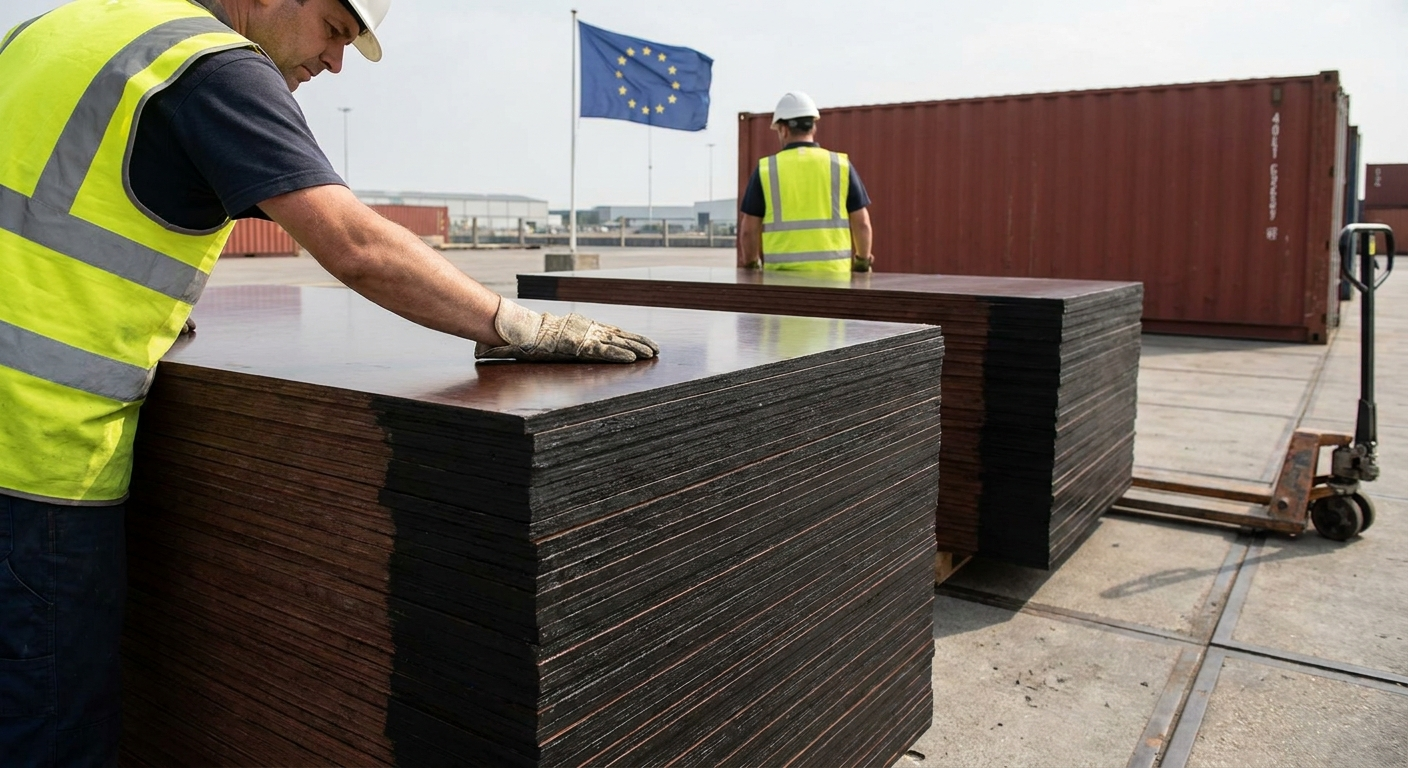
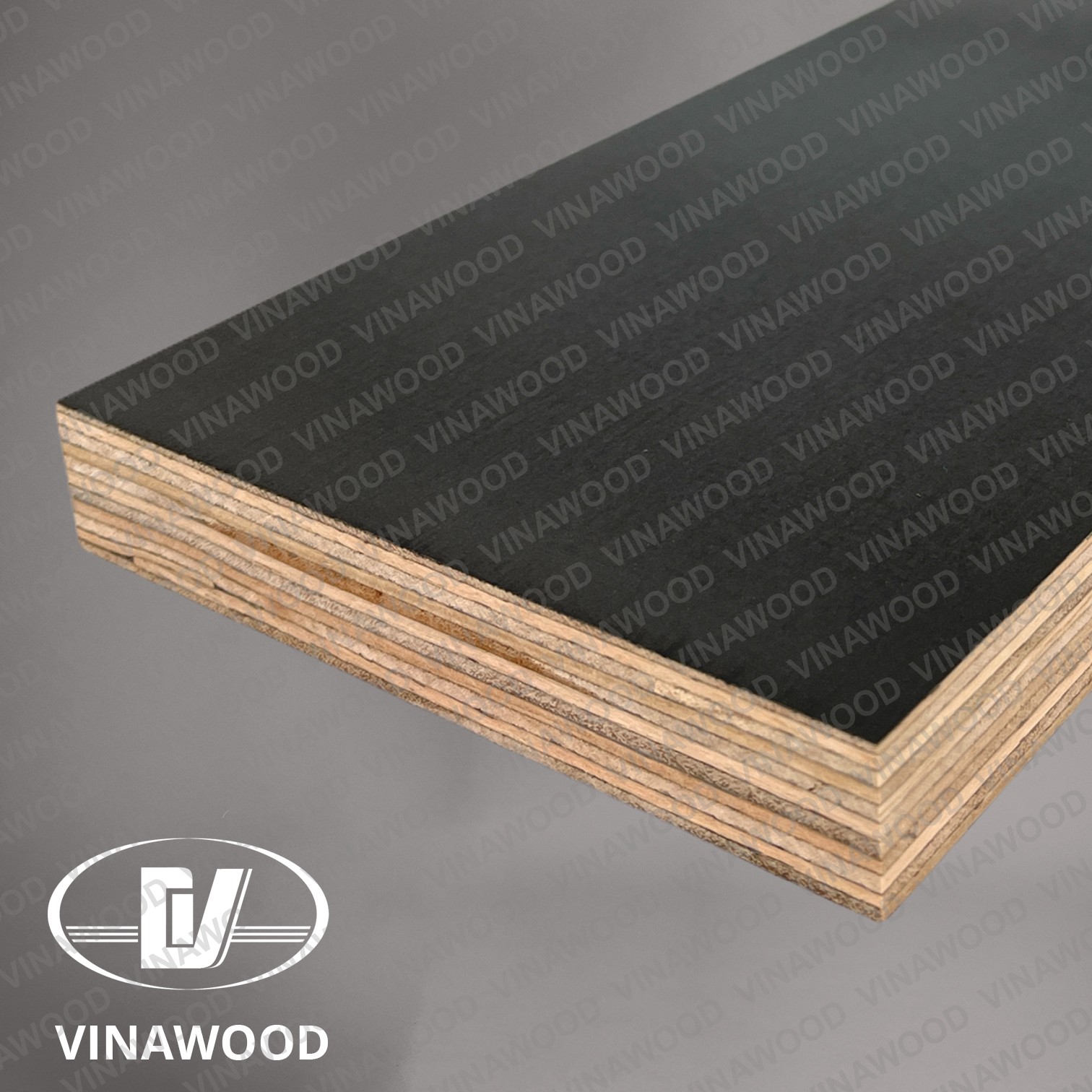
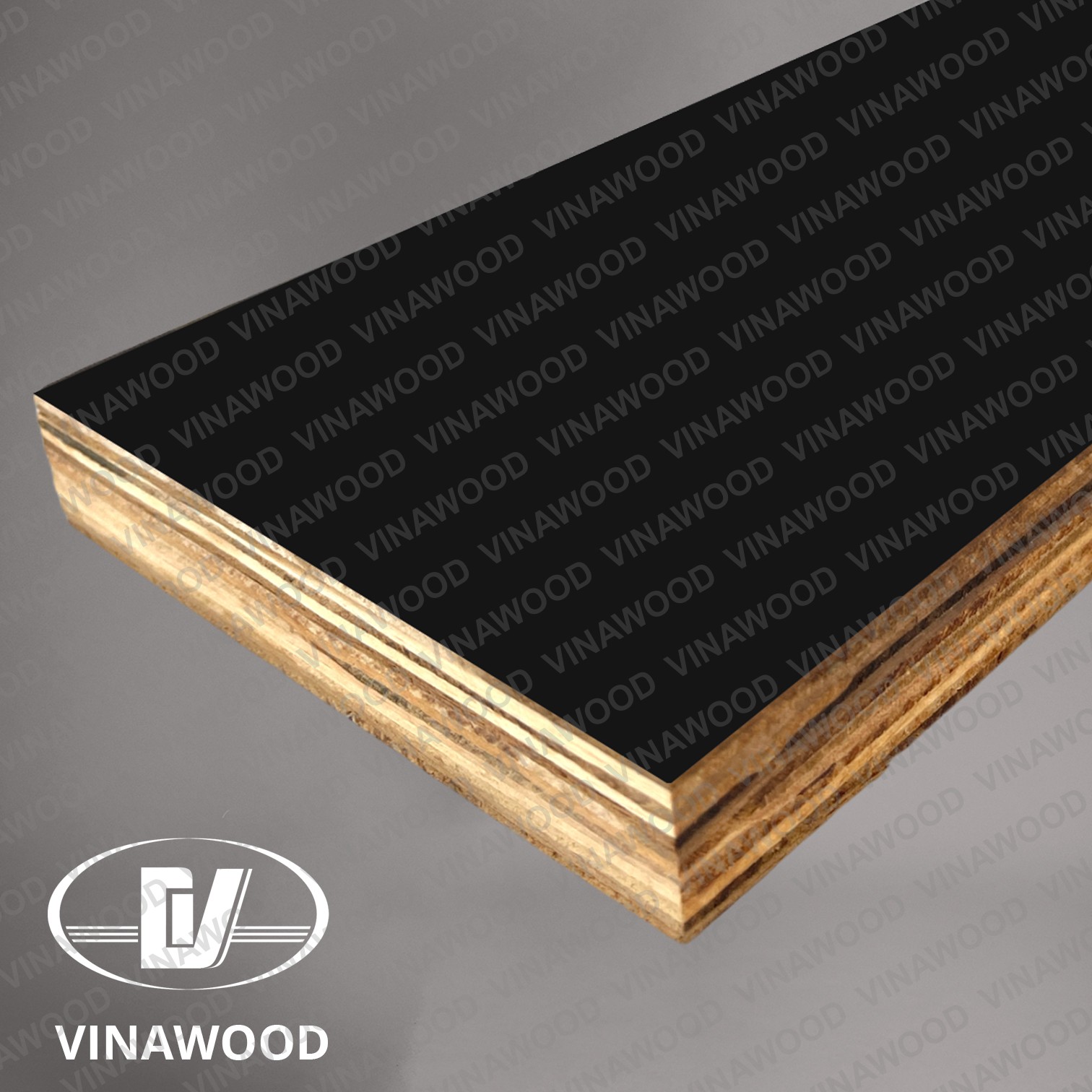
Every Vinawood formwork panel is veneer core. Pro Form at 18mm runs 11 plies of plantation hardwood, phenolic-bonded throughout, with a phenolic film overlay top and bottom. The choice of veneer core for formwork is not marketing — it is what the application demands. Concrete pours press against the panel with hydrostatic pressure; tie bolts fasten through the panel with high local loads. The plywood needs to bend predictably under load, hold a fastener at the bolt hole, and shrug off the multiple wet-dry cycles that come with reuse. MDF, particleboard, and lumber cores all fail at least one of those tests. Veneer core passes all three.
We've seen specifiers occasionally float the idea of an MDO panel for formwork, because the MDO overlay is a paintable kraft paper rather than a phenolic film. The point worth making: our film-faced and MDO ranges are both veneer-core constructions. Where they differ is in the overlay, not the core. The buyer choosing veneer core is choosing the substrate; the buyer choosing film-faced versus MDO is choosing the surface treatment.
About Vinawood
Vinawood has manufactured plywood at its own mill in Vietnam since 1992, exporting to more than 55 countries. Our entire product range — HDO formwork, MDO panels, film-faced concrete forming plywood, marine plywood, and commercial plywood — is veneer-core construction, lay-up varying from 5 to 13 plies depending on thickness and end-use. Plantation-grown Acacia, Eucalyptus, Hevea, and Styrax form the inner core stock. For specifiers comparing core types head-to-head, the deeper guide to plywood core types covers MDF, particleboard, lumber and combination cores alongside veneer core. We ship factory-direct under FSC-COC and PEFC chain-of-custody, with TSCA Title VI / CARB P2 documentation for North American shipments and CE marking under EN 13986 for European shipments.
Category
how-to
Related Markets
Related Countries
Related Products
▶Sources & References (4)
- ANSI/HPVA HP-1 — Standard for Hardwood and Decorative Plywood — Hardwood Plywood and Veneer Association (2020)
- EN 636:2012+A1:2015 — Plywood specifications — CEN (2015)
- Architectural Woodwork Standards (AWS) — Hardwood plywood grading — Architectural Woodwork Institute (2024)
- APA Veneer Grades publication — APA – The Engineered Wood Association (2023)