Plywood Core Types: A Simple Guide
Discover the different plywood core types and how they impact strength, durability, and finish quality. Choosing the right core, whether veneer, lumber, fiber, or combination can make all the difference in your woodworking or construction project. Learn about the advantages of each core type to…
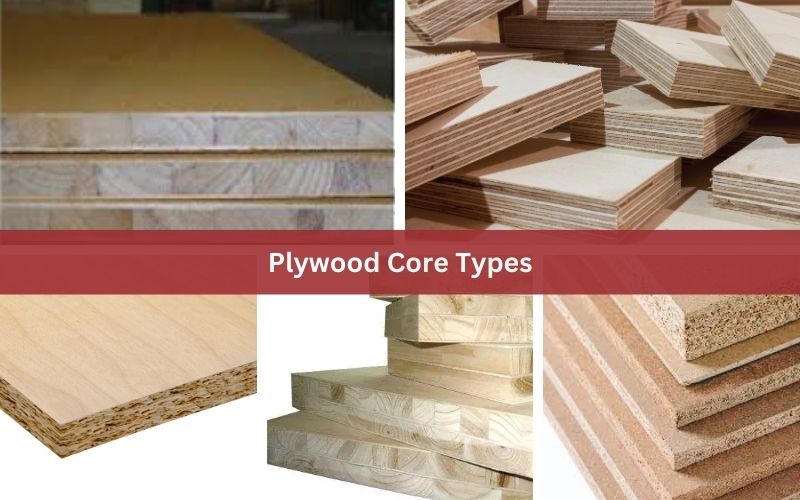
Five core types account for almost all the plywood sold for cabinetry, furniture, and architectural panels. Veneer. Lumber. Combination. MDF. Particleboard. The choice between them comes down to four trade-offs — screw-holding strength, surface flatness, weight, and cost. A panel optimised for one of those tends to give up something on the others. Below is what each core does well and where it falls short, with the linked piece on plywood cores running deeper on the spec details: plywood core types.
Types of Core
Veneer core
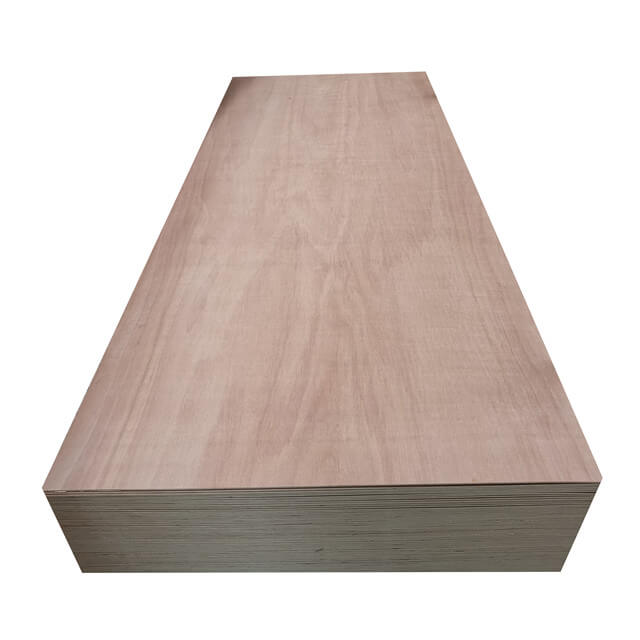
Veneer core is the workhorse construction. Thin sheets of wood veneer stacked with alternating grain directions, glued under heat and pressure. Light. Stiff. Holds screws well. Resists warping over wide spans.
What buyers like: dimensional stability and screw retention at lower weight than the solid-wood alternatives. What it gives up: face flatness compared to MDF-faced panels — the veneer pattern can telegraph through thin laminates. Standard pick for cabinetry, furniture, shop joinery. Anywhere the assembly carries fasteners.
Lumber core
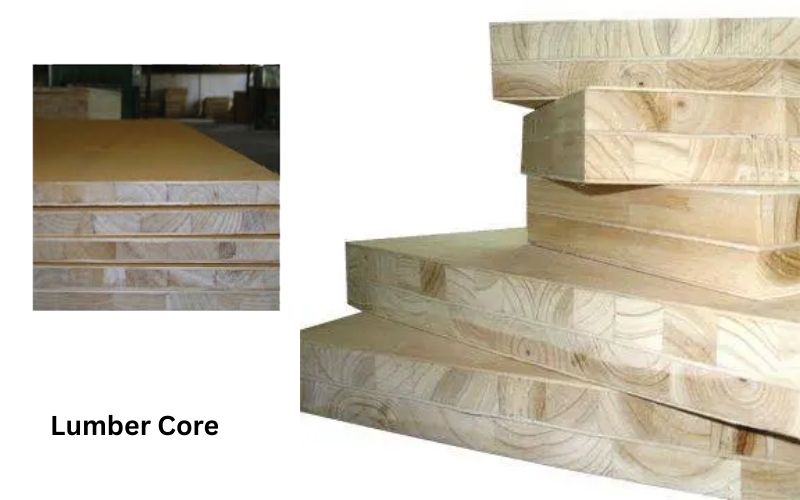
Narrow strips of solid wood, glued edge-to-edge, form the centre of a lumber-core panel. Two veneer layers cap top and bottom. Strip core does the structural work. Veneer faces handle finishing.
Strong screw retention along the strip axis. Less prone to long-span warping than pure veneer panels. Heavier than veneer-core. More expensive too. Cross-cut edges splinter without banding. Common in high-end cabinetry, shelving, and furniture where the panel needs to feel solid and hold fasteners across years of use.
Combination core
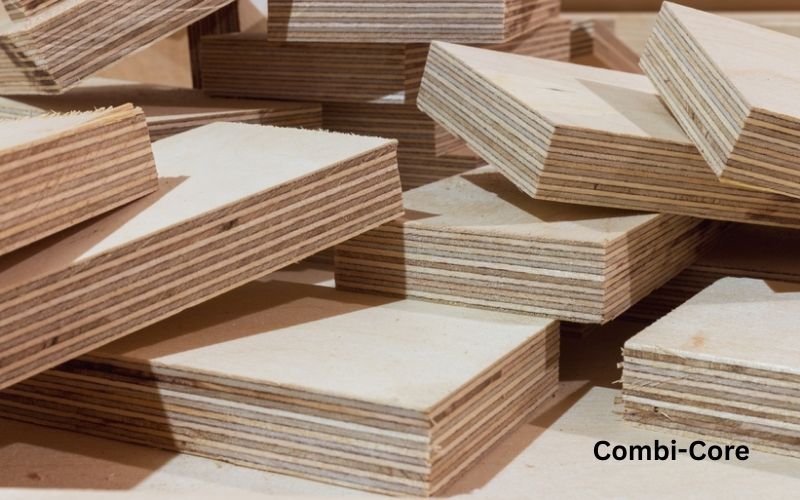
Combination core stacks a veneer-core centre with MDF or particleboard crossbands at the faces. Veneer carries strength and screw-holding. MDF face delivers flatness for laminate or paint finishes. A compromise design — and a reasonable one — for projects that need both structural performance and a clean visible surface.
Heavier than pure veneer-core. Cheaper than full lumber-core. Shows up in mid-to-high-grade cabinetry, architectural panels, and furniture where neither strength nor finish quality can be sacrificed.
MDF core
MDF core is medium-density fibreboard sandwiched between veneer faces. Face quality is what sells it — flat, dense, takes detailed router profiles cleanly. Painted cabinet doors, decorative panels, and furniture parts with shaped edges all favour MDF core.
Trade-offs are screw retention and weight. MDF doesn't grip fasteners the way solid wood or veneer does — wrong core for joinery that gets repeatedly disassembled. The board is also dense, which makes panels noticeably heavier than veneer-core equivalents. Best used in non-structural roles where the finish quality justifies the weight penalty.
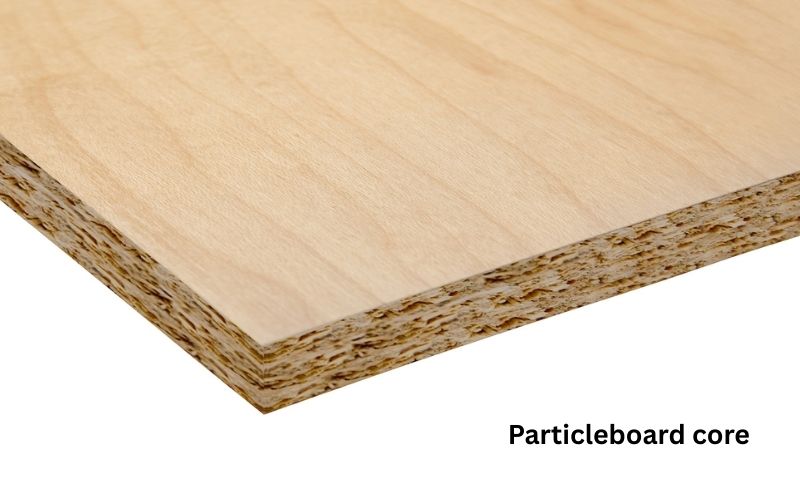
Particleboard core
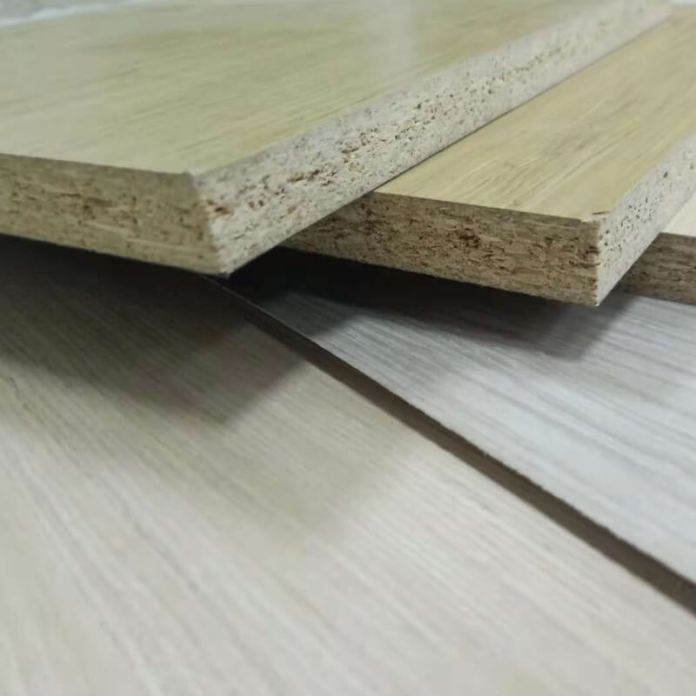
Particleboard core is the budget option. Wood particles bonded with resin under heat and pressure, faced with veneer. Smooth surface. Low cost. Easy to machine. Accepts laminate and paint cleanly.
What you give up: weaker screw retention than veneer, lumber, or combination cores. Lower moisture resistance once the face is breached. The core is fine for indoor furniture, casework, and fixed shelving where the assembly stays dry and the fasteners aren't repeatedly stressed. Wrong choice for any wet area or knock-down piece.
People Also Ask
What is V core plywood?
V-core, or veneer core, is plywood built entirely from wood veneer layers stacked with alternating grain directions parallel to the panel surface. The construction gives strong, stable, lightweight panels with good screw-holding — standard choice for cabinetry, furniture, and most interior work.
Is fiber core plywood better than veneer core?
Different jobs, different answers. Veneer core wins on strength, screw retention, and weight. Fibre core (MDF) wins on flatness, edge-routing detail, and paint-grade finish. Pick the core that matches the role your panel has to play. Not a one-size answer.
Plywood core choice is a working decision, not a brand decision. Match the core to the load, the finish, and the budget. Veneer for strength. Lumber for solid feel and screw retention over long spans. Combination for balance. MDF for flatness. Particleboard for budget interior work. Pick right and the panel performs in the role you asked it to fill.
VINAWOOD – Vietnam Plywood Supplier Manufacturer