Bamboo Plywood: Benefits, Uses, Cost & Where to Buy
Bamboo plywood is a rapidly renewable panel for furniture, flooring, and architectural fitout — not a structural or wet-area product. An honest guide to its properties, real strength against hardwood plywood and MDF, sizes, sustainability, and when a plantation-hardwood panel is the better…
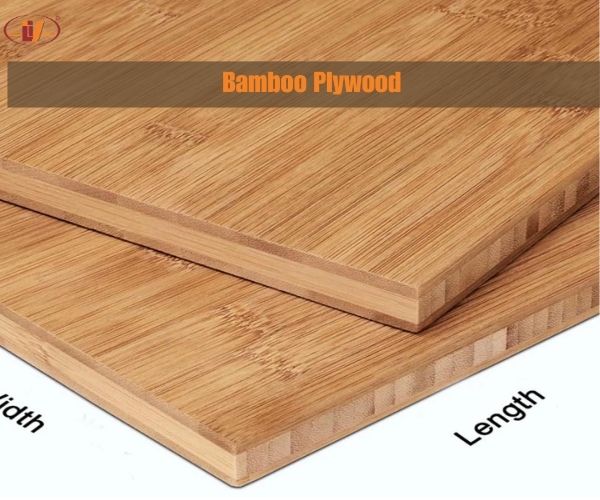
Bamboo plywood is a rapidly renewable panel made by bonding strips of bamboo into layers, used mainly for furniture, cabinetry, flooring, and architectural fitout. It is a grass-based interior and decorative panel, not a rated structural sheathing board and not a wet-area product. Get that framing right and the rest of the buying decision falls into place.
The panel earns its following on looks and renewability: a warm linear grain, a fast-growing raw material, and good dimensional stability indoors. Where it gets oversold is on strength and moisture. This guide walks the real properties, the honest comparison against hardwood plywood and MDF, and the point where a plantation-hardwood panel is the better specification.
What bamboo plywood is
Bamboo is a grass, not a tree, so bamboo plywood is not plywood in the strict veneer sense. Instead of rotary-peeled wood veneers, the panel is built from milled bamboo strips laminated under heat and pressure. Three strip orientations show up on the market. Vertical grain stands the strips on edge for a fine, uniform line. Horizontal (flat) grain lays them flat to show the node markings. Strand-woven crushes and compresses the fibres into a dense, hard board, the version usually sold for flooring.
The adhesive matters as much as the strip pattern. Interior-grade boards use urea-formaldehyde (UF) resin; better boards use melamine core resin (MUF) or a phenolic bond for damp-tolerant grades. When you read "melamine" on a bamboo panel spec, it means the MUF glue bonding the layers, not a surface film or a decorative laminate.
How bamboo plywood is made
Mature bamboo culms are cut into strips, boiled or carbonised to remove sugars and set colour, then dried. The strips are laid up in the chosen orientation, coated with resin, and hot-pressed into billets or full sheets. Strand-woven boards take an extra step: the fibre is shredded, resin-soaked, and compressed under high pressure into a much denser panel. The finished face is sanded and, for flooring, often factory-coated. If you want the underlying picture of how any layered panel is pressed and bonded, our guide to how plywood is made covers the press stage.
Bamboo plywood vs hardwood plywood vs MDF
Bamboo fibre does have a high tensile strength as a raw material property, and that figure gets quoted a lot. What it does not mean is that a bamboo panel performs like steel or outperforms structural plywood. Panel behaviour comes from the resin, the lay-up, and the grade, not from a single fibre statistic. Read the table as indoor-furniture guidance, not a structural rating.
| Property | Bamboo plywood | Hardwood plywood | MDF |
|---|---|---|---|
| Base material | Laminated bamboo strips (grass) | Cross-laid wood veneers | Compressed wood fibre |
| Relative density | Medium to high (strand-woven highest) | Medium (species-dependent) | Medium-high, uniform |
| Screw-hold at edges | Good | Good | Weak |
| Moisture behaviour | Water-resistant grades only; not for wet service | Ranges to marine grade | Poor — swells when wet |
| Structural rating | No | Yes (sheathing/structural grades) | No |
| Typical use | Furniture, flooring, panels | Construction, joinery, marine | Painted cabinetry, interior trim |
The short version: bamboo sits between MDF and hardwood plywood for indoor work, with a better face and better screw-hold than MDF, but without the structural or wet-service range that hardwood plywood covers. For a neighbouring engineered panel, the blockboard comparison is a useful cross-read.
What bamboo plywood is used for
Bamboo plywood earns its place indoors. Furniture makers use it for tabletops, casework, and shelving where the grain is a selling point. Cabinetmakers use it for carcasses and doors. Strand-woven boards go down as flooring in homes and light-commercial spaces. Architects specify it for wall and ceiling panels, including acoustic treatments, and for decorative fitout. What it is not is a construction sheathing product. Do not put bamboo plywood on a wall or roof as structural sheathing, and do not size it for load the way you would a rated plywood.
Bamboo plywood sizes and thicknesses
Standard sheets run 1220 × 2440 mm (4 × 8 ft), with some suppliers offering longer boards for benchtops. Thicknesses commonly span 6 mm (about 1/4") for facing work up to 18–25 mm (3/4"–1") for benchtops and flooring, with 12 and 15 mm in between for cabinetry. Cores are usually solid bamboo, though some specialty boards run a bamboo face over an MDF or poplar core. Confirm the core when strength or weight matters, because a veneer-over-MDF board behaves nothing like a solid bamboo panel.
Sustainability, without the gloss
Bamboo's headline is real: it is rapidly renewable, reaching harvest in three to five years against decades for hardwood timber, and it regenerates from the same root system without replanting. That is a genuine advantage over slow-growing species. The honest caveats are two. First, most bamboo panels ship from Asia, so transport carbon offsets part of the growing-stage benefit for buyers in the US, Europe, or Oceania. Second, the resin matters: specify a low-emission adhesive class (E0 or E1) and look for FSC certification rather than trusting a generic "rapidly renewable" label. We would rather point a buyer at a certified E1 board than at a vague sustainability claim on a spec sheet.
Moisture and durability
Bamboo plywood is water-resistant in its better grades, not waterproof. Interior UF-bonded boards tolerate normal household humidity but swell and delaminate under standing water or sustained damp. Sealed strand-woven flooring handles spills and foot traffic well, yet it is still an interior product. For bathrooms, wet rooms, exterior work, or anything with real moisture exposure, bamboo is the wrong panel. That is a job for a marine-grade board with a fully weatherproof phenolic bond.
A sourcing and spec checklist
Before you commit a container or a cutting list, confirm these on the spec sheet:
- Glue class — UF for dry interior, MUF or phenolic for damp-tolerant grades; emission rating E0 or E1.
- Core — solid bamboo versus bamboo-faced MDF or poplar; this drives weight, strength, and screw-hold.
- Strip orientation — vertical, horizontal, or strand-woven, matched to the look and the wear.
- Certification — FSC chain of custody, plus formaldehyde compliance (CARB P2 for the US).
- Origin and transport — factor freight carbon and lead time into the sustainability case.
When plantation-hardwood plywood is the better call
If the job needs load capacity, moisture tolerance, or a true structural rating, a plantation-hardwood plywood is the right specification and bamboo is not. Vinawood's plantation species (Acacia, Eucalyptus, and Hevea) give a denser, load-capable core than bamboo panels are graded for. For general construction and joinery, our commercial plywood range (including Consply Bintangor) covers the work bamboo cannot. For wet-area and marine use, the marine plywood range carries the weatherproof phenolic bond that interior bamboo lacks. Match the panel to the demand: bamboo for the indoor decorative face, plantation-hardwood plywood for load and moisture.
About Vinawood
To be clear, Vinawood does not manufacture bamboo plywood. Bamboo is not among our plantation species, and we do not ship a bamboo panel. Vinawood is a Vietnamese plywood manufacturer established in 1992, producing plantation-hardwood commercial, marine, structural, and formwork plywood — more than 5,000 containers a year to over 55 countries. Every sheet runs through a 12-step process with 100% individual-sheet inspection, certified to ISO 9001, FSC and PEFC chain-of-custody, CE (EN 13986), and EPA TSCA Title VI / CARB P2. If you are weighing bamboo against a hardwood panel for a load-bearing or moisture-exposed job, our sales team can spec the right plantation-hardwood grade and respond within 24 hours.
Category
guides
Related Markets
Related Countries
Related Products
▶Sources & References (2)
- Mechanical properties of bamboo and bamboo-based composites — USDA Forest Products Laboratory (2021)
- FSC Chain of Custody Certification — Forest Stewardship Council (2024)