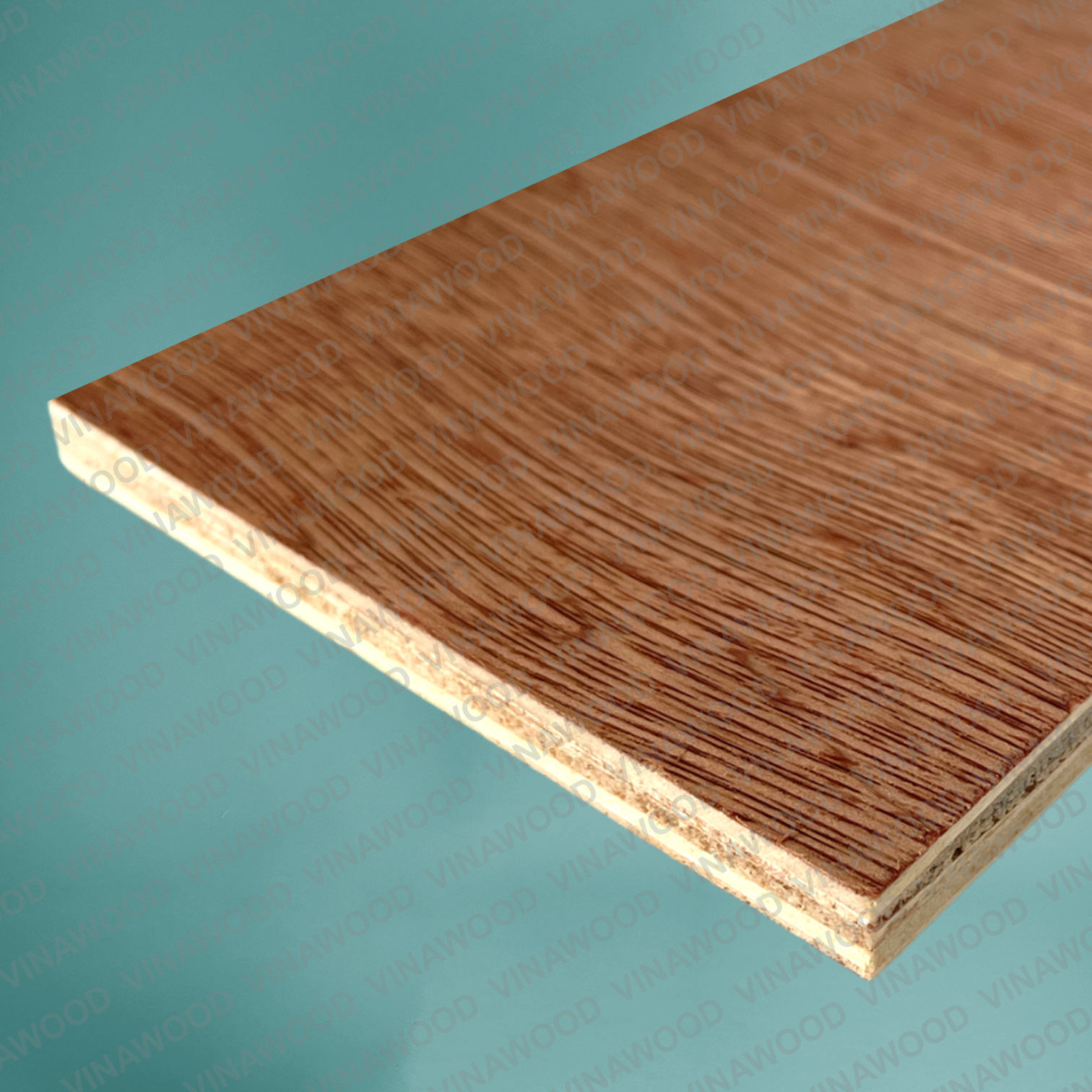
Plywood Weight: 4×8 Sheet Weights by Thickness, Species, and Glue System
Plywood weight reference table by thickness (1/4 to 1 inch), plantation hardwood and softwood density numbers, glue and film-faced overlay weight effects, EU vs US sheet sizes, and container payload math. Manufacturer source for Vietnamese Acacia, Eucalyptus, and Hevea plywood.
Plywood weight is one of those reference questions that splits into three audiences. A DIY contractor checking whether two 3/4 inch sheets will fit in the pickup bed without breaking the leaf springs. A structural designer adding the panel weight to the dead load on a floor diaphragm. A fleet manager sizing container payload before a quarterly shipment from a Vietnamese mill. The numbers are mostly the same; the precision required is not.
This piece is the manufacturer's reference, with density numbers per species and per glue system rather than the recycled 4x8 weight table that shows up on most trade-blog pages. Acacia, Eucalyptus, and Hevea each have their own density signature in the 600 to 700 kg/m³ band. The face film, HDO overlay, glue system, and EU vs US sheet format each shift the number by a known amount. The math is simpler than the SERP makes it look: weight equals density times volume.
Standard 4x8 weight table by thickness
The numbers below cover typical North American 4x8 plywood (1220 x 2440 mm, US imperial sizing) at average mixed-species density (about 580 kg/m³). Adjust up for hardwood and down for softwood per the species table further down.
| Thickness (US / metric) | 4x8 sheet weight (US) | 2440x1220 weight (metric) |
|---|---|---|
| 1/4" / 6 mm | 20 to 25 lb | 9 to 11 kg |
| 3/8" / 9 mm | 30 to 35 lb | 14 to 16 kg |
| 1/2" / 12 mm | 40 to 48 lb | 18 to 22 kg |
| 5/8" / 15 mm | 50 to 58 lb | 23 to 26 kg |
| 3/4" / 18 mm | 60 to 70 lb | 27 to 32 kg |
| 1" / 25 mm | 80 to 95 lb | 36 to 43 kg |
The range in each row comes from the species mix. Softwood plywood (Douglas fir, Southern yellow pine, spruce) sits at the bottom of the range. Mixed-hardwood plywood and the typical Vietnamese plantation hardwood (Acacia, Eucalyptus) sits in the middle. Birch and Hevea plywood, the densest commercial options, sit at the top of the range or slightly above.
Species and density: the input variable that matters most
Plywood weight is mostly a story about the wood. The glue and the face overlay shift the total by single-digit percentages; the species choice shifts it by 30 percent or more.
| Species | Average density (kg/m³) | Density (lb/ft³) | Where it shows up |
|---|---|---|---|
| Hevea (rubber tree) | 700 | 43.7 | Vietnamese plantation, dense interior-grade plywood, packaging |
| Birch (European) | 670 | 41.8 | Furniture, marine plywood, structural interior |
| Eucalyptus | 660 | 41.2 | Vietnamese plantation, formwork core, mixed-use |
| Acacia | 610 | 38.1 | Vietnamese plantation mainstream, formwork, packaging |
| Poplar | 460 | 28.7 | EU plantation, lightweight panels |
| Douglas fir | 510 | 31.8 | US Structural I sheathing, softwood plywood |
| Southern yellow pine | 560 | 35.0 | US Structural I sheathing, softwood plywood |
The Vietnamese plantation order is Hevea greater than Eucalyptus greater than Acacia. Acacia is the mainstream plantation species, not a lesser substitute. Hevea is what the latex rubber industry retires — once a rubber tree stops yielding latex (around year 25), the wood goes into plywood. Eucalyptus is the workhorse for formwork cores and packaging.
Density varies by 5 to 10 percent within each species depending on growing conditions, drying schedule, and the proportion of heartwood versus sapwood in the veneer mix. The numbers above are sound averages for typical mill output.
Glue system: smaller effect than species, but real
The glue holding the veneer plies together has a measurable but small effect on panel weight. The three core glue systems used in commercial plywood:
UF (urea-formaldehyde). The lightest of the three. Standard interior-grade glue, lowest resin content. Adds the least mass per panel.
MUF (melamine-urea-formaldehyde). Slightly heavier than UF due to the melamine-content uplift. The MUF used in Vinawood's Form Basic, Form Extra, Eco Form, and Consply panels is the EN 636-2 weatherable glue system that delivers up to 10 to 15 reuse cycles in formwork applications. Note that "melamine" here means the resin in the core glue — not the decorative melamine laminate used on kitchen cabinets, which is a different product family.
PF (phenol-formaldehyde, sometimes called phenolic). The heaviest core glue due to higher resin loading. Used in EN 636-3 Class 3 weatherable plywood (Pro Form), in US Structural I phenolic-bonded plywood, and in marine plywood. Adds approximately 0.5 to 1 kg per sheet compared to UF at the same construction.
For practical purposes, the glue system shifts the per-sheet weight by 2 to 4 percent. It matters for container payload calculations at scale but rarely changes the answer to "can I carry this sheet by myself."
Film-faced and HDO overlay weight
The face overlay is the most predictable weight add. Phenolic film (used on Pro Form, Form Extra, Form Basic, and the Vinawood film-faced range) adds approximately 1.5 to 2 kg per sheet for a 4x8 sheet at typical 120 g/m² film weight, two-side coating.
HDO (high-density overlay, used on the HDO range) adds more — typically 2.5 to 3.5 kg per sheet for one-side coating, or 4 to 5 kg per sheet for two-side coating, depending on the overlay density (220 g/m² and higher).
MDO (medium-density overlay, used on the Vinawood MDO range for matte concrete formwork) sits between the phenolic film and the HDO numbers in terms of weight contribution. The MDO overlay on the Vinawood range is a thicker phenolic surface film than standard glossy film-faced plywood, tuned for matte concrete finish rather than the kraft-paper overlay used on APA-domestic MDO for signage and painted exterior trim.
For a buyer comparing two suppliers, the overlay weight is one of the few useful spec-check numbers — a film-faced 18 mm panel claiming 28 kg per 4x8 is almost certainly underspec on overlay weight; the typical Vinawood 18 mm film-faced sheet runs 31 to 33 kg.
EU vs US sheet sizes
The two dominant commercial formats are US 4x8 (2440 x 1220 mm) and EU 2500 x 1250 mm. The EU sheet is slightly larger — 2.4 percent in length, 2.5 percent in width, so 4.9 percent in surface area. At the same thickness and density, the EU sheet weighs about 5 percent more.
For 3/4 inch (18 mm) film-faced plywood at 600 kg/m³ density (Acacia-faced) plus standard phenolic film:
| Format | Per-sheet weight (kg) | Per-sheet weight (lb) |
|---|---|---|
| US 4x8 (2440x1220 mm) | 33 to 35 kg | 73 to 77 lb |
| EU 2500x1250 mm | 35 to 37 kg | 77 to 81 lb |
For buyers comparing supplier quotes across the EU and US markets, normalising by m² is the clean comparison — the per-sheet number can mislead.
Weight per ft² and per m² (for dead-load calculations)
For floor live-load and roof dead-load math, the practical conversion is weight per unit area:
| Thickness | Weight per ft² (lb) | Weight per m² (kg) |
|---|---|---|
| 1/4" / 6 mm | 0.7 lb | 3.5 kg |
| 1/2" / 12 mm | 1.4 lb | 6.9 kg |
| 5/8" / 15 mm | 1.7 lb | 8.4 kg |
| 3/4" / 18 mm | 2.0 lb | 10.0 kg |
| 1" / 25 mm | 2.7 lb | 13.4 kg |
For roof and floor dead-load: a 3/4" plywood subfloor adds approximately 2 psf (98 Pa) to the floor dead load. Add a layer of phenolic film and that climbs to about 2.1 psf. For a 200 ft² room, that's 400 lb of subfloor weight — enough to factor into the floor joist sizing calc but not enough to drive it.
Container payload math
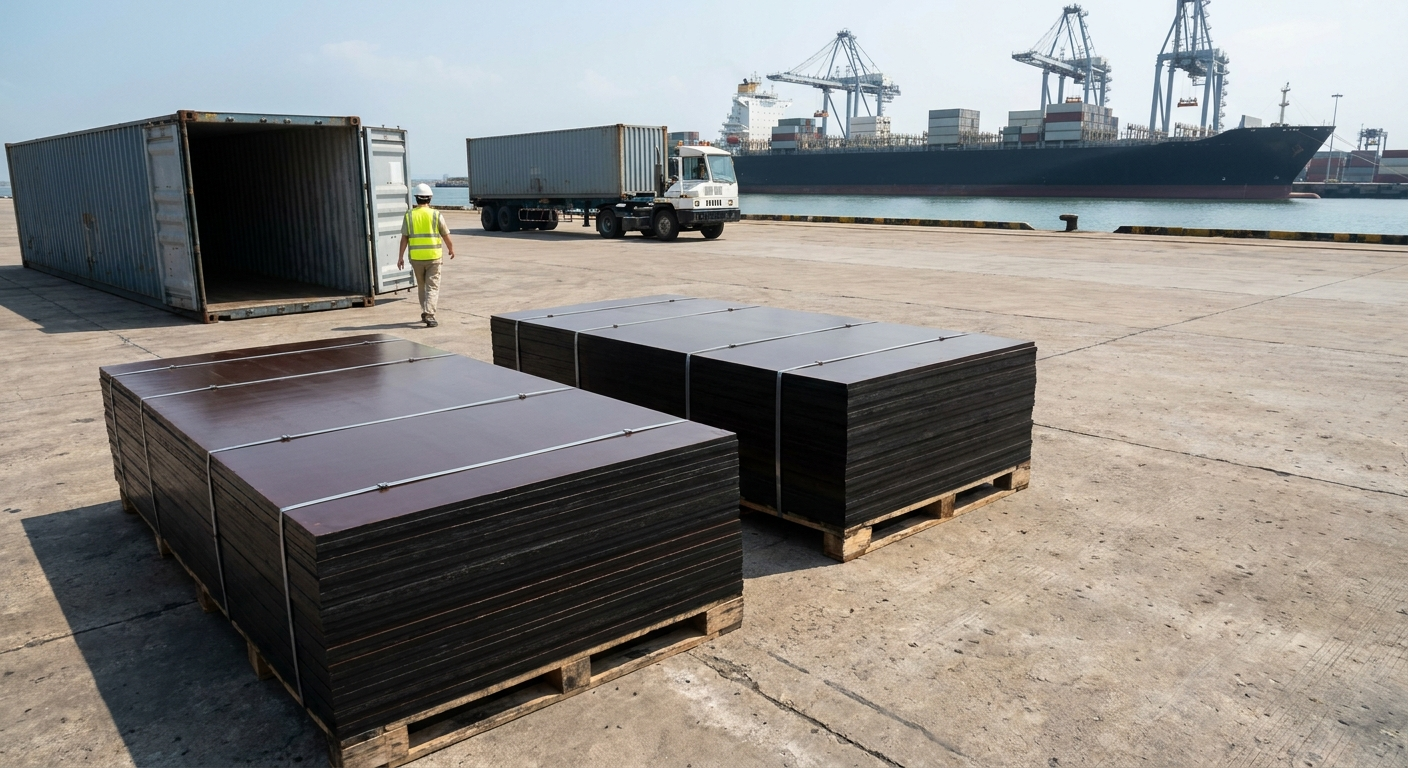
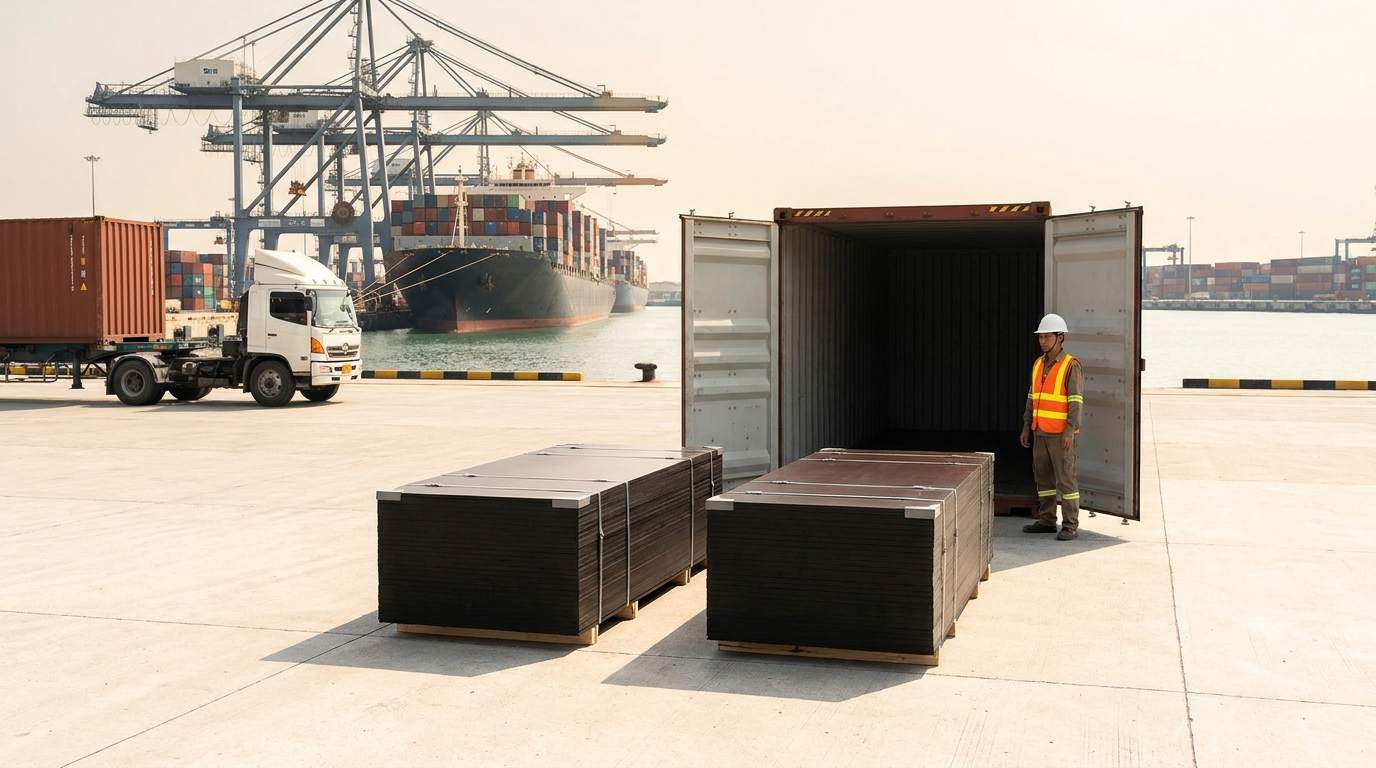
This is the question fleet managers actually ask. A standard 20-ft dry container has a maximum payload of about 22 metric tons (48,500 lb), capped slightly lower in practice depending on the destination port's road-haul weight limits. For 3/4" Acacia plywood at 30 kg per sheet:
22,000 kg / 30 kg per sheet equals 733 sheets per 20-ft container, or about 730 to 750 sheets for the typical mixed-thickness order.
For 1/2" plywood at 20 kg per sheet: 22,000 / 20 equals 1,100 sheets. For 1/4" plywood at 11 kg per sheet: 22,000 / 11 equals 2,000 sheets, though container volume becomes the binding constraint at lighter sheets (the container is full long before the weight limit hits).
For a 40-ft container (28 metric tons payload), the per-sheet count scales proportionally, with volume usually binding before weight for thicker panels and weight binding before volume for thinner.
We see in our export data that the typical Vinawood 20-ft shipment to North America runs around 700 sheets of mixed-thickness film-faced plywood at typical 22 to 23 metric tons gross. Buyers planning quarterly orders should size their warehouse pallet capacity around that number.
Handling guidance
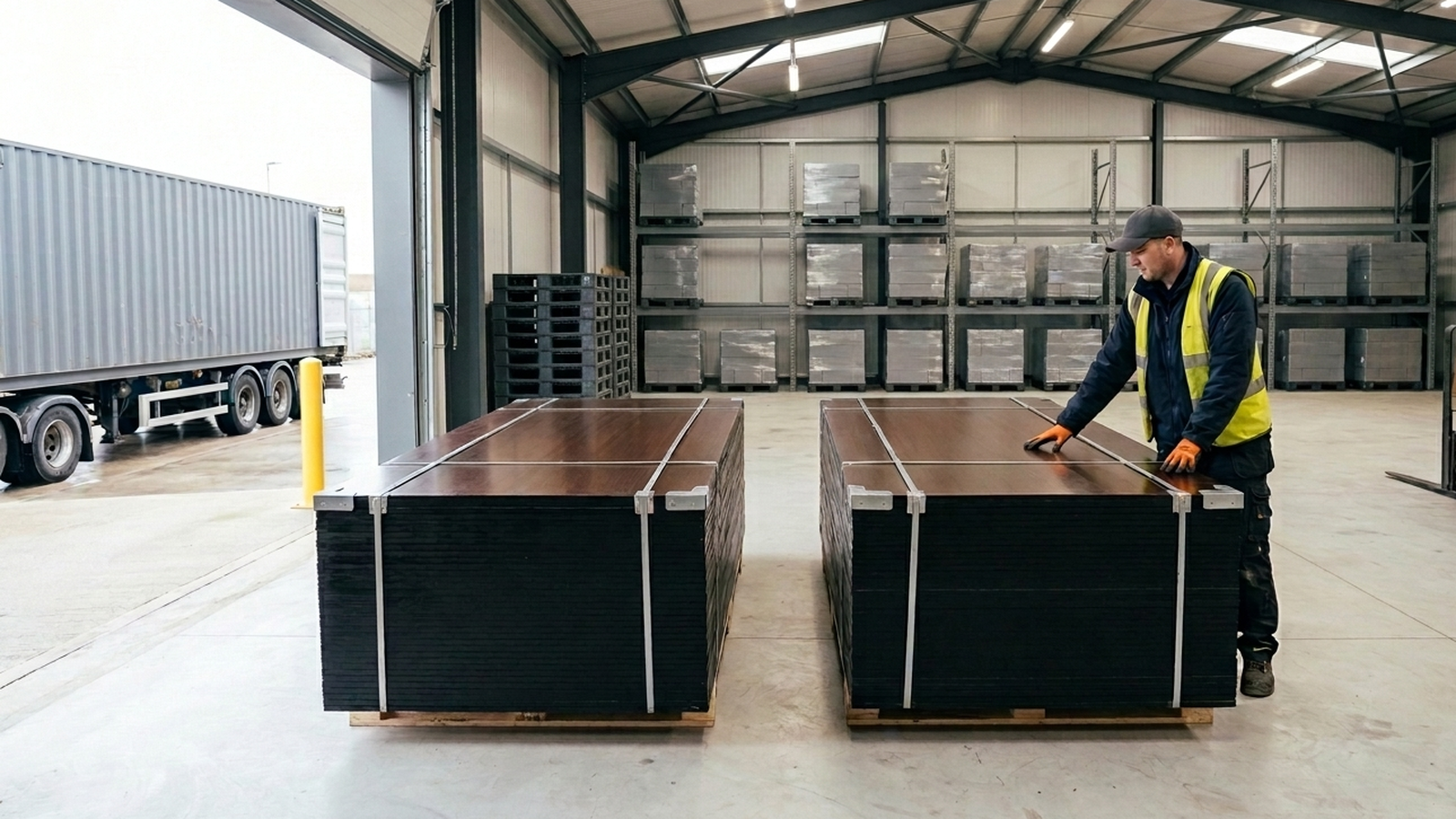
OSHA's general guidance for manual material handling sits at 50 lb (about 23 kg) per worker for routine lifting. A 3/4" hardwood plywood sheet at 60 to 70 lb sits above that line — the recommended handling is two-person carry, panel cart, or vacuum panel lifter for any volume.
A 1/2" sheet at 40 to 48 lb is at the edge of what a single worker can carry on the flat without sustained strain; for stair work or overhead carry, two-person handling still applies.
The lighter softwood plywoods sit lower on the table than the hardwood numbers, but the difference is small enough that the handling rule still routes by thickness: 3/4" and above is two-person, 1/2" is one-person on the flat with caution, 3/8" and below is one-person.
The calculator formula
For any custom case, the math is straightforward:
Weight = Density x Volume
Where volume equals length times width times thickness, in consistent units. For metric:
Weight (kg) = Density (kg/m³) x Length (m) x Width (m) x Thickness (m)
Example: a 2440 x 1220 x 18 mm sheet of Acacia-faced plywood at 610 kg/m³ density:
0.018 x 2.44 x 1.22 x 610 = 32.7 kg per sheet
Add 1.5 to 2 kg for phenolic film overlay: 34 to 35 kg per sheet. That matches the empirical numbers from the formats table above.
For US imperial:
Weight (lb) = Density (lb/ft³) x Length (ft) x Width (ft) x Thickness (ft)
The 3/4" thickness in feet equals 0.0625, so a 4 x 8 ft sheet of Douglas fir plywood at 31.8 lb/ft³:
0.0625 x 8 x 4 x 31.8 = 63.6 lb per sheet
Slightly less than the hardwood numbers above, as expected.
Application context: what the weight actually means
For subfloor, a 3/4" plywood at 2 psf dead load is one element in a typical 12 psf wood floor dead load (joists, subfloor, finish flooring, drywall ceiling below). It's a meaningful contributor but rarely the driver.
For shear wall sheathing, the panel weight contributes to the gravity load on the foundation but not to the shear capacity directly. The shear capacity comes from the panel thickness, edge nailing, and blocking — see our plywood shear wall guide for the structural detail.
For formwork, the panel weight matters most for handling — a crew that's reusing 18 mm film-faced panels through 15 to 20 pour cycles handles each panel roughly 20 to 30 times across its useful life. Lighter panels reduce cumulative crew fatigue and injury risk; the difference between Acacia at 600 kg/m³ and Hevea at 700 kg/m³ adds up across a season of pours.
For packaging, the panel weight is freight cost. The Vinawood Packply range targets the lightest reasonable construction within the strength envelope — the math is clean: heavier crates cost more to ship, every kilo per panel scales linearly across thousands of pallets per quarter.
About Vinawood
Vinawood has been manufacturing plantation-grown hardwood plywood in Vietnam since 1992. The species mix runs Acacia, Eucalyptus, and Hevea — the three commercial plantation hardwoods that drive the density numbers in this article. Annual export volume exceeds 5,000 containers across more than 55 markets, with ISO 9001 quality management certification and full CARB Phase 2 / TSCA Title VI compliance for the North American market. The product range covers the film-faced formwork collection, the HDO range for North American buyers, and the MDO range for matte concrete forming. Density numbers per species in this guide reflect typical Vinawood mill output; for specific shipment weights and container payload sizing, our sales team works the math against your specific format, thickness, and overlay spec.
Category
reference