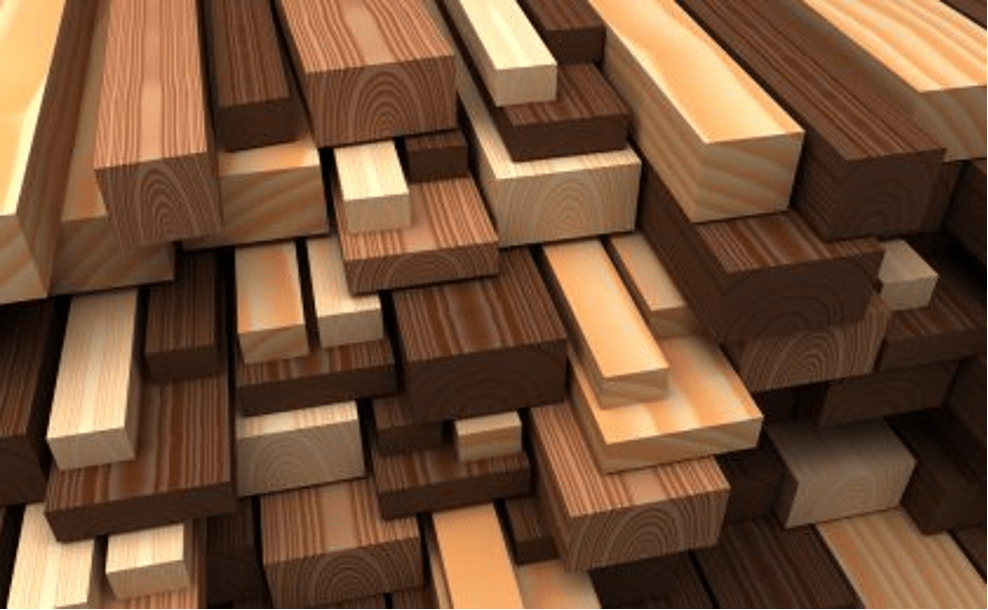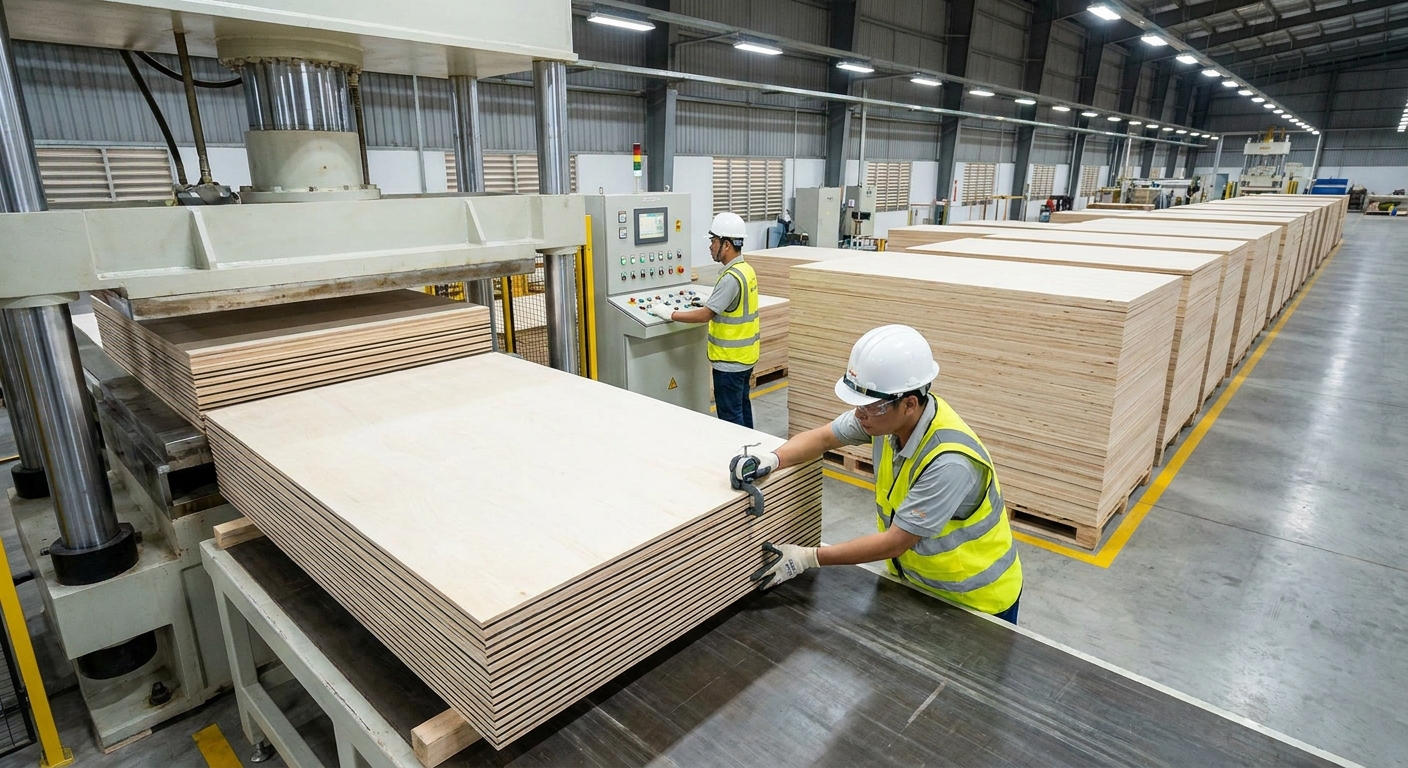
Birch Plywood Density, Weight & Strength: A Specifier's Reference (2026)
Birch plywood density typically falls between 650 and 760 kg/m³, with weight per 4×8 sheet ranging roughly 21–67 lb depending on thickness. This specifier's reference covers density by birch type, weight tables for both 2440×1220 mm and EU 2500×1250 mm sheets, MOE/MOR strength values, and how birch…
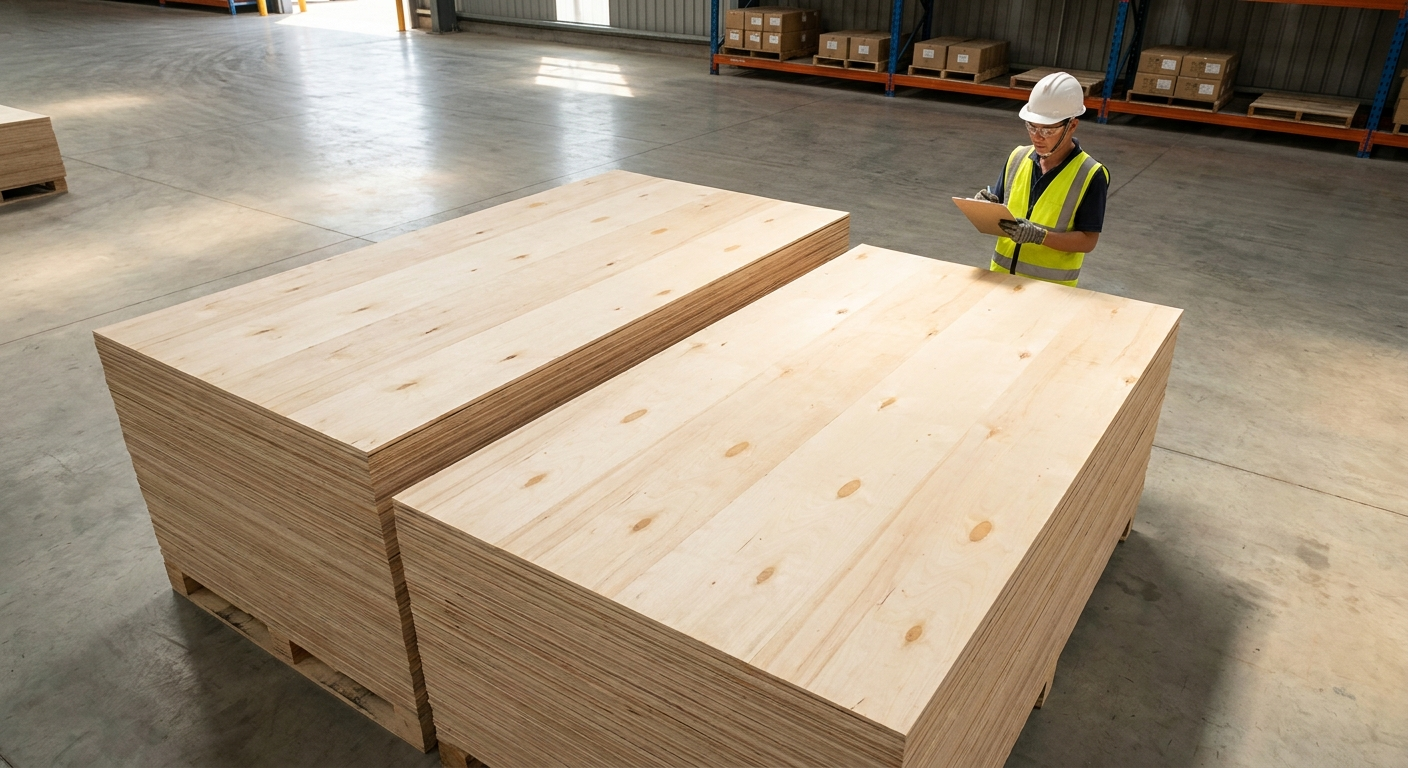
An 18 mm 4×8 sheet of Baltic birch weighs about 36 kg. That single number is what most CNC operators, freight clerks, and structural specifiers need when they look up "birch plywood density." The full answer matters in three other situations: comparing Baltic against Vietnamese birch-face for casegoods, modelling container payload, and running a span calculation on a shelf. We'll cover both. The headline figures are what we publish on our mill datasheets. The strength values further down are what density correlates with — though it doesn't fully predict them.
Density questions are one of the top three queries our QC team handles in spec sheets each month, alongside grade tolerance and bond class.
Birch Plywood Density at a Glance
Most birch panels land between 650 and 760 kg/m³. Four constructions dominate the export market in 2026, each with its own typical density band:
| Construction | Typical density (kg/m³) | Typical density (lb/ft³) |
|---|---|---|
| Standard birch plywood (mixed core) | 650–700 | 40.6–43.7 |
| Baltic birch (full birch through panel) | 680–720 | 42.5–45.0 |
| Vietnamese birch-face on hardwood core | 620–680 | 38.7–42.5 |
| High-density / film-faced birch | ≥750 | ≥46.8 |
The working figure most engineering teams use is 680 kg/m³ for birch plywood at 12% moisture content. EN 13986 lists this number for hardwood plywood calculations. Real panels vary a few percent above and below, depending mostly on what core species sits between the birch faces.
For broader plywood density context across pine, eucalyptus, and other species, see the broader plywood density reference.
What Density Actually Measures
Density is mass over volume. SI units give you kilograms per cubic metre; North American convention sticks with pounds per cubic foot. What gets quoted on a mill datasheet is panel density at typical service moisture content, usually 8 to 14% MC. Basic density (oven-dry mass divided by green volume) is a different number entirely and almost never appears on commercial paperwork.
Why anyone asks comes down to four practical needs. Sheet weight calculations rely on density: thickness times width times length times kg/m³ gets you the lift weight before reaching for the panel. Span tables in EN 1995 and the AWC NDS use density indirectly, through stiffness (E) and strength (f), both of which scale with density inside a species. CNC routing slows by 10 to 15% on Baltic versus poplar plywood at the same thickness because the denser panel loads the cutter harder. Container payload is the freight equivalent: a 40HC at 680 kg/m³ typically hits the volumetric cap before the weight cap, but cross 750 with film-faced birch and the maths flips.
Density by Birch Plywood Type
Standard birch plywood (650–700 kg/m³). Birch face and back, but the inner plies are mixed-species. Combi cores using poplar, eucalyptus, or styrax are the common combinations. Those core species drag the average down from what pure birch would deliver. Most general-purpose joinery panels labelled "birch plywood" sit here.
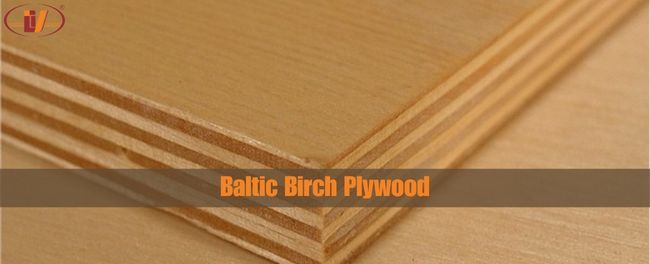
Baltic birch (680–740 kg/m³). The classic full-birch construction — every ply made from 1.5 mm rotary-peeled birch. Russia and Belarus historically supplied about 80% of world production. Sanctions in 2022 cut most of that off, and the available material now comes mainly from Latvian, Finnish, and Estonian mills. Those thin uniform plies, often 9, 11, or 13 layers in a 12 to 18 mm panel, sit closer together with less glue space, which is part of why Baltic runs heavier than the same thickness made with thicker plies.
For more on construction, grades, and post-sanctions sourcing, see Baltic birch plywood.
Vietnamese birch-face hybrid (620–680 kg/m³). A birch face and back hot-pressed onto a tropical-plantation hardwood core. Eucalyptus and acacia are the common cores; styrax appears in some grades. The density band depends on which sits in the middle. Eucalyptus core panels reach 650 kg/m³, acacia core slightly higher, combi or styrax core comes in lighter at around 620. These panels match Baltic on visible face quality but don't equal it on bending or screw-holding for a like-for-like thickness, because the inner plies aren't birch.
For a full breakdown of Vietnamese hybrid construction, certification, and Baltic comparison, see Vietnamese birch plywood.
High-density / film-faced birch (≥750 kg/m³). Phenolic film overlay on one or both faces, used for formwork, transport flooring, and other industrial work. The film itself is dense, the underlying birch is pressed harder, and the combined density crosses 750 kg/m³ routinely.
Why Density Varies — Three Drivers
Moisture content is the easy one to explain. A panel at 14% MC weighs roughly 5% more than the same panel at 8% MC. Water adds nothing to mechanical properties, just kilograms. Mill datasheets quote at 12% MC by convention.
Glue and resin loading is the second driver. Phenolic resin is denser than melamine. Both are denser than the wood they bond. Thin-ply panels carry more resin per cubic metre because they have more glue lines per unit thickness. A standard interior melamine-bonded panel comes in around 670 kg/m³; the same construction with phenolic adhesive runs 5 to 10 kg/m³ heavier.
Ply count and press pressure is the third. Thinner plies under harder press produce a denser, more uniform panel. That's part of why Baltic birch with its 1.5 mm plies runs heavier and stiffer than mixed-core panels of the same thickness with 2.5 to 3.0 mm plies. Density isn't just about which species you use. It's about how the panel is built.
Weight per Sheet — the Practical Numbers
Sheet weight at 680 kg/m³ (the EN 13986 reference for hardwood plywood at 12% MC), for both standard imperial and European sheet sizes, by thickness:
2440 × 1220 mm (4×8 ft) sheets, density 680 kg/m³:
| Thickness | Sheet weight (kg) | Sheet weight (lb) |
|---|---|---|
| 6 mm | ~12.1 | ~26.7 |
| 9 mm | ~18.2 | ~40.1 |
| 12 mm | ~24.3 | ~53.6 |
| 15 mm | ~30.4 | ~67.0 |
| 18 mm | ~36.4 | ~80.3 |
| 21 mm | ~42.5 | ~93.7 |
| 25 mm | ~50.6 | ~111.5 |
2500 × 1250 mm (EU) sheets, density 680 kg/m³:
| Thickness | Sheet weight (kg) | Sheet weight (lb) |
|---|---|---|
| 6 mm | ~12.8 | ~28.1 |
| 9 mm | ~19.1 | ~42.2 |
| 12 mm | ~25.5 | ~56.2 |
| 15 mm | ~31.9 | ~70.3 |
| 18 mm | ~38.3 | ~84.4 |
| 21 mm | ~44.6 | ~98.4 |
| 25 mm | ~53.1 | ~117.1 |
Formula for non-standard sizes:
Weight (kg) = length (m) × width (m) × thickness (m) × density (kg/m³)
Apply roughly ±5–7% for moisture content variation between dry (8% MC) and damp (14% MC). For Baltic birch use 700 kg/m³. For Vietnamese birch-face, 650 is the working number unless the core species is known.
Strength Properties Beyond Density
Density predicts strength imperfectly. Two panels at the same density can differ on stiffness and rupture by 15 to 20% depending on grain orientation, ply count, and resin system. Density gets you in the right ballpark, not to the right seat.
Typical engineering values for birch plywood, parallel to face grain, at 12% MC:
- Modulus of Elasticity (MOE): 9–12 GPa parallel, 5–7 GPa perpendicular.
- Modulus of Rupture (MOR): 50–70 MPa parallel, 30–45 MPa perpendicular.
- Shear strength (rolling shear): 1.0–1.5 MPa.
- Bending strength (panel): 60–90 MPa parallel, 25–40 MPa perpendicular.
- Screw withdrawal (face): ~7,500–9,500 N for a #10 wood screw at 25 mm depth in 18 mm Baltic birch — roughly 30–40% higher than equivalent pine or poplar plywood.
Baltic birch tests at the high end of these ranges. Vietnamese birch-face on eucalyptus core sits in the middle. Combi-core constructions sit at the low end. EN 636-rated panels publish minimum performance values that all tested batches must meet, and those minima are usually 15 to 20% below the typical numbers above. If a span calculation matters, use the rated minimum, not the typical.
Birch vs Other Plywood Species
Birch sits at the dense end of mainstream plywood. A side-by-side at typical mill values:
| Construction | Typical density (kg/m³) | Relative to birch (680) |
|---|---|---|
| Birch (standard) | 680 | 1.00 |
| Baltic birch | 700 | 1.03 |
| Eucalyptus hardwood plywood | 620 | 0.91 |
| Acacia hardwood plywood | 580 | 0.85 |
| Pine / spruce plywood | 520 | 0.76 |
| Poplar plywood | 430 | 0.63 |
The implication for any specifier weighing options: an 18 mm 4×8 sheet of birch weighs about 60% more than the same sheet in poplar. Weight-sensitive applications go to poplar — shopfitting, RV interiors, drone airframes. High-load casegoods go the other direction.
Choosing by Density for Your Application
Furniture and cabinetry. Standard birch at 640–700 kg/m³ delivers the screw-holding and edge appearance most cabinet shops need. Going up to full Baltic at 700+ is justified when the exposed birch edge becomes part of the visual design or when joinery loads warrant it. For bedroom casework with concealed edges, the premium usually isn't worth it.
CNC routing and laser cutting. Baltic birch above 680 kg/m³ cuts cleanest in laser and router work. The 1.5 mm plies and uniform density resist tear-out. Vietnamese birch-face works for less critical CNC, but the mixed-species edge can show wider colour variation under raking light.
Structural and load-bearing. Density alone does not qualify a panel for structural use. EN 13986 and EN 636-rated panels with declared performance values are the correct specification. For uses, benefits and drawbacks of birch plywood in furniture and joinery, density is one input among several.
Formwork. For concrete forming, density is the wrong question. Overlay grade, EN 636 bond class, and adhesive system control reuse cycles. A 750 kg/m³ film-faced birch panel with melamine adhesive (Class 2) delivers fewer reuses than a 680 kg/m³ phenolic-bonded panel (Class 3) under the same overlay.
Vietnamese Birch as a Baltic Alternative
Russian and Belarusian Baltic birch has been under EU, UK, and US sanctions since March 2022. Latvian, Finnish, and Estonian mills haven't absorbed all the displaced volume. Lead times for Baltic birch from EU-domestic sources commonly run 12–20+ weeks. Spot-market prices sit 30–60% above pre-sanction levels.
Vietnamese birch-face panels have become the most widely deployed substitute in cabinet, retail joinery, and furniture. They match Baltic on visible face quality (B/B, B/BB, BB/CP face grades) and approach it on bending strength for non-structural applications. Landed cost runs 25–40% lower than Baltic. FOB lead times sit at 25–35 days.
On density, the comparison is honest but nuanced. Vietnamese birch-face on dense eucalyptus or acacia core can reach 680 kg/m³ — Baltic territory. On combi or styrax core, density runs nearer 620, meaningfully lighter. The advice we give buyers: specify the core species explicitly on the PO if density-driven properties matter to the application. "Birch plywood" doesn't mean the same kg/m³ from every supplier.
Density is a useful single number, but a starting point. For any specification beyond rough weight estimation, pair it with the EN 636 bond class, the EN 13986 declared performance values, and the actual construction — full-birch versus birch-face — that matches what the application needs.
Category
guides
Related Markets
Related Countries
▶Sources & References (5)
- EN 13986:2004+A1:2015 — Wood-based panels for use in construction — European Committee for Standardization (CEN) (2015)
- Wood Handbook — Wood as an Engineering Material (Chapter 12: Mechanical Properties of Wood-Based Composite Materials) — USDA Forest Products Laboratory (2021)
- Plywood Design Specification (PDS) — APA — The Engineered Wood Association (2024)
- Plywood — properties and uses — Puuinfo (Finnish Wood Industry Information) (2024)
- EN 636:2012+A1:2015 — Plywood Specifications — European Committee for Standardization (CEN) (2015)