Vietnamese Birch Plywood: Quality, Grades, and How It Compares to Baltic Birch
Vietnamese birch plywood explained — what the term actually covers, how birch-face/hardwood-core construction differs from full-birch Baltic, the post-2022 sanctions context, EUDR/CARB compliance, and how to specify it on a PO.
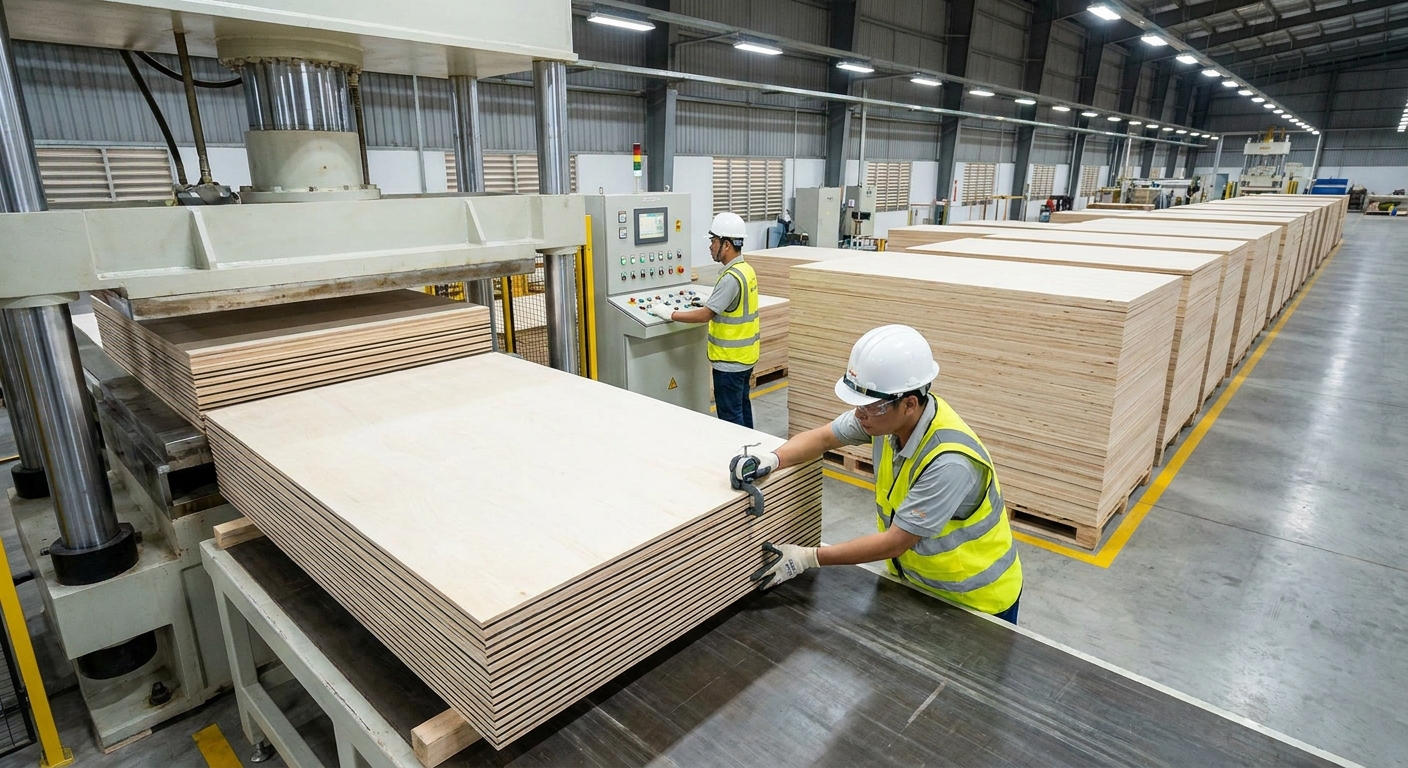
Roughly 95% of "Vietnamese birch plywood" on the export market is birch face and back over a tropical hardwood core — not full-birch construction. Buyers who don't know that read the label as a Baltic substitute, place a structural CNC order, and discover the difference after the first cut. This article is the hub our QC team points new accounts to before any sample order. It covers what the term actually describes, why buyers are sourcing it in 2026, the spec sheet, certifications, where it works, and what to put on a PO so the panel that ships matches what you ordered.
For the full-birch Baltic comparison, see the dedicated Baltic birch plywood guide; for general birch overview, see what is birch plywood.
What "Vietnamese Birch Plywood" Actually Means
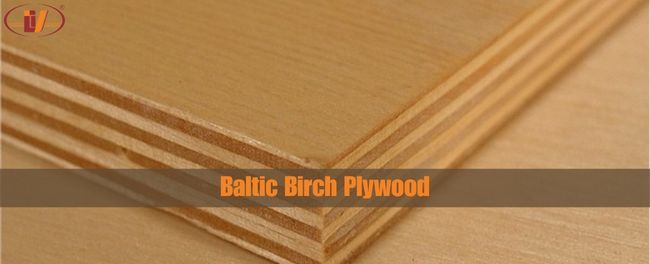
Vietnamese-origin plywood marketed as birch is built with a birch face and birch back hot-pressed onto a tropical hardwood core. The core carries 60-80% of the cross-section by thickness. Three core combinations dominate exports.
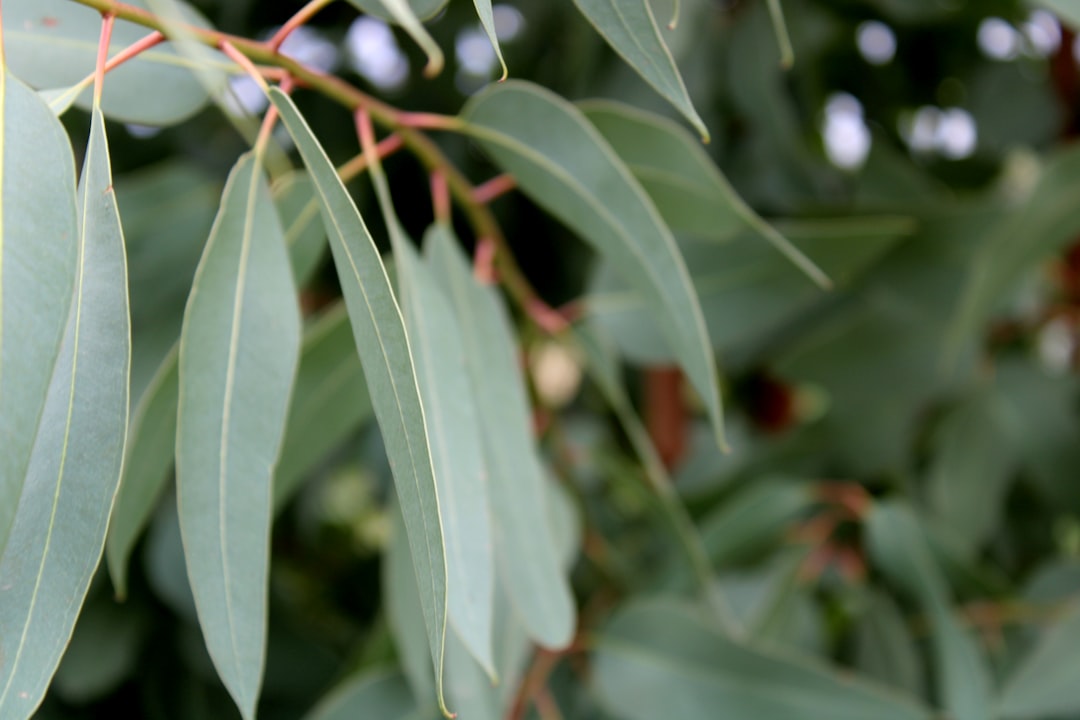
Eucalyptus core. Plantation eucalyptus from central Vietnam delivers good density (around 600–650 kg/m³) and consistent veneer quality. The most common core for Vietnamese birch-face panels going into US and Australian cabinet and furniture work.
Acacia core. Acacia mangium and acacia hybrids are widely planted across Vietnam. Acacia-cored birch-face panels run slightly heavier than eucalyptus, with similar bending and screw-holding performance.
Styrax or combi-core. Styrax (a domestic plantation hardwood) and combi-cores (mixed hardwood inner plies) sit at the budget end. Used widely in packaging and lower-end joinery, less commonly specified for visible cabinet work.
For the full breakdown of how each species behaves in plywood applications, see the plywood core species guide. The practical implication. A Vietnamese "birch" panel and a Baltic birch panel of identical thickness will not have identical bending strength, screw-holding capacity, or weight. They look similar at the face. They differ in cross-section.
Pure full-birch Vietnamese plywood does exist as a custom-order spec. It's rare in standard catalogues. Most Vietnamese mills don't stock it because the species mix in Vietnam favours plantation hardwoods over birch as an interior-ply species.
Why Buyers Are Sourcing Vietnamese Birch in 2026
Three factors converged over the past three years.
Russian and Belarusian Baltic birch under sanctions since 2022. Russia and Belarus historically supplied roughly 80% of the world's Baltic birch plywood. EU sanctions effective March 2022 banned Russian-origin plywood imports. Similar measures from the UK and US followed. The supply that remains — from mills in Latvia, Finland, and Estonia — cannot replace the displaced volume.
EU-domestic Baltic mills face capacity constraints. Latvian, Finnish, and Estonian birch mills are running at or near capacity. Lead times that ran 6–8 weeks pre-2022 now commonly run 12–20+ weeks for new accounts. Spot-market Baltic birch carries a 30–60% price premium over pre-sanction levels.
Vietnam offers ready container supply. Vietnamese mills with established birch-face capability can ship full containers within 25–35 days FOB. Landed cost on US East and West Coast deliveries typically runs 25–40% below remaining Baltic stock for equivalent thicknesses and face grades. For furniture importers and cabinet shops where birch face appearance was the key buying criterion (rather than full-birch structural performance), the substitution math works.
Vietnamese Birch Plywood Grades and Specifications
Standard Vietnamese birch-face plywood specifications across reputable export mills:
| Spec | Common Range |
|---|---|
| Face/back grade | B/B, B/BB, BB/CP, BB/C |
| Standard thicknesses | 4, 6, 9, 12, 15, 18 mm (custom up to 25 mm) |
| Sheet sizes | 1220 × 2440 mm (4×8), 1250 × 2500 mm (EU) |
| Adhesive (interior) | WBP melamine — EN 636-2 / Class 2 |
| Adhesive (exterior/humid) | WBP phenolic — EN 636-3 / Class 3 |
| Core species | Eucalyptus, acacia, styrax, combi (rare: full birch) |
| Density (panel) | ~600–700 kg/m³ depending on core |
| Formaldehyde class | E1 (EN 717-1), CARB Phase 2 / TSCA Title VI for US-bound |
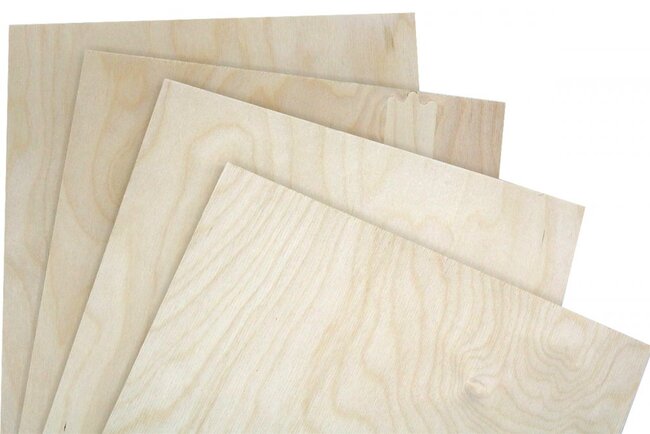
Face grades follow the European convention. B grade is sanded and largely defect-free with tight, sound knots and no open splits. BB allows up to a defined number of repaired patches per panel. CP is a paint-grade face with patches and minor colour variation accepted.
For cabinet door blanks and visible casegoods exteriors, B/B or B/BB is typical. For drawer boxes and concealed structure, BB/CP runs lower in price and is appropriate. The right grade is the cheapest one that meets the visible-finish requirement. Don't over-spec for hidden surfaces.
How Vietnamese Birch Compares to Baltic Birch
The honest comparison — the one most competitor pages avoid — acknowledges where each product wins.
| Parameter | Vietnamese Birch (face/back) | Baltic Birch (full) |
|---|---|---|
| Construction | Birch face/back over hardwood core | Birch through every ply |
| Density | ~600–700 kg/m³ (core dependent) | ~680–720 kg/m³ |
| Bending strength | Comparable for non-structural | Higher — better for structural and cantilevered |
| Screw-holding | Adequate for cabinet work | Stronger — the reference for high-load joinery |
| Edge appearance (CNC) | Mixed-species layered edge | Uniform birch layered edge — the recognised "Baltic edge" |
| Surface finish | Comparable B/B face quality | Comparable B/B face quality |
| Price | ~25–40% lower | Premium pricing post-sanctions |
| Lead time | 25–35 days FOB Vietnam | 12–20+ weeks ex-EU mill (post-2022) |
For a deeper look at how plywood density varies by core species and what that means for performance, see plywood density by species.
The strategic takeaway: Vietnamese birch-face plywood is a substitute, not a one-for-one replacement. For non-structural cabinet exteriors, drawer boxes, retail joinery, and casegoods where the buyer specifies birch primarily for the face appearance, Vietnamese birch-face delivers the look at meaningfully lower cost. For premium structural CNC work, exposed-edge architectural joinery, and applications where the visible "Baltic edge" is part of the design language, Baltic birch is still the correct specification.
Certifications and Compliance for Vietnamese Birch Exports
Vietnamese birch-face plywood entering major export markets requires the same certification stack as any hardwood plywood. Four documents that show up on most POs.
FSC Chain of Custody. Required for many EU and UK customers, increasingly required by US retail accounts (IKEA, West Elm, Crate & Barrel, etc.). Verify the supplier's certificate at info.fsc.org. The certificate code links to public records of the issuing body and validity period. Generic "FSC mix" claims without a verifiable certificate code aren't acceptable.
EUDR (Regulation (EU) 2023/1115). Effective for large operators from December 2024, with phased application. Wood and wood products entering the EU must come with a Due Diligence Statement (DDS) covering geolocation of harvest, legality, and zero-deforestation since 31 December 2020. Vietnamese suppliers shipping to EU customers should provide the DDS as standard documentation. For the full procedural detail, see the EUDR compliance guide for plywood importers.
CARB Phase 2 / TSCA Title VI. US federal formaldehyde compliance for hardwood plywood. Required on every panel sold or used in the United States. Test certificates from accredited third-party laboratories (UL, Intertek, SCS Global) accompany compliant shipments. Reputable Vietnamese exporters maintain CARB P2 certification as standard for US-bound product.
CE marking under EN 13986. Required for plywood placed on the EU market for construction-product use. Includes harmonised performance characteristics under EN 13986 and EN 636 bond classifications.
Optional but commonly requested: JAS / F**** certification for buyers shipping into Japan, and PEFC chain-of-custody for accounts that prefer PEFC over FSC.
Use Cases Where Vietnamese Birch Plywood Works Well
Kitchen cabinets and drawer boxes (non-structural). The single largest application by volume. Cabinet box assembly, drawer sides and bottoms, shelf material, and concealed structure all work with Vietnamese birch-face panels. Cost-per-square-metre is meaningfully below Baltic birch and the visible face quality matches.
Retail and commercial interior joinery. Display fixtures, store fit-outs, and commercial casegoods where birch is specified for the face appearance. Volume retail accounts (especially RTA furniture programmes) shifted significantly to Vietnamese birch-face after Baltic supply tightened.
Furniture: knockdown, casegoods, RTA. Wardrobes, dressers, bookcases, desks, and similar mass-produced furniture programmes use birch-face panels for the visible exteriors with melamine or veneered hardwood interiors. The Vietnamese product fits this segment cleanly.
Packaging and crating. Premium export crates, returnable packaging, and protective casing for high-value goods often specify birch face for surface durability. Lower-grade Vietnamese birch-face (BB/CP) is the cost-effective spec here.
Where Vietnamese birch-face does NOT work: Aerospace components (where birch is specified to a strict structural standard), marine structural panels (use marine-grade plywood with full BS 1088 compliance instead), and premium architectural CNC work where the exposed birch edge is part of the design intent. For those, full-birch Baltic remains the correct specification regardless of cost.
Sourcing Vietnamese Birch Plywood: Lead Times and Logistics
Standard production lead time from Vietnamese export mills runs 15–25 days from order confirmation, depending on mill backlog and whether the order matches existing stock specifications or requires custom configuration. Add ocean freight transit:
| Destination | Port | Ocean Transit | Total Lead Time |
|---|---|---|---|
| US East Coast | Savannah / Norfolk / NY | 28–35 days | ~7–9 weeks |
| US West Coast | Los Angeles / Seattle | 22–28 days | ~6–8 weeks |
| UK / Northern Europe | Felixstowe / Rotterdam | 25–32 days | ~7–8 weeks |
| Australia | Sydney / Melbourne | 18–25 days | ~5–7 weeks |
| Canada (East) | Halifax / Montreal | 30–35 days | ~7–9 weeks |
Container yields for the common cabinet thicknesses: a 40HC container holds approximately 380–420 sheets of 18 mm panels, 650–750 sheets of 12 mm panels, and 950–1,100 sheets of 9 mm panels (variation reflects packaging configuration and pallet structure).
For first-time importers evaluating Vietnamese suppliers, the procurement workflow — from supplier shortlist through sample order, factory audit, and pre-shipment inspection — is covered in the evaluate a Vietnam plywood supplier guide. The short version: never commit to a container of any specification you have not first qualified on a sample order.
What to Specify on a PO for Vietnamese Birch Plywood
The single most common procurement mistake on Vietnamese birch is under-specifying the PO. Use this checklist.
Face and back grade. State explicitly: B/B, B/BB, BB/CP. Don't write "birch face" without a grade.
Core species. Don't accept "hardwood core". Require the species named (eucalyptus, acacia, styrax, combi). Different cores carry different per-square-metre cost, weight, and screw-holding behaviour.
Adhesive class. WBP melamine (EN 636-2 / Class 2) for interior cabinet and furniture work. WBP phenolic (EN 636-3 / Class 3) only when humid or moisture-prone exposure is part of the use case. Phenolic costs more per sheet. Don't over-spec it for indoor casegoods.
Sheet size and thickness tolerance. Sheet size in millimetres (1220×2440 vs 1250×2500). Thickness tolerance per EN 315 (typically +0.7/–0.9 mm on 18 mm panels for sanded grades). Tighter tolerances on request — confirm with supplier.
Required certifications. List explicitly: FSC CoC certificate code required, CARB P2 / TSCA Title VI for US shipments, EUDR DDS for EU shipments, CE marking under EN 13986 for EU construction-product use.
Edge sealing on/off. Factory edge sealing adds protection during shipping and reduces moisture pickup in transit. Worth specifying for sea freight to humid destinations.
Pre-shipment inspection. SGS or Bureau Veritas inspection prior to container loading. Cost is borne by the buyer (typically $400–$800 per inspection day). It catches specification deviations before the container ships.
For background on the broader Vietnamese supplier landscape and how to qualify a manufacturer, see the Vietnam plywood supplier sourcing pillar.
Vinawood's Birch-Face Plywood Capability
Vinawood produces birch-face panels over eucalyptus, acacia, and combi cores at our mill in Vietnam. Standard offering: 4–25 mm thicknesses, 1220×2440 mm and 1250×2500 mm sheet sizes, B/B, B/BB, and BB/CP face/back grades, and both WBP melamine (EN 636-2) and WBP phenolic (EN 636-3) adhesive options.
Certifications: ISO 9001 quality management, FSC Chain of Custody, CARB Phase 2 / TSCA Title VI for US-bound product, CE marking under EN 13986, and EUDR Due Diligence Statement support for EU shipments. Pre-shipment inspection by SGS or Bureau Veritas is arranged on request.
For sample requests and FOB quotations, contact via vinawoodltd.com. A typical sample programme covers 2–4 panels in the requested grade, thickness, and core species, with full mill test report and current third-party certifications attached.
Frequently Asked Questions
Is Vietnamese birch plywood real birch?
The face and back veneers are real birch. The interior core plies are typically tropical hardwood — eucalyptus, acacia, styrax, or combi — not birch. This is birch-face construction, not full-birch construction. Pure full-birch Vietnamese plywood exists as a custom-order spec but is rare in standard export catalogues. Always read the construction spec on the PO rather than assuming "birch plywood" means birch through every ply.
How does Vietnamese birch plywood compare to Baltic birch?
Vietnamese birch-face panels match Baltic birch on visible face quality and approach it on bending strength for non-structural applications. Baltic birch wins on screw-holding, structural performance, and the recognised uniform-birch layered edge that matters for exposed CNC work. Vietnamese birch is typically 25–40% lower per square metre than remaining Baltic stock and ships in 25–35 days FOB versus 12–20+ weeks for Baltic post-sanctions.
Is Vietnamese birch plywood EUDR compliant?
It can be, but compliance depends on supplier documentation, not country of origin. Vietnamese exporters with FSC Chain of Custody certification and the operational systems to provide a Due Diligence Statement (geolocation, legality, zero-deforestation since 31 December 2020) can supply EUDR-compliant product. Verify the DDS and the FSC certificate code at info.fsc.org before shipment. Generic "sustainable" claims without verifiable documentation aren't sufficient.
What is the price of Vietnamese birch plywood?
FOB Vietnam pricing varies by face grade, thickness, core species, and adhesive class. As an indicative range, B/BB 18 mm birch-face on eucalyptus core ships in the rough range of $7–11 per square metre FOB at container volume — typically 25–40% below comparable Baltic birch landed cost in US, UK, or Australian markets. Always request a current FOB quotation tied to specific spec and volume; pricing changes with hardwood log markets and ocean freight rates.
Can I use Vietnamese birch plywood for kitchen cabinets?
Yes — kitchen cabinet boxes, drawer boxes, shelving, and concealed structure are the largest application by volume. Use B/B or B/BB face grade for visible cabinet exteriors and BB/CP for hidden structure. Specify WBP melamine adhesive (EN 636-2) for typical kitchen humidity; upgrade to WBP phenolic (EN 636-3) only if the cabinets will see direct moisture exposure (under-sink applications or humid coastal climates without HVAC).
Category
guides
Related Markets
Related Countries
▶Sources & References (5)
- Regulation (EU) 2023/1115 — Deforestation-free Products (EUDR) — European Commission (2023)
- Formaldehyde Standards for Composite Wood Products — TSCA Title VI — US Environmental Protection Agency (2024)
- EN 13986:2004+A1:2015 — Wood-based panels for use in construction — European Committee for Standardization (CEN) (2015)
- FSC Chain of Custody Certification (FSC-STD-40-004) — Forest Stewardship Council International (2021)
- Eurostat: Plywood imports to EU member states — European Commission — Eurostat (2026)