Plywood Shear Wall: Code, Sheathing Spec, and Why Formwork Plywood Is a Different Animal
What makes a wall a shear wall, how IRC and IBC spec plywood sheathing, the edge-nailing and holdown details that actually govern capacity, and why concrete formwork plywood is a separate product family from structural shear-wall sheathing.
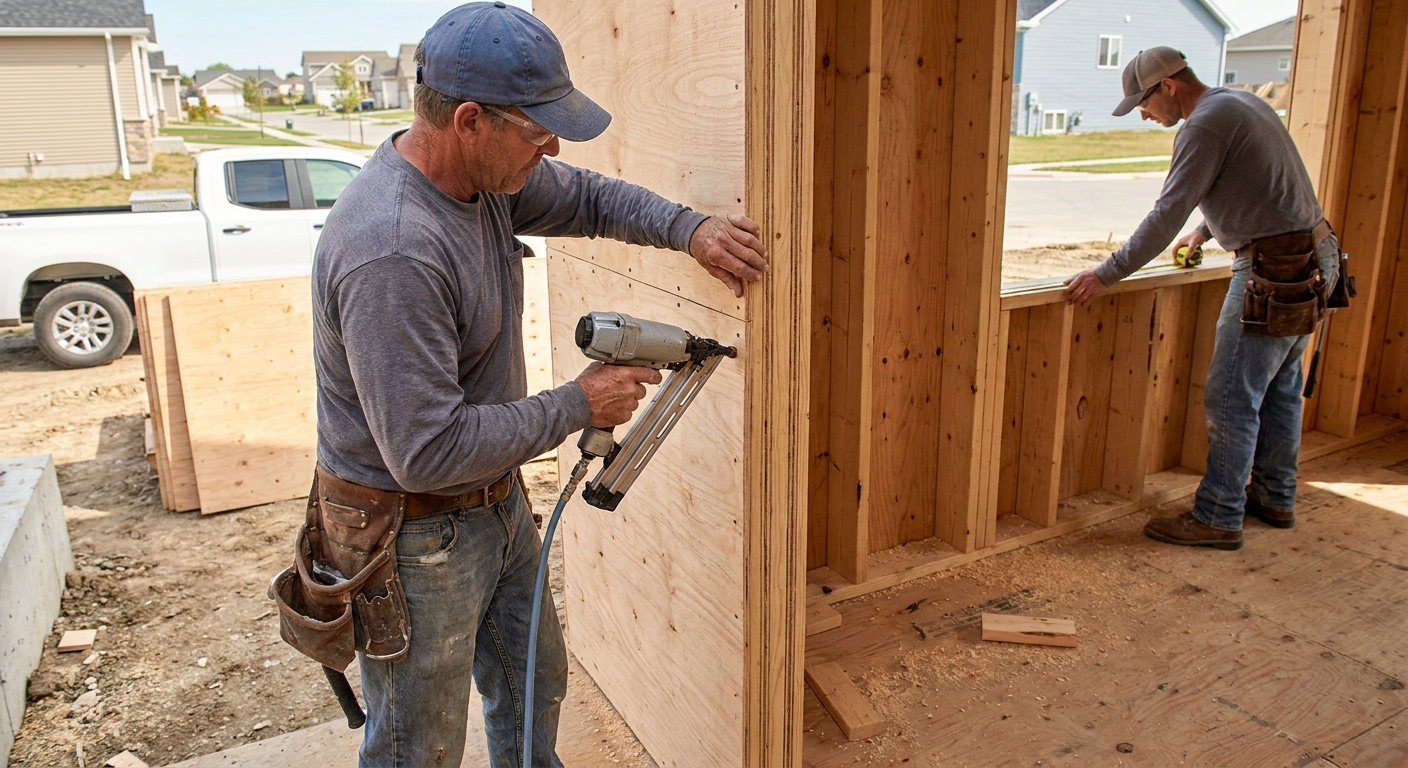
A plywood shear wall is the single most-cited structural use of plywood in US and Canadian residential framing, and one of the most-confused topics when buyers move from code text to a lumberyard purchase order. The query pulls in two distinct readers. A homeowner with a permit set who needs to translate "15/32 inch APA Structural I, blocked, 8d common at 3 inches o.c. edge" into a real material order at the framing supplier. And a residential framer or designer comparing OSB versus plywood for the same wall, often with a seismic retrofit context underneath.
This guide writes from the lumberyard side of the counter. Code citations are summarised, not reproduced — IRC R602.10 and IBC 2306 are the authoritative texts and the structural engineer of record owns the calc. The aim is to make the buyer competent enough to spec, source, and inspect the material without misreading the engineer's intent.
What makes a wall a shear wall
Vertical gravity loads (floor weight, snow on the roof, the building's own weight) travel down through bearing walls and into the foundation. Lateral loads (wind hitting the wall, ground shaking under the building) want to rack the building sideways. A shear wall is a vertical diaphragm that resists that racking by transferring the lateral load down through its plane and into the foundation via tie-down anchors at the corners.
In a typical wood-framed house, the exterior walls, interior partition walls aligned in both axes, and certain garage-side walls all act as shear walls when they're sheathed with wood structural panels and detailed per the code. The sheathing is the membrane that carries the in-plane shear; the studs and plates form the boundary frame; the holdowns at the corners prevent the wall from pulling up off the foundation at one end and pushing through at the other.
Skip the sheathing nail pattern, and the wall is just a stud cage that racks. Skip the holdowns, and the wall pulls out of the foundation at the corner. Both failure modes show up in post-earthquake reconnaissance reports from California (Northridge 1994) and the Pacific Northwest (Olympia 2001). The code requirements are not theoretical.
Code basis: IRC, IBC, and ASCE 7
The 2024 IRC (International Residential Code) covers one- and two-family detached houses up to three stories. Section R602.10 is the prescriptive bracing path, with bracing methods PFH (portal frame with hold-downs), CS-WSP (continuously-sheathed wood structural panel), BV-WSP (braced wall panels with wood structural panel), and several others. If the house is regular and within the prescriptive limits, R602.10 gives a recipe-style design path with tabulated bracing-line minimum lengths.
The IBC (International Building Code) governs commercial buildings and residential beyond three stories or outside IRC scope. Section 2306 covers engineered wood-structural-panel shear walls, with capacity tables that look up fastener size, edge spacing, and panel thickness against an allowable unit shear in pounds per lineal foot of wall length.
ASCE 7 (Minimum Design Loads and Associated Criteria for Buildings and Other Structures) sets the seismic and wind loads the structural engineer applies to the building. The output is a required shear capacity per wall line, which the engineer translates into a specific schedule (panel thickness, nail size, edge spacing).
For the buyer's purposes: the engineer's schedule on the permit drawings is the spec. The code citations explain the why. The buyer doesn't pick the schedule — the engineer does.
Sheathing spec: APA-rated panels and the 15/32" minimum
IBC 2306 and IRC R602 reference "wood structural panels" rated by APA — The Engineered Wood Association. Two grade families show up in shear-wall schedules.
APA-rated Sheathing. The standard wood structural panel, with a span rating stamped on the panel face (24/0, 32/16, 40/20, 48/24 — the first number is the rated roof span in inches with the long axis perpendicular to supports, the second is the rated floor span). For most shear walls, APA-rated Sheathing 24/0 or 32/16 is acceptable.
APA-rated Structural I. A higher-strength rating, typically 5-ply construction with all veneer plies Group 1 species (Douglas-fir-larch, Southern yellow pine). Required by code when the engineer's calculation depends on the higher allowable unit shears tabulated for Structural I — most commonly in seismic design categories D, E, and F, or in high-wind coastal regions.
Minimum thickness for shear-wall sheathing in IRC R602 is 3/8 inch (9.5 mm), but the practical minimum in real construction is 15/32 inch (11.9 mm). Most engineering schedules call for 15/32" or 19/32" (15.1 mm) for residential and light-commercial. Heavier industrial shear walls go to 23/32" (18.3 mm) or thicker.
The panel grade stamp on the back face shows the producing mill, the grade, the span rating, the exposure rating (Exterior, Exposure 1), and the compliance standard (PS 1, PS 2, PRP-108, or PRG-320 for I-joists). For shear walls in damp climates or where the sheathing will be exposed before the cladding goes on, Exterior or Exposure 1 rated is the working minimum.
Nailing schedule: where most field failures actually start
The nailing schedule does more work than the panel thickness for shear-wall capacity. Edge nailing is the nail line around the perimeter of each panel, where the panel transfers its in-plane shear into the framing. Field nailing is the interior pattern across the panel face.
Edge nailing patterns in typical residential shear walls range from 6" on center (low-shear walls in lower seismic / wind zones) down to 2" on center (high-shear walls in seismic design categories D, E, F). The engineer's schedule will specify one of: 6", 4", 3", or 2" edge spacing. Field nailing is almost always 12" on center.
Nail size for shear walls is 8d common (0.131" × 2.5") for most schedules, with 10d common (0.148" × 3") for heavier shear walls or thicker sheathing. Box nails (0.113" diameter for 8d box) carry significantly less capacity than common nails and are not interchangeable unless the engineer's schedule explicitly allows box. Gun-driven equivalent fasteners are accepted under ICC-ES evaluation reports — confirm the report number on the gun-nail box matches the engineer's spec.
Nail head clearance matters. The nail head must finish flush with the sheathing surface, not driven through into the wood, and not standing proud above it. An over-driven nail loses about 20% of its design shear capacity per APA testing — a common field failure mode that doesn't show up until the house is racked by a real event.
Blocking, holdowns, and the rest of the load path
Blocking. All four panel edges must bear on framing — a stud or plate on each long edge, a horizontal block between studs on each short edge. Unblocked shear walls are permitted in low-shear applications but carry significantly reduced capacity (about half the blocked value in IBC 2306). When the engineer specifies blocked shear walls, that means horizontal 2x or 3x blocking between studs at every panel-to-panel joint.
For high-shear walls (edge nailing at 3" or 2"), 3x blocking is often required — the larger member prevents nail splitting where the dense edge-nail pattern would otherwise crack a 2x.
Holdowns. Pretensioned tie-down devices at the wall corners that anchor the boundary framing to the foundation. The Simpson Strong-Tie HTT and PHD families are the dominant North American product lines; equivalent USP, MiTek, and other manufacturers also produce code-listed devices. The engineer's schedule specifies the holdown type, anchor bolt size, and embedment depth.
Without holdowns, the lateral load applied to the top of the shear wall lifts the wall at one end. The sheathing carries the in-plane shear; the holdowns carry the overturning. Both must be present for the wall to work as designed.
Anchor bolts. Foundation anchor bolts tie the bottom plate to the concrete. IRC R403 requires 1/2" diameter anchor bolts at no more than 6 ft on center, with at least two bolts per plate piece and one bolt within 12" of each plate end. The engineer's schedule may tighten this for high-shear walls.
OSB vs plywood: equivalent under code, different in the field
For most shear-wall conditions, OSB (oriented strand board) and plywood of the same thickness and rating carry equivalent code capacities. The IBC 2306 tables and the APA design guides allow either material with the same edge-nail schedule. Where the engineer specifies "wood structural panel," both qualify.
Field differences show up in three areas. Fastener-pullout values are slightly higher in plywood than in OSB, which matters when the dominant load is uplift rather than shear (high-wind coastal regions). Moisture behavior differs — OSB swells more when wet, particularly at panel edges, and the swelling does not fully recover after drying. For walls that will see weather exposure before the cladding goes on, plywood holds up better. And edge-nailing splitting risk is marginally higher in OSB at tight schedules (3" and 2" o.c.) where the dense nail pattern stresses the strand bond.
For routine residential walls in dry climates with normal construction sequencing (sheathing, building wrap, cladding within days), OSB and plywood are functionally interchangeable. For walls that will sit weathered before the building dries in, plywood is the safer call.
See our broader piece on OSB and plywood for the cost and material comparison at the panel level.
High-seismic regions: California, the Pacific Northwest, Cascadia
Seismic Design Categories D, E, and F push the schedule harder. Edge nailing tightens to 3" or 2" o.c., 3x blocking becomes standard at high-shear walls, holdown forces climb, and the perforated shear wall method (allowing for openings in the wall while maintaining shear capacity through the residual sheathing) requires careful detailing.
FEMA P-807 (Seismic Evaluation and Retrofit of Multi-Unit Wood-Frame Buildings With Weak First Stories) is the methodology used for soft-story retrofits in California — the cripple wall and weak-first-floor failures from Loma Prieta and Northridge. The retrofit details typically add plywood shear walls and steel moment frames to the open garage front.
In British Columbia and Washington State, the Cascadia subduction zone risk drives similar high-seismic design. The Vancouver and Seattle building departments enforce tightened edge-nailing schedules and additional holdown requirements per the local amendments.
None of this changes the panel-sourcing answer for the buyer. The engineer's schedule is the spec. The buyer's job is to bring the right material to the framing crew — APA-rated Structural I sheathing, 15/32" or 19/32" depending on the schedule, 5-ply construction, Exposure 1 or Exterior rating.
Where formwork plywood fits, and where it does not
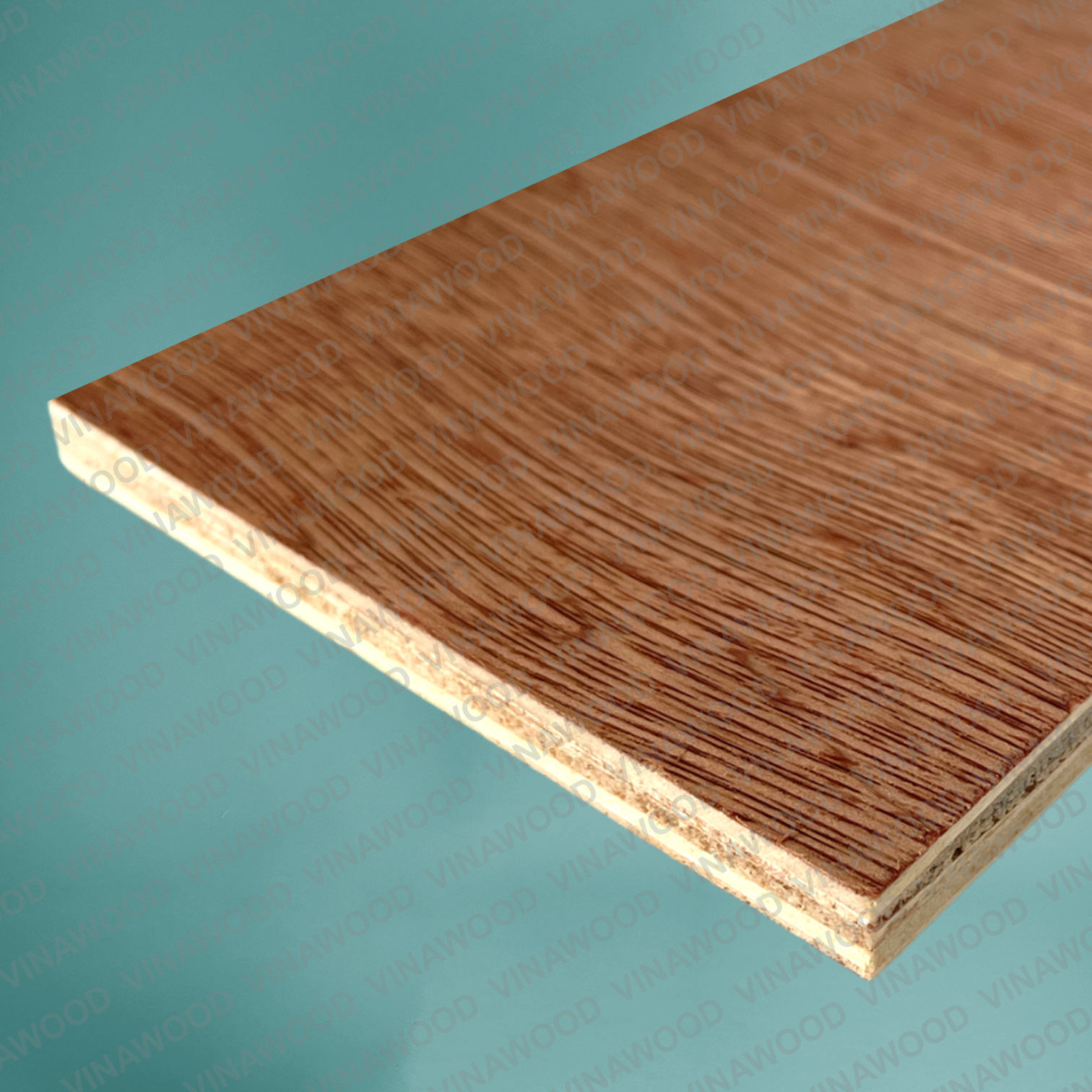
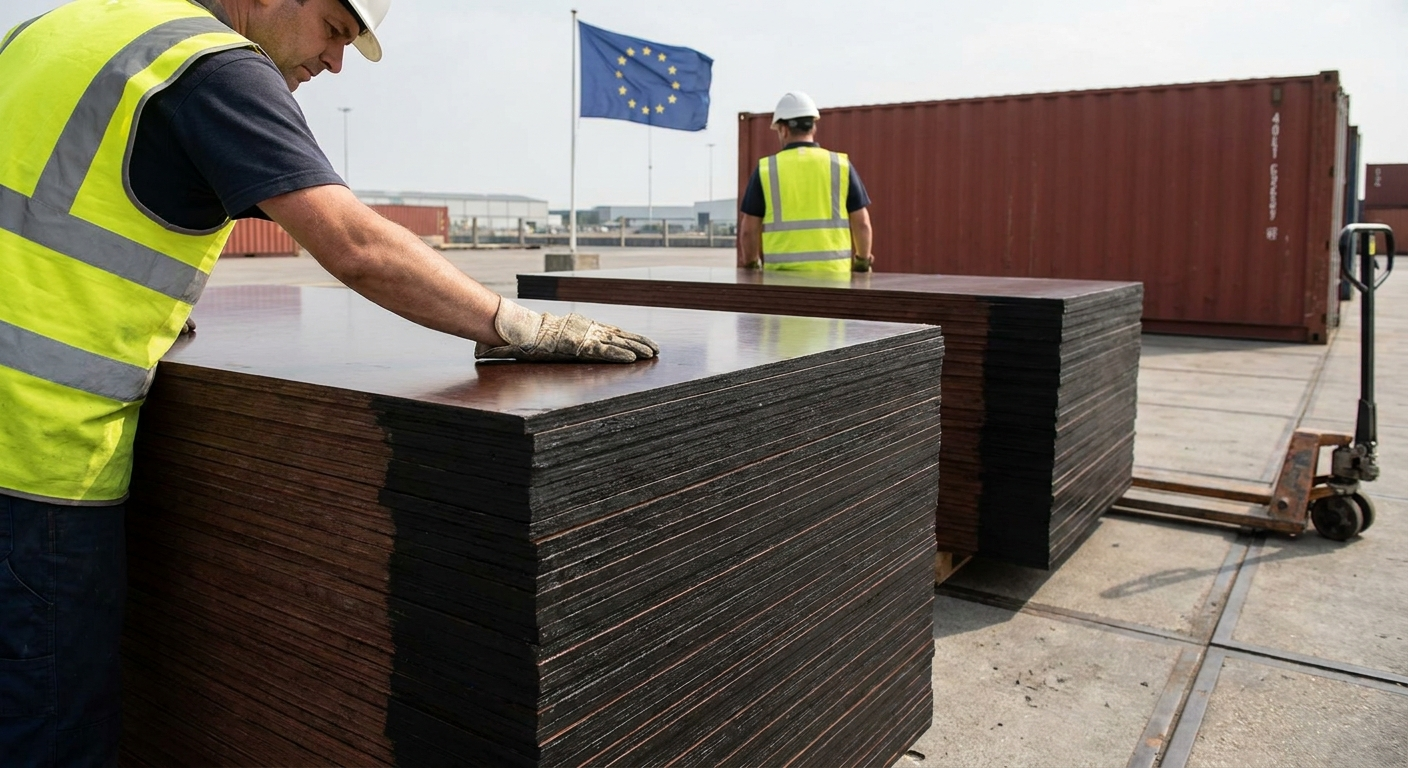
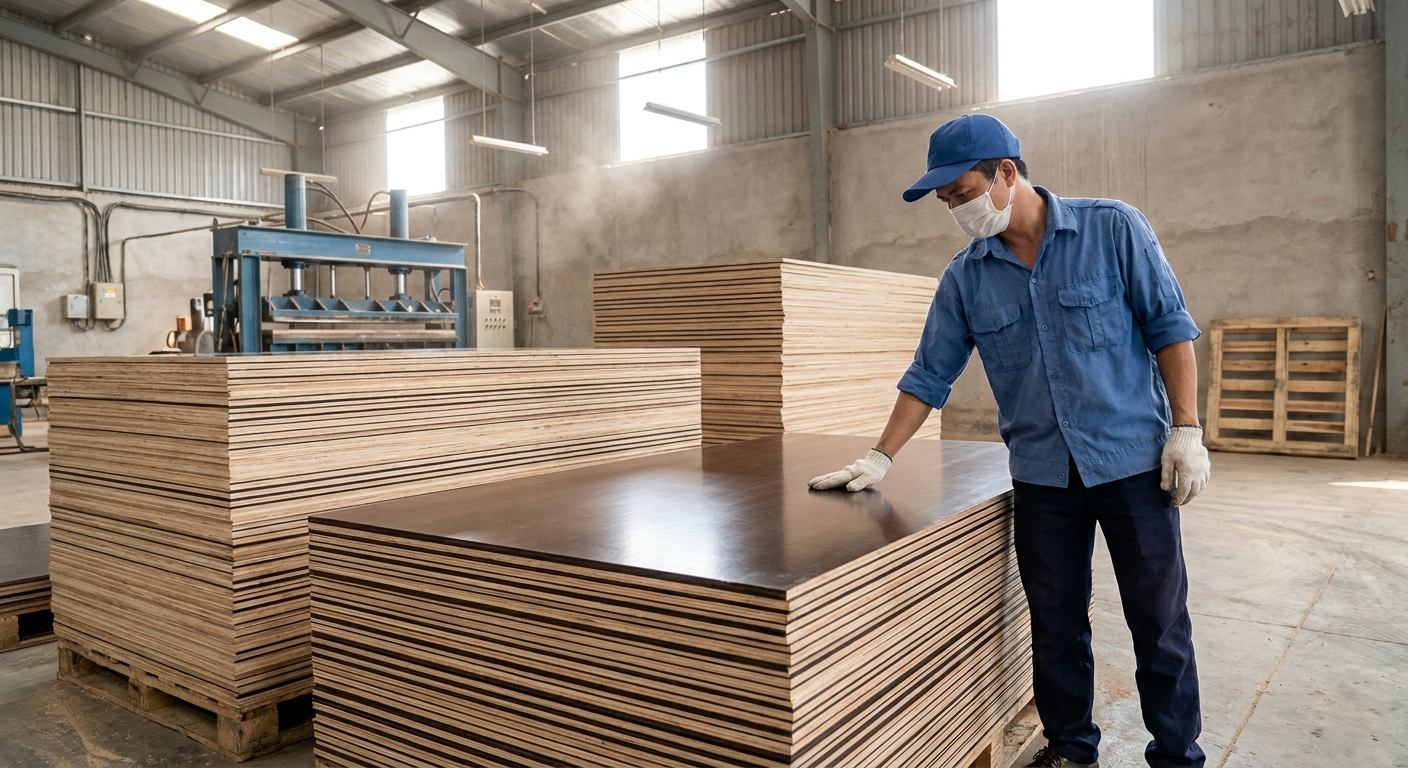
This is the part that gets confused in buyer queries. Vietnamese film-faced formwork plywood is a different product family with a different spec target. Pro Form (EN 636-3, phenolic core glue, phenolic face film) and the HDO range (kraft-paper overlay for matte concrete finish or paint-grade exterior trim) are engineered for concrete-formwork cycle reuse — the panel sees water and concrete on one face up to 20 times across its working life. The spec target is film durability and core glue weather resistance, not in-plane shear capacity for a code-rated wall assembly.
Three things follow from that.
One. Vinawood does not pitch our formwork plywood as US structural shear-wall sheathing. The APA-rated, span-rated, Structural I product is a different manufacturing spec (5-ply Group 1 species, PS 1 compliance, APA mill audit) sourced from domestic mills — Roseburg, Boise Cascade, Plum Creek, Weyerhaeuser. The buyer for a US shear wall buys APA-rated product at the framing supplier, not film-faced formwork plywood from Vietnam.
Two. From a Vietnamese mill perspective, we see buyers occasionally ask whether film-faced formwork plywood can be used for shear walls. The honest answer is that the film-faced surface is not the right surface for nail-set in a code-rated shear wall, the panels are not span-rated by APA, and the panel layup is not optimized for in-plane shear. It would not pass an inspection. Different application, different product.
Three. Where our product family does meet the buyer's need is concrete forming for foundations, retaining walls, columns, and slab decking — the formwork side of the same residential project. See our wall formwork plywood guide for the formwork spec and column formwork plywood for vertical concrete pours.
Buyer checklist for the framing supplier
| What the engineer's schedule says | What to ask the supplier for |
|---|---|
| 15/32" APA Structural I, blocked | 15/32" APA-rated Structural I, 5-ply, Exposure 1, span rating 32/16 or higher |
| 19/32" APA Structural I, blocked, 8d @ 3" o.c. | 19/32" APA-rated Structural I, 5-ply, Exterior rating preferred |
| 15/32" APA Sheathing, unblocked | 15/32" APA-rated Sheathing, Exposure 1, span rating 32/16 |
| Edge nailing 8d common @ 4" o.c. | 8d common nails (0.131" × 2.5"), NOT box nails unless allowed; or gun-equivalent per ICC-ES report |
| 3x blocking at panel edges | 3x4 or 3x6 SPF or DF blocking lumber to match the engineer's schedule |
| Simpson HTT22 holdowns | Confirm part number on the schedule, verify anchor bolt diameter and embedment |
One field tip: when the engineer specifies "or equivalent" for the holdown, the substitute device must carry an ICC-ES report demonstrating equivalent or better tested capacity for the same anchor bolt configuration. The supplier's catalog cross-reference is a starting point, not the final word.
Why this matters for the rest of the structure
The shear wall is the second-to-last item in the lateral load path. Wind or seismic load enters the roof diaphragm, transfers through the roof-to-wall connection (continuous load path), down through the wall sheathing, through the holdowns, into the foundation anchor bolts, and finally into the concrete footing and soil.
A continuous load path means every connection in that chain has to carry the same lateral load. The strongest shear wall in the world won't perform if the roof-to-top-plate connection is missing the right strap, or the holdown anchor bolt is undersized, or the foundation footing doesn't have enough soil-bearing area. Code compliance is a system property, not a single-panel property.
For the buyer, that means three things to verify on the permit drawings before sourcing material. The wall sheathing schedule (panel grade, thickness, nailing, blocking). The holdown schedule (device part number, anchor bolt size, embedment depth). And the roof-to-wall hardware (Simpson H-clips, hurricane ties, or equivalent). All three must arrive at the framing supplier in the same order.
About Vinawood
Vinawood has been manufacturing plantation-grown hardwood plywood in Vietnam since 1992. Our annual export volume exceeds 5,000 containers across more than 55 markets, with ISO 9001 quality management certification and full CARB Phase 2 / TSCA Title VI compliance for the North American market. Our product range covers concrete-formwork plywood (HDO and MDO panels, film-faced formwork) and packaging plywood (LVL, Packply). For the North American concrete-formwork side of a residential project, see the HDO plywood collection and MDO plywood collection. For the structural shear-wall sheathing on the same project, the answer is APA-rated domestic product at the framing supplier — a different product family that we do not manufacture, and an honest answer beats a confused recommendation.
Category
how-to