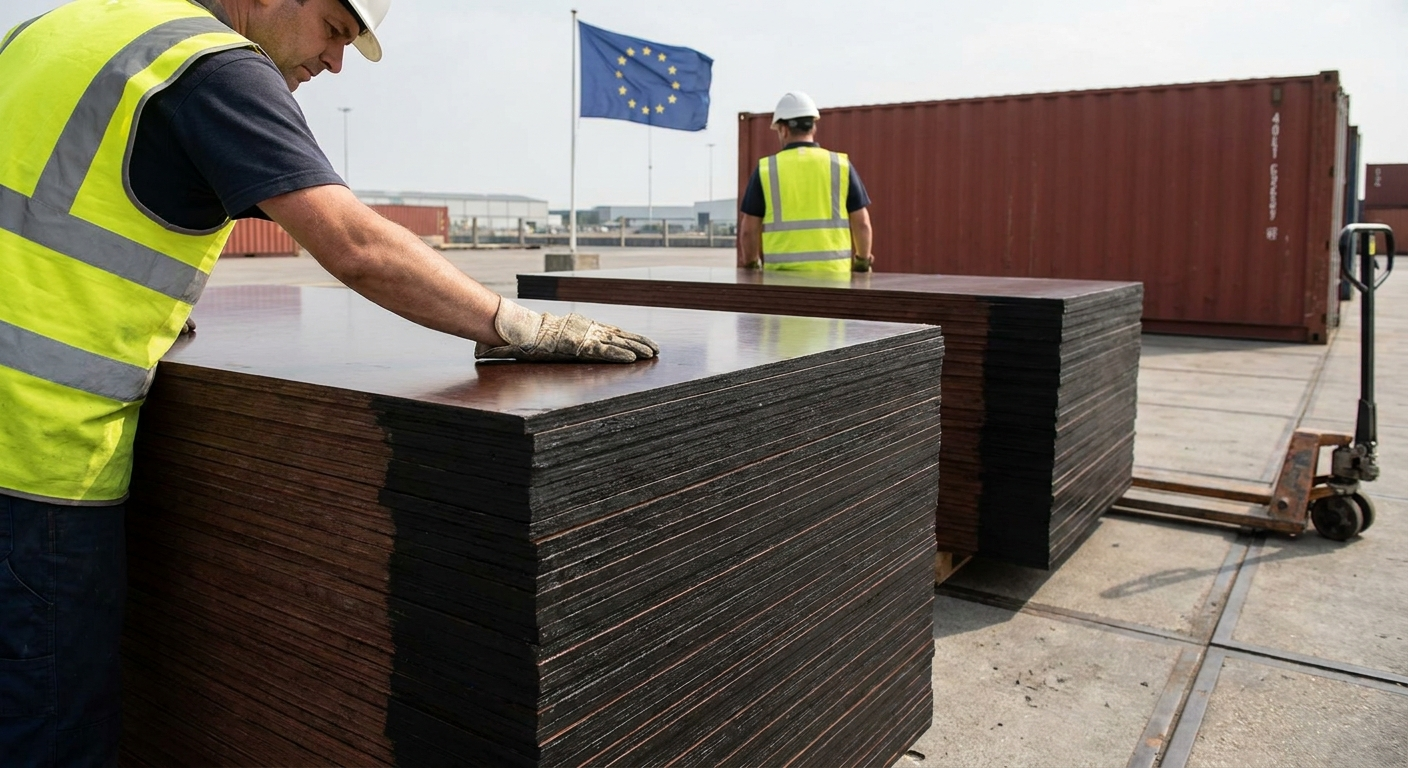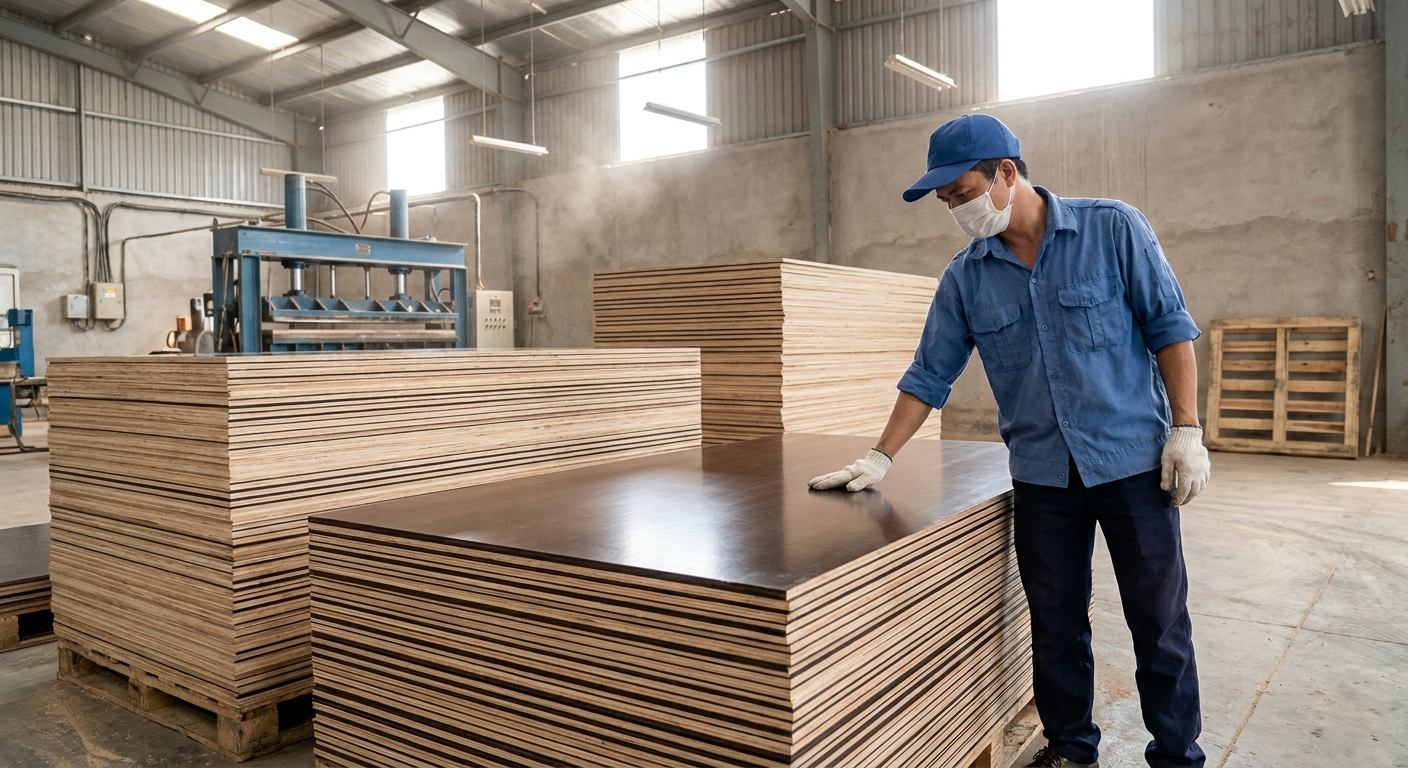
Plywood for Column Formwork: Rectangular, Circular & How to Match Panel Spec to Pour Count
When plywood-faced column forms still beat steel modular systems, and when they don't: pour-count thresholds, rectangular vs circular spec, EN 636-2 vs EN 636-3, tie-rod hole maintenance, and the reuse cycles you should actually expect for column work.
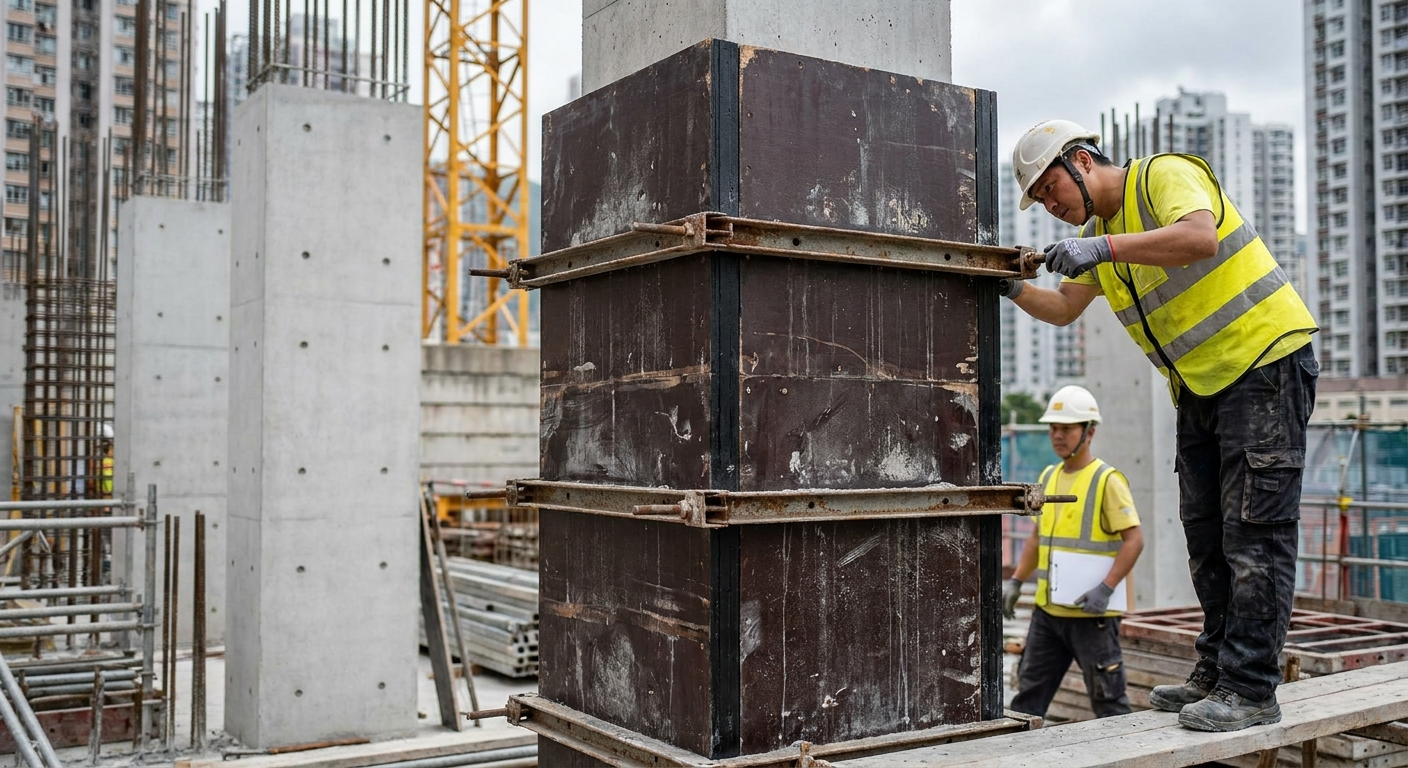
Type "column formwork" into Google and the first page is rental catalogues. PERI VARIO. MEVA Mammut Circo. EFCO, ULMA, Doka. Sonotube for rounds. Steel half-shells for repeats. Somewhere an AI Overview waves at timber as the old way. Plywood-faced column forms still leave our mill for real jobs. The SERP just hides them under modular marketing.
Two questions decide the call. How many pours of the same section? And how much do you care about the off-form face?
Where plywood column forms still win
Honest math. Under about ten identical pours, a plywood-faced timber column usually beats a rented modular system on landed cost — rental fees, freight and yoke kits don't pay for themselves. Past about thirty identical pours, steel or aluminum wins. Plywood reuse caps out and strip-and-reset labour eats the margin. The middle band? Judgment call.
Four jobs sit cleanly in the plywood lane. Rectangular sections between 200 and 600 mm, where the rental inventory misses your exact module. Architectural one-offs — a handful of feature columns to a custom profile. Sites with no crane and nowhere to lay modular down. Bridge-deck blockouts and box-outs, where a small framed plywood form sits inside a larger steel cage.
Not a sales pitch against modular. The job picks the tool.
Rectangular columns: thickness, yokes, lateral pressure
Sections 200 to 400 mm, lifts under 3.5 m: 18 mm phenolic film-faced is the working baseline. Yokes usually sit 300 to 500 mm centres near the base and open up toward the top. Lateral pressure follows the head of plastic concrete, not the full column height.
Past 400 mm wide, or a tall single lift over 4 m at a fast pour rate, step up to 21 mm. ACI 347 and CIRIA 108 own the pressure model. On tall lifts at typical placement rates, the base load lands somewhere between 50 and 90 kN/m². Don't memorize that. Hand it to the engineer who designs the form and signs the calc.
Two notes from packing lists we actually ship. Tie-rod-and-cone beats steel strap clamps on finish — load path stays symmetric, corner gap stays tight. And the cheapest way to ruin a column is yokes too far apart on the top half, a fast pour, and a bow at pour three.
Circular columns: don't oversell what plywood does
Plywood will not bend itself into a clean circle. Round pours usually go to steel half-shells, fibre tubes (Sonotube and equivalents), or modular curved systems. Say otherwise and anyone who's poured a real round column will call the article out.
Where plywood still shows up on circular work: one-off architectural diameters that don't justify steel half-shells for a single pour; faceted polygonal columns (8, 12, 16 sides) that read as round at viewing distance, built from straight panels with mitred joints; and box-outs inside a circular form — a small plywood void for a sleeve, anchor or service penetration.
Brief says "plywood for round columns" with no caveat? Push back. Honest answer: some specific cases, yes. Not a general stand-in for half-shells.
Adhesive class and film weight
Column forms get hammered at the edges. Corner water ingress kills panels faster than face-film abrasion — short panel, clustered tie holes, strip-and-reset faster than walls. The glue holding the veneer stack has to live through that.
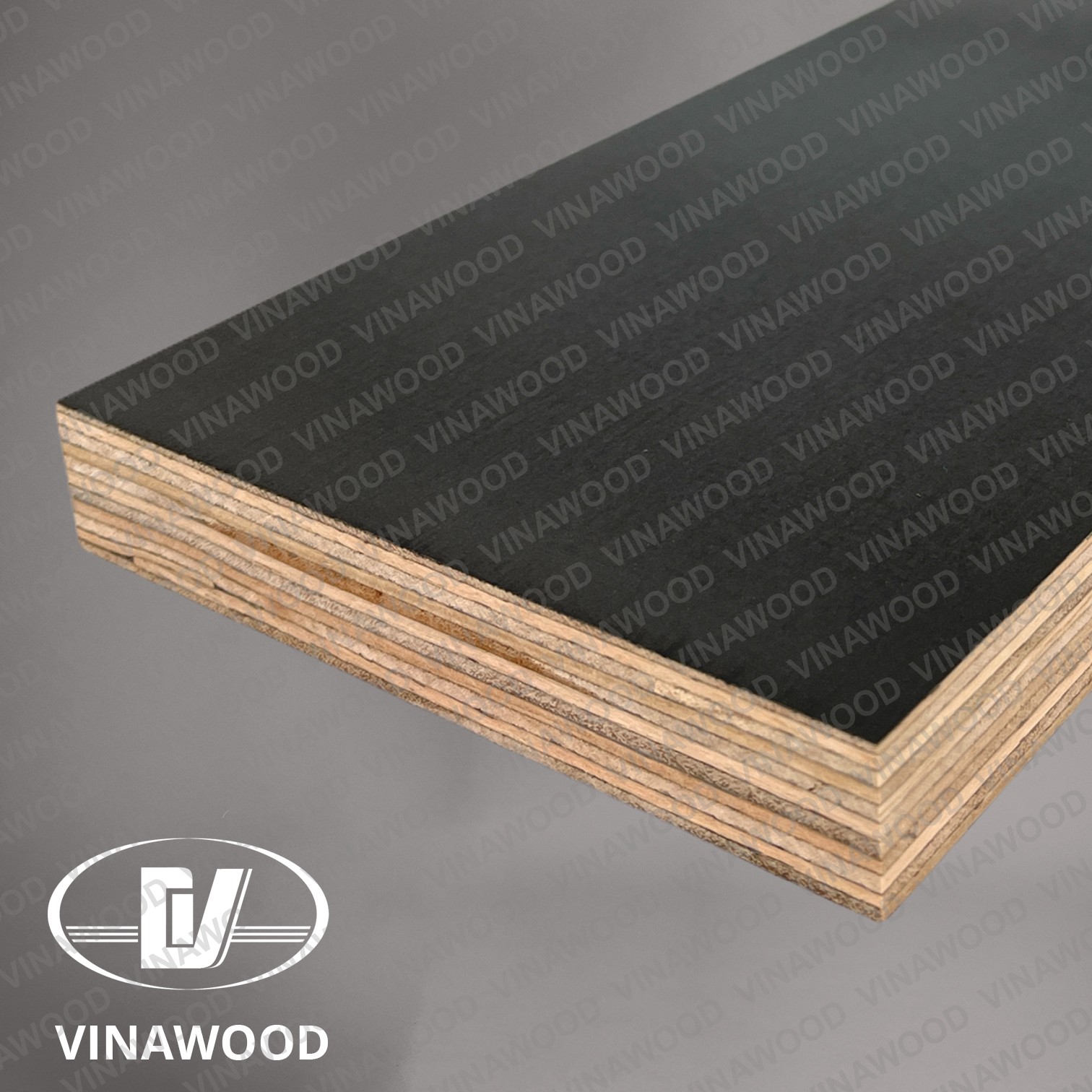
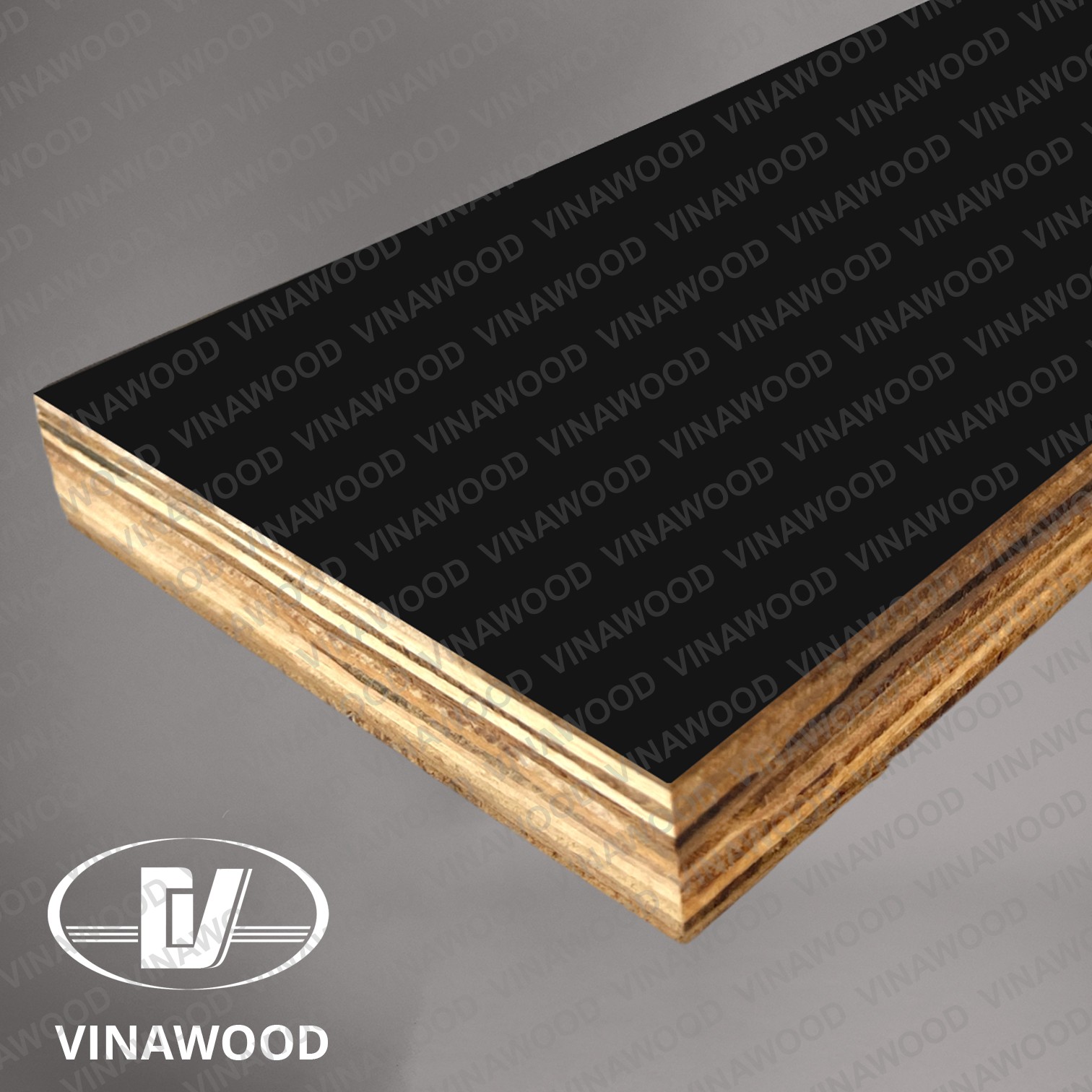
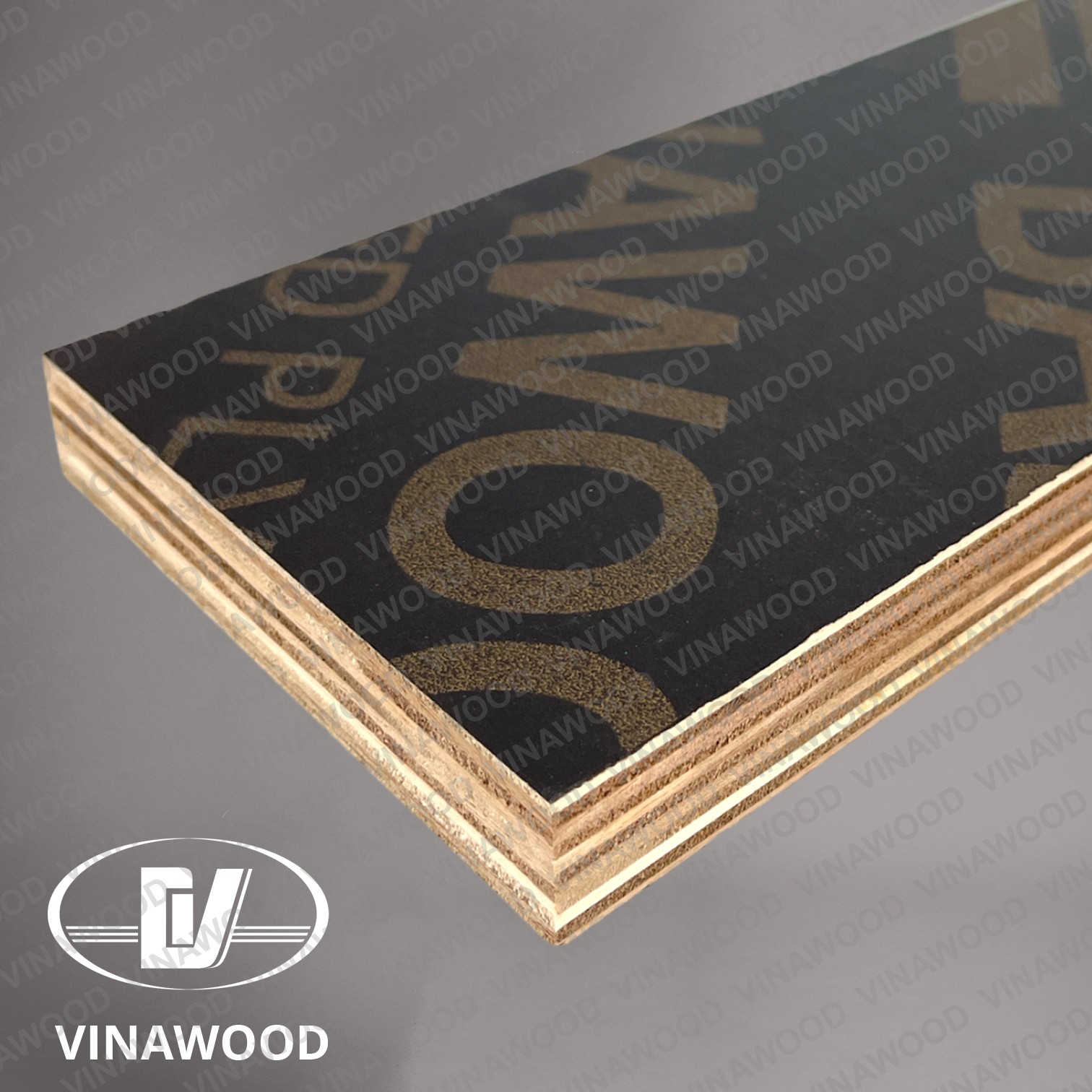
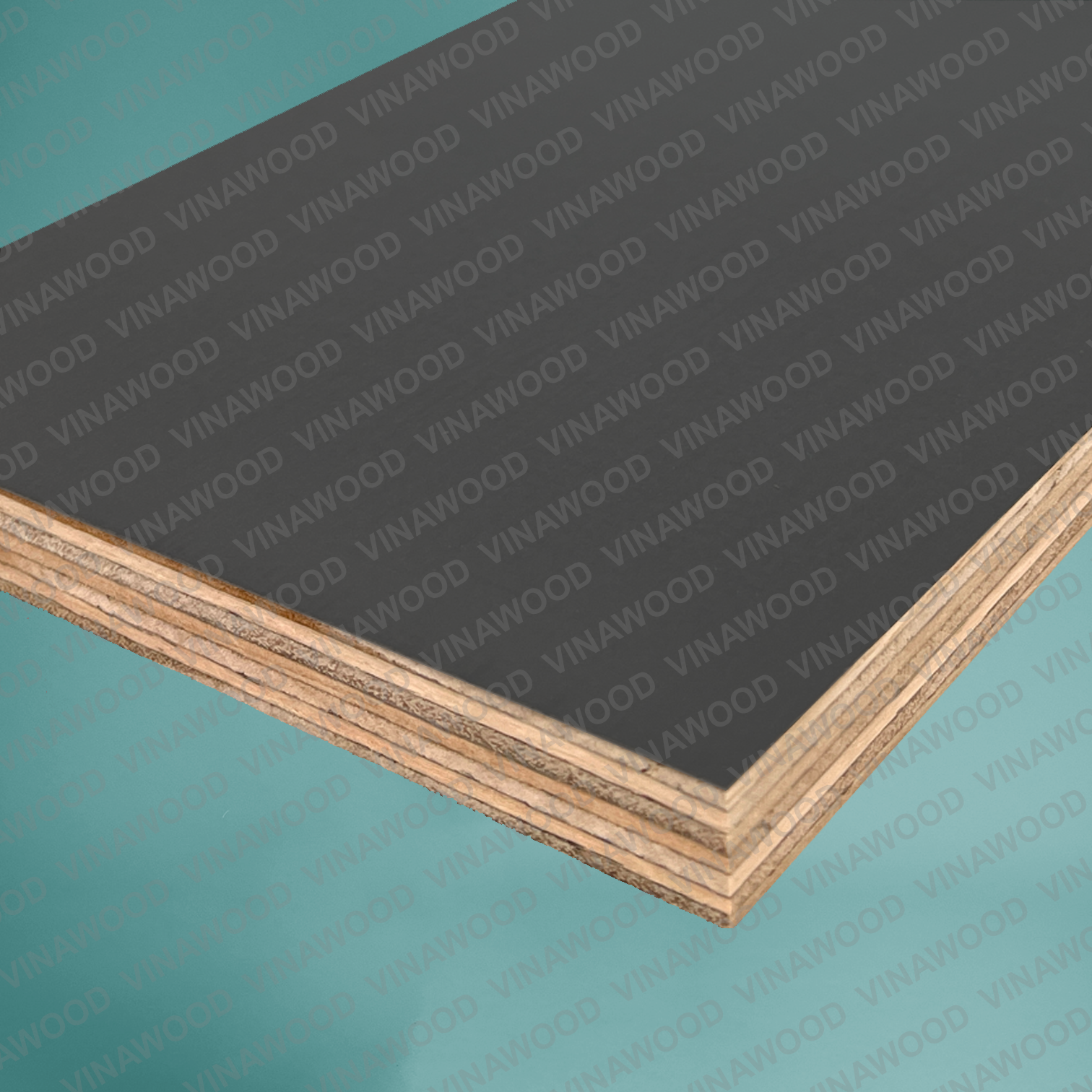
Repeat-pour work wants phenolic-bonded plywood at EN 636-3 (Class 3). Vinawood's Pro Form sits there, up to 20 reuses with disciplined edge care. Short runs of three to eight pours can run higher-melamine MUF at EN 636-2 (Class 2) for up to about 15 reuses — that's Form Extra. Longer life from the glue recipe, not a heavier face film. Same film as Form Basic.
Watch the word "melamine." Here it almost always means the core resin (MUF) bonding the plies inside an EN 636-2 formwork panel. Not kitchen-cabinet decorative laminate. Two products. One word.
Face film on columns: aim for 120 g/m² and above on industrial repeats. Ninety to 120 g/m² still finishes well on short-run residential work. Pro Form's own face film is 125 g/m²; Form Basic / Form Extra / Eco Form Plus typically run 165 g/m² phenolic face film over an MUF core.
Tie-rod holes: where reuse actually dies
Walk a site that's been running plywood column forms for two months. Same failure every time. Face film still looks fine. Corners bowed. Tie-rod holes wallowed out from pours, water and rough stripping. That's the kill.
Three habits buy cycles. Seal every cut edge — including inside every tie-rod hole — the day you cut. Reuse tie cones; don't drive raw rods through the face. Pulling for architectural finish? Plug and fill the tie-hole on the strip cycle, not three days later when the concrete has set.
From our mill in Vietnam, the panels that show up in failure reports are almost never off-spec. They got dropped corner-first off a flatbed. Or sat in standing water for a week. Or got stripped with a crowbar instead of a wedge.
Reuse cycles: maximums, not minimums
Phenolic film-faced column panels (Pro Form, HDO range): up to 20 reuses if you look after the edges.
Higher-melamine MUF Class 2 (Form Extra): up to 15 with careful handling.
Standard MUF Class 2 sits lower on columns — corner stress is harder than wall or slab. Form Basic up to 10. Eco Form up to 6.
Ceilings, not floors. Strip fast, drop panels, skip edge seal and you'll hit half those numbers and still be "in spec." Run a tight strip-and-clean habit and you'll get the full count, sometimes a little more.
When NOT to spec plywood for column work
High-volume identical pours past about thirty units. Steel and aluminum modular amortize cleanly past that point. Strip-and-reset is faster. Finish stays consistent across the run.
Very tall single-lift columns over 4.5 m with no intermediate restraint. Lateral pressure gets nasty. Bracing a plywood-faced form starts costing more than the panel.
Architectural finish above ACI Class A. Vertical grain can telegraph through a light film at higher cycles, and patched tie-holes show. Spec says "no visible joints, no visible tie pattern"? Steel or aluminum with a smooth liner.
Sourcing checklist for column work
| Specification | What to ask for |
|---|---|
| Adhesive class | EN 314 Class 3 declaration for repeat pours; Class 2 acceptable for short runs |
| Face film weight | 120 g/m² minimum for industrial column work; 90+ for residential |
| Edge sealer | Factory-applied moisture-blocking edge paint, named product not "edge sealed" |
| US market | CARB P2 / TSCA Title VI certificate per shipment |
| EU market | CE marking (EN 13986), FSC or PEFC if buyer requires |
| Section sizes | Confirm panel size matches your yoke layout. 1220×2440 or 1250×2500 are the common formats |
Nothing exotic here. Same checklist a procurement manager writes for any film-faced order. On columns, film weight matters less than edge sealer and the EN 314 class on the cert.
The decision matrix
| Column scenario | Recommended spec |
|---|---|
| Rectangular 200–400 mm, ≤8 pours, residential | 18 mm Form Extra (MUF Class 2, up to 15 reuses) |
| Rectangular 200–400 mm, 8–20 pours, commercial | 18 mm Pro Form (PF Class 3, up to 20 reuses) |
| Rectangular 400–600 mm or tall (>4 m single lift) | 21 mm Pro Form |
| Faceted polygonal circular, single architectural pour | 18 mm Pro Form, mitred joints, factory-cut |
| True circular, repeat pours | Not plywood. Half-shells, fibre tube, or modular curved systems. |
| 30+ identical pours, infrastructure | Not plywood. Modular steel or aluminum. |
About Vinawood
Vinawood has been making plywood in Vietnam since 1992. Film-faced formwork covers EN 636-2 (Form Basic, Form Extra, Eco Form, Consply) and EN 636-3 (Pro Form, HDO range), with ISO 9001, CE under EN 13986 for Europe, and CARB P2 / TSCA Title VI for the US. We ship more than 5,000 containers a year to 55+ countries. For columns, lead with Pro Form on repeat-pour commercial work and Form Extra on short-run residential or feature columns. Full range: film-faced plywood collection. Longer glue-class comparison: melamine vs phenolic film-faced.
Category
how-to