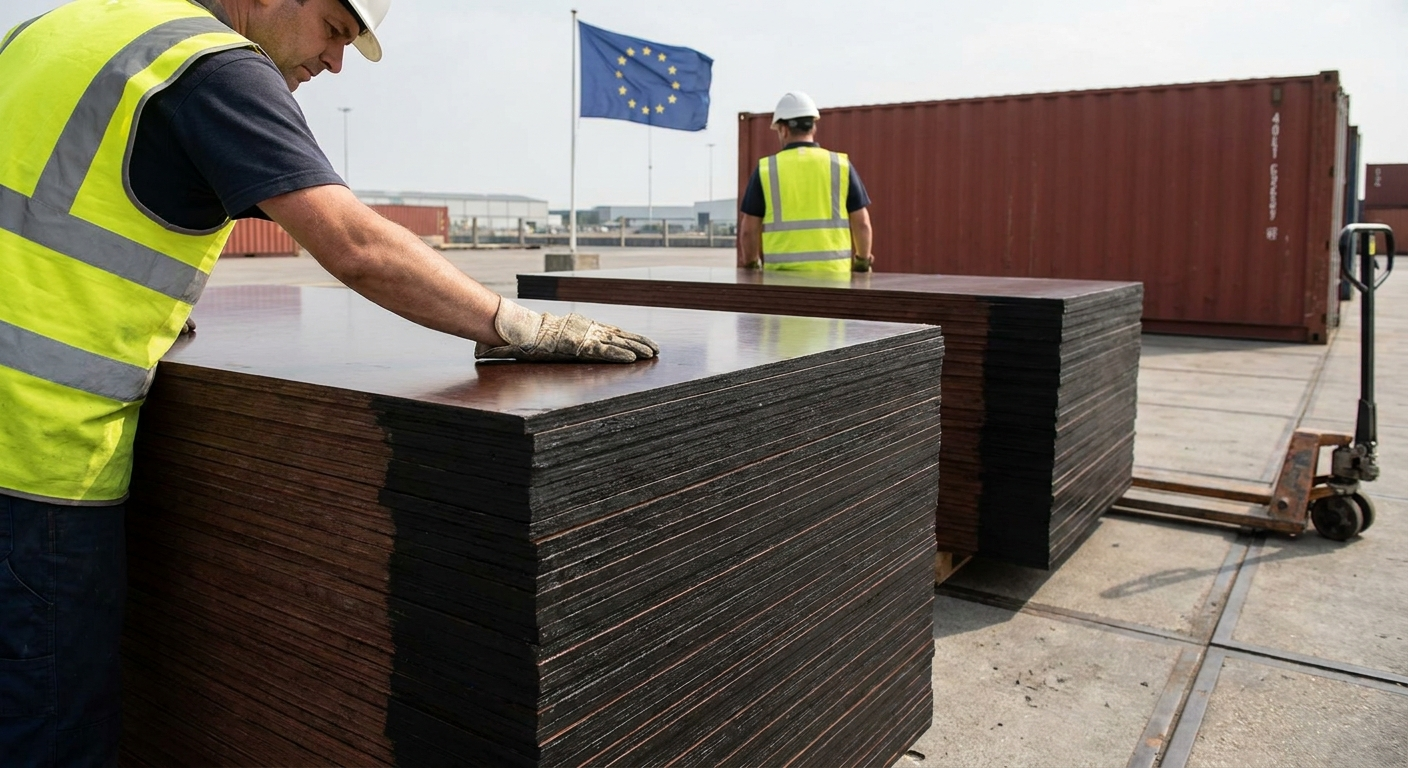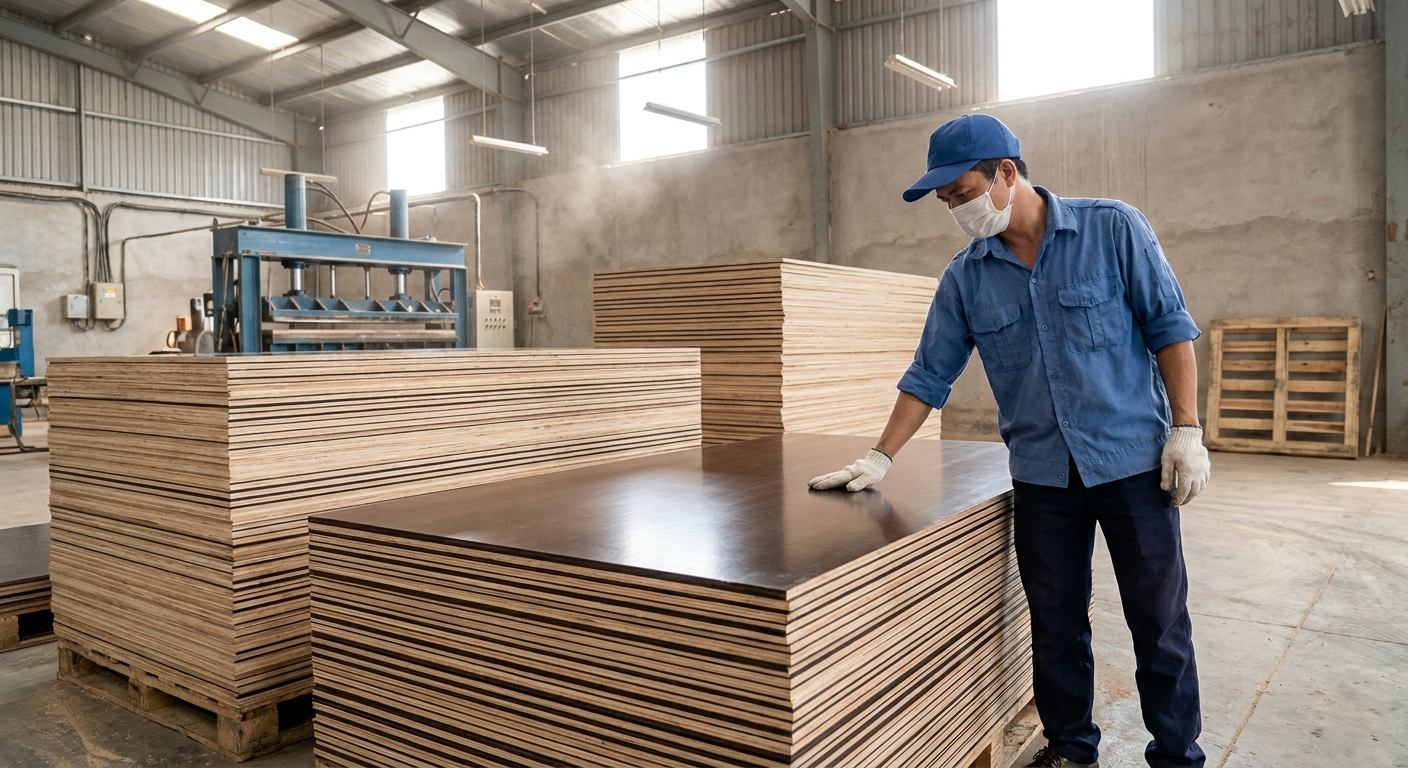
Plywood for Wall Formwork: When Plywood-Faced Forms Beat System Walls (and When They Don't)
When plywood-faced wall forms beat system formwork from Doka, PERI, MEVA, and ULMA, and when they don't. Cost-curve framework by pour-area, 18 vs 21 mm spec, one-sided pours, retaining walls, hybrid use on rented frames, and reuse cycle expectations for residential through commercial wall work.
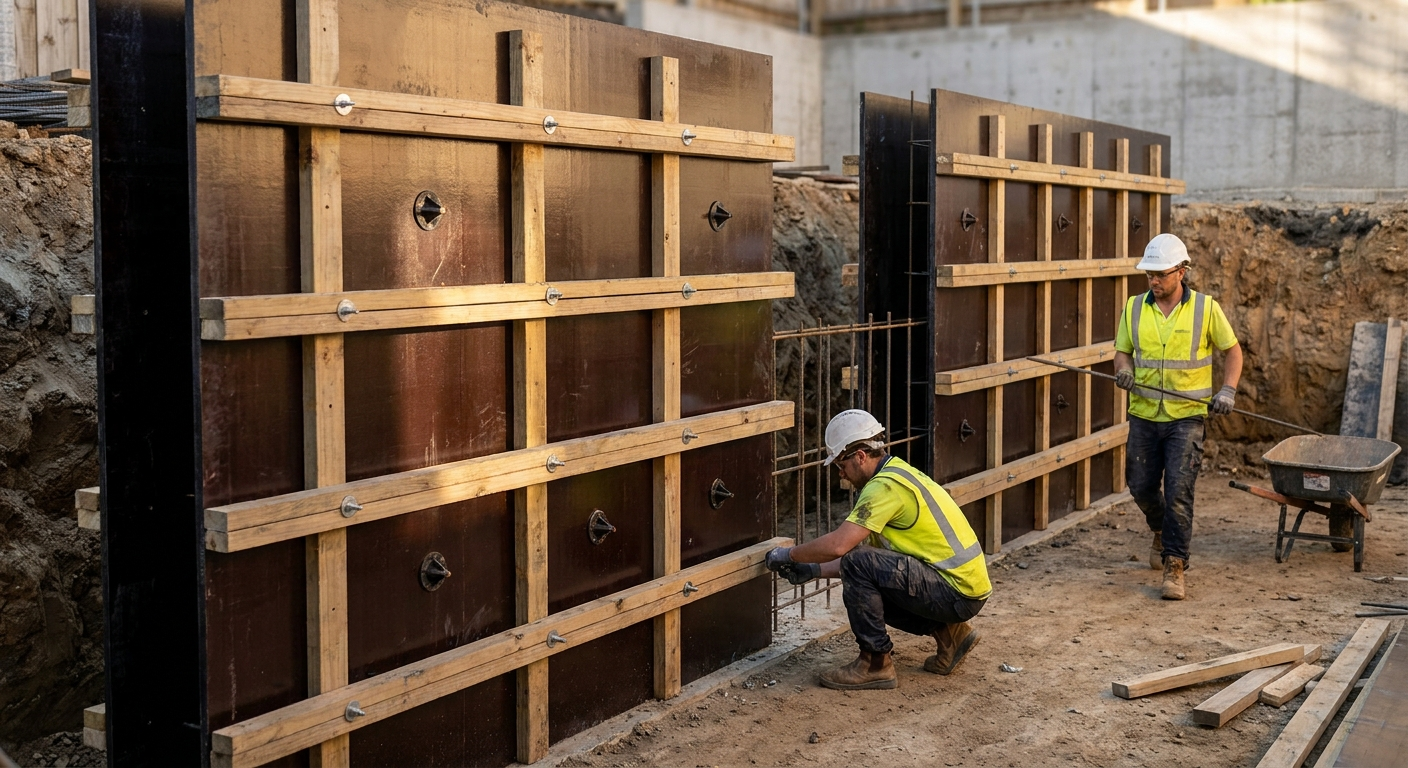
Type "wall formwork" and Google hands you rental catalogues. Doka Framax. PERI MAXIMO. MEVA Mammut. ULMA Comain. Somewhere an AI Overview waves at plywood for "complex" designs, then the page snaps back to modular. The cost curve for when a plywood-faced wall form wins? Missing.
Here it is. Not a pitch against system walls. The pour-area number where the math flips.
The four ways crews actually build wall forms
Four ways to form a wall. Geometry, how often you repeat, and which rental yard is closest pick the winner.
Site-built timber and plywood. Studs, walers, strongbacks, snap ties, dark brown phenolic film. Slowest build. Cheapest materials. Wins when the plan is weird. Hybrid: rent Framax or MAXIMO, bolt custom plywood as the skin — residential, retaining, one-off architectural. Handset modular: two people lift panels out of the container, standard sizes, fast cycle. Crane gangs (Top 50, VARIO, Mammut XT) for tall pours, repeat infrastructure, architectural finish.
Rough cost curve. Under ~500 m² of face, non-repeating or short run → plywood-faced usually cheapest landed. 500–2,000 m² of repeats → rental math gets close; judgment beats the spreadsheet. Past 2,000 m² of the same geometry → modular gangs win clean.
Where plywood-faced wall forms actually win
Four niches stay in the plywood column.
One-sided pours against earth or rock. No rentable system solves unbalanced thrust cheaply at small scale. Bracing truss plus plywood face is what most slope-cut residential foundations actually use.
Curved or irregular plan. Retaining walls under 30 m radius, faceted polygons, walls that step in and out. Modular doesn't bend. Plywood gets cut on the bench.
Short-run residential and retaining. Under about 500 m², no repeat panels. Rental fees, depot freight and modular assembly time don't pay for themselves on one basement.
Replacement faces on aging rented frames. Quiet segment. Big volume. Contractor keeps the steel or aluminum frame, bolts on fresh phenolic film-faced plywood when the original skin is shot. Shows up month after month in our export lists — Eastern Europe and the GCC especially.
Thickness, grade, and layout for plywood-only walls
Under 2.4 m lift, 600 mm studs, 1.5–2.0 m/hour pour rate: start at 18 mm phenolic film-faced. Walers ~400 mm centres mid-lift, open to 600 mm near the top. Strongbacks every 1.2 m. A 600 × 600 snap-tie grid is common; the formwork engineer still signs the layout.
Single lift past 3.0 m, or base pressure past ~50 kN/m² from a fast pour? Move to 21 mm. ACI 347 and CIRIA 108 set the model. Tall industrial walls at speed land around 60–95 kN/m² — modular's home turf. Residential, retaining, short commercial: 18 mm is enough.
Formats we move: 1220×2440 (NA/AU), 1250×2500 (EU/UK). Match frame or stud layout. Don't cut an EU panel down for a US hybrid frame — the offcut is expensive.
Hybrid use: replacing face panels on rented frames
Framax, MAXIMO, Mammut, Comain: designed for a replaceable plywood face. Heavy commercial use kills the original skin around 30–50 pours. Renting a fresh frame hurts. Bolting a new face on does not.
Buy checklist. Size must match the frame's tie-rod and bolt pattern — exactly. 1220×2440 and 1250×2500 cover most; odd sizes need a factory cut. Film ≥ original: 120 g/m² min on industrial walls, 90 g/m² ok on residential. Edge seal matters more on hybrid than on plywood-only — steel holds the panel rigid, edges still see water and concrete.
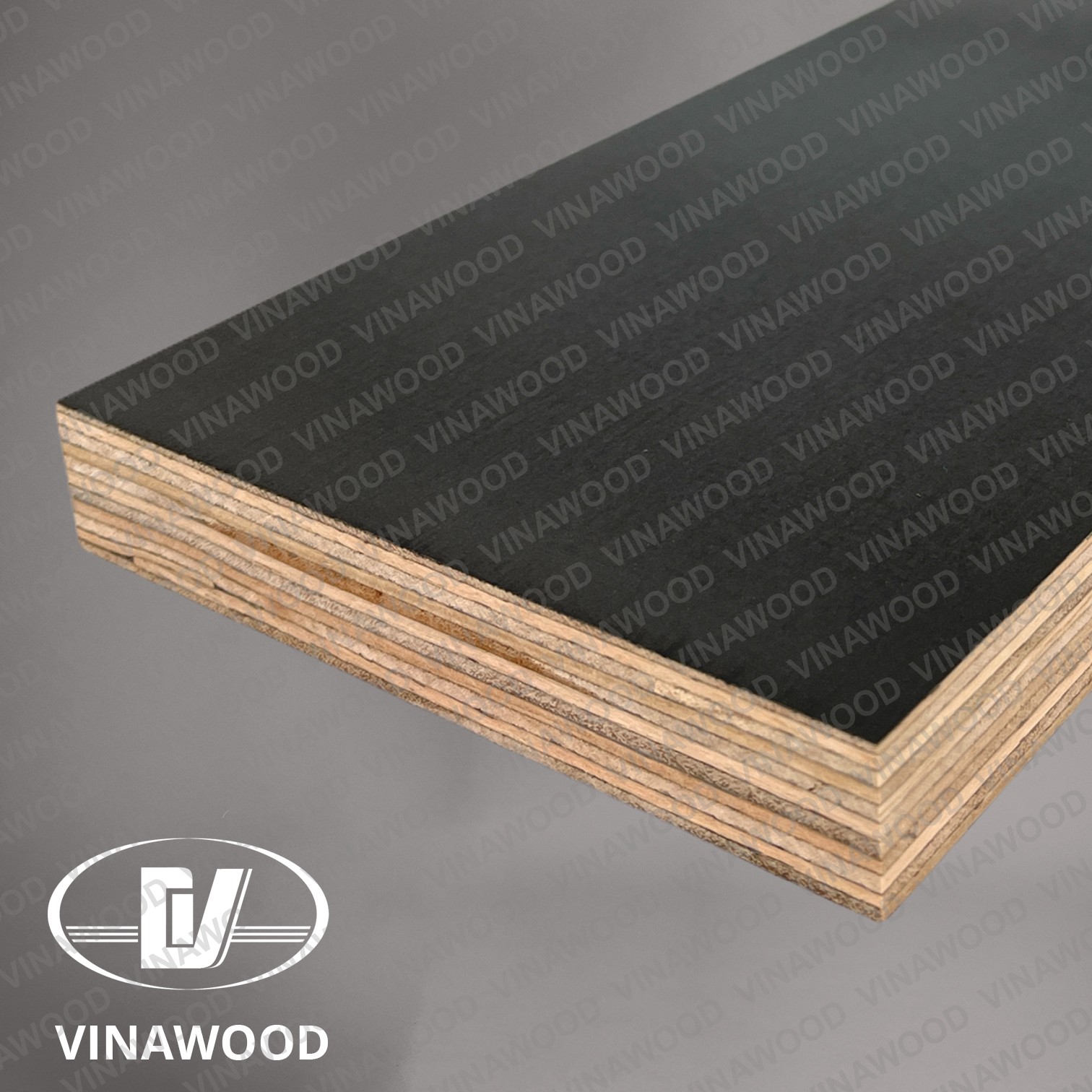
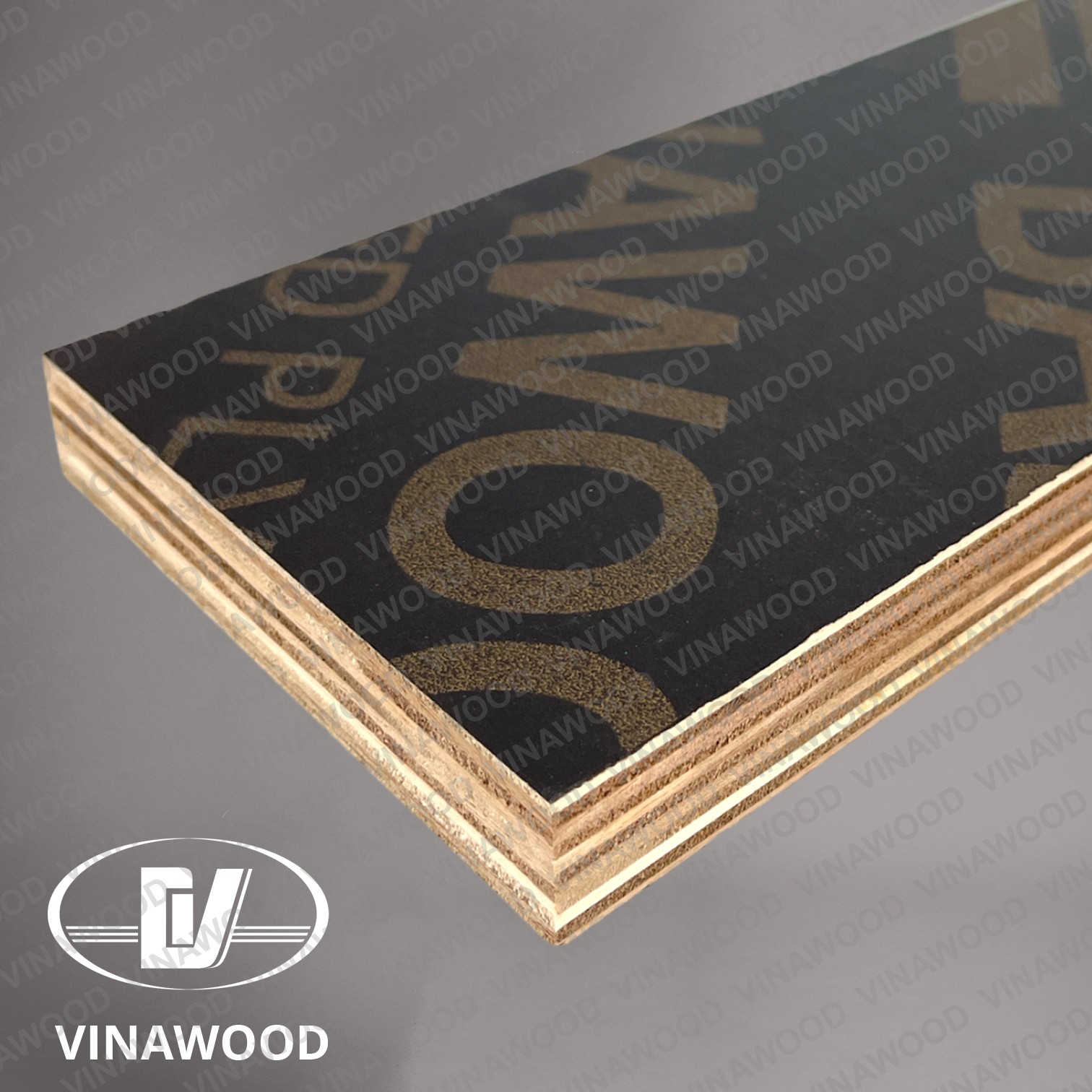
Pro Form fits here: phenolic-bonded EN 636-3 (Class 3), up to 20 reuses. Frame already paid. Spend on the face.
Adhesive class and film weight
Repeat walls, industrial faces over 100 m², hybrid rented frames → phenolic-bonded EN 636-3 (Class 3). Pro Form: 125 g/m² film, up to 20 reuses if you seal the edges.
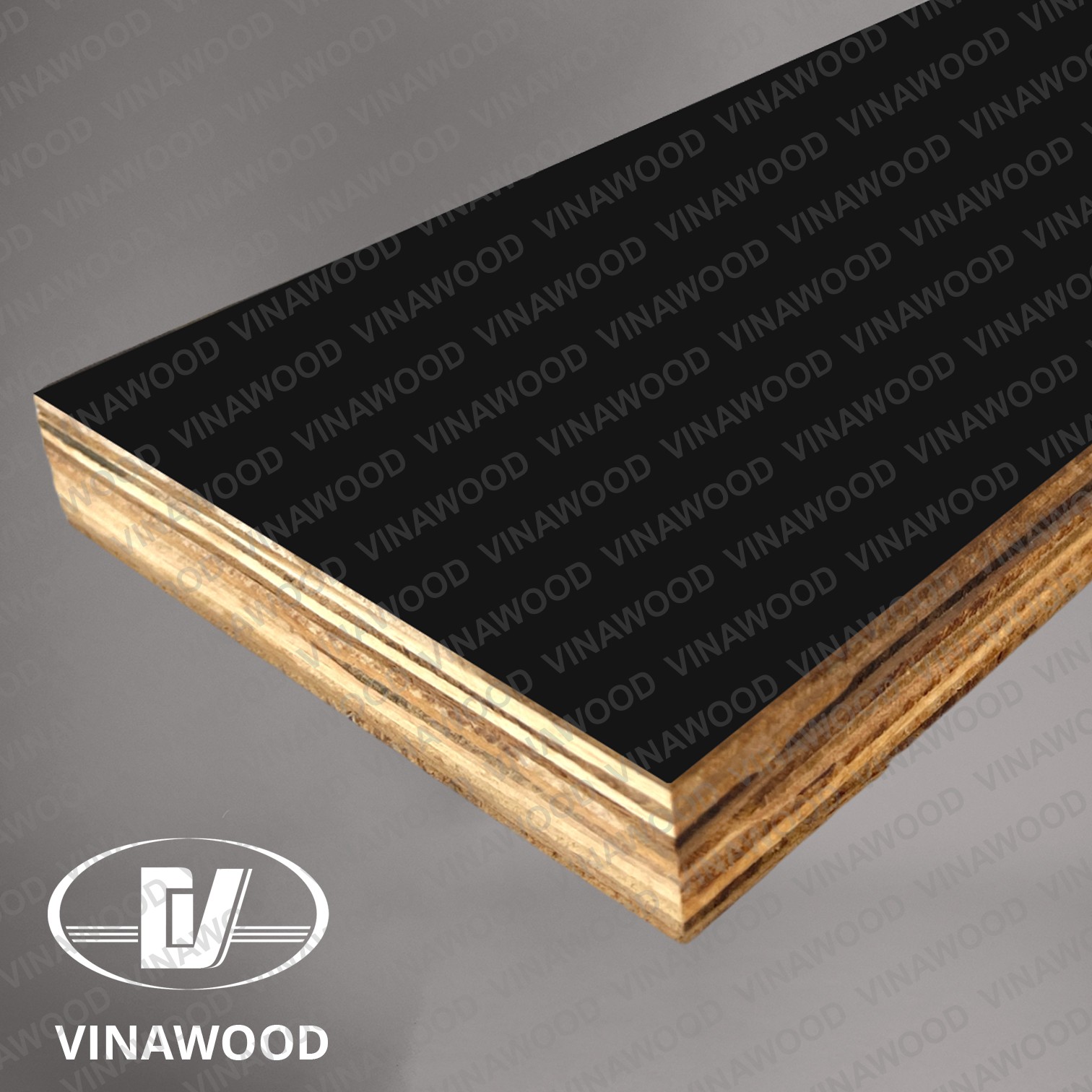
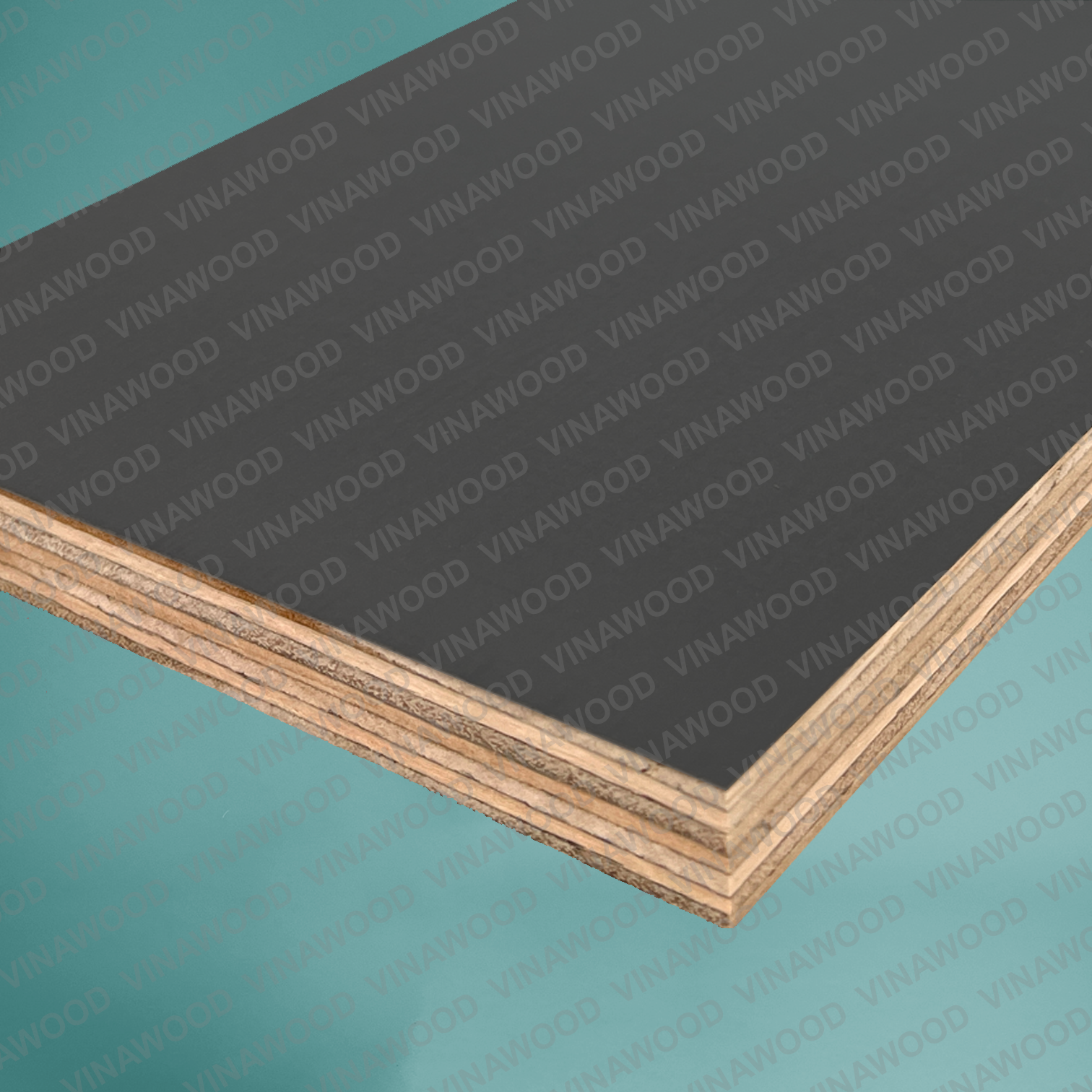
Short residential and retaining → higher-melamine MUF Class 2 (EN 636-2). Form Extra, up to 15. Extra cycles vs Form Basic come from glue chemistry, not a thicker film. Both typically wear ~165 g/m² phenolic face film over an MUF core.
"Melamine" in our formwork notes almost always means that MUF core resin. Not kitchen laminate. Two products, one word — see melamine vs phenolic film-faced.
Film targets stay simple: ≥120 g/m² industrial; 90–120 g/m² residential foundations. Both stocked in the film-faced collection.
One-sided wall formwork
One-sided pours are where plywood-faced forms still have no small-scale modular twin. Basement cut into a slope. Retaining wall against rock. Pool against earth. No opposite face means no symmetric tie-rods.
Working answer: bracing truss anchored into the slab or rock, plywood form as the concrete skin. Snap ties into the truss on the formed side only. Other face hard against earth or rock.
Three details every one-sided pour surfaces. Truss must take full hydrostatic pressure on a single face — nothing shares the load. Tie-backs into slab or earth get sequenced before the pour, not after. Blowout at the base is harder than on symmetric walls: nothing to push against.
Retaining walls specifically
Residential retaining walls under about 3.5 m still run timber and plywood. Geometry too irregular for handset modular. Volume too low for gangs. Lumber is usually already on site. Drop-in is the plywood face.
Three layout calls.
Lift sequence. Walls over 2.5 m usually take two lifts, cold joint at the batter change or below grade where it won't show. Slow the pour on tall lifts so design pressure stays in range.
Drainage cones. Weep holes come from cone inserts in the back-side plywood, often on a 1.5 m grid. Face has to take repeated coring without splitting at the cone.
Finish class. Below-grade or landscape retaining: ACI Class B or C. Visible architectural: Class A — higher film weight or a fresh face rotation helps.
Reuse cycle expectations
Phenolic film-faced wall panels (Pro Form, HDO range): up to 20 reuses if you mind the edges and snap-tie holes.
Higher-melamine MUF Class 2 (Form Extra): up to 15 on walls — snap-tie pattern is kinder than column work.
Standard MUF Class 2 sits lower: Form Basic up to 10, Eco Form up to 6.
What kills wall panels: snap-tie hole swell when ties run without cones, dropped forms on strip, rough stripping where the panel meets the strongback. From our mill in Vietnam, claims almost never come back as off-spec panels. Crowbar instead of a wedge. Flat on wet ground.
Form release, ties, and off-form finish class
What strips off the wall hangs on three things.
Release dose. Too little → patchy face. Too much → dust and oil stains. Two thin coats, low-pressure spray, dry between.
Snap-tie grid. It shows on anything below Class A. Symmetric, or tucked behind a control joint? Call it at layout.
Finish class. Class A needs fresh film, controlled ties, fast strip. Class B for visible commercial. Class C for basements and below-grade where defects are normal. Rotate panels to the target.
When NOT to spec plywood-faced walls
Identical pours past about 2,000 m² of face. Modular gangs amortize. Strip-and-reset is faster. Finish stays consistent across the run.
Single-lift industrial walls over 4.5 m. Bracing a plywood-faced form that tall costs more than the panel. Modular handles the pressure better.
Finish above Class A. Vertical grain can telegraph through a light film at higher cycles. Spec says "no visible joints, no ties, no grain"? Steel gang with a smooth liner.
Sourcing checklist
| Specification | What to ask for |
|---|---|
| Adhesive class | EN 314 Class 3 for repeat pours and hybrid use; Class 2 acceptable for short runs |
| Face film weight | 120 g/m² minimum for industrial walls; 90 g/m² and up for residential |
| Panel format | 1220×2440 mm for NA/AU; 1250×2500 mm for EU/UK; must match frame system |
| US market | CARB P2 / TSCA Title VI certificate per shipment |
| EU market | CE marking (EN 13986), FSC mix or 100% if green-building spec applies |
| UK market | UKCA marking, FSC where required |
| Hybrid use on rented frames | Confirm panel size matches the frame's tie-rod and bolt pattern |
Decision matrix
| Wall scenario | Recommended spec |
|---|---|
| Residential basement, ≤500 m² pour face | 18 mm Form Extra (MUF Class 2, up to 15 reuses) |
| Retaining wall, ≤3.5 m high, ≤500 m² | 18 mm Form Extra or Form Basic |
| One-sided pour against earth/rock | 18 mm Pro Form on bracing-truss system |
| Hybrid use on rented Doka/PERI/MEVA frame | 18 mm Pro Form (EN 636-3, up to 20 reuses) |
| Commercial repeat walls, 500–2000 m² | 18 mm Pro Form |
| Tall industrial single-lift >4.5 m | Not plywood-only. Modular handset or crane-handled gang. |
| Architectural Class A finish, repeat pours | Not plywood-only. Steel gang with smooth liner. |
About Vinawood
Vinawood has made plywood in Vietnam since 1992. Film-faced covers EN 636-2 (Form Basic, Form Extra, Eco Form, Consply) and EN 636-3 (Pro Form, HDO range), with ISO 9001, CE under EN 13986 for Europe and the UK, and CARB P2 / TSCA Title VI for the US. More than 5,000 containers a year to 55+ countries. Walls: lead with Pro Form on repeat commercial and hybrid rented frames; Form Extra on residential foundations and retaining short-runs. Horizontal decks: slab formwork plywood guide.
Category
how-to