Plywood for Slab Formwork: Thickness, Grade & Layout Guide
Slab formwork plywood is a soffit job: joist span, overlay, and bond class — not thickness alone. 18 mm film-faced on 400–500 mm centres is the workhorse; mill reuse is up to 8–20 by grade. Vinawood, est. 1992, factory-direct to 55+ countries.
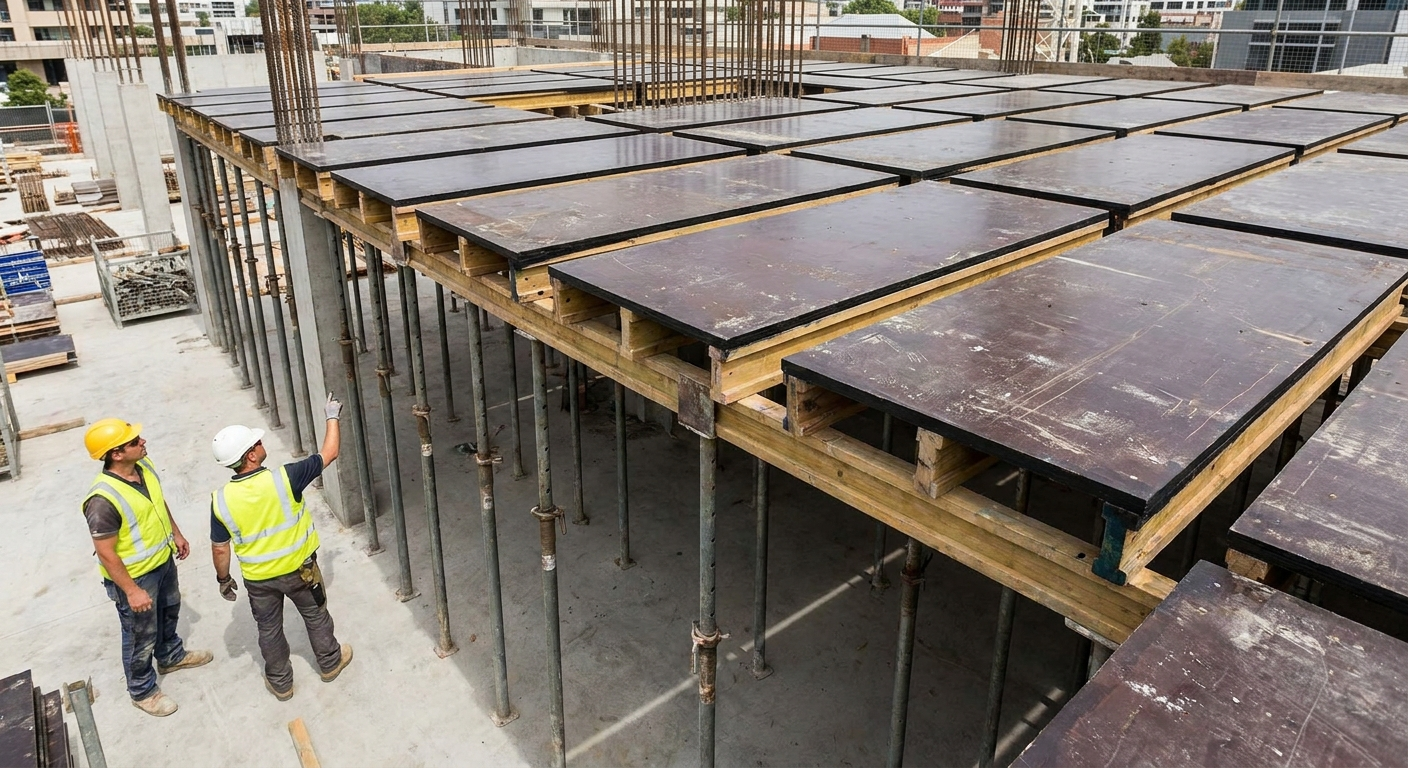
Slab formwork plywood is a soffit job before it is a thickness debate. The sheet sits flat under the full dead weight of wet concrete (about 24 kN/m³) plus live load from crews, bar, and anything parked on the deck. Sag becomes a permanent wave in the soffit, and on an exposed ceiling even 2–3 mm of dip already shows. Stiffness across the joists, the overlay on the face, and the bond class in the core decide that result together. Thickness on its own does not.
Vinawood is a Vietnam mill established in 1992, and we ship about 5,000 containers a year to 55+ countries. If you want millimetre-by-pour numbers, they're on the formwork plywood thickness guide. What you'll find here is different: how to lay out a soffit and which grade to put on it, written for buyers searching slab formwork plywood.
Why slab formwork is not wall formwork
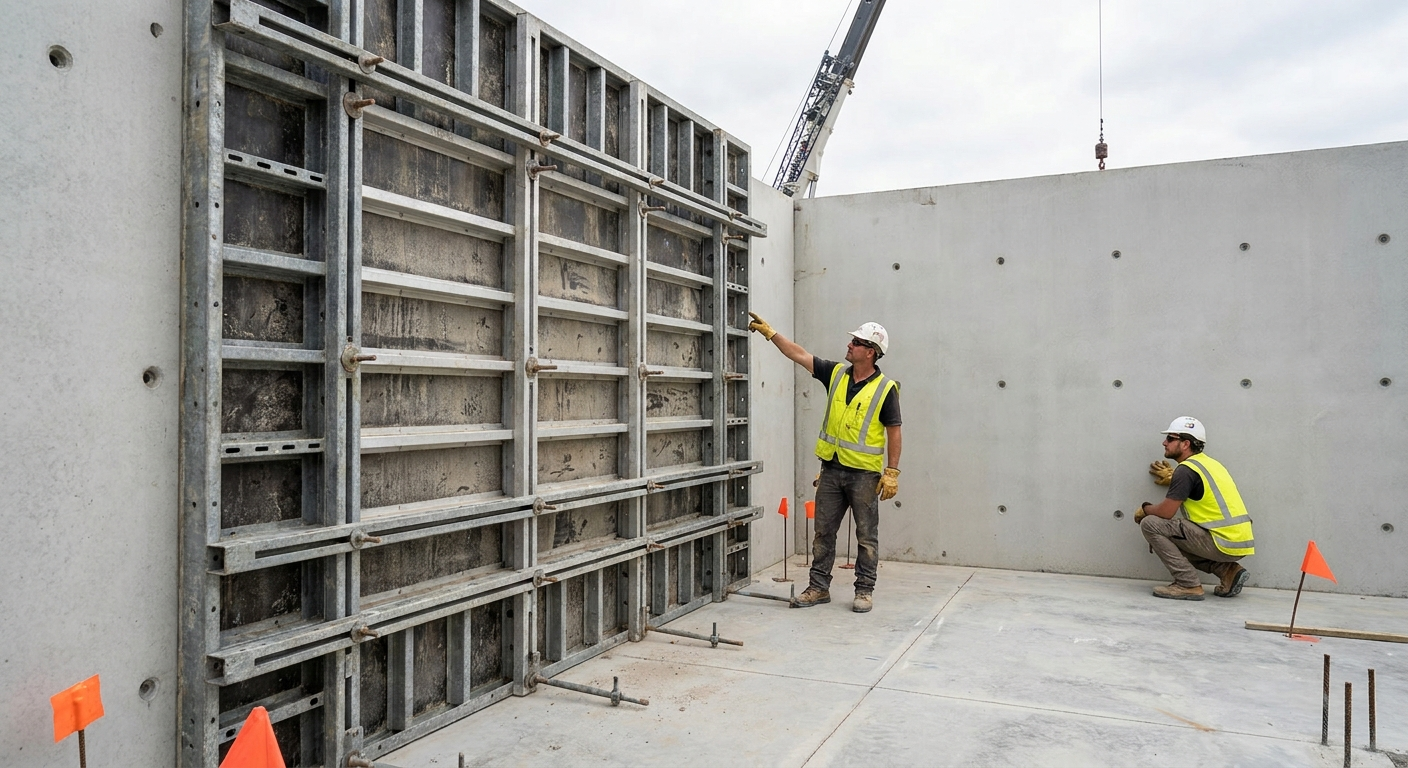
Wall formwork and slab formwork both use plywood as the forming face, but the load is not the same job. On a wall, the panel takes sideways pressure that's highest at the base and eases off toward the top, and a steel or timber frame carries most of that push anyway. On a slab, the sheet is the deck. That's why buyers go looking for plywood formwork for slab specifically, since the soffit often ends up as the finished ceiling rather than a wall face nobody will see.
What the mill needs from you, then, is span and overlay and bond class, not one millimetre figure. Contractor-forms language sits on plywood for concrete forms. An RFQ that just says "18 mm film faced" without joist centres leaves us guessing which soffit you have in mind.
Thickness by joist spacing (field table)
Thickness comes out of joist centres and the deflection limit. Treat the table below as a field rule of thumb for pours up to about 200 mm deep and nothing more. Once you get into deeper slabs or crane pads or staging loads, you want a formwork engineer, not a blog table.
| Joist spacing (mm) | 12 mm | 15 mm | 18 mm | 21 mm |
|---|---|---|---|---|
| 300 | Suitable | Suitable | Suitable | Over-specified |
| 400 | Not recommended | Suitable | Suitable | Suitable |
| 500 | Not recommended | Marginal | Suitable | Suitable |
| 600 | Not recommended | Not recommended | Marginal | Suitable |
Deflection limits. Exposed soffits in offices, flats and retail usually sit at L/270, meaning the most it can sag is the span divided by 270. Above a ceiling grid, where nobody sees the soffit, you can run looser. Tighten the limit and you need a thicker sheet or closer joists, which is why the same 18 mm panel can pass on one set of centres and fail on another.
The 18 mm workhorse. Most commercial slab plywood formwork worldwide still decks 18 mm film-faced sheets on 400–500 mm joist centres. Prop and beam makers design around that default. Handling weight stays sane, and stiffness holds for a standard 150–200 mm pour.
When 21 mm earns its keep. Go thicker once centres push past 500 mm, or the pour gets deeper than 200 mm, or the deck is going to carry an unusual live load. Stepping up one panel thickness can let you open the joist grid and save falsework. That trade-off is a site calculation, though. In the field, sizes usually mean 2440×1220 (NA/Asia) or 1250×2500 (Europe film-faced). Cut sheets still need edge support. Always.
Grade selection for slab work
Grade is about overlay durability and glue class. It has nothing to do with storey count. A 30-floor tower does not magically get 30 pours out of one sheet. The data sheet says reuse is up to N, and poor site care will still steal cycles from that. On Vinawood formwork the face film is phenolic, while MUF is the core glue on the lower rungs (it isn't a bare melamine overlay). So say which meaning you're after, whether that's core resin or face film, or decorative laminate.
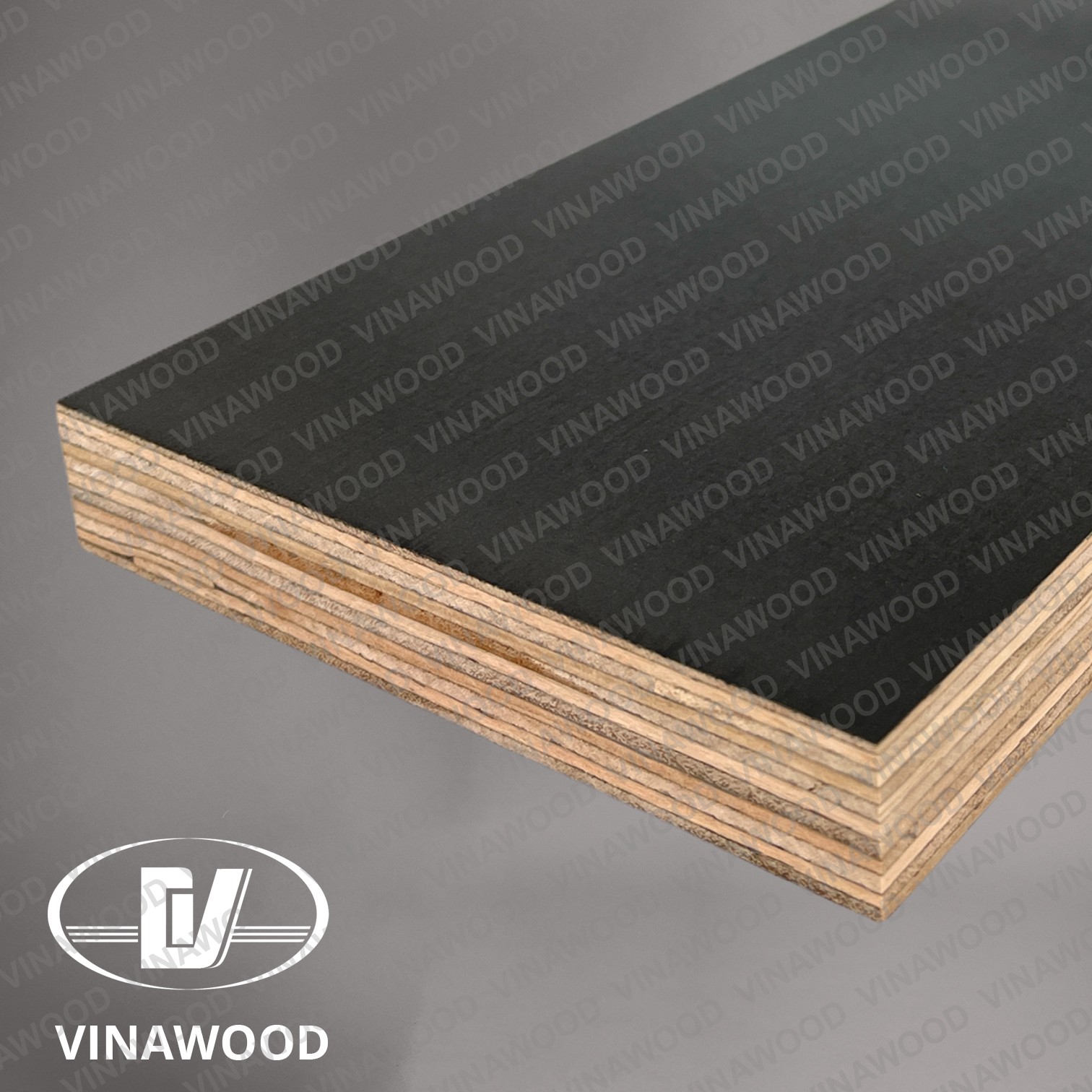
Eco Form Plus (WBP MUF, up to 8 reuses). Short residential decks, single-storey slabs, and work that will not see a second week of stripping. Acceptable finish for concealed soffits and slabs that take a topping. Do not spec it for architectural exposed ceilings.
Form Basic (EN 636-2, WBP MUF, up to 10 reuses). The commercial workhorse. Wet concrete sits on a slab panel for 24–72 hours before strip, longer than a typical wall pour, so the water-resistant glue line matters. Fine for concealed and moderately exposed soffits.
Form Extra (Superior Glue MUF, EN 636-2, up to 15 reuses). Same Class 2 envelope as Form Basic. The extra cycles come from glue chemistry, not a heavier face film, and not Class 3. Do not call Form Extra phenolic. Do not call it EN 636-3. I still see RFQs that write "Class 3" on a Form Extra line and then argue with the mill TDS. The card is EN 636-2. Read it.
Pro Form Lite (WBP phenolic, EN 636-3, up to 15 reuses). First PF/Class 3 rung, sitting between Form Extra and Pro Form. Use it when the engineer named Class 3 but the pour count does not justify full Pro Form film weight.
Pro Form (WBP phenolic, EN 636-3, up to 20 reuses). This is the one for long-cycle high-rise soffits and exposed architectural decks, where Class 3 glue gives you margin in wet weather. Floor count is still not a reuse number.
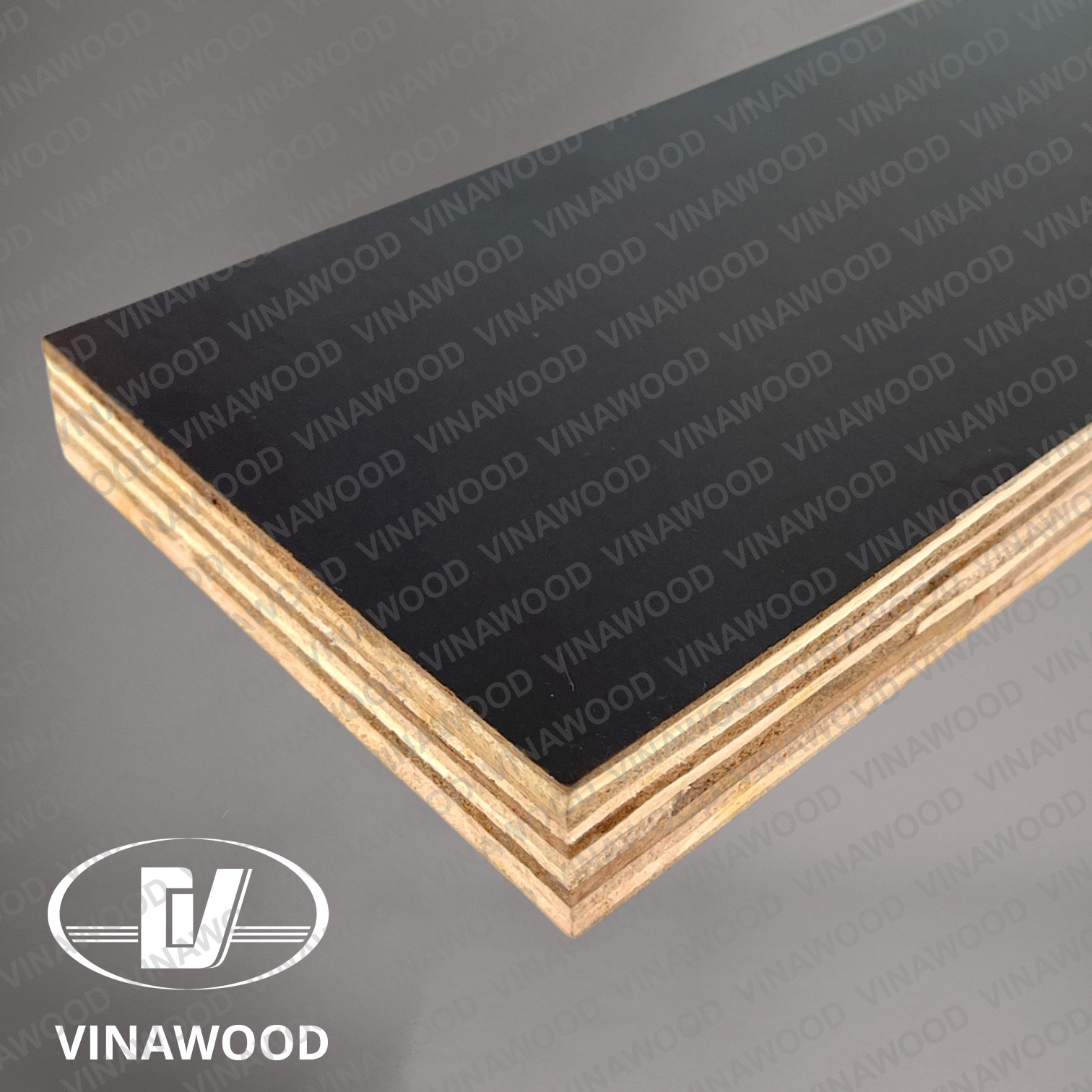
US and Canadian soffit buyers often search HDO or MDO rather than film-faced. Vinawood's North American overlay pair is the HDO plywood range (HDO Basic Class 2, up to 10; HDO Premium / Premium HD phenolic Class 3, up to 20) and MatteFace Plywood (MTF). MatteFace is a matte phenolic surface film for formwork only, up to 15 reuses. Buyers often search for MatteFace as MDO formwork plywood. MDO stays a search term, not a Vinawood product name.
Only Pro Form, Pro Form Lite, HDO Standard and HDO Premium are Class 3; HDO Basic is Class 2. Form Extra is MUF. P-Form is polypropylene, not Pro Form. Consply is commercial Bintangor, not film-faced. Rule of thumb for Europe film-faced: under 8 pours, Eco Form Plus; around 10, Form Basic; up to 15 without Class 3, Form Extra; Class 3 at 15, Pro Form Lite; up to 20, Pro Form. Browse the film-faced plywood collection for the Europe line.
Panel layout that protects the soffit
How you lay the sheets on the falsework changes both stiffness and the soffit you strip. Grade will not save a bad layout.
Face grain across the joists. Plywood spans better across its outer veneer, so the face grain should run perpendicular to the joists holding it up. Take a 1220×2440 sheet with joists on the short run: the long edge sits across them. Turn it the other way and you've given away deflection you never needed to buy.
Stagger joints between rows. Offset adjacent rows by at least half a sheet so short-edge joints do not line up. A continuous joint is a ridge waiting to print through the concrete. Half-lap the rows. Do not "make it neat" by lining every seam.
Support every edge. Every cut needs a joist, bearer or trimmer under it. An unsupported edge dips under wet concrete and leaves a lip, and it's worst around stair voids and lift shafts (risers too), where sheets get cut to odd shapes. If you see a cut edge hanging, add a bearer.
Close the joints. Butt edges tight. A 2–3 mm gap lets paste bleed and leaves fins you then grind. Swollen sheets that will not close get foam tape, not a shrug. Grout loss is a labour bill, not a mill defect.
Release agent before the sheet goes down. Once rebar is on the deck you cannot coat evenly. Treat panels on the stack, then place them. Miss a patch and the next pour takes the overlay with it.
Slab plywood vs steel, aluminium, plastic
Plywood is not the only soffit deck. Steel, aluminium tables, and plastic all have a job. None of them get "up to 50" film-faced cycles — film-faced reuse is the mill up to N on the grade card above.
Steel deck panels. Heavy and slow to cut. On identical bays with a crane nearby they'll last a long time, but irregular grids and small sites won't thank you for them. And please don't send us another mill's name and ask us to "match" it.
Aluminium table forms. Fast set and strip on repetitive high-rise plates, with high first cost. The plywood deck inside the table still follows the same thickness and grade rules on this page. The table is the handling system. The sheet is still the soffit face.
Plastic formwork. Light and fine for simple low-rise shapes. Structural capacity at a given thickness is lower than film-faced, and finish quality jumps around. A fallback when plywood supply is tight, not a default for exposed commercial soffits.
For most slab plywood formwork, from house foundations through office plates, film-faced still wins on cut-to-fit and soffit smoothness. Full overlay-vs-system comparison is on formwork plywood alternatives.
Maintenance that keeps the "up to N"
A slab sheet lives a harder life than a wall sheet. Full wet load sits on the phenolic face film for 24–72 hours, so alkaline paste has time to bite. The core glue (MUF on Eco Form Plus / Form Basic / Form Extra; PF on Pro Form Lite / Pro Form) is what holds the veneers if water reaches a cut edge. Face film is not glue. Glue is not decorative laminate. Name which "melamine" you mean: on this range it is core MUF, never a bare melamine overlay.
Clean the same day you strip. Residue bonds harder after a long soffit dwell. Use plastic scrapers and water. Metal tools chew the film and you just spent a reuse.
Check for a permanent bow. Overload or wide centres can leave a set. Run a straightedge across the face after wash. More than about 2 mm of bow across the width means drop that sheet to concealed-soffit duty or retire it.
Re-seal cut edges. Mill edge-sealer is water-resistant / WBP. It does not turn a cut core into a marine panel. Site cuts lose that seal, so acrylic edge paint after each cycle on any chipped edge. Edge delamination is the usual killer.
Stack flat on bearers. Use three even bearers, and never lean a slab sheet against a wall. Between pours, look after the pack like the structural deck it still has to be.
What to put on a slab soffit RFQ
Near the end of every enquiry, send us this checklist. We need the soffit span (joist centres and pour depth) and the overlay you want, film-faced for Europe or HDO or MatteFace. Add the bond class (EN 636-2 or EN 636-3), the sheet size (2440×1220 or 1250×2500) and the emission class. That beats a vague "best plywood for slab" every time.
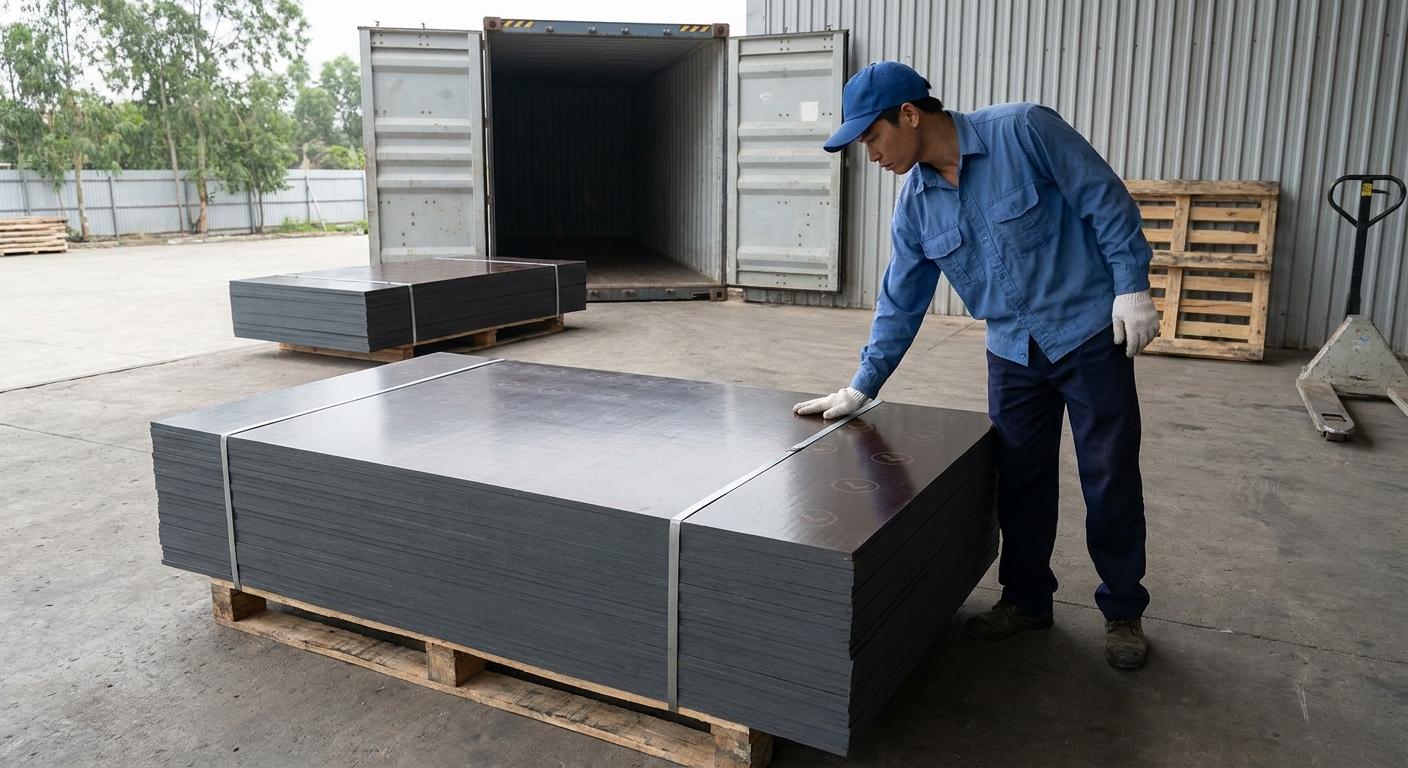
Vinawood has made formwork plywood since 1992. We ship about 5,000 containers a year to 55+ countries, and we run a 12-step process with 100% sheet inspection. We're a factory-direct mill of Vietnam origin, working with plantation-grown cores. There's no retail store. If your paperwork needs a shipping origin, ask sales.
Some North American distributors need ready stock and can't wait out a full container lead time. For them, Vinawood maintains distribution warehouses in Toronto, Vancouver, Calgary, Montreal, Miami, Houston, and Baltimore to supply local distributors. Mill orders still go factory-direct, so request a quote or request mill specs with the checklist above. We will map Eco Form Plus through Pro Form, or HDO / MatteFace for a North American soffit.
Category
guides