How to Store and Maintain Formwork Plywood for Maximum Reuse
Practical guide to storing and maintaining formwork plywood panels between pours — covering flat stacking, post-stripping cleaning, edge sealing, release agent application, and panel inspection to maximise reuse cycles.
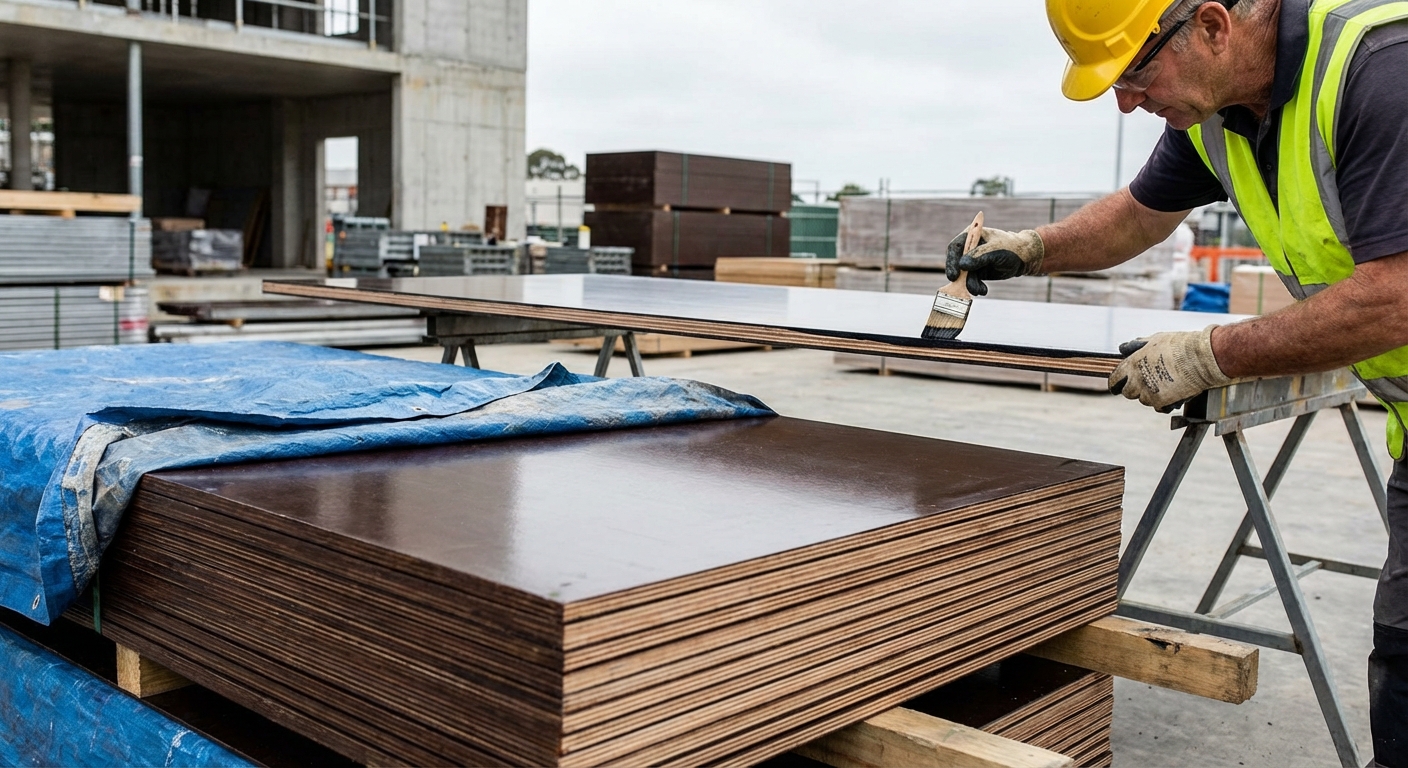
Why Storage and Maintenance Determine Your Cost Per Pour
The reuse rating printed on a formwork plywood data sheet is a maximum, not a guarantee. A Pro Form panel rated for up to 20 reuses will only reach that number if it is stored, cleaned, and maintained correctly between pours. Neglect any part of the maintenance cycle and the same panel might last eight pours — or fewer.
The financial impact is significant. A panel costing $38 that achieves 15 reuses delivers a cost per pour of $2.53. The same panel achieving only 8 reuses costs $4.75 per pour — an 88% increase in forming cost per square metre, compounded across every panel on the project. Proper maintenance is not optional; it is the single largest variable in formwork economics after the initial panel selection.
Storage Best Practices
How panels are stored between pours — and between projects — has a direct effect on their structural integrity and surface condition. The fundamentals apply regardless of panel type or brand.
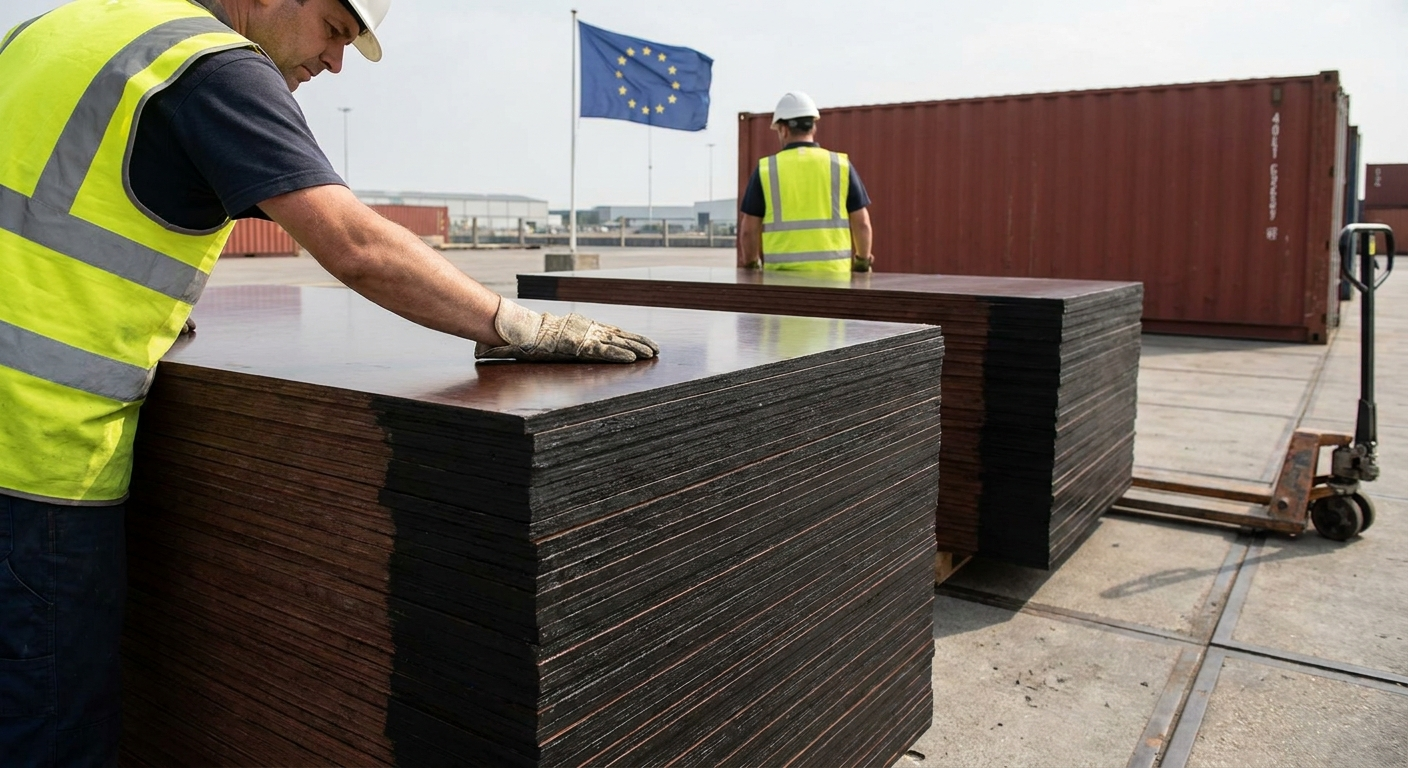
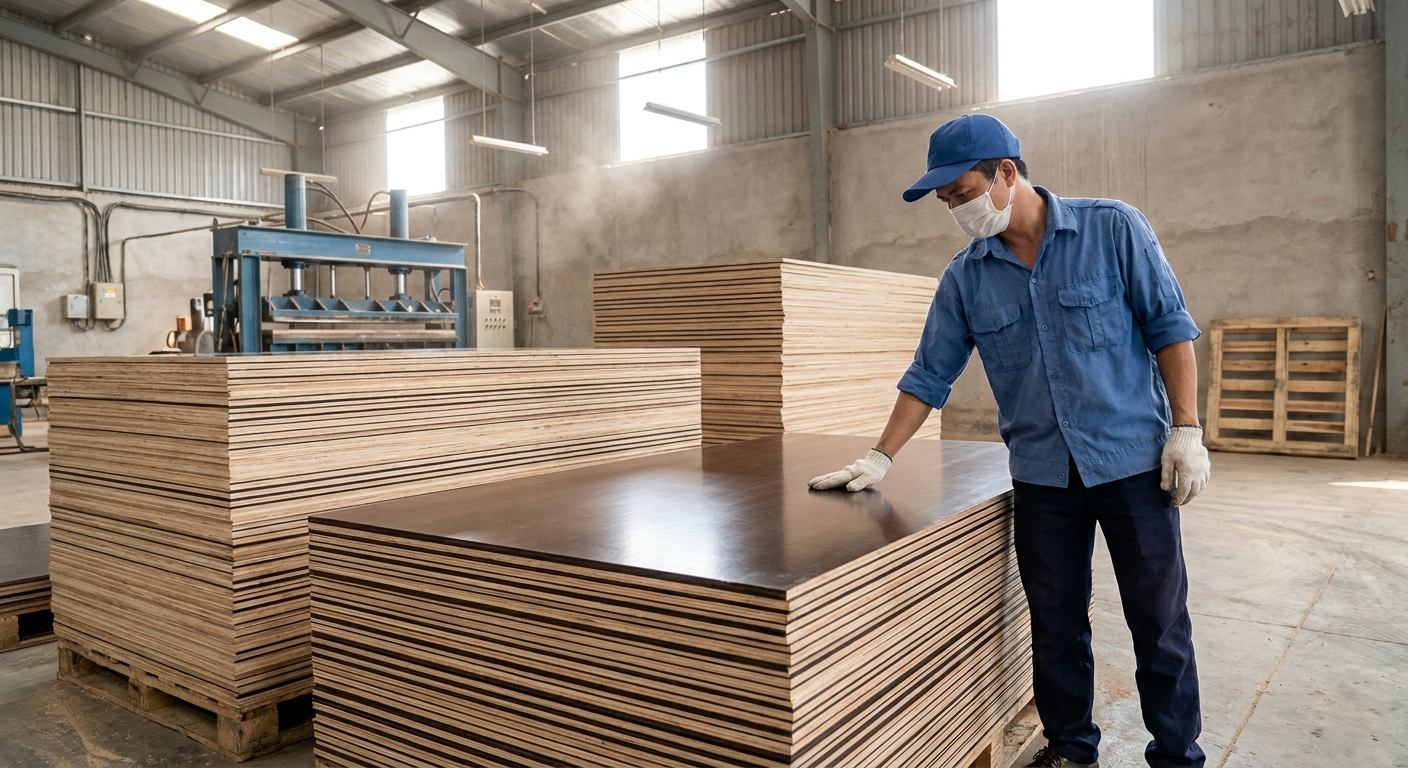
Stack flat on level bearers. Panels must be stored horizontally on a flat, level surface with at least three evenly spaced bearers supporting the full 2440 mm length. Bearers should be 75–100 mm wide timber or steel, positioned at each end and at the midpoint. Uneven support causes permanent warping that makes panels unusable for fair-face concrete work.
Keep panels off the ground. The bottom bearer should elevate the stack at least 100 mm above ground level to prevent moisture wicking from the slab or soil beneath. Direct ground contact is the fastest route to edge swelling and core degradation.
Protect from weather. Cover stacks with a waterproof tarpaulin or store under a roof. Leave the sides open to allow air circulation; trapped moisture accelerates degradation. A polythene-backed tarp is preferable to a sealed roof, which can trap condensation.
Keep stacks separate by thickness. Storing 18 mm and 21 mm panels in the same stack creates uneven bearing pressure and edge crushing. Use dedicated stacks or pallets to segregate by thickness.
Cleaning Between Pours
Concrete residue, cement paste, and water left on the surface between pours are the fastest routes to surface degradation and reduced reuse cycles. The cleaning process must be methodical and completed within hours of stripping.
Remove concrete immediately after stripping. Do not leave wet concrete on the surface overnight. Use a pressure washer or scraper to remove all residual concrete. On panels used for fair-face applications, be gentle: aggressive scraping can damage the film surface and reduce reusability.
Avoid abrasive cleaners. Sandblasting, wire brushes, and grinding are prohibited. These methods damage the phenolic film overlay and compromise the panel's bond line.
Use water or mild detergent. A pressure washer at 50–100 bar (2000–3000 psi) is ideal for removing loose concrete. For stubborn residue, a mild detergent solution works without damaging the surface. Rinse thoroughly with clean water and allow to dry completely before stacking.
Dry panels thoroughly. Standing water or persistent dampness leads to edge swelling and core rot. Panels should dry within 2–3 hours of cleaning under normal conditions. In humid climates or during winter, increase drying time or use mechanical drying (fans or heat lamps).
Inspect and document condition. Assign a responsible person to inspect each panel after cleaning. Document any damage, delamination, or surface degradation. Retire panels showing structural compromise before they fail on site.
Repairs and Maintenance Between Projects
Repairing damage between projects extends the life of panels and maximizes reuse cycles. However, repairs have limits — not all damage is economical to fix.
Minor surface damage. Small cracks, scratches, or chips in the film overlay do not require retirement if the core bond is intact. These can be sealed with epoxy or edge-seal tape to prevent water ingress and core delamination.
Delamination at edges. Delamination typically starts at the edges, where water has infiltrated the core. If caught early (small area, e.g., 50 × 50 mm), it can sometimes be arrested by applying edge-seal tape or epoxy. However, delamination that extends more than 100 mm from the edge or affects the panel's structural integrity requires retirement.
Major structural damage. Deep gouges, large cracks, or compression failures cannot be repaired cost-effectively and will compromise concrete finish quality. Retire these panels immediately.
Cost-per-pour rule for repairs. Only invest in repairs if the cost is less than 15% of a new panel's price. A repair costing $6 on a $38 Pro Form panel is justified. A repair costing $8 is not — retire the panel and invest in a new one.
The Bottom Line: Maximum Reuse is a Choice
A Pro Form panel can deliver up to 20 reuses and a cost per pour of $2.53 — but only if every step of the maintenance cycle is completed correctly. This is not a feature of the panel; it is a reflection of diligent site management.
For projects operating 50+ pours, proper storage and maintenance deliver cumulative savings of thousands of dollars compared to neglect. For smaller jobs, the savings are proportionally smaller but still meaningful. Either way, the investment in a robust storage and cleaning protocol pays for itself within the first project.
Category
how-to