VinawoodVinawood *
Editor's Pick·12 min read

WBP Glue: What It Is, How It's Tested & Why It Matters for Plywood

Technical guide to WBP glue: what the adhesive performance standard means, which adhesive types achieve it, how EN 314 Class 3 bond strength is tested, and how buyers can verify WBP claims from plywood suppliers.


Key Takeaways
WBP (Weather and Boil Proof) is an adhesive bond performance classification, not a specific glue type. Multiple adhesive chemistries can pass the WBP boil test, but phenolic formaldehyde (PF) resin is the only one recommended for concrete formwork and marine applications due to its superior long-term durability. The current standard is EN 314 Class 3, which requires the bond to survive boiling water immersion without delamination. Always request third-party EN 314 Class 3 test certificates when evaluating suppliers — a WBP label without laboratory documentation is not a reliable quality guarantee.
WBP Glue: What It Is, How It's Tested & Why It Matters for Plywood

WBP is the most important three-letter abbreviation in plywood procurement — and the most misunderstood. Buyers specify "WBP glue" on purchase orders. Suppliers stamp "WBP" on packing lists. Yet WBP is not a glue type. It is a performance standard that describes how an adhesive bond behaves under extreme moisture and heat exposure. Understanding this distinction is the difference between procuring plywood that survives 40 concrete pours and plywood that delaminates after 3.

This guide explains what WBP actually means as an adhesive classification, which adhesive chemistries achieve it, how the bond is tested under EN 314 and BS 1203, and how to verify supplier claims before committing to a container order.

WBP Is a Performance Standard, Not a Glue Type

WBP stands for Weather and Boil Proof. It describes the result of an adhesive bond test — specifically, a bond that survives prolonged boiling water immersion without delamination. WBP is not a chemical formula, a brand name, or a specific adhesive product. Multiple adhesive chemistries can achieve WBP classification, but they differ significantly in long-term durability under real-world conditions.

This matters for procurement because two plywood panels both labelled "WBP" may use completely different adhesives with very different performance profiles. A panel bonded with phenolic formaldehyde resin and a panel bonded with melamine-urea-formaldehyde can both technically pass the WBP boil test — but only the phenolic bond will reliably survive 30+ concrete pour cycles in tropical humidity. The label is the same; the performance is not.

What Does WBP Mean? The Technical Definition

The WBP classification originated in British Standard BS 1203:1979, which defined four adhesive bond grades for plywood: INT (interior), MR (moisture resistant), BR (boil resistant), and WBP (weather and boil proof). The WBP designation required the adhesive bond to withstand a cyclic boiling test — repeated immersion in boiling water followed by drying — without the bond failing.

In the current European framework, BS 1203 has been superseded by EN 314-1 (test method) and EN 314-2 (bond quality classification). The three EN 314 bond classes map approximately to the older BS 1203 grades:

EN 314 ClassBS 1203 EquivalentTest ConditionApplication
Class 1INT / MRCold water soakInterior use only
Class 2BRHot water soak + drying cyclesHumid/outdoor protected conditions
Class 3WBPBoiling water immersion + drying cyclesExterior, marine, formwork — full weather exposure

When a buyer specifies "WBP glue" or "WBP plywood," the equivalent in current standards is EN 314 Class 3. Any test certificate or specification claim should reference this classification for the bond to be considered genuinely weather and boil proof. For a comprehensive guide to WBP plywood products and applications, see our complete overview.

Types of Adhesive That Achieve WBP Rating

Several adhesive chemistries can pass the WBP boil test under laboratory conditions. However, their long-term performance under real-world exposure differs substantially.

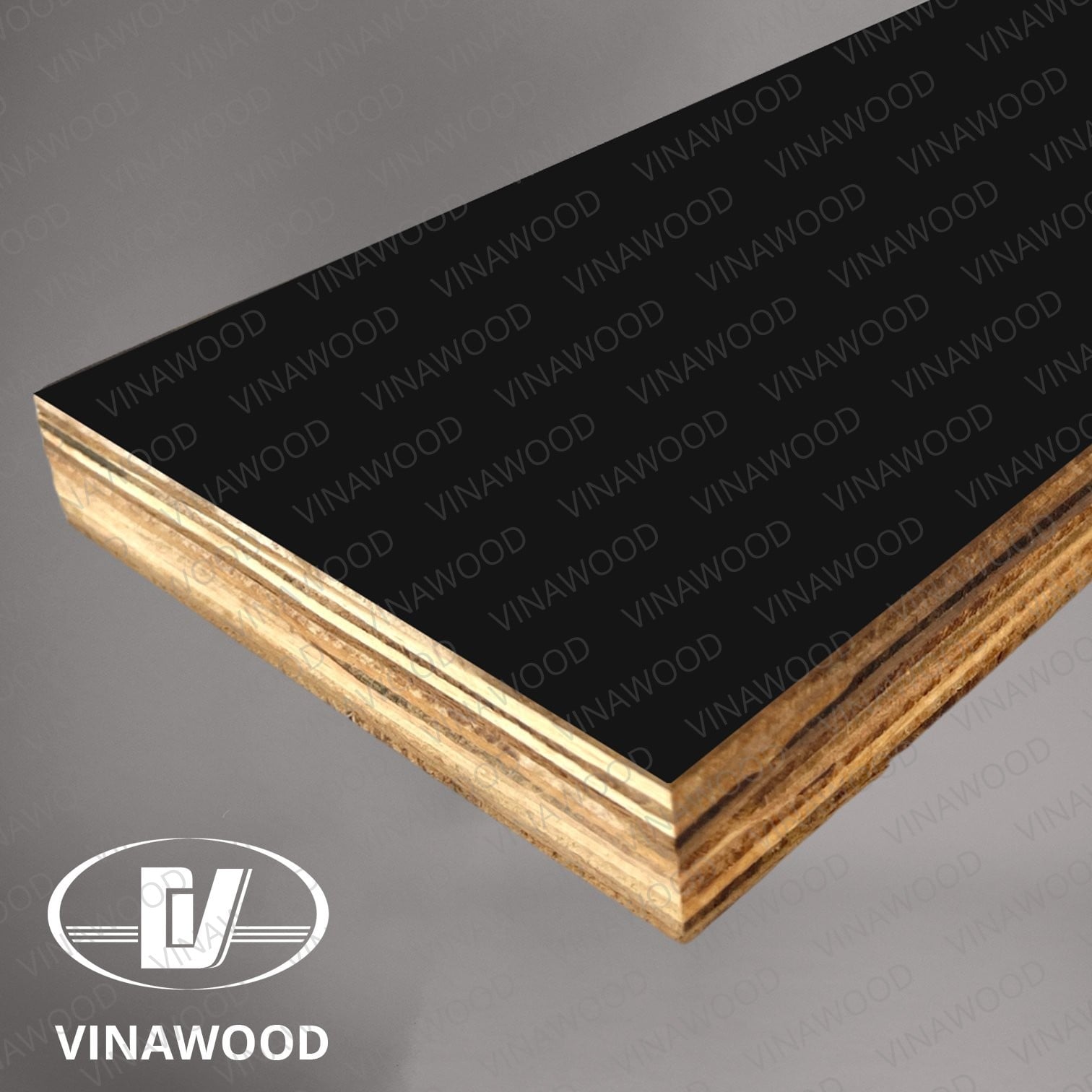
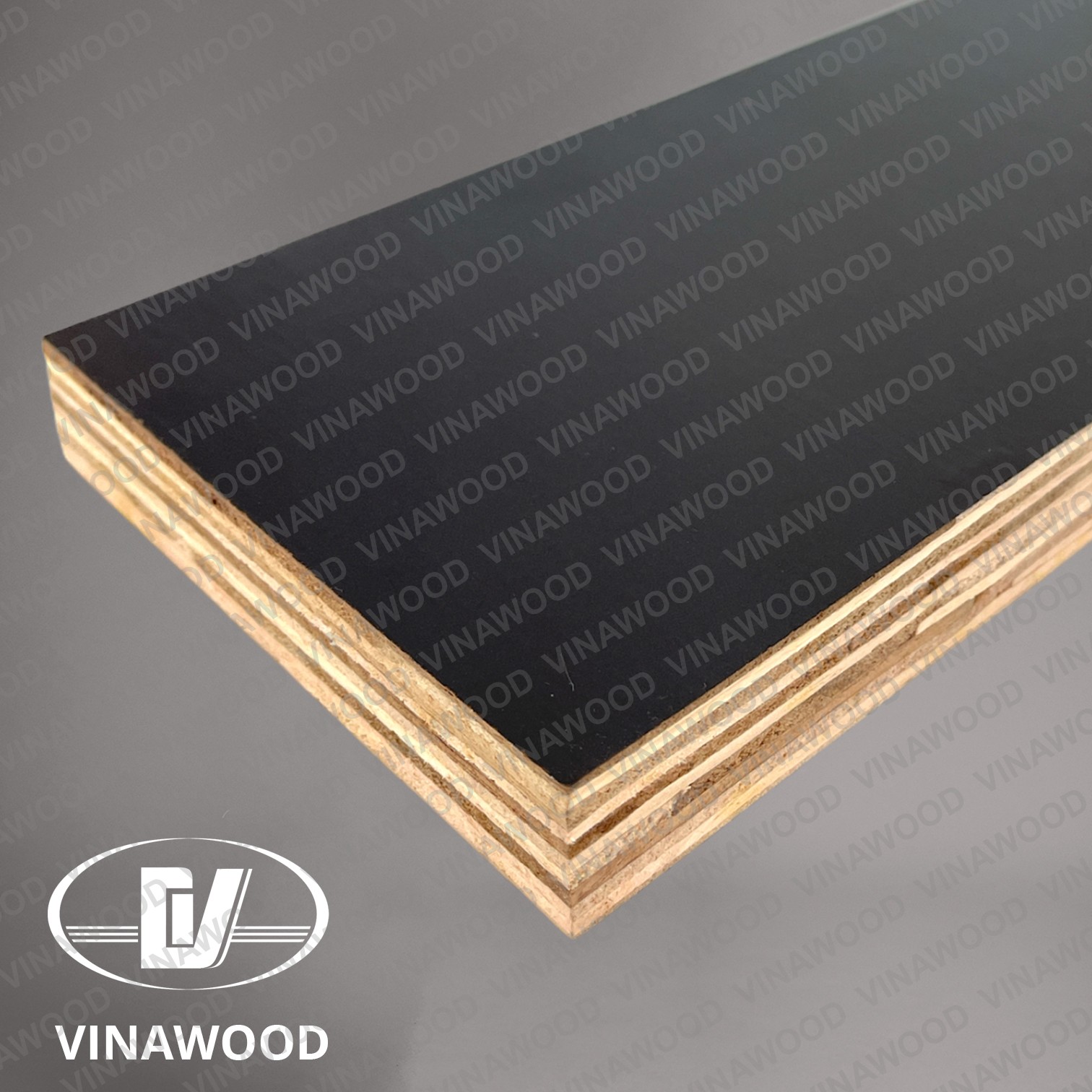
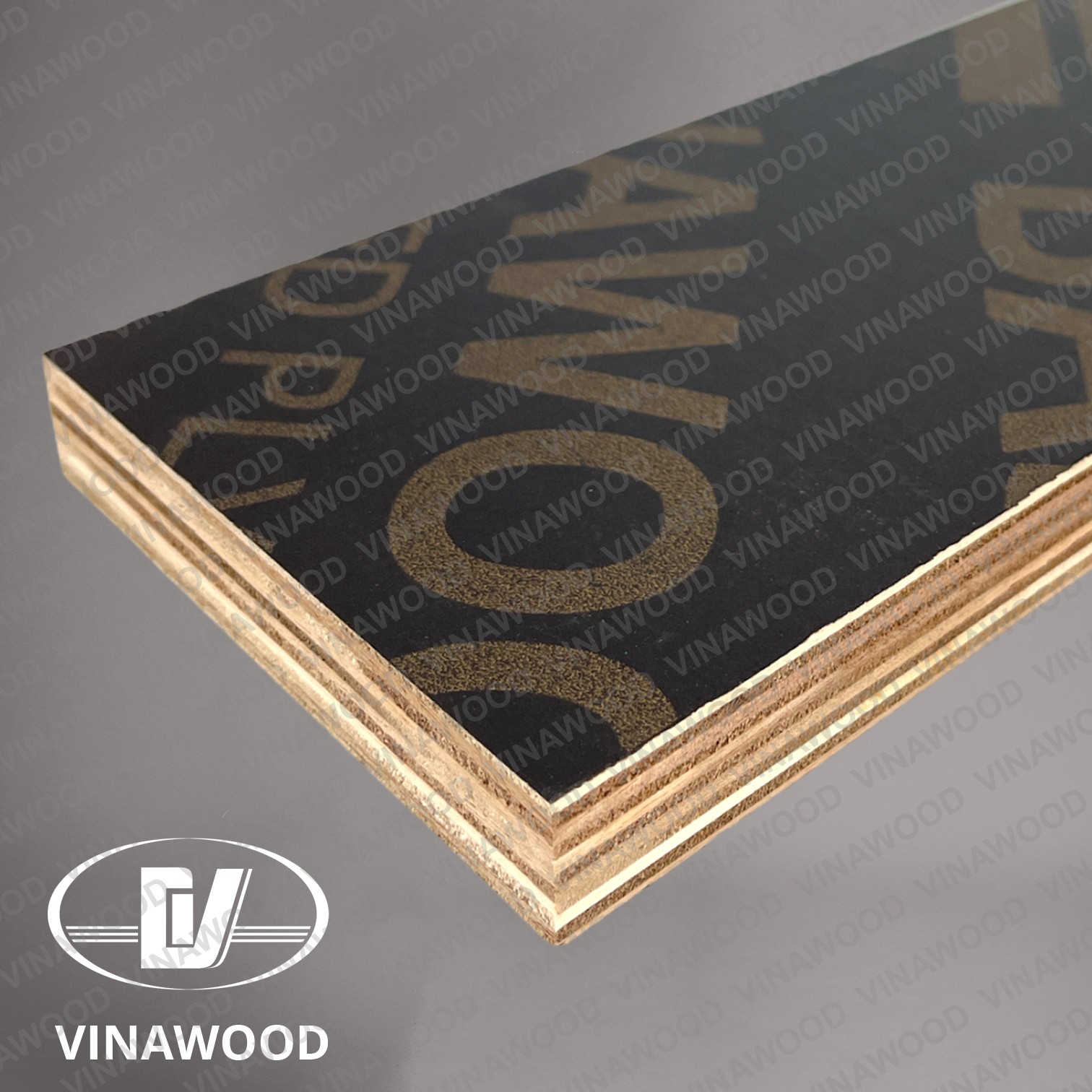
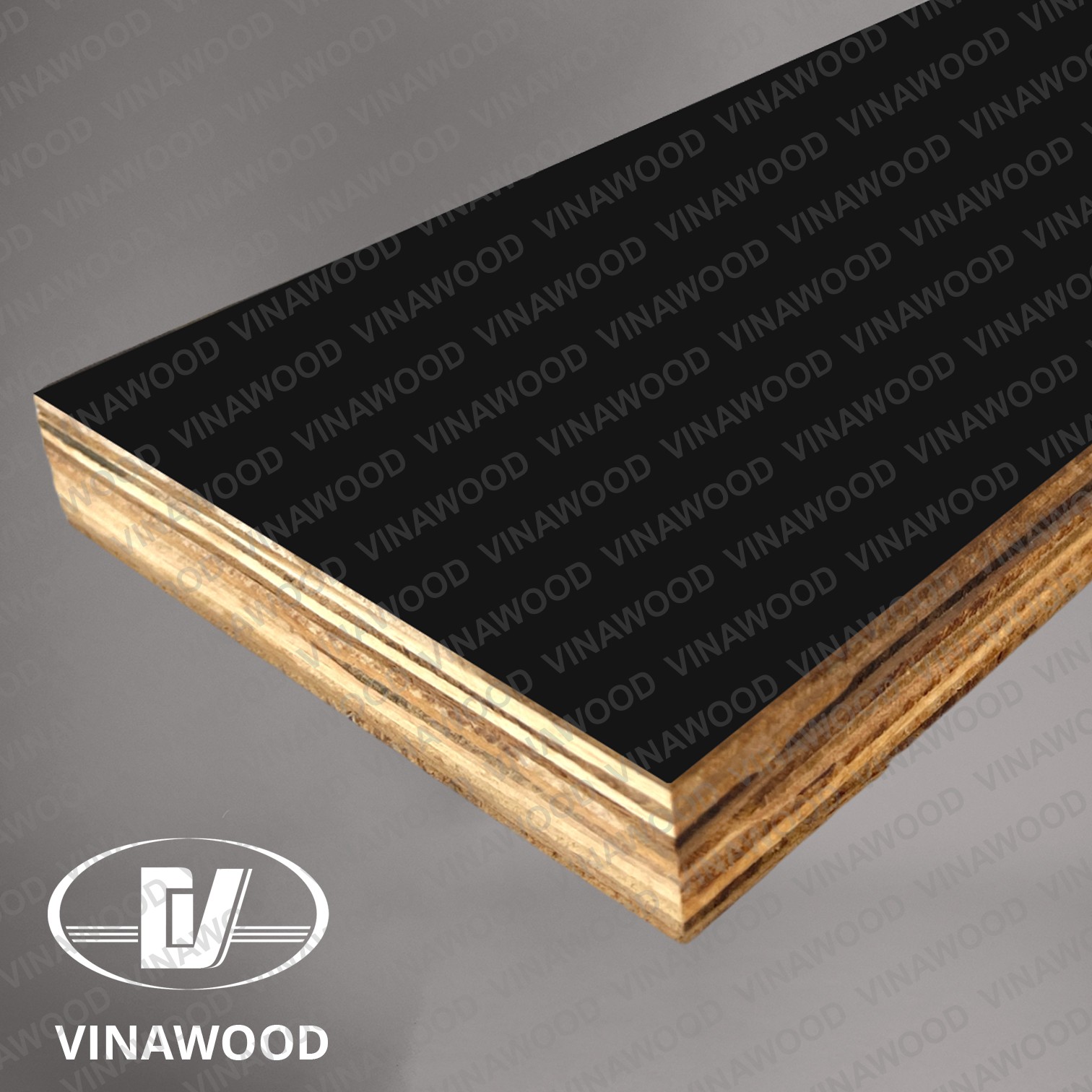
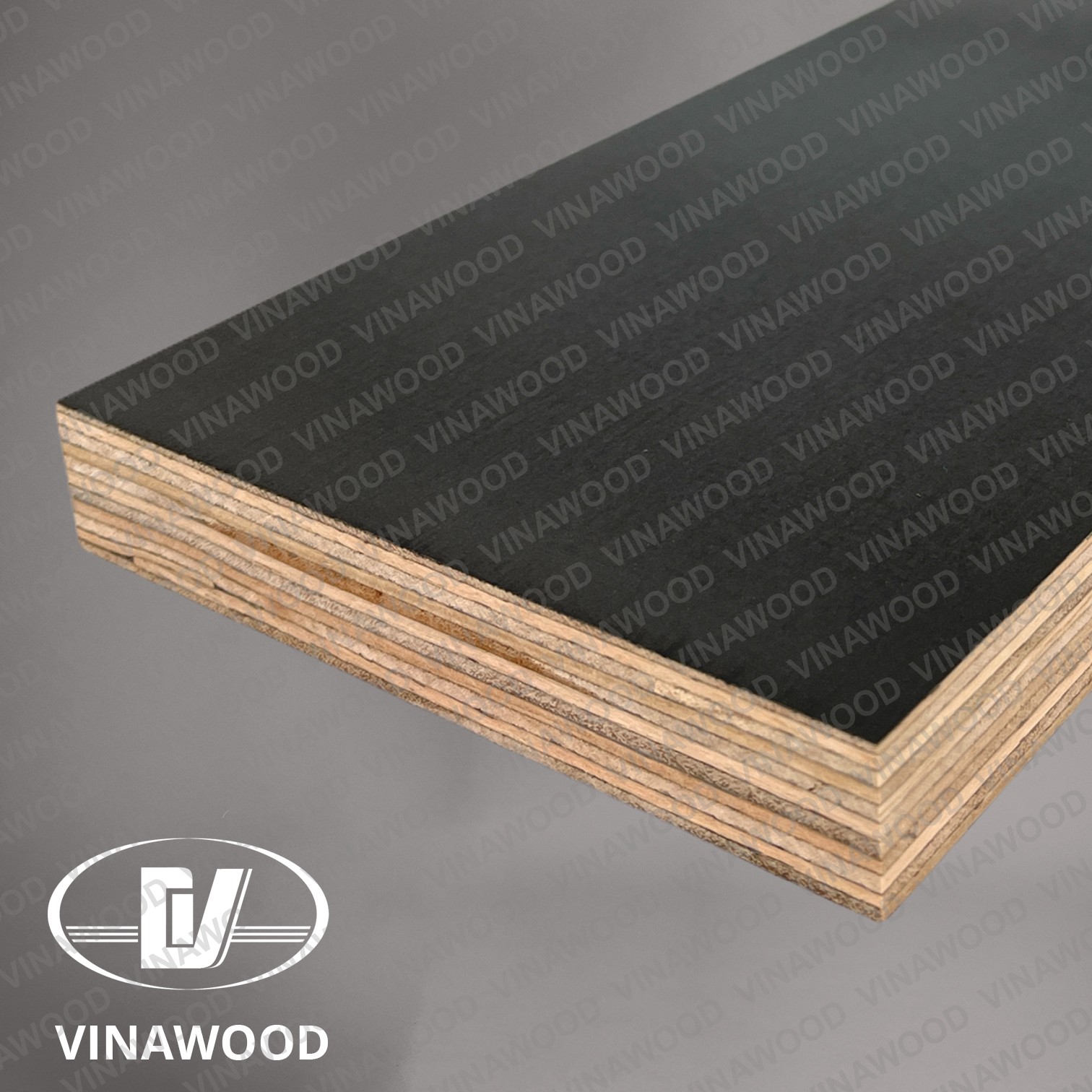
Phenolic formaldehyde (PF) resin is the gold standard for WBP plywood. Phenolic adhesive produces a dark brown or black glue line visible at the panel edge — an easy visual identifier. PF resin is inherently waterproof: the cured bond is chemically inert to water, heat, and the alkaline environment of fresh concrete. All quality formwork plywood — including every panel in Vinawood's range — uses phenolic formaldehyde adhesive. Phenolic plywood is the only adhesive type recommended for concrete forming and marine applications where sustained moisture exposure is guaranteed.

Melamine-urea-formaldehyde (MUF) is a hybrid adhesive that can achieve WBP classification under certain formulations with high melamine content. MUF produces a lighter-coloured glue line (cream to pale yellow). While it passes the standard boil test, MUF has lower long-term durability than phenolic under sustained tropical humidity and repeated wet-dry cycling. Some manufacturers use MUF to reduce production costs while still claiming WBP classification — technically accurate but misleading for applications requiring decades of exterior exposure or hundreds of forming cycles.

Melamine formaldehyde (MF) is a mid-range adhesive — better than urea formaldehyde but less durable than phenolic under extreme conditions. MF can pass WBP tests in some formulations but is not widely used in structural or formwork plywood production.

Urea formaldehyde (UF) is the most common adhesive in interior-grade plywood. UF achieves MR (Moisture Resistant) classification only — it is NOT WBP rated and will fail under sustained moisture exposure. UF-bonded plywood must never be used for concrete formwork, marine applications, or any exterior use. The bond softens when wet and progressively degrades with each moisture cycle.

Adhesive TypeWBP Achievable?Glue Line ColourLong-Term DurabilityFormwork Suitable?
Phenolic (PF)Yes — inherently WBPDark brown / blackExcellent — decades of exterior exposureYes — the only recommended adhesive
Melamine-Urea (MUF)Yes — with high melamine contentCream / pale yellowGood — but degrades faster than PF in tropical conditionsMarginal — not recommended for high-reuse forming
Melamine (MF)Possible — formulation dependentLightModerateNot recommended
Urea (UF)No — MR grade onlyWhite / creamPoor — fails under sustained moistureNo — will delaminate

How WBP Bond Strength Is Tested

The EN 314-1 test method is the current international standard for evaluating plywood bond quality. Understanding how the test works helps buyers interpret test reports and assess whether a supplier's WBP claim is genuine.

EN 314-1 test procedure: Test specimens are cut from the plywood panel and subjected to a pre-treatment cycle that simulates extreme moisture exposure. For Class 3 (WBP), this involves boiling the specimens in water for a specified duration, then drying them under controlled conditions. After pre-treatment, the specimens are tested in shear — a force is applied to slide the veneer layers apart along the glueline. The test measures both the shear strength (in N/mm² or MPa) and the wood failure percentage (how much of the failure occurs in the wood fibre rather than in the adhesive).

What to look for in a test report: A valid EN 314 Class 3 test certificate should show the pre-treatment method used (boiling water immersion), the measured shear strength values, the wood failure percentages, and a pass/fail determination against the minimum thresholds specified in EN 314-2. The minimum requirements are a shear strength of at least 1.0 N/mm² and a minimum wood failure percentage that varies by shear strength value.

The 72-hour boil test (BS 1203): Under the older British Standard, the WBP classification required specimens to survive 72 hours of continuous boiling. This is a more aggressive test than the EN 314 cycling method and remains referenced by some UK and Indian buyers as an additional quality benchmark. Phenolic adhesive passes this test comfortably; MUF adhesive frequently shows bond degradation by the 48-hour mark under this extended test.

Why third-party testing matters: Manufacturer self-declarations of WBP compliance carry no independent verification. An EN 314 Class 3 certificate issued by an accredited laboratory (SGS, Bureau Veritas, Intertek, or equivalent) confirms that the specific product was tested by an independent party. Self-declared WBP claims without supporting laboratory documentation should be treated with caution — particularly when evaluating unfamiliar suppliers.

WBP vs MR vs BR — Adhesive Grade Comparison

The three adhesive grades represent a clear hierarchy of moisture resistance. Specifying the wrong grade for your application leads to predictable failures.

ParameterMR (Moisture Resistant)BR (Boil Resistant)WBP (Weather & Boil Proof)
Adhesive typeUrea formaldehyde (UF)Melamine-urea (MUF)Phenolic (PF)
EN 314 classClass 1Class 2Class 3
Moisture resistanceModerate — intermittent humidityGood — protected outdoor exposureExcellent — full weather + boiling
Temperature resistanceLowModerateHigh
Typical applicationsInterior furniture, cabinetryExterior joinery, covered structuresFormwork, marine, exterior structural
Cost premiumBaseline+3–5% over MR+5–10% over MR
Concrete formwork useNot suitableNot recommendedRequired

The cost premium for WBP phenolic adhesive over MR urea formaldehyde is typically 5 to 10 percent of the panel manufacturing cost. On a per-sheet basis, this translates to a few dollars per panel — a negligible cost difference when compared to the consequences of bond failure during a concrete pour.

Why WBP Glue Matters for Formwork Plywood

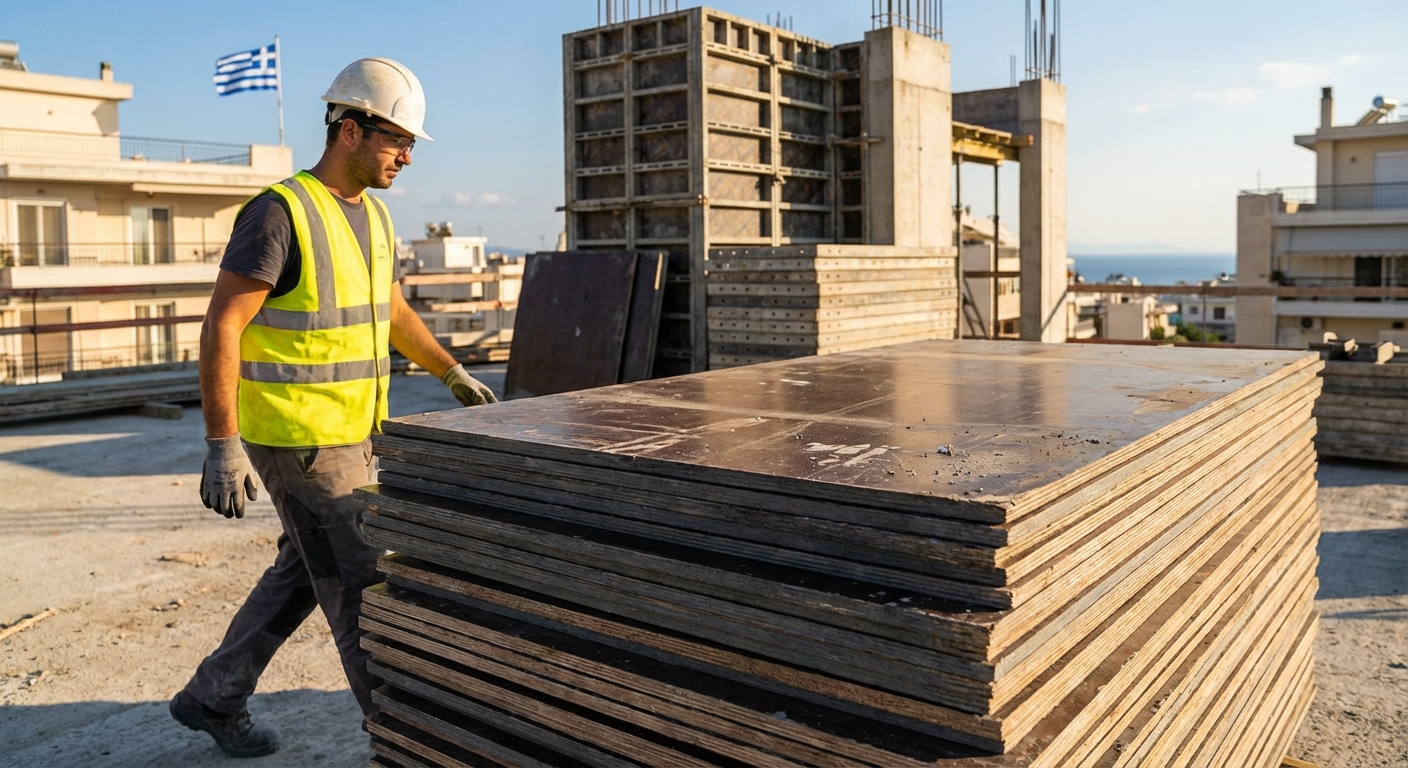
Concrete forming subjects plywood to conditions that rapidly expose any adhesive weakness. Understanding why WBP phenolic adhesive is non-negotiable for formwork helps procurement teams resist the temptation of cheaper, sub-WBP alternatives.

Sustained moisture exposure: Fresh concrete contains approximately 150 to 180 litres of water per cubic metre. When poured against a plywood form face, this moisture saturates the panel surface and begins migrating into the core through any gap in the film coating, through cut edges, and through mechanical fastener holes. MR adhesive begins softening within hours of sustained wet contact; WBP phenolic adhesive is unaffected.

Repeated wet-dry cycling: A formwork panel is wetted during the pour, saturated during curing (typically 12 to 48 hours), then dried after stripping. This cycle repeats for every pour — 20, 30, 40 or more times over the panel's service life. Each cycle stresses the adhesive bond at the glueline. WBP phenolic adhesive maintains its bond integrity across hundreds of these cycles; sub-WBP adhesives degrade progressively.

Alkaline chemical environment: Fresh concrete is highly alkaline (pH 12 to 13). The cement paste attacks organic materials including some adhesive chemistries. Phenolic resin is chemically resistant to this alkaline environment; urea formaldehyde is not.

The adhesive–reuse relationship: The adhesive bond class is the foundation of the panel's reuse count. A panel with a weak bond fails from delamination — veneer layers separate at the glueline — long before the face film or veneer surface wears out. WBP phenolic adhesive enables the 20 to 50+ reuse cycles that make film-faced plywood economically viable for high-volume forming. For a complete analysis of forming plywood types and their cost-per-pour economics, see the concrete form plywood guide.

How to Verify WBP Claims from Plywood Suppliers

The WBP label on a packing list is only as credible as the documentation behind it. Experienced buyers verify adhesive claims before committing to volume orders — especially when sourcing from unfamiliar suppliers or new markets.

Request EN 314 test certificates. Ask the supplier for an EN 314-1 test report from an accredited third-party laboratory (SGS, Bureau Veritas, Intertek, TÜV). The certificate should reference the specific product grade being purchased — not a generic certificate covering a different panel specification.

Check the bond classification. The certificate must clearly state EN 314 Class 3 (or BS 1203 WBP). A certificate showing Class 1 or Class 2 does not meet WBP requirements, regardless of what the supplier's marketing claims.

Verify the test applies to your product. A manufacturer may hold an EN 314 Class 3 certificate for their premium grade while shipping a different grade with sub-WBP adhesive. Ensure the test report references the exact product specification, grade, and thickness that you are ordering.

Check the glue line visually. On sample panels, inspect the cross-section edge. Phenolic WBP adhesive produces dark brown or black glue lines between the veneer layers. Light cream or white glue lines indicate urea formaldehyde (MR grade) — not suitable for formwork regardless of the label.

Commission pre-shipment inspection. For container orders from any supplier, SGS or Bureau Veritas can sample panels from the production batch and conduct independent EN 314 boil testing at a local laboratory before the container is released. This is the most reliable verification method for first-time orders.

WBP Glue in Different Plywood Standards Worldwide

WBP is the dominant terminology in British, European, and Indian markets. Other national standards use different classification systems that describe equivalent adhesive performance:

StandardRegionWBP EquivalentTest Method
EN 314-2Europe, UKClass 3Boil test + shear strength
BS 1203UK (historical)WBP grade72-hour boil test
IS 303IndiaBWP grade (Group 1)Boiling water immersion
AS/NZS 2269Australia, NZBond Type AEquivalent boil test
APA PS 1-19USA, CanadaExterior classificationCyclic exposure + shear test

The key insight for international buyers is that adhesive performance transcends national standards. Whether you specify EN 314 Class 3, IS 303 BWP, AS/NZS Bond Type A, or APA Exterior — you are describing the same fundamental requirement: an adhesive bond that survives sustained water immersion and heat cycling without delamination. When sourcing from a manufacturer in a different country than your project location, specify the adhesive performance requirement (WBP / EN 314 Class 3) alongside any national standard compliance needed for local building code or tender requirements.

Vinawood's WBP Phenolic Adhesive Process

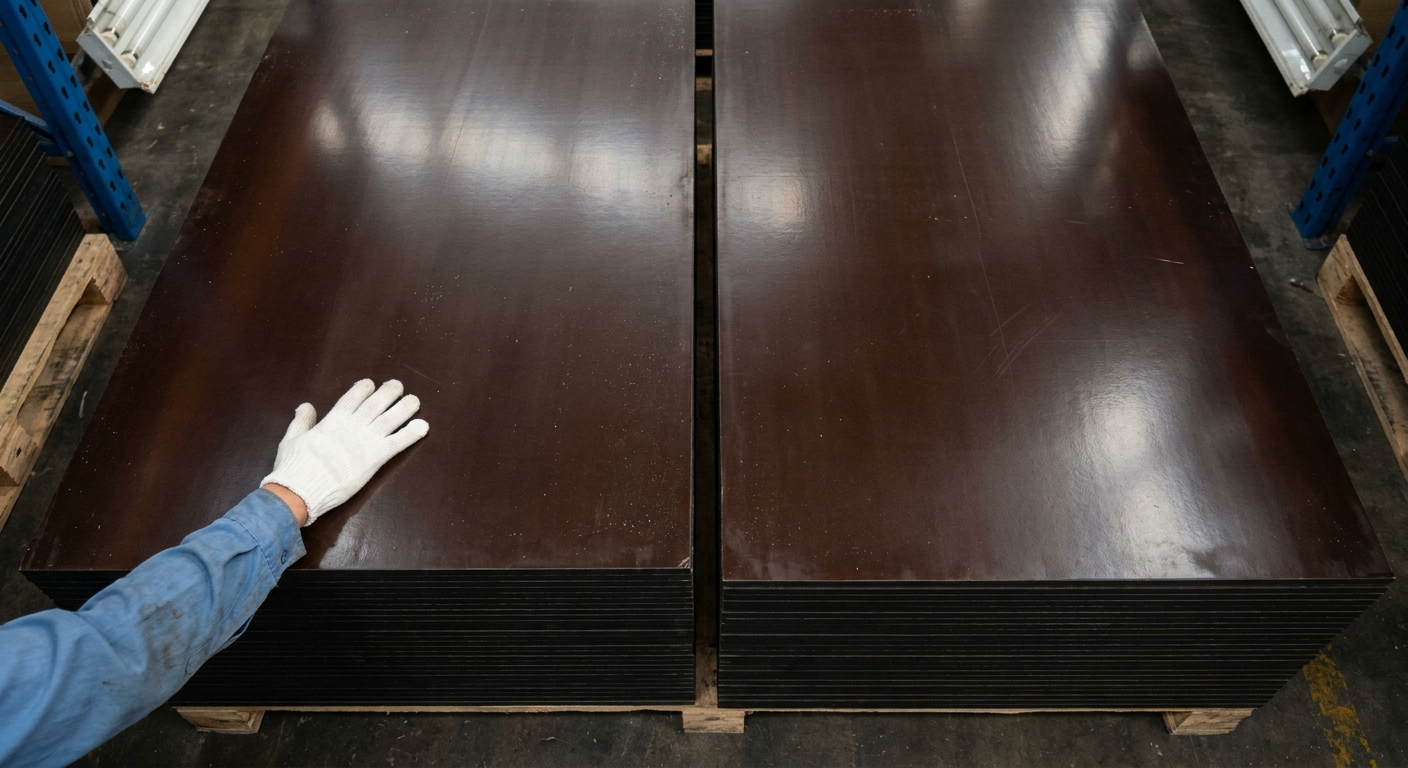
All Vinawood formwork panels — every grade in the film-faced and HDO product ranges — use phenolic formaldehyde (PF) WBP adhesive throughout all plies. This is not a selective specification applied only to premium grades; it is the standard across the entire formwork product line.

The adhesive process at Vinawood's Vietnam factory includes glue spread rate monitoring at the roller coater (180 to 220 g/m² per glueline), press temperature control (130 to 150°C), and dwell time calibration matched to panel thickness and adhesive formulation. In-house quality control tests bond strength on samples from each pressing batch using the EN 314-1 method before panels are cleared for finishing.

EN 314 Class 3 test certification from accredited third-party laboratories is available with every shipment. Mill test reports confirming adhesive type, bonding strength results, thickness tolerance, and moisture content are provided as standard documentation — not on request, but as part of every container order's documentation package.

Vinawood's Form Basic (EN 636-2, 10+ reuse cycles) and Form Extra (EN 636-3, 15+ reuse cycles) both use identical WBP phenolic adhesive systems — the difference between grades is in the film weight and veneer grading, not the adhesive. The full film-faced plywood collection covers all grades and thicknesses from 12 to 21 mm, all manufactured with phenolic WBP adhesive as standard.

Frequently Asked Questions

Is WBP the same as waterproof?

Not exactly. WBP (Weather and Boil Proof) describes the adhesive bond performance — the bond survives sustained water immersion and boiling without delamination. However, the plywood panel itself is not fully waterproof. The wood veneers will absorb moisture over time, potentially causing swelling or dimensional change. WBP means the glue will not fail even when wet — but the wood component still interacts with moisture. For formwork and marine applications, the WBP bond ensures structural integrity across hundreds of wet-dry cycles.

Can melamine glue be WBP rated?

Melamine-urea-formaldehyde (MUF) adhesive with high melamine content can achieve WBP classification under the standard EN 314 Class 3 boil test. However, MUF has lower long-term durability than phenolic adhesive under sustained tropical humidity and extended boiling. For applications requiring maximum moisture resistance over many years or hundreds of forming cycles — such as concrete formwork and marine use — phenolic WBP adhesive is the recommended choice.

What is the difference between WBP and marine grade?

WBP refers specifically to the adhesive bond classification. Marine grade refers to the overall panel specification — which includes WBP adhesive plus additional requirements for veneer quality, void-free core construction, and enhanced thickness tolerance. All marine-grade plywood uses WBP adhesive, but not all WBP plywood meets marine-grade veneer and construction standards. For concrete formwork, WBP adhesive is the critical specification; marine-grade construction quality is a bonus but not typically required.

How long does WBP plywood last outdoors?

The WBP adhesive bond itself does not degrade with outdoor exposure — phenolic resin is essentially permanent under normal weathering conditions. The limiting factor for outdoor durability is the wood veneer, which degrades through UV exposure, fungal attack, and physical weathering over time. Uncoated WBP plywood exposed to full weather typically shows surface degradation within 3 to 5 years, while the adhesive bond remains intact. Coated or film-faced WBP plywood (with phenolic film protection) lasts significantly longer because the film shields the wood from UV and moisture.

Does WBP glue contain formaldehyde?

Phenolic formaldehyde (PF) adhesive does contain formaldehyde as a chemical component. However, the cured phenolic bond is highly stable — virtually all formaldehyde is consumed in the curing reaction, resulting in very low emission levels from the finished panel. Vinawood's panels are manufactured to CARB Phase 2 (California Air Resources Board) and E1 European formaldehyde emission standards, confirmed by third-party laboratory testing. These are the most stringent emission limits applied internationally.

Category

how-to

Sources & References (2)
  1. EN 314-1: Plywood — Bonding Quality — Test MethodsEuropean Standards (2023)
  2. BS 1203:1979 — Specification for Synthetic Resin Adhesives for PlywoodBritish Standards Institution (1979)

Related Articles

View all →
Most Viewed Articles
1

Concrete Form Plywood: Types, Sizes & Selection Guide

32 views
2

Different Types of wood with pictures and Their uses

24 views
3

Vietnam Plywood Supplier: Why Contractors Choose Vinawood

22 views
4

Phenolic Plywood: Benefits, Uses and Applications

15 views
5

How much weight can plywood hold? Plywood load capacity chart

14 views
Quick Tools
📦CBM Calculator🚢Container Loading💰Landed Cost🔍Plywood Selector📐Packing CalculatorAll tools →
← Back to Blog

Curated by Vinawood

Dive Deeper Into This Topic

Related Reading

Quick Answers

Is WBP the same as waterproof?
Not exactly. WBP (Weather and Boil Proof) describes the adhesive bond performance — the bond survives sustained water immersion and boiling without delamination. However, the plywood panel itself is not fully waterproof because the wood veneers still absorb moisture over time. WBP means the glue will not fail even when wet, but the wood component still interacts with moisture.
Can melamine glue be WBP rated?
Melamine-urea-formaldehyde (MUF) adhesive with high melamine content can achieve WBP classification under the EN 314 Class 3 boil test. However, MUF has lower long-term durability than phenolic adhesive under sustained tropical humidity. For concrete formwork and marine applications requiring maximum moisture resistance, phenolic WBP adhesive is the recommended choice.
What is the difference between WBP and marine grade?
WBP refers specifically to the adhesive bond classification. Marine grade refers to the overall panel specification, which includes WBP adhesive plus additional requirements for veneer quality, void-free core construction, and enhanced thickness tolerance. All marine-grade plywood uses WBP adhesive, but not all WBP plywood meets marine-grade construction standards.
How long does WBP plywood last outdoors?
The WBP adhesive bond itself does not degrade with outdoor exposure — phenolic resin is essentially permanent under normal weathering. The limiting factor is the wood veneer, which degrades through UV exposure and fungal attack. Uncoated WBP plywood shows surface degradation within 3 to 5 years outdoors, while the adhesive bond remains intact. Film-faced WBP plywood lasts significantly longer.
Does WBP glue contain formaldehyde?
Phenolic formaldehyde (PF) adhesive contains formaldehyde as a chemical component. However, the cured phenolic bond is highly stable — virtually all formaldehyde is consumed during curing, resulting in very low emissions from the finished panel. Quality manufacturers produce panels meeting CARB Phase 2 and E1 European formaldehyde emission standards.