Formwork Plywood for Croatian Construction Projects
A guide for Croatian construction professionals sourcing CE-marked formwork plywood. Covers EN standards, product specifications, and shipping from Vietnam to Croatia.
Why Croatian Builders Are Looking Beyond Traditional Plywood Suppliers
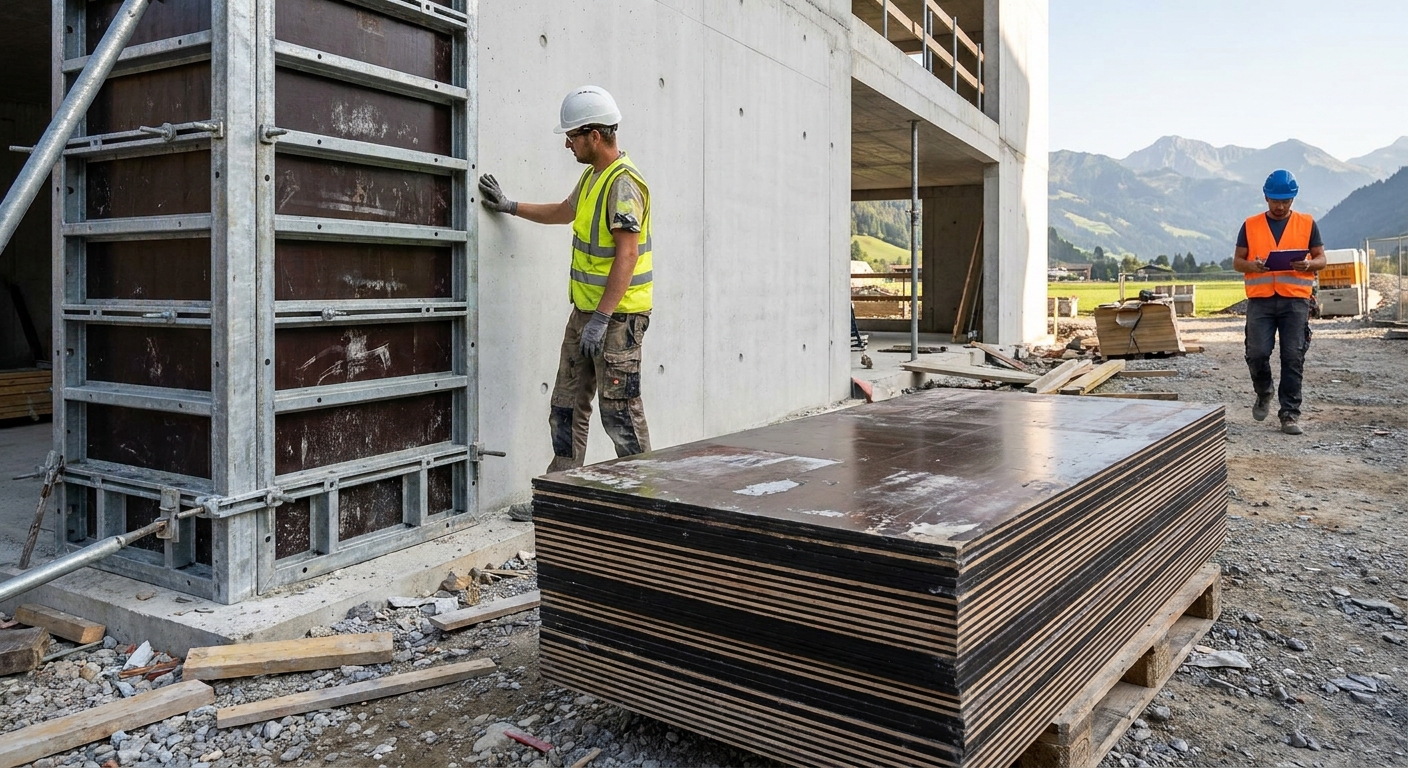
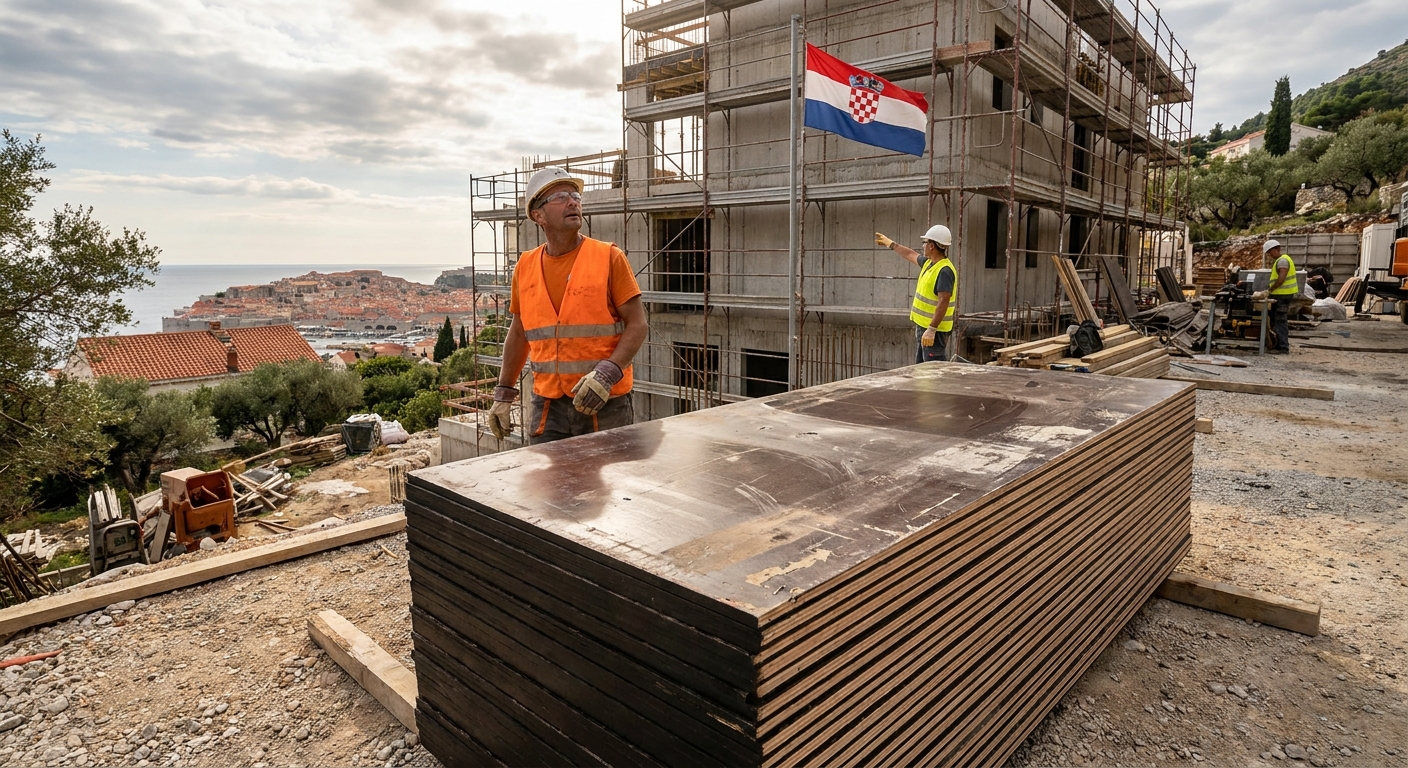
Croatia received roughly €22 billion in EU funds for the 2021–2027 programming period. A substantial slice of that goes into construction — motorway extensions, the Pelješac Bridge approach works, post-earthquake rebuild in Zagreb after the 2020 quakes. Every concrete pour on those projects sits on formwork plywood, and since Croatia joined the EU in 2013, every panel on those sites has to carry CE marking under EN 13986.
The Romanian, Turkish, and Chinese supply lines that historically fed Croatian formwork demand still exist. The Chinese product is the one that shifted hardest — anti-dumping duties on Chinese-origin plywood in several EU markets have moved a lot of buyers to look at Vietnam, where the EU–Vietnam Free Trade Agreement (EVFTA) gives the same product duty-free entry. Add factory-direct pricing on top of zero duty and the landed-cost gap on a container can be substantial.
EN Standards That Apply to Formwork Plywood in Croatia
EU member state, EU rules. The standards that show up on a Croatian formwork plywood spec sheet:
| Standard | Scope | Relevance to Croatian Projects |
|---|---|---|
| EN 13986 | CE marking for wood-based panels in construction | Mandatory for all formwork plywood sold in Croatia |
| EN 636-2 | Plywood for use in humid conditions (Class 2) | Suitable for most covered formwork applications |
| EN 636-3 | Plywood for use in exterior conditions (Class 3) | Required for exposed formwork, marine, and high-moisture environments |
| EN 314-2 | Bond quality classification | Defines glue-line durability — Class 2 (melamine) or Class 3 (phenolic) |
| EN 12369-2 | Characteristic values for structural design | Used by engineers to specify plywood in load-bearing formwork systems |
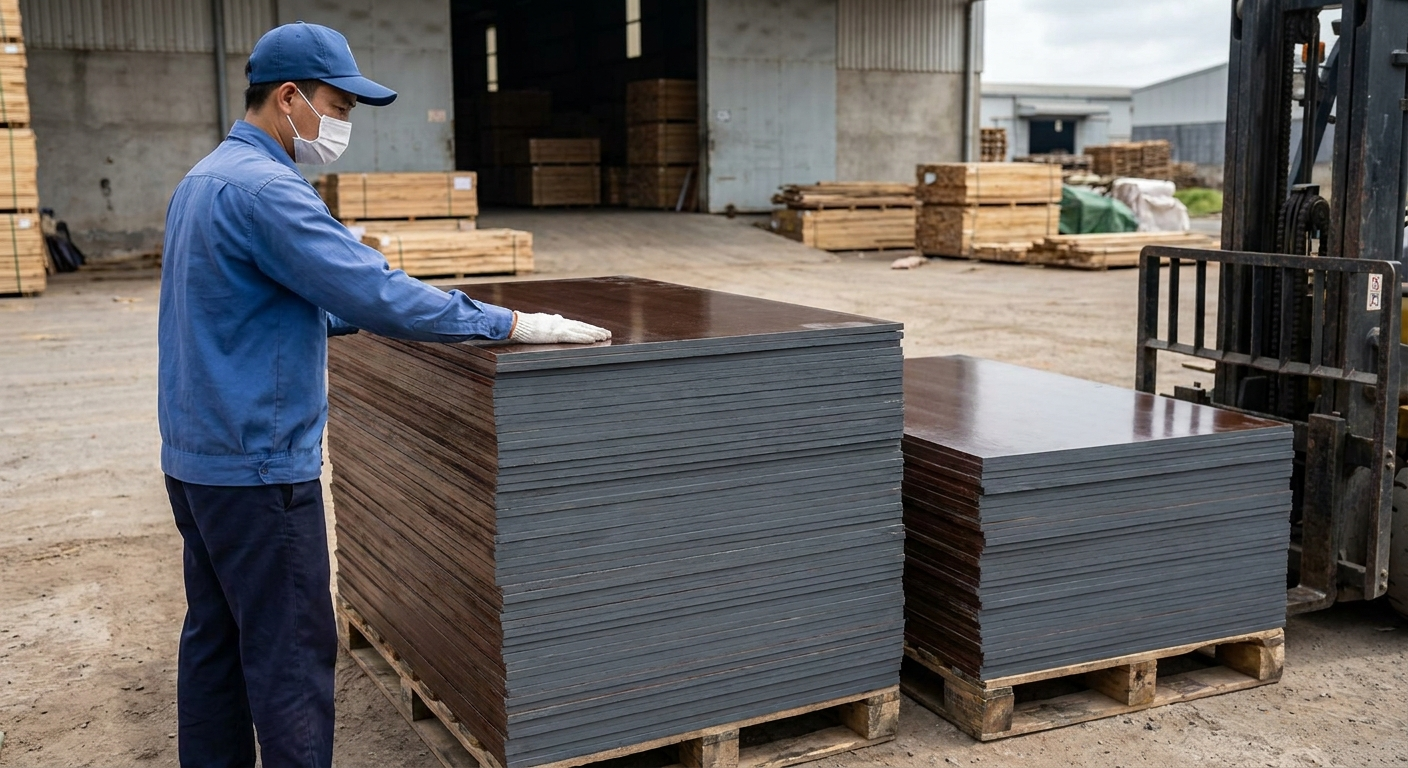
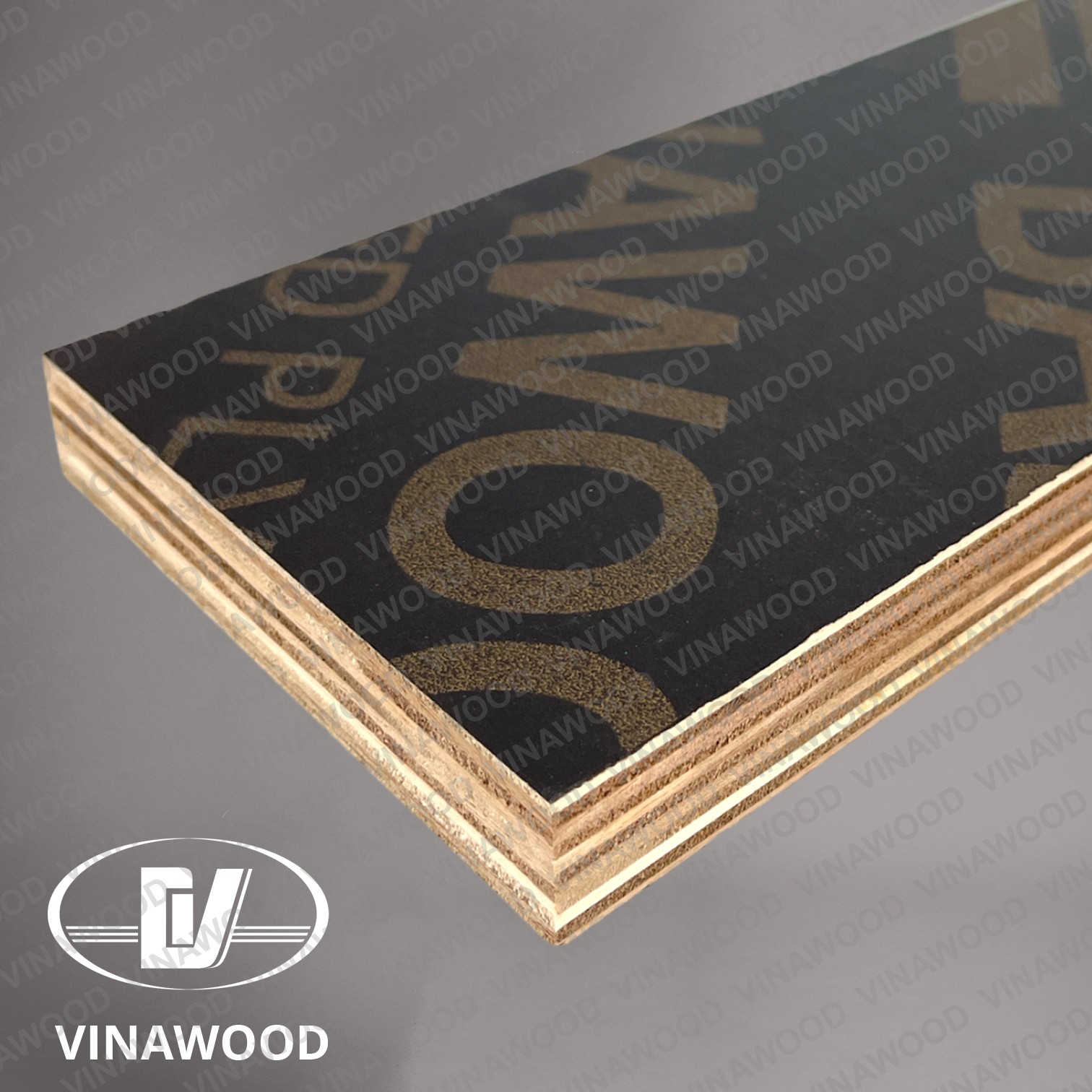
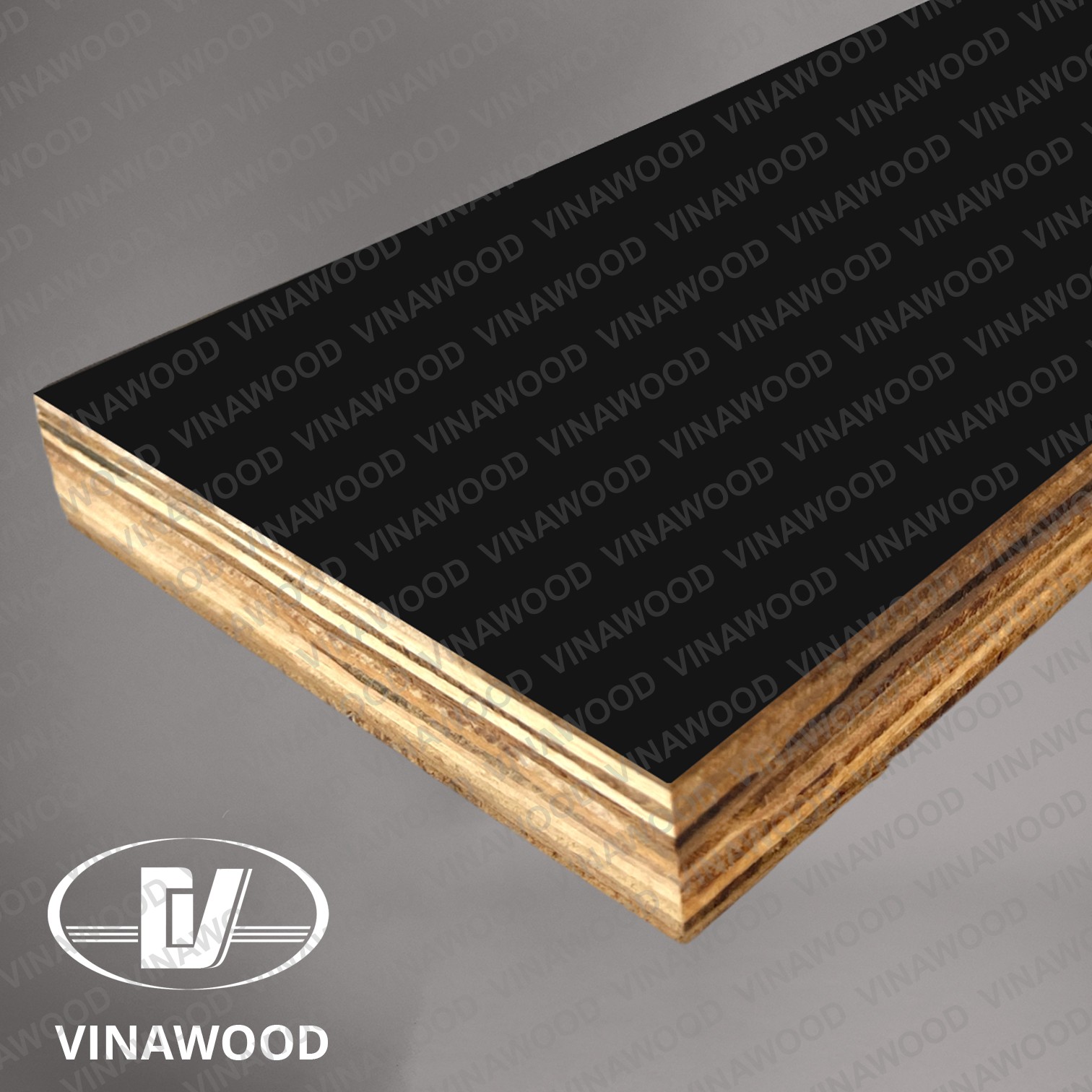
Our Film Faced Plywood range is CE-marked to EN 13986 and independently tested to EN 636 and EN 314. Croatian buyers get the documentation pack their site inspector and customs broker need on the same day the container lands.
Film Faced Plywood Range for Croatian Construction
What we ship into the Croatian market for formwork applications, all available in the European 2500×1250 mm size:
| Product | Glue Type | Standard | Max Reuses | Best For |
|---|---|---|---|---|
| Form Basic | WBP Melamine | EN 636-2 | Up to 10 | Standard residential formwork, columns, beams |
| Form Extra | WBP Melamine | EN 636-2 | Up to 15 | Commercial projects, repetitive pours |
| Pro Form | WBP Phenolic | EN 636-3 | Up to 20 | Infrastructure, bridges, exposed concrete, demanding formwork |
All three carry a phenolic film overlay for clean concrete release, sealed edges to slow moisture ingress, and Acacia or Eucalyptus core veneers from certified plantation forests. 2500×1250 mm is the panel size Croatian site teams expect; 2440×1220 mm is also available for buyers shipping mixed-market containers.
Advantages of Vietnamese Plywood for the Croatian Market
Croatian importers historically bought from Romania, Turkey, and China. Four reasons Vietnamese-origin product has been moving into that mix:
Duty-Free EU Market Access
EVFTA went live in August 2020. Vietnamese plywood enters the EU at zero duty. Chinese-origin plywood faces anti-dumping duties in several EU markets. The tariff gap shows up as lower landed cost in Croatian distributor margins.
Full Compliance Documentation
Every shipment ships with the documentation pack: CE Declaration of Performance (DoP), FSC-COC or PEFC chain-of-custody certificates, EN test reports, phytosanitary documentation. Croatian customs and site inspectors get the full file with the container — no chasing certificates after the fact.
Factory-Direct Pricing
We're vertically integrated from veneer peeling to surface lamination. No middleman markup, no trading-company margin between the press and the loading port. Container-load orders pick up direct-factory pricing.
Sustainability and EUDR Readiness
Our timber is 100% plantation Acacia and Eucalyptus from certified Vietnamese forests. Supply chain is EUTR-compliant with documented traceability — which puts Croatian importers in a defensible position for the upcoming EU Deforestation Regulation (EUDR).
Shipping and Logistics: Vietnam to Croatia
Hai Phong is the Vietnamese export port we load from. Three Croatian receiving options matter:
- Port of Rijeka — Croatia's largest cargo port, well connected to Zagreb and inland markets.
- Port of Split — serves the Dalmatian coast and southern Croatia.
- Port of Ploče — gateway to southern Croatia and neighbouring Bosnia and Herzegovina.
Hai Phong to Rijeka runs 28–35 days through Piraeus, Koper, or Trieste transhipment. We handle export documentation, container loading optimisation, and CIF delivery to any Croatian port if the buyer wants the freight booking on our side.
Specifications and Sizing
The standard specs we ship into European formwork applications including Croatia:
| Parameter | Specification |
|---|---|
| Standard Sizes | 2500×1250 mm, 2440×1220 mm |
| Thicknesses | 12 mm, 15 mm, 18 mm, 21 mm |
| Core Species | Acacia, Eucalyptus |
| Film Overlay | Phenolic film (120 g/m² or 220 g/m²) |
| Edge Treatment | Sealed with waterproof paint |
| Glue Type | WBP Melamine (Class 2) or WBP Phenolic (Class 3) |
| Formaldehyde | E1 class (≤0.124 mg/m³) — meets EU requirements |
| Certifications | CE (EN 13986), FSC-COC, PEFC, ISO 9001 |
Custom sizes and thicknesses are available on large-volume orders. Our 12-step manufacturing process and 100% individual sheet inspection are what keep batch-to-batch quality consistent on long supply runs.
Croatia's Construction Outlook
The €22 billion in EU funding mentioned at the top is what's driving the steady-state demand. Motorway extensions, the Pelješac Bridge approach infrastructure, and post-2020 earthquake reconstruction in Zagreb keep formwork volume on the schedule for years. Public-tender work tends toward infrastructure-grade panels — high reuse counts, repeated pour cycles, often EN 636-3 specification because the exposure conditions push past Class 2 territory.
That's the demand profile Pro Form was built for. Form Extra carries the residential and standard commercial work. Form Basic covers the budget end. The mix Croatian importers most often run is Form Basic plus Pro Form on the same container, which lets them serve both retail builders and the infrastructure tender pipeline from one inventory.
Category
guides
Related Markets
Related Countries
Related Products
▶Sources & References (3)
- EU-Vietnam Free Trade Agreement (EVFTA) — European Commission (2020-08-01)
- EN 13986: Wood-based panels for use in construction — European Committee for Standardization (CEN) (2015-01-01)
- Croatia 2021-2027 EU Cohesion Policy — European Commission (2024-01-01)