WBP Plywood Explained: Water-Resistant Bond, Not a Waterproof Panel
WBP plywood is a glue-line class, not a waterproof panel. EN 314 Class 3 PF vs Class 2 core MUF, Vinawood formwork ladder with Eco Form Plus through Pro Form Lite and HDO, and what to put on the RFQ.
Buyers still ask for “waterproof plywood.” That phrase misleads. What they usually mean is WBP plywood: a panel whose glue line holds under wet service. The wood still takes on moisture. The bond is what the lab tests.
WBP once stood for Weather and Boil Proof under an older British glue rule. Today the useful number is the class on an EN 314 bond report (the European plywood glue-line test). Class 3 phenol-formaldehyde (PF) is the outdoor reference. Class 2 melamine-urea-formaldehyde (core MUF adhesive) covers humid, protected work. This guide stays on formwork glue class, not DIY subfloors or furniture cores. For how that glue choice shows up on a pour programme, see plywood for concrete forms.
What WBP originally meant
Under BS 1203, a Weather and Boil Proof bond had to survive a set boil, dry, and re-immerse cycle without the veneers peeling apart. The historical name shows up once here so you know why sales sheets still say WBP. After that, treat it as a glue-line boil test, not a claim that the whole panel sheds water forever.
EN 314 replaced that vocabulary with three bond classes. Class 1 is interior dry. Class 2 is humid or protected exterior. Class 3 is exterior exposure — the engineering match for classic WBP. Trade talk still says “WBP” for Class 3. Some sheets also say “WBP melamine” for Class 2 MUF. That second use is common in formwork buying. It is not the same exposure envelope as Class 3 PF. If your tender text says WBP without a class number, clarify before the PO locks.
National labels map to the same idea: IS 303 BWP in India, AS/NZS Bond Type A in Australia and New Zealand, APA Exterior in North America. You are still asking whether the glue line survives sustained wet service. Write the performance you need, then map the local code name as a second line.
WBP vs MR on the quote sheet
MR (moisture-resistant) glue usually means urea-formaldehyde (UF) or light MUF aimed at Class 1–2. WBP talk, in the strict sense, points at PF Class 3. The table below is the buyer version.
| Feature | WBP / EN 314 Class 3 | MR / EN 314 Class 1–2 |
|---|---|---|
| Core adhesive | Phenol-formaldehyde (PF) | UF or core MUF adhesive |
| Moisture envelope | Sustained outdoor / wet formwork | Interior to humid-protected |
| Boil cycle | Passes Class 3 cyclic boil | UF fails Class 3; high-content MUF can pass Class 2 |
| Typical formwork use | Long-cycle outdoor pours | Covered or moderate-cycle work |
| Glue-line colour | Dark red / brown / near-black | Pale yellow to amber (MUF) or pale (UF) |
Cost is not in that table on purpose. Price belongs on the RFQ, not in a blog claim. A cheap Class 3 sheet with soft cores can still fail early. A well-built Class 2 sheet with a phenolic face film can finish a short covered job cleanly.
Phenolic adhesive (Class 3)
PF cures into a thermoset that does not soften under heat or water once set. That is why it survives the Class 3 cycle: boil, dry at about 60°C, boil again, then shear the glue line. The same chemistry holds up against alkaline concrete leachate across many pours.
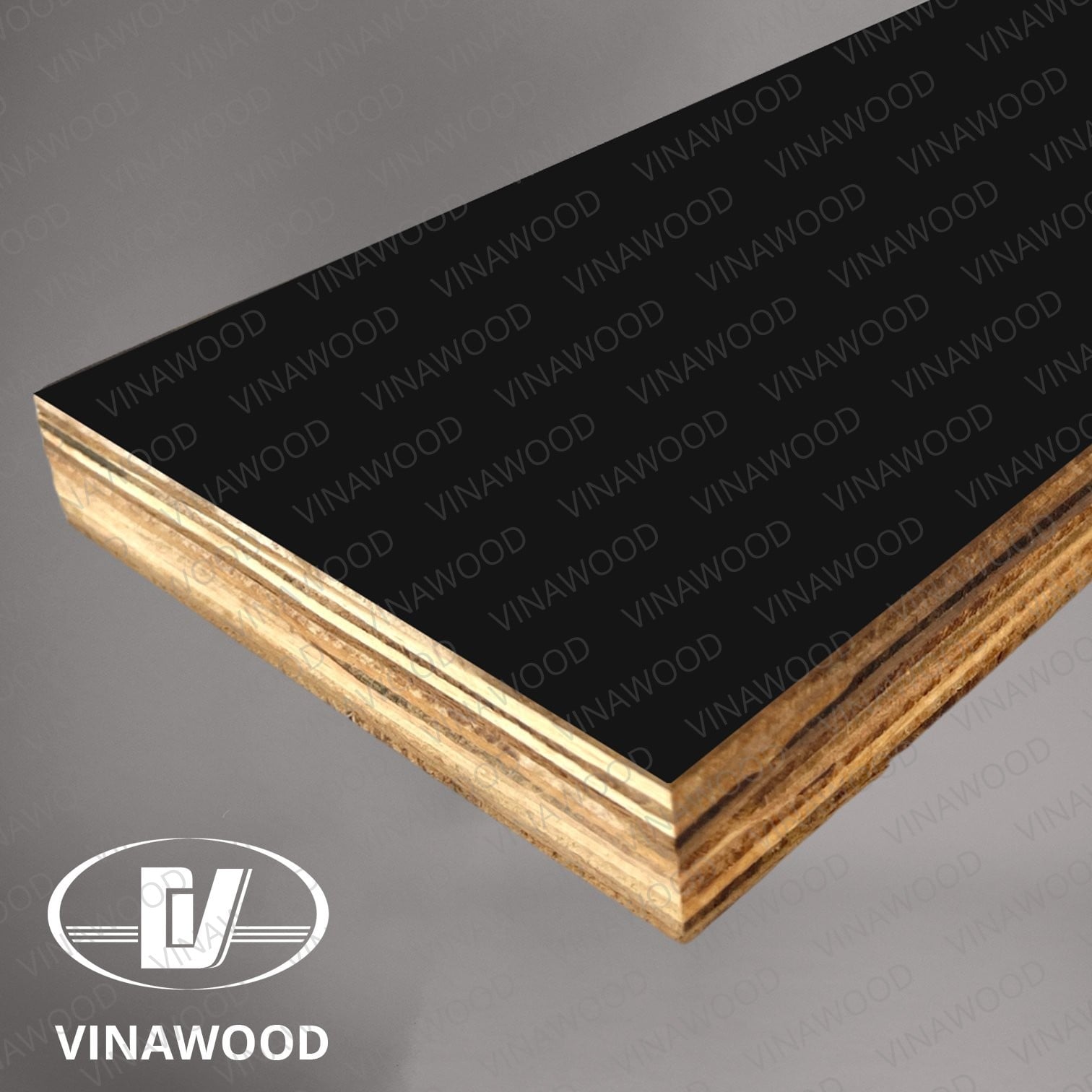
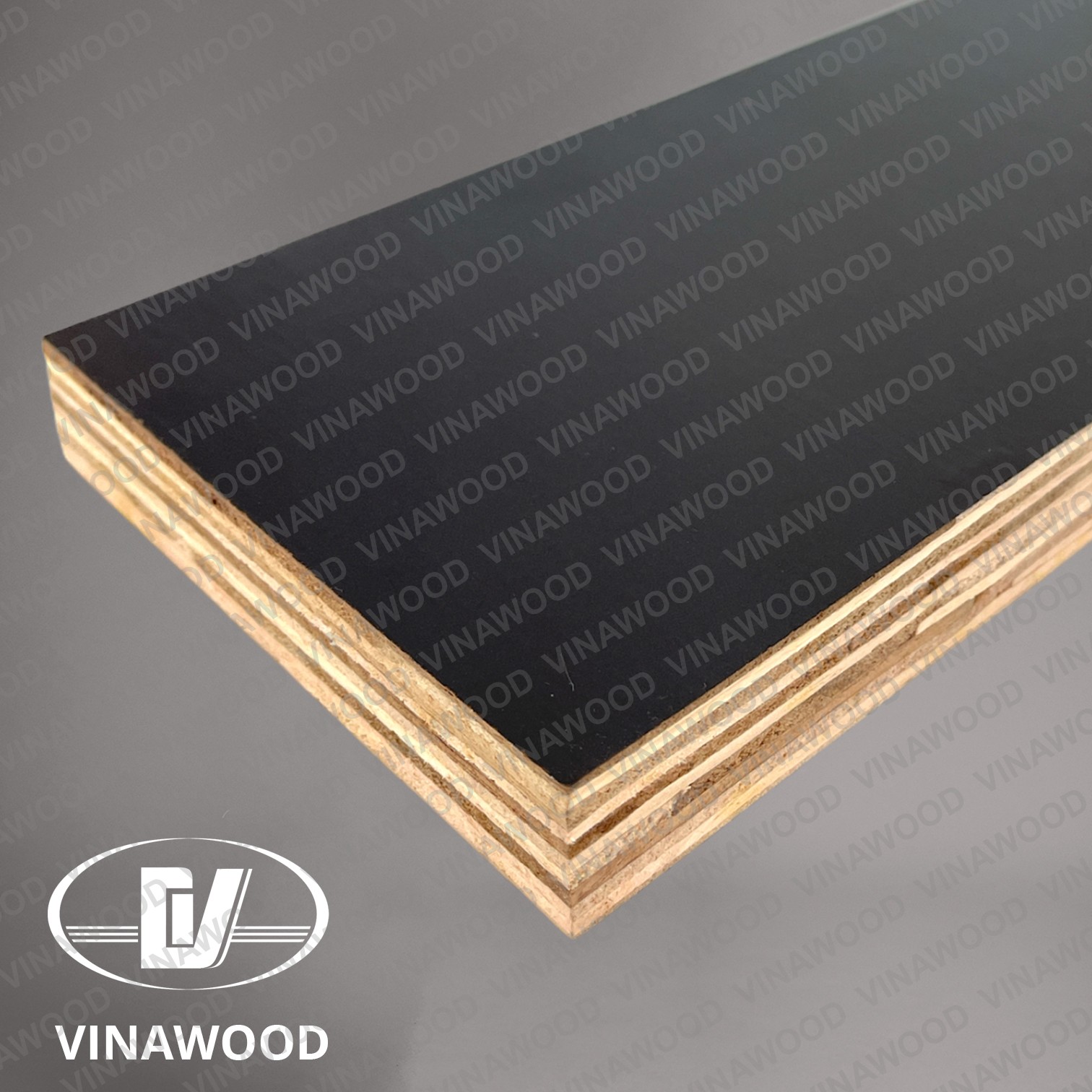
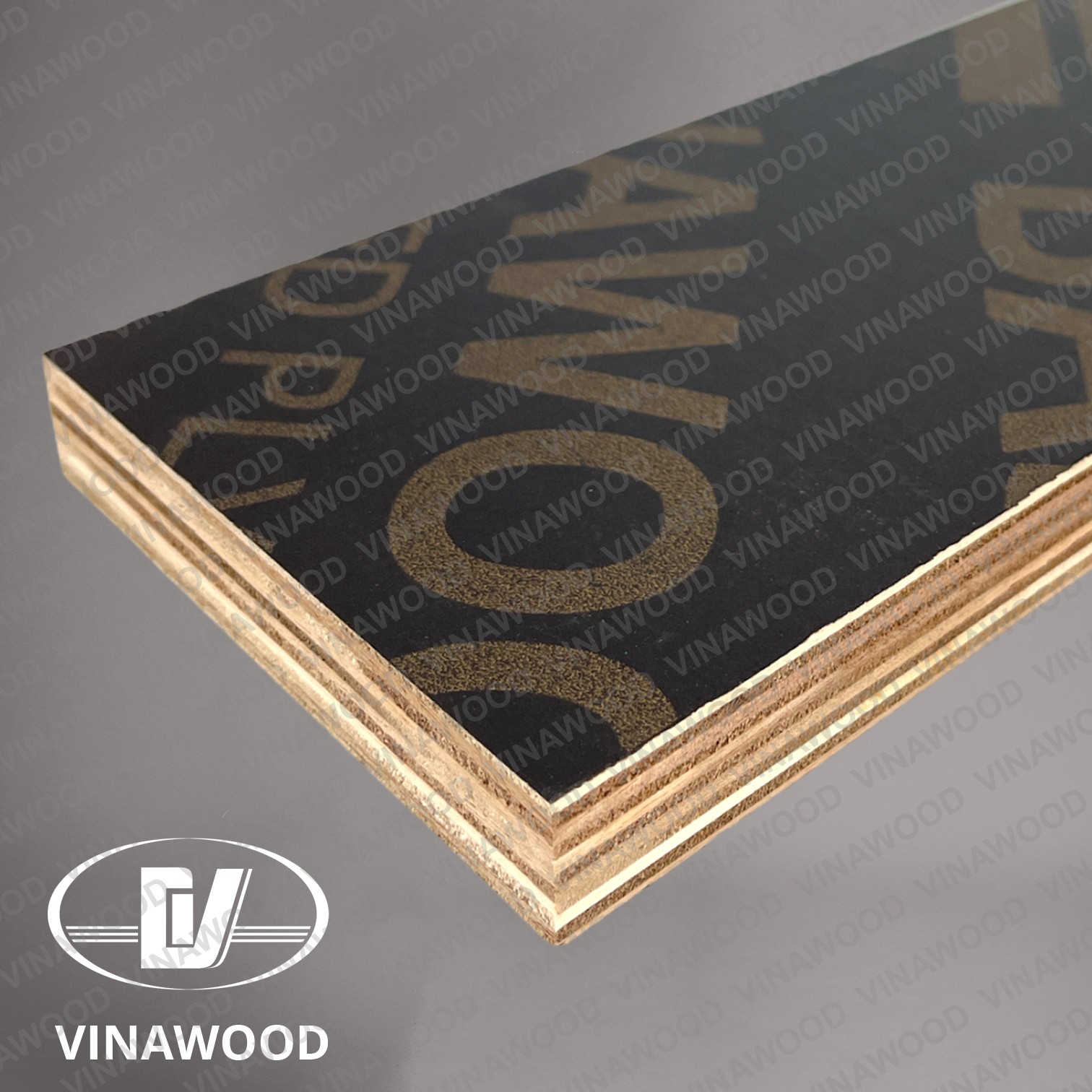
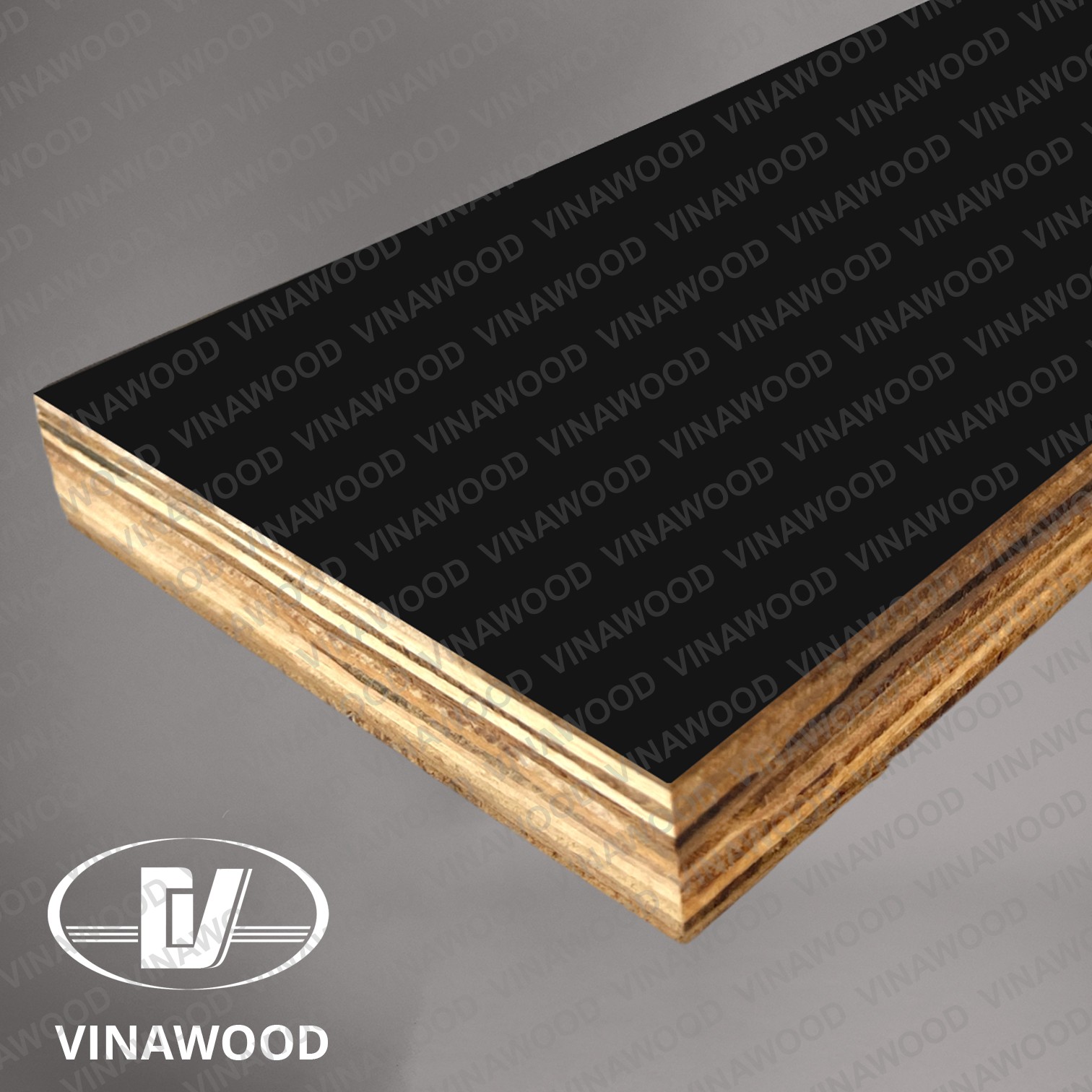
A dark glue line at the cut edge is a field clue, not a certificate. Still ask for the class number on the lab report. Phenolic Class 3 / EN 636-3 formwork at Vinawood sits in Pro Form, Pro Form Lite, and the HDO plywood range. Film-faced Class 3 panels also live in the film-faced plywood collection.
HDO Basic is rated for up to 10 reuses. HDO Premium is rated for up to 20. Reuse figures are maxima under proper handling. Never write “20+” or invent a 100-pour claim. Edge seal, release agent, stacking, and how hard the crew drops the panel all move the real count.
On the mill floor, Class 3 PF also needs tighter press control. Resin mix, veneer moisture, and press time all show up in the shear numbers. That is why a Class 3 certificate from one batch does not automatically cover every thickness you order later. Ask whether the report matches the thickness and face weight on your PO.
Phenolic costs more to press than MUF. Mills that run Class 3 need hot-press capacity and resin control. That is why Class 3 shows up on long-cycle towers, coastal yards, and jobs where panels live outdoors between pours. For the Class 3 phenolic story itself, see phenolic plywood.
Core MUF adhesive in practice
Say core MUF adhesive, not bare “melamine.” Melamine also names a face film and a decorative laminate. Those are different products. Mixing the three words on one RFQ is how wrong panels get shipped.
A high-content MUF bond can pass EN 314 Class 2 and pair with EN 636-2 humid service. It does not equal Class 3 PF on the long outdoor reuse tail. On covered pours with a phenolic face film and solid plantation-grown cores, MUF panels still do real work.
I have seen RFQs treat “WBP melamine” as if it were Class 3 phenolic. That mix-up is what turns a delivery dispute into a claim file.
Practical split on site: covered multi-storey pours with short outdoor storage often fit Class 2 MUF with a phenolic face film. Open infrastructure, wet seasons, or reuse past the mid-teens usually call for Class 3 PF. For overlay chemistry and reuse curves, see melamine vs phenolic film-faced plywood.
How EN 314 is tested
EN 314-1 is the test method. EN 314-2 sets the pass thresholds. Specimens go through a pre-treatment (for Class 3, the cyclic boil route), then get sheared along the glue line. The report should show pre-treatment, shear strength (N/mm²), wood-failure percentage, and pass/fail against the minima in EN 314-2.
Ask for the class number on the report. “Is this WBP?” almost always gets a yes. The class is the technical answer. Prefer an accredited lab certificate over a self-declaration with no data attached.
Marine grade is a full panel spec (veneer quality, voids, tolerances) that usually includes a water-resistant WBP-class bond. Formwork buyers need the bond class first. Marine construction quality is optional for most pours.
Formaldehyde is in the resin chemistry before cure. Finished Vinawood panels are built to meet CARB Phase 2 / EPA TSCA Title VI and E1-style emission expectations, with third-party checks on the mill side. That is emission compliance. It is not a claim that the panel is sealed against every wet-dry cycle without care. Uncoated wood still weathers under UV and rain even when the glue line holds. Film face and edge paint slow that surface wear. The bond and the surface are separate failure modes. Spec both.
Vinawood formwork ladder
Vinawood is a Vietnam mill established in 1992. We ship about 5,000 containers a year to 55+ countries under a 12-step process with 100% individual sheet inspection. Pick the glue class to match the pour, then pick the overlay weight.
Core MUF / EN 314 Class 2 side:
- Eco Form Plus: value film-faced, up to 8 reuses
- Form Basic: core MUF Class 2, phenolic face film, up to 10 reuses
- Form Extra: Superior Glue MUF, not Class 3. Same phenolic face as Form Basic. Longer reuse comes from glue chemistry, not a heavier overlay. Up to 15 reuses
Phenolic Class 3 / EN 636-3 side:
- Pro Form Lite: PF Class 3, up to 15 reuses (sits between Form Extra and Pro Form)
- Pro Form: PF Class 3, up to 20 reuses
- HDO range: phenolic Class 3 overlay panels; Basic up to 10, Premium up to 20
Only Pro Form, Pro Form Lite, and HDO are phenolic Class 3. Form Basic, Form Extra, and Eco Form Plus are not. Consply is commercial Bintangor plywood, not a film-faced formwork grade. Leave it off this ladder.
Plantation-grown acacia and eucalyptus cores are the species Vinawood runs for these formwork lines. Density and face grade still vary by SKU. Spec the core expectation on the RFQ if your market is sensitive to weight or stiffness, not only to glue class. Glue sets the water-resistance ceiling. Core species, face film gsm, edge seal, and site handling decide how close you get to the stated reuse. That is why mills publish “up to N,” not a single guaranteed cycle count.
Reading past the WBP label
Three checks before you sign the PO: EN 314 class on an independent lab report; adhesive chemistry written plain (phenol-formaldehyde / PF vs melamine-urea-formaldehyde / MUF); glue-line colour at the edge as a sanity check, never as the only proof.
One more label trap: some traders print “WBP” on the bundle tag and ship Class 2. Your receiving team should check the glue-line colour and pull the certificate before the panels hit the crane. A five-minute edge check beats a mid-project swap.
Vague phrases like “premium WBP system” or “water-proof bonding” usually hide Class 2 MUF. If your tender needs Class 3, write Class 3 (or EN 636-3) on the RFQ. Add film gsm and size so the mill cannot swap a lighter face without telling you.
What to put on the RFQ
Ask for EN 314 class on the test report, PF vs core MUF chemistry, film gsm, thickness and size, edge seal, and your target reuse (as “up to N,” not a promise). Add FSC or PEFC chain-of-custody and CARB P2 / TSCA Title VI when your market needs them. CE / EN 13986 when the panel is going into an EU construction product path.
State the application in one line: covered residential, open infrastructure, coastal yard, or high-rise reuse target. That one line saves a week of email. Attach a previous panel photo if you are replacing a grade that failed early.
Vinawood quotes against that checklist from the mill. Send the application, bond class, overlay, and quantity through /rfq or request a quotation. We will match the glue class to the pour instead of selling you a water-resistant label dressed up as something the wood cannot be.
Category
guides
▶Sources & References (3)
- EN 314-1: Plywood Bonding Quality Test Methods — CEN (2004)
- EN 314-2: Plywood Bonding Quality Requirements — CEN (2001)
- BS 1203:1979 Synthetic Resin Adhesives for Plywood — BSI (1979)