Formwork Plywood for Slovenian Construction: Opaž & Vezana Plošča Supplier
Complete guide to film-faced formwork plywood for Slovenian construction — EN 636 standards, local terminology (opaž, vezana plošča), reuse economics, and factory-direct import from Vietnam via the Port of Koper.
Why Slovenian Builders Need Reliable Formwork Plywood
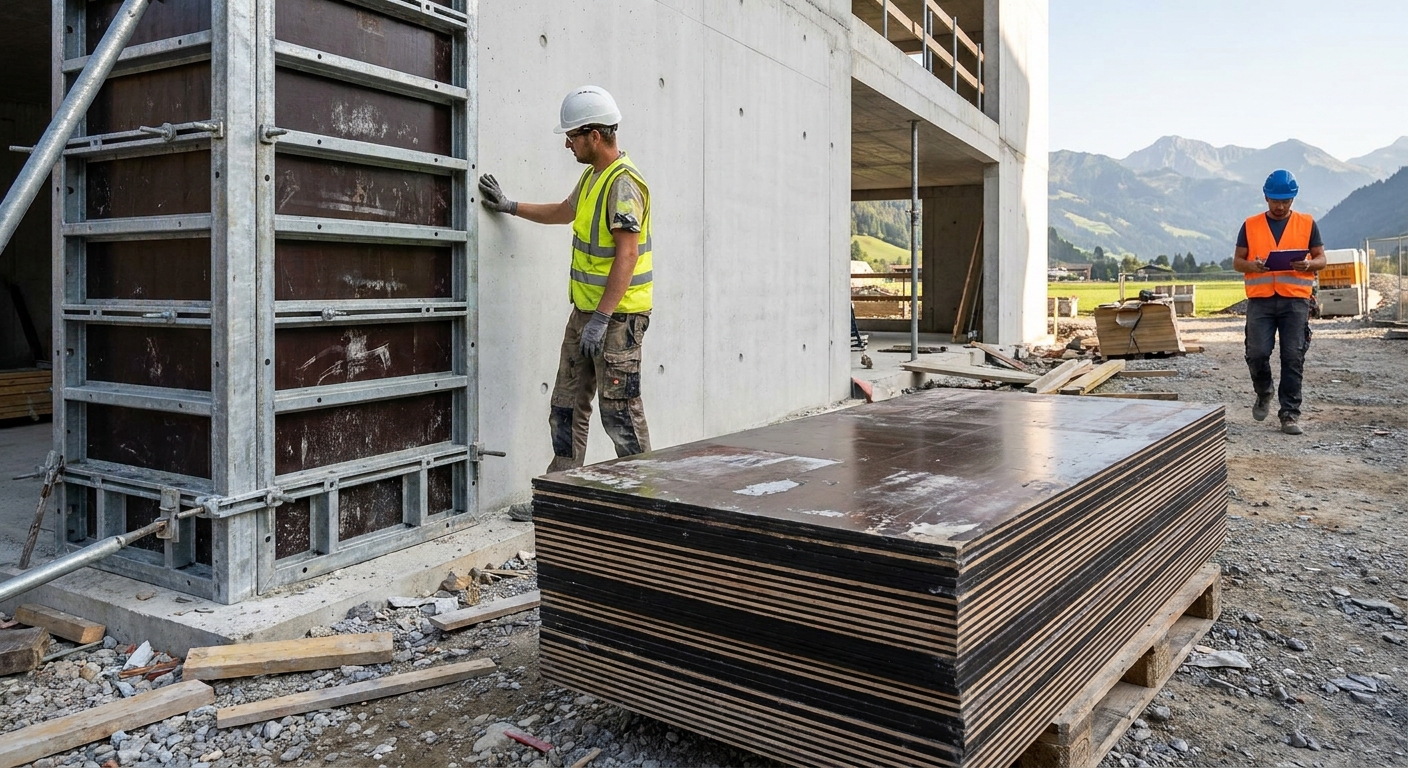
Slovenia's construction sector is experiencing steady growth, driven by EU-funded infrastructure projects, commercial developments in Ljubljana and Maribor, and a robust residential building pipeline. For Slovenian contractors working with reinforced concrete — whether pouring foundations, walls, or elevated slabs — the quality of formwork plywood directly determines the finish of the cured concrete and the economics of the entire forming operation.
The challenge for Slovenian procurement managers is sourcing film-faced formwork plywood that meets EN 636 standards at competitive prices. Traditional European suppliers in Finland and the Baltic states produce excellent panels, but at price points that strain project budgets — particularly on large-scale infrastructure work where formwork material represents a significant portion of total costs.
Vietnamese-manufactured film-faced plywood offers Slovenian builders an alternative: panels that meet identical EN 636 and CE marking requirements at 20–35% lower cost per sheet at container volume, with transit times of approximately 28–32 days via the Port of Koper.
Understanding Slovenian Formwork Terminology
When sourcing formwork plywood for the Slovenian market, understanding local terminology helps navigate supplier conversations and technical specifications. The key terms Slovenian contractors use include:
| Slovenian Term | English Equivalent | Usage Context |
|---|---|---|
| Opaž | Formwork | General term for the complete forming system |
| Opažna plošča | Formwork board/panel | The plywood sheet used as the forming face |
| Vezana plošča | Plywood | Generic plywood — specify "za opaž" (for formwork) to clarify |
| Filmirana vezana plošča | Film-faced plywood | Plywood with phenolic resin overlay for concrete contact |
| Vodoodporna vezana plošča | Waterproof plywood | WBP-bonded plywood suitable for exterior/wet conditions |
These terms appear frequently in Slovenian tender documents, construction specifications, and equipment catalogues. International suppliers shipping to Slovenia should be prepared to reference EN standards alongside these local designations.
EN 636 Standards for Slovenian Construction
As an EU member state, Slovenia follows European harmonised standards for structural timber products. For formwork plywood, the relevant standards are:
| Standard | Classification | Application |
|---|---|---|
| EN 636-1 | Class 1 — Dry conditions | Interior use only — not suitable for formwork |
| EN 636-2 | Class 2 — Humid conditions | Suitable for most formwork applications with WBP melamine adhesive |
| EN 636-3 | Class 3 — Exterior conditions | Heavy-duty formwork in prolonged wet exposure, WBP phenolic adhesive |
Most Slovenian formwork applications require EN 636-2 as a minimum. For projects involving prolonged water exposure — such as dam construction, tunnel linings, or winter pours where panels remain in place for extended curing periods — EN 636-3 with phenolic adhesive provides additional protection against delamination.
The CE marking requirement (EN 13986) applies to all structural plywood products placed on the Slovenian market, confirming compliance with EU Construction Products Regulation.
Film-Faced Plywood Specifications for Slovenia
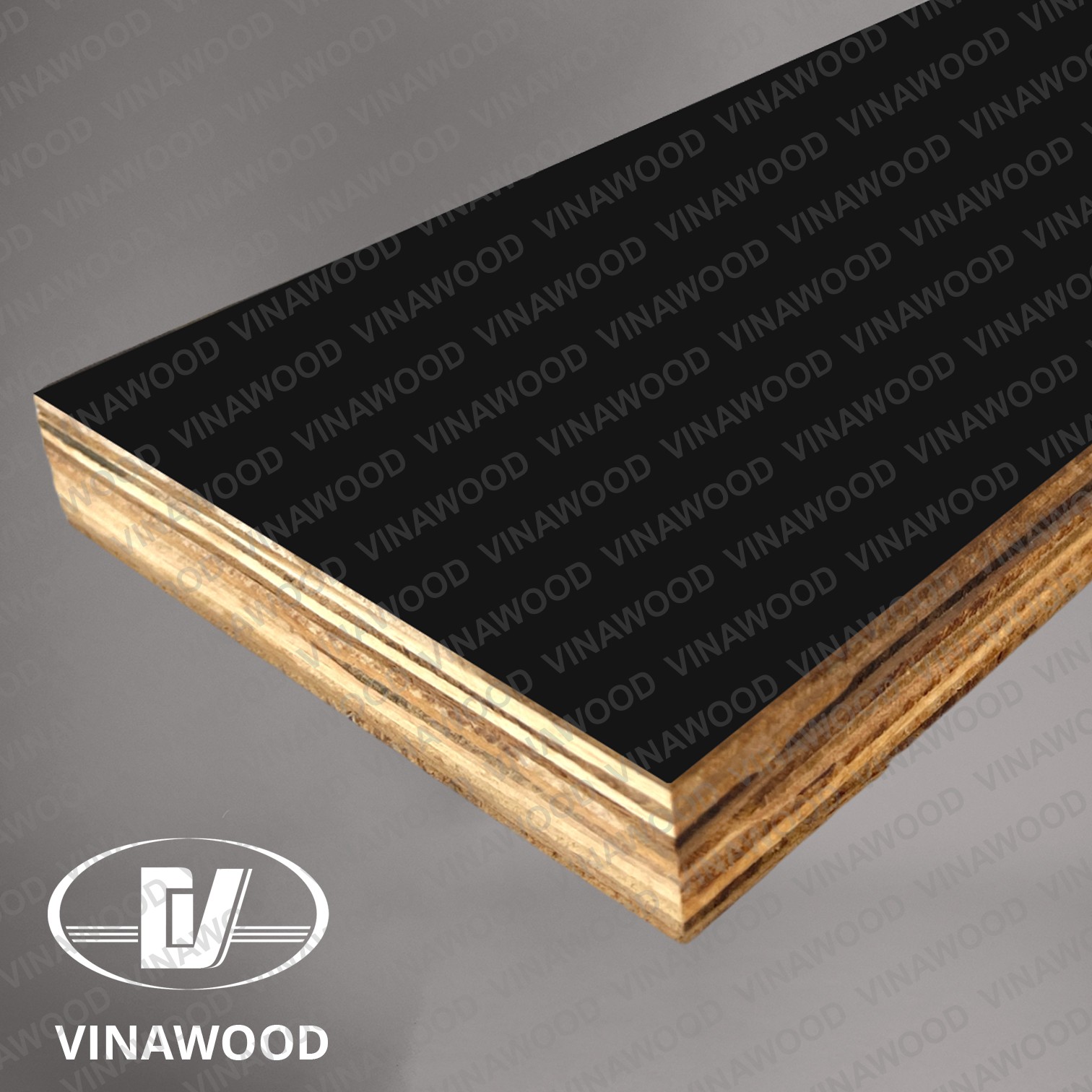
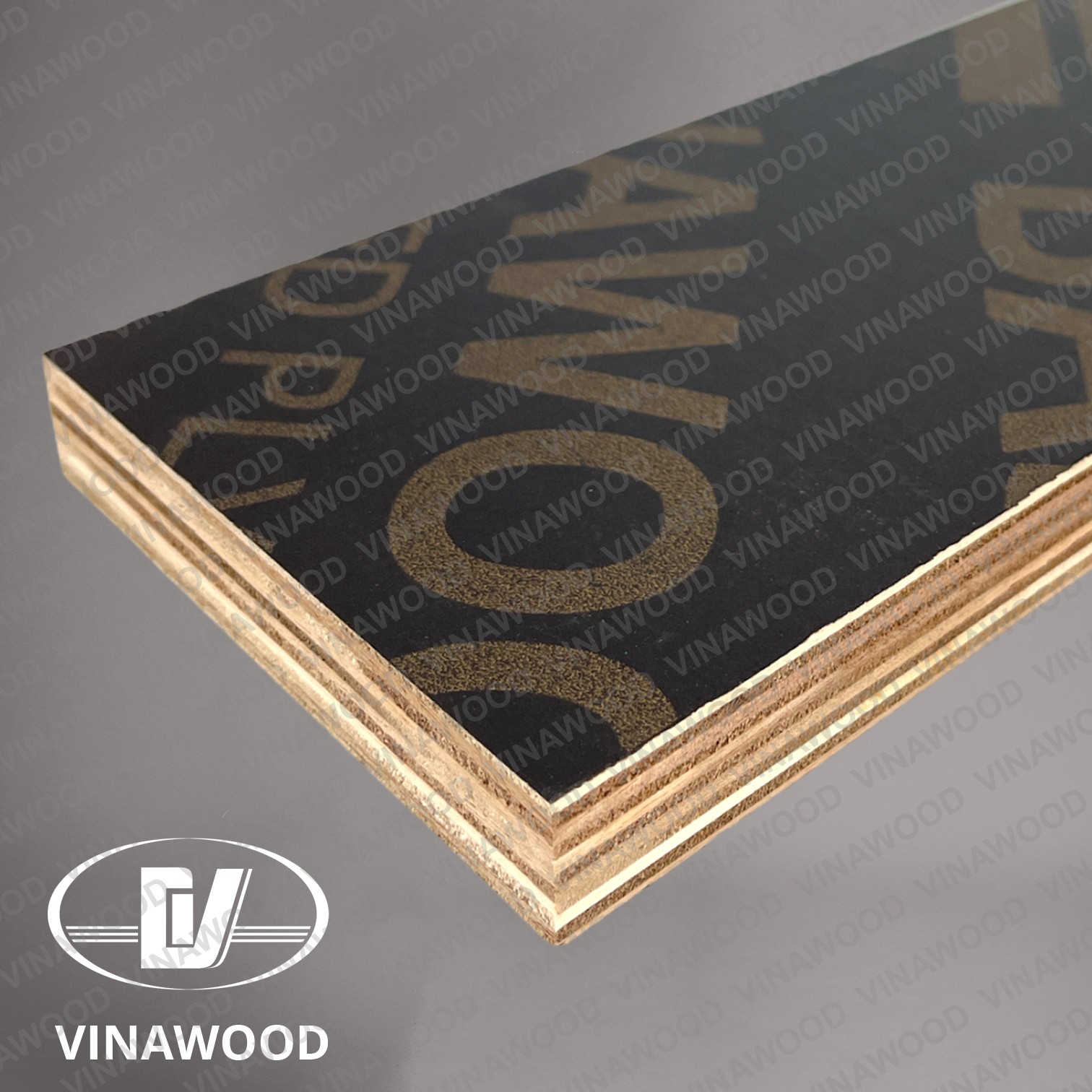
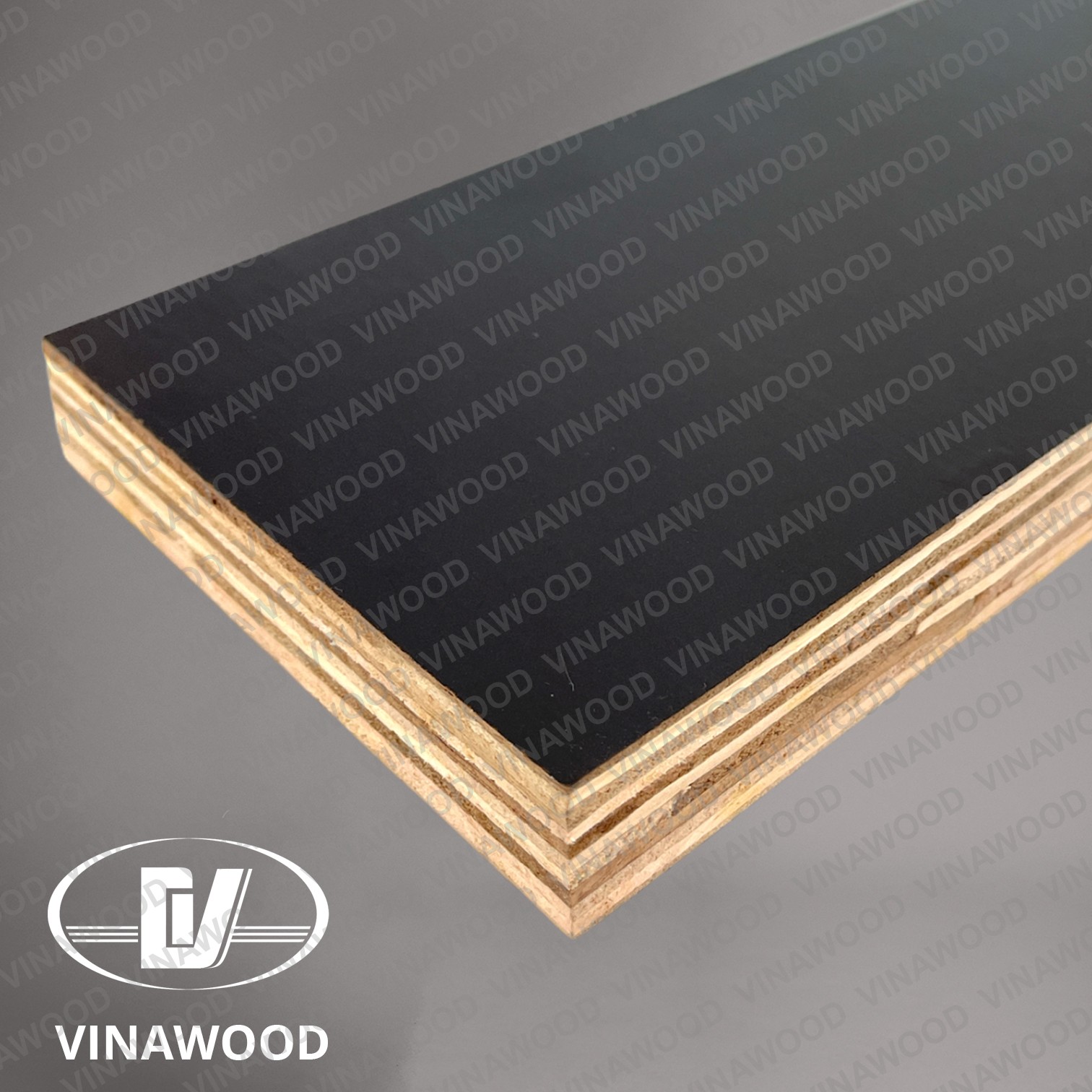
Vinawood manufactures several film-faced plywood grades suited to Slovenian construction needs:
| Product | Adhesive | EN Standard | Max Reuses | EU Size Available |
|---|---|---|---|---|
| Eco Form Plus | WBP Melamine | EN 636-2 | Up to 8 | 2500×1250mm |
| Form Basic | WBP Melamine | EN 636-2 | Up to 10 | 2500×1250mm |
| Form Extra | WBP Melamine | EN 636-2 | Up to 15 | 2500×1250mm |
| Pro Form | WBP Phenolic | EN 636-3 | Up to 20 | 2500×1250mm |
For standard Slovenian commercial and residential formwork, Form Extra with up to 15 reuse cycles represents the best value proposition — its 120 g/m² film weight provides a smooth release surface while maintaining durability across multiple pour cycles. For infrastructure projects requiring EN 636-3, Pro Form with WBP phenolic adhesive delivers up to 20 reuses and withstands prolonged moisture exposure without delamination.
All products are available in the 2500×1250mm European standard size, which aligns with Slovenian formwork systems and reduces cutting waste compared to Asian-standard 1220×2440mm sheets.
Shipping and Logistics to Slovenia
Slovenia's strategic position in Central Europe and its access to the Adriatic Sea through the Port of Koper make it well-connected for container shipping from Vietnam.
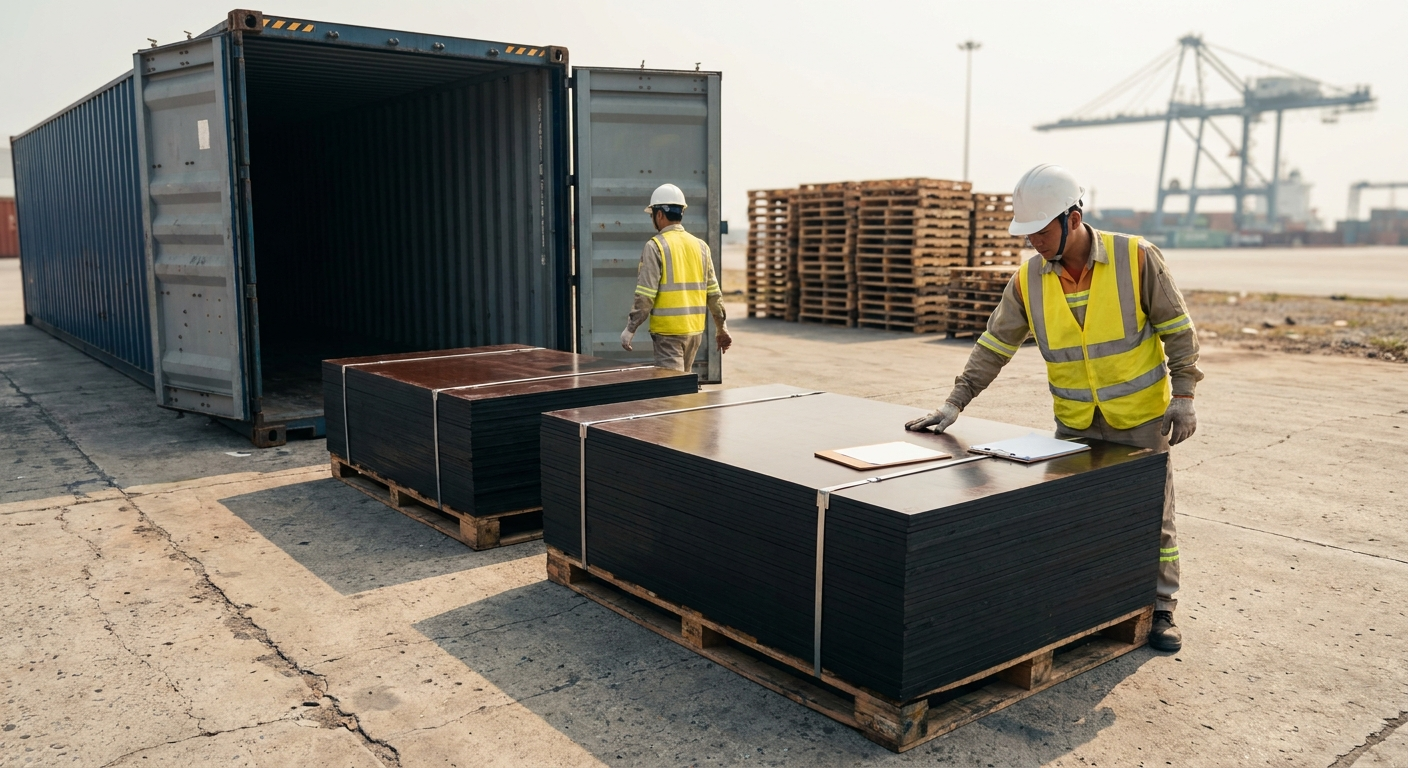
Port of Koper is the primary entry point for containerised cargo into Slovenia. Transit time from Vietnamese ports (Ho Chi Minh City / Cai Mep) to Koper is approximately 28–32 days via major shipping lines operating on Asia–Mediterranean routes. From Koper, inland distribution to Ljubljana takes under 2 hours by road, and Maribor is reachable within 3 hours.
A standard 20-foot container holds approximately 22–24 cubic metres of plywood (roughly 500–600 sheets of 18mm panels), while a 40-foot container accommodates 44–48 cubic metres. For Slovenian contractors purchasing at project scale, a single 40-foot container typically covers the formwork plywood requirement for a mid-sized commercial building project.
Vinawood ships on FOB and CIF Koper terms, with full container load (FCL) pricing available for orders of one container or more. Documentation includes phytosanitary certificates, CE marking declarations, and EN test reports — the standard package required for EU customs clearance.
Cost Comparison: Vietnam vs. European Suppliers
The primary economic advantage of Vietnamese-manufactured formwork plywood for Slovenian buyers is the factory-gate price differential. Vietnamese panels meeting identical EN 636-2 specifications typically cost 20–35% less per sheet than Finnish, Baltic, or Central European alternatives at container volume.
When evaluating total cost, Slovenian buyers should factor in shipping costs (approximately $2,500–$4,000 per 20ft container to Koper, depending on current freight rates), customs duties (EU MFN tariff on plywood from Vietnam), and the working capital tied up during the 28–32 day transit period. Even with these additions, the landed cost in Slovenia typically remains 15–25% below locally sourced European alternatives for equivalent EN-rated products.
The reuse economics further amplify the cost advantage. A panel achieving up to 15 reuse cycles at a lower per-sheet cost delivers a significantly lower cost-per-pour than a more expensive panel achieving the same number of cycles.
Slovenia's Construction Landscape
Slovenia's construction output has been growing steadily, supported by EU structural funds and the country's National Recovery and Resilience Plan. Key areas driving formwork plywood demand include highway and rail infrastructure upgrades (particularly the Karavanke tunnel second tube and the Ljubljana railway node modernisation), commercial real estate development in the Ljubljana Basin, and residential construction across regional centres including Maribor, Celje, and Kranj.
Slovenian construction companies typically source formwork systems from Austrian and Italian suppliers, but the plywood panels within those systems can be sourced independently. This creates an opportunity for Slovenian contractors to reduce costs by purchasing replacement formwork plywood sheets directly from manufacturers — fitting Vietnamese-manufactured panels into existing European formwork frames with no modifications required, thanks to the standard 2500×1250mm sizing.
Frequently Asked Questions
What size formwork plywood is standard in Slovenia?
The standard formwork plywood size used in Slovenian construction is 2500×1250mm, consistent with the broader European market. This size is compatible with Doka, PERI, and other European formwork systems commonly used by Slovenian contractors. Vinawood's entire European film-faced plywood range is available in this dimension.
Does Vietnamese plywood meet Slovenian building requirements?
Yes. Vinawood's film-faced plywood is manufactured to EN 636-2 and EN 636-3 standards, carries CE marking per EN 13986, and includes full test documentation. These are the same harmonised European standards applied in Slovenia as in all EU member states.
How long does shipping from Vietnam to Slovenia take?
Container shipping from Vietnamese ports to the Port of Koper takes approximately 28–32 days. From Koper, road distribution to any Slovenian construction site typically adds less than a day.
What is the minimum order quantity?
Vinawood's minimum order for European markets is one full container load (FCL) — approximately 500–600 sheets of 18mm plywood in a 20-foot container, or double that in a 40-foot container. For Slovenian contractors with smaller requirements, Vinawood can connect buyers with regional distribution partners.
Can Vietnamese plywood fit into European formwork systems?
Vinawood's European-size panels (2500×1250mm) are designed specifically for compatibility with Doka, PERI, Ulma, and other European formwork systems. The panels serve as direct replacements for European-manufactured plywood — same dimensions, same mounting pattern, same EN certification.
Category
guides
Related Markets
Related Countries
Related Products
▶Sources & References (3)
- EN 636 — Plywood specifications — European Committee for Standardization (2012-01-01)
- EN 13986 — Wood-based panels for use in construction — European Committee for Standardization (2015-01-01)
- Port of Koper — Container Terminal — Luka Koper (2026-01-01)