Formwork Plywood Thickness: 12 mm to 21 mm by Span and Pour
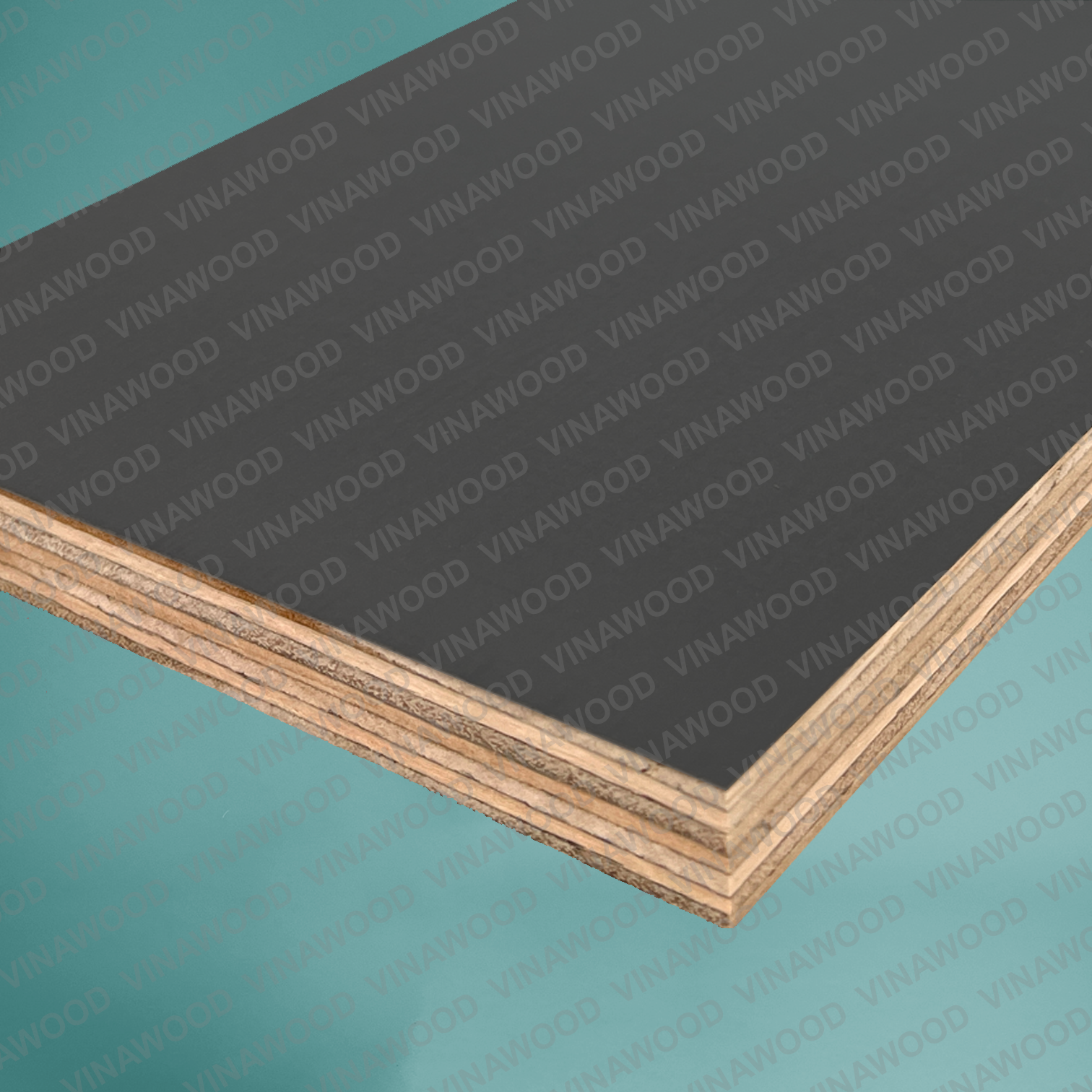
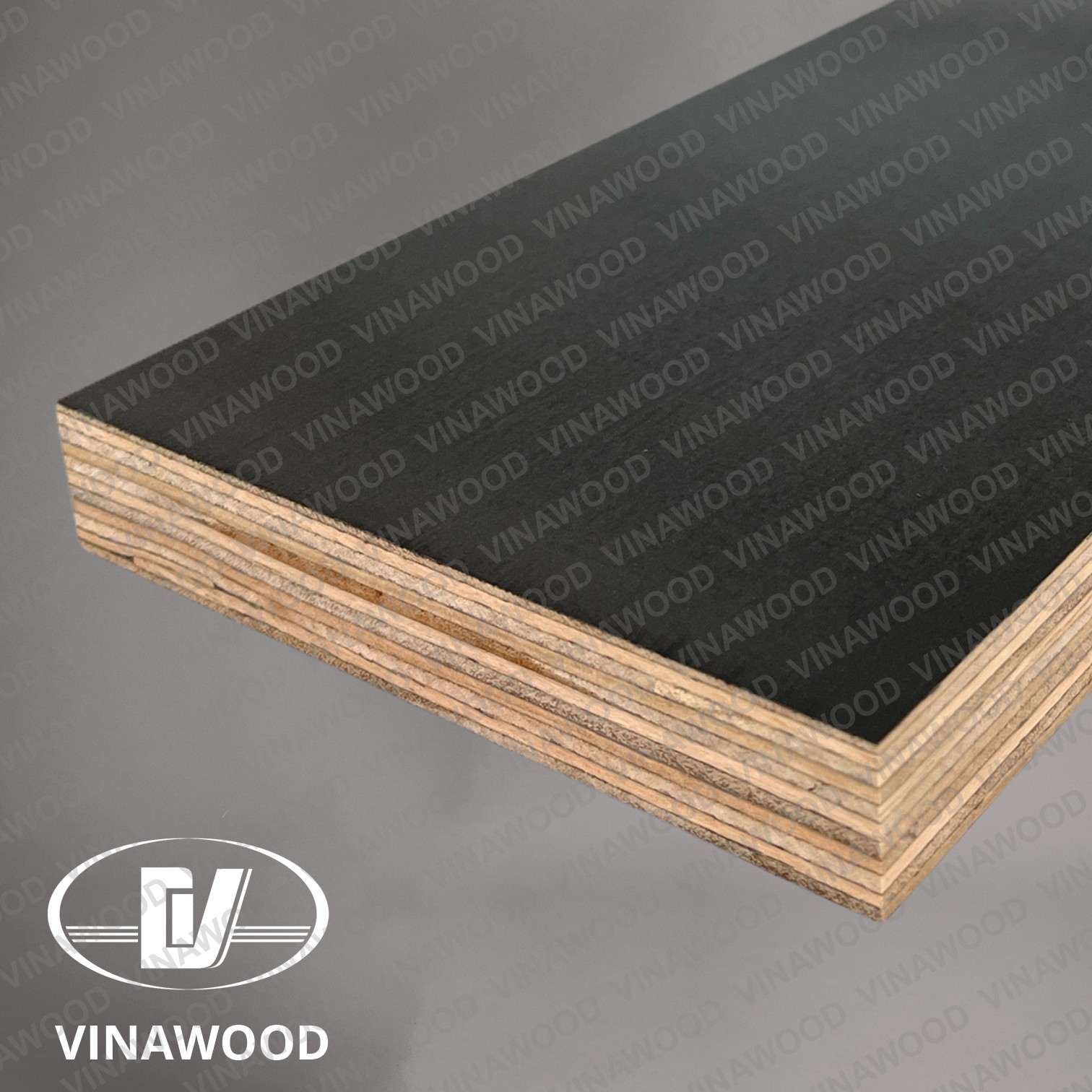
Formwork plywood thickness by span, pour height and overlay. 18 mm is the US workhorse; 21 mm for wide spans and tall pours. Reuse follows overlay and glue class (Class 2 vs Class 3), not millimetres alone.
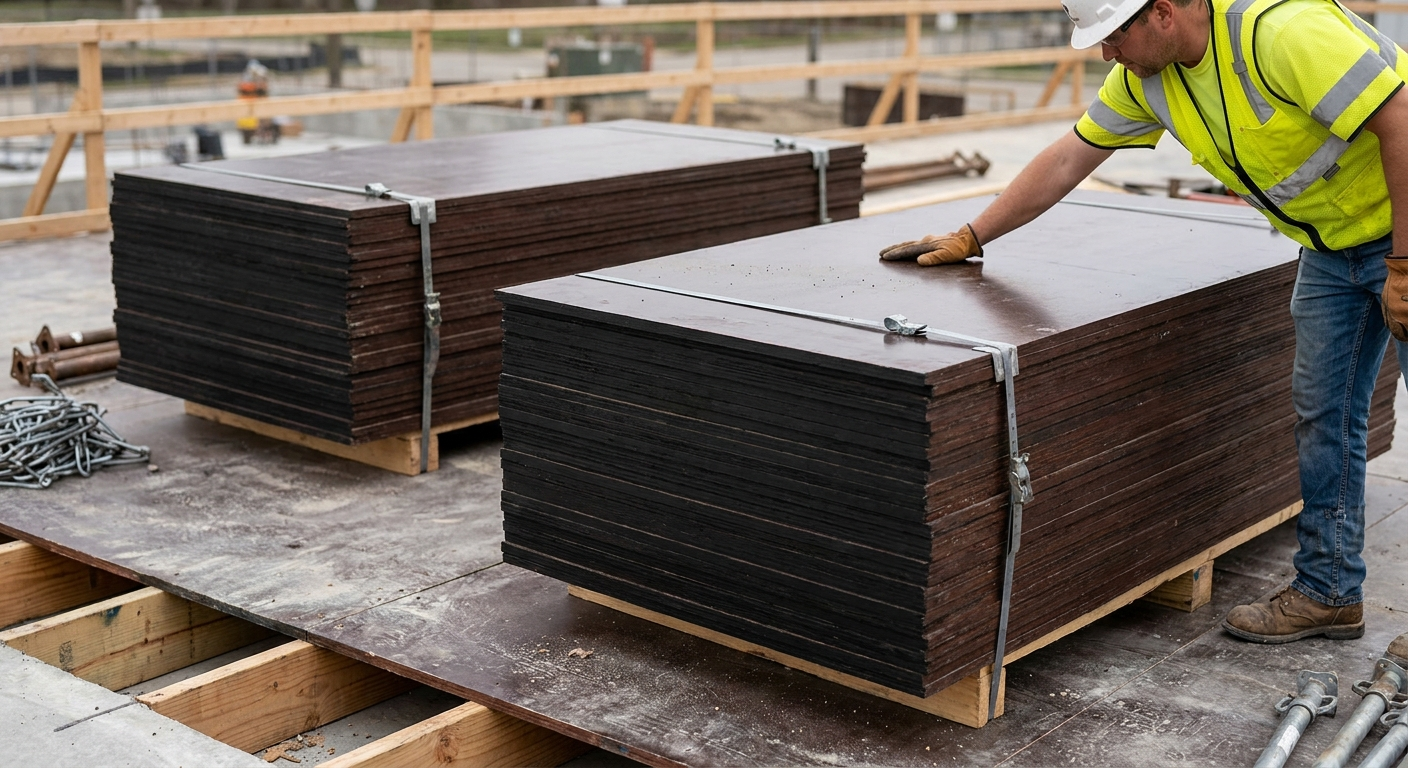
Short answer: use 18 mm (3/4") plywood for most concrete forms, and go to 21 mm when the span, the lift or the pour rate gets big. On a normal 16" joist or stud grid, 18 mm stays flat, a single labourer can still drag a sheet across the deck, and nearly every overlay we make comes in it. The jump to 21 mm pays off once joists open past roughly 400 mm (16"), a wall goes above 3 m, or the pump is filling faster than the face can shrug off. Keep in mind that thickness only buys stiffness. How many pours you get is a separate matter, set by the overlay and the glue class, which is why they sit on different lines of the RFQ.
We've kept this page narrow on purpose: millimetres by span and pour, nothing more. If you're laying out a soffit (joist spacing, deck grade and so on), the slab formwork plywood article already covers it and we won't copy its tables here. Overlay families get their own treatment on the concrete forming plywood hub, and site handling tips live on plywood for concrete forms.
Formwork plywood sizes: the sheet and the caliper are separate questions
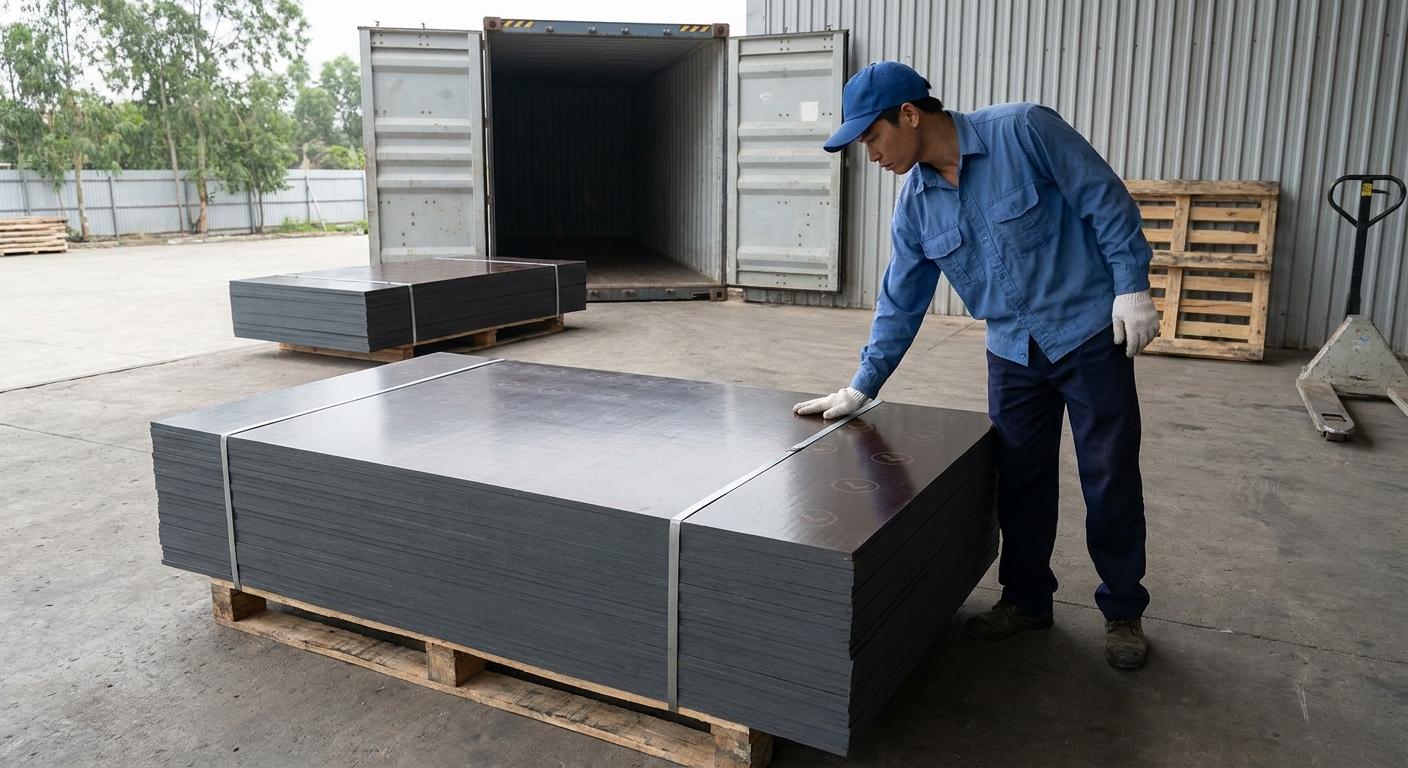
Ask a yard for "formwork plywood sizes" and you'll get two answers mixed together. One is the sheet. In North America that's almost always 2440×1220 mm (8×4 ft), because job-built forms and most packs are drawn around it; in Europe the gang and table systems are built on a 2500×1250 mm module. The other answer is the caliper, which for forming means 12, 15, 18 or 21 mm. Our film-faced and MatteFace ranges are listed in both sheet formats across that whole thickness set, so size seldom picks the product for you. What it really decides is whether the panel drops into the frame you already own.
A wrong format costs money quietly. Put a 2440 sheet in a frame built for 2500 and you're infilling a strip on every single panel; trim a metric sheet down to imperial and you've cut off the edge seal the mill applied. That's why our sales desk asks for the format first, thickness second, overlay last. Some lines (Eco Form is one) are also made at 17 mm for buyers whose existing stock runs on that caliper. 24 mm isn't a stock forming thickness for us, though, so if a drawing calls for it, check before the takeoff assumes it's sitting on a pallet somewhere.
Why plywood thickness matters in formwork
Concrete is heavy long before it's hard. A 200 mm slab loads the deck with about 4.8 kN/m² before anyone walks on it, and on a wall the sideways push grows with every metre of lift and every bit of extra pump speed. The plywood has to carry all of that between joists or studs. If the caliper's too thin for the span, the sheet sags a little, and the concrete records that sag perfectly in the soffit or the wall face. ACI 347 handles the pressure half of the design; APA span tables handle the plywood half.
Stiffness is just one of three choices on the order, though. The overlay is the face the concrete actually touches. The bond class describes the glue line holding the veneers together when they're soaked. You can buy a thin HDO Premium sheet and still watch it dish on a wide joist grid, or a thick Form Extra sheet that scuffs early because the crew forgot release agent. (Form Extra's longer life compared with Form Basic comes from its Superior Glue MUF core, melamine-urea-formaldehyde to EN 636-2. It isn't a heavier face film, and it isn't phenolic Class 3.)
Crews notice thickness at the hoist before they notice it on the pour. Twelve-millimetre sheets go up a stair tower without complaint. A 21 mm sheet wants two people and a clean landing. That handling gap explains why 18 mm hangs on in so many takeoffs where 21 mm would technically span farther on the same props.
The four standard thicknesses, and where each one earns its place
US yards talk in inches, mills in millimetres; the boards don't change. At the light end, 12 mm (about 1/2") is for short heads and tight curves, and only with close backing. On a 16" joist grid it's the wrong sheet, since the deflection shows in the finish well before the panel is anywhere near breaking.
Fifteen millimetres (about 5/8") handles house footings and low walls. It's also happy inside steel gang frames, where the steel does most of the work and the plywood is basically a skin. Then comes 18 mm (3/4"), the default for slabs, walls and most columns at standard spacing, and the thickness that fills the bulk of North American orders. And 21 mm (about 7/8")? That's for wide spans, tall lifts and fast pours, wherever a flat face matters more than the extra weight.
One practical warning. Caliper drifts a hair between production lots, so if two suppliers end up on one pour, compare both spec sheets; a 17.5 mm panel next to an 18.5 mm one will print every joint on the soffit. Seal every field cut too, because a raw edge soaks up mix water even when the film on the face still looks brand new.
Thickness by application
Each pour type loads the sheet differently. Decks fight gravity between joists, walls fight the fluid head of fresh concrete, and columns get the nastiest version of that head, all concentrated at the base.
Slab formwork
On a slab the plywood is only the top skin. Props stand on the floor below, H20 joists run across them, and the 18 mm sheet sits on top, so don't read the whole stack as a thick plywood block. As a rough guide, 18 mm handles joist spacing up to about 400 mm (16"). Move to 21 mm at 500 mm (20") spacing or under slabs deeper than 200 mm (8"); keep 15 mm for light residential decks with joists at 300 mm (12") or tighter. Nothing's wrong with a 21 mm deck on 16" joists. You're just paying for stiffness you won't use, in extra kilos on every lift. The slab formwork plywood guide takes joist layout further.
Wall formwork
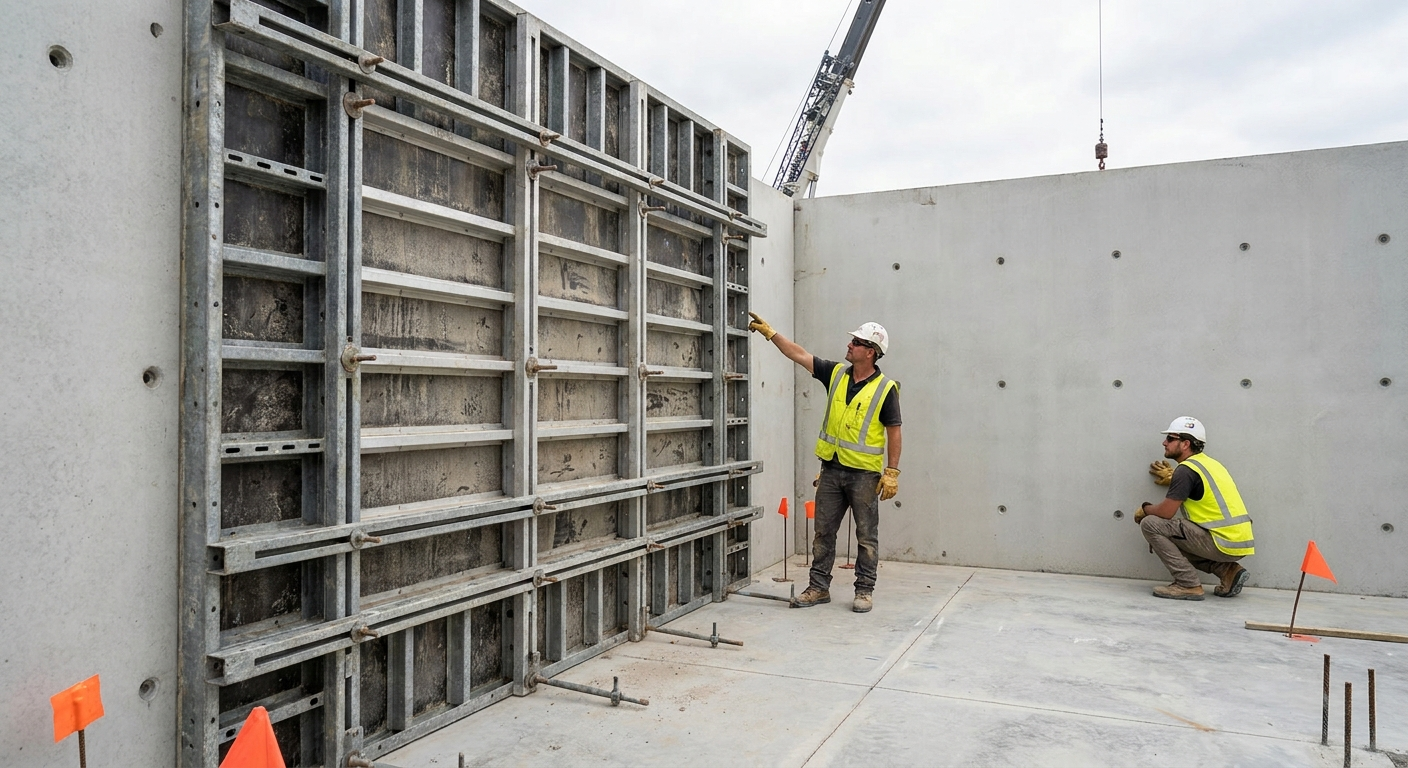
Wall pressure rises with height and with placing rate, simply because more of the concrete is still liquid when the next layer arrives. At ordinary tie spacing, 18 mm covers most walls up to 3 m (10 ft). Under 1.5 m, or behind a steel gang that's carrying the load, 15 mm does the job. Above 3 m, or on an architectural wall where a 2 mm belly means a rejected panel, we'd specify 21 mm. Tighter ties than the span tables assume can let you stay on 18 mm for a taller lift. Wider ties can't be fixed with plywood; extra millimetres don't replace hardware nobody installed.
Plywood column formwork
Columns need their own thinking because of how fast they fill. The plan area is small, so the concrete level climbs quickly, and on a quick pour most of the column can still be fluid by the time the top is reached. So the worst pressure lands at the base, which is exactly the spot you can't see once concrete is going in. ACI 347 gives columns a separate treatment from walls for this reason, and on a real job the designer's pressure figure should drive the choice, not a rule of thumb from a blog.
What converts that pressure into a thickness decision is the span the plywood bridges. On a column box, the sheet spans between yokes (or clamps) one way and across the face width the other, so both numbers count. A square column with tight yokes near the base is comfortable in 18 mm, and that's the minimum we'd use on any ordinary column. Once a face gets wider than about 600 mm (24"), or the yokes spread out toward the top of a tall shaft, 21 mm gives you the flatness that keeps arrises straight and the face free of a bulge. Rectangular columns with long unsupported faces are where we hear about the most rejects. They're also the clearest case for the thicker sheet.
Footing formwork
Footings have a short head, so pressure stays low and 18 mm handles nearly all of them. A 12 to 15 mm sheet can manage a shallow strip footing under 300 mm deep if the walers are close together. We wouldn't gamble 12 mm on a wide isolated pad to save a few kilos per sheet, though; patching a blown face always costs more than that saving.
Thickness vs concrete pressure
Until it starts to set, fresh concrete acts like a liquid, and vibration keeps it liquid a bit longer. Head plus poker energy push on the face. If the stud or joist span is too wide for the caliper, the panel bows and the finished surface shows the curve. Plenty of site engineers use a simple habit here: when the pour runs faster than about 1 m an hour, or goes taller than 3 m, step up one thickness, so a planned 18 mm becomes 21 mm. The overlay doesn't cancel that step. HDO Premium and Pro Form still need whatever stiffness the span asks for.
Weather and mix move the numbers as well. A cold mix placed slowly in a short lift keeps pressure down; a hot mix on a fast pump into a 4 m wall drives it up. ACI 347 explains how rate, temperature and unit weight feed the calculation. Send us those numbers and Vinawood will match thickness and overlay to them, but we won't promise cycles beyond the published product maxima to close an order.
One habit undoes a good thickness choice fast: resting the vibrator against the form. It marks the film, and no caliper protects a face from a 50 mm poker left running on it. Keep the poker in the concrete.
Thickness vs reuse
Pour count comes from the overlay and the glue class, plus how the crew strips and stores the sheet. Extra millimetres help a panel resist dents and flex fatigue; they don't add cycles by themselves, and a thicker Form Basic sheet is still capped by Form Basic chemistry. Here's how our range maps out (every figure is an "up to" value and assumes decent site care):
- HDO Basic: up to 10. Dense phenolic overlay over MUF-class WBP glue, EN 636-2 / Class 2.
- HDO Standard, HDO Premium and Premium HD: up to 20. Dense phenolic overlay with PF glue, EN 636-3 / Class 3.
- MatteFace Plywood (MTF): matte phenolic surface film, EN 636-3 / Class 3, formwork only. Reuse by SKU: 1SF up to 15, HD 1SF up to 17, 2S up to 25. Buyers often search for it as MDO formwork plywood; MDO stays a search bridge here.
- Form Basic: up to 10. Phenolic face film over a MUF core, EN 636-2 / Class 2.
- Form Extra: up to 15. Superior Glue MUF core, EN 636-2 / Class 2, same phenolic face as Form Basic, not Class 3.
- Pro Form Lite: up to 15. WBP phenolic glue with a 165 g/m² phenolic film, EN 636-3 / Class 3. It sits between Form Extra and Pro Form.
- Pro Form: up to 20. WBP phenolic glue, EN 636-3 / Class 3.
- Eco Form Plus: up to 8. Eco Form: up to 6. Both are MUF-bonded Class 2 entry grades for short-cycle work.
Among our film-faced grades, only Pro Form and Pro Form Lite are phenolic Class 3. In North America the Class 3 set is HDO Standard and HDO Premium (not HDO Basic), plus MatteFace on the matte phenolic side. No amount of thickness turns a MUF panel into a PF one. P-Form is a polypropylene-faced panel (not Pro Form), and Consply is commercial Bintangor plywood rather than a film-faced forming sheet.
Whether a crew actually sees the "up to" number, or half of it, comes down to release agent and cleaning, and to storing sheets flat and covered. Edges kill more panels than face wear does. A 21 mm sheet with a crushed long edge is scrap just like a 15 mm one, and the formwork panel care guide walks through how to avoid that.
HDO, MatteFace and film-faced: an overlay won't stand in for caliper
North American specifiers usually reach for HDO, or MatteFace when the architect wants a matte cast face. Export and European jobs lean toward film-faced plywood, often in 1250×2500. None of those faces replaces thickness. Put a 12 mm HDO Premium sheet on a 20" joist grid and it'll deflect like the 12 mm sheet it is.
HDO is a dense phenolic overlay built for high-cycle gangs. HDO Basic stays Class 2 at up to 10; HDO Standard and HDO Premium sit at Class 3 with up to 20. MatteFace is a matte phenolic surface film rated EN 636-3 / Class 3 — reuse follows the SKU (1SF up to 15, HD 1SF up to 17, 2S up to 25), and the face on its data sheet reads MatteFace Surface 325 gsm. It's a forming panel, not a paint or sign board, so don't let kraft-paper MDO creep onto the order in its place. MDO remains a search bridge only.
Overlay and glue class decide how many pours the sheet can take; thickness still decides how stiff it stays between joists. Put a thin Class 3 sheet on a wide grid and it dishes like any other thin sheet. With film-faced grades, separate the core from the film in your head. Form Extra runs Superior Glue MUF and gets up to 15 cycles without being Class 3. Pro Form Lite pairs PF glue with a 165 g/m² film for up to 15, while Pro Form is PF all the way to 20. You'll find the export range on the film-faced plywood collection; the three-way overlay comparison is at film faced vs MDO vs HDO.
Quick-reference table
| Application | Standard thickness | Heavy option | Light minimum |
|---|---|---|---|
| Slab formwork | 18 mm (3/4") | 21 mm | 15 mm |
| Wall formwork | 18 mm (3/4") | 21 mm | 15 mm |
| Column formwork | 18 mm (3/4") | 21 mm | 18 mm |
| Footing formwork | 18 mm (3/4") | 18 mm | 12 mm |
There's no reuse column in that table, and that's deliberate: overlay and glue set the cycle count. An 18 mm HDO Basic sheet is good for up to 10 pours; an 18 mm HDO Premium sheet of identical caliper reaches up to 20. WBP here means a water-resistant glue line, so edges still need sealer after cutting. Cores are plantation-grown Acacia and Eucalyptus, with Hevea in some grades.
What to put on the mill RFQ
A quote request that names five fields gets the right panel first time. Those are thickness and overlay, bond class, sheet size, and emission class. Written out, it might read: 18 mm; HDO Premium (or MatteFace, or a film-faced grade like Pro Form Lite); EN 636-3; 2440×1220; E1, or whichever emission class your market asks for.
Mixing slabs and tall walls on one job? Say so. One thickness can often cover both, but the overlay usually shouldn't. A matte architectural wall points toward MatteFace. A high-cycle column gang points toward HDO Premium or Pro Form, while a short-cycle footing can happily run on Form Basic at 18 mm without anyone on site missing the heavier film.
Vinawood has made formwork panels in Vietnam since 1992. We ship about 5,000 containers a year to 55+ countries, and every sheet gets inspected before it leaves. For quick top-ups, our distribution warehouses in Toronto, Vancouver, Calgary, Montreal, Miami, Houston and Baltimore keep ready stock for local distributors. Container programmes still run through the mill, so send the five fields through the RFQ form or our contact page and we'll match a stock thickness and overlay to your pour schedule. Pricing and duty questions go to the sales team; this page sticks to thickness, overlay and bond class.
Category
guides
Related Markets
Related Countries
Related Products
▶Sources & References (2)
- ACI 347 — Guide to Formwork for Concrete — American Concrete Institute (2014-01-01)
- Plywood Design Specification — APA — The Engineered Wood Association (2024-01-01)