Formwork Plywood for European Construction Projects
Vinawood supplies EN 636-compliant formwork plywood to European construction projects. Competitive FOB pricing, fast ocean freight to Rotterdam, Hamburg and Gdansk, and full CE documentation.
Why European Construction Projects Are Turning to Vietnamese Formwork Plywood
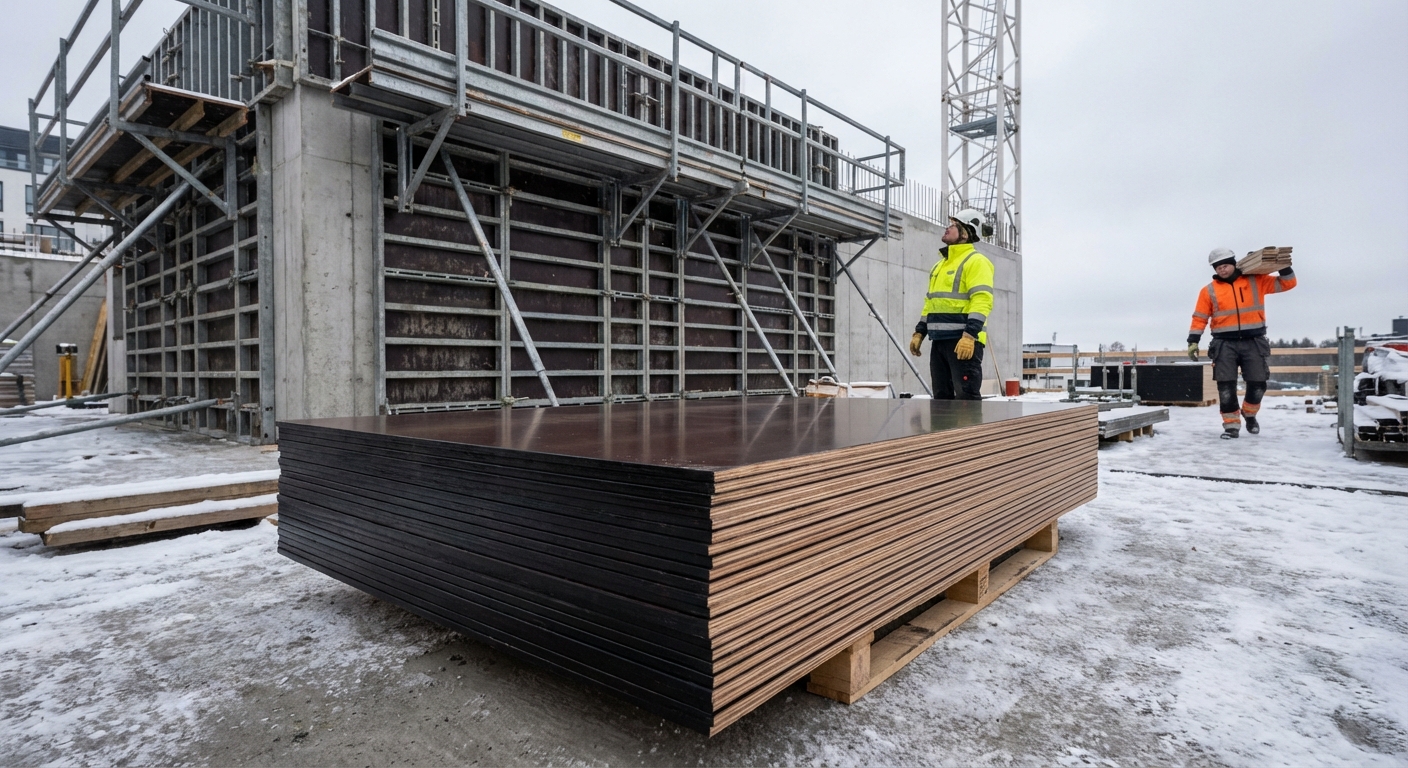
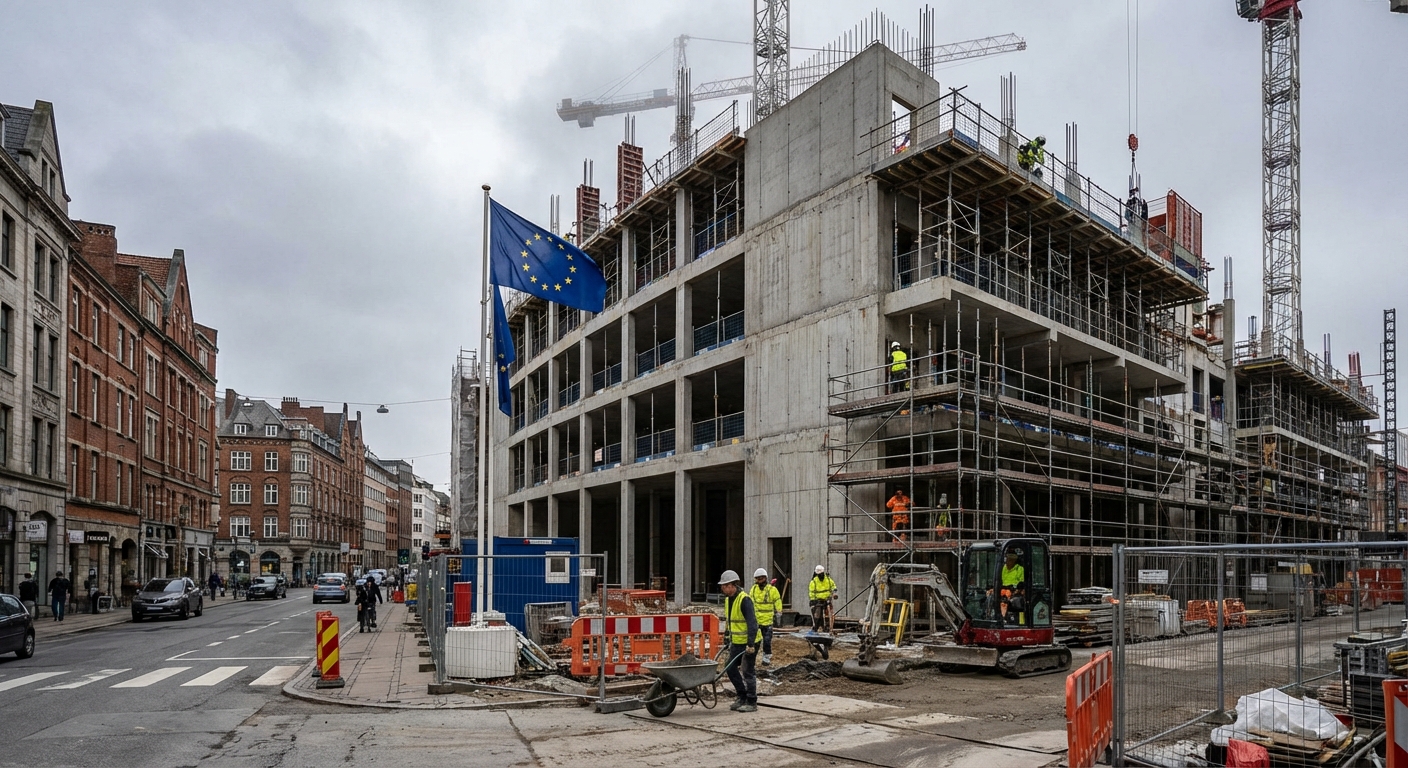
Europe's construction sector is one of the largest in the world, consuming an estimated 12 million cubic metres of structural and formwork plywood every year. From high-rise residential towers in Warsaw to infrastructure megaprojects in Germany and Scandinavia, the demand for reliable, cost-effective formwork plywood has never been higher.
Yet European procurement teams are increasingly turning to Vietnam as a reliable source. Vietnamese manufacturers now supply over 8 million cubic metres of plywood annually to global markets — and European construction is becoming a strategic focus. Vinawood, a Hanoi-based manufacturer with 30+ years of export experience across 55 countries, has established a stable presence in European formwork markets. The value proposition is compelling: EN 636-certified film-faced panels at factory-direct pricing, with consistent quality and reliable delivery schedules that rival traditional Finnish and Chinese suppliers.
Why Vietnam, Why Now
Vietnam is the world's second-largest plywood exporter. The industry benefits from abundant hardwood plantations, low-cost labour, vertical integration (many mills own forestry concessions), and strategic port infrastructure. More importantly for European buyers: Vietnamese manufacturers have invested heavily in EU market certification.
EN 636 compliance. All film-faced plywood sold to the EU market carries EN 636-2 (humid conditions) or EN 636-3 (exterior) certification. This is no longer a quality differentiator — it is now a market baseline.
CE marking. Under the Construction Products Regulation (CPR), all plywood for EU construction must carry CE marking supported by a Declaration of Performance (DoP). Vietnamese producers have streamlined this compliance process. Vinawood provides full CE documentation for all grades — enabling rapid import clearance and specification approval on EU projects.
Cost advantage without compromise. Factory-gate pricing in Vietnam is 25–35% lower than Finnish manufacturers. Yet certified Vietnamese plywood meets the same structural standards (EN 13986), achieves similar reuse cycles, and produces equivalent surface finishes. For European contractors managing tight project budgets, Vietnamese formwork plywood offers cost parity with Chinese suppliers but with better documentation, consistency, and supply reliability.
Vinawood's European Formwork Range
Vinawood manufactures three film-faced plywood grades for the European construction market. All use WBP phenol-formaldehyde adhesive and are available in both standard (2440×1220mm) and EU metric (2500×1250mm) sheet sizes.
| Product | EN Standard | Face Film (g/m²) | Reuse Cycles | Thickness Range (mm) | Primary Applications |
|---|---|---|---|---|---|
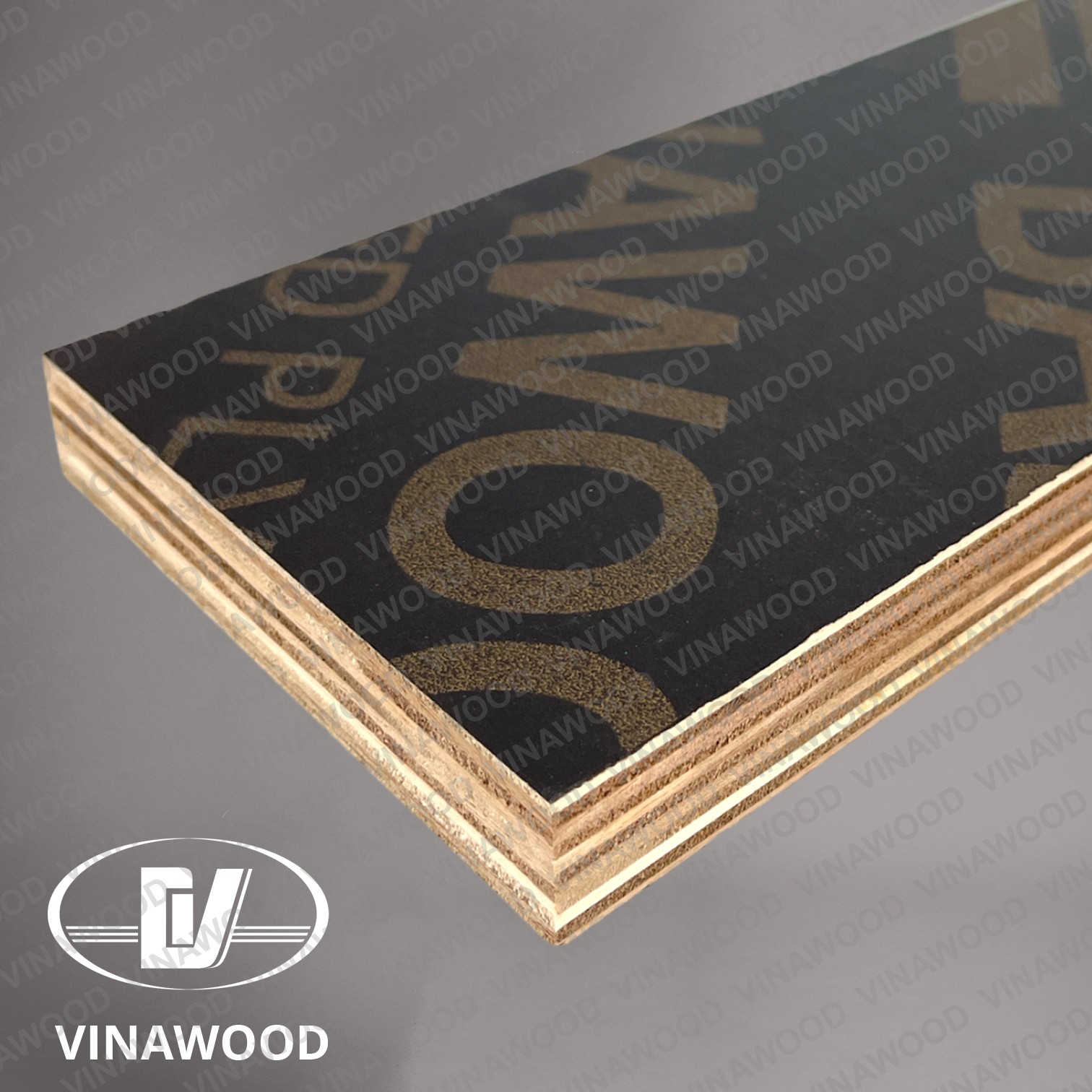
| Eco Form Plus | EN 636-2 | 120 | Up to 8 | 12–21 | Residential foundations, concealed soffits |
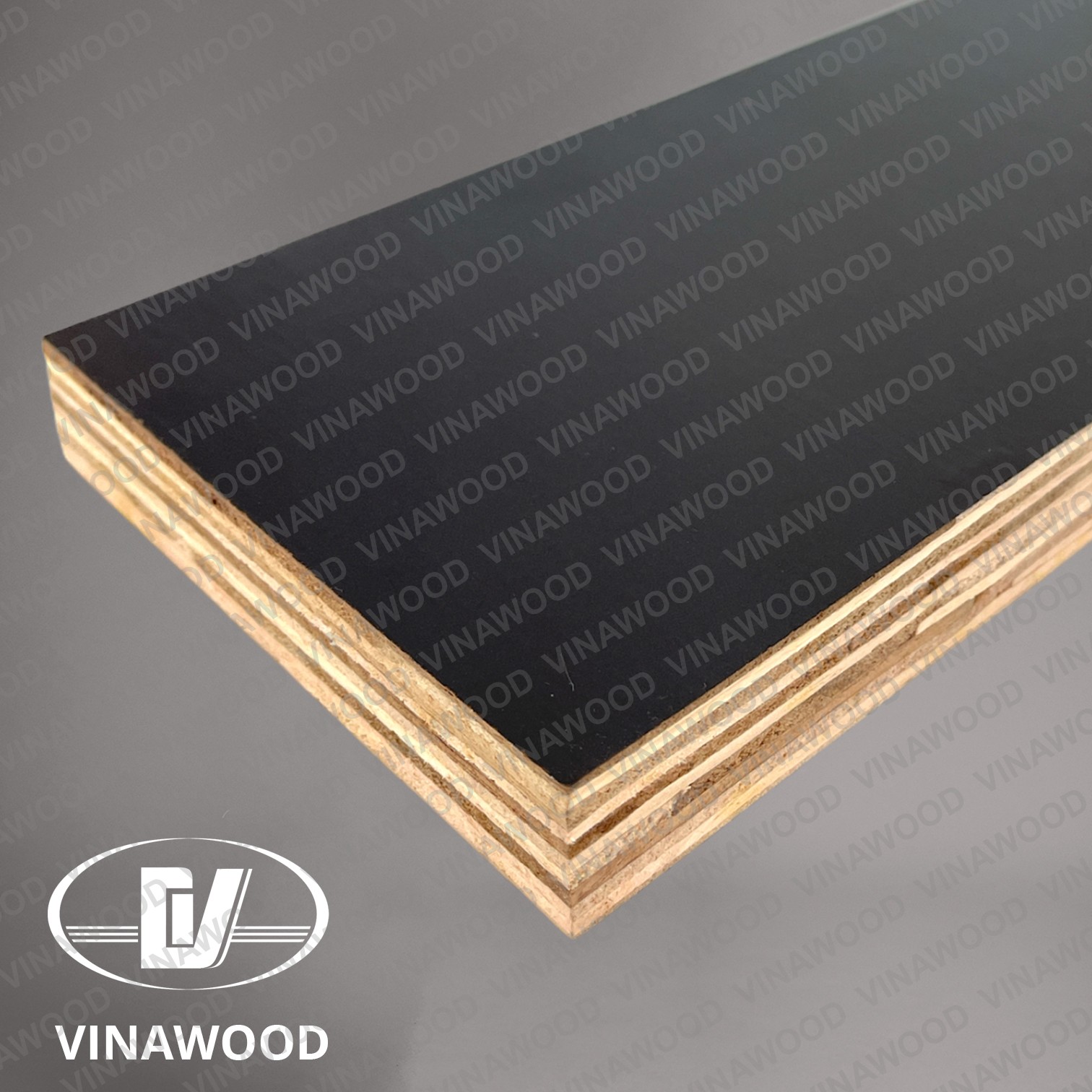
| Form Basic | EN 636-2 | 120 | Up to 10 | 12–25 | Standard commercial formwork, multi-storey residential |
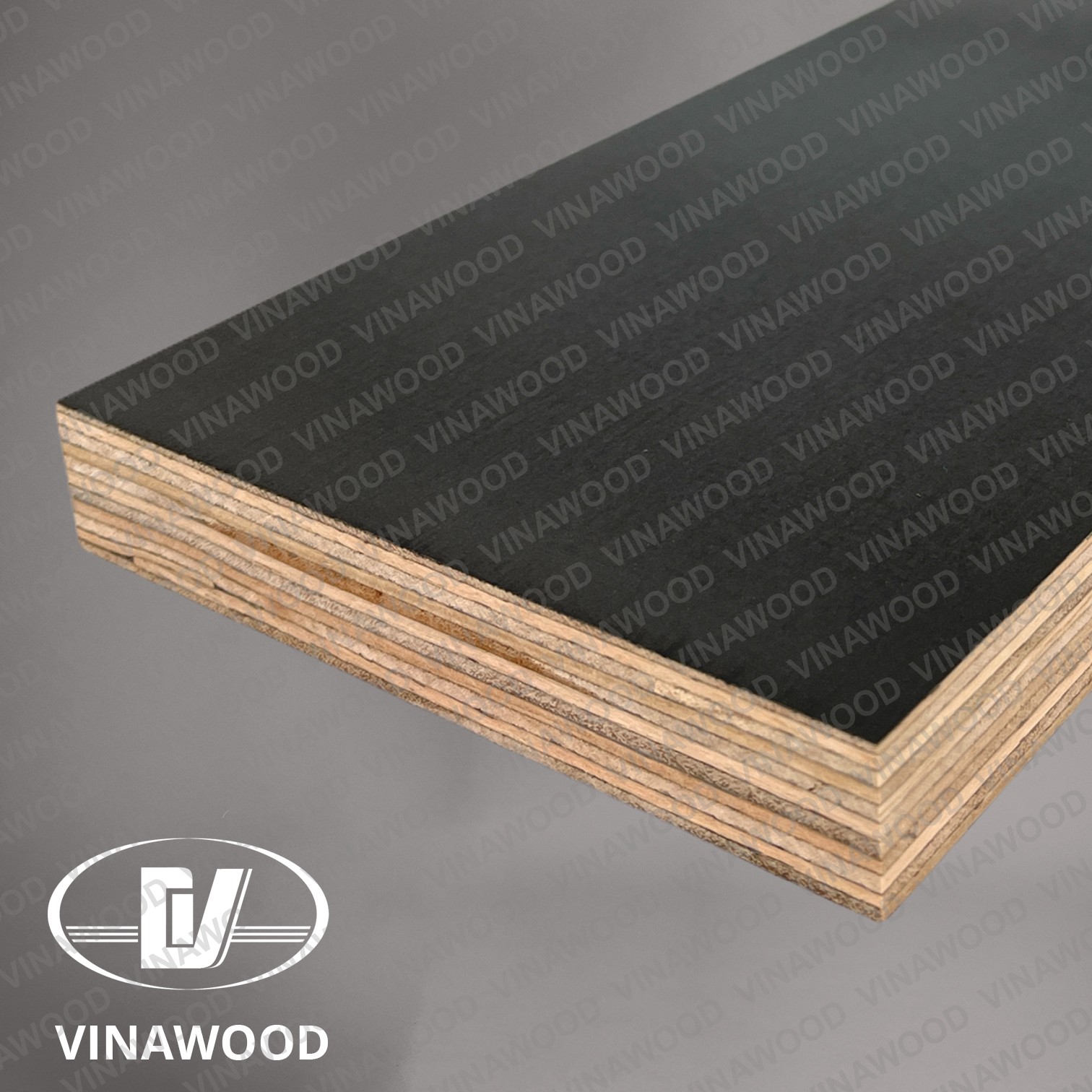
| Pro Form | EN 636-3 | 220 | Up to 20 | 15–25 | Heavy-duty infrastructure, high-rise, coastal projects |
The 18mm thickness in Form Basic and Pro Form is the most widely specified in European practice — balancing panel weight, spanning capacity, and cost-per-reuse.
Key Product Distinctions
Eco Form Plus: The Budget Alternative
Grade: EN 636-2 (humid conditions)
Face film: 120 g/m² polyester-bonded phenolic overlay
Reuse life: Up to 8 cycles
Surface finish: Smooth, suitable for concealed soffits and interior formwork. Not recommended for exposed architectural concrete.
Eco Form Plus is the entry point for price-sensitive residential and light commercial projects where the formwork will be used fewer than 8 times. The lower face film weight means the surface will show wear after 5–6 cycles, but the panel remains structurally sound and can be downgraded to site infrastructure or temporary shoring applications.
Form Basic: The Workhorse
Grade: EN 636-2 (humid conditions)
Face film: 120 g/m² melamine overlay
Reuse life: Up to 10 cycles
Surface finish: Smooth, suitable for both concealed and moderately exposed soffits. Acceptable for fair-face concrete with standard surface finish specifications.
Form Basic is the industry standard for commercial formwork across Europe. It is the specification for multi-storey residential towers, office buildings, shopping centres, and mixed-use developments. A 30-storey residential tower pouring one floor per week can reuse the same Form Basic panels across all 30 floors with minimal surface degradation. The melamine film overlay resists prolonged moisture exposure during the typical 24–48 hour stripping cycle.
Pro Form: The Premium Grade
Grade: EN 636-3 (exterior/sustained moisture)
Face film: 220 g/m² phenolic overlay
Reuse life: Up to 20 cycles
Surface finish: Superior finish, suitable for exposed architectural concrete and marine-adjacent applications.
Pro Form is specified for infrastructure projects, high-rise buildings on aggressive schedules (pouring faster than weekly cycles), and coastal applications where seawater spray or high groundwater tables expose the formwork to prolonged moisture. The thicker, higher-quality phenolic film maintains surface integrity through up to 20 reuse cycles — valuable on projects where the same panel set is reused on a rapid schedule.
EN 636: Compliance and Implications
The EN 636 standard divides plywood into three moisture classes:
- EN 636-2: For use in humid conditions (moisture content equilibrium 12–20%). Covers most interior and standard formwork applications where panels experience wet concrete for 24–48 hours during curing, then dry between cycles.
- EN 636-3: For exterior use and sustained moisture (equilibrium above 20%). Specified for coastal construction, permanent water contact, and applications with minimal drying time between cycles.
- EN 636-1: Interior/dry conditions only — not relevant for formwork.
Vinawood's Form Basic and Eco Form Plus meet EN 636-2. Pro Form meets EN 636-3. This distinction matters for specification and approval: some European building codes and project standards explicitly call for EN 636-3 plywood in coastal zones, requiring Pro Form even if an EN 636-2 panel would technically perform adequately.
Regional Application Examples
Germany and Central Europe
German construction is highly standardized. Most formwork specifications in Germany call for DIN-certified plywood (equivalent to EN 636). Form Basic meets all common German commercial formwork specifications. For high-rise projects in Frankfurt, Berlin, and Munich, Pro Form is increasingly specified due to the pressure to reduce formwork cycle time on complex building geometries.
Scandinavia
Despite the presence of Finnish manufacturers (SVEZA, Metsä), Scandinavian construction is now competitive. Danish and Swedish importers import Vietnamese formwork plywood at factory-direct pricing, then compete against domestic suppliers. EN 636-3 Pro Form attracts Scandinavian interest for infrastructure and marine-adjacent work (harbour renovation, waterfront developments, bridge formwork).
UK and Ireland
Post-Brexit, UK formwork procurement has become more price-driven. EU trade friction and tariffs have shifted some UK importers toward non-EU suppliers, including Vietnam. Form Basic and Eco Form Plus are commonly specified on UK residential developments where cost per reuse is the primary driver.
France and Southern Europe
Mediterranean construction — particularly in Greece, Spain, Portugal, and southern France — is experiencing infrastructure spending from EU recovery funds. Form Basic and Pro Form are both specified, depending on coastal proximity and project schedule. Italian importers frequently source Vietnamese formwork plywood due to price advantages over traditional Finnish and domestic Italian suppliers.
Certification and Documentation
All Vinawood panels carry the following certifications (provided with every shipment):
- EN 636-2 or EN 636-3: Moisture resistance classification
- CE marking: Declaration of Performance (DoP) under EN 13986 (Wood-Based Panels for Construction)
- EN 314: Bonding quality verification (Boil Test)
- FSC Chain of Custody: Sustainable forestry chain-of-custody certification
- CARB Phase 2: California Air Resources Board formaldehyde compliance (relevant for import to states with strict emission limits)
- Phytosanitary Certificate: ISPM 15 heat-treatment verification for all shipments to EU and international destinations
- Mill Certificates: Structural grade, thickness tolerance, face film weight, and adhesive specifications
All documentation is translated into English and German for EU convenience. Technical data sheets are available in 12 languages, and Vinawood's EU representatives provide on-site support for large projects.
Pricing and Supply Reliability
A typical 20ft container from Vietnam to a European port (Hamburg, Rotterdam, Antwerp) holds approximately 280–320 sheets of 18mm Form Basic in standard 2440×1220mm format. FOB Ho Chi Minh City pricing (factory pickup, buyer arranges freight) is approximately €7–11 per sheet, depending on volume and market conditions. CIF European port pricing (including ocean freight and insurance) is approximately €10–14 per sheet. Shipping transit time is 30–35 days via Suez or 35–40 days via Cape of Good Hope.
Minimum order is one 20ft container. For smaller trial shipments, Vinawood arranges LCL (Less than Container Load) consolidation through freight forwarders, though per-unit pricing is higher (~15–20% premium).
Quality Assurance and Site Inspection
Vinawood offers optional pre-shipment inspection through third-party certifiers (SGS, Bureau Veritas, Intertek). Many European importers request inspection of the first container to validate mill quality before committing to volume orders. This adds 3–5 days to lead time but provides confidence for new suppliers.
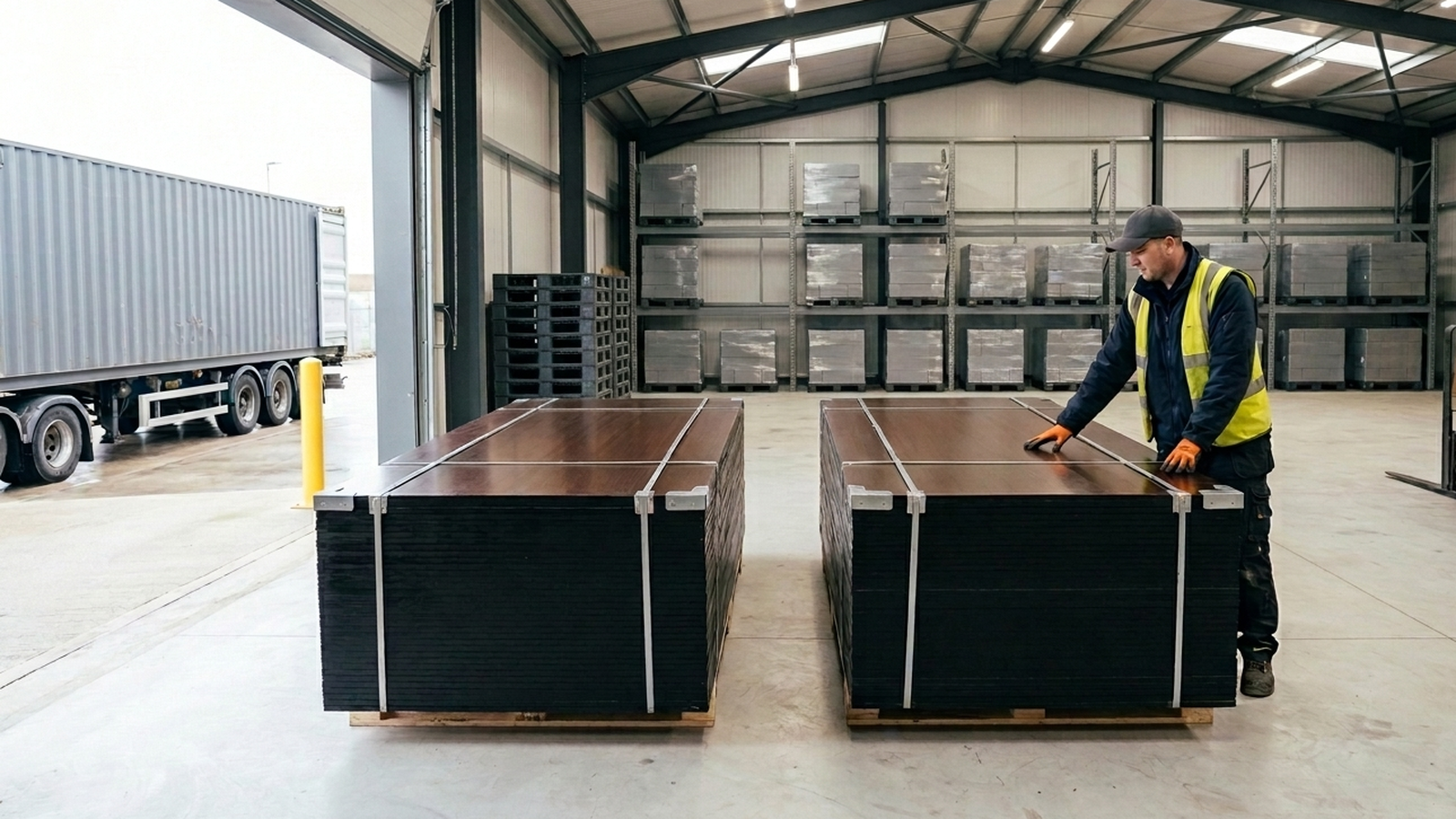
All panels are visually graded according to veneer quality (face, back, core) and are stacked and banded for secure ocean transport. Damage rates on shipments to Europe average less than 1% — well within commercial norms for containerised cargo.
Sustainability and Forestry Certification
Vietnam's plywood industry is increasingly focused on sustainable sourcing. Vinawood's core material comes from managed hardwood plantations in Vietnam's Central Highlands and Mekong Delta regions — largely Acacia and Eucalyptus plantations established over the past 20 years. These are FSC-certified sources, ensuring chain-of-custody tracking from forest to finished panel.
The carbon footprint of Vietnamese plywood (manufacturing + ocean freight) is significantly lower than Finnish or Russian alternatives due to shorter manufacturing energy use and the efficiency of large-scale ocean containerization versus truck transport across Europe.
Getting Started: How European Buyers Source from Vinawood
- Contact Vinawood's EU Representative: Provide project specifications (sheet size, thickness, EN 636 grade, volume, delivery port).
- Request a quotation: Vinawood provides FOB and CIF pricing, typical lead times (usually 4–6 weeks from order to shipment), and minimum order volumes.
- Arrange payment terms: Standard terms are 30% deposit, 70% on Bill of Lading or 100% Letter of Credit through European banks.
- Order and confirmation: Once payment is received, Vinawood schedules production. Lead time is typically 2–3 weeks for standard grades and quantities.
- Shipment and arrival: Panels are loaded into a 20ft or 40ft container and shipped to your nominated European port. Transit is 30–40 days.
- Port clearance and delivery: Your freight forwarder or customs broker arranges EU import clearance. Phytosanitary and CE documentation are provided in advance.
For more information, explore Vinawood's film-faced plywood collection, or contact the team directly for a project-specific quotation.
Category
guides