What Is Shuttering in Construction? Types, Materials & How It Works
A plain-language explainer of shuttering in construction: what it is, how it differs from formwork and centering, the step-by-step process, the materials used, and how to choose the right shuttering plywood.
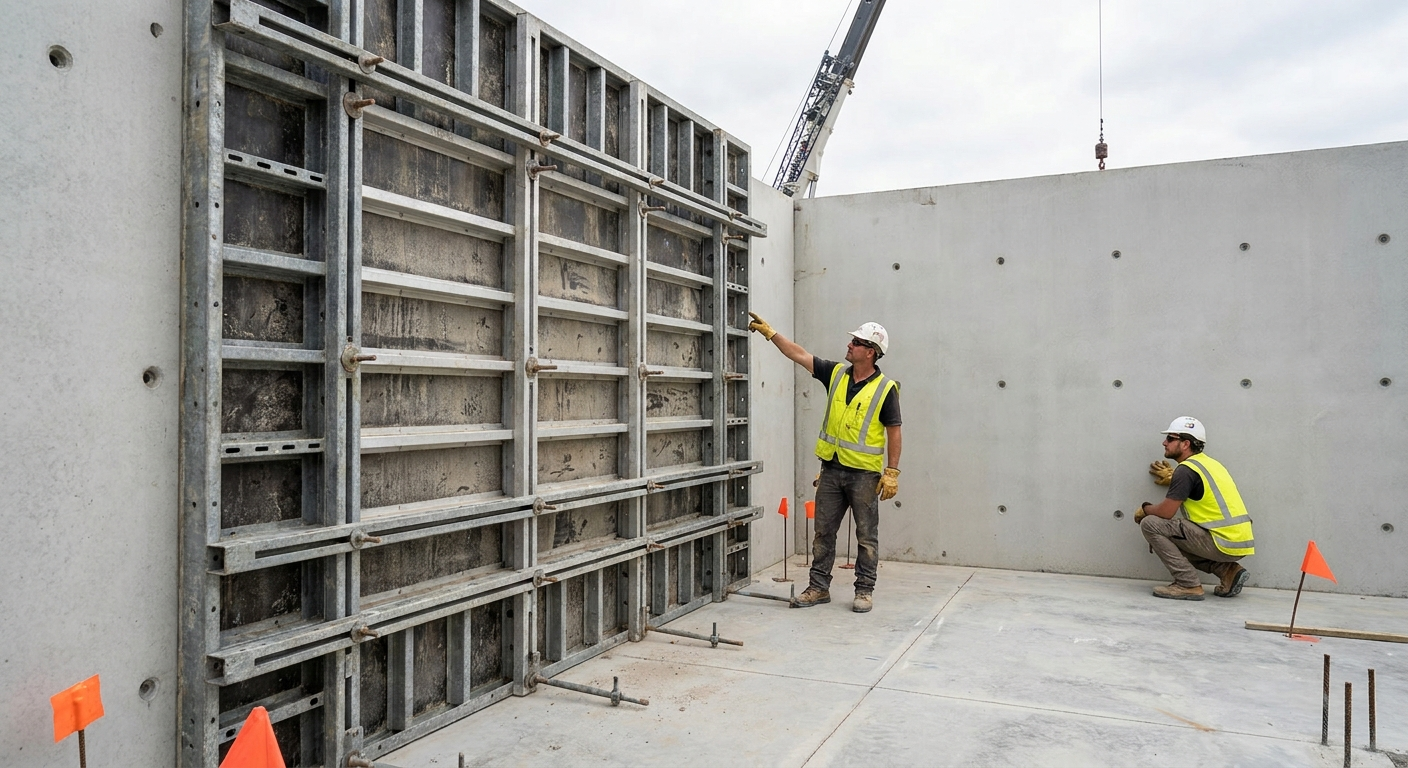
Shuttering is the temporary mould that holds and shapes wet concrete until it sets hard enough to support itself. Once the concrete cures, the mould is struck (removed) and the concrete keeps the shape the mould gave it. In most of the world the same thing is also called formwork; the two words mean the same job.
That is the short answer. The rest of this guide covers where the term fits among the words it gets confused with, how the process runs on site, what shuttering is made from, and how to pick the right material. For the deep dive on the panel itself, see our companion guide to shuttering plywood; this article is the concept and the selection overview.
Shuttering vs formwork vs centering vs staging
These four terms overlap and get mixed up constantly. Here is the clean version:
- Shuttering / formwork — the mould face that contacts the concrete and gives it shape and finish. "Shuttering" is common in India and the UK; "formwork" is the international term. Same thing.
- Centering — the support specifically under horizontal members like slabs and beams, holding the soffit form up until the concrete carries its own weight.
- Staging — the scaffold or props underneath that carry the whole assembly. The legs, not the face.
So a slab pour has shuttering (the deck face the concrete sits on), centering (the bearers holding that deck), and staging (the props carrying it all). The face is what decides the surface finish; the support is what decides safety and deflection.
Why shuttering matters
The mould does more than contain the pour. It sets the dimensional accuracy of the member, so a column comes out plumb and square. It sets the surface finish, which is why a smooth film-faced panel leaves fair-face concrete while a rough board leaves a textured one. And it holds everything safely while the concrete gains strength. Get the shuttering wrong and you get honeycomb, misalignment, or in the worst case a blowout during the pour.
The shuttering process, step by step
The sequence is the same whether you are forming a footing or a high-rise core:
- Setting out — mark the position, line, and level from the drawings.
- Erecting the mould — assemble the panels, brace them, and check plumb and alignment. Props and ties take the concrete pressure.
- Applying release agent — a thin, even coat so the concrete does not bond to the face and the panel strikes clean.
- Pouring and compacting — place the concrete in layers and vibrate to remove trapped air.
- Curing — keep the concrete moist and protected while it gains strength.
- Striking (de-shuttering) — remove the form once the concrete is strong enough. Vertical faces come off in a day or two; slab props stay much longer. The structural engineer sets the timing against the code. Our guide to formwork removal time covers this element by element.
Types of shuttering by material
Material is the choice that most affects finish, cost, and how many times the form can be reused.
| Material | Strengths | Limits | Typical use |
|---|---|---|---|
| Timber boards | Cheap, easy to cut and adapt on site | Few reuses, absorbs water, leaves a textured finish | Small jobs, irregular shapes, low volume |
| Film-faced plywood | Smooth finish, light, cuttable, good reuse | Cut edges must be sealed to last | Most concrete work — walls, columns, slabs |
| Steel | Very high reuse, rigid, tight tolerances | Heavy, needs cranes, rusts if neglected | Repetitive system formwork, high rotation |
| Aluminium | Lighter than steel, high reuse | Higher upfront cost, dents | Repetitive residential systems |
| Plastic / composite | Light, waterproof, modular | Limited to simple shapes, lower stiffness | Small repetitive elements |
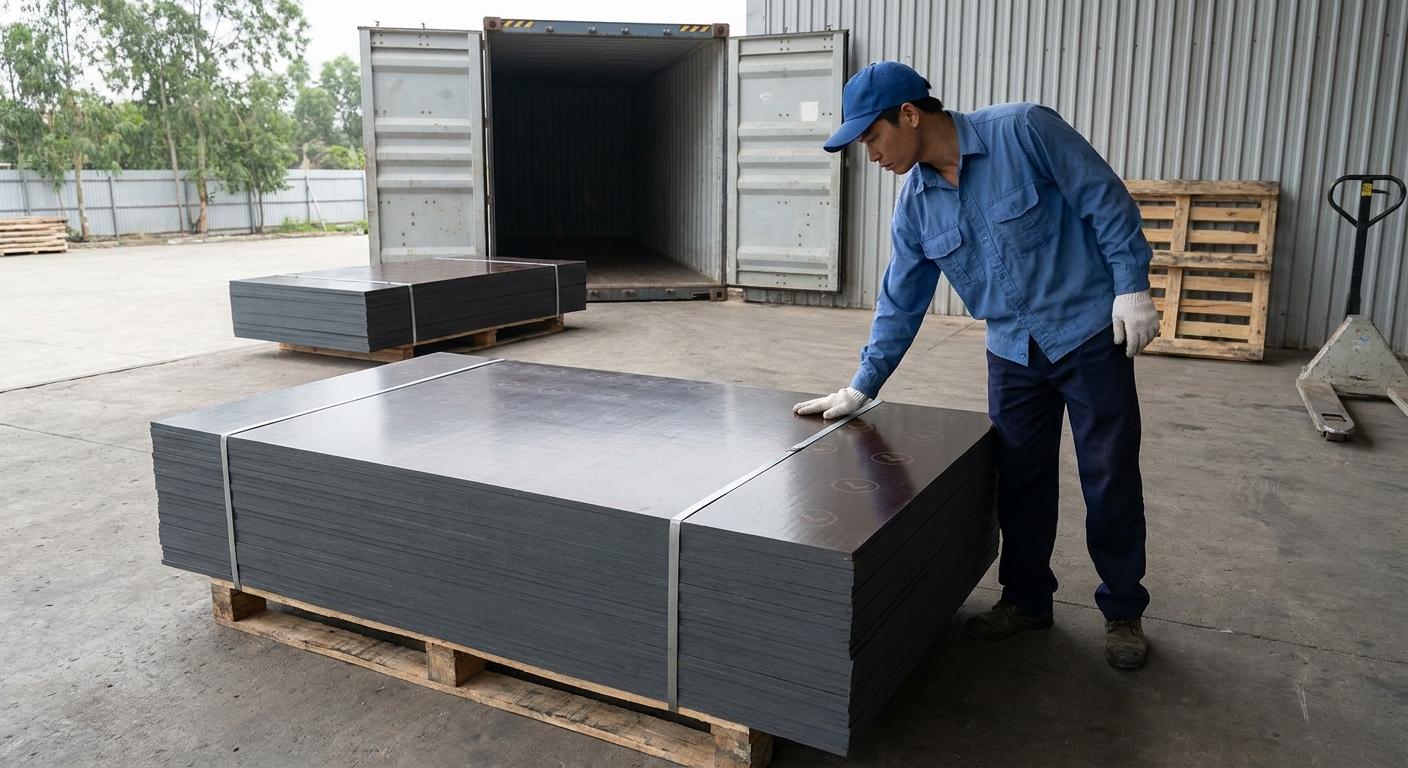
For most projects, film-faced plywood wins on balance: it is light enough to handle by hand, takes a smooth concrete face, cuts to fit awkward details, and reuses many times if the cut edges are sealed. We see this in our own export mix — across 55+ markets, film-faced plywood is the material most crews reach for, with steel reserved for the repetitive system jobs. Browse the film-faced plywood range for the panel options.
Types of shuttering by structural element
Shuttering is also named by what it forms. Foundation and footing shuttering holds the lowest, widest pours. Column shuttering is a tall, narrow box that must resist high pressure at its base. Wall shuttering uses large gang panels tied across the wall. Beam shuttering forms a U-shaped trough with a soffit and two sides. Slab shuttering is a flat deck on bearers and props. Each element has its own pressure pattern and striking time, but the face material decision is the same across all of them.
Choosing the shuttering material
Five questions settle the panel choice: how good does the concrete finish need to be, how many reuses do you need, how heavy a panel can the crew handle, what is the budget, and how much on-site cutting is involved. For plywood, those answers map onto the adhesive class of the panel.
| Panel | Core glue | Class / EN 636 | Max reuse | Best for |
|---|---|---|---|---|
| Form Basic | WBP melamine (MUF, standard content) | Class 2 / EN 636-2 | up to 10 | Standard reuse, general work |
| Form Extra | WBP melamine (higher-melamine-content MUF) | Class 2 / EN 636-2 | up to 15 | More cycles, tougher site conditions |
| Pro Form | WBP phenolic (PF) | Class 3 / EN 636-3 | up to 20 | Fair-face concrete, high rotation |
The "melamine" here is the melamine-urea-formaldehyde (MUF) resin that bonds the veneer core, not a decorative laminate and not a surface film. Form Extra reaches up to 15 reuses against Form Basic's 10 because of a more durable, higher-melamine-content MUF glue, not a heavier face film — both carry the same phenolic face. For fair-face columns and walls that stay on show, and for high-rotation work, step up to the phenolic-bonded Class 3 panel: Pro Form (EN 636-3, up to 20 reuses). Keep Form Basic and Form Extra labelled as Class 2; they are not Class 3 panels. If you are weighing the broader forming-plywood family, our concrete form plywood guide compares the types.
Common shuttering problems
When a struck surface disappoints, the cause is usually how the pour was run or how the panel was stored, not the panel itself. Honeycombing and surface blemishes usually trace to under-vibration during the pour or release agent applied unevenly. Edge swelling may indicate an unsealed cut edge or a panel that sat wet in storage; check handling and storage before anything else. Thin-panel bowing is moisture physics after the panel leaves the factory, not a manufacturing fault, and the small internal voids normal to plywood are within the product standard, not defects. Sorting the site cause from the panel cause keeps good panels in service and stops the same problem repeating on the next pour.
About Vinawood
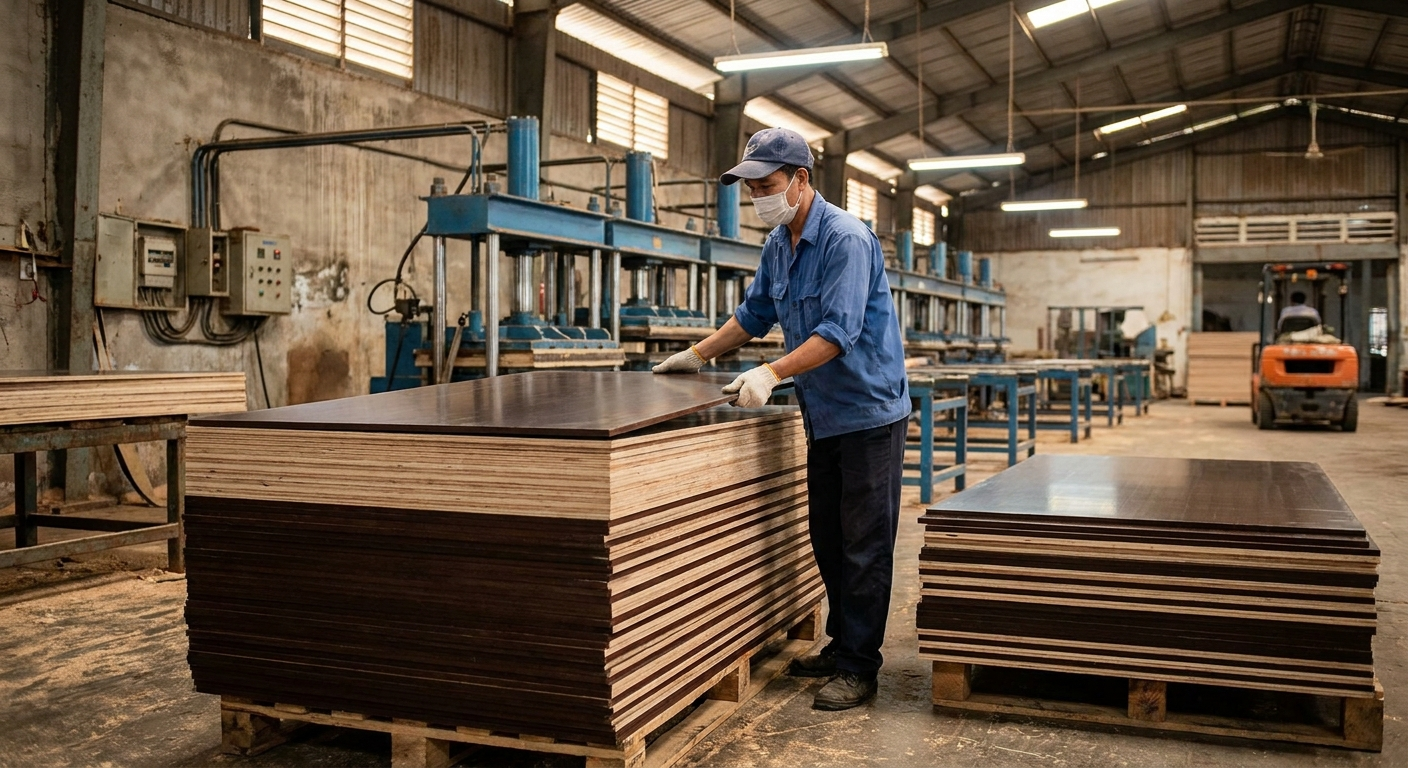
Vinawood has manufactured plywood in Vietnam since 1992 and ships over 5,000 containers a year to 55+ countries. The shuttering range runs from melamine-core Form Basic and Form Extra to phenolic-bonded Pro Form, each with a phenolic face, factory-sealed edges, and 100% individual sheet inspection. For a factory-direct quote with full CE EN 13986 and EPA TSCA Title VI documentation, contact our sales team.
Category
guides