Formwork Removal Time: How Long Before You Strike Concrete Forms
Formwork removal time by element: walls 24–48h, slab soffits ~7d under props, props 14–21d. ACI 347, IS 456, EN 13670, and how clean striking protects film-faced reuse up to N.
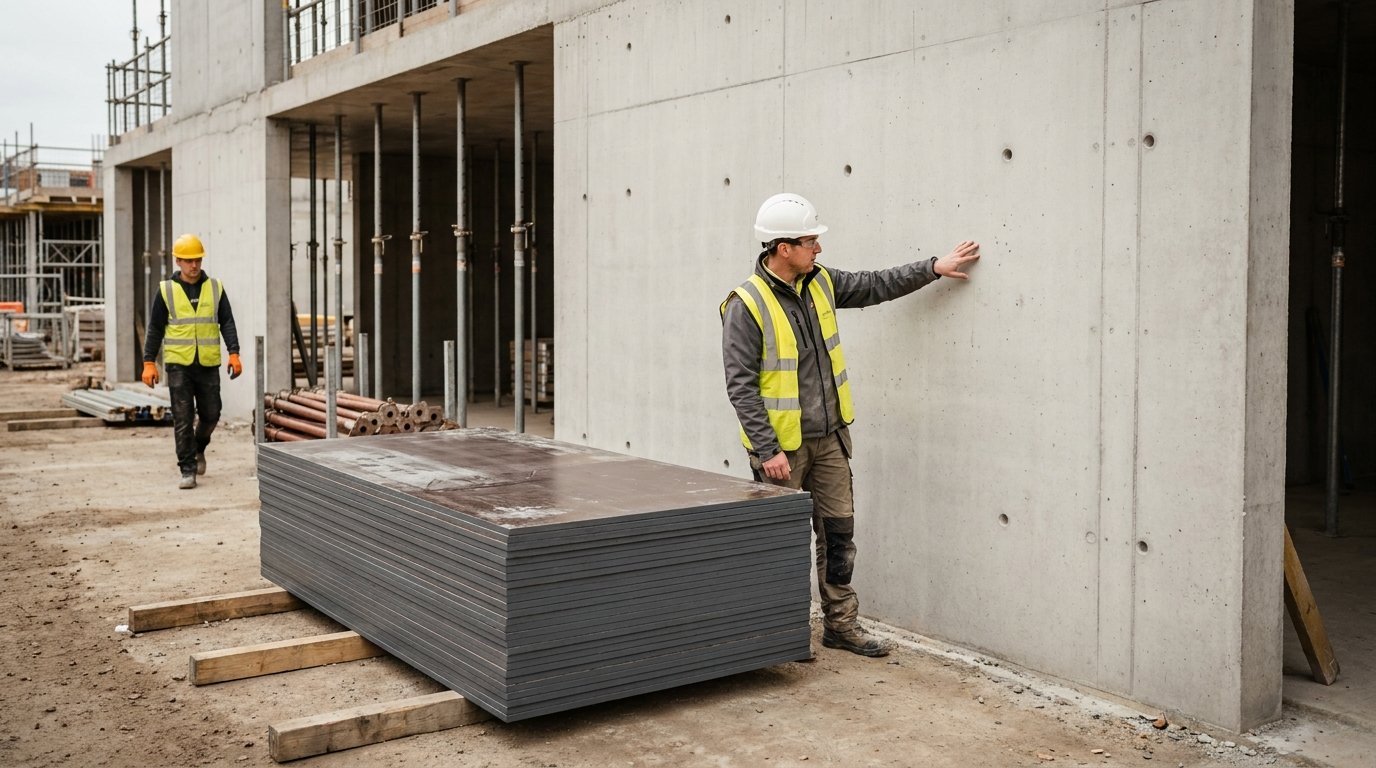
Most site teams want a short answer first. Vertical forms on walls and columns usually come off in 24–48 hours. Slab soffits under props need about 7 days before the deck can be struck. The props themselves often stay 14–21 days with re-shoring.
Those numbers are planning ranges, not hard rules. The structural engineer sets the real formwork removal time against the governing code plus the concrete’s strength gain, cement type, and site temperature. The rest of this page is the starting point for that conversation. If you are also choosing panels for the next cycle, keep the reuse target in the same RFQ as the striking plan. The two decisions travel together.
For the strength-first framing of the same decision (why you strip a measured strength rather than a wall-chart day), see the sibling guide on when to remove concrete formwork. This page stays on calendar ranges by element and the code hooks. It also covers weather and mix shifts, plus how clean striking protects panel reuse.
Striking is not the same as removing props
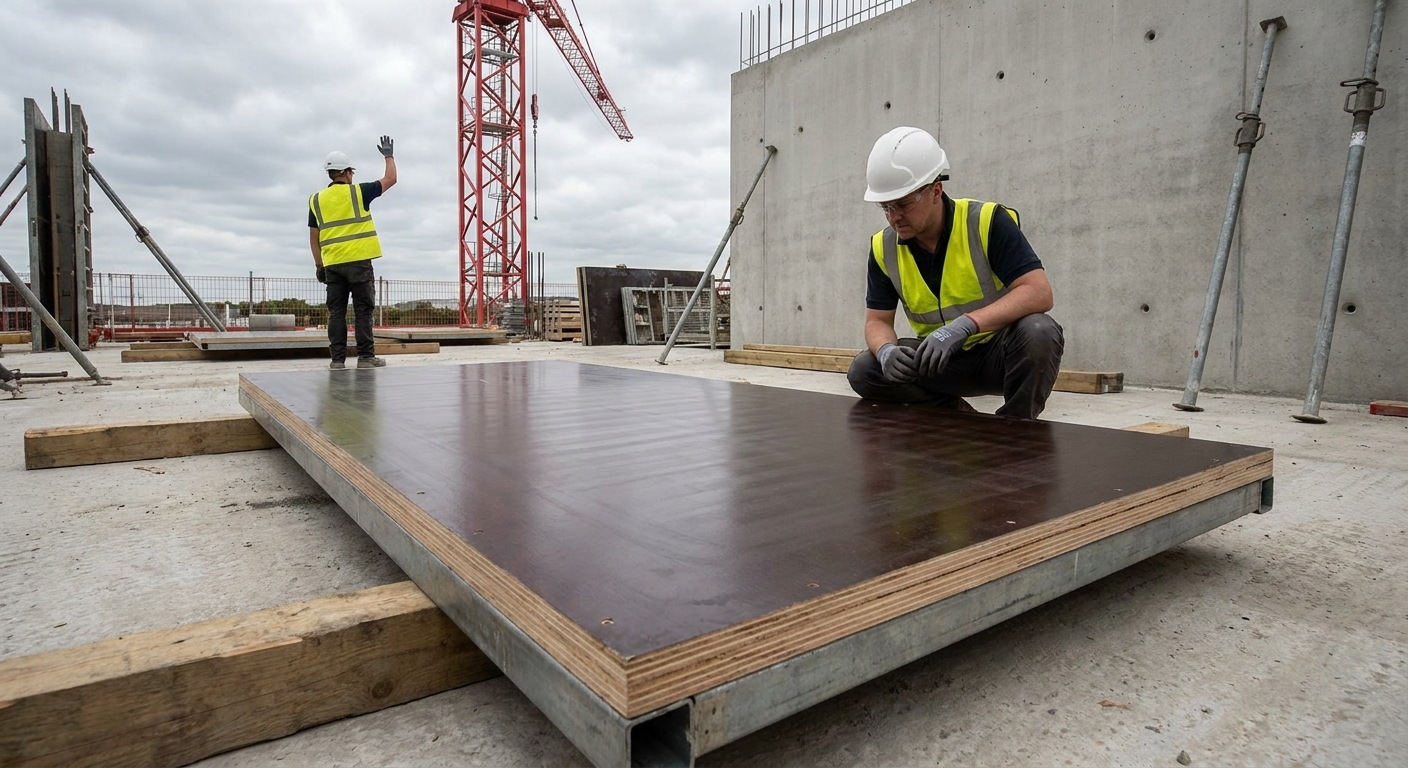
“Striking” (also called de-shuttering) means taking the form face off the cured concrete. It does not mean pulling the props out. On a slab, you can strike the plywood deck and its bearers while leaving the vertical props in place, or replace them at once with fewer props in a re-shoring pattern. The slab is still young. Props carry construction loads from floors going up above until the concrete can carry itself.
Confusing the two is how early collapses happen. Strike the face when the code allows. Keep the props until the engineer releases them. That split belongs in the method statement before the first truck arrives, not as a verbal note after the pour.
What actually decides the timing
The calendar is a proxy. The real trigger is concrete strength gain — the share of design strength the member has reached. Five factors move that number hard.
- Cement type. Rapid-hardening cement reaches striking strength faster than ordinary Portland cement (OPC). A mix with a high share of supplementary cementitious material can run slower.
- Temperature. Strength gain slows sharply in cold weather. A wall that strikes at 24 hours in summer may need 48–72 hours near freezing.
- Member type and span. A short-span beam soffit reaches a safe striking state sooner than a long-span slab carrying its own weight plus formwork above.
- Early-age loading. If floors are built above, the member is loaded before it is mature. That pushes prop removal later.
- Curing. A member kept moist and protected gains strength on schedule. One that dries out early can stall.
Two identical walls poured a month apart can have different striking times. The mix changed. So did the weather. That is why a fixed sticky note on the gang box is never enough on its own.
Element-by-element striking times
The table below gives typical code-based ranges. Treat them as a guide. The engineer owns the final call for mix design, span, and site weather.
| Element | Typical striking time | Notes |
|---|---|---|
| Walls, columns, vertical faces | 24–48 hours (1–2 days) | No structural load carried by the form; earliest to strike |
| Beam sides (no soffit load) | 24–48 hours | Side forms only; soffit and props stay |
| Beam soffits (props removed) | 14–21 days | Depends on span; longer spans wait longer |
| Slab soffit deck (props left) | ~7 days | Strike the plywood deck; keep or re-shore props |
| Slab props (full removal) | 14–21 days | Longer for larger spans or floors loaded above |
| Cantilevers | 21–28 days | Most sensitive; release strictly per engineer |
| Footings, mass foundations | 24–48 hours | Side forms only, no soffit; strike once edges hold |
Stairs sit between vertical and horizontal. Riser and stringer forms can come off early. Any soffit-supported flight follows slab timing. Our guide to foundation and footing formwork covers the vertical-face case in more detail when the pour is below grade.
What the standards say
No single global number exists. Each market follows its own code, and the engineer applies it to the project.
- United States: ACI 347 (formwork) and ACI 318 (structural concrete). Striking is tied to measured or estimated in-place strength, not fixed days. Field-cured cylinders or maturity meters are common on larger jobs.
- India: IS 456:2000 gives a table of minimum stripping times by member and cement type. Vertical faces often land around 24–48 hours. Slab props around 14 days. Beam props around 21 days for OPC. Temperature adjustments apply.
- United Kingdom and Europe: BS / EN 13670 (execution of concrete structures). Striking is governed by strength development and the project specification.
The pattern is the same wherever you pour. Follow the governing code and the structural engineer’s release. Use the ranges above only to plan the schedule. French readers can also check our sibling guide on décoffrage du béton.
The cost of striking too early, and too late
Strike a slab before it can carry itself and you get deflection that never recovers. The face can tear green concrete, leave honeycomb exposed, and in the worst case crack the member. Strike too late and you tie up panels and props the next pour needs. The cycle stretches. The whole job slows.
Early striking is a safety problem. Late striking is a schedule and cost problem. The window matters in both directions, which is why the engineer’s release and the pour programme have to talk to each other before the first form is set.
How weather and mix shift the schedule
Cold-weather concreting is where formwork removal time stretches the most. Maturity methods (temperature-time history) beat a fixed-day table when overnight lows sit near freezing. Some crews pour with heated enclosures. Others simply wait. Either way, the engineer’s release owns the call. Not the calendar sticky note.
Hot weather works the other way. Strength can arrive early, but so can surface drying if curing is skipped. A panel stuck to a dry, hot face is harder to strike cleanly. Thin, even release agent and shade on the forms still matter more than people admit on a fast summer cycle.
Admixtures change the picture too. Retarders push striking later. Accelerators pull it earlier. If the ready-mix ticket lists either, do not reuse last week’s striking times without checking the engineer. I have watched jobs lose a full day because the ticket changed and nobody told the form crew.
How clean striking protects panel reuse
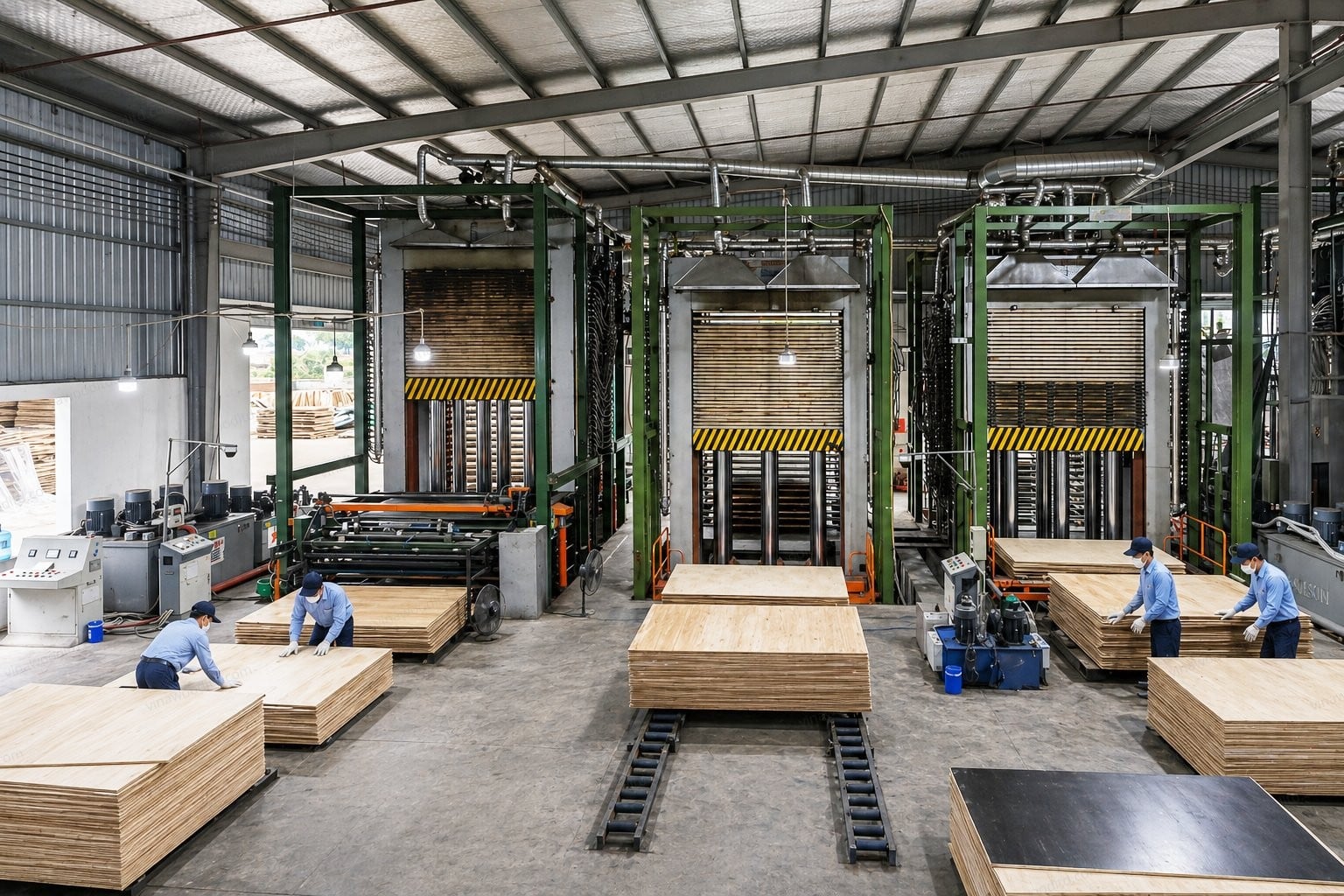
On-time striking is also what keeps a film-faced panel in service. We see this in our own export mix: the crews that get the most pours out of a panel are rarely the ones with the toughest board. They are the ones who strike with wedges and re-seal cut edges the same day.
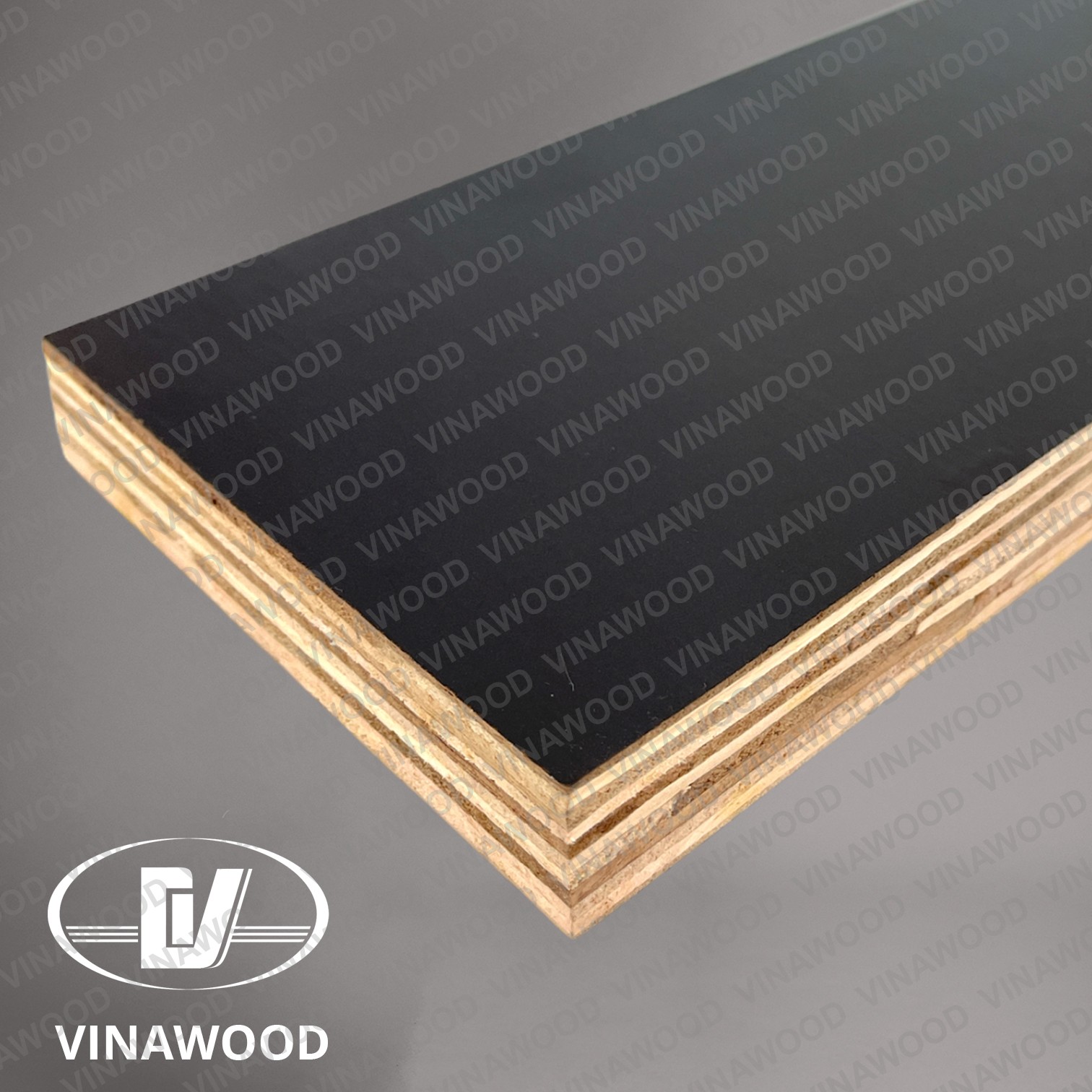
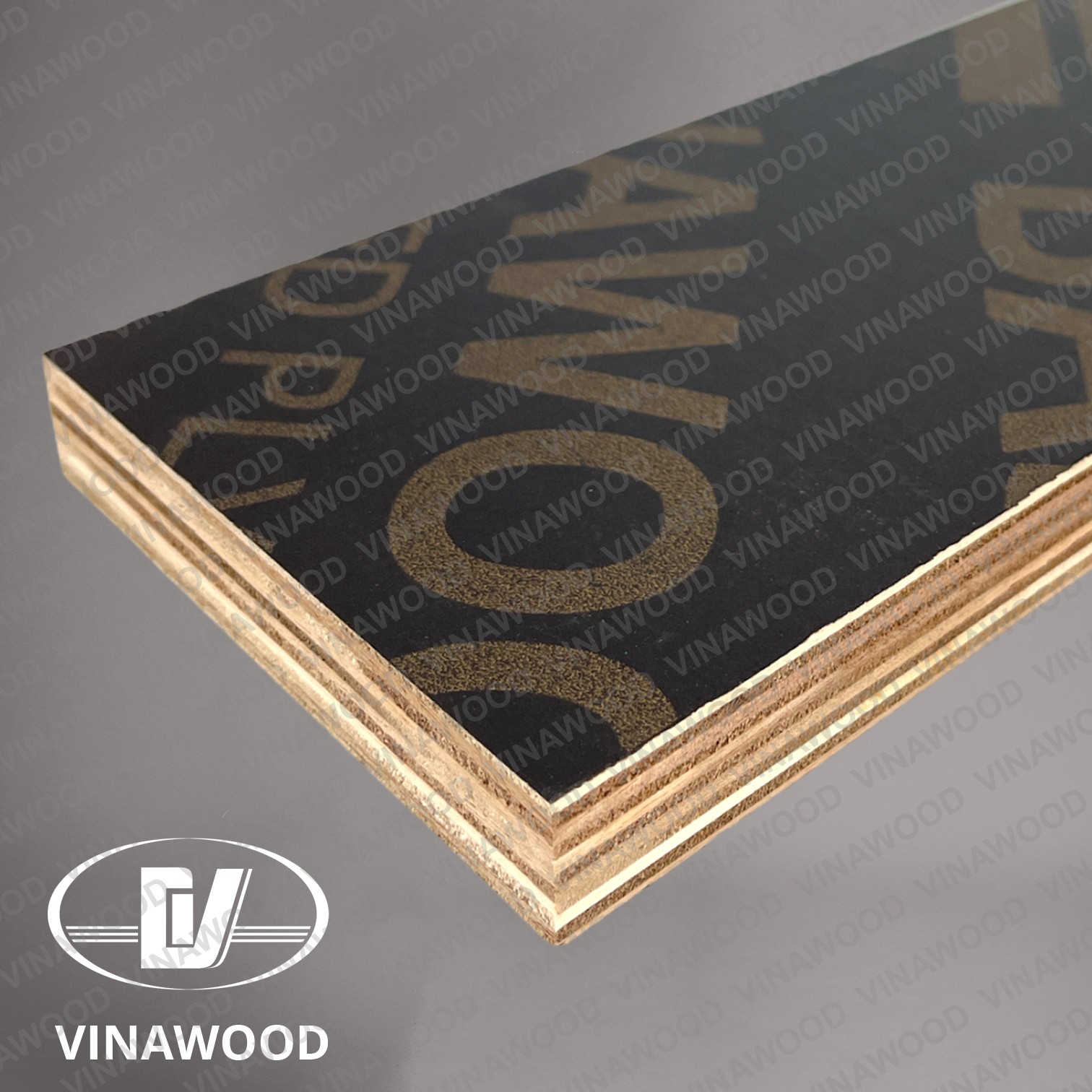
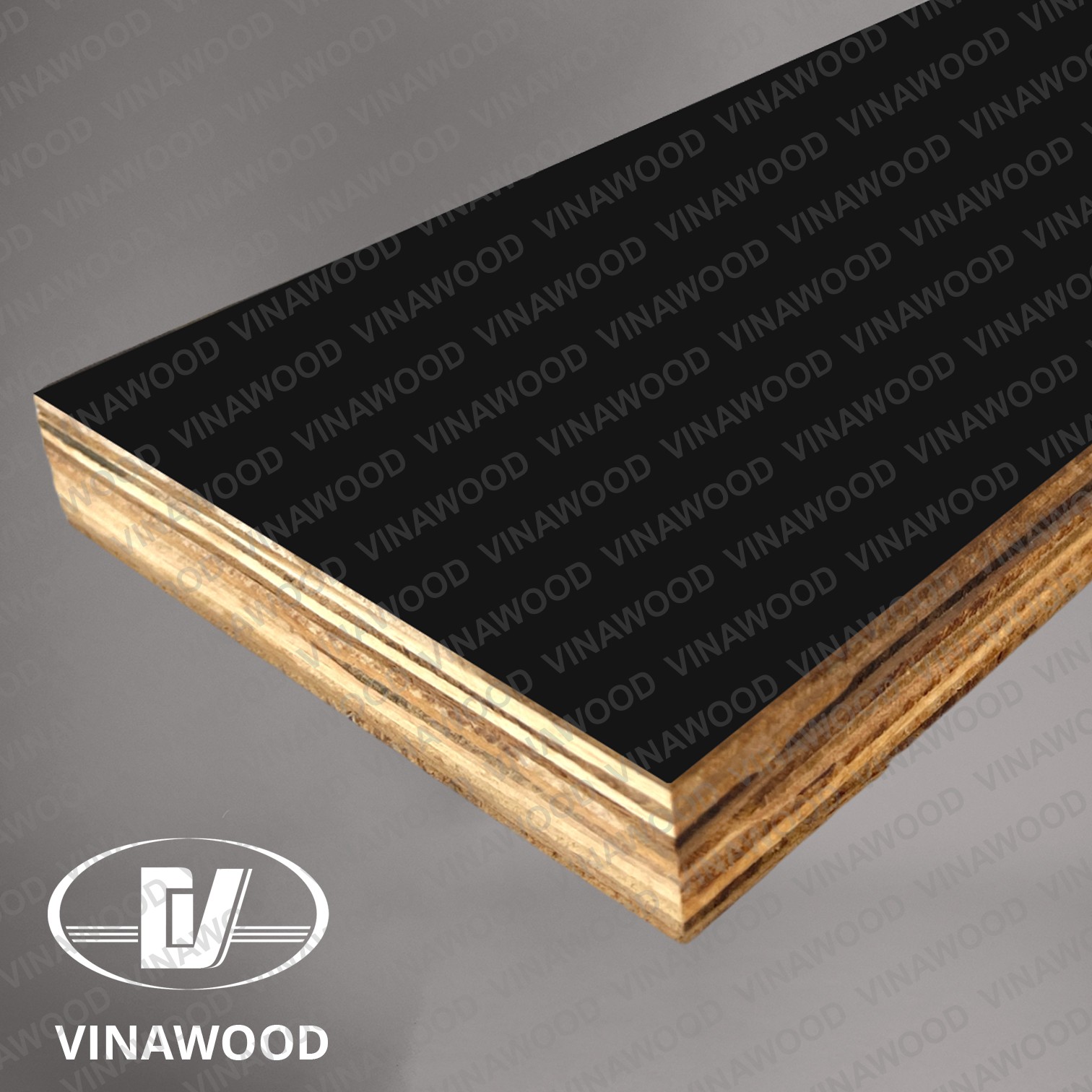
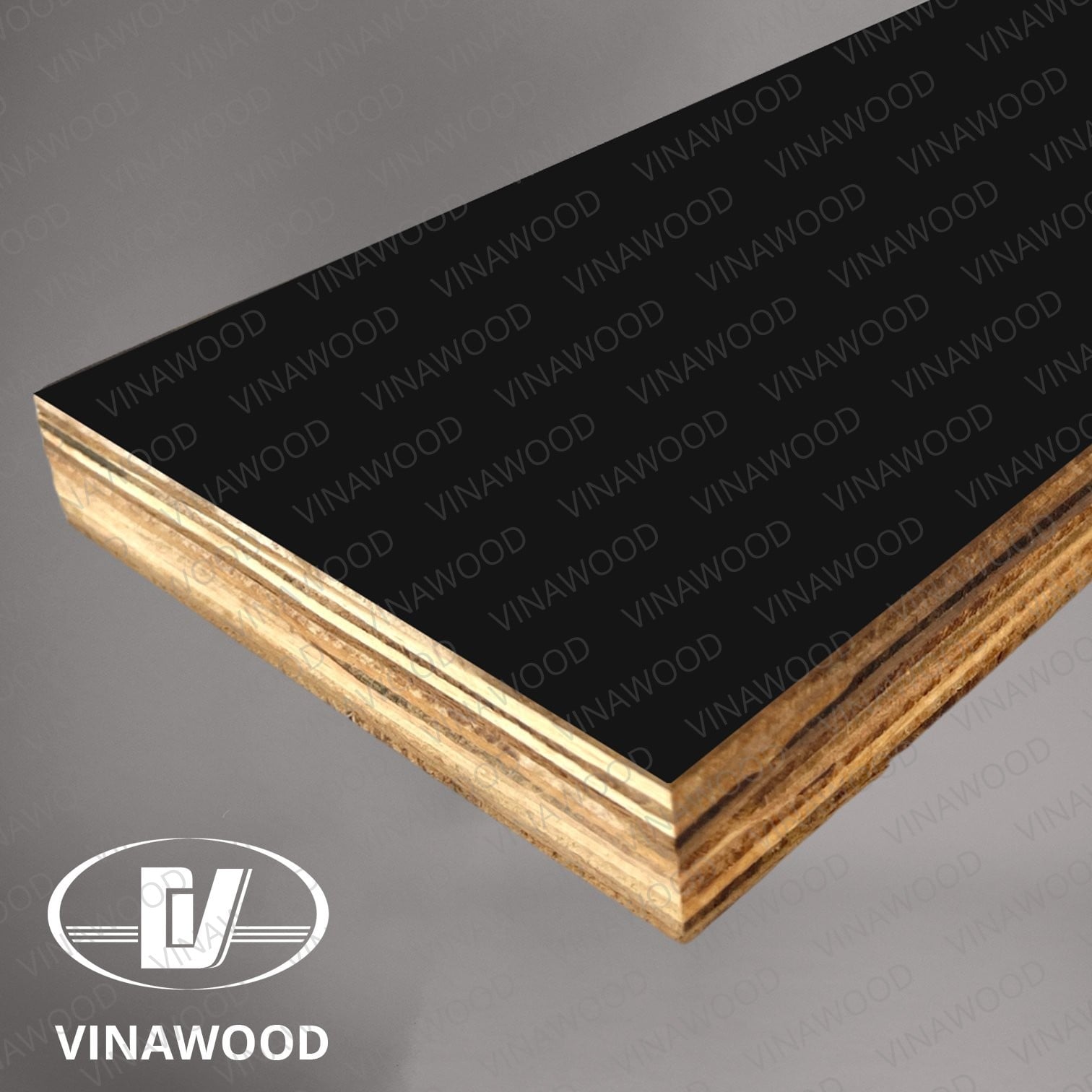
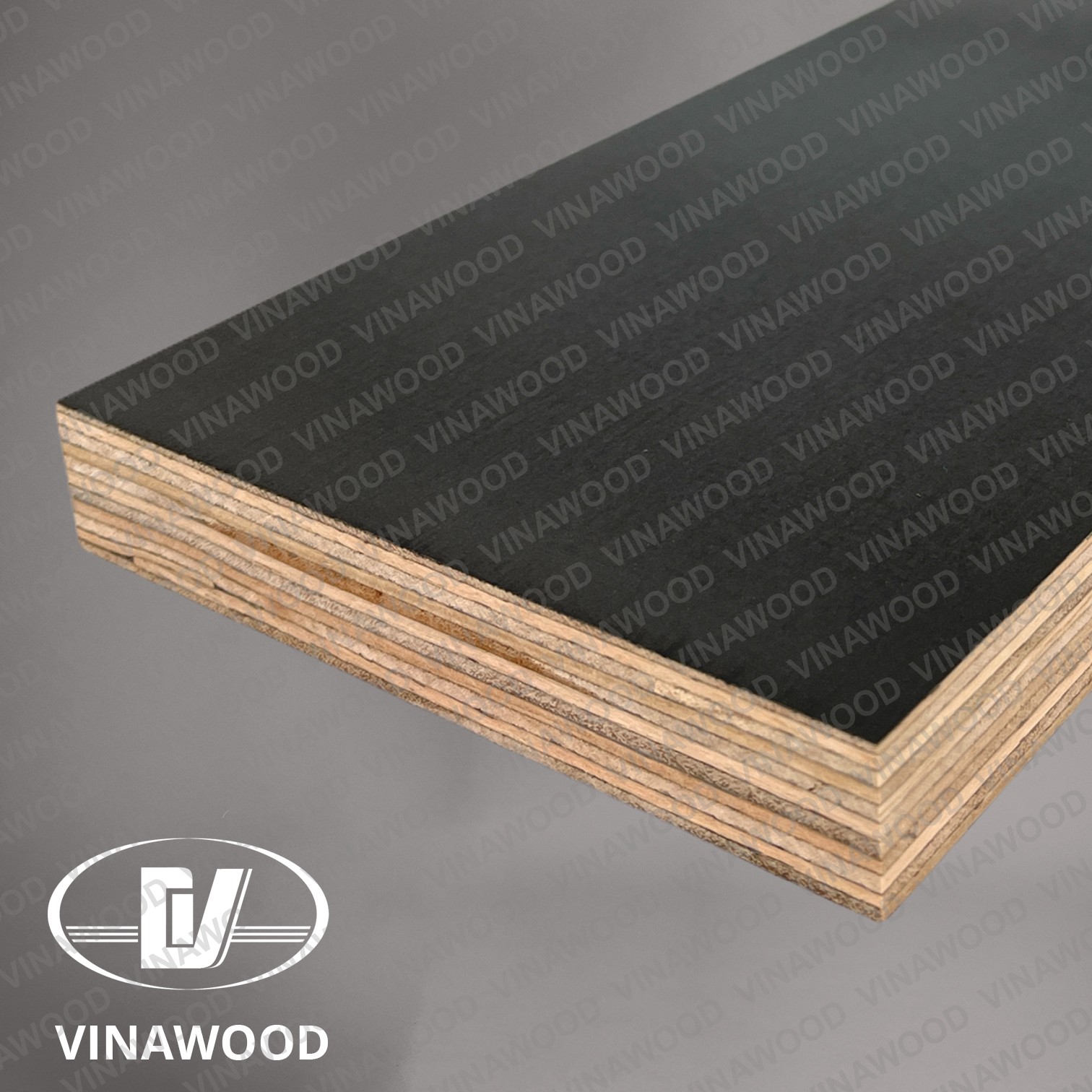
A crowbar levered against the panel face cuts the phenolic face film. That cut is where water gets in, and delamination starts there. Wedges break the bond without touching the face. Match the panel to the rotation you plan on Vinawood’s film-faced formwork ladder (reuse maxima from PIM maximum repetition; mid-funnel reuse tools on this site read the same fields):
- Eco Form Plus — up to 8 reuses
- Form Basic — core MUF adhesive, EN 636-2, up to 10
- Form Extra — Superior Glue MUF, still EN 636-2 / not Class 3, up to 15
- Pro Form Lite — PF Class 3 / EN 636-3, 165 g/m² face film, up to 15 (between Form Extra and Pro Form)
- Pro Form — PF / EN 636-3, up to 20
- HDO Basic — up to 10; HDO Premium / Premium HD up to 20
Form Extra and Form Basic share the same phenolic face film. Extra reuse comes from glue chemistry, not a heavier overlay. That distinction trips a lot of RFQs. Buyers see “melamine” on a datasheet and assume the face is the upgrade. It is not. Name which meaning you mean. Core MUF adhesive is one. Face film chemistry is another. Decorative laminate is a third.
Class 3 covers Pro Form, Pro Form Lite, HDO Standard and HDO Premium only; HDO Basic is Class 2. Do not confuse P-Form (polypropylene overlay) with Pro Form, and do not treat Consply (commercial Bintangor) as film-faced formwork. All of these film-faced and HDO grades use a water-resistant (WBP) glue line. Water-resistant, not waterproof. The veneers are plantation-grown hardwood. Reuse is always “up to N”. Site handling, release agent, and edge seal decide whether you land near the top of that band. For cycle planning maths, see how many times you can reuse formwork plywood. Overlay choice when the pour is formwork rather than marine duty sits in the film-faced vs marine plywood comparison.
Stripping best practice
Apply release agent evenly and thin before every pour. Too much stains the concrete and causes surface porosity. Too little lets the concrete grab and tears the film on release. Our release agent guide covers application rates and product families.
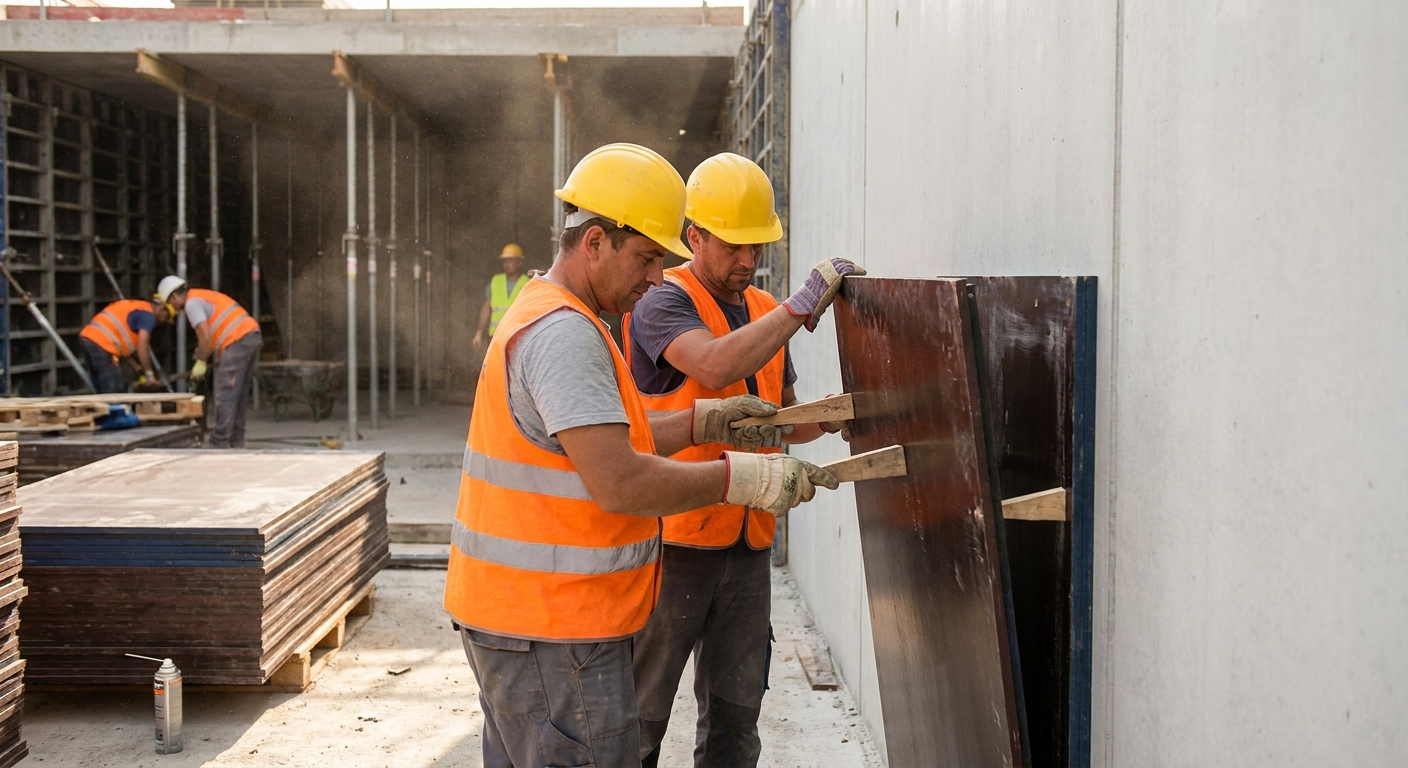
At strike, use wedges. Never a steel bar against the face. Then stack flat and dry under cover. Re-seal any cut edge before the panel goes back out. Edge sealing after every cut is the single habit that adds the most reuse cycles. For the full routine (cleaning, edge seal, storage, and retirement), see the formwork panel care guide.
Props and shores deserve the same care as the face. Mark release dates on the props themselves when the engineer issues a staged release. Do not rely on memory across two pours and a weekend. One more field note from the packs we ship: crews that wipe the face before stacking keep the film longer than crews that leave slurry overnight. Small habit. Big difference over a 10–15 pour life.
When the result is not what you expected
When a struck surface disappoints, the cause is usually site practice or storage, not the panel. Surface tearing on strike usually means the release agent was missed or the form came off too early. Edge swelling may point to an unsealed cut edge or a panel that sat wet in storage. Check handling first. Thin-panel bowing is moisture physics after the panel leaves the factory, not a manufacturing fault. Core voids inside plywood are normal to the product standard and are not defects.
Sorting the field cause from the factory cause keeps good panels in service. It also stops the same mistake repeating on the next pour. Photograph the face and the edge seal before you write a claim. A clear photo of slurry left overnight, or of a crowbar scar on the film, resolves more disputes than a long email. We ask for that photo first when a buyer sends a complaint pack.
Request a quote for formwork panels that match your strike cycle
Vinawood has manufactured plywood in Vietnam since 1992 and ships about 5,000 containers a year to 55+ countries. Tell us the overlay (phenolic film gsm), EN 636 class, PF vs MUF core glue, thickness, and the reuse target you need for your strike cycle. We will map that to Eco Form Plus, Form Basic, Form Extra, Pro Form Lite, Pro Form, or HDO without inventing cycle counts above the published maxima.
Then request a quotation or use the quotation form with thickness, sheet format, and reuse target. Our sales team will reply with mill specs and CE EN 13986 / EPA TSCA Title VI documentation.
Category
how-to
▶Sources & References (3)
- ACI 347 Guide to Formwork for Concrete — American Concrete Institute (2024)
- IS 456:2000 Plain and Reinforced Concrete — Code of Practice — Bureau of Indian Standards (2000)
- EN 13670 Execution of concrete structures — CEN (2009)