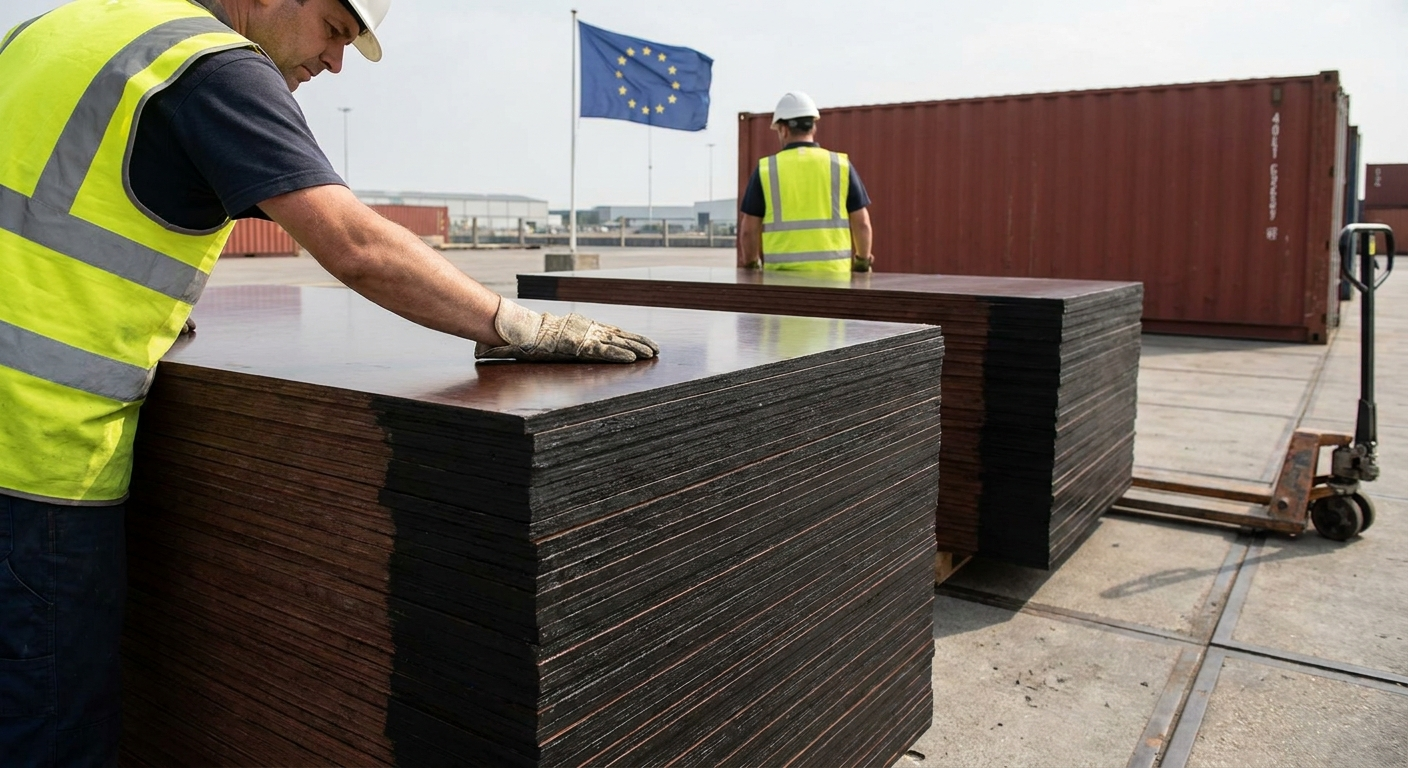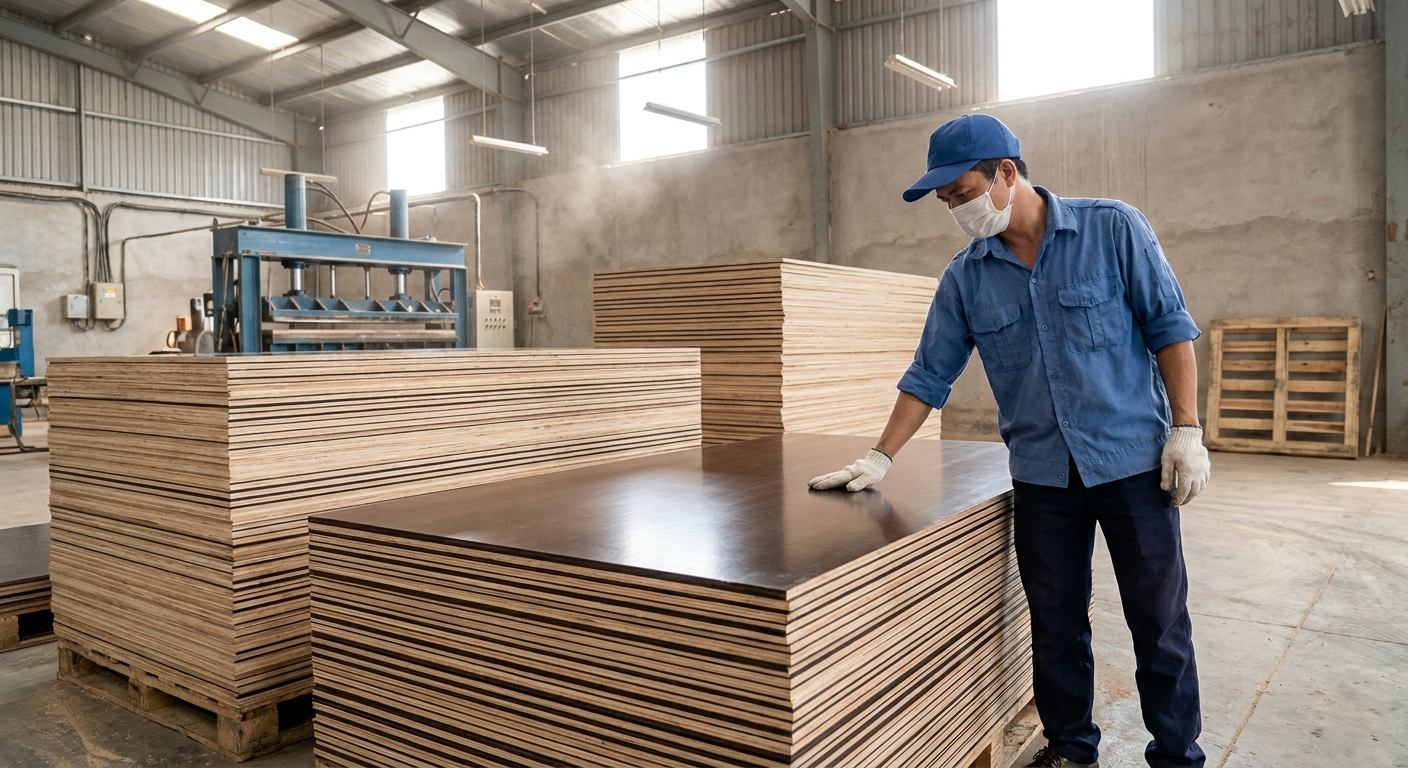
Plywood for Foundation & Footing Formwork: Spec, Pressure & Reuse
Which plywood belongs on strip footings, pad footings, pile caps, and shallow foundation walls — 18 vs 21 mm spec, why footing pressure is not wall pressure, edge sealing for cut-heavy forms, and reuse by EN bond class.

Footing and foundation forms are the part of the job where panel choice gets underthought. The lifts are short, the forms look simple, and the temptation is to grab whatever sheet is on the truck. Then the same crew that sealed every edge on the wall pour skips it on the footings, and four pours later the panels are swelling at the cut lines.
This guide covers what plywood actually belongs on strip footings, pad footings, pile caps, and shallow foundation walls. It treats the panel as the casting face and the bearer-and-stake layout as the load path, because that is how a foundation form really works. The formwork designer owns the pressure calculation. The panel spec is what we can help you get right.
Anatomy of a foundation form
Most shallow foundation work falls into four shapes. A strip footing is a long, low form, two side boards held apart by spreaders and braced against stakes. A pad footing is a small box for an isolated column or post base. A pile cap is a deeper box tying several piles together, and it sees more concrete head than the others. A shallow foundation wall sits on top of the footing and behaves like a short wall form.
In every case the plywood is the skin that shapes the concrete. The studs, walers, bearers, and stakes behind it carry the lateral load. Get the backing layout wrong and even a 21 mm panel bellies out between supports. Get the panel wrong and the backing layout cannot save the cast face.
Why footing pressure is not wall pressure
A tall wall builds hydrostatic pressure with height, so the base of a 3 m lift sees far more load than the base of a 400 mm footing. That much is obvious. What catches crews out is that short does not mean low-pressure. Fast placement and cold concrete both push the effective pressure up, and a pile cap filled in one quick drop can load the base of the form harder than people expect.
The numbers belong to the formwork designer working to ACI 347 (or the local equivalent). What matters for panel selection is the principle: design for the placement rate and concrete temperature, not just the form height. A footing poured slow and warm is gentle on the panel. The same footing dropped in one go on a cold morning is not.
Panel spec for footings and foundation walls
For standard strip and pad footings on normal placement rates, 18 mm (3/4 in) film-faced plywood is the working baseline. It carries the load over typical bearer spacing and gives a clean cast face. Move to 21 mm (13/16 in) for deep pile caps, fast pours, or foundation walls where the lift height climbs past about 1.2 m (4 ft) and the backing spacing has to open up.
The single spec that decides reuse on foundation work is edge sealing. Every cut edge is an open path for water into the core. Seal each one the day it is cut, before the panel ever sees concrete. This matters more on footings than on walls because foundation forms are cut to length constantly, which brings us to the adhesive question.
Adhesive class by reuse target
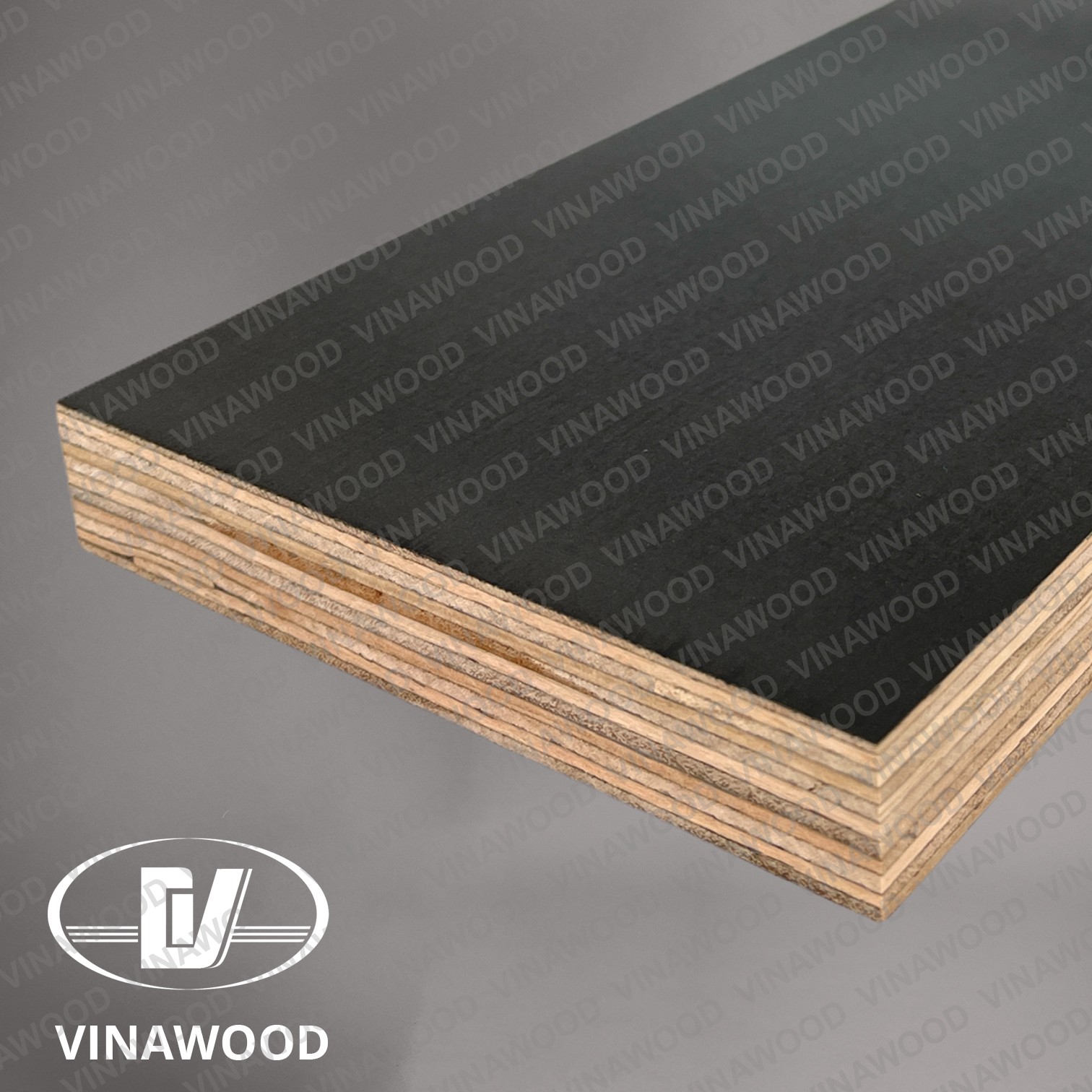
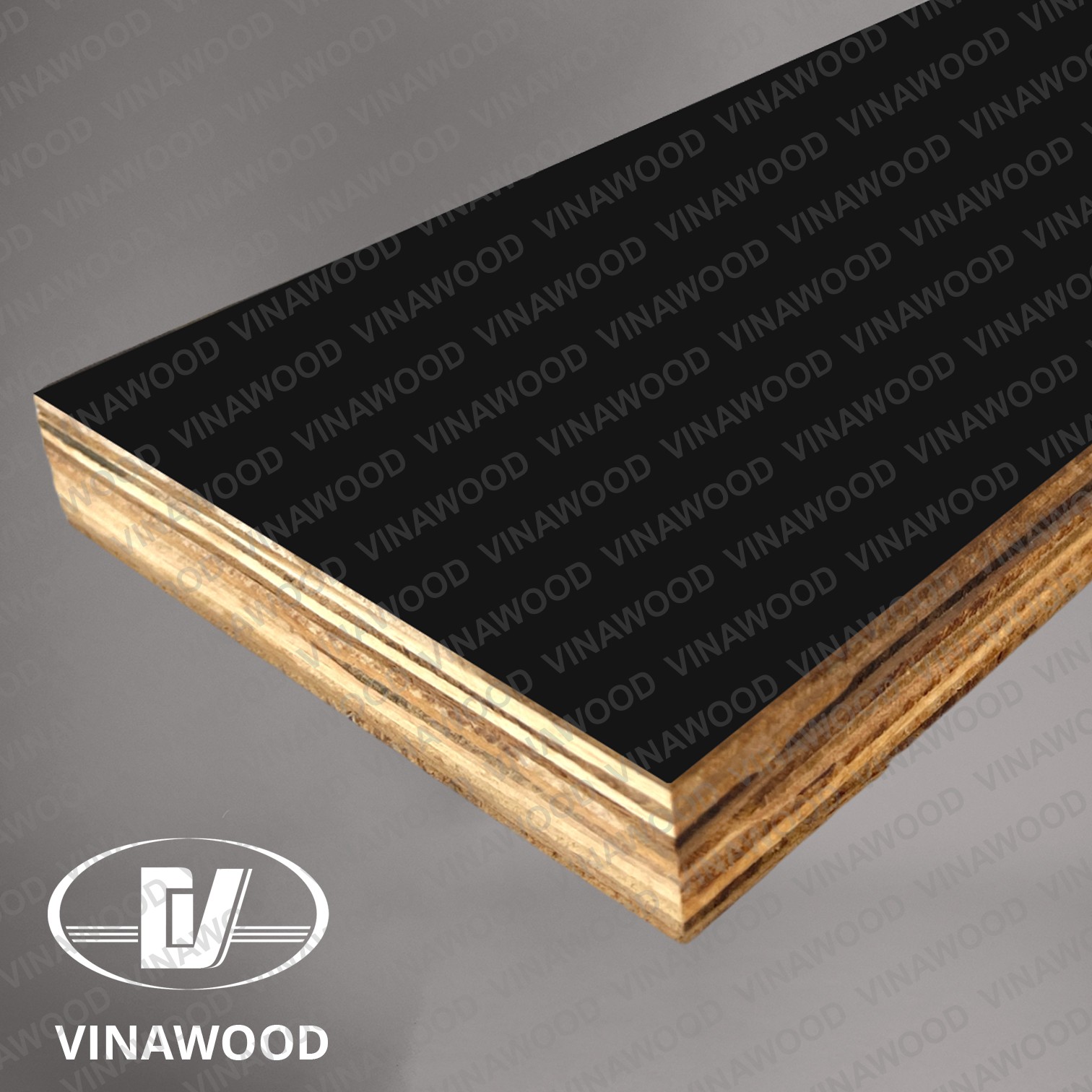
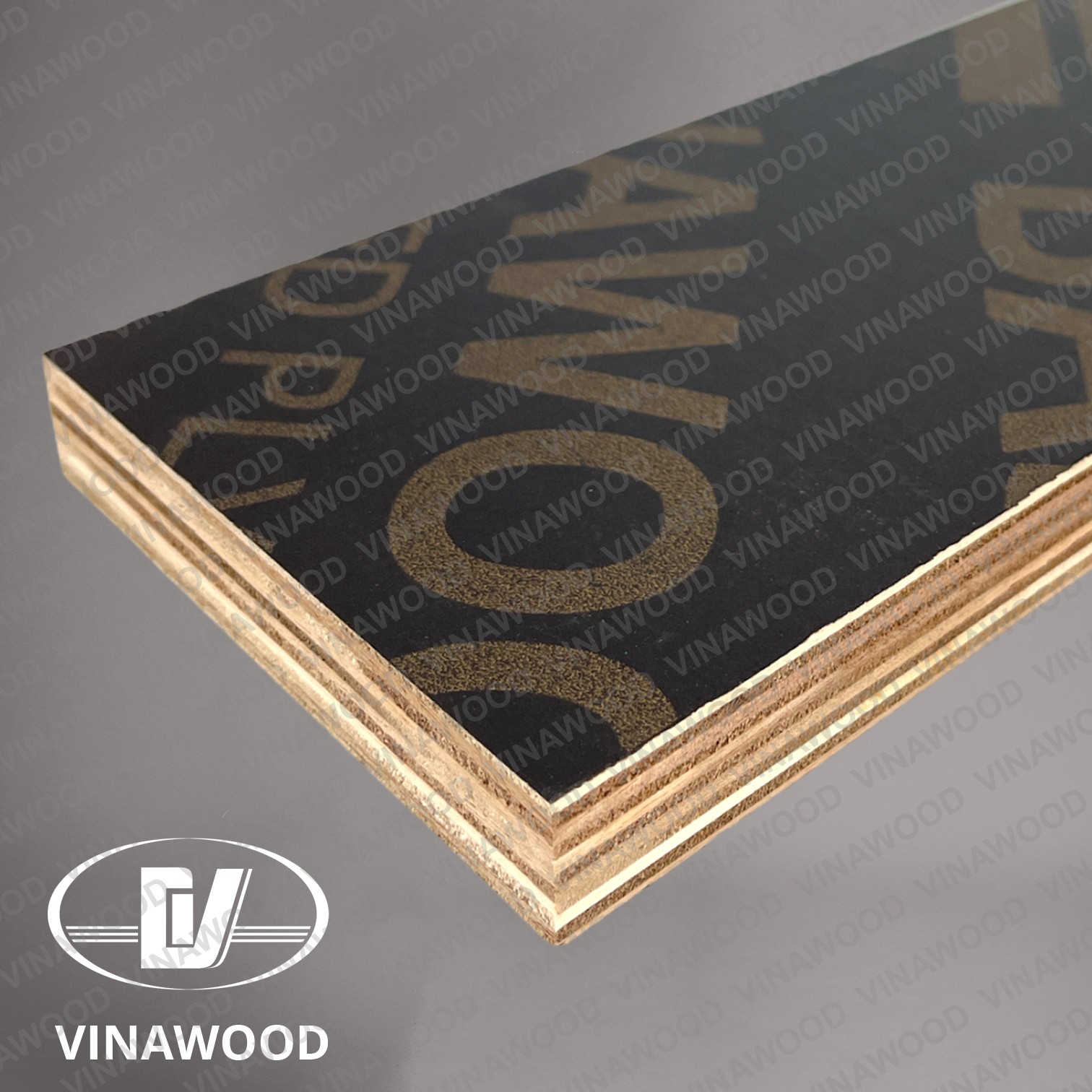
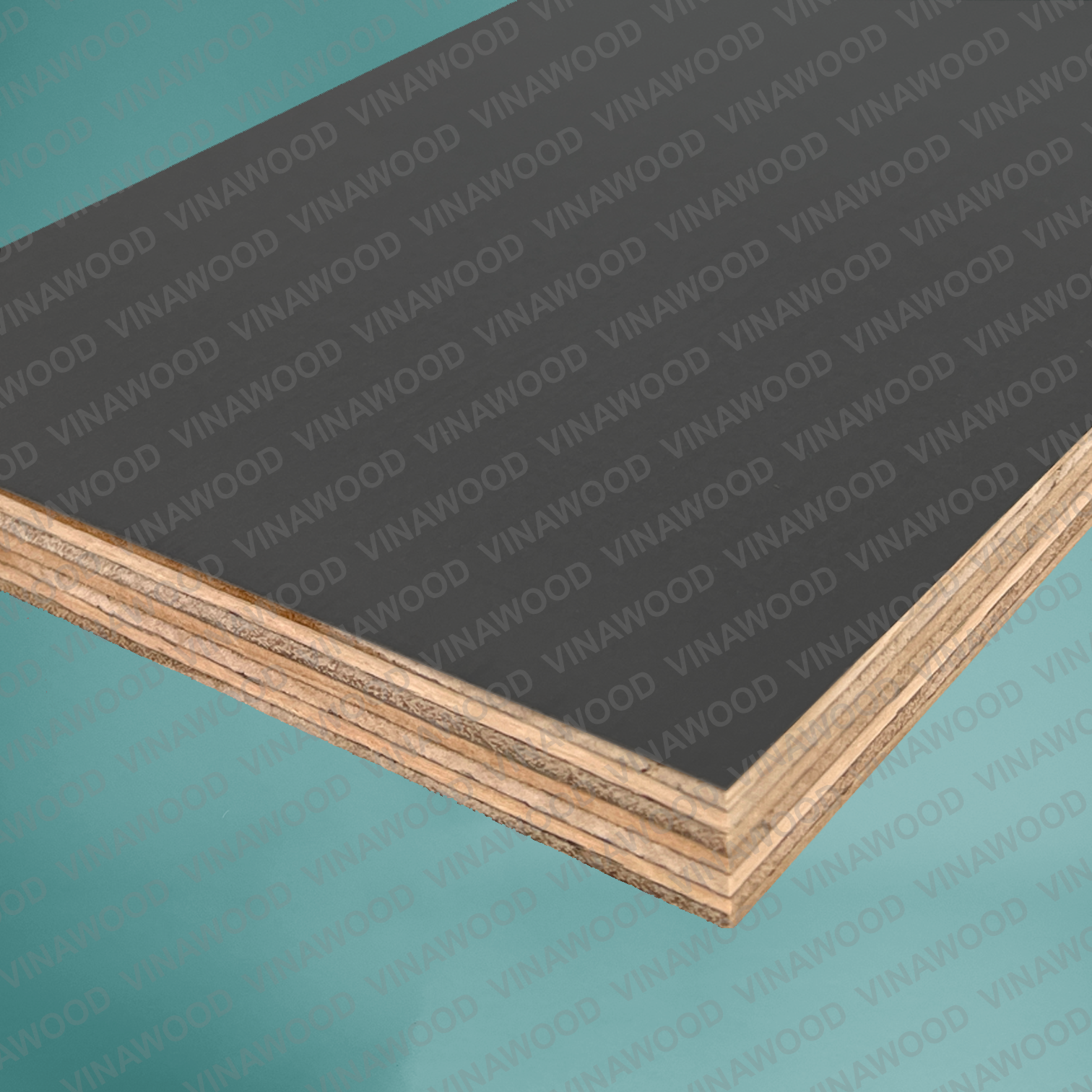
The reuse you get depends on the core glue and the care, not on the film alone. Here is how the Vinawood film-faced range maps to a foundation reuse target.
| Panel | Core glue | Bond class | Face | Max reuse | Foundation fit |
|---|---|---|---|---|---|
| Form Extra | WBP MUF (higher-melamine-content) | EN 636-2 / Class 2 | phenolic film | up to 15 | Repeat residential and light commercial footings |
| Pro Form | WBP phenolic (PF) | EN 636-3 / Class 3 | phenolic film | up to 20 | Repeat commercial footings, fair-face plinths, pile caps |
| Form Basic | WBP MUF (standard) | EN 636-2 / Class 2 | phenolic film | up to 10 | Short-run or single-project footings |
Two points keep crews out of trouble here. Class 3 (EN 636-3) is the phenolic-bonded tier. In the Vinawood range that means Pro Form and the HDO range, which is the line we point North American foundation crews toward for high-rotation commercial work. Form Extra is not a Class 3 panel. Its longer life over Form Basic comes from a more durable, higher-melamine-content MUF glue formulation, not from a heavier face film. Both panels carry the same phenolic film.
One vocabulary note, because it trips up buyers who come from the cabinet trade. "Melamine" in a formwork panel means the melamine-urea-formaldehyde core resin bonding the veneer plies. It is not the decorative melamine laminate used on interior carcasses, which is where the "melamine is interior only" idea comes from. Vinawood's MUF formwork panels are weatherable at EN 636-2 and belong on a footing.
Why footing forms are cut-heavy, and what that does to reuse
Foundation work eats panel edges. Strip footings get cut to length at every step and corner, pad footings are small boxes made of offcuts, and the result is a high ratio of cut edge to face area. Each fresh cut is raw core until somebody seals it.
In our own export data, the foundation panels that come back swollen almost never failed on spec. They were cut on site, stacked without sealing the new edges, and left on wet ground over a weekend. Sealed edges plus a thin film of release agent are what carry a panel to the top of its reuse band on footing work. Skip the sealing and a 15-cycle panel gives you five.
Stripping and care
Strike with a wedge, not a crowbar levered against the cast concrete. Foundation forms are braced hard against stakes, and prying tears the film at the corners. Clean the panel face before the grout sets, never with a steel scraper that scores the film. Re-seal any cut edge that has opened up. Store flat, off the ground, under cover.
Diesel is not a release agent. It softens the film over time and leaves a residue that stains the next pour. Use a proper form-release oil applied thin. The storage and maintenance guide covers the full routine that keeps panels in rotation.
Common issues, and where they actually come from
Edge swelling on a foundation panel may indicate an unsealed cut edge or storage on wet ground, so the first thing to check is handling history, not the panel. Bowing on a thin sheet stored upright in the sun is moisture and physics, not a manufacturing fault. A patchy cast face usually traces back to uneven release-agent coverage or grout left to harden on the film.
None of these are reasons to reject a panel at delivery. They are site-discipline outcomes, and they are fixable. A panel that arrives flat, sealed on all four edges, and within thickness tolerance is doing its job. What happens to it on the slab is where reuse is won or lost.
Sourcing checklist
| Spec | What to confirm |
|---|---|
| Adhesive class | EN 636-3 (Class 3) for repeat commercial footings and pile caps; EN 636-2 (Class 2) acceptable for short runs |
| Thickness | 18 mm (3/4 in) baseline; 21 mm (13/16 in) for deep pours and foundation walls |
| Edge sealing | Factory-sealed on all four edges; re-seal every site cut |
| US / Canada | CARB P2 / TSCA Title VI compliance certificate per shipment |
| EU / UK | CE marking under EN 13986; FSC where green-building spec applies |
| Panel format | 1220×2440 mm for North America and Australia |
For sibling-element spec, the wall formwork guide covers vertical forms and the slab formwork guide covers horizontal decks. For the full panel-type overview, see concrete form plywood.
About Vinawood
Vinawood has manufactured plywood in Vietnam since 1992, shipping more than 5,000 containers a year to 55+ countries. The formwork range spans EN 636-2 (Form Basic, Form Extra) and EN 636-3 (Pro Form, HDO range), with ISO 9001 quality management, CARB P2 / TSCA Title VI compliance for the United States and Canada, and CE marking under EN 13986 for export markets. For North American foundation work, lead with the HDO range and Pro Form on high-rotation commercial footings, and Form Extra on residential and light commercial runs. For a panel recommendation against your pour schedule, request a factory-direct quote.
Category
how-to