Concrete Discoloration: Why It Happens and Whether You Should Worry
Concrete discoloration is uneven surface color — blotches, dark spots, leopard spots. On new concrete it is usually normal and often fades on its own. Here is what causes it, whether to worry, and how to fix it.
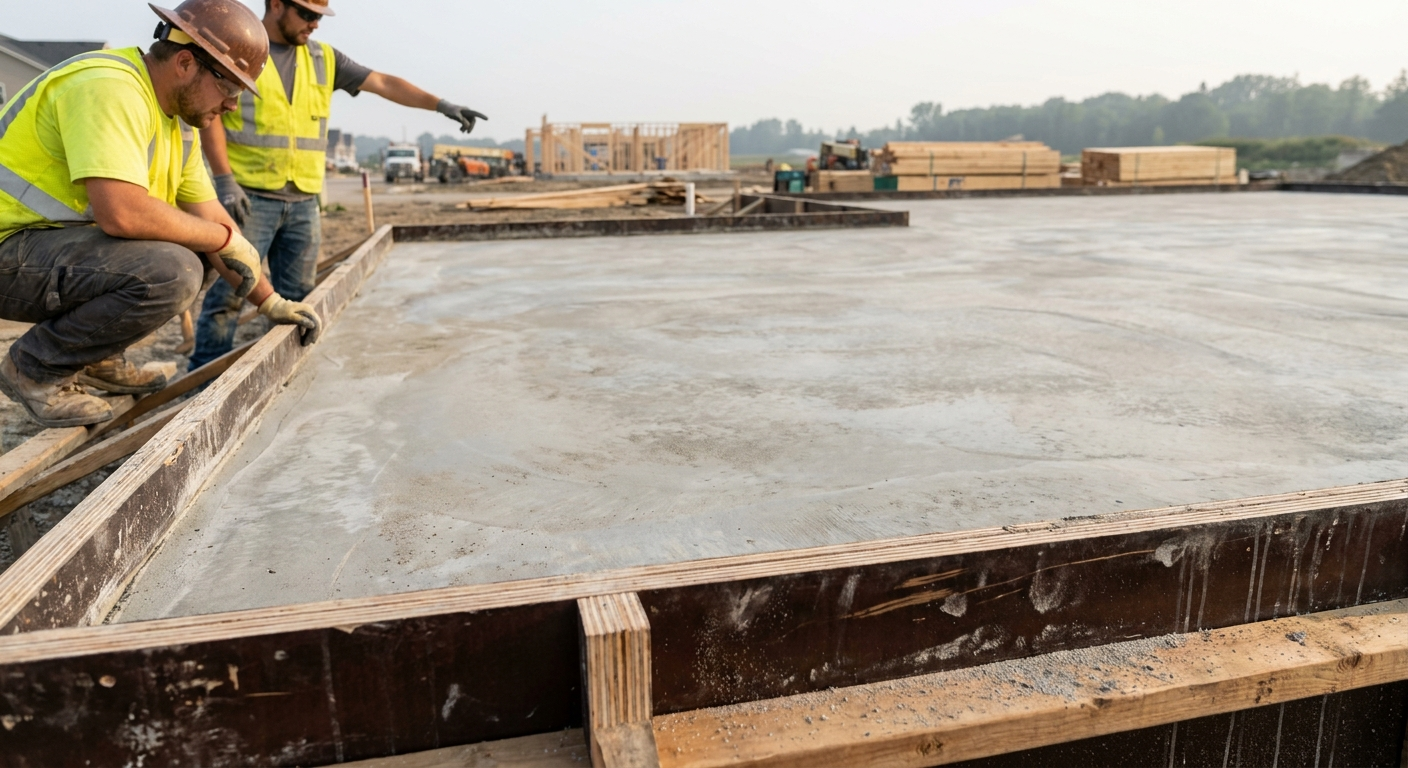
Much of the blotchy, leopard-spotted color that alarms people on a fresh slab disappears on its own within a few months, as the concrete dries and the surface carbonates. That is the first thing worth knowing about concrete discoloration, because it is one of the most misread things about a new pour. A slab or wall comes out patchy, dark blotches in some areas, pale zones in others, sometimes a streak that follows where a curing sheet lay, and the uneven color reads like a stain or a sign the concrete went wrong. In most cases it is neither.
The reassuring version is usually the true one. Discoloration on new concrete is common, almost always cosmetic, and a good share of it fades over the weeks and months after the pour as the slab dries out and the surface carbonates. From a formwork panel maker's seat, the honest framing matters too: discoloration is a curing, mix, and finishing story tied to the concrete itself, not a property of the form face that shaped the pour.
What concrete discoloration looks like
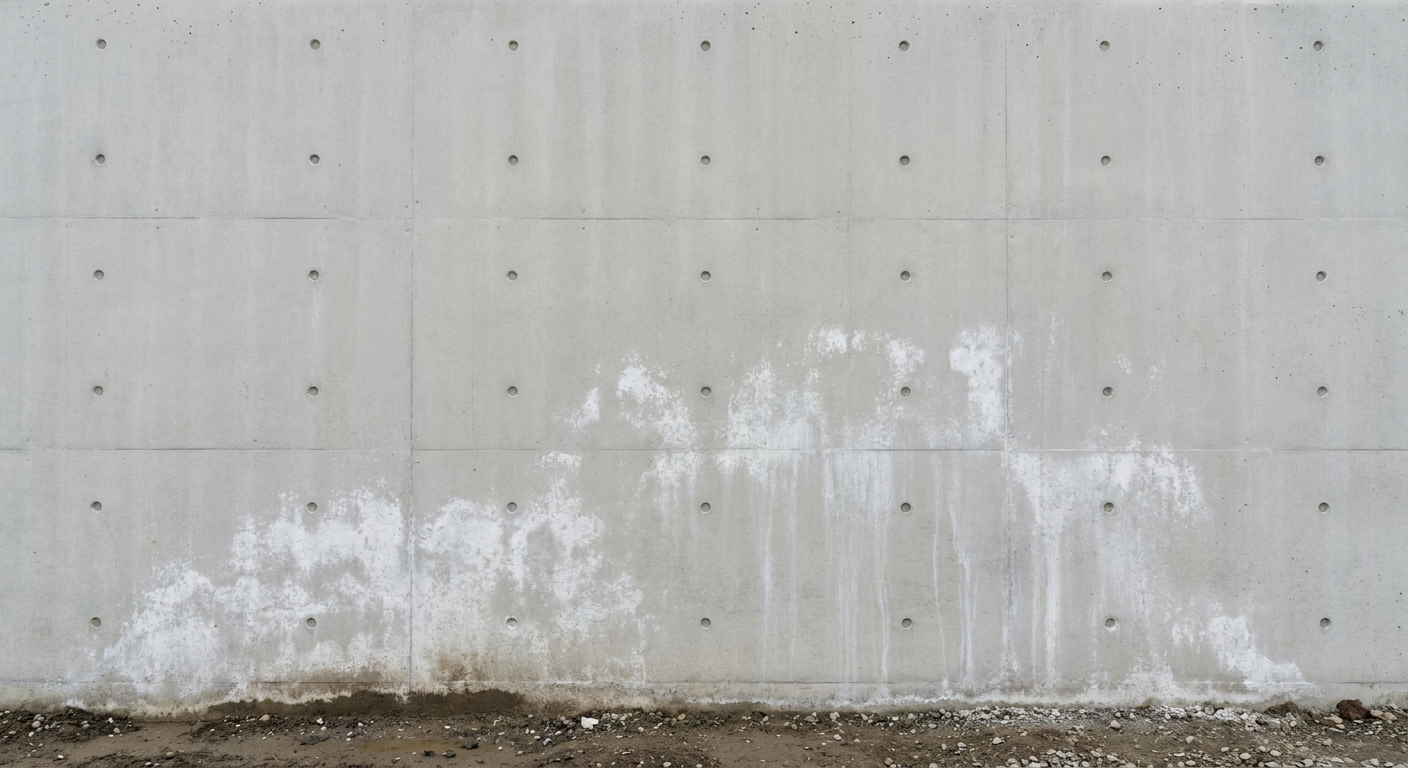
Discoloration is any uneven color across a concrete surface that should read as a consistent gray. It shows up in a few recognisable patterns.
- Blotches and dark patches. Irregular darker areas, often where moisture stayed in the surface longer.
- Leopard spots. A mottled pattern of dark spots on a lighter background, common on new slabs and one of the most-searched versions of this problem.
- Streaks and lines. Often following the edges of curing sheets or where water pooled and drained.
- Overall uneven gray. One area of a slab or wall reading a different shade than the rest, with no sharp boundary.
These are surface color effects. They sit in the top layer of the concrete and, in the great majority of cases, do not reflect anything about the strength or soundness of the slab underneath.
Is discoloration normal on new concrete?
Frequently, yes. New concrete is still losing moisture and reacting with the air for a long time after it is placed, and while that is happening the surface color is not settled. Blotchy or mottled color on a slab in its first weeks is a normal stage, not a verdict. A lot of it evens out on its own as the concrete dries uniformly and the surface carbonates over the following weeks and months.
That is the frame worth holding before doing anything: on new concrete, discoloration is usually a wait-and-see, not a repair. We have seen this in our own customers' field reports from formed architectural work: a wall that looked alarmingly patchy at strip reads far more even a couple of months later, once it has dried out and the surface has had time to settle. The instinct to scrub or acid-wash a fresh slab the week it is poured often does more harm than the discoloration would have on its own.
What causes concrete discoloration
When color comes out uneven, the causes sit with the concrete, the curing, and the finishing. Every one of them is about what happened to the slab, not the panel that formed it.
| Cause | How it shows up | Why it happens |
|---|---|---|
| Uneven or inconsistent curing | Patches and streaks, often matching curing-sheet layout | Polyethylene curing sheets that touch the surface unevenly trap moisture in some spots and let others dry, so the color sets differently. A leading cause of new-slab discoloration. |
| Calcium chloride accelerators | Darkening, sometimes mottled | Calcium chloride added to speed set is a well-known darkening agent and a frequent source of blotchy color. |
| Water added at the jobsite | Uneven light and dark zones | Adding water to the mix at the site, or sprinkling the surface, changes the surface water-cement ratio locally and shifts color. |
| Change in cement source or SCMs | A whole pour or section reading a different shade | A different cement batch, or a change in supplementary cementitious materials like fly ash or slag, changes the base color between loads. |
| Finishing timing and over-troweling | Burnished dark patches | Troweling too hard or too long densifies and darkens the surface unevenly. Over-finishing is a common workmanship cause. |
| Trapped moisture under coverings | Dark shapes matching whatever sat on the slab | Sheeting, lumber, or debris left on a curing slab holds moisture underneath and leaves a darker footprint. |
Read down that list and the pattern is plain. Discoloration is decided by curing method, admixtures, water control, cement consistency, and finishing. None of those is the plywood that shaped the pour.
Formwork's honest role on formed faces
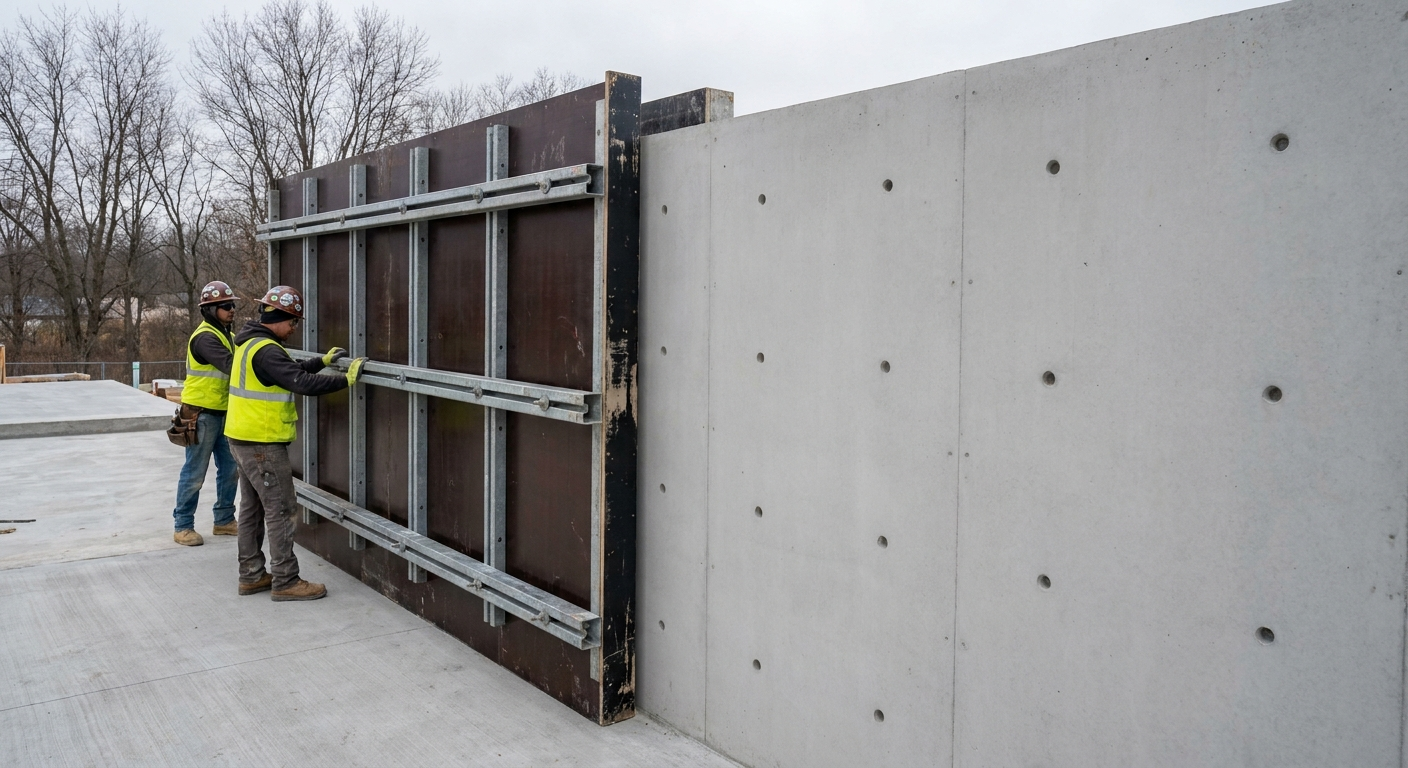
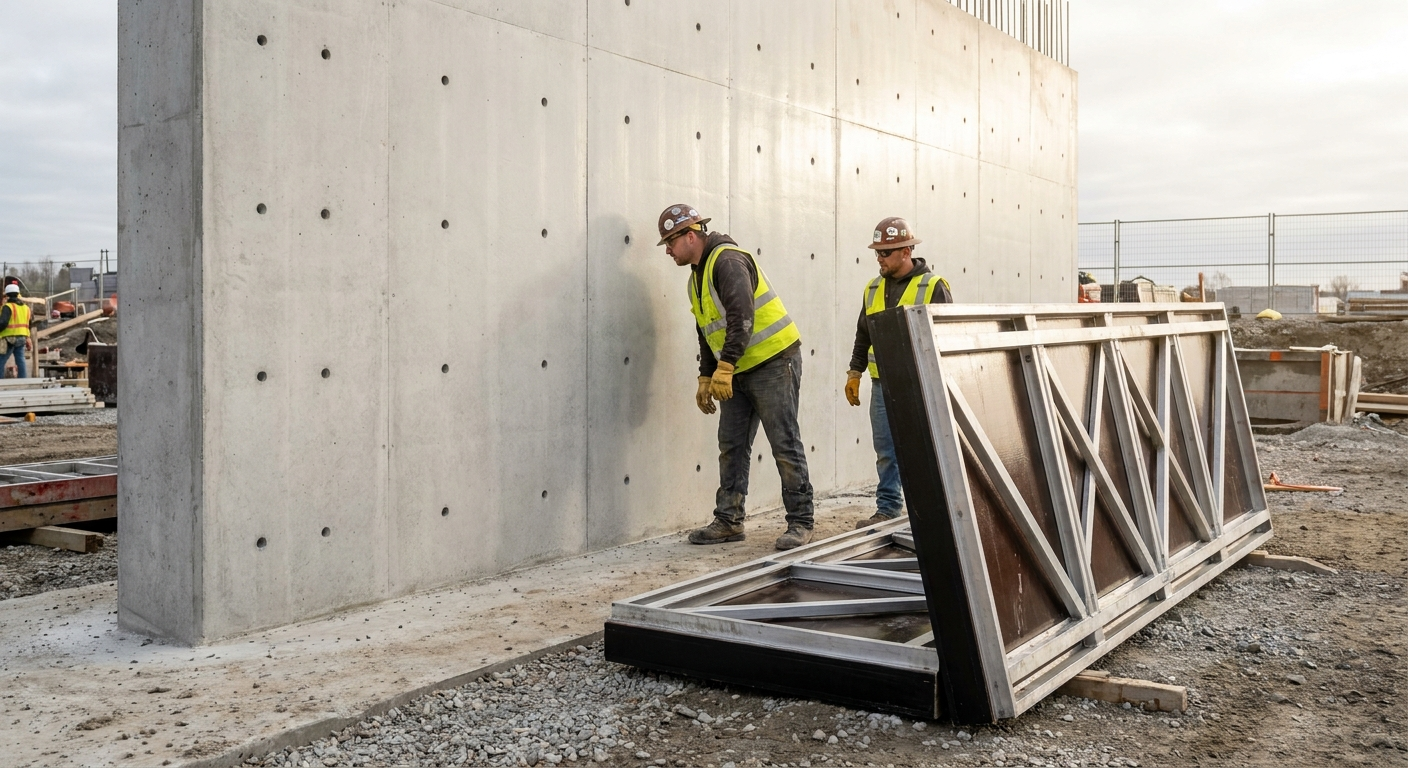
On flatwork, the form panel has essentially nothing to do with discoloration, because a slab is finished from the top. The narrow, honest connection is on formed vertical faces cast against a panel. There, the form-face type and its condition, the release agent type and how much of it is applied, and how moisture behaves at the form face can all influence surface color uniformity. A clean, non-absorbent film face tends to give a more even surface color than a raw or heavily reused face that pulls moisture unevenly.
Keep it proportionate. Most discoloration questions are about flatwork and curing, not the panel, and color variation across formed faces is normal rather than a panel fault. A form face can present a more uniform surface to start from. It does not control the curing, the admixtures, or the cement consistency that decide most of the color story. Anyone told that the right plywood guarantees even concrete color has been oversold.
When to investigate further
Most discoloration on new concrete needs patience, not investigation. It is worth a closer look when the color does not even out after the slab has had a few months to dry, when a sharp, unexplained shade change runs across a pour, or when the appearance matters for architectural work that has to match. Even then, check the ordinary causes first, in order: how was the slab cured and were curing sheets in even contact, were calcium chloride or other admixtures used, was water added at the jobsite, and did the cement source change between loads. Those questions resolve the large majority of cases.
Conservative language is the right instinct here. Uneven color may indicate a curing or admixture difference worth checking, but it rarely means the concrete is defective. Curing method, admixture history, and cement consistency should be checked before anyone questions the materials.
Will it go away? Fixes if it does not
Give new concrete time first. A large share of discoloration fades as the slab dries evenly and the surface carbonates over the first months. For color that stays put and matters, work from gentlest to most involved.
- Repeated washing and drying. Flushing the surface with water and letting it dry fully, repeated over several cycles, lifts and evens a surprising amount of surface discoloration. It is the first thing to try and often enough on its own.
- Mild acid treatment. A dilute acid wash made for concrete can even out more stubborn discoloration. Test a small area first, follow the product directions, and neutralise and rinse as instructed.
- Staining or coating. Where uniform color is required and washing has not delivered it, a concrete stain or coating gives a consistent finish. This is a finish choice rather than a repair, and it covers rather than corrects.
Whatever the route, treat the surface once the concrete has had time to settle, not in the first days after the pour when the color is still moving on its own.
How a uniform formwork face supports consistent architectural color
For finish-critical formed concrete, where the as-cast surface is the final look, a clean and uniform form face is the right starting point because it presents an even, low-absorbency surface to the fresh concrete rather than a patchy one. That evenness helps a formed face read consistently across an elevation, which matters most on architectural and fair-faced work. It is the front-end contribution forming genuinely makes to color uniformity.
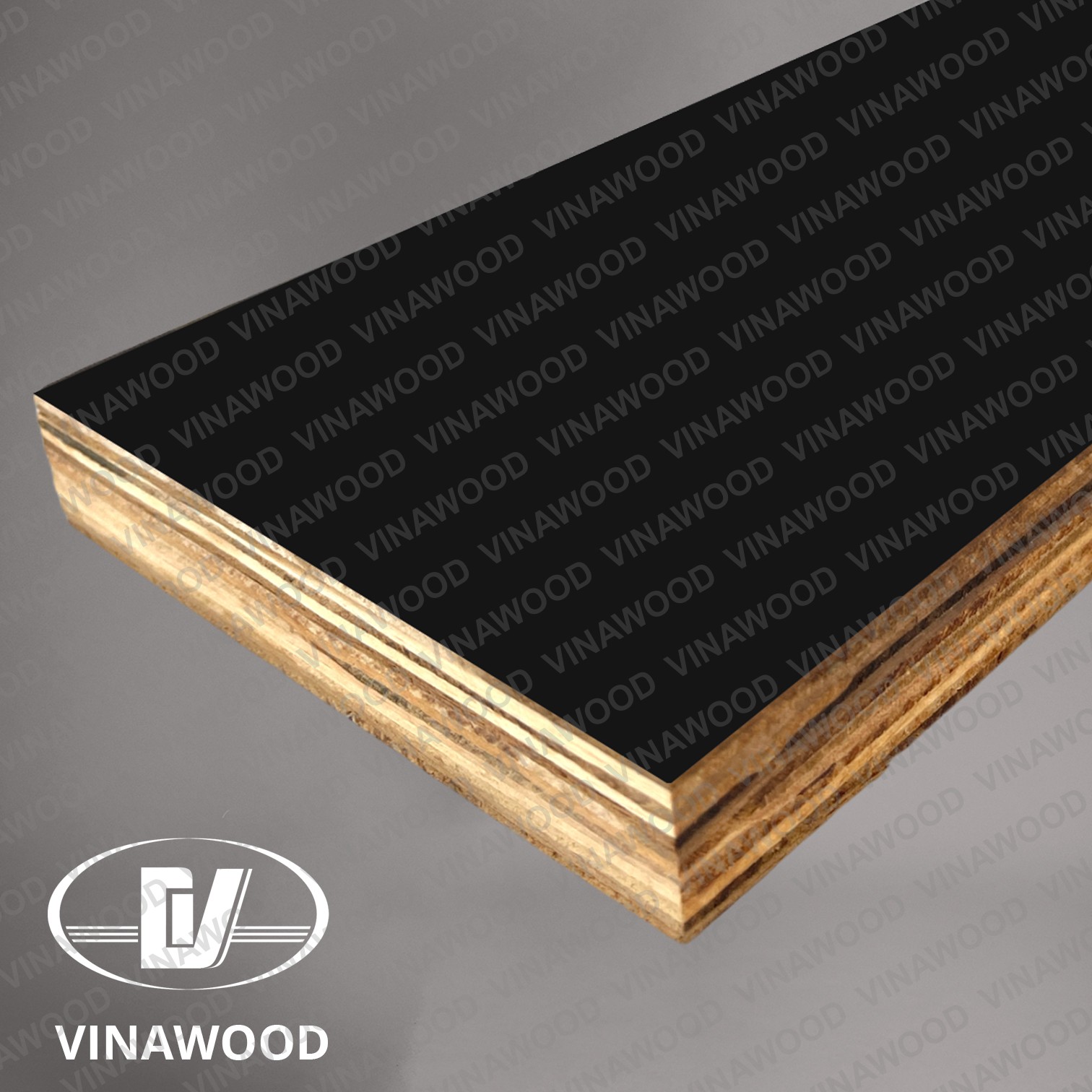
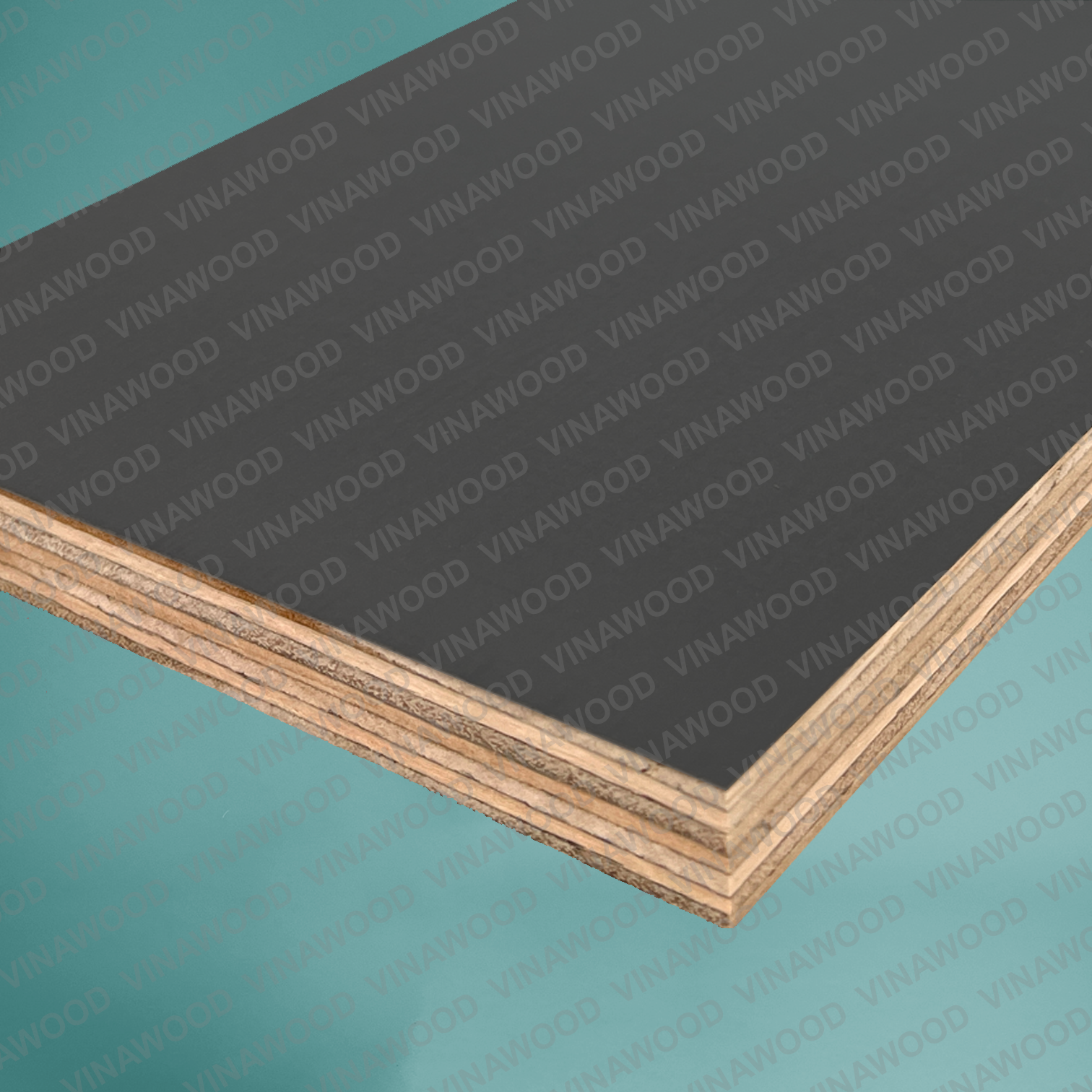
Vinawood manufactures formwork plywood in Vietnam with factory-sealed edges and 100% individual sheet inspection across the range. North American contractors working to imperial sizes can look at the HDO plywood range, where a high-density overlay holds a clean, uniform face across repeat pours. The HDO Premium 2S Formply is a WBP phenolic panel to EN 636-3 rated up to 20 reuse cycles for finish-critical work, and the HDO Basic 1SF Formply covers general forming. None of these controls the curing, admixtures, or cement consistency that decide most concrete color. What a sound face does is give the formed surface the most uniform possible start. For how the forming grades compare and how the surface family relates, see the fair-faced concrete guide, and the neighbouring surface questions in concrete scaling and concrete efflorescence.
About Vinawood
Vinawood has manufactured plywood in Vietnam since 1992 and ships more than 5,000 containers a year to 55+ countries. The formwork range carries full CE marking to EN 13986 for Europe and EPA TSCA Title VI / CARB P2 compliance for the United States, with factory-sealed edges and 100% individual sheet inspection across a 12-step manufacturing process. Forming plywood shapes the concrete and gives a formed face an even surface to start from; it does not set the curing and mix conditions that decide most concrete color, and we would rather a buyer hear that straight. For a factory-direct quote with your panel sizes and project volume, contact our sales team.
Category
guides
Related Markets
Related Countries
Related Products
▶Sources & References (2)
- Concrete Slab Surface Defects: Causes, Prevention, Repair (IS177) — Portland Cement Association (2001)
- Discoloration of Concrete: Causes and Remedies — American Concrete Institute (2013)