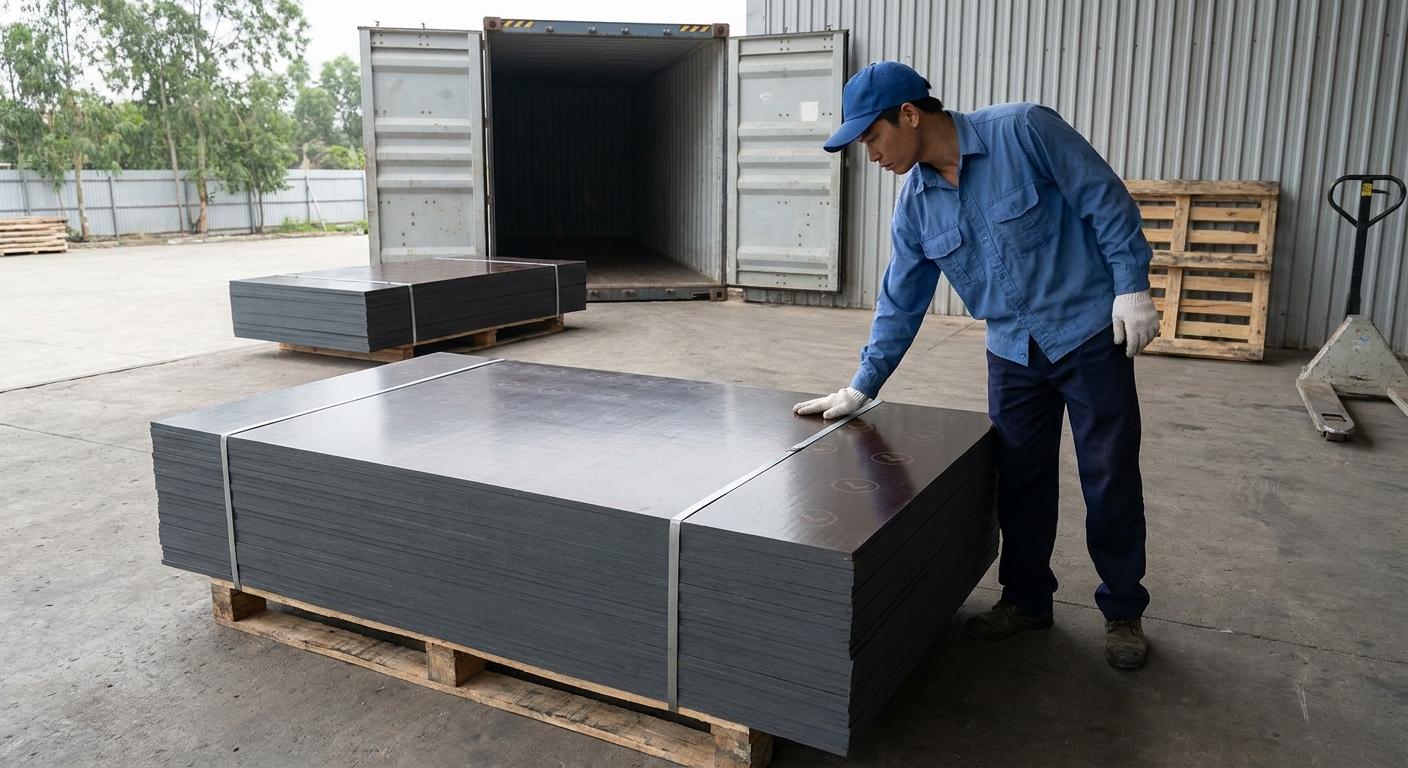
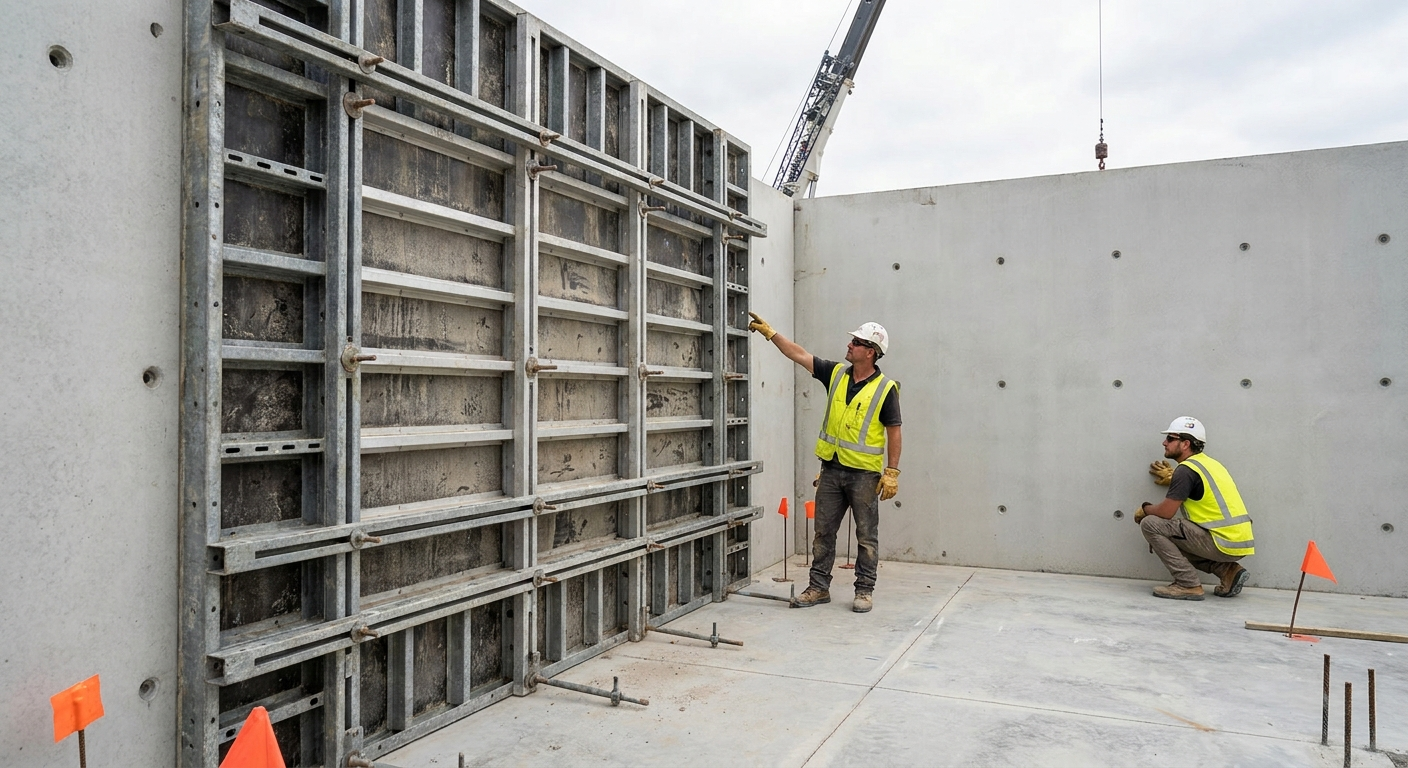
Fair-Faced Concrete: How Formwork and Panel Choice Drive the Finish
Fair-faced concrete copies the form face. Map glossy phenolic, MatteFace matte film, HDO and P-Form polypropylene, keep Class 3 accurate, and plan reuse stage on the elevation.
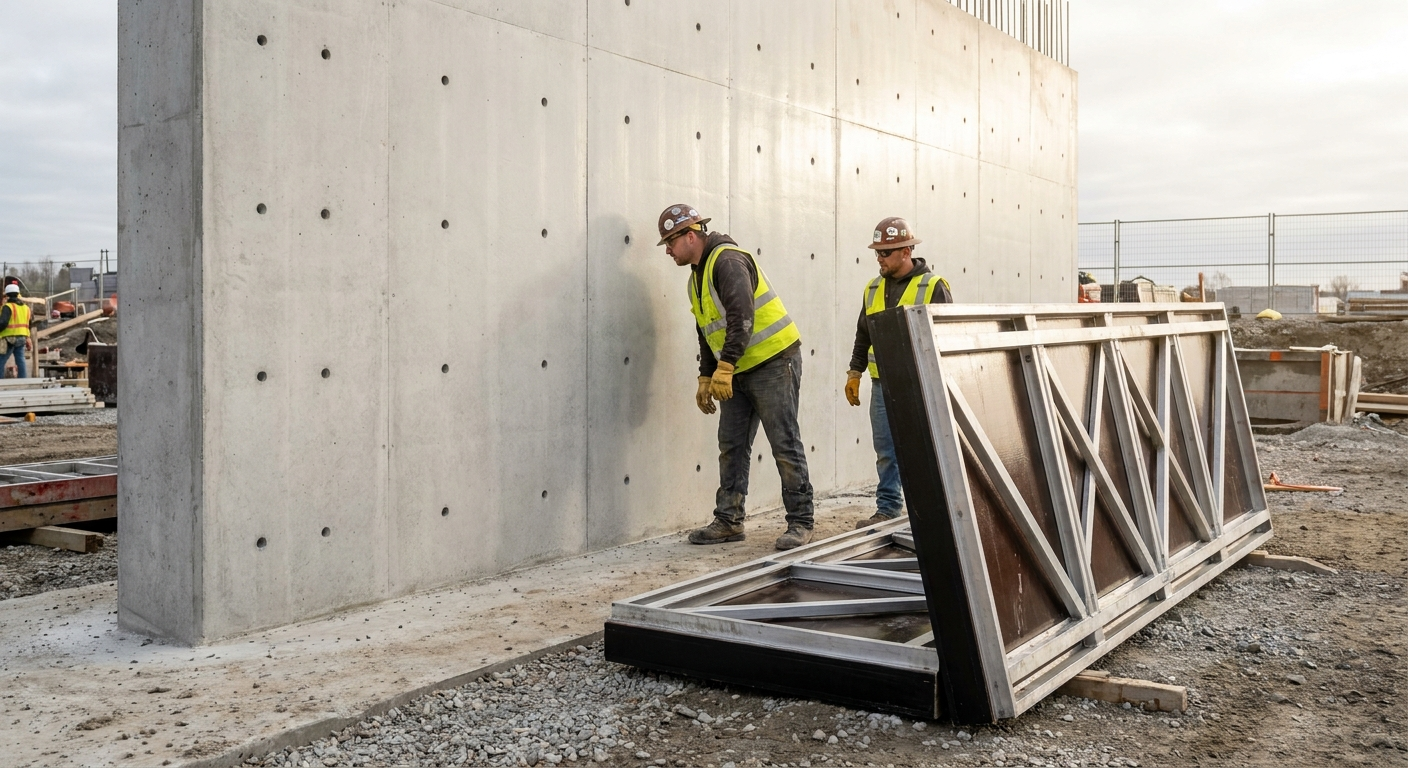
Fair-faced concrete is as-cast architectural concrete left exposed. No render. No paint. The form face acts like a mirror: texture, sheen, joint lines, and wear all transfer into what the owner will see for decades. Mix design, face chemistry, and release practice share that result, so the panel is only one of three levers — never a guaranteed fair-face promise on its own.
For a film-faced mill this is the clearest line between product choice and a building's appearance. A worn face prints its wear. A glossy phenolic film and a matte phenolic surface film are different finishes, not interchangeable labels. Polypropylene faces behave differently again, because they do not pull water the same way.
What fair-faced concrete actually is
As-cast exposed concrete covers facades, soffits, feature walls, bridge piers, retaining walls, and columns where the concrete itself is the finish. Board-marked timber and glass-smooth film faces both count. What they share is a tight tolerance for blowholes, colour drift, and joint marks compared with concrete that will be plastered over later.
Fair-faced is a quality bracket, not one look. Read the visual class in the project spec before you lock a panel SKU. A top class wants fresh faces and tight joints. A lower class tolerates more reuse and a little more colour scatter. Agree a reference sample on site before the main visible pours; that single step settles more arguments than any brochure photo.
The three controllable factors
Three things decide the as-cast face on site. Mix design sits with the concrete supplier and engineer: cement type and content, aggregate colour and grading, water content, admixtures. Formwork and the form face sit with panel choice: material, face type, joint tightness, tie layout. Release agent and placement sit with the crew: thin even coat, pour discipline, vibration, curing. Those last two control stains and bug holes as much as the sheet itself.
Only one of those three is the plywood. A mill that sells a guaranteed fair-faced result is overselling. We make the face as honest as we can. The pour and the mix still decide colour and void count.
How the form face transfers to the finish
A smooth phenolic film returns a near-uniform low-texture face. Sawn boards leave grain on purpose. Form liners leave whatever pattern is moulded in. Within film-faced work, glossy versus matte is a real design choice, not a marketing synonym.
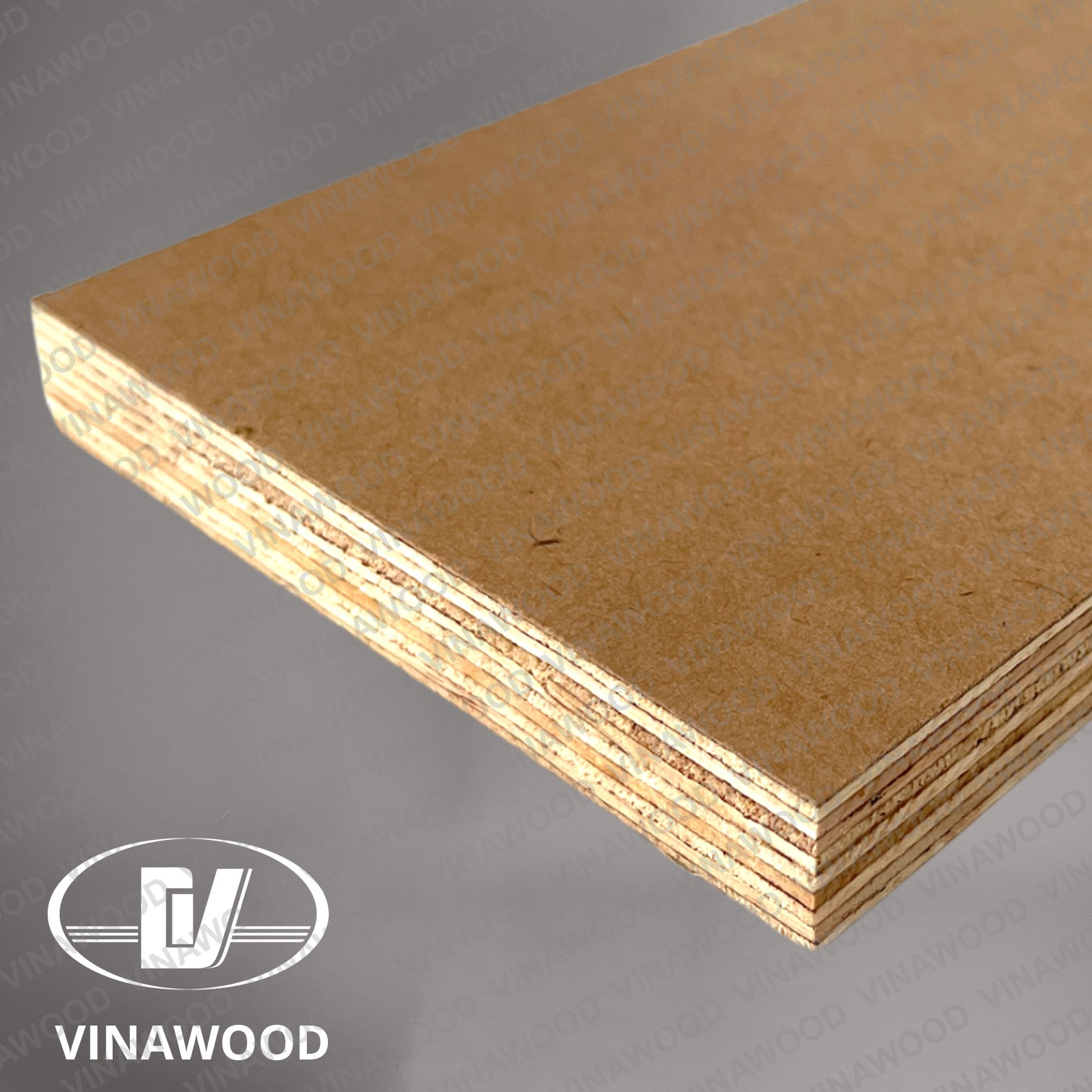
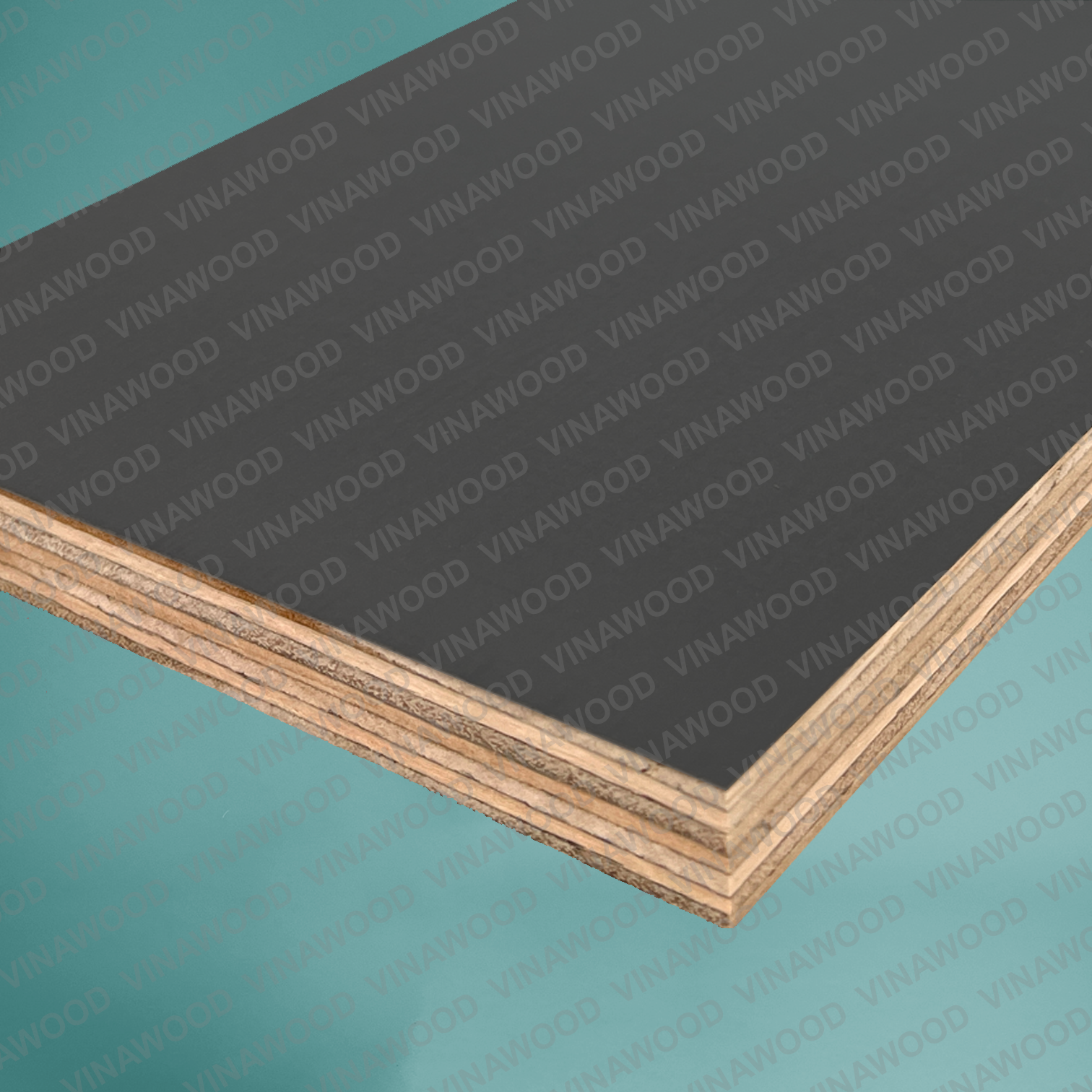
Glossy phenolic film gives a shiny cast face. Matte phenolic surface film gives an even, non-reflective finish that hides minor variation across a large elevation. Vinawood MatteFace Plywood (MTF) is the matte phenolic surface film product for formwork. Buyers often search it as MDO formwork plywood. Kraft-paper MDO for paint and signage is not this panel. Keep MatteFace in the formwork conversation and never treat it as a duty story.
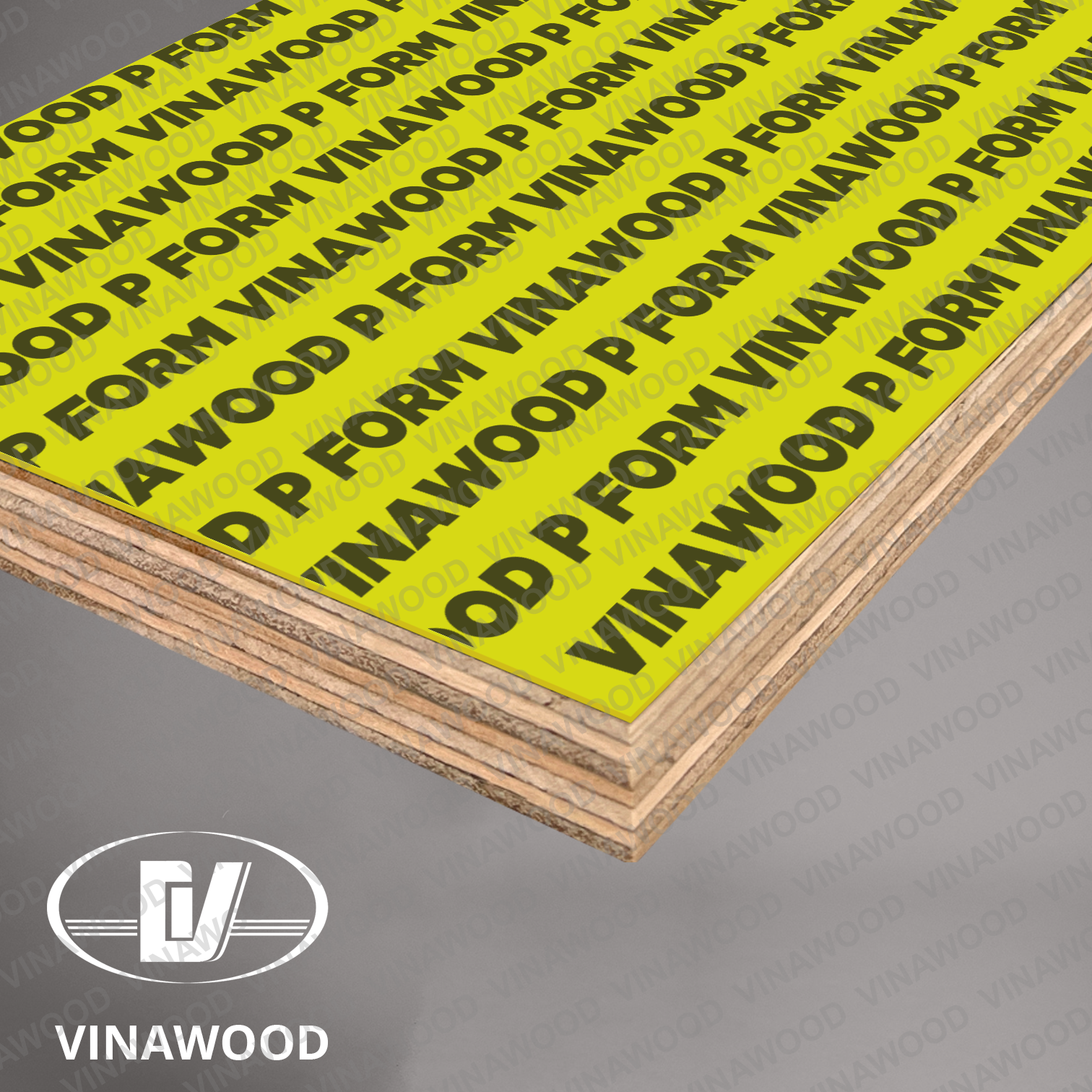
Polypropylene (PP) overlay is the non-film option. A PP face is closed and non-absorbent. It does not pull water unevenly from the paste against it, which keeps an even as-cast look across many pours when the face stays intact. Vinawood P-Form is polypropylene, not Pro Form. Do not conflate the names on the purchase order.
Face map and Class 3 ladder
Finish-critical takeoffs need a quick face map before price talk. Glossy phenolic film is the standard film-faced look; shine varies with film weight and release agent. MatteFace (MTF) is matte phenolic surface film, up to 15 reuses, formwork only, with a soft MDO search bridge. HDO is a dense phenolic overlay — HDO Basic up to 10, HDO Premium up to 20 — and sits in phenolic Class 3; see the HDO plywood collection. P-Form's polypropylene face runs up to 35 and stays strong for even fair-faced elevations because it is non-absorbent.
Phenolic Class 3 on Vinawood film-faced stock is Pro Form (up to 20), Pro Form Lite (up to 15), and the HDO range only. Walk the rest of the ladder in order: Eco Form Plus up to 8 for short runs, Form Basic up to 10, Form Extra (Superior Glue MUF, EN 636-2, not Class 3) up to 15, then Pro Form Lite and Pro Form. Form Extra carries the same phenolic face film as Form Basic; extra reuse comes from glue chemistry, not a heavier face film. Name which "melamine" you mean — core MUF adhesive, phenolic face film, or decorative laminate — because bare "melamine" on an RFQ creates the wrong panel. All reuse figures are up to N with site care. Plantation-grown cores. Prefer water-resistant or WBP wording on the takeoff.
I still see finish-critical facades keep early-cycle MatteFace or P-Form sheets on the visible elevation and rotate older glossy film-faced sheets to back-of-house pours. That rotation is cheaper than rejecting a whole elevation for joint stains after strike.
Panel selection for fair-faced work
Face quality comes first. Denser phenolic or intact PP holds longer before telegraphing wear. Joint tightness comes next: gaps leak grout and print dark lines, so brace stiffly under pressure. Edge sealing matters because unsealed cuts wick moisture and swell; factory edges are sealed, and field cuts need re-seal before the next pour. Reuse stage belongs on the elevation plan: fresh faces for visible work, older sheets for hidden pours, cycle counts on the stack rather than in someone's head.
For finish-critical repeat-use work, P-Form's closed PP face is often the cleanest even cast. The broader film-faced plywood range covers glossy phenolic tiers. MatteFace covers matte cast faces. HDO covers high-rotation North American forming with imperial sizes and ACI finish talk.
Thickness still matters. A belly in the panel prints into the concrete. Match millimeters to stud or joist spacing the same way you would on any structural pour. Face chemistry does not cancel a soft span.
Release agents and care
Release agent lets the form strike without tearing paste and influences colour and blowhole count. Over-application and pooling make dark patches. Use a thin even film, reapplied each pour. Match agent type to face chemistry: phenolic film and polypropylene do not always like the same oil.
For cleaning, storage, and edge discipline between pours, use the formwork panel care guide. Prompt clean-down after strip matters more than buying one grade harder. A MatteFace sheet left dirty overnight still prints that dirt into the next face. For release chemistry detail on site, cite the project release-agent guidance rather than guessing from a film colour swatch.
Joints, ties, and layout
On a fair-faced elevation, joints and tie holes are design. Set a grid. Keep ties on a module. Brace so pressure does not open joints mid-pour. Lateral pressure from the fresh concrete drives tie spacing; that calc is its own step and belongs with the formwork engineer, not the plywood invoice.
Panel layout should be drawn before the first lift. Random staggered joints look intentional on board-marked work and accidental on glass-smooth film faces. Pick the language the architect wants, then stick to it across the elevation.
Common finish problems
Blowholes and bug holes are trapped air — often mix workability, vibration, or thick release agent, rarely the panel face alone. Colour variation comes from uneven release agent, curing drift, or mixing panels of different ages and absorbency on one elevation. Grout loss and dark joints point to gaps and soft bracing, where panel joint discipline helps. Honeycombing is placement and compaction; detail lives on honeycomb in concrete.
Most marks on a stripped face are history, not a mill defect. Swap the sheet if the face is worn. Fix the pour if the voids sit in the middle of a fresh face.
MatteFace versus glossy film on large elevations
Large elevations exaggerate sheen differences. A glossy film can look patchy when light sweeps across a facade at an angle. MatteFace softens that reading. Neither face fixes a bad joint or a pooled release agent. Pick matte when the design asks for a calm, even concrete face. Pick glossy when the architect wants shine and accepts the maintenance that comes with it.
Keep MatteFace in the formwork conversation. Do not drag AD/CVD language into the product description. The construction story is open. Duty outcomes are not part of this page.
Why reuse stage belongs on the elevation plan
Fair-faced work fails when every sheet on a facade is treated as identical. Cycle one and cycle twelve do not cast the same. Write reuse stage onto the elevation plan the same way you write joint lines. Pull early-cycle MatteFace or P-Form for the public face. Send later-cycle glossy film-faced sheets to cores, basements, and temporary works.
Hire fleets already do this by colour code or stamp. Owner-builders often do not. A simple stack tag saves a reject meeting after the architect walks the wall.
Specification language and next step
Visual classes set limits on voids, colour, joints, and ties. Several national standards and trade bodies publish their own wording. The project specification names the one that applies. Read that class before you buy. A top visual class and a "use any leftover sheet" instruction do not belong on the same purchase order.
Vinawood has made formwork panels in Vietnam since 1992. About 5,000 containers a year to 55+ countries. Every sheet is inspected. Distribution warehouses in Toronto, Vancouver, Calgary, Montreal, Miami, Houston, and Baltimore supply ready stock to local distributors when a finish-critical pour needs break-pack sheets between container arrivals. For finish-critical work, start with P-Form or MatteFace, then confirm sizes and reuse stage on the RFQ.
Request a quotation with panel sizes, finish class, and project volume, or use /rfq. Match the face to the elevation you will leave exposed.
Category
guides
Related Markets
Related Countries
Related Products
▶Sources & References (3)
- Vinawood MatteFace Plywood collection — Vinawood
- Vinawood film-faced plywood collection — Vinawood
- Formwork panel care guide — Vinawood