How to Care for Formwork Panels: Form Oil, Cleaning & Storage Guide
Contractor guide to formwork panel care: form oil, cleaning, edge sealing, storage, repair and retirement. Locked Vinawood reuse maxima; MatteFace/MDO bridge clarified. Est. 1992, 55+ countries.

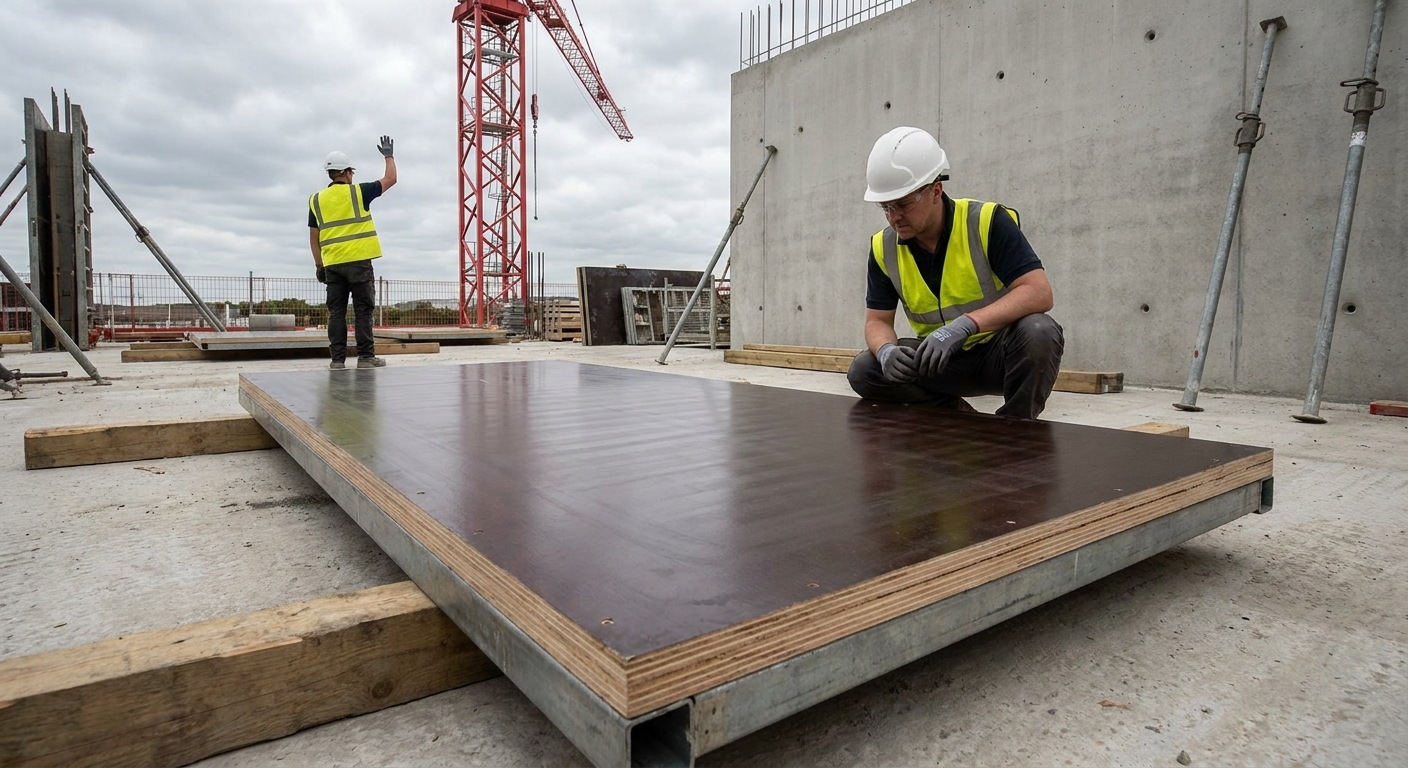
A formwork panel that returns ten clean pours and one that dies at three usually differs in care, not in the grade stamp. Film, edges and storage decide how close you get to the catalogue maximum. For crews running repetitive walls and decks, that maintenance loop is where cost per pour moves.
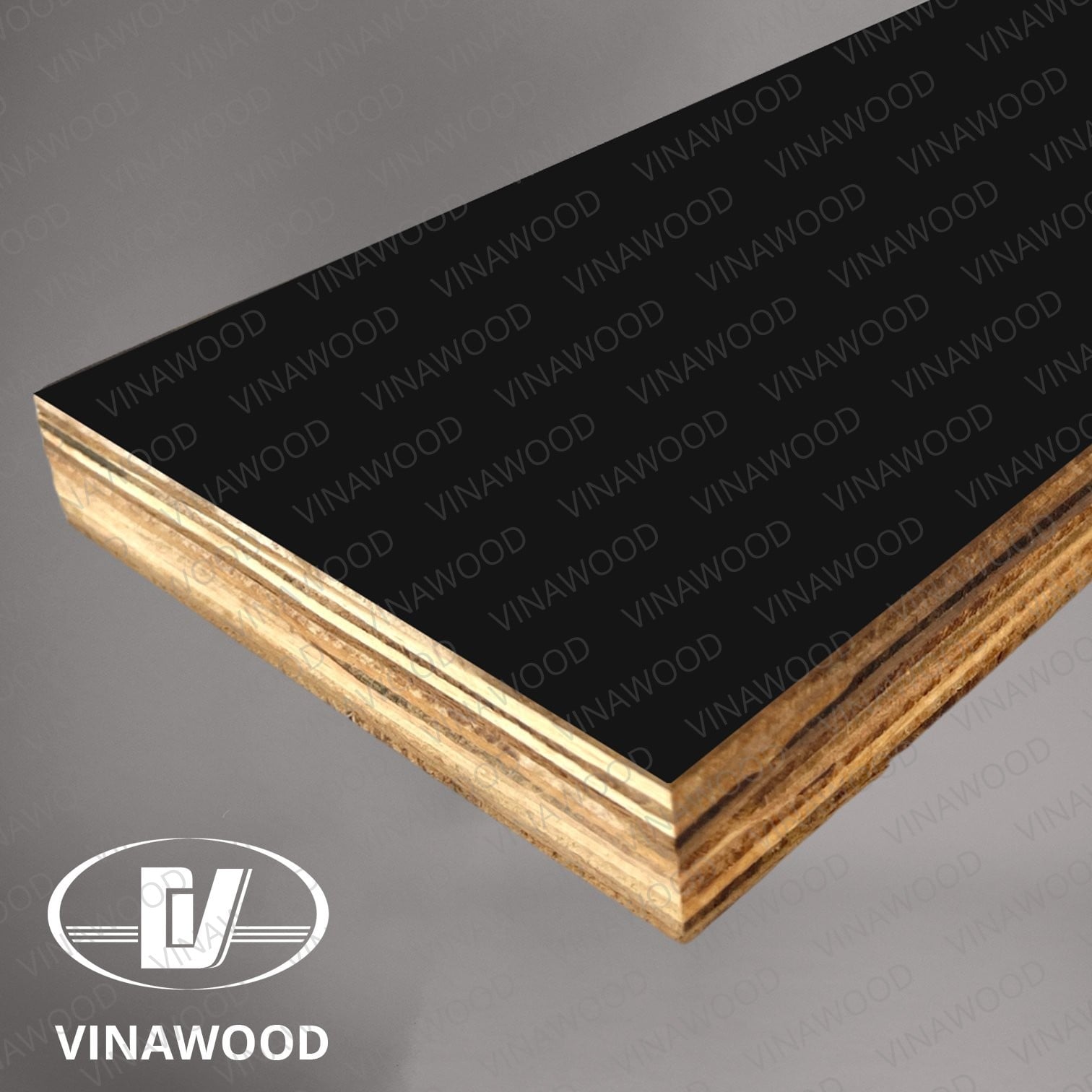
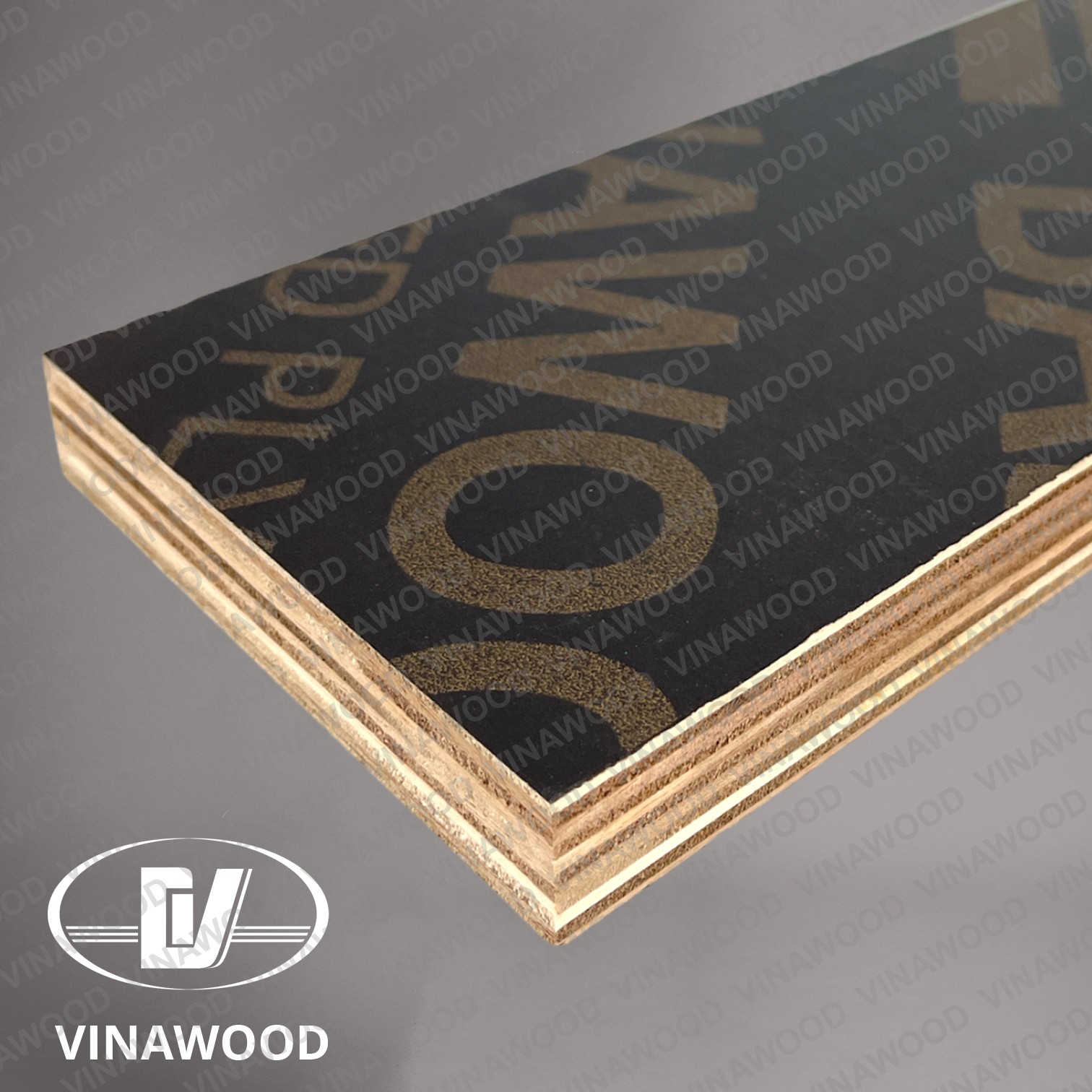
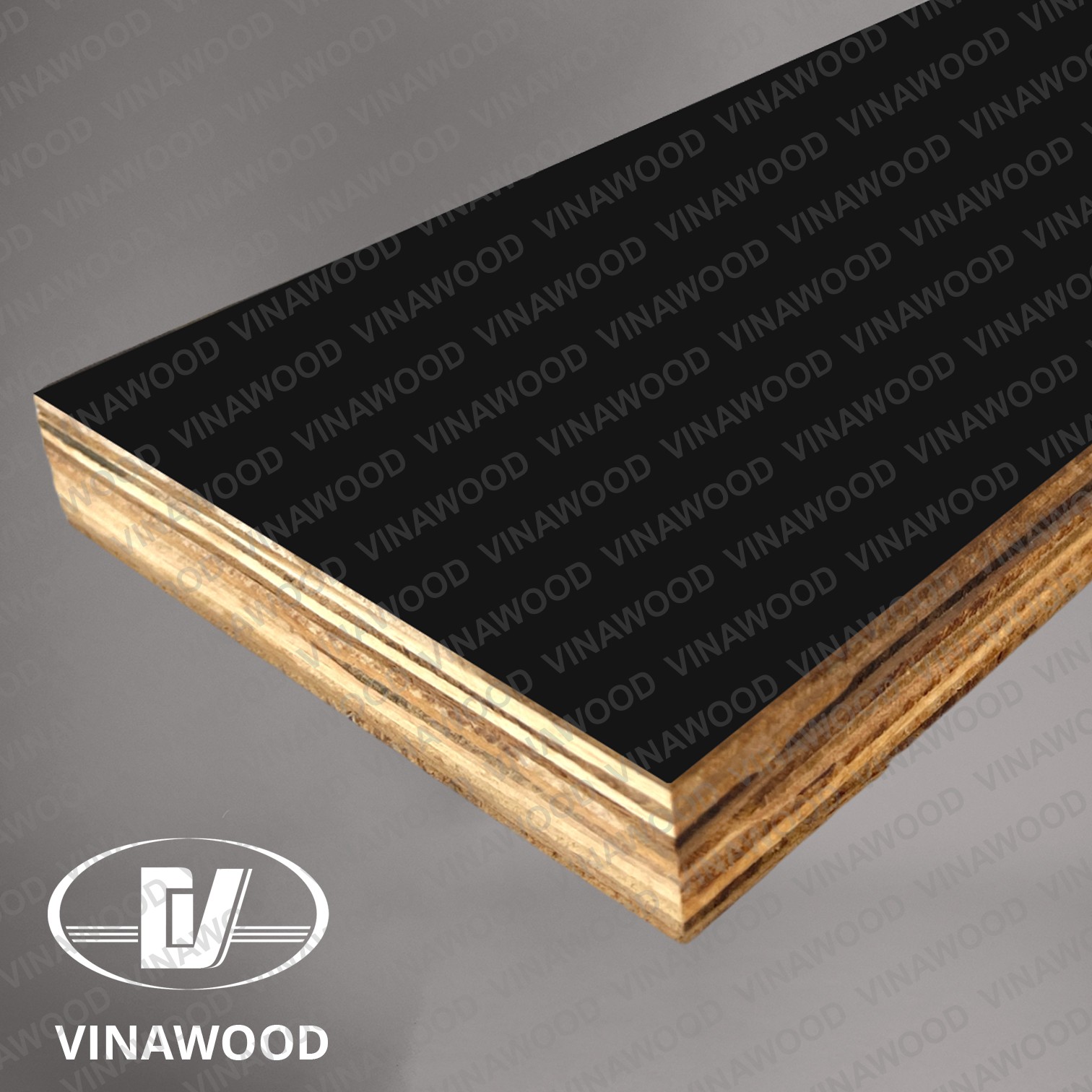
This guide walks the contractor workflow: release agent, post-strip cleaning, edge sealing, storage, repair and retirement. It covers film-faced panels, HDO (High Density Overlay), MatteFace Plywood (MTF — buyers often search it as MDO formwork plywood), and bare BB/OES plyform. Reuse figures below are Vinawood maxima written as “up to N.”
Form oil and release agents
A release agent puts a thin barrier between fresh concrete and the panel face. Skip it and paste bonds during cure, then tearing starts on the strip. The face loses film; the next pour starts behind. The same coat also helps finish quality — fewer bug holes and cleaner form lines when the product matches the face.
Four families show up on most sites.
Barrier-type form oils are petroleum films. They are cheap, easy to spray, and fine for structural work on standard plyform. Heavy coats can stain and stress phenolic film if they pool.
Reactive (chemically active) agents form a soap layer with calcium hydroxide in the paste. They are the usual pick for fair-face and architectural walls on HDO and film-faced sheets. Cost per litre is higher; cost per pour often falls because the face lasts longer.
Water-based emulsions meet low-VOC rules on enclosed decks and in jurisdictions with air-quality limits. Apply thin, wait for the emulsion to break, then pour. Cold weather can freeze them; hot, dry air may need a closer recoat.
Wax or paste compounds suit steel more than plywood. On film-faced faces they leave residue that prints into the concrete. Skip them for overlay panels.
Never use diesel or motor oil. Diesel stains the concrete, softens phenolic film, and fails most VOC and environmental rules. The “saved” drum cost is nothing next to a ruined face and a remedial pour. More detail lives in the concrete form release agent guide.
How to apply form oil
Technique matters as much as the drum. Too little and the paste grabs. Too much and pools sit in joints, then print bug holes.
Use a pump sprayer for large areas, a roller for touch-ups, and a rag only for edges. Aim for a faint sheen — glossy, not dripping. Film-faced and HDO faces need less product than bare plyform because the sealed surface absorbs less.
Apply before every pour. The barrier is spent during cure and strip. Typical timing is one to four hours before placement. In heat above about 30°C, apply closer to pour time so the film does not evaporate or collect dust. In cold weather, warm petroleum products slightly so they spray; keep water-based stock indoors overnight.
Coverage often lands around 5–8 m² per litre on sealed faces and a little less on porous plyform. Follow the label for the product in the yard. Recoat if forms sit through rain or a full day of sun.
Cleaning panels after stripping
The first one to two hours after strip are the highest-value window. Green residue scrapes off. Hard cement needs force that scratches film.
Start cleaning as soon as the panel leaves the frame. If you must wait, stack face-to-face so residue does not bake in sun. A plastic scraper is the primary tool. A stiff nylon brush handles stubborn spots. A pressure washer at about 70–100 bar (1,000–1,500 PSI) works on large sets if you keep a fan tip and stay roughly 30 cm off the face.
Do not use metal scrapers, wire brushes or grinders on phenolic film or HDO. Those tools strip the overlay and expose core. Skip acetone, MEK and lacquer thinner on phenolic film — they attack the resin binder. Clean water plus mechanical action is enough for normal paste.
Edge sealing — the step that saves panels
Cut edges are where moisture enters. Faces can look perfect while water travels the end grain, swells the core and starts delamination from the side. A panel with sealed faces and open cuts fails early.
Use a water-based acrylic edge sealant when you can. Exterior latex paint is an acceptable site substitute. Melted paraffin helps for long storage between jobs. Avoid slow oil-based paints that fight some release agents.
Seal after every field cut, before the next pour. Factory-sealed sheets leave the mill with four edges protected; any saw cut opens new end grain. Reseal when edge paint chips. Brush a thick coat across every exposed veneer layer and let it dry before stacking.
On busy sites, set a sealing station so cut panels do not return to inventory bare. That habit beats buying a higher grade and then leaving cuts open.
Storage between pours
Bad storage is the second common killer after open edges.
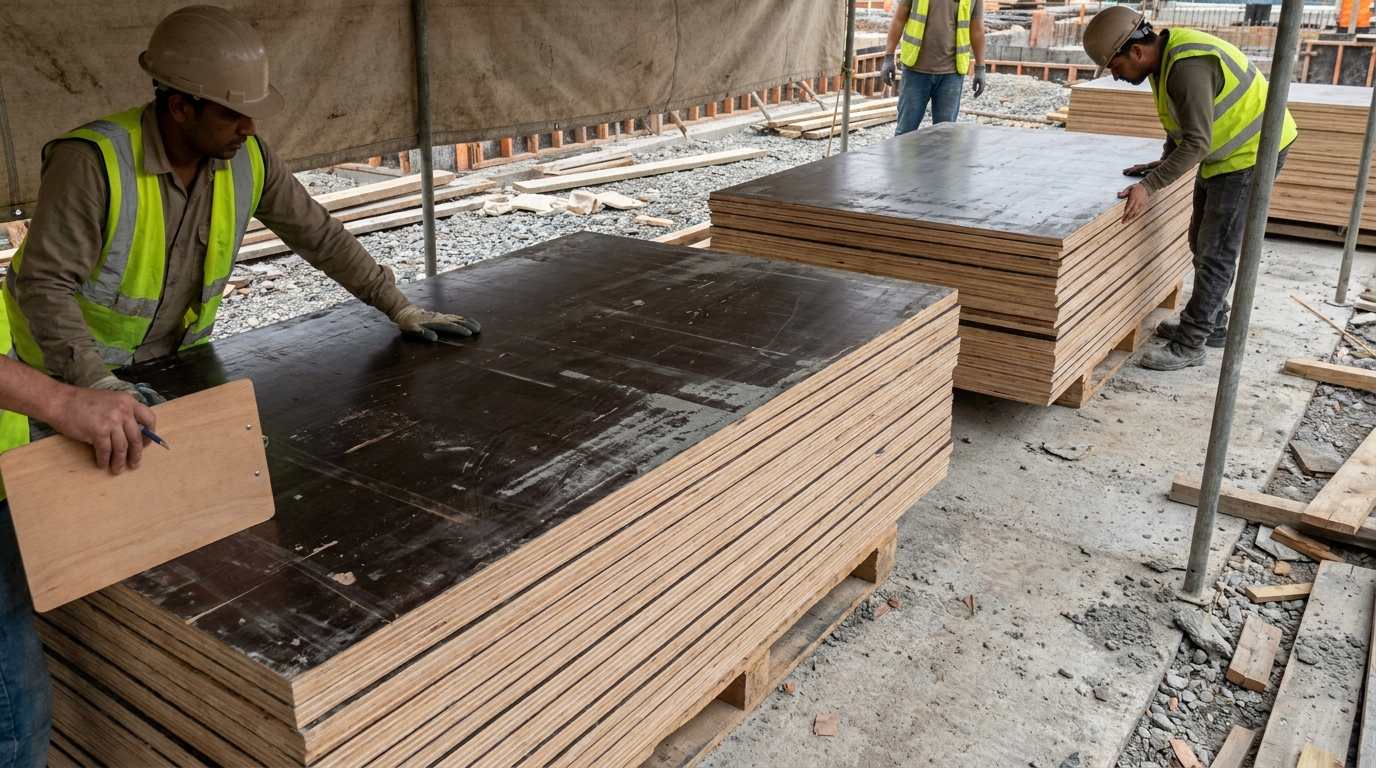
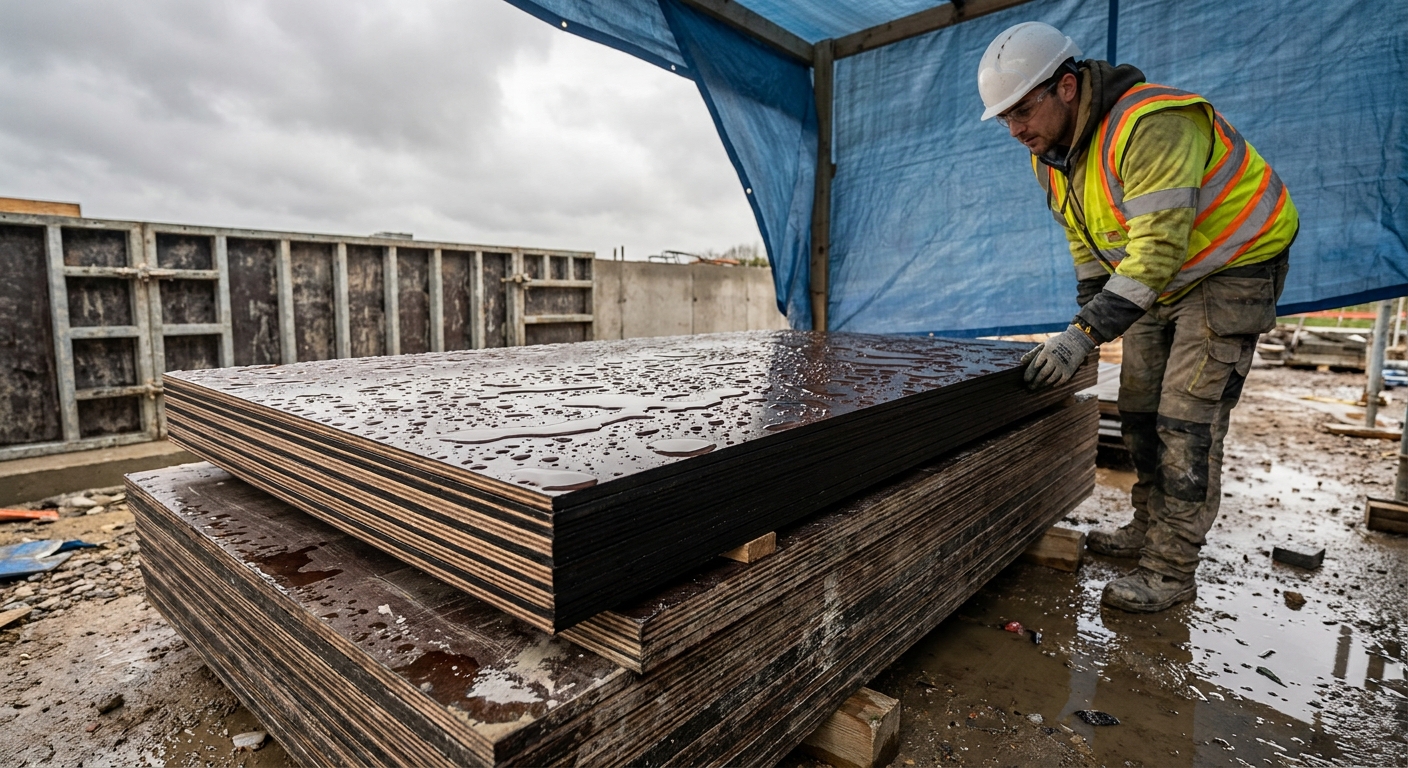
Stack flat on bearers or dunnage at about 600 mm spacing. Never put the bottom sheet on wet ground. Stack face-to-face and back-to-back so casting faces protect each other. Cover against sun and rain with a breathable tarp or a roof; sealed plastic wrap traps moisture and grows mould.
Leave air gaps or spacer sticks every eight to ten panels. Humid yards need that airflow. Surface mould stains concrete and needs cleaning; it is not the same as core rot, but it still costs a pour cycle.
Shade dark phenolic faces in extreme heat. Direct sun can drive surface temperature high enough to age the resin faster. In freezing weather, store panels dry — ice in a wet core can open internal checks.
Repairing minor damage
Small gouges under about 5 mm, local film tears and edge chips can take epoxy wood filler or a formwork patch compound. Clean the area, fill flush, cure, sand, then recoat with release agent. Expect a slight texture change on the next face — fine for buried work, not for Class 1 architectural concrete.
Retire rather than patch when you see true delamination, warping that will not flatten under stack weight, thickness loss over about 1 mm, or roughness that fails the finish class. Tap suspect panels. A dull thud usually means a solid core; a hollow ring suggests separation inside.
When to retire a panel
Maintenance aims to reach the grade maximum under real site habits. It does not mean stretching a worn face forever. A sheet that prints defects costs more in remakes than a replacement bundle.
Retire when surface roughness exceeds the finish class, delamination shows anywhere, thickness varies more than about 1 mm across the face, warp will not correct in 48 hours under stack weight, edge damage runs more than about 25 mm into the face, or mould has entered the core. Surface mould can clean; core mould ends the sheet.
Retired formwork plywood is usually wood waste or temporary site use under local rules — check disposal rules for phenolic-coated wood in your market.
Care tips by panel type
WBP glue means weather- and boil-proof bonding of the veneers. It is water-resistant, not waterproof. The face film and edge paint do the day-to-day moisture work. Plantation-grown cores (Acacia, Eucalyptus and similar) are the feedstock behind Vinawood formwork grades.
| Panel | Bond / class | Care focus | Vinawood reuse max | Common failure |
|---|---|---|---|---|
| Form Basic | WBP MUF, EN 636-2 | Gentle cleaning; seal every cut | Up to 10 | Film abrasion from metal tools |
| Form Extra | Superior Glue MUF, EN 636-2 (same phenolic face family as Form Basic; not Class 3) | Edge seal + covered storage | Up to 15 | Edge swell from open cuts |
| Pro Form Lite | PF Class 3 / EN 636-3, 165 g/m² phenolic film | Light reactive coat; no diesel | Up to 15 | Film lift after diesel or heavy scrape |
| Pro Form | PF Class 3 / EN 636-3 | Edge seal + UV cover | Up to 20 | UV and wet-ground storage |
| HDO Basic | PF Class 3 formply | Edges first — overlay protects the face | Up to 10 | Edge delamination |
| HDO Premium / Premium HD | PF Class 3 formply | Light reactive coat; flat storage | Up to 20 | Edge moisture, over-oiling |
| MatteFace (MTF) | Matte phenolic film (APA MDO is a search/bridge term) | Even coat; avoid kraft-style scrubbing myths | Up to 15 | Uneven oil on the more open matte face |
| BB/OES plyform | No protective overlay | Heavier oiling every pour | Up to 4–8 (site typical) | Surface bond and tear-out |
Only Pro Form, Pro Form Lite and HDO sit in phenolic Class 3. Form Extra’s longer reuse comes from Superior Glue MUF chemistry, not a Class 3 bond and not a heavier face film than Form Basic. Consply is commercial Bintangor and does not belong in this formwork table. P-Form is polypropylene-faced, not Pro Form.
Third-party APA or market HDO ranges sometimes quote higher cycle bands. Treat those as market context. They are not Vinawood catalogue maxima. For cycle planning maths, see how many times you can reuse formwork plywood. Moisture limits and the waterproof myth sit in is shuttering plywood waterproof.
I would rather fund edge sealer, plastic scrapers and a dry rack than chase a higher stamp while cuts stay open. Grade and site procedure have to move together.
MatteFace, MDO search, and naming
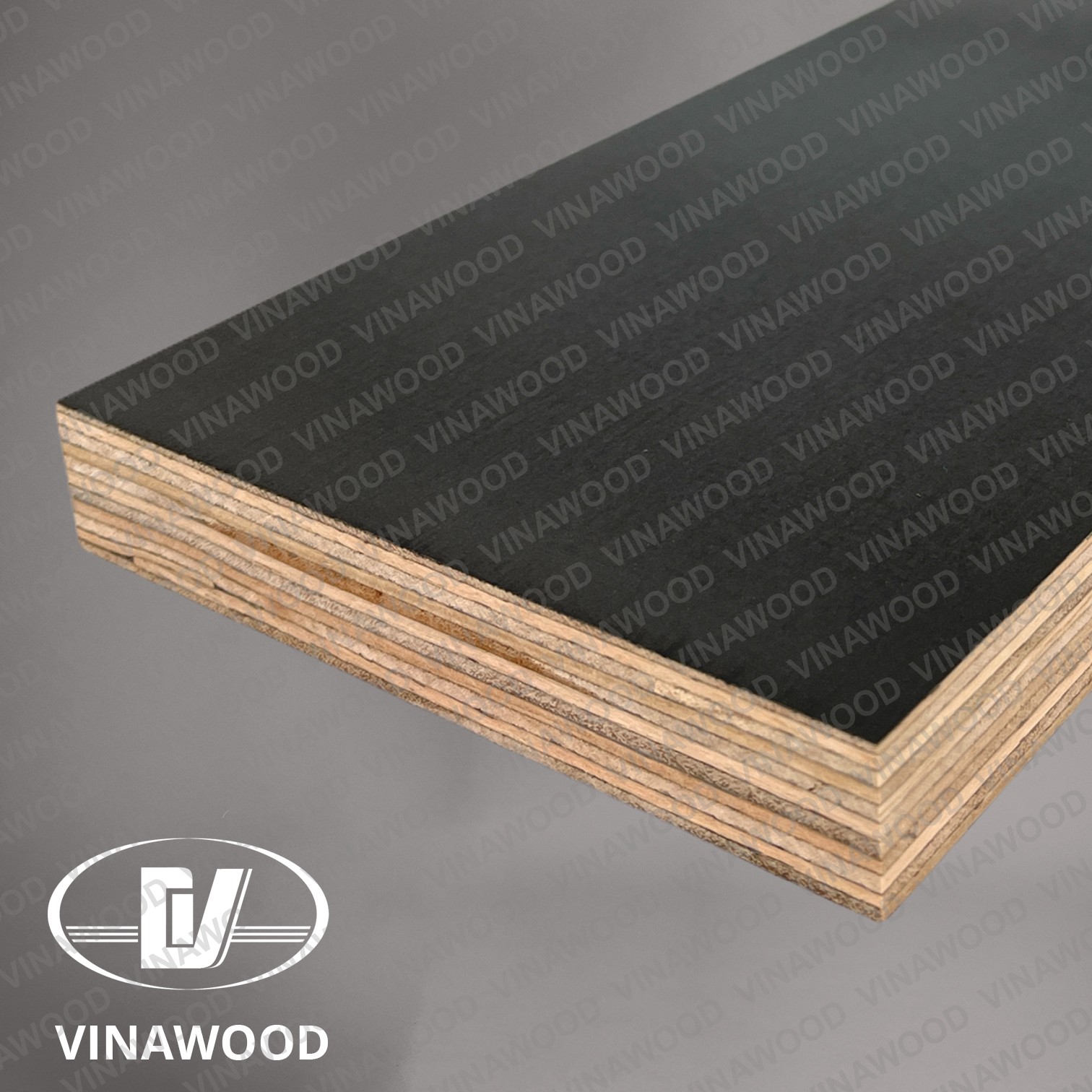
Vinawood’s product name is MatteFace Plywood (MTF). Many buyers still search “MDO formwork plywood.” The product is a matte phenolic surface film for formwork, not kraft paper overlay and not a paint-grade board. Browse the MatteFace plywood collection when the finish needs a matte strike face.
Build the care plan with the mill
Vinawood has manufactured construction plywood in Vietnam since 1992 and ships about 5,000 containers a year to 55+ countries. The export ladder for film-faced work runs through the film-faced plywood collection; North American HDO programmes sit under HDO plywood.
Send pour schedule, finish class, preferred release chemistry, thickness and sheet size through /rfq or /contact?type=quotation for an RFQ. Note how many field cuts you expect per sheet. That detail tells us whether Form Basic, Form Extra, Pro Form Lite or Pro Form is the honest match — not a headline maximum copied from another mill’s brochure.
Category
how-to
Related Markets
Related Countries
Related Products
▶Sources & References (3)
- ACI 347 — Guide to Formwork for Concrete — American Concrete Institute (2014)
- EN 636:2012+A1:2015 — Plywood. Specifications — CEN (2015)
- How Many Times Can You Reuse Formwork Plywood? — Vinawood (2026)