Concrete Scaling: Causes, Severity Levels, and How to Prevent It
Concrete scaling is the flaking or peeling of the hardened surface mortar, driven mainly by freeze-thaw and de-icing salts on a weak or over-finished surface. Here are the causes, the severity levels, how to prevent it, and the narrow role forming honestly plays.
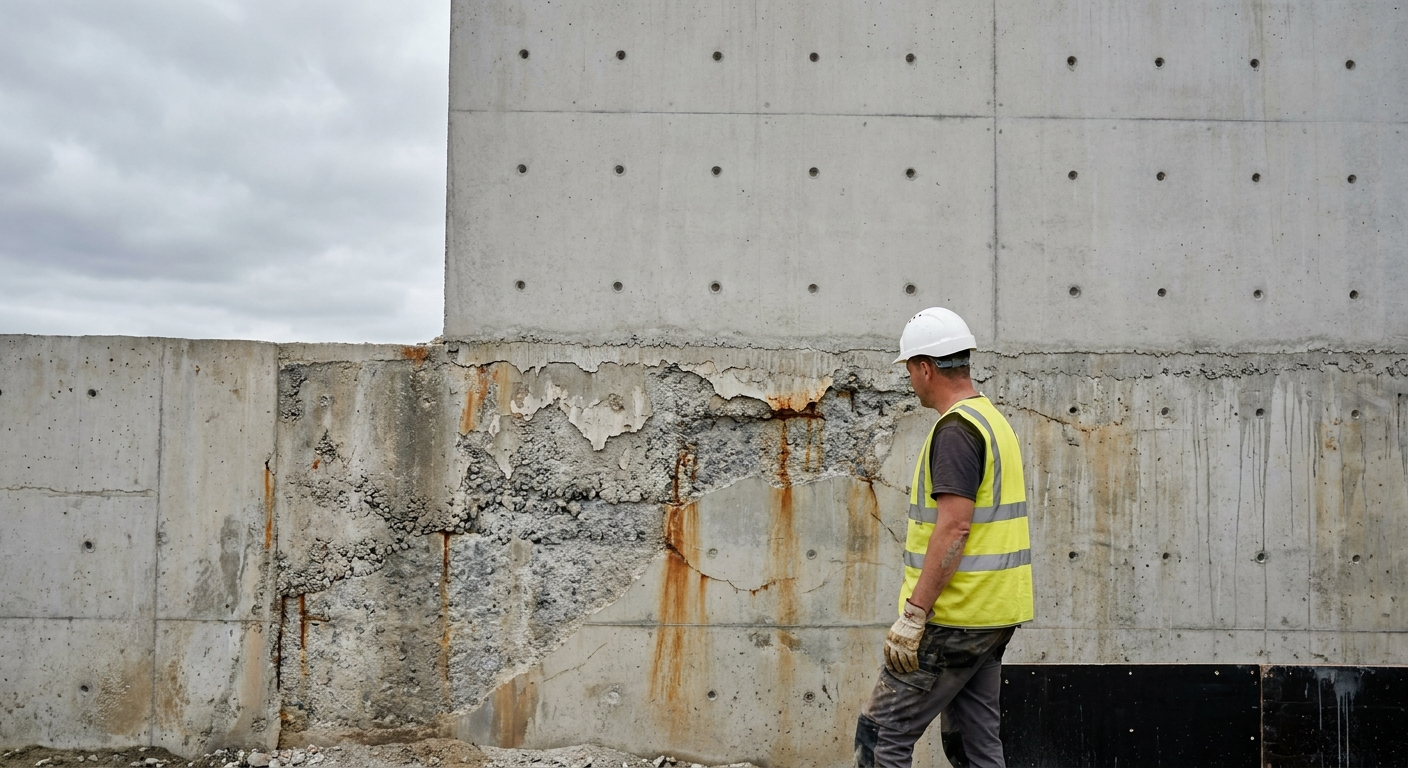
Water expands about 9 percent each time it freezes. On an exterior slab that met de-icing salt through its first winter, that expansion goes to work in the top three millimetres, and the thin mortar skin at the surface lifts away in flakes. That is concrete scaling: the finished surface peeling, flaking, or crumbling off while the concrete underneath stays sound. In worse cases the coarse aggregate is left standing proud of the paste. You see it most on driveways, sidewalks, patios, and other exterior slabs that spend a winter under salt and repeated freezing.
From a formwork panel maker's seat, the honest version is that scaling is a slab-and-exposure problem far more than a construction-panel one. It develops in the top few millimetres of flatwork, months after the pour, driven by frost, salt, and how the surface was finished and cured. The form face that shaped a wall or a column does not set the wear resistance of a troweled slab surface. Forming has a narrow role, and we get to it below.
What concrete scaling is
Scaling is a shallow loss of the surface mortar, the cement-and-sand skin that sits above the aggregate. It usually begins as small flakes or a peeling top layer no more than about 3 mm (1/8 in) deep. Left to keep cycling through frost and salt, it deepens, spreads, and eventually exposes the coarse aggregate across a wide area. The concrete below the scaled layer is often perfectly sound. What failed is the surface skin, which never gained or kept the density it needed to resist the forces working on it.
The reason scaling matters to name correctly is that it gets confused with deeper damage. It is a surface-mortar loss, not a structural fracture. Our guide to concrete spalling covers the deeper kind, where concrete breaks away into the cover and can reach the reinforcing steel. Scaling and spalling both take material off the surface, but scaling is shallow and mortar-only while spalling goes deep and is often driven by something underneath pushing out.
Severity levels: how to read what you have
| Severity | What you see | Typical depth | What it means |
|---|---|---|---|
| Light | Small flaked patches, minor peeling of the surface skin, no aggregate showing | Up to about 3 mm (1/8 in) | Mostly cosmetic. Often stabilises if the cause is removed and the surface is sealed. |
| Moderate | Larger flaked areas, mortar lost across a visible zone, fine aggregate starting to show | Roughly 3 to 10 mm (1/8 to 3/8 in) | Surface is actively losing material. Needs the cause addressed and usually an overlay or resurfacer. |
| Severe | Coarse aggregate exposed and standing proud, mortar gone across a wide area | Over 10 mm (3/8 in), into the aggregate | The wearing surface is lost. Resurfacing or a bonded overlay is the realistic fix. |
The jump from light to moderate is the one to watch. Light scaling that is left under the same salt and frost load rarely stays light. Once the skin is broken, water and salt reach a little deeper each cycle, and the loss accelerates.
What actually causes scaling
Scaling has a well-understood set of causes, and every one of them sits with the concrete, the finishing crew, or the winter exposure. None of them is the form panel. The headline driver is freeze-thaw. Water held in the surface pores expands about 9% each time it freezes, and repeated cycling fatigues the thin skin until it breaks apart, which is why scaling peaks in late winter and early spring. De-icing salt sharpens all of it, pulling more water into the top layer and worsening the frost damage, and first-winter concrete that has not fully matured is the most vulnerable of all.
The most common workmanship cause is finishing over bleed water. Trowel while bleed water still sits on the surface and you work that water and the weak fines back into the top skin, sealing a high water-cement, low-strength layer into the exact zone that has to survive frost. Two more causes live in the mix and the schedule. Too little entrained air leaves freezing water nowhere to expand without tearing the paste, so for any exterior slab in a freeze-thaw climate air entrainment is the single biggest mix-design defence. A surface finished too early or cured too briefly never builds the strength it needs, and a short cure leaves a soft skin that scales. Behind all of them is water: anything that raises the water-cement ratio at the surface, from an over-wet mix to a sprinkle that eases troweling, weakens the skin and invites the scale.
We have seen this in our own customers' field reports from northern job sites: where an exterior slab scales through its first winter, the trail runs back to air content, finishing timing, or a salted surface, not to the sheet that formed the pour.
Where formwork fits, honestly
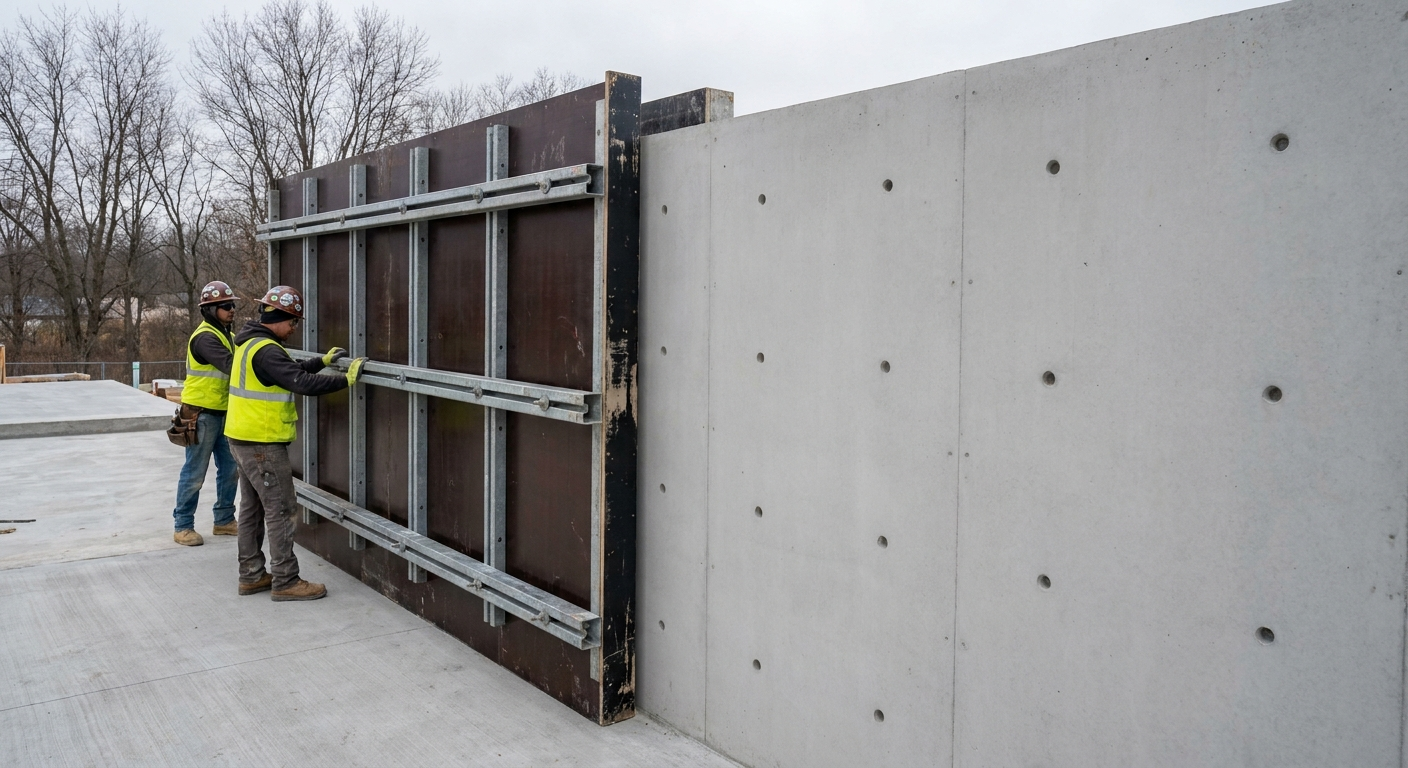
Scaling is overwhelmingly a flatwork phenomenon, and flatwork is troweled from the top, not formed against a panel. So for slabs, the forming stage has almost nothing to do with it. The narrow, honest connection is on vertical and architectural faces that are cast against a panel. There, a sound, non-absorbent film face gives a denser, more uniform surface skin to start from, and a dense skin resists frost a little better than a porous one. A worn or absorbent face can leave a patchy, locally weaker surface.
That is a surface-uniformity effect, and it is real but small. It does not reach the troweled top of a slab, which is where the great majority of scaling happens. Anyone told that the right plywood prevents scaling has been sold a story the material cannot back up. The panel shapes the concrete. Frost, salt, air content, and finishing decide whether a surface scales.
When to investigate further
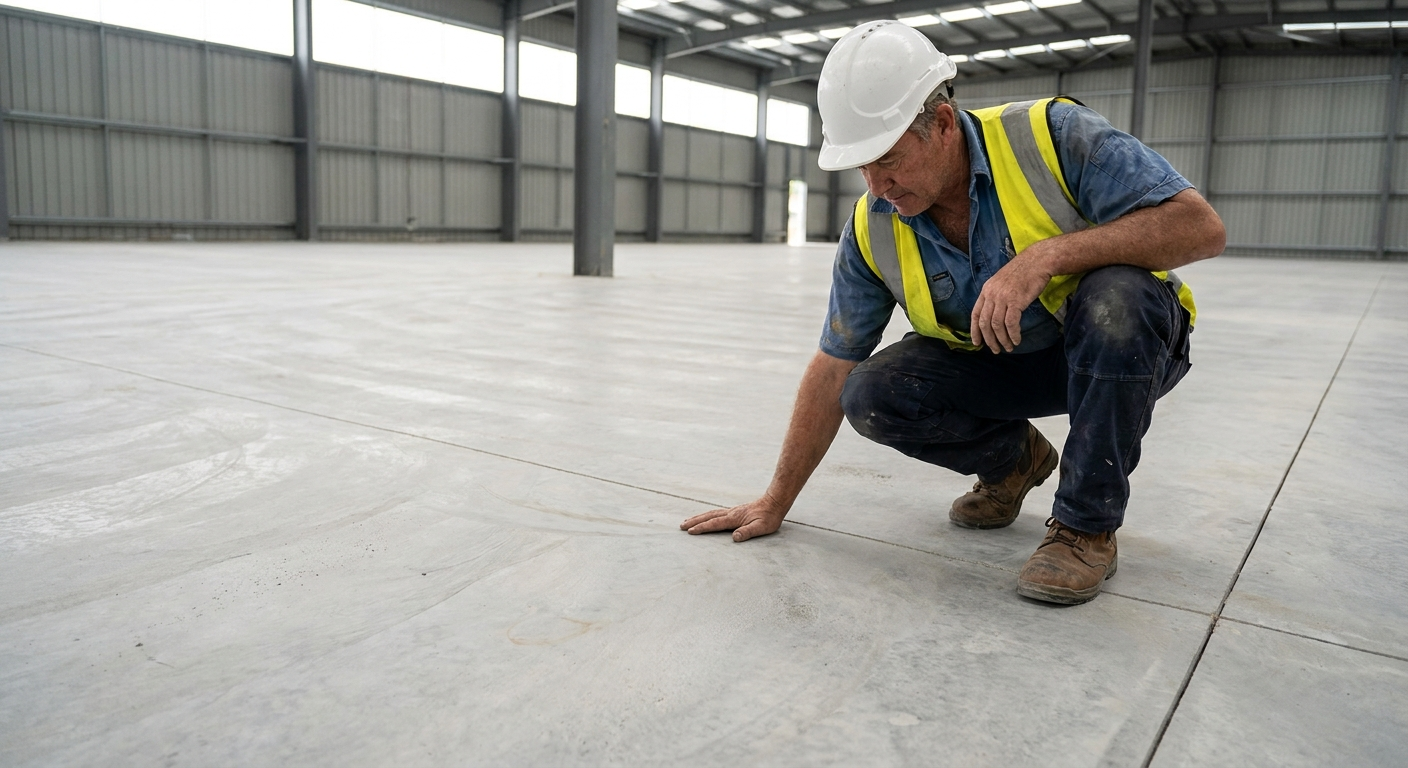
Light scaling on a driveway is usually a treat-and-seal job, not an investigation. It is worth a closer look when the scaling is moderate or severe, when it spreads quickly across a single season, or when it shows up on a slab that should have been mature enough to resist it. Before assuming bad concrete, check the ordinary causes first, in order: was the mix air-entrained for the exposure, was the surface finished over bleed water, was the curing cut short, and was de-icing salt used on the surface in its first winter. Those four questions resolve most cases.
A surface that keeps scaling after it has been sealed, or one losing material fast enough to expose aggregate, may indicate a weak surface layer that runs deeper than a sealer can reach. That is an assessment, not a guess, and it points toward resurfacing rather than another coat of sealer.
Prevention checklist
Scaling is far cheaper to prevent than to repair, and prevention is almost entirely a mix, finishing, and curing discipline set before and during the pour.
- Specify air entrainment for any concrete exposed to freeze-thaw. Confirm the air content is right for the exposure class. This is the front-line defence.
- Do not finish over bleed water. Wait until the bleed water has evaporated before floating and troweling. Never work surface water back into the skin.
- Cure fully. Keep the surface moist for the full curing period with wet curing, a curing compound, or sheeting. A short cure equals a weak, scale-prone surface.
- Keep de-icing salts off first-winter concrete. Give a new slab a full season to mature before it meets road salt. Use sand for traction that first winter where you can.
- Control the water. Hold the water-cement ratio in spec and never sprinkle water on the surface to ease finishing.
- Seal exterior flatwork with a penetrating sealer once the concrete has cured and dried, and reapply on a maintenance schedule to slow water and chloride entry.
Repair options
The repair depends on how deep the scaling has gone. Match the fix to the severity rather than reaching for the heaviest option every time.
- Clean and seal light scaling. For a surface still mostly intact, remove the loose flakes, clean the surface, and apply a penetrating sealer to slow further water and salt entry. This stabilises many light cases.
- Resurfacer or thin overlay for moderate scaling. A polymer-modified cement resurfacer bonded to a prepared surface restores a wearing layer where the mortar skin has gone but the slab below is sound.
- Bonded overlay for severe scaling. Where aggregate is exposed across a wide area, grind or shot-blast back to sound concrete and place a bonded overlay or topping. This is the durable answer when a thin coat would just scale again.
Whatever the level, address the cause first. A resurfacer over concrete that is still under-air-entrained and salted every winter buys time and then scales in turn.
How the right formwork supports a quality vertical finish
For the formed parts of a structure, walls, columns, and architectural faces, a clean, non-absorbent form face gives the fresh surface a dense, uniform skin to start from, and it strips cleanly without tearing green concrete at the edges. That evenness helps a formed face resist surface trouble and read consistently across an elevation. It is the front-end contribution forming genuinely makes.
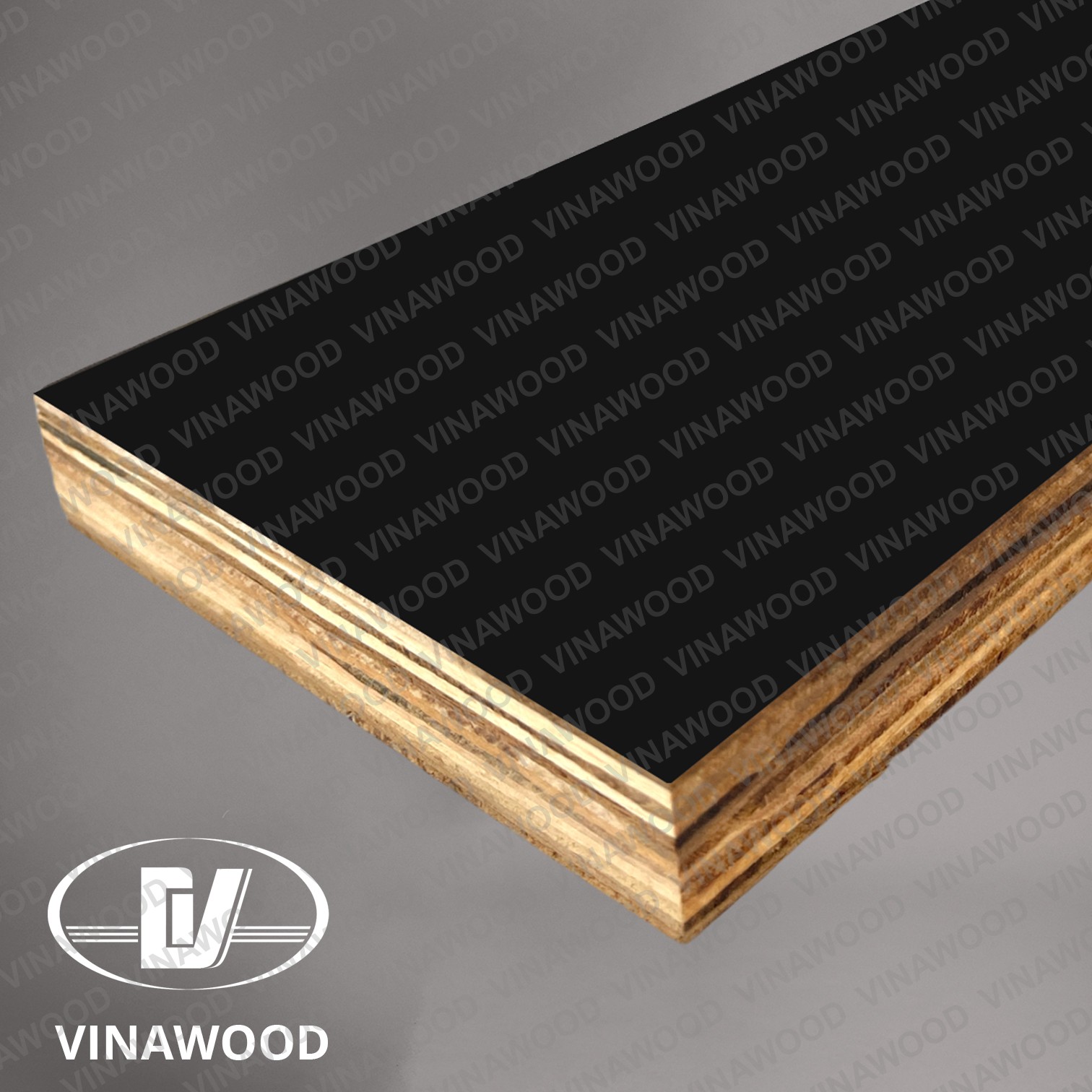
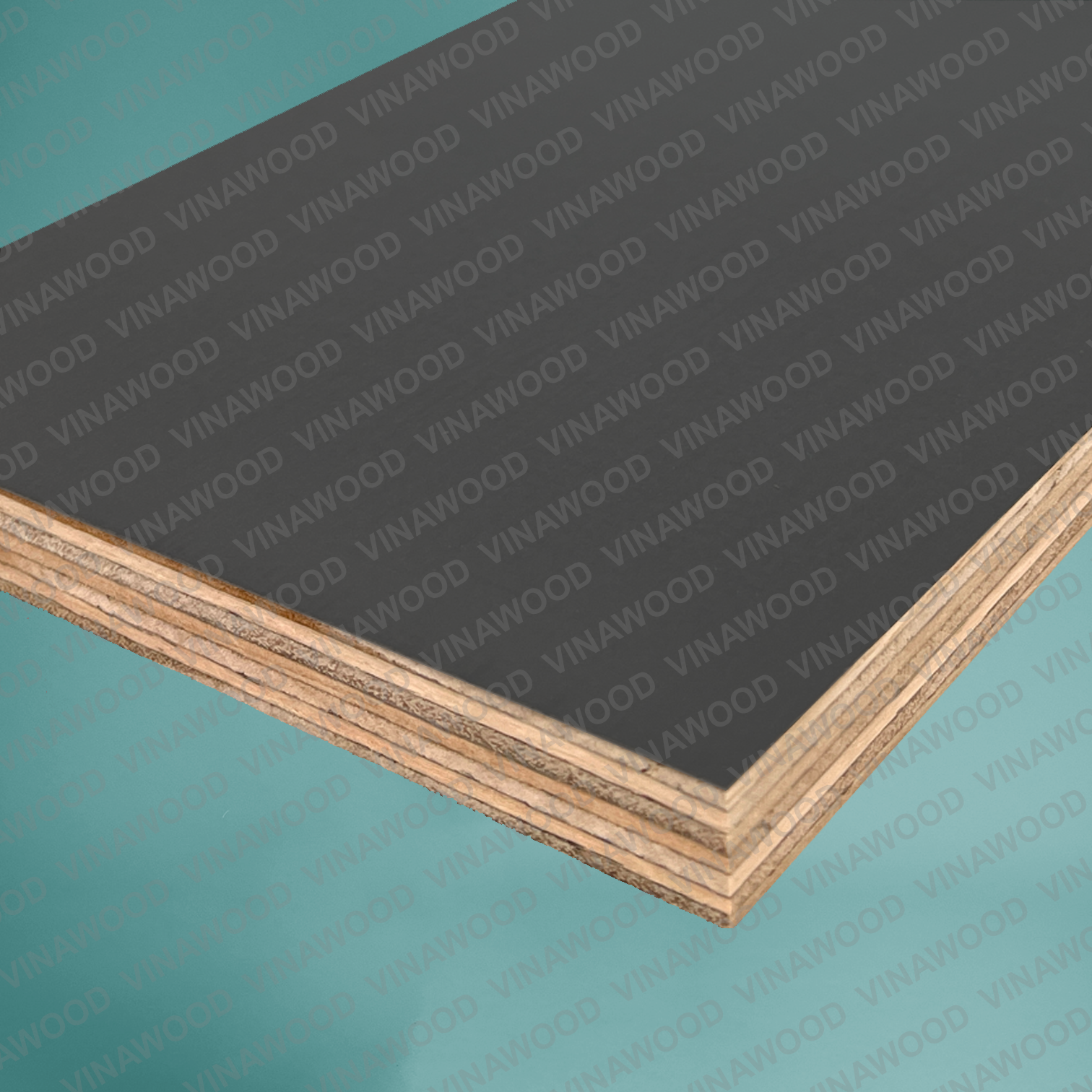
Vinawood manufactures formwork plywood in Vietnam with factory-sealed edges and 100% individual sheet inspection across the range. North American contractors working to imperial sizes can look at the HDO plywood range, where a high-density overlay holds a clean, low-absorbency face across repeat pours. The HDO Basic 1SF Formply suits general forming, and the HDO Premium 2S Formply is a WBP phenolic panel to EN 636-3 rated up to 20 reuse cycles for finish-critical, high-rotation work. None of these prevents scaling, which is decided by air entrainment, finishing, curing, and winter exposure. What a sound form face does is give the formed surface the best possible start. For how the forming grades compare, the fair-faced concrete guide lays them out, and the wider surface-quality family this sits in is covered alongside concrete dusting and concrete crazing.
About Vinawood
Vinawood has manufactured plywood in Vietnam since 1992 and ships more than 5,000 containers a year to 55+ countries. The formwork range carries full CE marking to EN 13986 for Europe and EPA TSCA Title VI / CARB P2 compliance for the United States, with factory-sealed edges and 100% individual sheet inspection across a 12-step manufacturing process. Forming plywood shapes the concrete; it does not finish or cure the wearing surface where scaling is won or lost, and we would rather a buyer hear that straight. For a factory-direct quote with your panel sizes and project volume, contact our sales team.
Category
guides
Related Markets
Related Countries
Related Products
▶Sources & References (2)
- Concrete Slab Surface Defects: Causes, Prevention, Repair (IS177) — Portland Cement Association (2001)
- Guide to Durable Concrete (ACI 201.2R) — American Concrete Institute (2016)