Concrete Dusting: Why Slab Surfaces Go Powdery and How to Stop It
Concrete dusting is a weak, powdery surface layer that rubs off under traffic. It comes from bleed-water finishing, poor curing, carbonation from unvented heaters, and low surface water control, not from the forming panel. Here is what causes it, how to fix it, how to prevent it, and the narrow role…
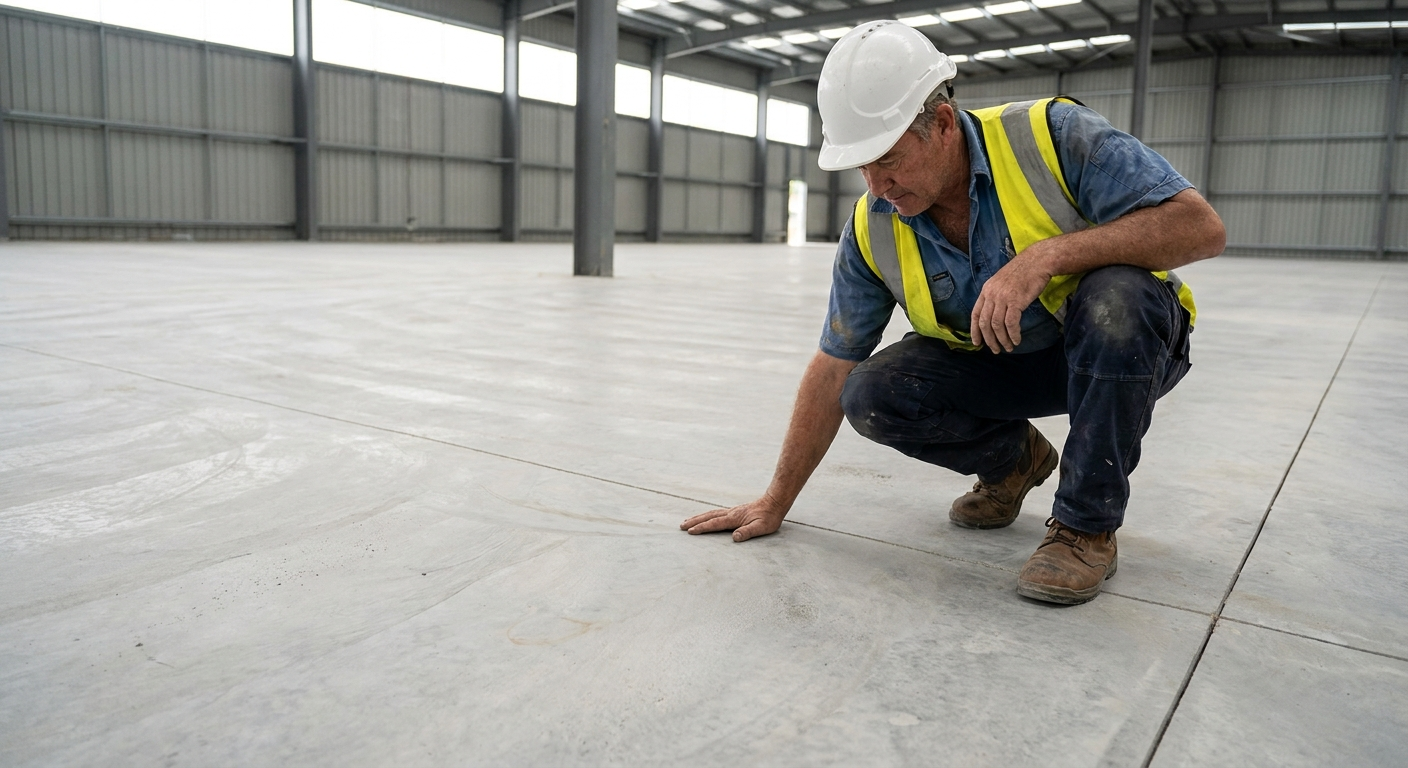
A concrete floor is supposed to stay closed and hard at the surface. When it instead gives off a fine chalky powder that rubs onto your hand, your shoes, and the tyres of every forklift that crosses it, you have surface dusting. It is one of the most common complaints on garage slabs, basement floors, and industrial warehouse floors, and it is almost always a question about the slab, not about anything that shaped it.
The honest version, from a plywood manufacturer's seat, is that dusting lives at the very top millimetre of the slab and traces back to how the concrete was mixed, finished, and cured. The form face that shaped a wall or the underside of a slab does not set the wear resistance of the wearing surface. We will get to where forming genuinely fits, because it does, narrowly. First, what dusting actually is, why it differs from the white deposit people confuse it with, what causes it, and how to stop it.
What concrete dusting is
Dusting is a weak, friable layer at the surface of hardened concrete that breaks down into a fine powder under foot or wheel traffic. The powder is mostly free lime and under-strength cement fines, the material that ends up concentrated in the laitance at the very top of the slab. Underneath that thin powdery skin the concrete can be perfectly sound. The problem is that the top layer never developed the strength the rest of the slab has, so it abrades away as dust instead of holding as a hard wearing surface.
You notice it because the powder keeps coming back. Sweep it, and a day of traffic produces more. That persistence is the tell that this is a weak surface layer regenerating under abrasion, not loose construction dirt sitting on a sound floor.
Dusting vs efflorescence: not the same problem
The two get mixed up constantly, and they have different causes and different fixes. Efflorescence is a white crystalline deposit left when soluble salts migrate to the surface with moisture and the water evaporates. Dusting is a weak surface that powders under abrasion. One is a salt film sitting on top; the other is the surface itself coming apart. Naming which you have is the first decision, because treating a weak surface as if it were a salt stain wastes effort.
| Feature | Dusting | Efflorescence |
|---|---|---|
| What you see | Fine chalky powder that rubs off | White crystalline film or blush |
| What it is | Weak, under-strength surface layer (free lime, cement fines) | Soluble salt deposit carried up by moisture |
| The test | Rub a finger across it: powder comes off and keeps returning under traffic | Often wipes or washes off; returns with moisture movement, not abrasion |
| Root cause | Bleed-water finishing, poor curing, carbonation, low surface strength | Salt plus a moisture path to the surface |
| Primary fix | Harden the surface (silicate densifier) or remove and overlay | Address the moisture source, then clean the deposit |
Why concrete dusts: the surface-strength chain
Dusting comes down to one thing, a top layer that hardened weak. Several conditions push the surface in that direction, and on a problem slab more than one of them is usually at work.
- Too much water at the surface. A high water-cement ratio, or a slab that was wetted or sprinkled to make troweling easier, leaves the top layer thin in cement and rich in water. That layer cures soft. Excess bleed water carries fine, weak material up to the surface as laitance.
- Finishing over bleed water. The most common single cause. Troweling while bleed water is still sitting on the slab works that water and the fine laitance back down into the surface, sealing a weak, high water-cement layer into the very zone that has to resist wear. Finishing has to wait until the bleed water has gone.
- Carbonation during curing. When unvented combustion heaters or gas burners run in an enclosed pour during cold weather, the carbon dioxide they give off reacts with the fresh surface before it has hardened. That carbonation produces a soft, dusty, chalky skin. It is a classic winter-slab failure and one of the more overlooked causes.
- Inadequate or short curing. Concrete needs to stay moist to develop strength at the surface. A slab left to dry out too soon, or cured for too short a time, never builds the surface strength it should, and the top layer stays friable.
- Early freezing. If the surface freezes before it has gained strength, the freezing disrupts the cement hydration at the top and leaves a weak, dusting layer behind.
- Dirty aggregate or excess fines. Clay, silt, or too high a proportion of fine material in the mix raises the water demand and weakens the surface paste, which feeds the same powdery result.
Every item on that list sits with the mix, the finishing timing, the curing, or the air quality during the pour. That matters for the next section.
Where dusting comes from, and where it does not
Dusting originates in mix design, finishing discipline, curing, and the cure environment. It does not originate in the formwork or the panel face. The form face controls the imprint and texture of a formed surface, the wall finish or the soffit pattern. It does not set the chemistry or the wear resistance of a slab's wearing surface, which is troweled and finished from the top long after the forming material has done its job. A slab dusts because of what happened to its top millimetre during placement and cure, not because of what shaped the concrete below it.
From a Vietnamese mill's seat, we say this plainly because we see the misattribution: when a floor dusts, the trail leads to bleed-water finishing, a heater left unvented, or a cure cut short, not to the sheet that formed the pour. A panel can present a clean, dense formed surface and help a crew strike cleanly. It cannot reach up and harden the troweled top of a slab.
When to investigate further
Light surface dusting on a sound slab is usually a treat-and-move-on job. Persistent dusting that keeps returning after a densifier or sealer has been applied may indicate a deeper weak layer rather than a thin surface skin, and that is worth investigating before throwing more product at it. Conservative first steps: check the curing records for the pour, ask whether finishing happened over bleed water, and confirm whether combustion heaters were vented during a cold-weather placement. Those three questions resolve most cases. A floor that still dusts after the surface has been hardened may have a weak layer thick enough to need mechanical removal and an overlay, which is an assessment rather than a guess.
How to fix existing dusting
The fix depends on how deep the weak layer goes. For most slabs it is shallow and can be hardened in place.
- Sweep and vacuum first. Remove all the loose powder so you can see and treat the actual surface. This also tells you how much is coming off, a rough read on severity.
- Apply a penetrating silicate densifier for light to moderate dusting. Sodium or lithium silicate reacts with the free lime in the surface to form additional hardened material, binding the friable layer into something that resists abrasion. This is the standard first-line fix and works well when the weak layer is thin.
- Seal light cases. A penetrating sealer can lock down a minor dusting surface and is sometimes enough on its own for low-traffic floors.
- Mechanical removal and overlay for severe cases. Where the weak layer is too thick for a densifier to reach sound concrete, grind or shot-blast the surface back and apply a bonded overlay or topping. This is the answer when hardening alone keeps failing.
Match the fix to the depth. A densifier on a thin weak skin is durable; a densifier over a thick weak layer buys a little time and then the dusting returns.
How to prevent it
Prevention is entirely a placement-and-cure discipline, and it costs far less than fixing a dusting floor afterward.
- Control the water. Keep the water-cement ratio in spec and never sprinkle water onto the surface to ease finishing. Added surface water is added surface weakness.
- Do not finish over bleed water. Wait until the bleed water has evaporated before floating and troweling. This single habit prevents the most common form of dusting.
- Cure properly. Keep the surface moist with wet curing, curing compound, or sheeting for the full curing period so the top layer gains strength. Short cure equals weak surface.
- Ventilate combustion heaters. In cold-weather enclosed pours, vent gas and propane heaters to the outside so their carbon dioxide does not carbonate the fresh surface. Use indirect-fired heaters where possible.
- Protect from early freezing. Keep the slab above freezing until it has gained enough strength, using insulated blankets or heated enclosures in winter.
- Watch the mix. Clean aggregate and a sensible fines content keep the surface paste strong.
Where good forming still helps, honestly
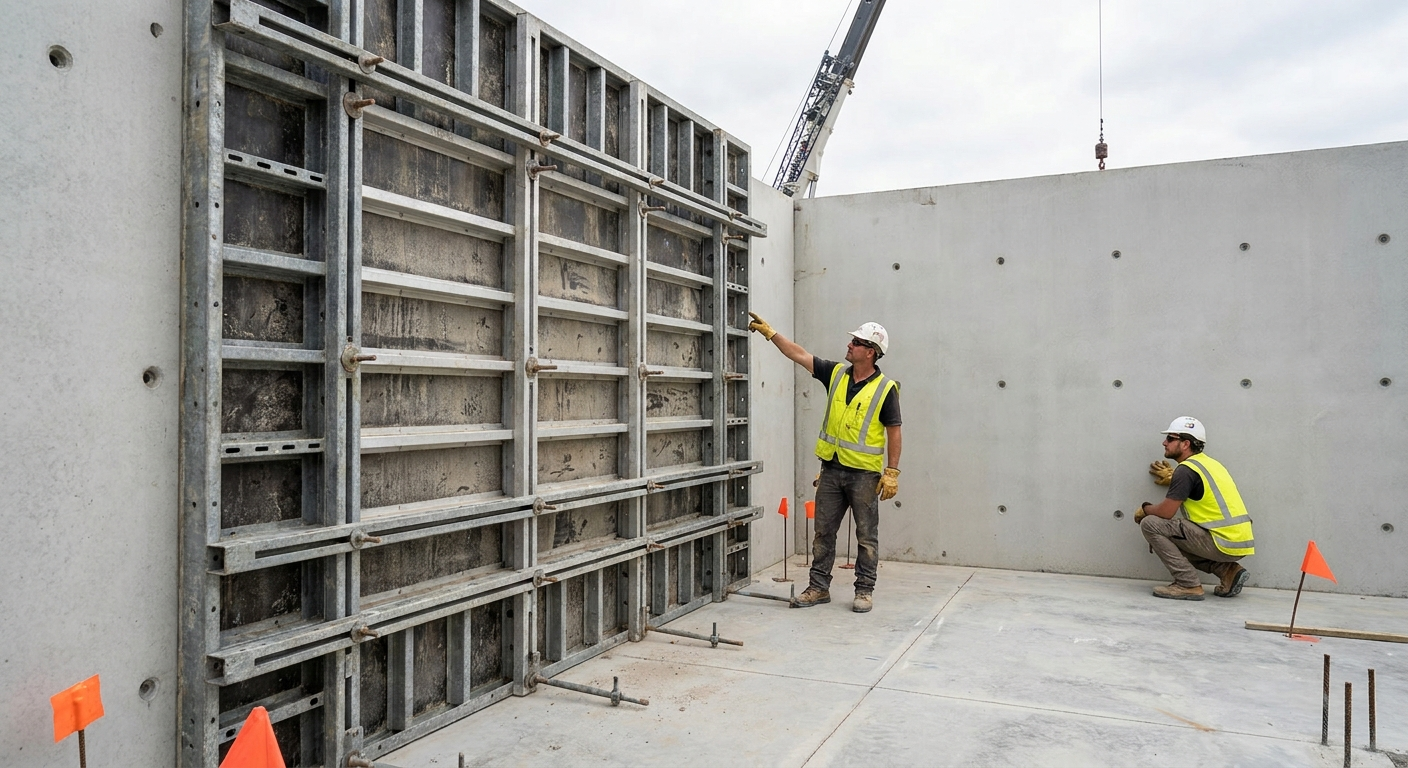
The forming stage has a supporting, not causal, role here, and it is worth stating where it genuinely contributes so the line stays honest. A clean, non-absorbent film face produces a uniform, dense formed surface on the parts of a structure that are formed, walls, columns, and soffits, and a non-absorbent face does not pull water unevenly out of the surface against it the way a raw, thirsty panel can. That helps surface consistency on formed faces. It does nothing for the troweled top of a slab, which is where dusting lives.
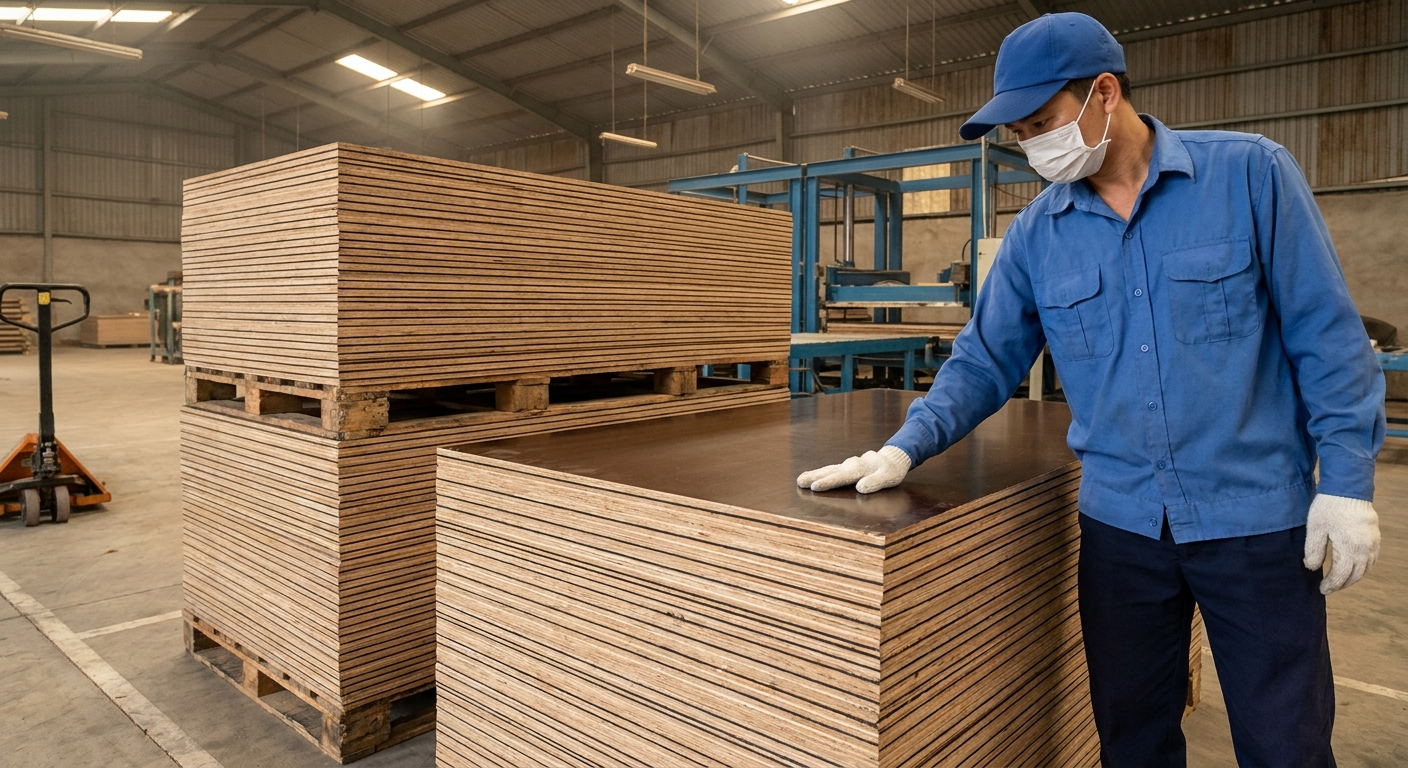
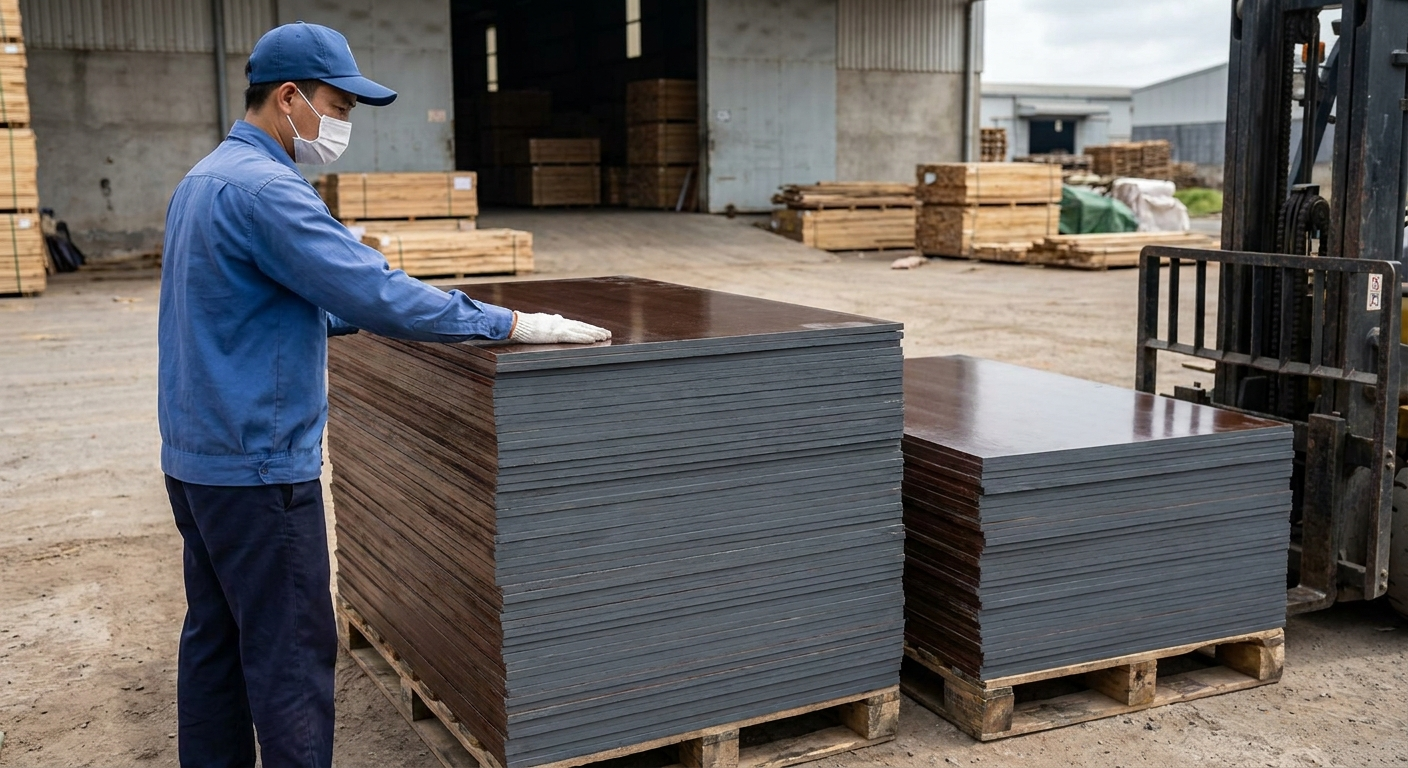
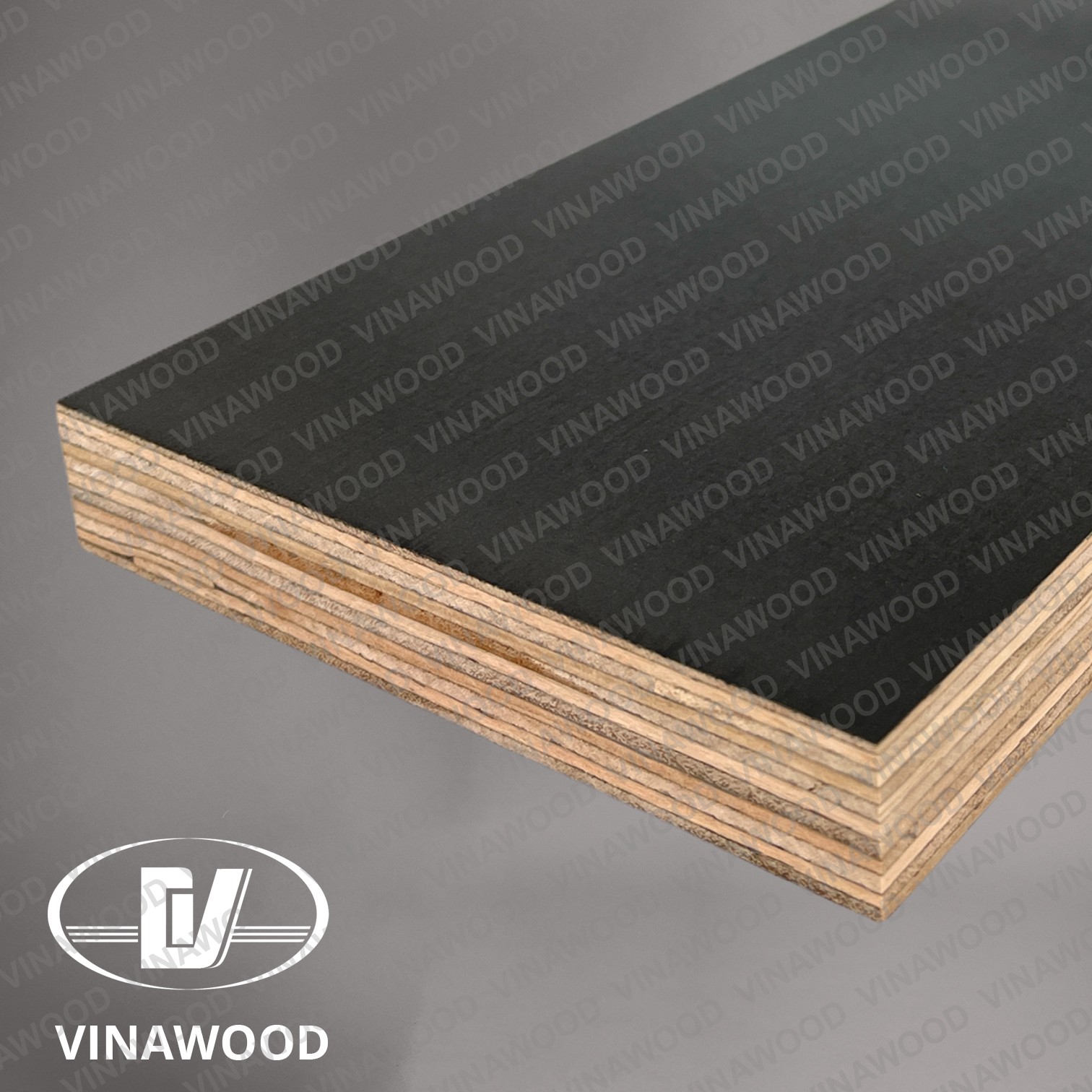
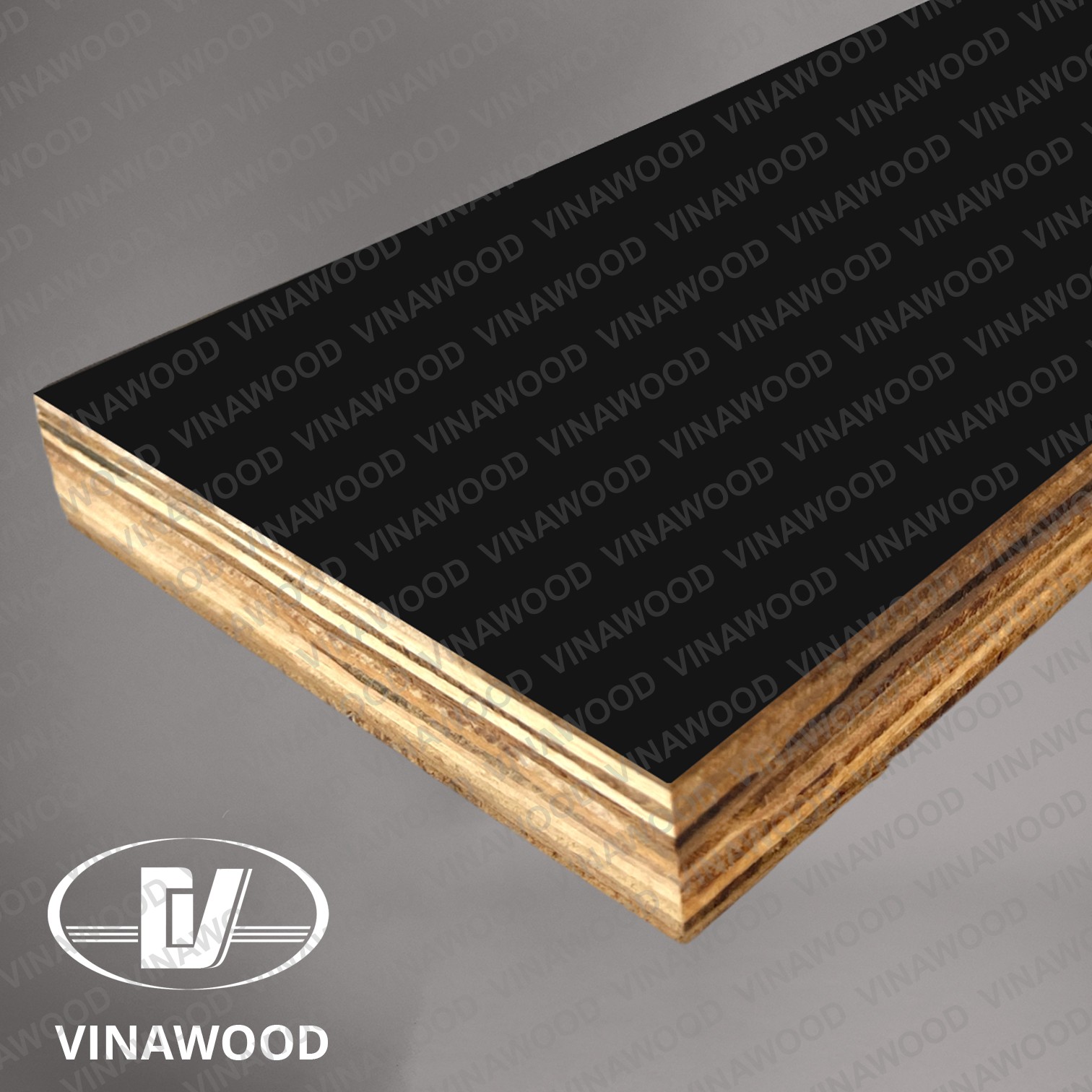
So the contribution is real and narrow: consistent formed surfaces and clean striking that does not damage green edges. For the striking side of that, our guide to formwork removal time covers when to strike without tearing green concrete, and the release agent guide covers how release practice affects the formed surface. Vinawood manufactures film-faced plywood in Vietnam with factory-sealed edges and 100% individual sheet inspection; for finish-critical, repeat-use forming, Pro Form is a WBP phenolic panel to EN 636-3 rated up to 20 reuse cycles. None of that hardens a slab surface. It gives the formed parts of a structure a sound, consistent face to start from. The wearing surface is earned at finishing and curing, and that is where a dusting problem is won or lost. For how the forming grades compare, the concrete form plywood guide lays them out, and the surface-quality family this sits in is covered alongside concrete spalling.
About Vinawood
Vinawood has manufactured plywood in Vietnam since 1992 and ships over 5,000 containers a year to 55+ countries. The formwork range runs from melamine-core (MUF) Form Basic and Form Extra to phenolic-bonded Pro Form for Europe and Commonwealth markets, each with a phenolic face, factory-sealed edges, and 100% individual sheet inspection across the range. Panels ship with full CE EN 13986 and EPA TSCA Title VI documentation. Forming plywood shapes the concrete; it does not finish or cure the wearing surface, and we would rather a buyer hear that straight. For a factory-direct quote with your panel sizes and project volume, contact our sales team.
Category
guides
Related Markets
Related Countries
Related Products
▶Sources & References (2)
- Concrete Slab Surface Defects: Causes, Prevention, Repair (IS177) — Portland Cement Association (2001)
- Guide to Durable Concrete (ACI 201.2R) — American Concrete Institute (2016)