Film Faced Plywood vs MDO vs HDO: Which Panel Do You Need?
Film faced vs MDO vs HDO plywood: overlay, reuse and concrete finish. MatteFace is the forming panel buyers search as MDO. Vinawood, est. 1992, 55+ countries.
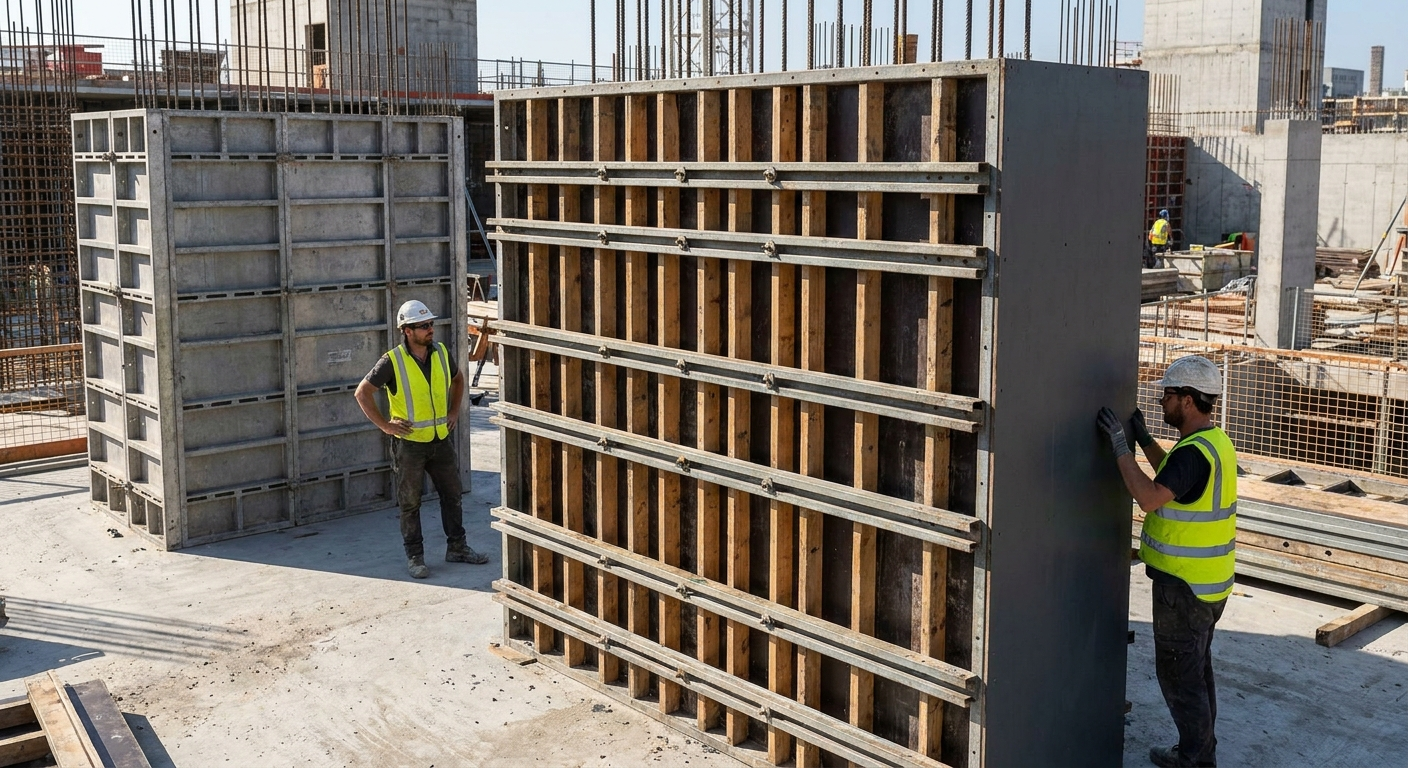
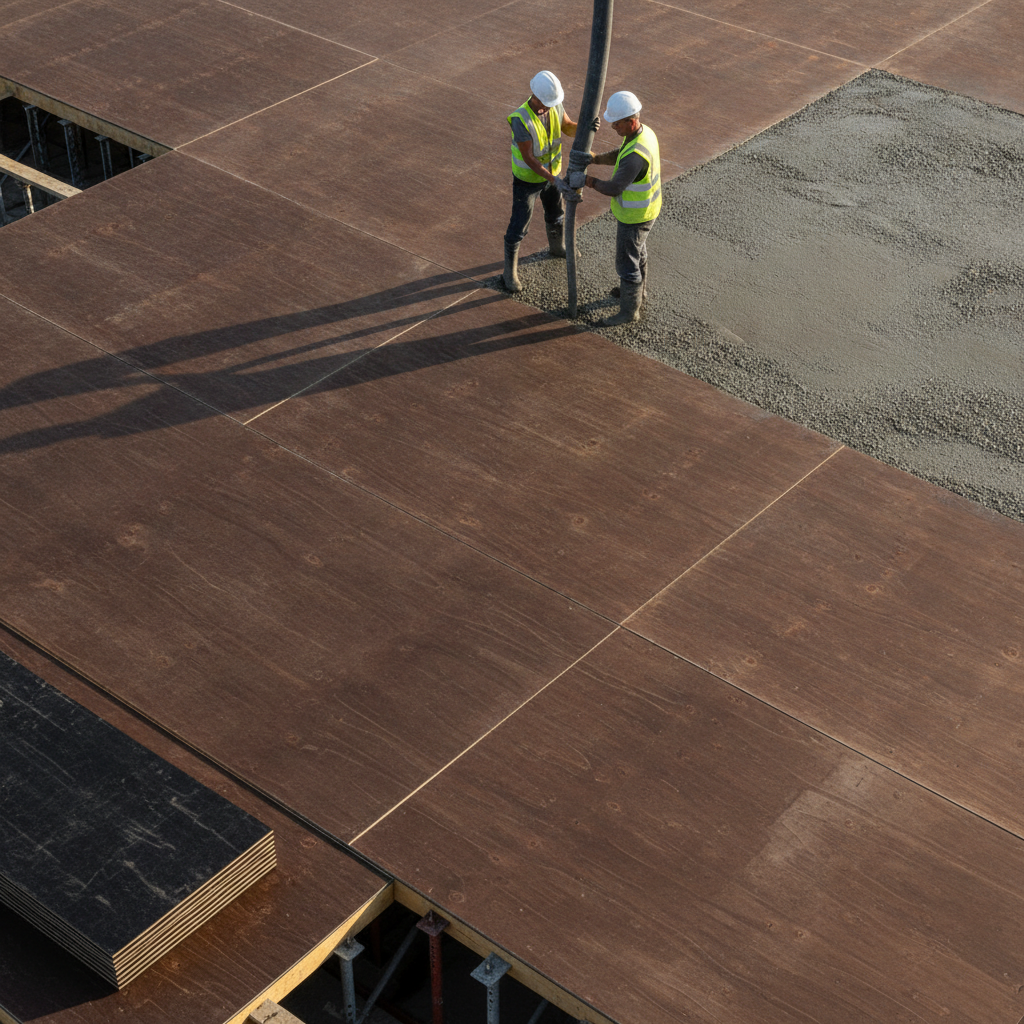
When a takeoff lists film faced, MDO, and HDO on the same sheet, the buyer is not picking a thickness. The choice is which face the concrete will see, how the panel will strip, and which overlay can survive the pour programme without inventing a fifty-cycle promise. Glossy film, a matte forming face that buyers still search as MDO, and a dense HDO overlay each solve a different job. Thickness, joist spacing, and pour height belong on the formwork plywood thickness guide. This page stays on the face.
Vinawood sells the forming versions of those overlays. Kraft-paper MDO built for paint and signage is a different construction, and we do not pitch it as a formwork CTA. Buyers search for MDO; the mill ticket for the matte forming face is MatteFace Plywood (MTF).
What an overlay actually does
An overlay is a sheet bonded to the face veneer under heat and pressure. At the edge it reads as a surface finish, not as a thick extra ply. The core still carries the load and the span. The overlay decides release behaviour, abrasion resistance, and how the concrete looks when the gang strips. If the face is wrong for the finish class, no amount of millimetres will fix the cast.
Three overlays show up on US and export takeoffs for forming work. Glossy phenolic or melamine film is the global formwork default and sits in Vinawood’s film-faced plywood range. Matte forming film is what buyers type when they search MDO formwork plywood; the product name is MatteFace Plywood. HDO is a denser phenolic overlay built for demanding North American formply programmes; see the HDO plywood collection and the product hub at /hdo-plywood.
Buyers often search for MatteFace as MDO formwork plywood. The mill name on the packing list is MatteFace.
Quick comparison
| Feature | Film faced | MDO (search) | HDO |
|---|---|---|---|
| Overlay | Phenolic or melamine film | Matte phenolic film (MatteFace forming). Kraft paper MDO is paint/signage, not our CTA | High-resin fiber overlay |
| Finish | Glossy, smooth or textured | Matte cast face | Very hard, near-mirror when strip is clean |
| Water behaviour | Water-resistant / WBP | Water-resistant / WBP | Water-resistant / WBP |
| Vinawood reuse (up to) | Eco Form Plus 8; Form Basic 10; Form Extra 15 (MUF); Pro Form Lite 15 (PF); Pro Form 20 | MatteFace 15. Kraft MDO is not a forming CTA | HDO Basic 10; HDO Premium / Premium HD 20 |
| Paint | Poor on glossy film | Not paint-grade on MatteFace; kraft MDO is the paint category | Hard face; primer only if you must |
| Primary job | Glossy concrete formwork | Matte forming (MatteFace) | High-cycle glossy forming |
Industry film-weight talk sits in a wide band. That is generic context, not a MatteFace SKU table. If a drawing asks for a face label, use MatteFace Surface 325 gsm. Do not publish overlay gsm or resin percent as a MatteFace performance claim.
Film faced plywood for most gangs
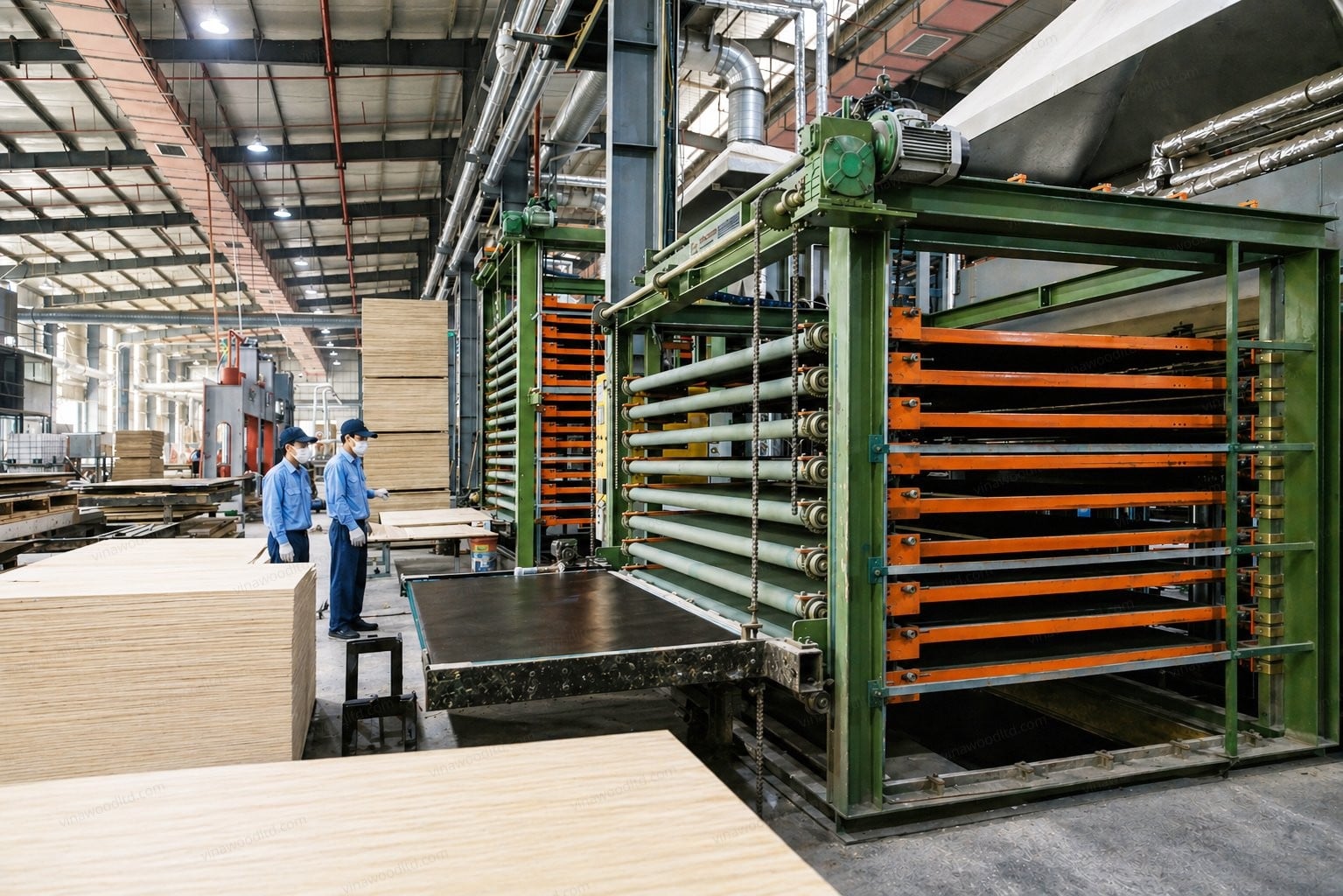
Film faced plywood fuses a resin-impregnated paper film to the panel in the hot press. Phenolic film is the WBP Class 3 route. Melamine film (MUF) is EN 636-2. The warehouse photo can look identical; the mill ticket is where they split. Split the film from the core before you compare price.
Form Extra uses WBP MUF under EN 636-2 and is rated up to 15. It is not Class 3. Longer reuse than Form Basic comes from glue chemistry, not from a heavier film. Pro Form Lite is WBP phenolic, 165 g/m² face film, EN 636-3 / Class 3, up to 15. Pro Form is WBP phenolic, EN 636-3, up to 20. Form Basic sits at up to 10. Eco Form Plus sits at up to 8.
EU gangs often want 1250×2500. US packs stay 2440×1220. P-Form is polypropylene, not Pro Form. Consply is commercial Bintangor, not a film-faced formwork sheet. Textured film exists for walkways and some deck pours; smooth film is the wall and column default. Do not mix them on one architectural elevation unless the drawing says so. The concrete will keep the difference.
If a European buyer asks for EN 636-3, do not ship Form Extra and hope. That is a Class 3 call: Pro Form Lite, Pro Form, or HDO on the North American ticket. Glossy film is also the wrong pick when the spec calls for a matte cast face. That job is MatteFace, searched as MDO. It is the wrong pick if you plan to paint the panel. Film fights paint.
MDO as a search term, MatteFace as the product
MDO is a trade name that covers two panels. Keep them apart on the RFQ. Kraft-paper MDO is a resin-impregnated kraft overlay for paint and signage. APA-grade paper MDO exists in that category. We do not sell that construction as formwork, and we do not knock mills that do. If the job is a painted fascia or a billboard, kraft MDO is the category. It is not our CTA.
Formwork buyers searching MDO want a matte phenolic surface film. Vinawood’s product is MatteFace Plywood (MTF): matte phenolic film, formwork only, up to 15. Not kraft paper. Not paintable. Not signage. Soft bridge, one sentence: buyers often search for MatteFace as MDO formwork plywood. The bridge page that keeps the ranking token is /mdo-plywood.
Reuse for MatteFace is up to 15 with site care. Same ceiling as Form Extra and Pro Form Lite, different face. The two-way overlay sibling is HDO vs MDO plywood. That URL owns the head-to-head. This page stays three-way.
I still see takeoffs that write “MDO” with no construction named. Ask kraft or matte film before the mill books a press. A paint-grade sheet in a wall gang is a wasted container.
HDO when the face has to stay hard
HDO is a high-resin fiber overlay pressed onto the face. Harder than standard film. Glossy and near-mirror when the pour and release are clean. North America specs it by name. HDO Basic is up to 10 and phenolic Class 3. HDO Premium and Premium HD are up to 20 and phenolic Class 3. Vinawood does not rate HDO above 20.
Overlay density does not mint cycles if the crew bars the face off or stores sheets in a puddle. Release agent, clean-down, and flat cover still rule. HDO is overkill on a one-off footing. It earns the sheet cost on a high-cycle column gang or an architectural wall that has to stay glossy after many strips.
Stripping tells you more than a brochure. Glossy film should peel with a sheen still on the face after a clean release. MatteFace should leave a matte, even wall, not a plastic shine. HDO should still look like a hard overlay after a dozen strips, not a fuzzy kraft. If the face is already fuzzy on pour three, the overlay was wrong for the programme, or the bar work was rough.
Edge seal still matters on all three. A raw cut drinks mix water. Overlay on the face does not seal the core. WBP glue is water-resistant. It is not a boat hull. Plantation-grown veneer sits under the film. Size and overlay are the variables that change on the RFQ.
How to choose without folklore
Start with the finish the architect will see, then the handling the gang will give the sheet, then the verified reuse band for a named grade. Glossy film-faced covers standard walls, slabs, and columns: Form Extra (MUF, up to 15) or Pro Form Lite / Pro Form (PF Class 3) by cycle count. A matte cast face, searched as MDO, is MatteFace up to 15 for formwork only. High-cycle glossy work points at HDO Premium or Pro Form, up to 20. Paint or signage is kraft-paper MDO, not MatteFace and not our product. Chemical or tank work often names HDO’s harder overlay; confirm the chemical list with sales.
A mixed job is normal. Footings on Form Basic. Walls on Pro Form Lite or MatteFace. A few architectural lifts on HDO Premium. Write that mix on the RFQ. One overlay for the whole site is simpler, and it is also how people overbuy HDO for a strip footing. True system swaps (steel, aluminum, plastic) sit on formwork plywood alternatives. Overlay types also sit on the protected concrete forming plywood hub, which this page does not reopen.
Upfront cost ranks film faced and MatteFace in a mid band and HDO higher. That is a rank, not a price list. Cost per pour follows reuse, and reuse follows overlay plus glue plus site care. Thickness still matters. An 18 mm HDO Basic sheet is still 18 mm on a 16-inch joist. See the thickness guide for span and pour height. Never treat millimetres as a reuse guarantee.
What to put on the mill RFQ
Send concrete finish, panel type (film faced, MatteFace / MDO-search, or HDO), dimensions and thickness, formwork system, expected pour and handling conditions, estimated volume, and the documentation pack you need. Name bond class: EN 636-2 or EN 636-3. Name size: 2440×1220 or 1250×2500. Name emission class where the market requires it.
Vinawood has manufactured construction plywood since 1992 and ships roughly 5,000 containers a year to 55+ countries. Plantation-grown cores. Sheet-level inspection. Factory-direct mill, not a plywood store. Route the ask through /rfq or /contact?type=quotation. No published sheet prices. No invented cycle premiums. Sales owns duty questions. This page stays on overlay, reuse, and finish.
Category
how-to