Film Faced Plywood Uses: Construction, Formwork & Beyond
Film faced plywood uses center on concrete formwork, with secondary roles in truck decks, hoarding, and heavy packaging. Match Vinawood grades by reuse and glue class — not anonymous film-weight buckets — then RFQ with the application named.
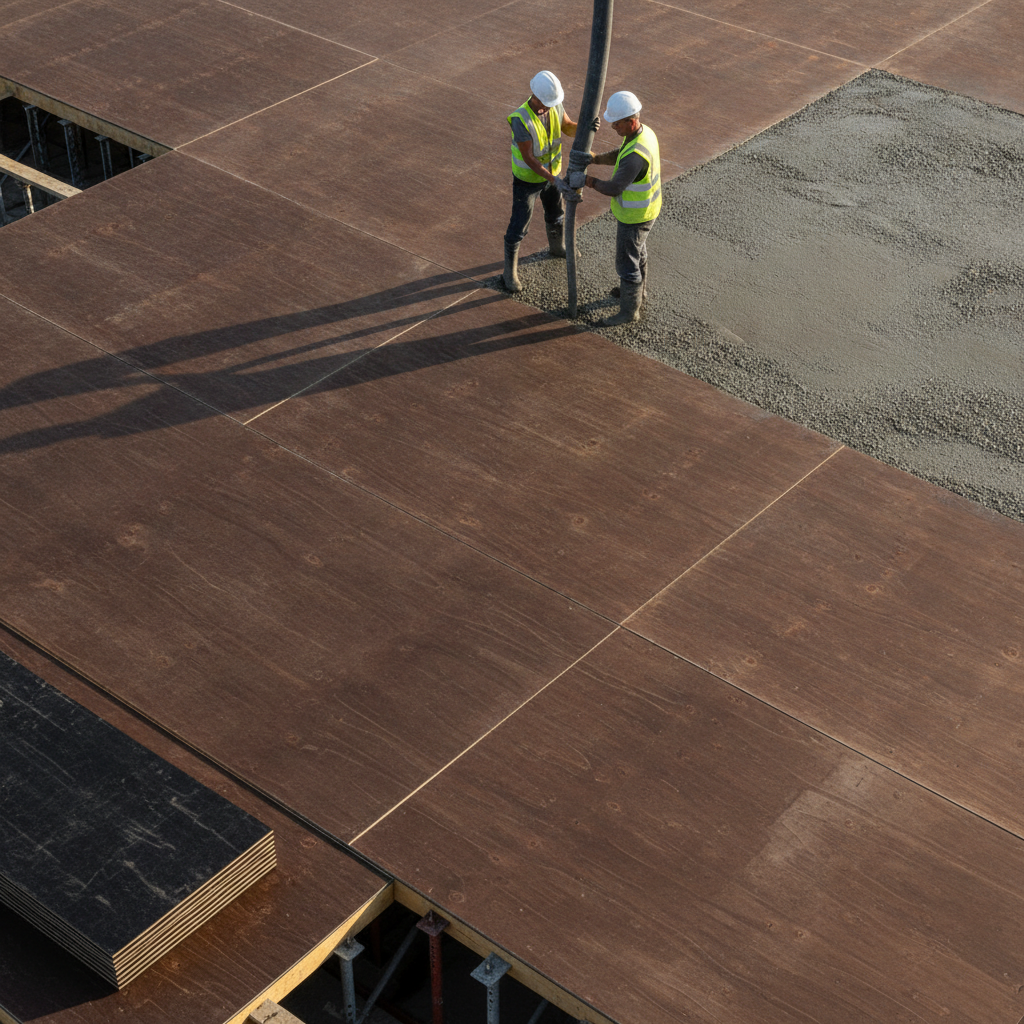
Film faced plywood earns its place on a site when crews need a reusable casting face that releases cleanly and holds a predictable finish. Most of the commercial volume still goes into concrete formwork — walls, slabs, columns, and beams — but the same panel family also shows up as truck decking, site hoarding, and heavy packaging when moisture and abrasion would wreck ordinary veneer plywood. This page stays in that B2B lane: which use fits which Vinawood grade, how face film and core glue differ, and what belongs on an RFQ before price.
Vinawood has manufactured construction plywood in Vietnam since 1992 and ships roughly 5,000 containers a year into 55+ countries. Cores are plantation-grown acacia and eucalyptus. Overlay and bond class decide reuse and finish, so they should lead the buying conversation rather than a vague “standard film faced” line. Browse the film faced plywood collection when you already know the grade band; use this article when you are matching uses to the ladder.
Concrete formwork is still the primary use
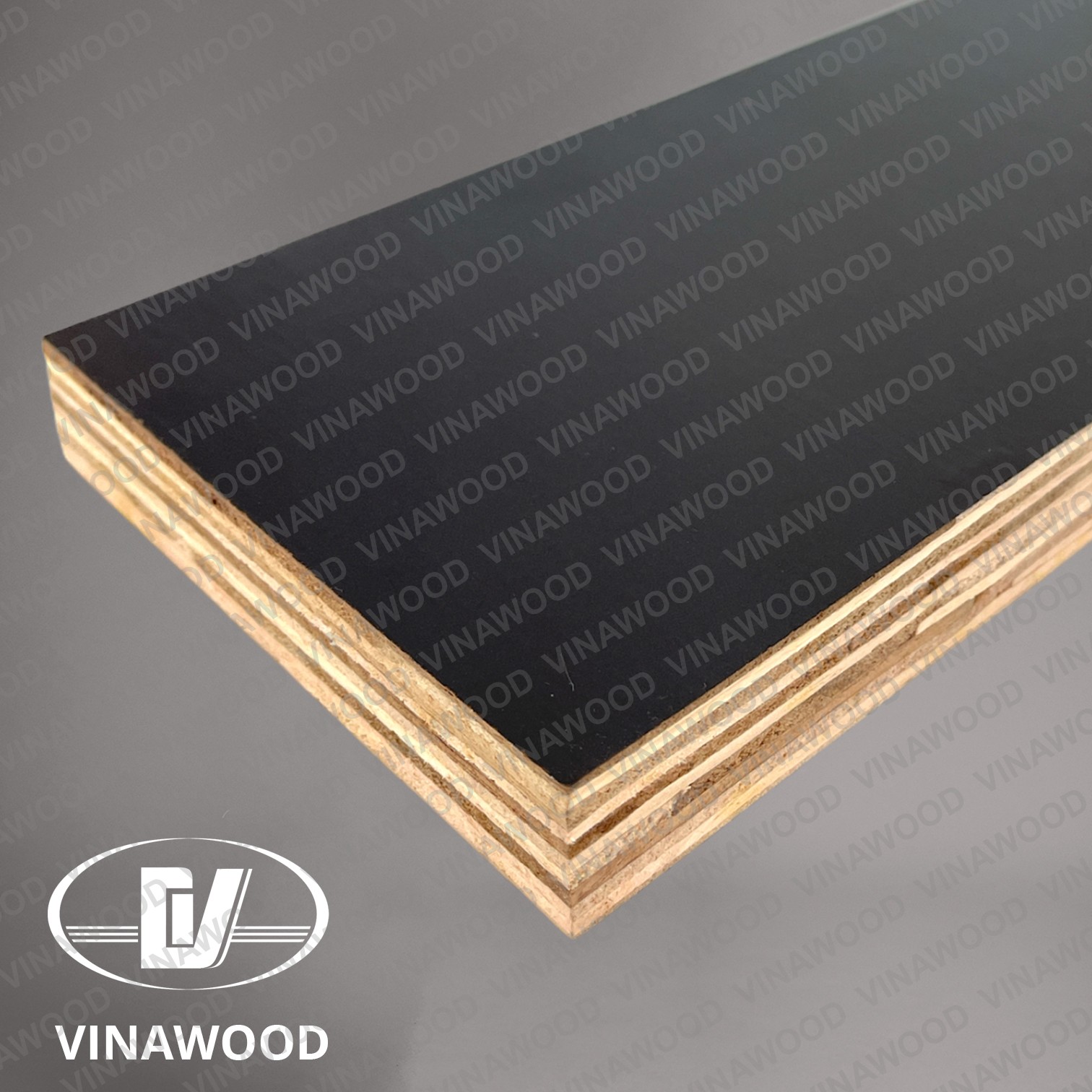
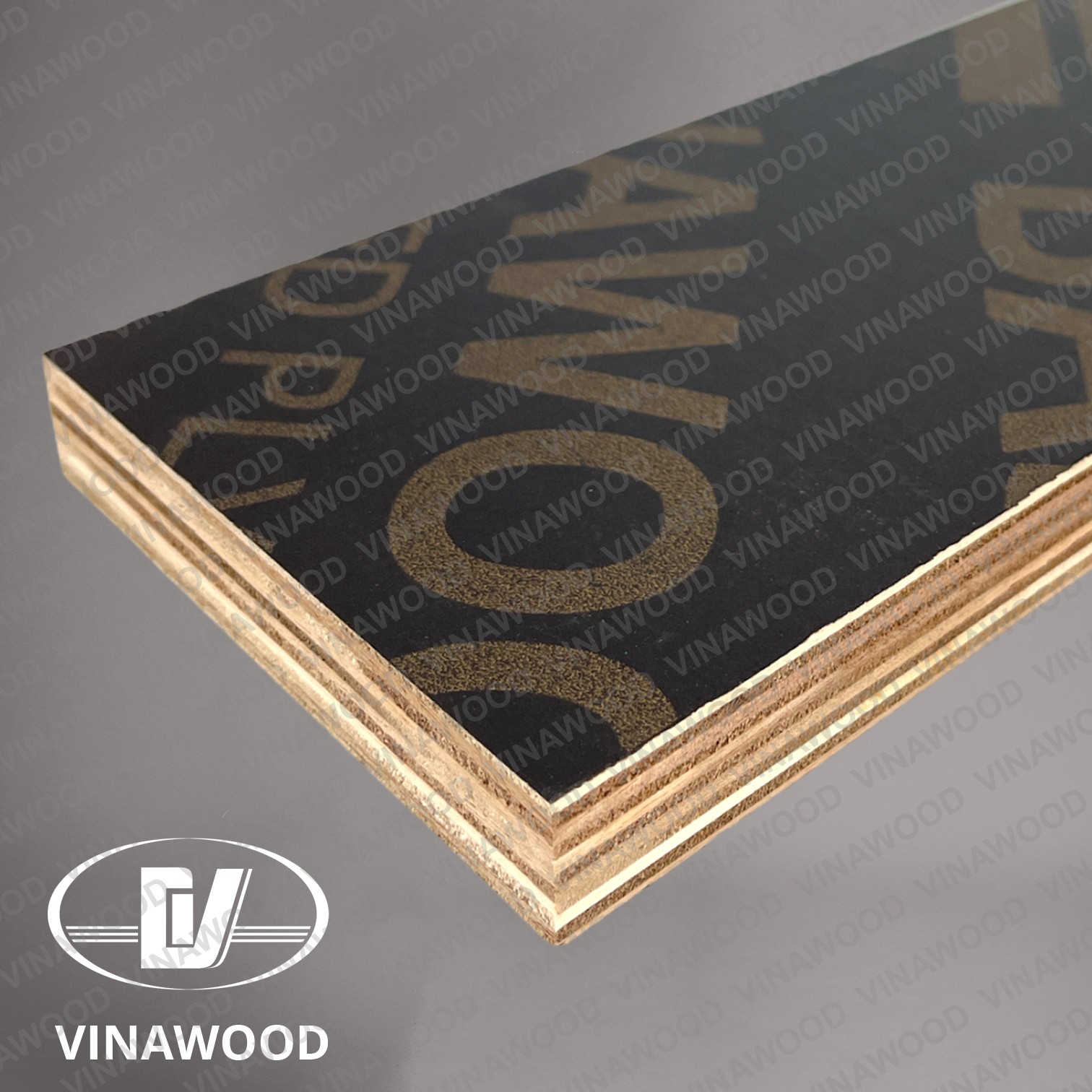
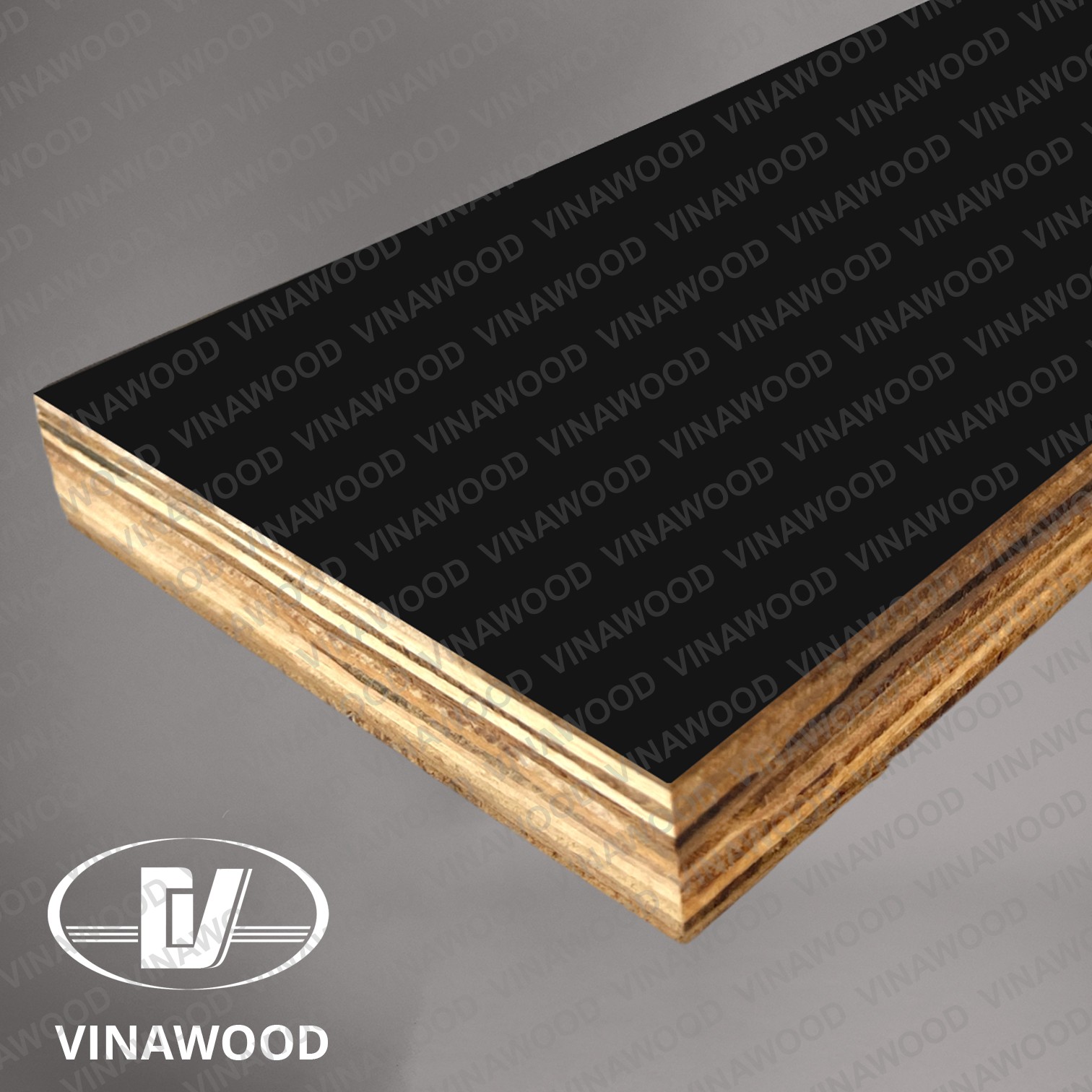
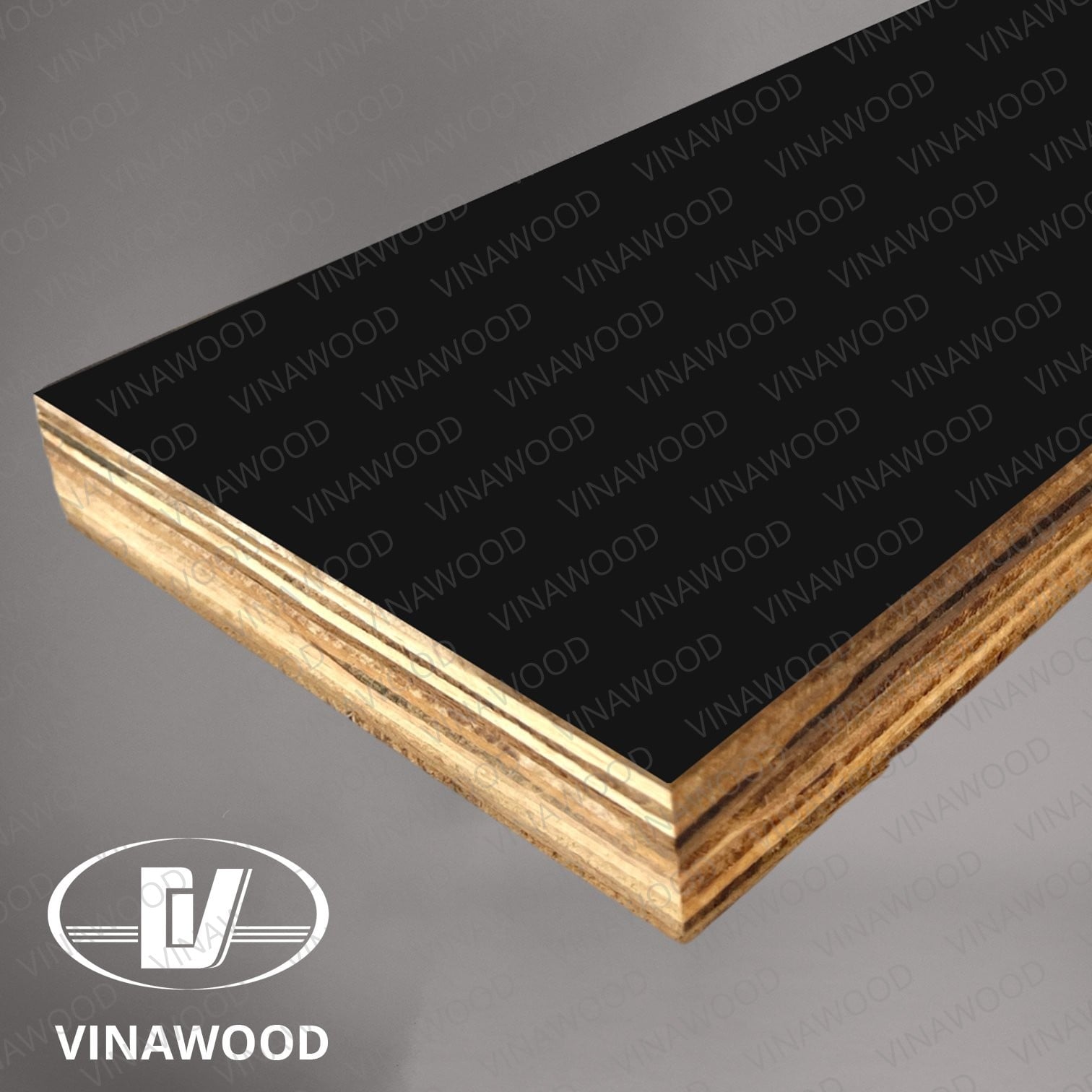
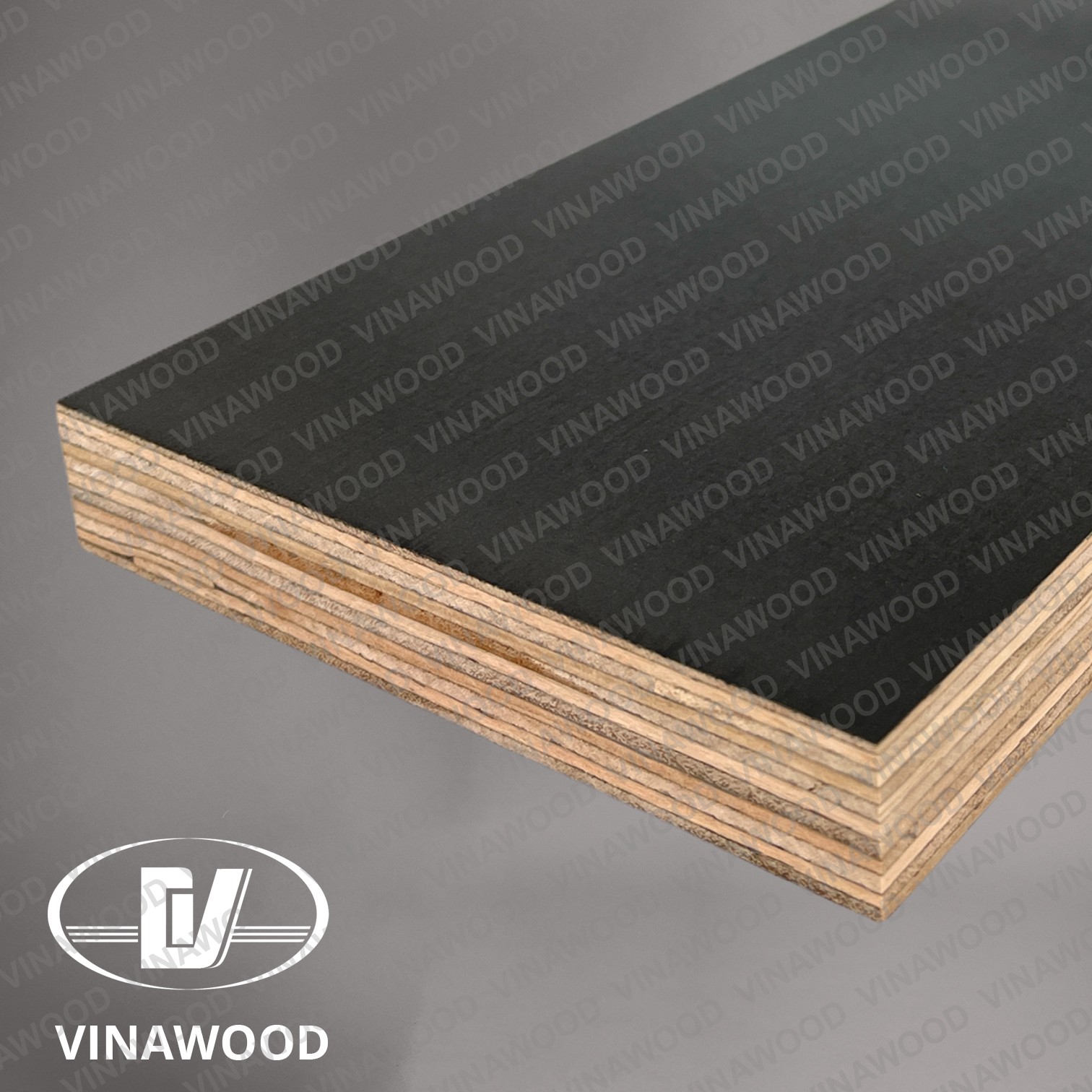
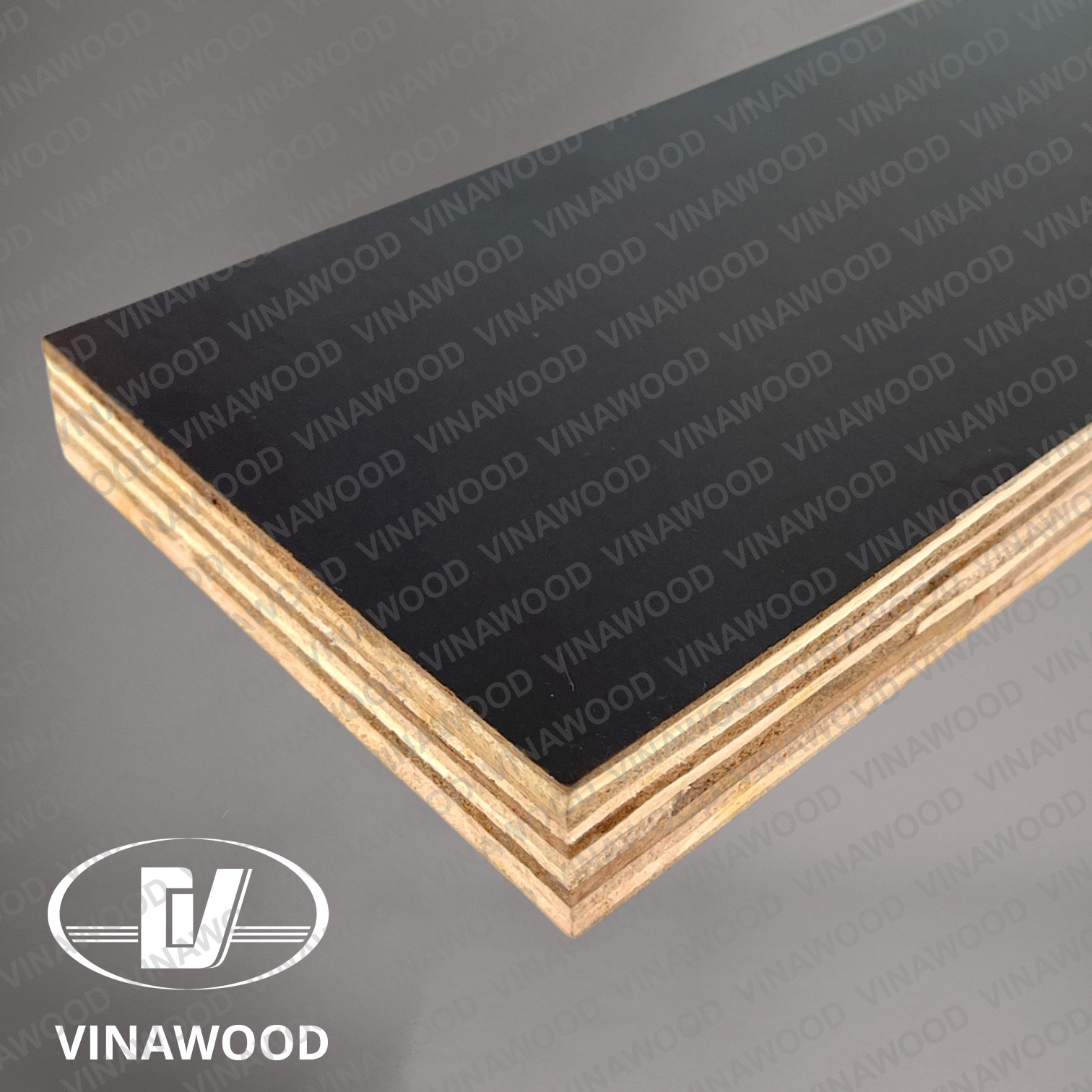
On a pour, film faced plywood is the temporary mold that takes wet-concrete pressure, holds the face the architect will see, and strips so the gang can move. The phenolic face film is a paper-thin overlay that resists concrete stick and surface wear. The core glue — melamine-urea-formaldehyde (MUF) or phenolic Class 3 — decides whether the panel survives the reuse target you wrote into the programme. Confusing those two layers is how sites end up with a glossy face that looks right and a core that opens after a few cycles.
Wall gangs, slab decks, column boxes, and climbing systems all share that demand for a smooth, dimensionally stable face. Thickness and sheet size still follow span and frame module — often 15 mm or 18 mm in 1220×2440 mm or 2500×1250 mm — but the use-case decision starts with reuse band and finish class. Soft-link the protected forming hubs when you need pour physics; this page stays on applications and grade fit. For buying lanes rather than uses, see where to buy formwork plywood.
Architectural fair-face work pushes the overlay and handling practice harder than buried structural concrete. Crews that oil, clean, and stack correctly get more pours from the same SKU. Crews that drag panels face-down across rebar do not — and no mill grade fixes that habit.
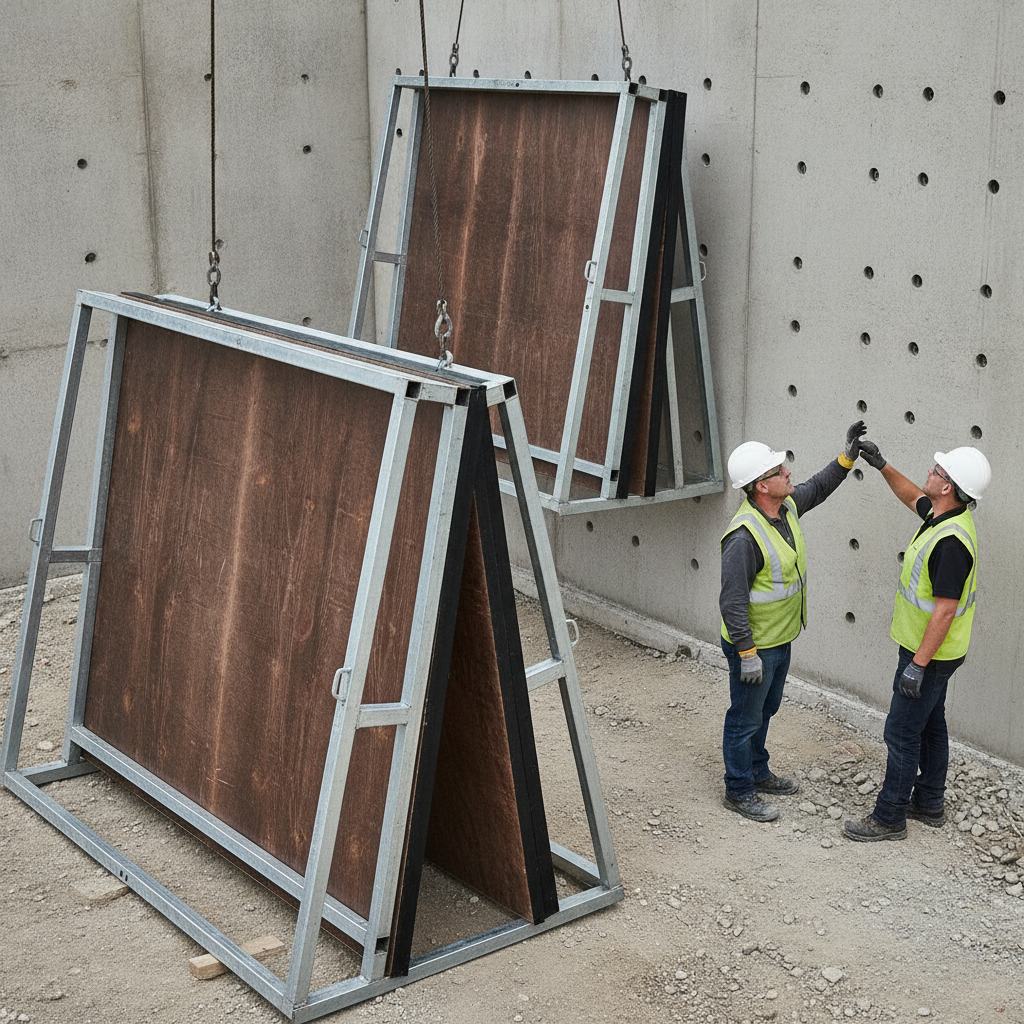
Table forms and flying forms in high-rise work put the same film faced deck on a large framed unit that cranes floor to floor. Thickness consistency and edge integrity matter because the deck area is large and repair time is expensive. A mill grade with a clear reuse band and documented bond class beats a mixed pallet of unknown film weight when the crane slot is booked for dawn.
Secondary uses beyond shuttering
Heavy vehicle flooring is a common second use for thicker film faced sheets. Trailer and truck decks take forklift traffic, pallet scrape, and weather that would chew an uncoated panel. Here the hard film face and a denser core matter more than a fair-face concrete finish. Container flooring is related but often a specialized hardwood or bamboo composite; do not assume every film faced formwork SKU is a drop-in container floor without checking the buyer’s floor specification.
Site hoarding and temporary walls use film faced panels for weather resistance and a paintable, rigid face. Single-sided film is common when only one face is exposed. Packaging and machinery crates pull the same moisture-resistant glue line and abrasion resistance when equipment cannot ride in soft cardboard. These jobs rarely need phenolic Class 3; an MUF film faced grade with the right thickness is usually enough if the RFQ states the duty clearly.
I still get RFQs that list “film faced for formwork or flooring” without a reuse number or a finish target. That mix forces the mill to guess. Split the line items: formwork reuse band on one row, flooring thickness and traffic note on another.
Vinawood formwork ladder for real programmes
Older marketing pages sorted film faced stock into anonymous film-weight buckets. That shorthand hid glue class and overstated reuse. Vinawood’s commercial ladder is product-named and reuse-capped as “up to N” under good site practice — never an open-ended N+ claim.
| Grade | Bond / face note | Reuse (up to) | Best-fit uses |
|---|---|---|---|
| Eco Form Plus | Film-faced, MUF core | 8 | Short residential cycles, budget shuttering |
| Form Basic | Film-faced, MUF core | 10 | Light commercial walls and slabs |
| Form Extra | Superior Glue MUF, EN 636-2 (not Class 3) | 15 | Longer mid-rise MUF programmes |
| Pro Form Lite | Phenolic Class 3 | 15 | PF step between Extra and Pro Form |
| Pro Form | Phenolic Class 3 | 20 | High-cycle film-faced gangs |
| HDO Basic / Premium | Phenolic Class 3 overlay family | 10 / 20 | Denser overlay, heavier reuse targets |
| MatteFace (MTF) | Matte kraft face; MDO is search/bridge | 15 | Matte architectural concrete finishes |
Only Pro Form, Pro Form Lite, and the HDO family are phenolic Class 3 / EN 636-3 on this ladder. Form Extra’s longer reuse comes from Superior Glue MUF chemistry, not from calling it Class 3. P-Form is polypropylene-faced, not Pro Form. Consply is commercial bintangor for fit-out work, not film-faced formwork. MatteFace Plywood (MTF) is the product name when buyers search “MDO”.
Face film, core glue, and the melamine trap
Say which “melamine” you mean. Core MUF is a glue chemistry in EN 636-2 grades such as Form Extra. Phenolic face film is the casting overlay. Decorative melamine laminate is an interior surface product and does not belong on a shuttering RFQ. Film colour — brown or black — is a face choice for site marking and appearance, not a bond-class certificate.
Weather and boil proof (WBP) describes a water-resistant glue line tested for wet service. It does not mean the panel is sealed against every wet-service exposure. Reuse stays “up to N.” Plantation-grown wording stays; skip natural-forest folklore. For bond-class depth beyond this uses page, cite the phenolic guide when it is outside the rewrite scope rather than cloning it here.
When a quote only lists film weight in g/m², ask for the glue class in the same table. Face film weight without bond class is half a specification — enough to print a brochure, not enough to plan a twenty-pour mid-rise.
Emission paperwork travels with the use. US-bound formwork still asks for EPA TSCA Title VI / CARB statements; European programmes often need CE / EN 13986 evidence and may ask for an EUDR pack on qualifying grades. Put those fields on the RFQ next to the application line so the mill does not quote a grade that cannot clear the destination.
Sample panels help when the finish is architectural. Ask for the same face colour and glue class you intend to order, then run a small mock pour or strip test before the first floor. A photograph of a brown sheet is not a finish proof — the site mock is.
Edge sealing and storage still belong in the use conversation. Oil-based or epoxy edge paint slows moisture uptake at the cut face; bearers and a breathable cover keep stacks flat between pours. A correct grade that sits in a wet puddle overnight will not look correct at strip.
How to RFQ by use, not by hobby dimensions
Write the use first: wall formwork, slab deck, column, truck floor, hoarding, or crate. Then add size, thickness, face colour if it matters, bond class, emission standard for the destination market, and target reuse. North American and European gangs that run Doka, Peri, or Alsina envelopes should note the frame module as a compatibility field — those names are system envelopes, not plywood mills to shop.
Vinawood maintains distribution warehouses in Toronto, Vancouver, Calgary, Montreal, Miami, Houston, and Baltimore to supply ready stock to local distributors when a programme needs top-up sheets. Container programmes and manufacturer-direct quotes still go through /rfq or /contact?type=quotation. The mill does not publish list prices because grade mix and packing change landed economics.
Indoor underlayment and decorative laminate jobs are outside this article’s commercial formwork scope. If a buyer is chasing dimensional DIY fractions or hobby project boards, point them away from mill formwork RFQs — those searches are not the use cases this hub owns.
A clean uses RFQ closes the loop: application named, ladder grade matched, documents listed, one CTA. That is enough for the mill to quote without a second round of “what is this panel for?” — and enough for the site to stop treating every brown sheet as interchangeable.
Category
how-to
▶Sources & References (3)
- Film Faced Plywood collection — Vinawood (2026-09-30)
- 9 Best Companies to Buy Formwork Plywood — Vinawood (2026-09-30)
- Film Faced Plywood for Concrete Formwork Guide — Vinawood (2026-09-29)