Formwork Plywood Grades Decoded: EN 636, APA Plyform & ANSI Standards Compared
Formwork plywood is graded across three parallel systems — EN 636 bond class, APA Plyform Class I/II, and BS/BIS regional standards. This guide cross-references the lot, with manufacturer-side context on which adhesives map to which class and how to read a formwork plywood spec stamp.
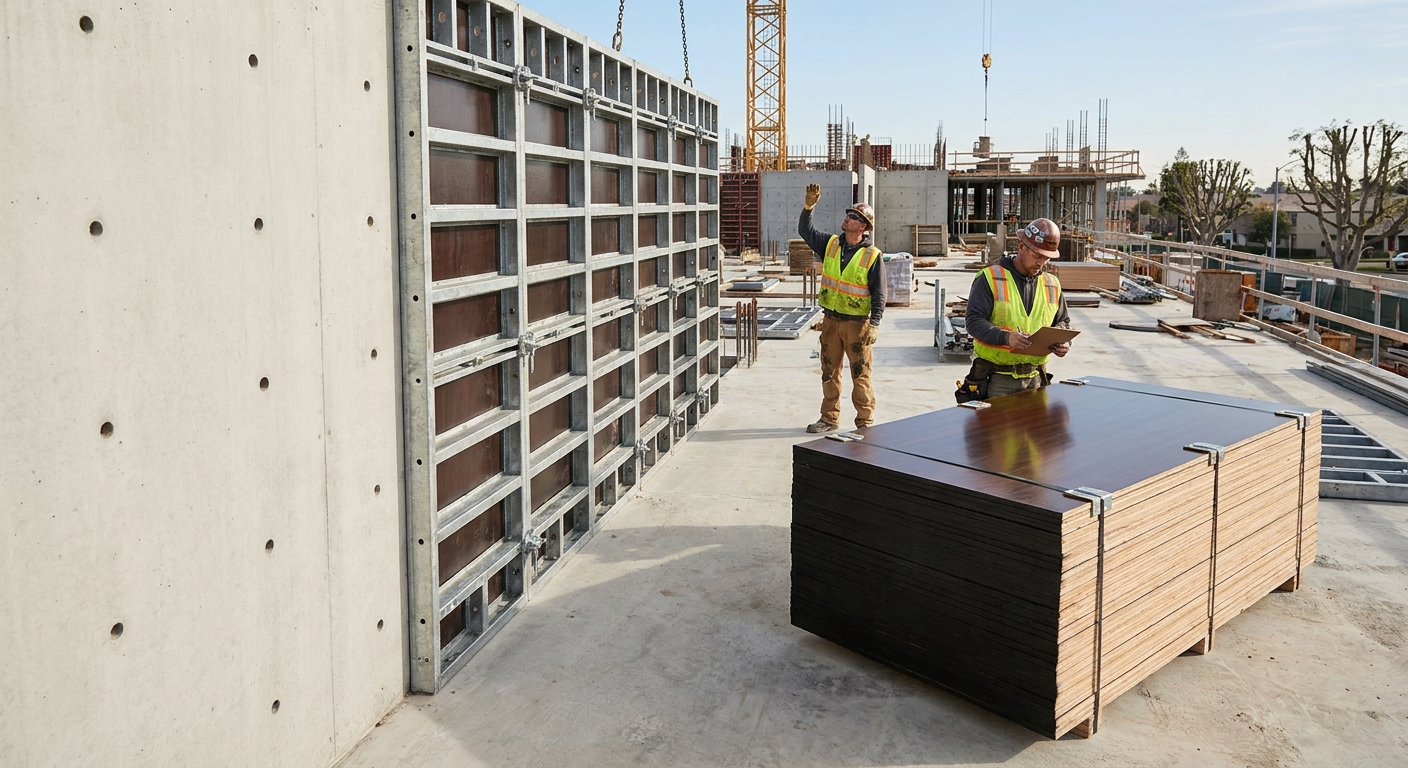
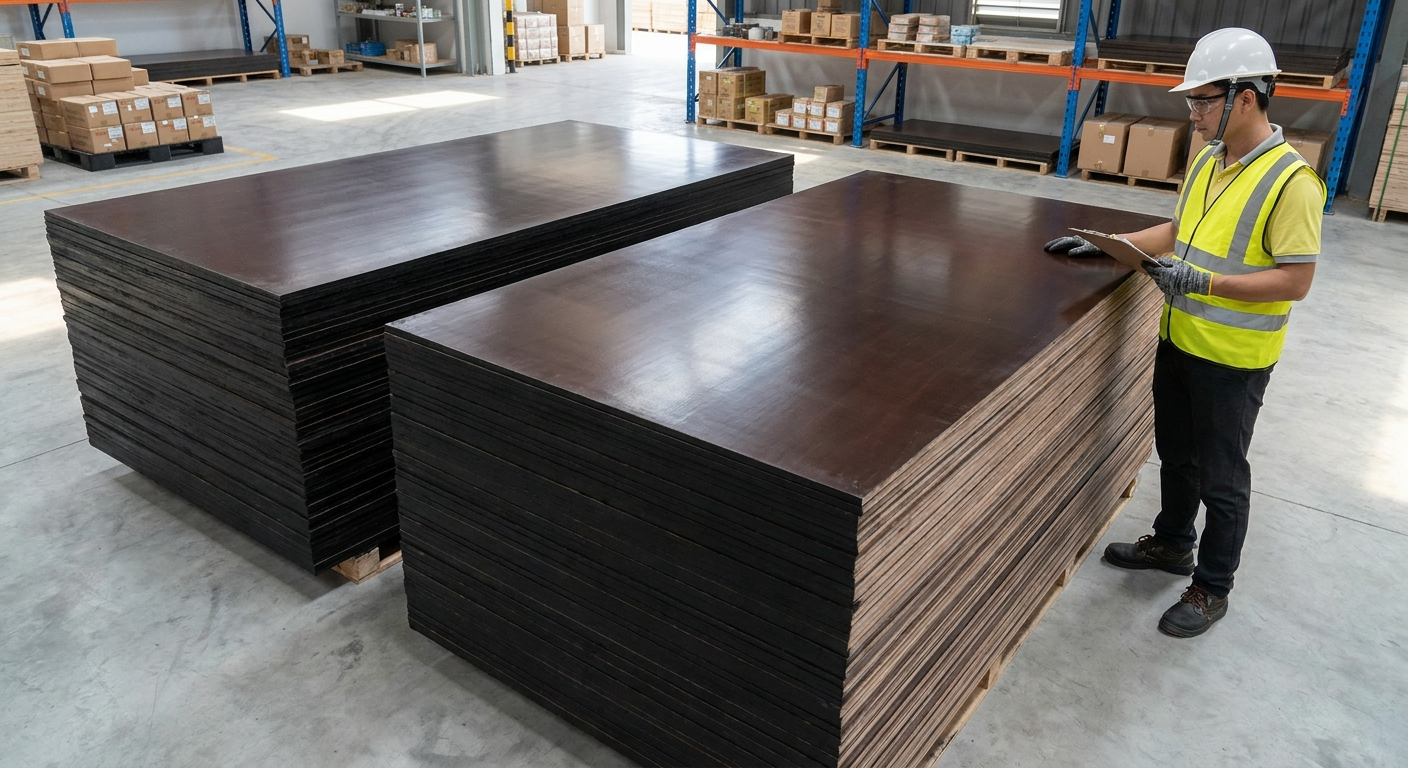
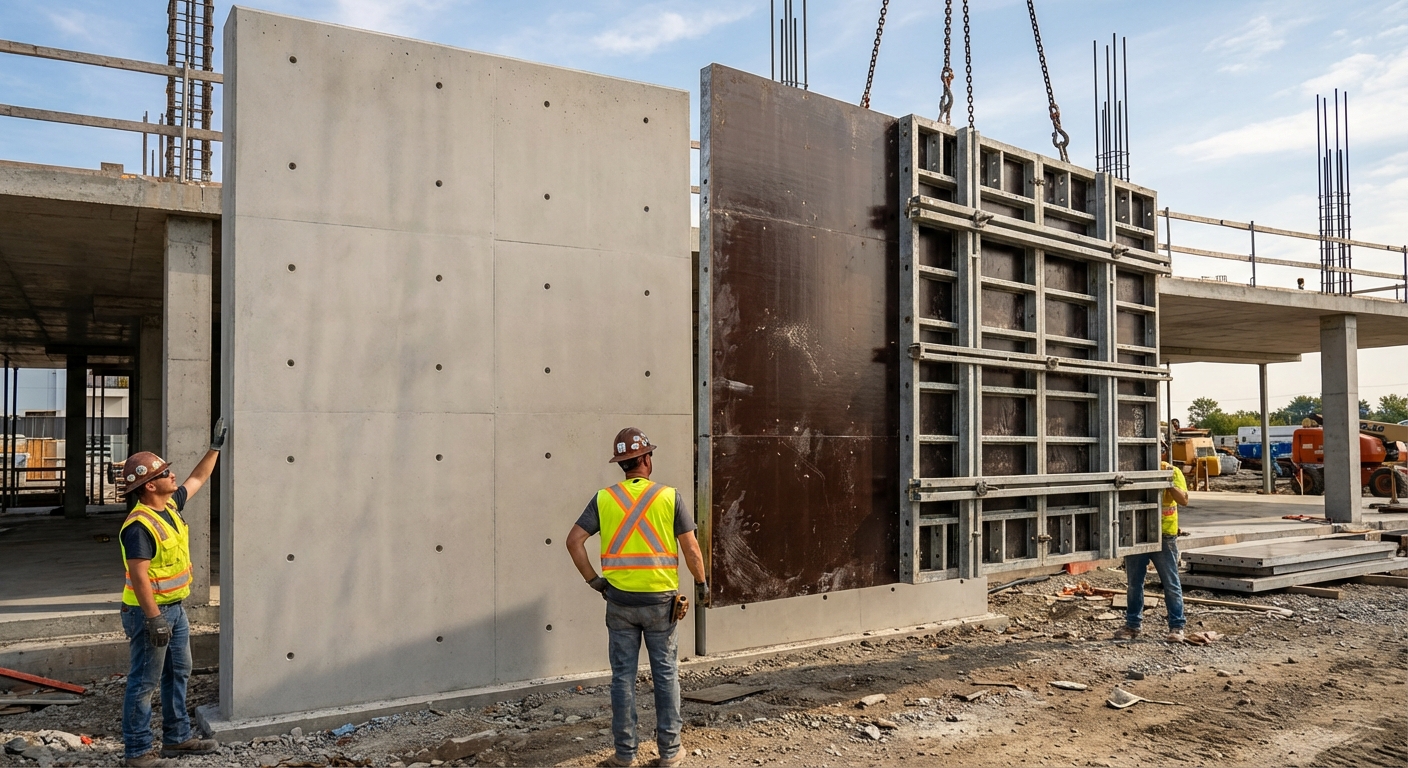
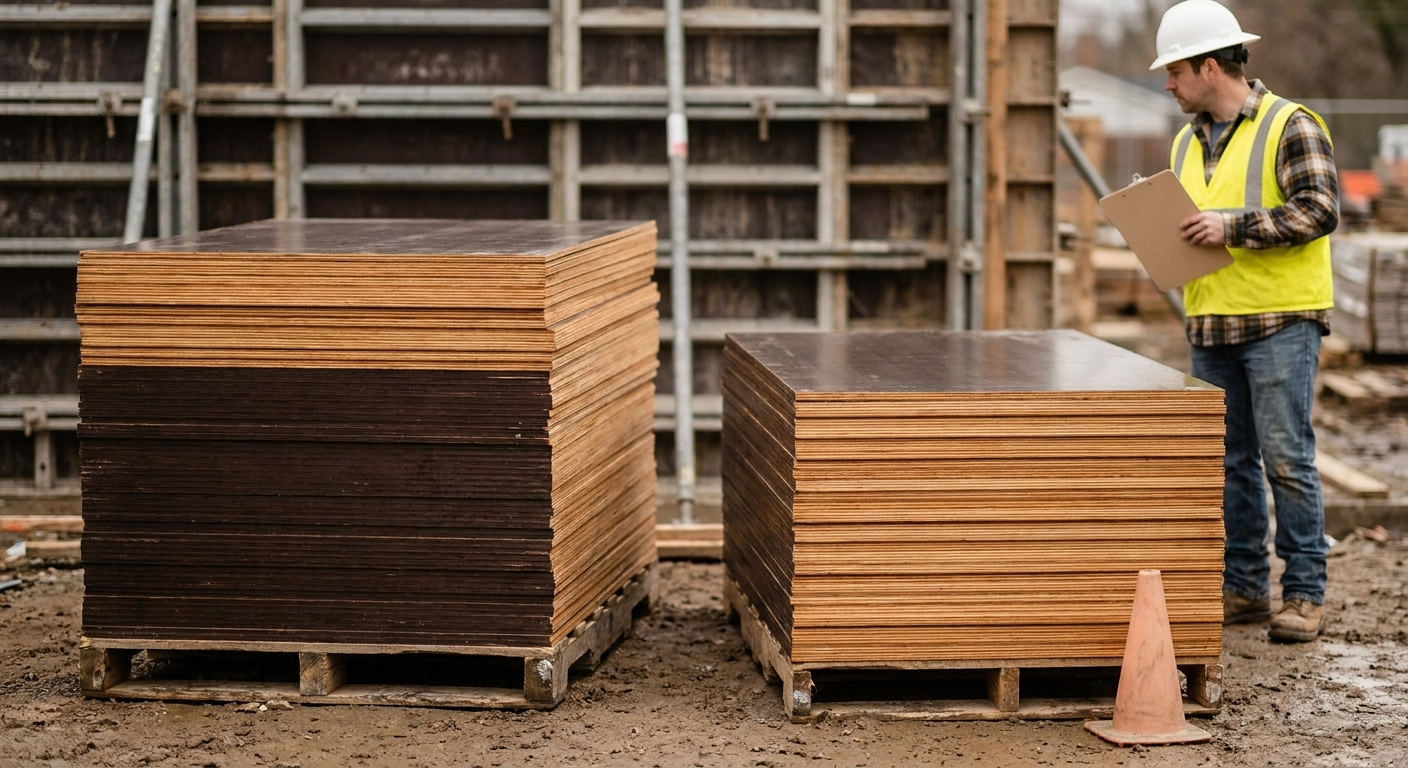
Formwork plywood lives at the intersection of two grading universes. The standard A–D appearance grades describe what you see on the face of the panel; the formwork-specific systems — EN 636 bond classes, APA Plyform classes, BIS shuttering grades — describe what holds the panel together under wet concrete and how many pour cycles you should expect. Read either system in isolation and you'll mis-spec.
This guide walks through every formwork grading system a buyer or specifier is likely to encounter, maps adhesive chemistry to bond class, decodes Plyform classes, cross-references BS, BIS, AS, CSA, and JAS conventions, and shows how to read the stamp on a panel. Written from a manufacturer's perspective by Vinawood, a Vietnamese mill producing across the full formwork-grade range to 55+ countries.
TL;DR — Formwork Plywood Grades at a Glance
| System | Top class | Mid class | Economy / utility |
|---|---|---|---|
| APA Plyform (US) | Plyform Class I (HDO option) | Plyform Class II (MDO option) | B-B Plyform |
| EN 636 (Europe) | EN 636-3 (exterior, phenolic) | EN 636-2 (humid, melamine) | EN 636-1 (dry interior) |
| EN 13986 (CE marking) | Harmonised standard — covers fire, formaldehyde, bond, mech. | — | — |
| BIS IS 4990 (India) | Boiling-water-proof shuttering | Standard shuttering | Single-use commercial |
The standard appearance-grade letters (A, B, C, D) cross all of these systems and describe face/back veneer quality independently of the formwork-specific bond and overlay grading. For a deeper look at the underlying letters, see the foundational A/B/C/D grading system.
Why Formwork Has Its Own Grading Layer
A panel can be "B-grade face" and still be the wrong panel for a concrete pour. Three things matter for formwork that the appearance grade does not capture: bond class (the glue between veneers, codified by EN 636 in Europe and Interior/Exposure 1/Exterior in North America), structural performance (Modulus of Elasticity and Modulus of Rupture, declared under EN 13986 in Europe and APA span ratings in North America), and reuse cycles (governed by overlay type and supporting bond class — not specified by the A/B/C/D appearance grade at all).
EN 636: the European Bond-Class System
EN 636 "Plywood Specifications" splits panels into three bond classes by the moisture exposure they're rated for. EN 636-1 (Class 1) covers dry interior service only — cabinet, joinery, and indoor-only applications, never appropriate for formwork. EN 636-2 (Class 2) covers humid conditions and short-term exterior exposure, typically with WBP melamine-formaldehyde adhesive — suitable for protected indoor pours and standard commercial concrete work where panels are stripped and stored under cover between cycles. EN 636-3 (Class 3) covers full exterior service with WBP phenol-formaldehyde adhesive — the bond class for high-reuse formwork, prolonged-exposure pours, and Class 3-spec marine and infrastructure work.
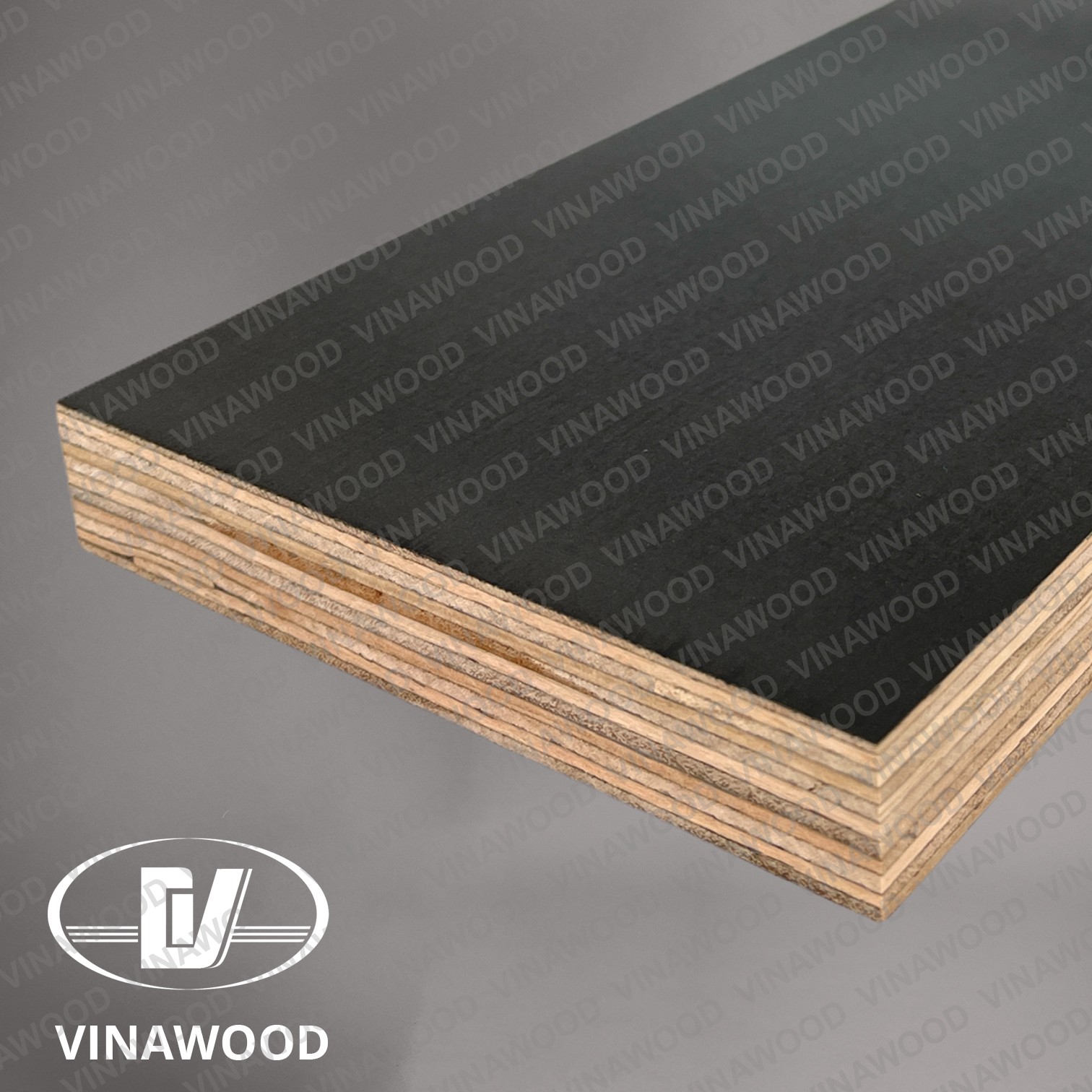
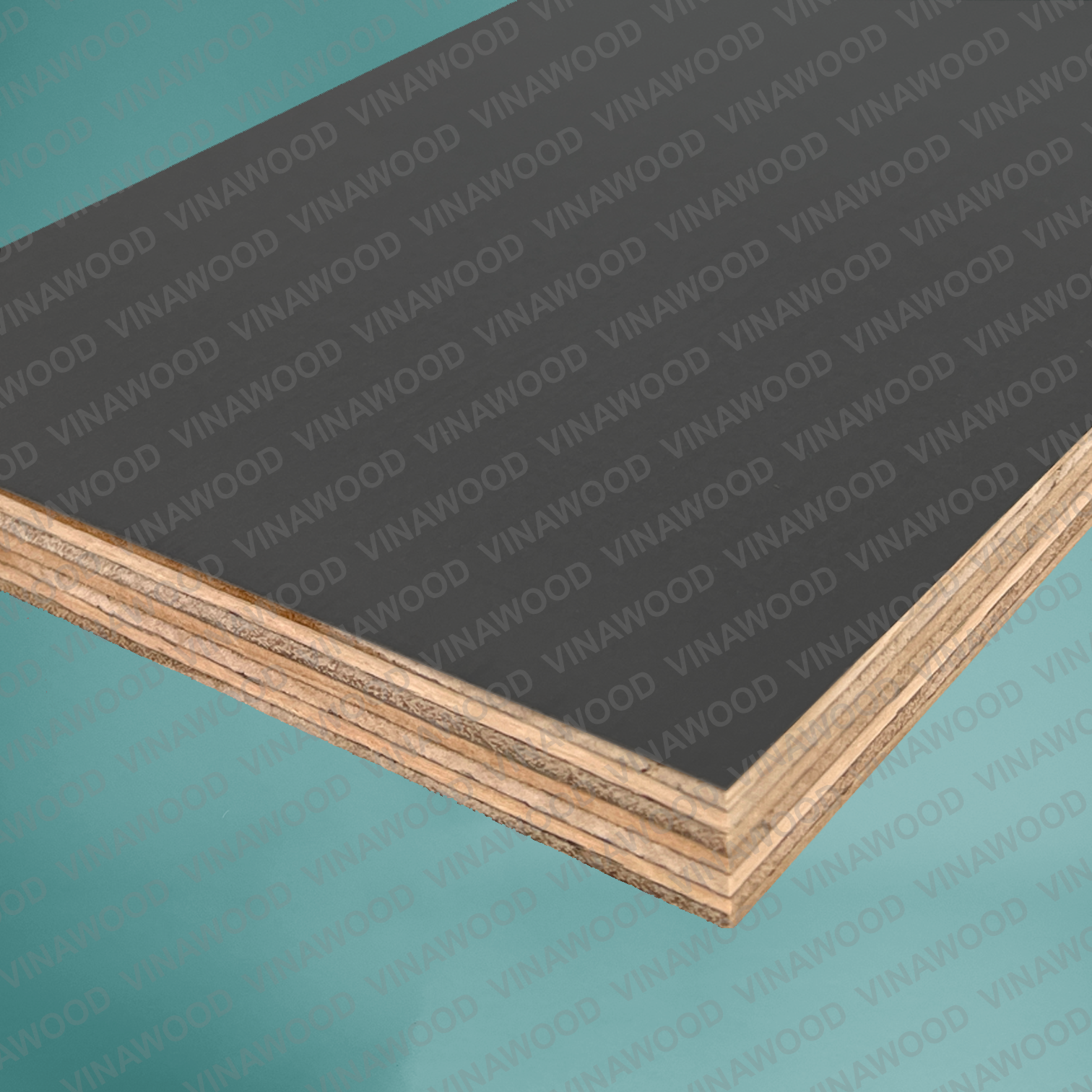
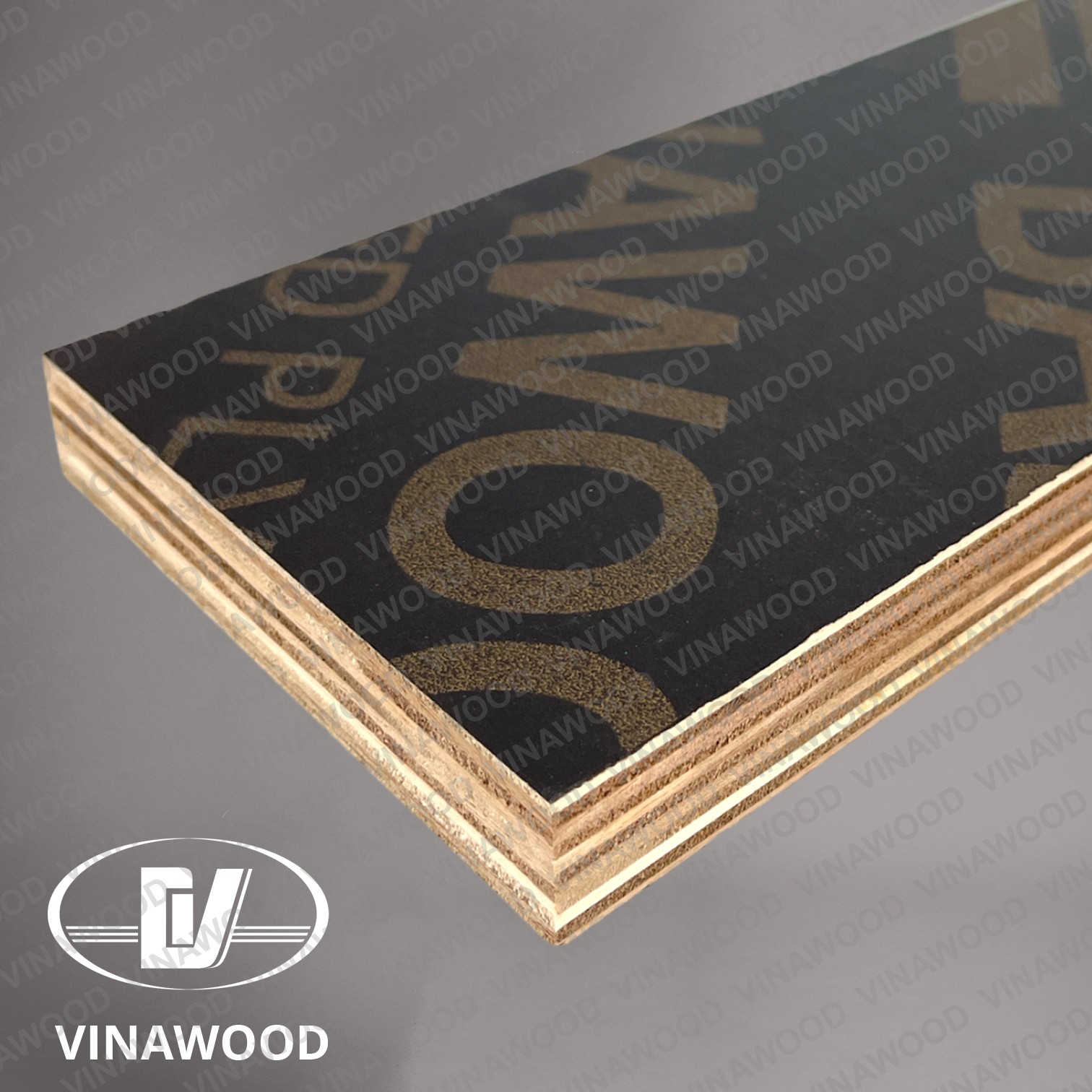
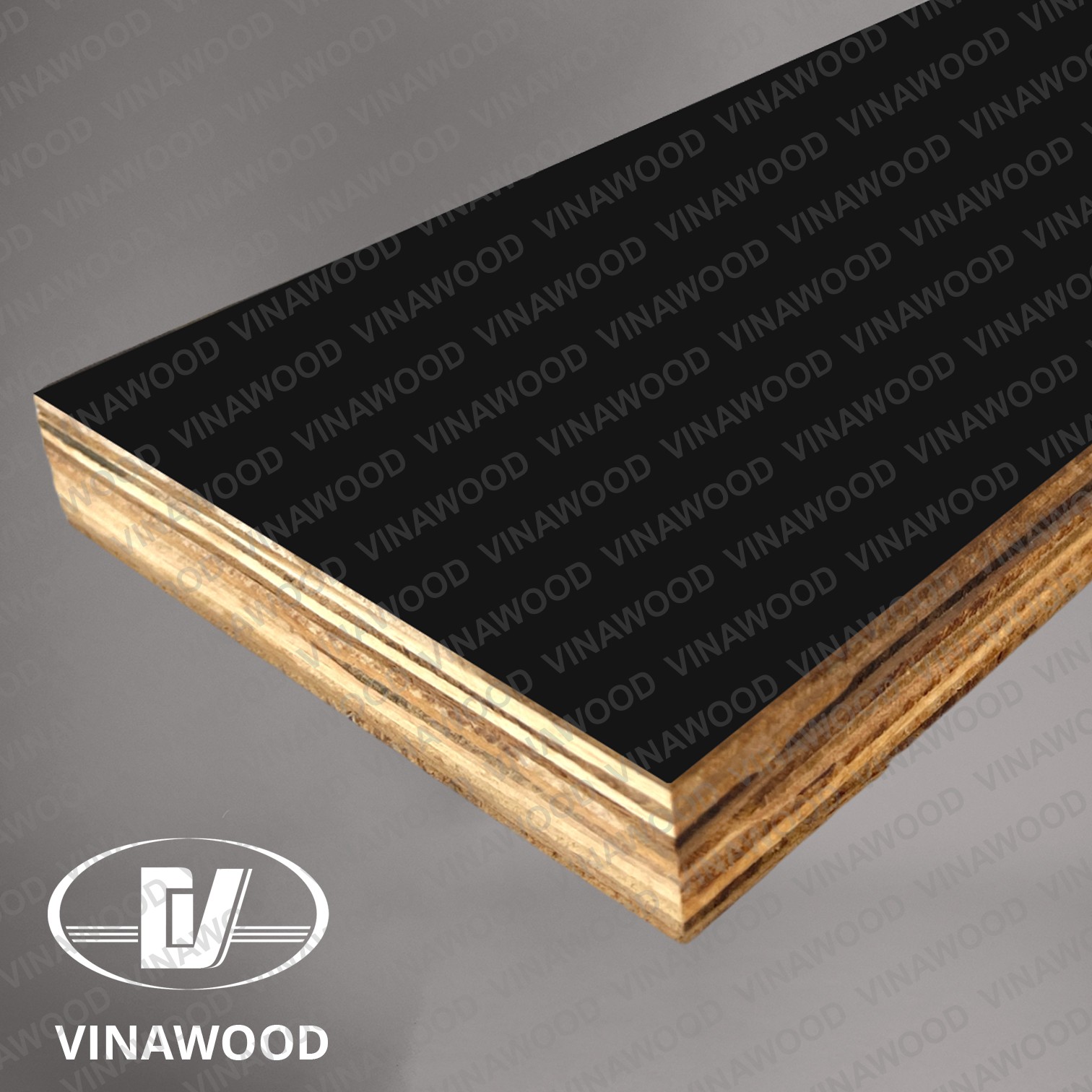
Critically, only certain Vinawood products are bonded with phenolic adhesive and therefore qualify as EN 636-3 / Class 3. The HDO range and Pro Form use phenolic adhesive. Form Basic, Form Extra, Eco Form Plus, and Consply use WBP melamine adhesive and are EN 636-2 / Class 2. For the deeper adhesive comparison, see WBP melamine vs phenolic glue.
If a brief or PO calls for "Class 3 phenolic-bonded" formwork plywood, the right Vinawood specification is Pro Form (EN 636-3 phenolic-bonded) for the global formwork market or the HDO range for North American projects.
EN 13986: the Harmonised European Standard
EN 13986 "Wood-based panels for use in construction" is the umbrella standard that ties bond class to construction-product compliance. CE marking under EN 13986 declares reaction to fire (Euroclass D-s2,d0 typical for plywood), formaldehyde emission class (E1 is the construction-grade default), bond class (EN 636-2 or EN 636-3 for formwork-grade panels), and mechanical properties (Declared Performance values for bending strength and stiffness).
For European market access, every formwork panel must carry a CE mark with Declaration of Performance backed by EN 13986 testing. Imported panels without a verifiable DoP cannot legally be placed on the EU construction market.
APA Plyform: the US System for Concrete Formwork
The APA's Plyform classifications govern formwork plywood across North America. Plyform Class I is the premium concrete-forming panel — sanded face/back, group-1 species (Douglas fir, southern pine), Exterior bond — often paired with HDO overlay ("HDO Plyform") for high-reuse and fair-face concrete applications. Plyform Class II is the mid-range grade with broader species range, often paired with MDO overlay for sealed, paint-ready faces; common on residential multi-unit and mid-rise commercial work. Structural I Plyform is an engineered grade for high-stress applications where the panel itself carries part of the structural load. B-B Plyform is the economy class — sanded B-grade face and back, no overlay, Exterior bond — used for single-pour or low-reuse projects.
For the full Plyform class breakdown including reuse-cycle economics and how imported film-faced panels compare, see APA Plyform plywood — Class I and Class II explained.
HDO and MDO Plyform
HDO (High-Density Overlay) and MDO (Medium-Density Overlay) are APA-trademarked overlaid panels that sit on top of the Plyform classification. HDO Plyform uses a phenolic-resin overlay at 60+ pounds per ream of paper, hot-press bonded to the face veneer — the hardest, smoothest formwork surface available in North America, typically rated for up to 20 pour cycles in the standard grade. MDO Plyform uses a lighter overlay (around 25–58 pounds per ream), sealed but not as dense as HDO; rated for fewer reuse cycles and the more economical of the two overlaid grades.
For the broader overlay comparison — film-faced vs MDO vs HDO — see film-faced plywood vs MDO vs HDO.
BS 8110 and UK Formwork Specification Practice
UK formwork practice historically referenced BS 8110 "Structural use of concrete" for formwork specification. BS 8110 has now been superseded by Eurocode 2 (BS EN 1992-1-1), which references EN 13986 and EN 636 for the panel performance requirements. Older project specifications in the UK construction sector may still cite BS 8110 by habit.
UK contractor terminology in 2026 typically uses "Class 2 ply" and "Class 3 ply" as informal shorthand for EN 636-2 and EN 636-3 panels respectively, with "shuttering plywood" as the trade term for formwork plywood generally. Marine-grade plywood is occasionally specified for permanent or semi-permanent formwork applications, though for most reusable formwork systems, EN 636-3 phenolic-bonded film-faced plywood delivers the same performance at lower cost than true marine plywood.
BIS IS 4990 (India) and ASEAN Cross-References
Outside Europe and North America, formwork plywood standards diverge. BIS IS 4990 (India) is the Bureau of Indian Standards specification for plywood for concrete shuttering, recognising boiling-water-proof (BWP) and boiling-water-resistant (BWR) bond grades — BWP roughly equates to EN 636-3 / Class 3. BIS IS 303 (India) is the general-purpose plywood standard with grade differentiation similar to EN 635. AS 6669 (Australia) is the plywood structural standard, referencing the AS/NZS 2269 series for bond classes (A-bond = phenolic, B-bond = melamine). CSA O121 (Canada) is the Canadian Douglas fir plywood standard with structural and Plyform-equivalent ratings. JAS (Japan) is the Japanese Agricultural Standard for plywood with type-1 (exterior phenolic), type-2 (humid), and type-3 (interior) bond classifications similar to EN 636.
Across all systems, the practical rule is the same: phenolic-bonded panels carry the highest bond rating (EN 636-3 / Class 3 / Type 1 / BWP / A-bond), and melamine-bonded panels carry the mid-tier rating (EN 636-2 / Class 2 / Type 2 / BWR / B-bond). The terminology differs; the chemistry and performance hierarchy do not.
How to Read a Formwork Plywood Specification Stamp
An EN 13986 / CE-marked panel carries the CE mark, manufacturer name and address, year of production, the notified certification body number, reference to EN 13986, the bond class (EN 636-2 or EN 636-3), formaldehyde class (typically E1), reaction-to-fire class (typically D-s2,d0), and Declared Performance values for bending strength and stiffness.
An APA-stamped Plyform panel carries the "PLYFORM" designation and class (I, II, Structural I, B-B), face/back grade pair (e.g., "B-B"), bond classification ("Exterior" — mandatory for Plyform), mill number for traceability, and thickness with grain direction.
A genuine Vinawood Pro Form panel carries CE marking with EN 636-3 bond class declaration, Vinawood mill identifier, FSC chain-of-custody certificate code, batch and date stamp. Counterfeit stamps on imported plywood do circulate — cross-check the mill identifier and certificate codes with the certifying body before accepting a shipment.
Choosing the Right Grade for Your Project
A simplified decision tree. Step 1: Number of pours expected. Single pour or 2–3 pours — economy grade (B-B Plyform, EN 636-2 melamine, no overlay). 5–20 pours — mid-grade (Plyform Class II / MDO, EN 636-2 melamine film-faced, or EN 636-3 phenolic film-faced 120 g/m² overlay). 20+ pours — premium grade (Plyform Class I / HDO, EN 636-3 phenolic with 220 g/m² overlay).
Step 2: Bond class needed. Indoor or covered storage between pours — EN 636-2 / Class 2 melamine is acceptable. Outdoor exposure, monsoon/wet-season pours, or freeze-thaw cycling — EN 636-3 / Class 3 phenolic is mandatory.
Step 3: Overlay choice. Architectural fair-face concrete — HDO or 220 g/m² phenolic film. Standard structural pours — 120 g/m² phenolic film or MDO. Single-use or hidden concrete — B-B Plyform or unfaced sanded panels.
Step 4: Grade combo. The face that contacts concrete should be the higher grade (or the overlay-faced side); the back can be a lower grade where it faces the formwork frame and is not seen. This is why many Plyform combinations are "B-B" rather than "A-A" — spending extra for a B-grade front and an A-grade back delivers no on-pour benefit and adds cost.
Formwork plywood specifications layer face appearance, bond class, and overlay performance. Get the bond class right first — it's the lever that controls how the panel survives wet concrete — then layer overlay choice and face grade on top. Cross-reference the regional standard your buyer or jurisdiction requires (EN 636 for Europe, APA Plyform for North America, BIS IS 4990 for India, AS 6669 for Australia) and write the spec on the PO in the regional terminology your supplier and contractor will recognise.
Category
guides
Related Markets
Related Countries
Related Products
▶Sources & References (5)
- APA Form L870 — Engineered Wood Construction Guide — APA — The Engineered Wood Association (2024)
- EN 636:2012+A1:2015 — Plywood Specifications — European Committee for Standardization (CEN) (2015)
- EN 13986:2004+A1:2015 — Wood-based panels for use in construction — European Committee for Standardization (CEN) (2015)
- IS 4990:2011 — Plywood for concrete shuttering work — Specification — Bureau of Indian Standards (BIS) (2011)
- ANSI/HPVA HP-1-2020 — American National Standard for Hardwood and Decorative Plywood — Hardwood Plywood and Veneer Association (2020)